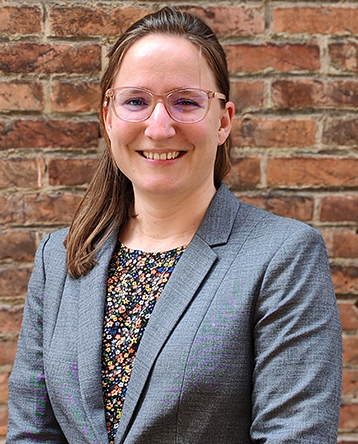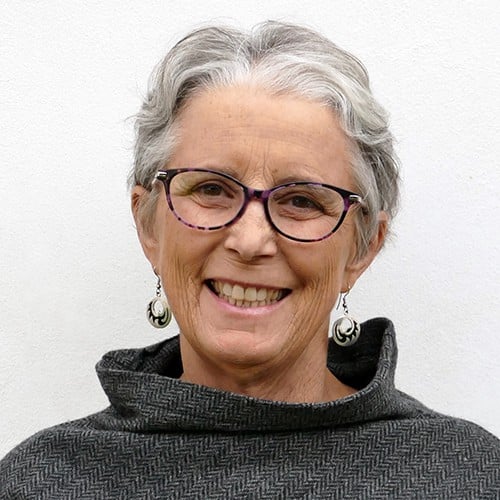
Stephanie Forrest is a Professor in the School of Computing and Augmented Intelligence (SCAI) at Arizona State University (ASU), where she also serves as Director of the Biodesign Center for Biocomputation, Security and Society. She is an External Faculty member of the Santa Fe Institute (SFI), where she previously held leadership roles including Co-Chair of the Science Board (2010–2013) and Interim Vice President for Academic Affairs (1999–2000). Prior to joining ASU, she was a Regents Distinguished Professor and Department Chair of Computer Science at the University of New Mexico (2006–2011). B.A., St. John's College M.S., Ph.D., University of Michigan, Computer Science Her research lies at the intersection of biology and computation, focusing on computational immunology, automated software repair, evolutionary computation, and modeling complex systems such as cancer and immune responses. She pioneers bio-inspired algorithms for cybersecurity and develops evolutionary techniques for software optimization and repair. Her work integrates principles from immunology, genetics, and complex adaptive systems to solve problems in computer science. The trends in her recent publications reveal a sustained focus on automated program repair using evolutionary computation, GPU code optimization, and modeling biological systems. Her work increasingly combines machine learning with mutation-based search, explores semantic representations in code repair, and applies bio-inspired models to real-world software and security challenges. ACM/AAAI Allen Newell Award (2011) Presidential Young Investigator Award (1991) Stanislaw Ulam Memorial Lectures, SFI (2013) IEEE Fellow UNM Annual Research Lecture (2012) IEEE S&P Test of Time Award (2020) ICSE Most Influential Paper Award (2019) ACM/SIGEVO Impact Award (2019) SEAMS Best Paper Award (2019) WEIS Best Paper Award (2015) Stephanie Forrest has advised numerous students and researchers, often in collaboration with W. Weimer, C. Le Goues, and M. Moses. Her research is supported by major funding agencies including the National Science Foundation (NSF), Defense Advanced Research Projects Agency (DARPA), Air Force Research Laboratory (AFRL), and the Santa Fe Institute. She has also contributed to public policy as a Jefferson Science Fellow at the U.S. Department of State (2013–2014), advising on cyber-policy. She currently chairs the Government Affairs Committee of the Computing Research Association (CRA). She leads the Biodesign Center for Biocomputation, Security and Society, which brings together interdisciplinary teams to study the co-evolution of technology and society. Her research group has developed tools for intrusion detection (e.g., STIDE, pH, RISE), automated software repair (e.g., GenProg), and biological modeling (e.g., CancerSim). Current projects include engineering diversity for enhanced cybersecurity, measuring internet censorship, and modeling immune and cancer systems.