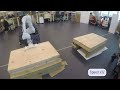
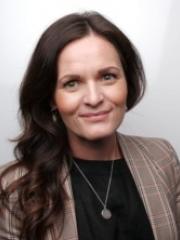
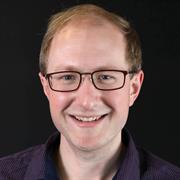
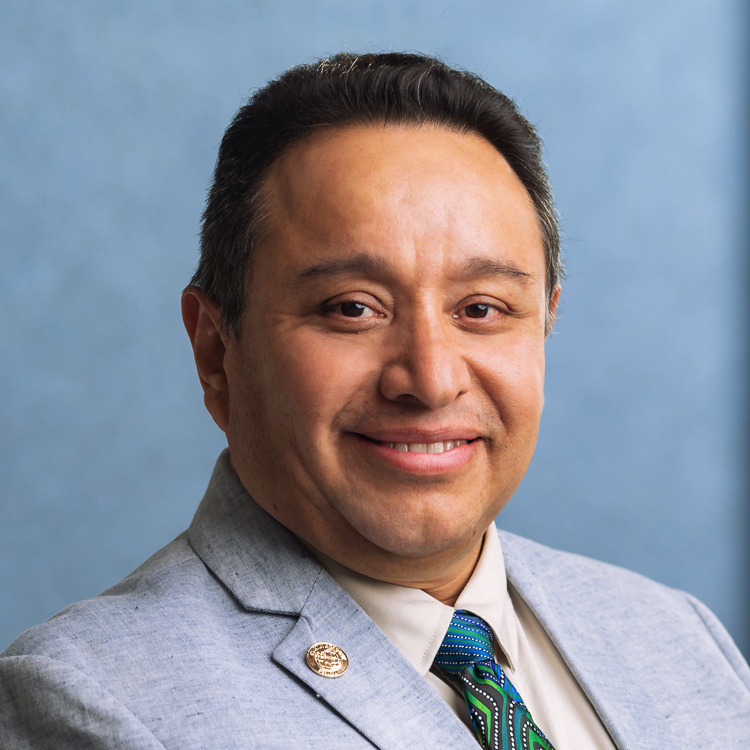
Dikai Liu is a Distinguished Professor and Strategic Research Director at the University of Technology Sydney (UTS), Australia, within the School of Mechanical and Mechatronic Engineering . His work spans field robotics and human-robot collaboration (HRC) , focusing on autonomous systems for infrastructure maintenance, construction automation, and underwater operations. Key research areas: Robotics, Human-Robot Interaction, Bio-Inspired Design, Infrastructure Maintenance Recent publications highlight innovations in trust modeling for HRC, stiffness control in continuum robots, and sociotechnical frameworks for AI-driven robotic systems. His 15 most recent articles emphasize applications in bridge maintenance, construction automation, and ethical AI integration. Awards include the 2019 UTS Medal for Research Impact, ASME DED Leonardo da Vinci Award (USA), and multiple engineering excellence recognitions. His research has generated over $22M in external funding, including 13 ARC grants and industry partnerships.
Jun Shen is a Professor at the School of Computing and Information Technology, University of Wollongong. He specializes in computational intelligence, cloud computing, and big data applications, with a focus on AI-driven solutions for real-world challenges in transport systems, healthcare, education, and environmental management. He has secured over 40 research grants totaling AU$4.5 million and supervised 26 completed PhD projects. His work spans interdisciplinary areas including bioinformatics, smart manufacturing, and digital health. Research interests include bio-inspired algorithmic optimization, AI in arts/media, and edge computing for IoT systems. He has pioneered research centers in applied computing since 2014 and holds editorial roles in top journals like IEEE Transactions. As an IEEE Distinguished Lecturer, he actively promotes AI ethics and interdisciplinary collaboration. Recent publications emphasize adversarial machine learning defenses, UAV systems, and multimodal data fusion. His supervision includes projects in intelligent transport systems, cloud computing, and e-learning. Grants include projects on resilient energy systems and UAV geolocation verification. Leadership roles include leading over 20 researchers and chairing conferences. He advocates for digital transformation in public services and has conducted fieldwork at MIT, UCI, and Georgia Tech.
Associate Professor Steven Wiederman holds the position of Associate Dean Research in the Faculty of Health and Medical Sciences at the University of Adelaide. He leads the Visual Physiology & Neurobotics Laboratory within the School of Biomedicine. His research focuses on understanding visual processing in insects, particularly dragonflies, and translating these insights into applications for autonomous robotics and neuro-inspired systems. Key areas include target detection, optic flow processing, and selective attention mechanisms in biological systems. His interdisciplinary work combines electrophysiological techniques, computational modeling, and robotics engineering. Current projects explore how dragonfly neurons enable precise tracking of moving targets amidst clutter, with applications in developing advanced vision systems for drones and robots. He has secured significant funding through ARC fellowships and industry partnerships, including projects on neuro-inspired deep learning for defense applications. Academic achievements include an ARC DECRA Fellowship (2011–2015) and an ARC Future Fellowship (2016–2020). He is a member of the ARC College of Experts and actively supervises PhD and Master’s students in neuroscience, robotics, and computational biology. His lab collaborates with engineers and computer scientists to bridge biological insights with technological innovation. Publications highlight breakthroughs in understanding neuronal mechanisms underlying predictive vision, selective attention, and adaptive processing in dragonfly visual systems. Media coverage includes features in Wall Street Journal , New York Times , and Science Daily , emphasizing the potential of insect-inspired solutions for future technologies.
Professor Omid Kavehei is a Professor of Intelligent Microsystems in the Faculty of Engineering at the University of Sydney, serving as Deputy Head of the School of Biomedical Engineering. Previously, he held roles as a Research Fellow at the University of Melbourne and Lecturer at RMIT University. His research focuses on biomedical microsystems, nanotechnology, and brain-inspired hardware for healthcare applications, particularly epilepsy monitoring and seizure prediction. Education: PhD (specific institution not explicitly stated) His work bridges nanoelectronics and healthcare, aiming to develop low-power, brain-inspired devices for sensory perception and medical diagnostics. Key interests include neuromorphic engineering, wearable sensors, and AI-driven medical systems. Awards include the Ramaciotti Biomedical Research Award (2021), Microsoft AI for Accessibility Grant (2019), and multiple teaching/research excellence awards from the University of Sydney. His recent work explores neuromorphic cytometry for cell analysis, edge AI for ECG/EEG diagnostics, and closed-loop neurostimulation systems. Collaborations include the Sydney Nano Institute, Brain and Mind Centre, and industry partners like Microsoft. Current research students are advancing topics like bio-inspired algorithms for seizure detection, hardware-friendly machine learning models, and flexible sensor systems for aquatic environments. Grants include funding for neurophysiology platforms, quantum sensors, and semiconductor design. Labs/teams: Involved in the Centre for Drug Discovery Innovation and collaborations across engineering, neuroscience, and clinical domains.
Dr. Paulo Santos is a Senior Lecturer at Flinders University's College of Science and Engineering, specializing in Artificial Intelligence with a focus on explainable AI systems. He holds a PhD from Imperial College London (2003) and has over 20 years of research experience in spatial reasoning, machine learning, and robotics. His work bridges knowledge representation with deep learning to enhance transparency in AI decision-making. Dr. Santos has led research groups in Brazil, collaborated internationally, and secured funding from organizations like the British Council and EU. His expertise spans robotics, computer vision, and cognitive science. Notable achievements include the British Computer Science Machine Intelligence Prize (2004) and the Santander Prize for Science and Innovation (2006). Research interests include reinforcement learning for autonomous underwater vehicles (AUVs), scene graph generation in computer vision, and spatial reasoning for multi-robot systems. Recent work emphasizes sim-to-real transfer learning and fault recovery in underwater robotics.
Surya Nurzaman is a Senior Lecturer at Monash University Malaysia, specializing in soft robotics, embodied intelligence, and bio-inspired systems. He holds a PhD from Osaka University (2011) and has held research fellowships at ETH Zürich and the University of Cambridge. His work bridges robotics engineering with biomedical applications, emphasizing interdisciplinary collaboration. He teaches courses such as Dynamics II, Electromechanics, and Engineering Design. Research focuses on soft robotics for industrial and biomedical applications, including soft grippers, exoskeletons, and adaptive control systems. Projects include aerial robotics for oilfield inspection and AI-driven sensor frameworks. Nurzaman has received awards like the ITEX 2021 Gold Medal and the 2024 School of Engineering Excellence Award. He is actively involved in editorial roles for journals like IEEE Robotics & Automation Magazine and Frontiers in Robotics and AI. His contributions span over 50 publications, with recent work addressing tremor prediction, soft sensor modeling, and cross-domain learning. Collaborations include international partners in Japan, Switzerland, and the UK. Nurzaman’s research aligns with UN SDGs, particularly in advancing sustainable industry solutions and health innovations.
Associate Professor Taylor Dick is a leading researcher at the University of Queensland's School of Biomedical Sciences, where she serves as Director of the Neuromuscular Biomechanics Laboratory. Her interdisciplinary work bridges biomechanics, bio-inspired assistive devices, and neuromuscular physiology, addressing fundamental questions about movement's role in evolution, health, and disease. She completed her PhD at Simon Fraser University (2016) and postdoctoral training at the University of North Carolina (2016-17) before joining UQ in 2017. Education: PhD in Biomechanics (Simon Fraser University, 2016) Key Roles: Associate Professor, Director of Higher Degree Research, International Society of Biomechanics Executive Council Member Her research integrates musculoskeletal anatomy, neural control, and biomechanics to study human and animal locomotion. By combining experimental paradigms with modeling techniques, her team investigates muscle-tendon dynamics, locomotor adaptations, and assistive device optimization. Recent work focuses on gait disruptions in motor neuron disease, aging-related muscle changes, and VR-based balance assessment. Latest publications highlight trends in muscle energetics , exoskeleton design , and comparative biomechanics . Her team's interdisciplinary composition spans biomechanists, physiologists, engineers, and computer scientists, reflecting her collaborative approach. Scientific Awards: 2024 Queensland Tall Poppy Award 2024 International Union of Physiologists Junior Faculty Award 2024 International Society of Electrophysiology and Kinesiology Kevin P. Granata Award 2021 International Society of Biomechanics Jaquelin Perry Emerging Scientist Award Taylor actively supervises 18 HDR students and has advised 16 to completion. She co-developed the BRInC program to promote STEM engagement for girls. Her research is funded by competitive grants exceeding $3.6 million, including projects on wearable robotics for ALS patients and kangaroo locomotion.
Dr. Timothy Wiley is a Lecturer in Computer Science at RMIT University's School of Computing Technologies within the STEM College. He specializes in Artificial Intelligence and Robotics, focusing on autonomous systems, online learning, and human-robot interaction. His roles include leading the RedbackBots RoboCup team and designing core courses in AI and robotics. He holds a PhD from UNSW Sydney and has extensive industry and academic collaborations, including with Rheinmetall Defence Australia and Nova Systems. Affiliations: RMIT AI Innovation Lab, CIAIRI, RUASRT Education: PhD (Computer Science, UNSW), BSc (Computer Science, UNSW) Research: Autonomous robotics, Explainable AI, UAV systems, fatigue crack modeling Research interests center on data-efficient machine learning for robotics, explainable AI, and applications in agriculture, aviation, and defense. Recent projects include UAV delivery systems and AR visualization for RoboCup. He teaches courses like Programming Autonomous Robots and leads the first-year Programming Studios. Notable achievements include the 2025 Best Paper Award at HRI and finalist status in RMIT's 2023 Research Leadership Awards. His work bridges academic research with industry applications, such as food waste reduction in macadamia harvesting and urban wind environment modeling for AAM.
Dr. Can Nerse is an early-career researcher and Adjunct Fellow at the School of Mechanical and Mechatronic Engineering, University of Technology Sydney (UTS), where he works as a Postdoctoral Research Fellow at the Centre for Audio, Acoustics and Vibration (CAAV). He joined UTS in February 2021 and has progressed from Postdoctoral Research Associate to Postdoctoral Research Fellow. His academic journey includes a Postdoctoral Research Associate position at Gwangju Institute of Science and Technology in South Korea. Dr. Nerse received his PhD in Mechanical Engineering from Gwangju Institute of Science and Technology in August 2020, following an MSc from the same institution in 2015 and a BSc from Middle East Technical University, Ankara, Turkey in 2013. Dr. Nerse's research focuses on the intersection of vibro-acoustics, metamaterials, and bioinspired engineering. He investigates how eusocial insects like honey bees build structures with specific vibro-acoustic properties and applies these insights to develop novel materials and vibration control solutions. His work spans theoretical modeling, experimental validation, and practical industrial applications in noise and vibration mitigation. Current research interests include vibroacoustics, metamaterials, biotremology, self-organization, digital twins, and numerical methods. Dr. Nerse's publication record demonstrates a progression from fundamental vibration analysis to bioinspired metamaterial applications. His most recent work focuses on topological mechanical states in hyperuniform materials, wild bee signal classification, and bio-inspired acoustic metasurfaces manufactured through knitting technology. This research trajectory shows increasing integration of biological principles with engineering solutions for noise and vibration problems. International Institute of Acoustics and Vibration (IIAV) - Member since 2023 Society for Experimental Mechanics - Member since 2015 Korean Society for Noise and Vibration Engineering (KSNVE) - Member since 2013 Dr. Nerse has secured multiple research grants including the UTS FEIT Blue Sky Research Scheme Grant for bio-informed sensing and the UTS Cross-Faculty Collaboration Grant for acoustic well-being through metasurfaces. He has taught courses including Embedded Mechatronics System, Dynamics and Control, FEM and Optimization, and Sound and Vibration. He is available for Master's research supervision and PhD student supervision, particularly in areas related to his expertise in vibro-acoustics and metamaterials. Dr. Nerse leads research in the Centre for Audio, Acoustics and Vibration (CAAV) at UTS, working with interdisciplinary teams to develop innovative solutions for vibration and noise problems. His current projects involve creating acoustic metasurfaces using knitting technology to address noise issues in communal spaces, aligning with UN Sustainable Development Goals for Sustainable Cities and Communities, Industry Innovation and Infrastructure, and Climate Action.
Sabrina Caldwell serves as a Senior Lecturer and Researcher at The Australian National University's School of Computing. As Co-chair of JPEG Trust within the ISO/IEC JTC 1/SC 29/WG 1 working group, she has led the development of international standard ISO/IEC 21617-1 for media trustworthiness assessment, scheduled for publication in October 2024. Her work bridges academic research with global standardization efforts in digital media security. Her research interests focus on two interconnected domains: digital image authentication (particularly distinguishing authentic photographs from AI-manipulated content) and physiological signal processing using neural networks. Within human-AI teaming, she investigates deception detection through multimodal analysis of nonverbal behavior and develops frameworks for assessing the credibility of visual media in the age of generative AI. Her fingerprint reveals strong concentrations in neural networks (100%), physiological signal processing (85%), and affective computing (30%). Analysis of her 29 research outputs shows increasing emphasis on multimodal deception detection and media trustworthiness standards since 2020. Her work demonstrates consistent collaboration with international researchers like Temmermans, Bhowmik, and Kyburz, with notable projects including MEC23: Advanced Biometrics and C2 Sociotechnical Experimentation. The publications reveal a strategic shift toward practical standardization frameworks after 2022, coinciding with her JPEG Trust leadership role. Caldwell holds active research supervision registration and leads projects including the 2023-2026 Australian government travel grant for international standards participation and the 2024 Human-machine aesthetics seed grant. Her projects consistently address real-world applications of computing for social good, particularly in media trust and human-centered biometrics.
Associate Professor Cesar Ortega-Sanchez is affiliated with Curtin University's School of Electrical Engineering, Computing and Mathematical Sciences (EECMS), where he holds the role of Associate Professor since 2005. He has served in leadership roles including Academic Lead of the Engineering Foundation Year (2015-2022), Associate Dean of Teaching and Learning (2013-2014), and Chair of IEEE WA Section (2016-2017). His expertise spans bio-inspired systems, embedded systems, robotics, and engineering education. Education: BEng (Hons) from the Metropolitan Autonomous University (Mexico), MSc from Brunel University (UK), and PhD from the University of York (UK). Specializes in curriculum design, assessment methodologies, and promoting student employability. Mentor of Curtin Robotics Club and IEEE Curtin Student Branch since 2009. Research Interests: Embedded systems, bio-inspired architectures, educational pedagogy, and indigenous content integration in engineering curricula. Over 60 publications in areas like FPGA-based assistive technologies, smart home systems, and energy storage monitoring. Awards include the 2015 Australian Office of Learning and Teaching Citation and M.K. Stott Prize (2000). Teaching roles include leading ELEN1000 (Electrical Systems) and ENGR1000 (Engineering Connections), with a focus on innovative teaching methods like project-based learning (e.g., 'Crazy Machine' lab projects). Active in educational committees at university and national levels.
Dr. Lei Gao is a Principal Research Scientist at CSIRO Land and Water with over 20 years of expertise in complex environmental systems research. A nationally and internationally recognized thought leader, he pioneers methods in sustainability modelling and AI-driven environmental predictions while collaborating with institutions like Oxford University, IIASA, and the Chinese Academy of Sciences to address land and water management challenges. His research centers on complex systems modelling, sustainability assessment, adaptive management under uncertainty, and machine learning applications for environmental systems. He specializes in translating these methodologies into practical solutions for water resources, land systems, and socio-economic analysis, with a focus on robust decision-making under climate extremes and global change. Recent publications reveal a dominant trend integrating artificial intelligence with environmental modelling, particularly in water flow prediction, soil carbon sequestration, and climate impact assessment. His work increasingly addresses systemic sustainability challenges through scenario analysis, trade-off assessments, and SDG-focused frameworks, demonstrating strong interdisciplinary convergence. Dr. Gao's scientific accolades include: Cell Press China Paper of the Year Award (Sustainability Category) CSIRO Chairman’s Medal for Science Excellence Julius Career Award for exceptional early to mid-career scientists MVIPIT Best Paper Award Impactful Publication Award Publons Peer Review Award — Top reviewers for CSIRO Multiple Best Paper Awards and Research Excellence recognitions As Project Leader for the CAS-CSIRO Joint Project on agricultural climate adaptation, CSIRO Strategic Project on AI-based water banking, and Australia-China Science Fund on soil carbon sequestration, he demonstrates exceptional grant leadership in securing competitive funding for high-impact environmental research. Based at CSIRO Land and Water, Dr. Gao operates within a dynamic international research ecosystem, leveraging cross-program collaborations and partnerships with global institutions to develop innovative sustainability solutions for complex environmental challenges.
Professor Derek Abbott is a faculty member in the School of Electrical and Mechanical Engineering at the University of Adelaide, within the Faculty of Sciences, Engineering and Technology. He holds the academic rank of Professor and is actively involved in supervising Masters and PhD students. His research interests span a wide range of interdisciplinary fields, including biomedical engineering, optical systems, game theory, quantum mechanics, stochastic phenomena, computational neuroscience, and forensic engineering. Professor Abbott has also contributed to energy systems optimization and space-based sensor technology. His recent work includes studies on neural network robustness, gravitational redshift measurement, and cardiovascular disease prediction using machine learning. His research often bridges theoretical concepts with practical applications in engineering and healthcare. Key research areas include the development of terahertz technology, bio-inspired engineering systems, and quantum game theory frameworks. He has published extensively on topics ranging from deep learning security to renewable energy grid optimization. His interdisciplinary approach integrates principles from physics, mathematics, and computer science to address complex real-world problems. Professor Abbott is eligible to supervise postgraduate research students and collaborates internationally on projects related to forensic genealogy, platonism in science, and energy storage solutions. His work often emphasizes the intersection of technology and societal challenges, such as climate change and healthcare innovation.
Dr. Asanka Perera is a Lecturer in Mechatronic Engineering at the University of Southern Queensland (UniSQ) within the School of Engineering. He holds a PhD from the University of South Australia (UniSA), an MSc in Industrial Automation from the University of Moratuwa, and a BSc in Electrical and Electronic Engineering from the University of Peradeniya. His research focuses on robotics, autonomous systems, computer vision, and machine learning with applications in drones, adversarial attacks on 3D point clouds, and medical imaging. Notable projects include bio-inspired navigation systems, multi-robot collaboration, and non-contact vital signs monitoring. Dr. Perera has secured grants including AUD 17,546 from the US Department of Air Force for bio-inspired navigation research and AUD 68,645 for heterogeneous robot swarms. He actively supervises PhD students exploring topics like robust 3D object recognition and vision-based localization in low-light conditions. He has taught courses at UNSW Canberra and UniSA, including Robotics & AI labs, autonomous systems design, and control systems. His professional memberships include IEEE, Engineers Australia, and the Australian Computer Society. Dr. Perera is affiliated with UniSQ's Centre for Future Materials and Centre for Astrophysics. His work has been featured in media outlets such as Scientific American and ABC Australia.
Young Jung No is a Senior Lecturer at the University of Sydney's School of Biomedical Engineering. With a PhD in Engineering and a Graduate Certificate in Higher Education, he specializes in synthetic biomaterials for musculoskeletal tissue regeneration. His research focuses on developing off-the-shelf alternatives to traditional tissue grafting techniques through bioactive ceramics, polymer-ceramic composites, and synthetic tendons/ligaments. Education: B. Engineering (Mechanical) (Biomedical) Hons I, B. Medical Science (Physiology), PhD, GradCert (Higher Ed) Professional Affiliation: Member of Engineers Australia His work investigates how synthetic materials interact with biological systems, emphasizing physical, chemical, and biological properties for tissue repair. Current projects include doped calcium silicate ceramics and bioactive composites for bone and soft tissue regeneration. Recent publications highlight advancements in hydrogel composites, 3D-printed scaffolds, and ion-releasing biomaterials. Themes span biomedical engineering, materials science, and regenerative medicine. He has received awards for teaching innovation and was recognized as one of the 40 under 40 Most Influential Asian-Australians in 2022. 2024: Faculty of Engineering Education Innovation Award Commendation 2022: 40 under 40 Most Influential Asian-Australian 2020: Faculty of Engineering Dean’s Award for Outstanding Teaching As Associate Head of School (Education), he teaches courses in biomaterials, biomechanics, and interdisciplinary engineering. His research has attracted grants like BioFlexNet (2024) for cardiovascular monitoring technologies and Harvard Mobility Scheme funding (2018) for tendon tissue regeneration biosensors.