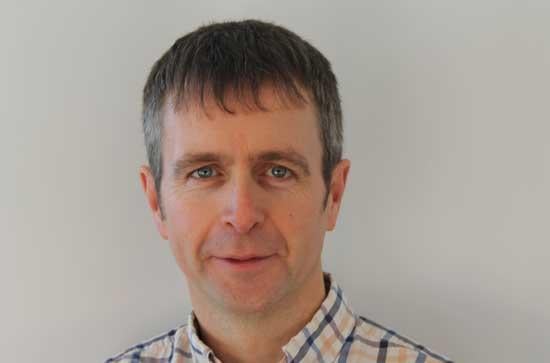
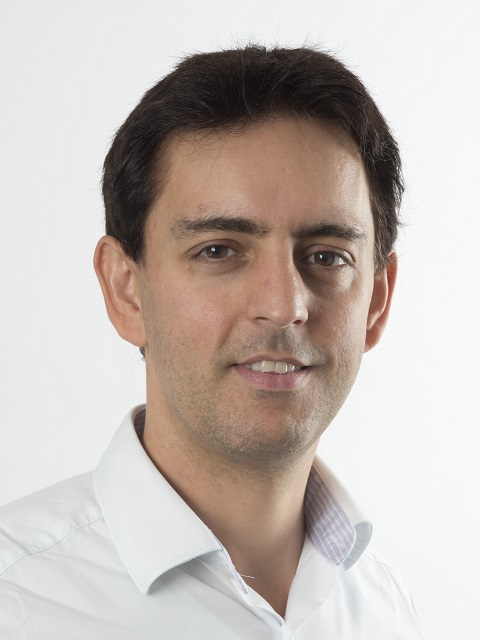
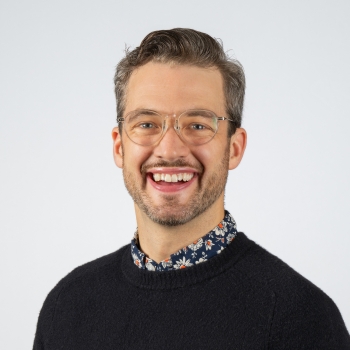
Paul Lukowicz is a distinguished researcher affiliated with the University of Kaiserslautern and DFKI, Kaiserslautern, Germany. His work focuses on Human Activity Recognition (HAR) using wearable sensors, Augmented Reality for surgical navigation, and Quantum-Inspired Computing for AI efficiency. He leads interdisciplinary projects involving capacitive sensing , bio-impedance , and large language models (LLMs) in real-world applications. Research Trends from his recent publications (2024-2025) reveal a focus on Energy-efficient AI for wearables Context-aware AR systems Physics-informed neural networks Quantum machine learning Human-in-the-loop training frameworks Medical device innovation His work spans health applications , industrial IoT , and human-AI collaboration , often involving partnerships with institutions like University of Passau and international collaborators. Key technical approaches include sensor fusion , cross-modal learning , and edge computing for wearable systems.
Dr. Tolga Berber is an Assistant Professor at the Faculty of Science, Karadeniz Technical University . With a PhD in Computer Engineering from Dokuz Eylül University, his academic career spans over 20 years, including roles as Deputy Head of Department (2013–2023) and extensive research in Computer Sciences, Artificial Intelligence, and Medical Informatics .
Diarmuid O'Donoghue is an Assistant Professor in the Faculty of Science & Engineering at Maynooth University, specializing in Computational Creativity and Analogical Reasoning . His research explores topological similarities between text and source code to develop cognitively inspired systems for problem-solving and bias detection. Co-PI of the Modelling implicit bias project (€21/FFP-P/10118) Senior Scientific Coordinator for the €2.6M EU-funded Dr Inventor project Key research areas include: Latent homomorphism detection in lexical data Comparative analysis of LLMs and analogical systems Formal specification generation from code/text His work has shaped undergraduate project frameworks with ethical GenAI integration . Publications span ICCC , GECCO , and journals like Artificial Intelligence Review .
David Bierbach is a Researcher at the Biology and Ecology of Fishes group within the Faculty of Life Sciences at Humboldt University . His work focuses on collective behavior, animal welfare, and evolutionary ecology in aquatic species. Key Research Areas: Collective decision-making in fish shoals Behavioral plasticity in clonal and sexual fish species Environmental stress responses and adaptations Science of Intelligence Cluster collaborations Methodological Innovations: Use of biomimetic robots in studying social behavior Development of standardized fish husbandry protocols Current Projects: Thermal tolerance in extremophile fish Predator avoidance dynamics in collective systems Behavioral individuality in clonal vertebrates In recent publications (2024-2025), Bierbach's research spans fish social networks, aquaculture standards, and computational modeling of collective behavior. His work emphasizes interdisciplinary approaches combining biology with robotics and data science to advance both ecological understanding and animal welfare practices.
Prof. Dr. Pawel Romanczuk is a faculty member at Humboldt University's Faculty of Life Sciences, Institute of Biology, where he leads research in complexity science and adaptive systems. His work bridges biological collective behavior with robotics and computational modeling. Research Focus: Collective decision-making, swarming dynamics, animal behavior, and bio-inspired robotics Key Collaborations: Interdisciplinary work with robotics, physics, and ecological modeling His recent publications explore metric-free alignment in active matter, human-swarm interaction , and escape cascades in biological systems. He investigates how network topology influences decision-making and studies vision-based navigation algorithms. Scientific trends include: Understanding phase transitions in animal collective behavior Developing biomimetic robots for experimental studies Modeling social contagion in multi-agent systems
Dr. Halil İbrahim Yavuz is an Assistant Professor in the Department of Materials Science and Nanotechnology Engineering at Yeditepe University , with prior academic roles at Yuzuncu Yil University and Middle East Technical University. His research spans materials science, nanotechnology, and renewable energy, focusing on dye-sensitized solar cells (DSSC), superconducting materials, and environmental applications of nanomaterials. Doctorate in Metallurgical and Materials Engineering (Middle East Technical University, 2007-2014) Master's in Chemistry Education (Çukurova University, 2003-2004) BSc in Chemistry (Çukurova University, 1998-2003) Research interests include solar cell optimization , nanomaterial synthesis , environmental remediation , and superconducting composites . His recent work emphasizes ZrO2 blocking layers , carbon nanotube integration , and bio-inspired nanomaterials . Scientific awards include Vanın En Başarılı Bilim Adamı (Radyocular Derneği, 2019) and Genç Araştırmacı Ödülü (TMMOB Metalurji Mühendisleri Odası). He has supervised 8 graduate students and led projects in ballistic armor development , radiation-resistant corrosion inhibitors , and graphene-based thermal camouflage .
Dr Jose Santos serves as Associate Head of the School of Computing and Lecturer in the Faculty of Computing, Engineering and the Built Environment at Ulster University. Based at the Belfast campus (2-24 York Street), he maintains an active research profile with 54 publications since 2000 and a Scopus h-index of 9. His leadership extends to the Computer Science Research group where he contributes to the university's UN Sustainable Development Goal initiatives. Dr Santos' research centers on networking and communications, with foundational work in geographical routing protocols for mobile ad-hoc networks (MANETs) evidenced by his highly-cited survey (193 citations). His expertise spans quality of service optimization , location-aware routing for disaster telemedicine , and multimedia streaming in emergency scenarios . Recent expansions include Robotics: Bio-inspired control systems using reinforcement learning for coverage and navigation Emerging technologies: Blockchain-based edge computing (BECA architecture) and SLAM systems for autonomous navigation Sustainability applications: Low-cost environmental monitoring and battery health estimation His work consistently bridges theoretical networking concepts with real-world emergency response challenges. Analysis of recent publications (2021-2025) reveals strategic convergence of AI with physical systems. Key trends include sensor fusion for robotics (monocular-LiDAR SLAM), blockchain for secure IoT edge computing, and neural networks for battery diagnostics. This evolution maintains his core networking expertise while addressing sustainability through pollution monitoring and energy-efficient systems, aligning with Ulster University's focus on practical technological solutions for global challenges. Dr Santos has supervised 4 research students and secured funding for impactful projects including: KTP Programme with Fire Glass Direct Ireland Ltd (2012-2015): Transferred academic knowledge to industrial applications Ja.NET location awareness proposal (2008): Pioneered cooperative positioning techniques for indoor environments His external engagement includes serving as External Examiner at Griffith College (2015-2017), demonstrating commitment to academic standards beyond Ulster University. As part of Ulster's Computer Science Research group, Dr Santos contributes to multidisciplinary teams addressing UN Sustainable Development Goals. His current work integrates drone communications for fire emergency response, particulate matter monitoring, and blockchain architectures - reflecting a trajectory toward intelligent systems that enhance community resilience and environmental sustainability through rigorous networking research.
Dr. Andrea Soltoggio is a Reader in Artificial Intelligence (Associate Professor) and Research Coordinator in the Computer Science Department at Loughborough University's School of Science. He holds a combined BSc and MSc in Computer Science from the Norwegian University of Science and Technology and Politecnico di Milano, and a PhD from the University of Birmingham. His academic journey includes research positions at EPFL, the University of Central Florida, and Bielefeld University where he served as Technical Coordinator for the FP7 European project AMARSi. His research focuses on creating AI systems that learn continuously like biological brains, with particular emphasis on lifelong learning, collaborative knowledge sharing, and energy-efficient AI. Dr. Soltoggio has made significant contributions to the development of algorithms that enable AI systems to share knowledge without centralized control, as demonstrated in his MOSAIC framework published in 2025 and his Nature Machine Intelligence paper on collective AI systems. His recent publications reveal a strong trend toward sustainable AI development, with multiple projects focused on reducing the energy footprint of machine learning systems. His work bridges neuroscience and AI, exploring how biological learning mechanisms can inform more adaptive artificial systems. The research spans from theoretical frameworks to practical applications in robotics, healthcare diagnostics, and edge computing. Fellow of the Higher Education Academy (FHEA) Published in Nature Machine Intelligence (2024) Lead researcher on multiple funded projects including FP7 AMARSi Regular media contributor on AI topics (BBC, The Conversation) Dr. Soltoggio actively supervises PhD students and postdoctoral researchers in the Computer Science Department, with current projects focusing on lifelong learning, neuromorphic computing, and sustainable AI. His research group collaborates with Loughborough Business School on digital decarbonization initiatives and maintains connections with international AI laboratories. The team has access to advanced computational resources including Nvidia A100 GPUs and various robotic platforms for experimental validation of their theories.
Tom Glover is an Assistant Professor in the Department of Computer Science within the Faculty of Technology, Art and Design at Oslo Metropolitan University. His office is located at Stensberggata 29, 0170 Oslo (Office number: SG204) with contact information including mobile: +47 975 38 894 and office: +47 672 37 712. Dr. Glover's research focuses on the intersection of cellular automata, artificial intelligence, and complex systems. His work spans theoretical computer science, artificial life, and practical applications in reservoir computing and control systems. His research group is part of the Innovation, Digital Transformation and Sustainability Research groups within the Department of Computer Science. Analysis of his publications reveals a consistent focus on cellular automata as computational models, with particular emphasis on their application in reservoir computing, network dynamics, and self-organizing systems. His work demonstrates how simple computational rules can generate complex behaviors with applications across multiple domains including control systems and biologically inspired computing. As an active researcher, Glover has published in reputable venues including the International Journal of Parallel, Emergent and Distributed Systems, Complex Systems, and proceedings from the Artificial Life Conference series. His recent work (2023-2024) shows continued development in sensitivity analysis of cellular automata and network topologies.
Dr. Jemma Rowlandson is a Senior Lecturer at the University of Bristol's School of Electrical, Electronic and Mechanical Engineering and a key member of the Bristol Composites Institute. Holding a PhD, MRes, and MChem, she leads cutting-edge research in sustainable materials with emphasis on hydrogen storage solutions and composite engineering, including her role as Principal Investigator for the Great Western Supercluster of Hydrogen Impact for Future Technologies project. Her academic qualifications include: PhD MRes MChem Rowlandson specializes in developing sustainable materials for energy and environmental applications, with core expertise in hydrogen storage using lignin-derived nanoporous carbons, castor oil-based polyurethane foams, and environmental impact assessment. Her research integrates experimental characterization, computational modeling, and life cycle analysis to optimize material performance while addressing sustainability challenges across multiple sectors. Analysis of her 15 most recent publications (2018-2025) reveals dominant themes in biomass-derived carbon materials for hydrogen storage, sustainable polyurethane composites, and feasibility studies for hydrogen applications in aviation and heating systems. The work demonstrates increasing integration of environmental impact assessment and circular economy principles, with strong focus on lignin valorization and bio-based polymer engineering. Her teaching excellence has been recognized through prestigious university awards: Bristol Teaching Award: Inspiring and Innovative Teaching Award for Faculty of Engineering (2023) Bristol Teaching Award: Vice Chancellor’s Award for Education (2023) As Principal Investigator for the £7.8M Great Western Supercluster of Hydrogen Impact for Future Technologies (2024-2027), she directs major research initiatives while mentoring engineering students. Her collaborative approach extends to the Engineering Education Research Group where she develops innovative pedagogical methods for sustainable engineering education. Rowlandson actively contributes to the Bristol Composites Institute and Engineering Education Research Group, driving interdisciplinary collaboration between materials scientists, mechanical engineers, and sustainability experts to advance clean energy technologies and sustainable material solutions.
Benjamin Wheatley is an Associate Professor of Mechanical Engineering at Bucknell University, where he leads the Mechanics and Modeling of Orthopaedic Tissues Laboratory (MMOT Lab) . His research integrates experimental and computational biomechanics to understand soft-tissue and musculoskeletal mechanics, with applications spanning orthopaedics, rehabilitation engineering, and bio-inspired design. Education B.S. in Engineering, Trinity College, 2011 Ph.D. in Mechanical Engineering, Colorado State University, 2017 Research Interests Wheatley’s work centers on finite-element modeling and experimental characterization of biological soft tissues, particularly skeletal muscle, tendon, and bone. He investigates structure–function relationships in orthopaedic tissues, neuromuscular biomechanics, and bio-inspired protective structures such as bighorn sheep horns. Applications include improving prosthetic gait, understanding knee-joint loading, and designing impact-mitigating materials. Publication Trends Across more than 30 peer-reviewed articles since 2015, Wheatley’s scholarship exhibits two dominant trajectories: (1) high-fidelity computational modeling of skeletal muscle and orthopaedic tissues under multiaxial loading, and (2) experimental biomechanics studies combining motion capture, EMG, imaging, and mechanical testing. Recent work increasingly couples optimal-control theory with gait simulations to predict clinical outcomes for individuals with limb loss. Scientific Awards & Honors (none explicitly listed in provided text) Advising & Funding Wheatley actively mentors undergraduate and graduate researchers in the MMOT Lab; interested students are invited to attend weekly lab meetings after contacting him via email. Grant and funding details are not provided in the supplied text. Laboratory & Team He directs the Mechanics and Modeling of Orthopaedic Tissues Laboratory located in Academic East 302, Bucknell University. The lab emphasizes student-led collaborative research that bridges mechanical engineering, orthopaedics, and biology.
Professor Kwak Tae-gi is a distinguished academic and industry expert at Sejong University's Department of Fashion Design, College of Arts and Physical Education. With a PhD in Fashion Design from Kyung Hee University (2007), a Master of Design from Royal College of Art (1992), and foundational training at Central Saint Martins and Waltham Forest College, he bridges traditional craftsmanship with digital innovation. Education: PhD (Kyung Hee University), MDA (Royal College of Art), BA (Central Saint Martins), Diploma (Waltham Forest College) His research spans digital fashion, gender-neutral styles, and cultural hybridization in design, with over 50 publications in Korean Society of Costume Design and related forums. Industry collaborations include Hyundai Motor Company (2014-2015) and Seoul Fashion Week committees. He leads Korea Fashion Illustration Association as President since 2008. Recent work highlights YouTube content creation (2024), 3D printing applications (2016-2017), and cross-cultural studies merging Korean bojagi with European art. Though no explicit awards listed, his advisory roles in Blue House uniform design (2014) and police uniform committees (2015) underscore policy impact.
Dr Erfu Yang is a Senior Lecturer in the Robotics and Autonomous Systems (RAS) Group within the Department of Design, Manufacturing and Engineering Management (DMEM) at the University of Strathclyde, UK. He holds a Ph.D. in Robotics from the University of Essex (2008) and has held research fellow positions at the University of Stirling, Tokyo Institute of Technology, and the University of Edinburgh. He is an active researcher, principal investigator, and supervisor in advanced robotics and intelligent systems. Ph.D. in Robotics, University of Essex, UK (2008) Research Fellow, University of Stirling, UK Research Fellow, Tokyo Institute of Technology, Japan Research Fellow, University of Edinburgh, UK Dr Yang's research focuses on robotics, autonomous systems, computer vision, AI, machine learning, mechatronics, and optimization. His work integrates multi-agent reinforcement learning, fuzzy logic, neural networks, and bio-inspired algorithms into applications such as manufacturing automation, healthcare robotics, and autonomous inspection. He emphasizes intelligent human-robot collaboration, safety, and adaptability in dynamic environments. The recent publications reflect a strong trend in applying deep learning and AI to industrial quality control, cognitive assessment with social robots, autonomous navigation, and multi-objective path planning. His work bridges theoretical algorithm development with practical deployment in smart manufacturing and healthcare. Topics span from ResNet-based inspection systems to bio-inspired robotic design and fractional-order system modeling. TOP CITED ARTICLE 2023-2024 Recipient Top 2% Scientists Recipient IEEE Outstanding Service Award Best Poster for RoVER VIP Project at ESD@Strath Conference 2023 TOP CITED ARTICLE 2021-2022 Recipient Excellent Paper Recipient Best Paper Award (2019) Best Paper Award Nominee (2017) Dr Yang has secured over 15 research grants as PI or CI, including projects on intelligent cobots for farming, human-robot healthcare collaboration, and autonomous inspection in manufacturing. He supervises multiple PhD and research students and leads initiatives in smart manufacturing and assistive robotics. He is an Associate Editor for Cognitive Computation (Springer) and serves on IEEE and IET committees, including as Publicity Co-Chair for IEEE UK and Ireland Industry Applications Chapter. He is actively involved in the Robotics and Autonomous Systems research group at DMEM, leads the Bio-Inspired Robotics Design and Development project, and utilizes equipment such as the NMIS-DMEM Cobot UR10e. His work contributes to UN Sustainable Development Goals in industry, innovation, and health.
Qi Sun is an Assistant Professor at New York University's Tandon School of Engineering, jointly affiliated with the Department of Computer Science and Engineering and the Center for Urban Science + Progress (CUSP). He leads the Immersive Computing Lab, where his research focuses on advancing virtual and augmented reality through perception-aware computing, neural rendering, and energy-efficient XR displays. Research Interests: His work lies at the intersection of computer graphics, computer vision, and computational perception. He investigates how human perception can guide the design of immersive technologies, with research directions including foveated rendering, generative models for VR/AR, bio-physically inspired wearable displays, and multimodal interaction. His lab collaborates with industry leaders such as Meta to develop next-generation XR systems. The recent publications reflect a strong trend in perception-driven optimization for XR, focusing on reducing computational and energy costs while preserving visual quality. Key themes include gaze-contingent rendering, saliency modeling, holographic compression, and AI-assisted AR guidance. These works are published in top venues like ACM SIGGRAPH, IEEE ISMAR, IEEE VR, and IEEE VIS, often earning best paper awards. Scientific Awards: IEEE Virtual Reality Best Dissertation Award Best Paper Award, ACM SAP 2024 Best Paper Honorable Mention, ACM SIGGRAPH 2024 Best Paper Honorable Mention, IEEE VR 2024 Best Paper Honorable Mention, IEEE VIS 2023 Best Paper Award, IEEE ISMAR 2022 Best Paper Honorable Mention, ACM SIGGRAPH 2022 Best Paper Award, ACM SIGGRAPH 2022 Advising and Grants: Dr. Sun actively recruits PhD students, postdoctoral researchers, and interns, particularly those with backgrounds in neural rendering and generative models. He encourages pre-application collaborations and advises through the Tandon CSE PhD program. His research is supported by academic-industry partnerships, including recent work with Meta on XR display optimization. He promotes interdisciplinary research that bridges urban science, AI, and immersive computing. Labs and Teams: He directs the Immersive Computing Lab at NYU Tandon, which conducts cutting-edge research on human-aligned wearable displays and generative AI algorithms for XR. The lab focuses on making XR devices more efficient, immersive, and accessible for real-world applications in urban environments, healthcare, and education.
Anders Christensen is a Professor at the Maersk Mc-Kinney Moller Institute, University of Southern Denmark (SDU), where he leads research in swarm robotics, autonomous systems, and drone technologies. He is affiliated with the SDU UAS Center and SDU Climate Cluster, contributing to interdisciplinary projects involving environmental monitoring and AI-driven robotics. His research focuses on swarm robotics , multi-agent coordination , and UAV-based environmental monitoring . He explores decentralized control, task allocation in drone swarms, and bio-inspired autonomous systems. His work bridges theoretical algorithms with real-world applications in wildlife conservation and search-and-rescue operations. The recent publications highlight a strong trend in drone swarm deployment , communication protocols , and decentralized pathfinding , primarily applying AI and distributed computing to robotics. These works span fields such as environmental science, emergency response, and embedded systems, demonstrating interdisciplinary impact. Anders Christensen is actively involved in research projects such as WildDrone , CloudBrain , and SpikeDrone , where he contributes as a project participant or supervisor. He has secured EU and national funding, enabling field trials and technological innovation in drone-based monitoring. He teaches courses including Bio-inspired Autonomous Systems and Introduction to Robotics, Computer Vision, and Artificial Intelligence , shaping the next generation of robotics researchers.