Prof. Dr.-Ing. Guido Kramann is a faculty member at Brandenburg University of Technology in the Department of Technology. His academic work bridges mechatronics and computational music, emphasizing innovative intersections between engineering and artistic practice. Affiliation: Brandenburg University of Technology Department: Technology Location: Engineering Science Center (IWZ), Room 403, Brandenburg an der Havel, Germany Guido's research spans mechatronics, algorithmic music generation, and human-computer interaction. He explores arithmetic-based grammars and evolutionary processes for real-time musical composition, focusing on accessibility for laypeople and phenomenological efficacy in technical systems. His publications reflect a recurring interest in: Ubiquitous music and interactive soundscapes Phenomenological approaches to user interfaces Evolutionary algorithms for creative applications Harmonic unification in computational counterpoint He has contributed to conferences like CMMR, UbiMus, and EvoMUSART, though no scientific awards are documented here.
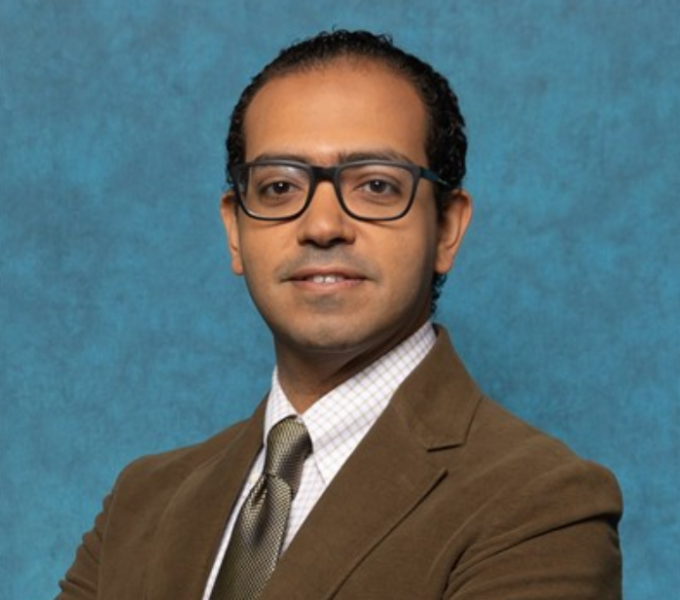
Dr. Mostafa Bedewy is an Associate Professor at the University of Pittsburgh's Swanson School of Engineering, with primary appointment in Mechanical Engineering & Materials Science and secondary appointments in Chemical & Petroleum Engineering and Industrial Engineering. He leads the NanoProduct Lab , focusing on nanomanufacturing and advanced materials research. Education: Postdoctoral training, Massachusetts Institute of Technology (MIT), 2014-2016 Ph.D. Mechanical Engineering, University of Michigan–Ann Arbor, 2009-2013 M.S. Mechanical Design and Production Engineering, Cairo University, 2008 B.S. Mechanical Design and Production Engineering, Cairo University, 2006 Research Interests: Dr. Bedewy's work spans advanced manufacturing, nanoscale materials synthesis, and bio-inspired design. Key areas include laser processing, carbon nanotube growth dynamics, self-folding polymer systems, cybermanufacturing, and machine learning applications for materials optimization. His interdisciplinary approach bridges nanotechnology with flexible electronics, biomedical devices, and sustainable manufacturing. Publication Trends: Recent articles (2020-2025) demonstrate strong focus on precision nanofabrication techniques, including laser-induced graphene synthesis, chemical vapor deposition optimization for carbon nanotubes, and intelligent polymer systems. Machine learning integration for materials characterization and process control emerges as a growing theme alongside biomedical applications like biosensors and magnetically directed nanoparticles. Awards and Honors: NSF CAREER Award (2023) TMS Frontiers of Materials Award (2022) IISE Outstanding Young Investigator Award (2020) SME Outstanding Young Manufacturing Engineer Award (2018) ORAU Ralph E. Powe Junior Faculty Enhancement Award (2017) American Carbon Society Robert A. Meyer Award (2016) University of Michigan Richard and Eleanor Towner Prize (2014) MRS Silver Award (2013) Research Leadership: As director of the NanoProduct Lab, Dr. Bedewy oversees projects funded by NSF and other agencies, including his CAREER award on cybermanufacturing frameworks. The lab develops novel in-situ characterization tools and data-driven manufacturing platforms, collaborating with biomedical and industrial partners to translate nanomaterials into functional devices.
Femke van Beek is an Assistant Professor in the Robotics section of the Department of Mechanical Engineering at Eindhoven University of Technology. Her research focuses on integrating soft robotics with haptic perception to develop autonomous robots with tactile sensing capabilities, particularly for agricultural applications within the 4TU Green Sensors project . She employs VR/AR experiments to study human haptic perception and design bio-inspired sensors. Academic Background : PhD in Psychonomics and Cognitive Psychology (Vrije Universiteit Amsterdam), MSc in Sensory Biology and Biomechanics (Wageningen University), and BSc in Biology (Wageningen University). Her research spans soft robotics , haptic feedback , and human-in-the-loop engineering , emphasizing practical sensor design and robotic movement optimization. Recent work includes open-source platforms for real-time control of soft robots and studies on vibrotactile vs. auditory feedback in tele-operation. Scientific Awards : Eurohaptics Society PhD Award (2017)
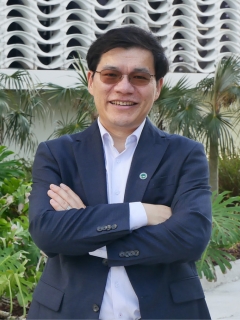
Xianming Shi serves as Professor and Chair of the Department of Civil, Architectural, and Environmental Engineering at the University of Miami's College of Engineering. His leadership role encompasses academic administration, faculty development, and strategic direction for the department's research and educational programs. Dr. Shi's research spans multiple critical areas within civil engineering with particular emphasis on sustainable infrastructure materials. His primary research interests include: Development of geopolymer concrete systems as sustainable alternatives to Portland cement Valorization of industrial byproducts (fly ash, rice husk ash, MSW incineration ash) in construction materials Nanomaterial applications for enhancing concrete performance and durability Self-healing concrete technologies for infrastructure longevity Life cycle assessment of construction materials for environmental impact reduction Frost durability mechanisms in concrete for cold climate applications Analysis of Dr. Shi's publication trends reveals a consistent focus on material science solutions for sustainable infrastructure. His work frequently combines experimental investigations with advanced characterization techniques (XRD, SEM-EDS, FTIR, TG-DTG) to understand material behavior at multiple scales. A significant portion of his recent research addresses carbon reduction through biochar incorporation and waste stream utilization in cementitious systems, demonstrating alignment with global sustainability goals. His interdisciplinary approach bridges civil engineering, materials science, and environmental engineering to develop practical solutions for infrastructure challenges. Dr. Shi maintains an active research program with numerous collaborations both within and outside the University of Miami. His work on corrosion protection systems, deicing technologies, and concrete durability mechanisms demonstrates practical applications of fundamental research to real-world infrastructure problems. The integration of life cycle assessment in many of his studies highlights his commitment to evaluating both technical performance and environmental impacts of construction materials.
Prof. Dr. Numan CELEBİ serves as a Professor at Sakarya University's Faculty of Computer and Information Sciences, Department of Information Systems Engineering, where he has held academic positions since 2007. His career progression includes promotion to Associate Professor in 2013 and subsequent advancement to full Professor. His educational foundation comprises a Doctorate in Industrial Engineering from Sakarya University (1998-2004) with thesis Inductive-rough clustering approach to part family generation , a Master's in Electrical and Electronics Engineering (1995-1997) with thesis Development of computer program for the implementation of Adapazari medium voltage distribution network (SCADA) system , and a Licence from Istanbul Technical University's Electrical-Electronic Engineering program (1985-1989). CELEBİ's research spans Artificial Intelligence , Machine Learning , and Computer Vision , with significant contributions to optimization algorithms (Polar Bear Algorithm, Tug of War Optimization), intelligent transportation systems (traffic congestion detection, vehicle rerouting), and computer vision applications (object tracking, saliency detection, UAV-based plant recognition). His methodology frequently integrates Rough Set Theory and fuzzy systems for data analysis and decision support. Analysis of his 15 most recent publications (2007-2023) reveals a clear research trajectory toward applying metaheuristic optimization and deep learning to real-world problems. His work demonstrates increasing focus on transportation systems (40% of recent publications), agricultural technology via UAVs (15%), and novel optimization frameworks (25%), with consistent methodological emphasis on hybrid algorithm design and real-time implementation. As an educator, CELEBİ supervises graduate research through courses like ENF 524 Project and teaches specialized subjects including Meta Heuristic Optimization Methods , Intelligent Techniques in Data Analysis , and Data Science across undergraduate and graduate programs. His teaching portfolio spans discrete mathematics, computer networks, and cloud computing, reflecting interdisciplinary expertise.
Dr. Fatma AKALIN serves as an Assistant Professor in the Department of Information Systems Engineering at Sakarya University's Faculty of Computer and Information Sciences. Previously, she held a Research Assistant position at the same institution starting in 2020. Her academic foundation was built through a Bachelor's and Master's in Computer Engineering from Sakarya University. Education: M.Sc. in Computer Engineering, Sakarya University (2018-2020) B.Sc. in Computer Engineering, Sakarya University (2014-2018) Dr. AKALIN's research bridges artificial intelligence with critical medical diagnostics challenges. She pioneers novel applications of deep learning architectures and bio-inspired optimization algorithms across diverse healthcare domains. Her work spans dental radiology for periapical lesion detection, cardiac diagnostics for arrhythmia and heart failure prognosis, gastrointestinal anomaly identification through capsule endoscopy, and genomic sequence analysis for leukemia classification. She has developed specialized techniques including the Crocodile and Egyptian Plover (CEP) optimization algorithm and synthetic data generation methods to address medical data scarcity. Analysis of her 2022-2025 publications reveals a strategic focus on medical image processing with consistent innovation in YOLO-based object detection, ensemble classifiers, and hybrid deep learning models. Her research trajectory demonstrates increasing sophistication in integrating domain-specific constraints with algorithmic advancements, particularly in overcoming data limitations through synthetic data generation and optimization techniques. Dr. AKALIN has not received documented scientific awards or fellowships. Available information does not indicate student advisement or external grant funding. No dedicated research laboratories or collaborative teams are specified in current materials.
Professor Jim Harkin serves as Head of the School of Computing, Engineering and Intelligent Systems at Ulster University's Magee Campus in Derry~Londonderry. He is a prominent member of the Computational Neuroscience and Neuromorphic Engineering team within the Intelligent Systems Research Centre (ISRC), where he leads cutting-edge research bridging biological neural processes with hardware implementations. Harkin's research focuses on developing intelligent embedded systems capable of self-repair under error conditions, drawing inspiration from neural network models. His work explores how computer models of neural networks can be mapped to hardware to build highly efficient and reliable embedded computers. Key innovations include Networks-on-Chip strategies and hardware implementation of self-repairing Spiking Neural Networks. His research spans multiple domains including fault tolerance, neuromorphic computing, and AI hardware acceleration, with applications in healthcare, structural monitoring, and energy systems. Analysis of his recent publications reveals a strong trend toward practical applications of neuromorphic computing, particularly in healthcare monitoring systems, structural health assessment, and energy-efficient computing. His work shows increasing integration of spiking neural networks with real-world hardware implementations, demonstrating a clear trajectory from theoretical models to deployable systems with commercial applications. Harkin has received numerous scientific accolades including the Life and Health Startup Company of the Year 2019 from InventNI Ulster Distinguished Learning Support Fellowship Multiple awards for innovative routing strategies in neural network hardware implementations Professor Harkin has secured significant research funding exceeding £3.5 million from diverse sources including EPSRC, MRC, Innovate UK, HSC R&D, InvestNI, and DEL. His grant portfolio demonstrates strong industry and healthcare sector engagement, particularly through his co-founded startup Respiratory Analytics which focuses on medical analytics. He has supervised numerous research students and has been instrumental in Ulster University's Computer Science submissions to major research assessment exercises including RAE 2008, REF2014, and REF2021. As Head of School and leader within the Intelligent Systems Research Centre, Harkin oversees multiple research teams focusing on computational neuroscience, neuromorphic engineering, and intelligent embedded systems. His lab has developed specialized FPGA-based platforms for simulating and implementing self-repairing neural networks, including the AstroByte multi-FPGA architecture for accelerated simulations of fault-tolerant spiking astrocyte-neuron networks.
Nazmul Siddique is a Senior Lecturer at Ulster University's School of Computing, Engineering and Intelligent Systems. His research focuses on computer science, artificial intelligence, deep learning, and robotics. Research Interests: Neural Networks, Reinforcement Learning, Multimodal Systems, Biomedical Applications, Industrial Automation. His recent work includes object detection with YOLOv5, emotion recognition via cross-modal attention, and applications of deep learning in healthcare. He collaborates with researchers on topics like visuo-tactile recognition and Bangla sign language processing. Key Projects: Stochastic Regression Model for Robot Localization, IMCLEVER Project on Cumulative Learning in Robots. He has supervised PhD researcher John Doherty and contributed to advancements in industrial automation, autism detection, and diabetic eye disease diagnostics.
Abdurrahim TEMİZ is an Assistant Professor at the Faculty of Technology, Karabük University , Department of Industrial Design Engineering. He earned his PhD (2022) and MSc (2018) in Industrial Design Engineering from the same institution, following a BSc in Mechanical Engineering (2014). Education: PhD (2022), MSc (2018), BSc (2014) from Karabük University Current Roles: Assistant Professor (2022–present), Deputy Head of Department (2023–present) His research focuses on Solid Mechanics, Additive Manufacturing, Computer Aided Design, Material Design , and Finite Element Analysis . He has led projects on 3D-printed PLA optimization, auxetic structures, and biodegradable magnesium implants , with over 15 publications in SCI/Scopus-indexed journals. His recent work explores TPMS lattice structures for biomedical applications, process parameter optimization in additive manufacturing, and functionally graded materials for implants. Collaborations include researchers from Turkey, Ukraine, and Azerbaijan, with 39 citations (h-index: 8). He has supervised 3 Master’s theses on topics like 3D-printed waste recycling, annealing optimization , and sustainable packaging , while teaching courses in Computer Aided Design, Rapid Prototyping , and Scientific Project Preparation .
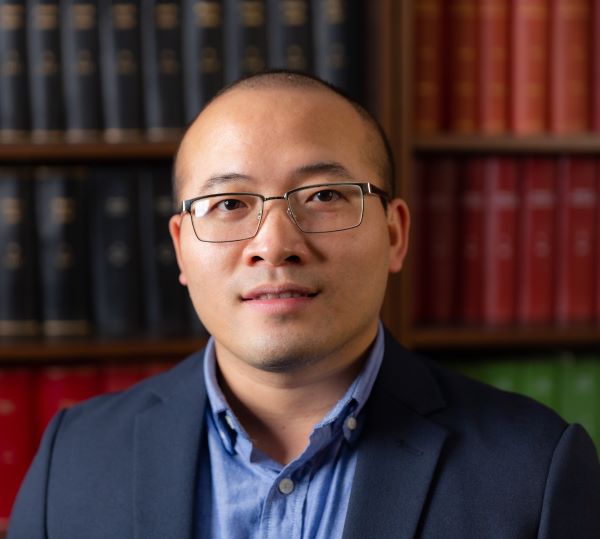
Guoming Li is an Assistant Professor in the Department of Poultry Science at the University of Georgia's College of Agricultural & Environmental Sciences . His research integrates digital technologies, data analytics, and automation to advance poultry production systems. Education: Ph.D., Mississippi State University M.S. & B.S., China Agricultural University Postdoctoral Training, Iowa State University Dr. Li's work focuses on precision livestock farming , computer vision , and applied artificial intelligence for automated behavior monitoring, environmental control, and welfare assessment. His recent studies explore robotics, digital phenotyping, and 3D reconstruction. Scientific Awards : 2022 Editor’s Choice Article (MDPI Sensors) 2022 ASABE Outstanding Reviewer Award 2021 ASABE Boyd-Scott First-Place Award 2020 AOC Graduate Scholarly Achievement Award 2019 International Symposium on Animal Environment and Welfare Best Paper/Presentation He contributes to open-source tools like AnimalAccML for behavior analytics and has developed robotic systems for poultry management. His projects emphasize cross-disciplinary collaboration with institutions across the U.S. and China.
Vijaykrishnan Narayanan is a Distinguished Professor in the Department of Computer Science and Engineering at Pennsylvania State University . His research focuses on ferroelectric memory systems , energy-efficient computing , and neuromorphic engineering , with applications in deep learning , edge computing , and secure hardware design . He leads projects such as EFRI BRAID (Neuroscience-Inspired Visual Analytics) and FuSe-TG (Heterogeneous Ferroelectronics for Big Data Analytics). Research Interests Compute-in-Memory (CIM) architectures Ferroelectric Field-effect Transistors (FeFETs) Low-power VLSI design Hardware security mechanisms Scientific Contributions Over 707 research outputs and 26 grants Key contributor to UN Sustainable Development Goals via energy-efficient computing NSF grants for projects like Ferro-CoDE (combinatorial optimization) and INSECT NET (entomology-computer science collaborations)
Professor Ruth Oulton is a Professor of Quantum Photonics at the University of Bristol , affiliated with the School of Physics and School of Electrical, Electronic and Mechanical Engineering . Her research focuses on solid-state quantum emitters interacting with light for quantum technology applications. Grants: Principal Investigator for EPSRC Quantum Technologies Fellow (EP/N003381/1), EPSRC Standard Grant (EP/M024156/1), and PI of EU FP7 FET grant (SPANGL4Q). Research Themes: Quantum Engineering Technology Labs (QETLabs), Photonics and Quantum Technologies, Bristol Quantum Information Institute. Scientific Awards: Alexander von Humboldt Fellowship, EPSRC Career Acceleration Fellowship, and EPSRC Research Leaders Award (New Directions). Labs/Teams: Quantum Engineering Technology Labs (QET Labs) at the University of Bristol.
Dr. Richard Leibbrandt is a Lecturer at Flinders University's College of Science and Engineering, with full membership in the Medical Device Research Institute and associate membership in the Flinders Digital Health Research Centre. He holds a PhD from Flinders (2009) focused on computational models of language acquisition in children. His interdisciplinary background bridges psychology and computer science. Research Interests: Leibbrandt specializes in cognitive science, human-machine language learning, and human-centered computing systems. His work spans virtual agents, digital health applications, neural behavior modeling, and AI-driven diagnostic tools. Key domains include: Machine learning in healthcare (e.g., PCR optimization, mental health sensing) Virtual reality systems for behavioral research Social determinants of health analytics Computational neuroscience (neural coding, insect pursuit dynamics) Research Output Trends: Recent publications (2020-2025) demonstrate strong emphasis on AI/ML applications in biomedicine, including smart diagnostic devices, virtual reality behavioral platforms, and computational neuroscience. Health technology innovation is a consistent theme, with 30% of works involving clinical translation studies. Projects & Supervision: Active in ARC/NHMRC initiatives including 'From Talking Heads to Thinking Heads' and neuroimaging projects. Supervised 2 AI-focused students. Secured grants for virtual patient training systems in clinical education. Affiliations: Contributes to UN Sustainable Development Goals through digital health research. Associated labs include the Medical Device Research Institute (full member) and Flinders Digital Health Research Centre (associate member).
Felix Kong is a Lecturer at the University of Technology Sydney, Faculty of Engineering and Information Technology. He specializes in control engineering, robotics, and mechatronic systems with a focus on maritime navigation and bio-inspired locomotion. Current affiliation : University of Technology Sydney (Lecturer since 2022) Previous role : Postdoctoral Research Fellow at University of Technology Sydney (2019-2022) Education : PhD from University of Sydney His research spans multiple domains: Maritime robotics : Stochastic ship routing, ocean current estimation, visibility graph optimization Dynamic locomotion : Gait analysis in parrots, bio-inspired vertical climbing robots Control theory : Iterative learning control, contraction analysis, SLAM optimality prediction Recent publications demonstrate a strong trend toward autonomous navigation systems that integrate: Stochastic weather modeling for ship routing 3D ocean flow estimation for underwater gliders Neural network-based SLAM analysis Multi-agent planning frameworks He has received funding from: Australia's Economic Accelerator Innovate Grant (2025-2027) UTS ECR Research Capabilities Initiative (2021-2022) Teaching contributions include course development and instruction for 41099 Fundamentals of Mechatronic Engineering . Peer-review activities extend to major robotics conferences and journals.
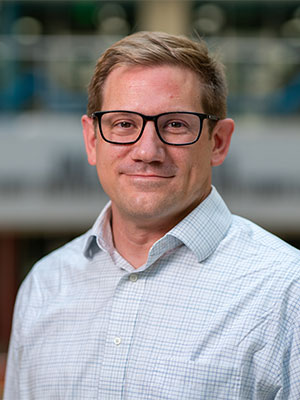
Patrick Shamberger is an Associate Professor and Director of Undergraduate Programs in the Department of Materials Science & Engineering at Texas A&M University's College of Engineering, where he leads the PHATE Research Group. His research focuses on phase transformations, nucleation phenomena, and engineered materials for energy and information technologies. Key application areas include thermal energy storage systems, neuromorphic materials, caloric effect cycles, and transient thermal management solutions. His educational background includes a Ph.D. in Materials Science and Engineering from the University of Washington (2010), an M.S. in Geology and Geophysics from the University of Hawaii (2004), and a B.S.E. in Civil and Environmental Engineering from Princeton University (2002). Research spans fundamental studies of phase transitions to applied thermal management systems, with recent work emphasizing hybrid composites for energy storage, neuromorphic computing materials, and dynamic thermal regulation. Publications demonstrate strong focus on material design strategies combining experimental characterization with theoretical modeling. Honors include the 2023 College of Engineering Excellence Faculty Award, 2019 NSF CAREER Award for nucleation research in martensitic transformations, and multiple teaching excellence recognitions. Current projects involve NASA-funded space cooling materials and ARL-collaborated neuromorphic systems.