Jenny Y. Yang is a Professor in the Department of Chemistry at the University of California, Irvine. Her research focuses on the development of inorganic electrocatalysts for chemical fuel generation and utilization, emphasizing bio-inspired secondary coordination sphere effects and thermochemical property optimization. Institution: University of California, Irvine Department: Chemistry Research Interests: Oxygen activation mechanisms Hydrogen production and oxidation Carbon dioxide reduction for fuel synthesis Thermochemical property effects on catalysis Secondary coordination sphere engineering Electrochemical carbon capture systems Scientific Trends: Recent work spans from 2023–2025, covering CO2-to-methane conversion, quantum dot hybrid systems for hydrogen evolution, and computational approaches to CO2 capture agent design. Articles highlight interdisciplinary methods combining inorganic chemistry, electrochemistry, and sustainability-focused engineering. Contact: Office: 4080 ISEB | Phone: 949-824-1533 | Email: j.yang@uci.edu
Professor George Britovsek (FRSC) is a leading figure in catalysis and sustainable carbon management at Imperial College London . As Director of the MRes in Catalysis & Engineering and Head of Teaching in Inorganic Chemistry, he bridges academic leadership with cutting-edge research. His work focuses on transition metal complexes for converting ethylene , alkanes , biomass , and CO₂ into valuable chemicals and fuels through industrial collaborations. Education : M.Sc. (Technical University of Aachen, 1990), Ph.D. (Aachen, 1993) under Prof. W. Keim Postdoctoral Training : University of Tasmania (1994-1996), Imperial College London (1996-2000) His research interests span: Selective oxidation of alkanes using bio-inspired iron complexes Alkene conversions to functional polymers via novel catalysts CO₂ valorization into polymers and cyclic carbonates Biomass-derived feedstocks for chemical synthesis Recent catalysis trends highlight his work on: Designing Fe-N/C catalysts for epoxidation Developing PN3P pincer ligands for H₂ activation Creating degradable polyethylene via iron-catalyzed chain growth Modeling alternating α-olefin distributions in chromium systems Awards : Fellow of the Royal Society of Chemistry (FRSC) Students & Collaborators actively engage in: Photocatalytic polymer degradation Electrocatalytic CO₂ conversion Functionalized polymeric materials 3D-printed catalytic scaffolds His Britovsek Research Group operates at the Molecular Sciences Research Hub, White City Campus, advancing both homogeneous and heterogeneous catalysis through experimental and computational approaches.
Professor Guoxiu Wang is a Distinguished Professor and Industry Laureate Fellow at the University of Technology Sydney (UTS), leading the Centre for Clean Energy Technology. His expertise spans battery technologies, materials chemistry, and electrochemistry, with a focus on lithium-ion, sodium-ion, and other advanced energy storage systems. He holds prestigious fellowships, including from the Royal Society of Chemistry and the European Academy of Sciences. His research has been recognized through numerous awards, including being listed as a Highly Cited Researcher since 2018. Research Interests: Professor Wang’s work addresses challenges in energy storage through innovative materials design, including electrode materials for sodium-ion and lithium-sulfur batteries, MXenes, and electrolyte development. His team explores strategies to enhance battery performance, such as heterostructure engineering and defect-rich catalysts. Publications & Impact: With over 750 refereed papers, including in Nature Energy , Advanced Materials , and Angewandte Chemie , his work has garnered >78,000 citations (H-index 153/165). Recent trends focus on sodium-ion battery materials, MXene-based capacitors, and sustainable energy solutions like osmotic energy harvesting. Awards & Leadership: Awards include Fellowships from the Royal Society of Chemistry (2017), International Society of Electrochemistry (2018), and European Academy of Sciences (2020). He serves as an Associate Editor for Energy Storage Materials and Electrochemical Energy Reviews , and leads international collaborations, including a Royal Society Wolfson Visiting Fellowship at the University of Manchester (2024–2026). Grants & Supervision: Secured significant external grants, with active supervision of PhD/Masters students in battery technologies. His labs prioritize sustainable energy solutions and advanced material synthesis. Labs & Teams: Directs the Centre for Clean Energy Technology, fostering interdisciplinary research to advance clean energy technologies, from novel battery designs to electrochemical catalysts for CO2 and nitrate conversion.
Professor Bing-Jie (Bruce) Ni is an Adjunct Professor at the University of Technology Sydney (UTS) within the School of Civil and Environmental Engineering and a full Professor at UNSW Sydney. He is an internationally recognised leader in environmental engineering, wastewater treatment, greenhouse-gas mitigation, microplastics fate, electrocatalysis and sustainable energy systems. Education PhD in Environmental Engineering, University of Science and Technology of China, Hefei (2005–2009) Research Interests Professor Ni’s research integrates process engineering, microbial biotechnology, materials science and mathematical modelling to develop sustainable technologies for high-efficiency pollutant removal, minimal carbon footprint and maximal energy recovery from wastewater. He is a global pioneer in: Modelling and control of nitrous oxide (N₂O) and methane (CH₄) emissions from wastewater systems, Micro- and nano-plastics ecotoxicity and mitigation in anaerobic digestion, Transforming sewage sludge into high-value liquid bio-energy (medium-chain fatty acids and long-chain alcohols), Designing cost-effective electrocatalysts from natural minerals for green hydrogen production and wastewater electrolysis. Research Output & Impact Over the last decade he has published 2 research books, 30 book chapters and >400 refereed journal papers , including 35 in Environmental Science & Technology and 85 in Water Research . His work has influenced global policy: the IPCC adopted his nitrous-oxide-emission model in 2019 to revise national greenhouse-gas inventories for the first time in 13 years. Awards & Recognition ARC Future Fellowship & ARC DECRA Fellowship Clarivate Analytics Highly Cited Researcher (Web of Science) Royal Society of Chemistry Highly Cited Researcher (2020–present) Mendeley Data Top 2 % Cited Researchers worldwide Listed among “Australia’s Most Innovative Engineers” (Engineers Australia, 2018) 50+ additional awards including Scopus Young Researcher Award, South Australian Water Awards, UQ Research Excellence Awards, and Outstanding Doctoral Dissertation Awards. Research Funding & Leadership He has secured ≈ AUD $10 million in competitive funding (six major ARC grants plus >20 government, university and industry projects). He serves as: Lead Guest Editor, Water Research Editorial Advisory Board, Environmental Science & Technology Associate Editor for Journal of Cleaner Production , Environmental Chemistry Letters , Environmental Research , Journal of Environmental Management Editorial Board member for five additional high-impact journals. Teaching & Supervision At UTS he teaches Renewable Energy Technologies , Environmental and Sanitation Engineering , Process Dynamics and Control , and Water and Wastewater Treatment . He is available to supervise Masters and PhD students in environmental biotechnology, process modelling and sustainable energy systems. Laboratory & Commercial Translation He heads active research teams at both UNSW and UTS and is the inventor of >10 granted patents , some of which are currently being commercialised to deliver real-world impacts in greenhouse-gas-neutral wastewater treatment and renewable energy production.
Julien Warnan is a researcher at the Catalysis Research Center (CRC) of the Technical University of Munich (TUM). He leads a multidisciplinary research group focusing on renewable energy, particularly artificial photosynthesis and photocatalytic systems for fuel production. His work emphasizes molecular dyes, catalysts, polymers, and hybrid materials to transform CO2 and water into value-added chemicals. He holds the title of Researcher and is actively involved in academic leadership, including co-editing special issues and organizing international conferences like the ECAT conference. His research has been recognized with awards such as the TUM Chemistry Supervisory Award 2021. Recent activities include visiting scientist roles at Imperial College London and collaborations with groups at TUM and other institutions. Research interests encompass MOF-based photocatalysis, biohybrid systems, and sustainable energy conversion. Key achievements include pioneering studies on metal-organic frameworks for CO2 reduction and solar fuel production. His team has published extensively in high-impact journals like Angewandte Chemie and Advanced Materials , with a focus on functional hybrid materials and electrochemical systems. PhD supervision: Nadine Schmaus, Philip Stanley, Johanna Eichhorn, and others Notable collaborations: Shustova Lab, Rieger Group, Fischer Group Labs: Catalysis Research Center (CRC)
Dr. Andrea S. Carlini is an Assistant Professor of Materials in the Department of Chemistry & Biochemistry at the University of California, Santa Barbara (UCSB). Her research focuses on structurally dynamic biomaterials and devices, aiming to bridge biochemical signals with soft materials for smart biomedical applications. She holds a PhD from UC San Diego and completed a postdoc at Northwestern University’s Querrey Simpson Institute for Bioelectronics. B.S. in Chemistry & Biological Sciences (Virginia Tech, 2012) M.S. in Chemistry & Biochemistry (UC San Diego, 2014) Ph.D. in Chemistry & Biochemistry (UC San Diego, 2018) Her research is organized into three core areas: (1) stimuli-responsive materials for disease monitoring, (2) 4D shape-changing peptides/polymers, and (3) soft wearable devices for quantitative health feedback. Recent work includes thermal sensors for vascular access and enzyme-responsive biomaterials for tissue engineering. Published articles span bio-electrochemical systems, wearable sensors, and smart hydrogels. Her NSF GRFP Fellowship supported early work on myocardial tissue engineering. The Carlini Group collaborates broadly across UCSB’s interdisciplinary environment. Labs/Teams: Carlini Group (UCSB) Focus: Bioelectronics, biomedical devices, and dynamic materials
Plamen Atanassov is a Chancellor’s Professor in the Department of Chemical and Biomolecular Engineering with a joint appointment in Materials Science and Engineering at the Samueli School of Engineering, University of California, Irvine . His work focuses on developing advanced electrocatalysts for energy conversion and storage systems. Department: Chemical and Biomolecular Engineering, Materials Science and Engineering Academic Rank: Professor (Chancellor’s Professor honorific) Research Themes: Electrocatalysis, Bio-electrocatalysis, Fuel Cells, Energy Harvesting Research Interests: Prof. Atanassov specializes in non-platinum and platinum-based electrocatalysts for fuel cells, bio-inspired energy systems , and carbon dioxide valorization technologies . His group has pioneered: Atomically dispersed metal-nitrogen-carbon catalysts Novel synthesis methods for durable electrocatalysts Machine learning-guided fuel cell optimization Electrochemical ammonia and urea production Hydrogen evolution reaction with non-precious metals Scientific Contributions: With over 380 peer-reviewed papers (101 h-index), 50 issued US patents , and 35+ PhD students advised , his work bridges fundamental electrochemistry and industrial-scale energy solutions. Recent publications emphasize catalyst durability under realistic conditions, CO2 reduction, and sustainable manufacturing practices.
Yu Xia is a Post Doc at the Department of Chemistry, Stockholm University, Sweden. He is affiliated with the Tom Willhammar Research Group, focusing on advanced electron microscopy and diffraction techniques for structural characterization of materials. PhD (2019–2023) from a joint program between the University of Birmingham (UK) and the Southern University of Science and Technology (China). Research emphasizes fabrication of metallic nanoparticles with non-equilibrium structures and shapes using gas-phase condensation and thermal shock methods. Specializes in scanning transmission electron microscopy (STEM), in-situ heating experiments, and electron energy loss spectroscopy (EELS) for nanoparticle analysis. Current work prioritizes 4DSTEM imaging for electron beam-sensitive materials and Python-based post-processing of electron microscopy datasets. Yu Xia's research spans Materials Science , Nanotechnology , and Electrocatalysis , with applications in photocatalytic hydrogen evolution , graphene composites , and advanced electron microscopy techniques . His work often integrates computational image processing with structural characterization to optimize material properties. Publications highlight innovations in heterostructure engineering , metallic alloy catalysts , and electron beam-sensitive material imaging . No scientific awards are explicitly mentioned in the provided text. Yu Xia's technical expertise includes Python scripting for image analysis, in-situ electron microscopy , and multifunctional graphene-based materials .
Unni Olsbye is a Professor in the Department of Chemistry at the University of Oslo, Faculty of Mathematics and Natural Sciences. Her research focuses on catalytic processes in micro- and nanoporous materials, with particular emphasis on structure-composition-function correlations in catalytic reactions and mechanistic studies of product formation. She is affiliated with several research groups including the Catalysis Section, SMN (Center for Materials Science and Nanotechnology), ProfMOF A/S, and iCSI (industrial Catalysis, Science and Technology). Professor Olsbye's research interests center on heterogeneous catalysis, particularly examining how the chemical composition of catalytic sites, their immediate environment, and steric factors influence reaction rates and selectivity in porous materials. Her work spans zeolites, zeotypes, and metal-organic frameworks (MOFs) for applications in CO 2 conversion, methane activation, methanol-to-hydrocarbons processes, and light alkane dehydrogenation. She investigates confinement effects in micro- and nanoporous materials, with processes studied including C-H activation, C-O activation, methane partial oxidation to methanol and syngas, methyl halide conversion, and ethene oxychlorination. Analysis of her recent publications reveals a strong focus on energy-related catalysis for sustainability, particularly CO 2 conversion to fuels and chemicals, methane activation to methanol, and olefin production. Her work frequently employs copper-based catalysts in zeolites and MOFs, with increasing attention to bio-inspired catalytic systems. The research combines experimental approaches with advanced characterization techniques to understand reaction mechanisms at the molecular level. Professor Olsbye leads or participates in several significant research projects including BIZEOLCAT (bifunctional catalysts for alkane activation), CCU-NET (Nordic mobility network), CO 2 LO (CO 2 hydrogenation, TRL1-3), COZMOS (CO 2 hydrogenation, TRL3-5), CUBE (C-H activation, ERC Synergy), and ProfMOF (MOF scale-up and testing). These projects address critical challenges in catalysis for sustainable energy and chemical production. Her laboratory work focuses on advanced characterization of catalytic materials, particularly using in situ and operando techniques to monitor reactions as they occur. The research group collaborates extensively with experts in organic and inorganic synthesis, advanced spectroscopy, and theoretical calculations to develop a comprehensive understanding of catalytic processes in confined environments.
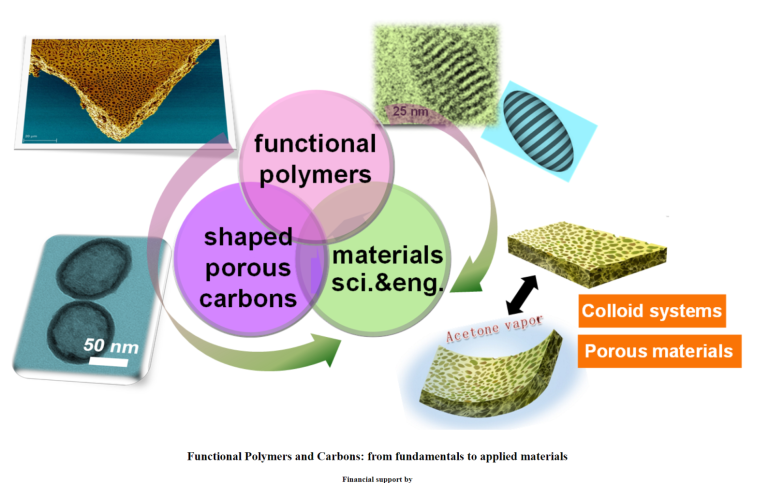
Jiayin Yuan is a Professor of Materials Chemistry at Stockholm University, Department of Chemistry. He leads the Jiayin Yuan Research Group, focusing on functional polymers and carbons for environmental and energy applications. His work emphasizes sustainable materials, including porous polymers, carbon membranes, and energy storage systems. He holds an ERC Consolidator Grant (2022) and previously an ERC Starting Grant (2014), and directs the Stockholm Material Hub. His research spans CO2 capture, catalysis, and nanomaterials for renewable energy. He has held academic positions at Clarkson University (USA) and the Max Planck Institute (Germany), with a PhD from Germany (2009). Education: Bachelor's in Chemistry, Shanghai Jiao Tong University (2002) Master's in Chemistry, Germany (2004) PhD in Chemistry, Germany (2009) Research Interests: Synthesis of functional polymers, carbon materials, and their applications in environmental sustainability and energy. Current projects include CO2 capture via porous liquids, biomass-derived fertilizers, and bijel membranes for energy storage. Grants & Awards: ERC Consolidator Grant (2022) ERC Starting Grant (2014) Wallenberg Academy Fellow (2018) Advising & Labs: Supervises multiple PhD students and postdocs. His group collaborates on advanced materials for energy and environmental challenges. The Stockholm Material Hub (stockholmmaterial.com) fosters interdisciplinary research in materials science.
Professor Jun Huang is a faculty member in the School of Chemical and Biomolecular Engineering at the University of Sydney, where he holds the rank of Professor and is Director of the Laboratory for Catalysis Engineering. He is also a Domain Leader for Materials at the nanoscale at Sydney Nano Institute and a member of several interdisciplinary institutes, including the China Studies Centre and Sydney Institute of Agriculture. His research focuses on catalysis engineering, with an emphasis on developing sustainable processes for renewable fuels, pollutant treatment, and greenhouse gas mitigation. Huang has held prestigious awards such as the Australia Research Council Future Fellowship (2022) and the Sydney Accelerator Fellowship (2018). Education: Huang earned his PhD from the University of Stuttgart (2008) and completed postdoctoral research at Georgia Institute of Technology and ETH Zurich. He joined the University of Sydney in 2010 as a Lecturer, advancing to Senior Lecturer, Associate Professor, and Professor. Research Interests: Huang's work centers on catalyst design for green chemical processes, including biomass conversion to biofuels, wastewater treatment, and CO2 utilization. He emphasizes sustainable manufacturing and environmental impact reduction through innovative catalytic systems. Current Projects: These include catalytic transformation of hydrocarbons/CO2/biomass, nano-catalysts for renewable energy, and advanced NMR spectroscopy for catalysis analysis. Collaborative projects involve anti-cancer therapies and drug pharmacology studies. Awards: Over 15 awards, including the 2021 ACS Sustainable Chemistry & Engineering Lectureship and 2017 Vice-Chancellor’s Research Excellence Award. Teaching: Huang instructs courses such as CHNG2801 (Conservation Processes), CHNG3802 (Industrial Systems), and advanced chemical engineering topics. He supervises PhD/Master students in catalysis and sustainable engineering. Labs/Teams: Leads the Catalysis Engineering Lab and collaborates with Sydney Nano Institute on nanomaterials research.
Marika Kokko is a Professor of Bio- and Circular Economy at the University of Tampere, affiliated with the Faculty of Engineering and Natural Sciences and the Department of Materials Science and Environmental Engineering. Her research focuses on sustainable solutions for carbon dioxide utilization, nutrient recovery, and bioelectrochemical systems. She leads projects such as isoSUS (developing short-chain fatty acid conversion) and BioNH4 (recovering ammonium nitrogen from wastewater). Education: Doctor of Science (Technology), Tampere University of Technology (2013) Postdoctoral Researcher, University of Freiburg, Germany (2014–2016) Tenure-track career progression at Tampere University since 2016 Research Interests: CO₂ conversion via microbial electrosynthesis and bioelectrochemical processes Electrochemical nitrogen recovery from wastewater Microplastic analysis in environmental matrices Bioremediation of industrial waste streams Grants & Collaborations: Funded by Business Finland, Ministry of the Environment, and international consortia Active in interdisciplinary projects like CICAT2025 and UPCE Labs/Teams: Her research group investigates bioelectrochemical systems, microbial communities, and circular economy innovations. They collaborate with industry partners to scale sustainable technologies.
Dr. Kang Liang is a Scientia Associate Professor at the University of New South Wales (UNSW Sydney), specifically within the School of Chemical Engineering. He leads the Nano-Micro-Bio Systems research group and serves as Co-Chair of the Australian Synchrotron Program Advisory Committee for SAXS/WAXS and BioSAXS. His research focuses on the intersection of nanotechnology, biocatalysis, and materials science, with particular expertise in metal-organic frameworks and their applications in biomedical and environmental contexts. Dr. Liang's research interests center around interfacial engineering of nanostructured materials, NanoBionics, biomimetics and biomineralization, and smart nano-micro-bio systems. His work explores how nanomaterials can interface with biological systems to create innovative solutions for healthcare, environmental monitoring, and energy applications. He has made significant contributions to the field of biocatalytic metal-organic frameworks, demonstrating their potential in drug delivery, cytoprotection, and cell manipulation. His publication record shows a strong focus on developing advanced nanomaterials with applications spanning from environmental remediation (water purification, contaminant removal) to biomedical applications (drug delivery, biosensing, cancer treatment). The trends in his recent publications indicate increasing sophistication in the design of nanomotors and nanoswimmers, with growing emphasis on precision targeting, multi-functionality, and integration with biological systems. Victoria Fellowship in Physical Sciences (2017) Fellow of the Australian Royal Chemical Institute (FRACI) Fellow of the Royal Society of Chemistry (FRSC, UK) NHMRC Career Development Fellow (2019-2022) ARC Future Fellow (2023-2027) Dr. Liang actively mentors PhD and MPhil students through his research group and encourages highly motivated candidates to join his team. His research is supported by significant funding including his current ARC Future Fellowship (2023-2027). His work bridges chemical engineering, materials science, and biomedical applications, creating a unique interdisciplinary approach to solving complex problems in healthcare and environmental sustainability. His laboratory focuses on developing innovative nanomaterial platforms that interface with biological systems, with particular emphasis on creating responsive and adaptive systems that can perform specific functions when triggered by environmental conditions. The group's work represents a cutting-edge intersection of nanotechnology, bioengineering, and materials science.
Jingyi Chen is a Professor in the Department of Chemistry and Biochemistry at the University of Arkansas. She serves as Vice Chair in the College of Arts & Sciences and leads the Chen Research Group focused on rational design and synthesis of functional nanomaterials for energy conversion and human-health applications. PhD, Chemistry & Nanotechnology – University of Washington (2006) MA, Chemistry – State University of New York College at Buffalo (2002) BS, Chemistry – Sun Yat-sen University (1997) Her research spans three major projects: Project I: Developing cost-effective catalysts for fuel cell applications through precise synthesis of copper-based bimetallic nanocrystals. Project II: Surface modification of nanoparticles with polydopamine for bio-related applications like low-friction coatings. Project III: Creating nanoplatforms for targeted drug delivery against antibiotic-resistant infections and cancer. Recent publications focus on nickel phosphide nanoparticles (2024), perovskite oxide oxygen evolution catalysts (2023-2024), and silver nanoparticle antimicrobial mechanisms (2020-2023). Her group has produced 15+ recent publications in journals like ACS Nano , J. Phys. Chem. C , and ACS Infectious Diseases . Award highlights include: Thomson Reuters Top 1% Highly Cited Researcher (2015-2018) Arkansas Research Alliance Fellow (2018) Women’s Giving Circle Award (2014) Ralph E. Powe Junior Faculty Enhancement Award (2011) She has mentored over 20 graduate and undergraduate students , including Ryan Manso (PhD 2022), Isabelle Niyonshuti (PhD 2021), and David Thompson (DOE SCGSR awardee 2022). Her lab (CHBC 304/306/309) employs advanced tools like synthesis setups , electrochemical stations , and laser irradiation systems .
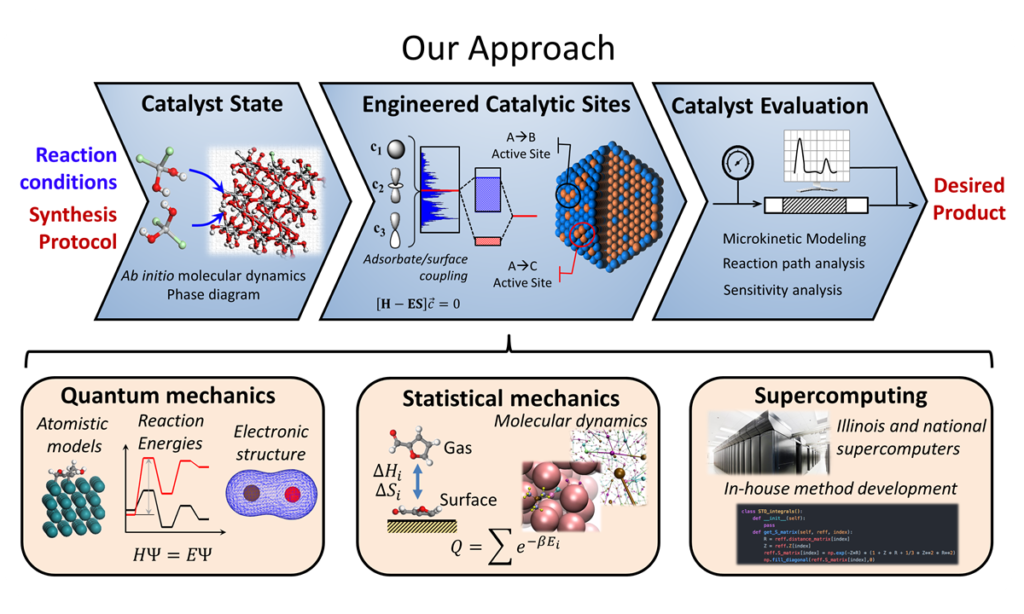
Dr. Alex Mironenko is an Assistant Professor in the Department of Chemical and Biomolecular Engineering at the University of Illinois at Urbana-Champaign. His research focuses on developing quantum mechanical methods to predict catalytic behaviors for renewable energy and chemical production. He leads the Mironenko Lab, which emphasizes computational models for heterogeneous catalysis, reactive force fields, and nanozyme design. Education: PhD in Chemical Engineering, University of Delaware (2018) Kadanoff-Rice Postdoctoral Scholar, University of Chicago (2018-2020) MS in Chemical Engineering, University of Kansas (2012) Diploma of Engineer, Omsk F.M. Dostoevsky State University, Russia (2009) Research Interests: Computational heterogeneous catalysis Reactive force fields derived from first principles Low-dimensional metal oxide catalysts Nanozymes and biomimetic catalysis Selective C-C coupling for CO₂ valorization Improving density functional theory accuracy Awards: ACS Petroleum Research Fund Doctoral Investigator Award (2021) Allan P. Colburn Outstanding Dissertation Prize (2019) Kadanoff-Rice Postdoctoral Fellowship (2018-2020) Advising and Grants: Advised PhD student Neil Tran (publication on methanol carbonylation mechanisms) Funded by NSF, ACS, and industry partnerships Labs/Teams: Mironenko Virtual Catalysis and Quantum Chemistry Lab Collaborations with institutions like University of Chicago and industry partners