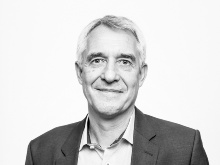
Dr Sanjeev Gambhir is a Senior Research Fellow at the Intelligent Polymer Research Institute, University of Wollongong. With over 30 years of experience in chemistry, he leads bioinks synthesis and scale-up activities at TRICEP (Translational Research Initiative for Cellular Engineering and Printing) facility. His work bridges academic research with commercial translation, particularly in 3D bioprinting of living tissues. B.Sc. and M.Sc. in Organic Chemistry from Garhwal University Ph.D. in Organic Chemistry from Indian Institute of Petroleum Research focuses on 3D bioprinting technologies, graphene composites, conducting polymers, and hydrogel engineering. Key challenges addressed include biomaterial diversity limitations, bioprinted construct characterisation, and scalable bioink formulation. His work spans tissue engineering, regenerative medicine, and industrial applications. Major publications appear in Nature Communications , Journal of the American Chemical Society , and Advanced Materials . With 60+ peer-reviewed papers and an H-index of 28, his research on graphene composites and conducting hydrogels has significant citations in biomedical and materials science domains. Frater Award (Australian National Fabrication Facility, 2013) Active in mentoring junior staff and students, Gambhir collaborates with Inventia Life Science Pty Ltd and Professor Fiona Wood at the University of Western Australia. Current funding includes MRFF grants for intraoperative skin regeneration systems and translational projects through University of Wollongong infrastructure grants.
Professor Daniel Cha holds a faculty position in the Department of Civil and Environmental Engineering at the University of Delaware. He earned his Ph.D. from the University of California, Berkeley, followed by a Master's from the University of British Columbia and a Bachelor's from McGill University. His academic and industrial career spans over three decades with expertise in environmental biological processes, microbial community dynamics, and sustainable waste management solutions. Dr. Cha has worked as a consulting engineer and held roles at the Sacramento Regional Wastewater Treatment Plant. His research focuses on microbial-driven systems, including energy/fertilizer recovery from food waste, biocomposite material synthesis from wastewater microorganisms, and genomic analysis of mixed culture microbial communities. Key areas also include zerovalent iron-based water treatment technologies, sulfate reduction for acid mine drainage mitigation, and innovative fecal sludge management systems in urban contexts. Notable projects include field demonstrations of breathable membrane toilets in India and pilot-scale bioretention systems integrating biochar. His work bridges environmental chemistry with engineering solutions, addressing contaminants like perchlorate, energetic compounds, and heavy metals in industrial wastewater. Publications span advanced oxidation processes, microbial ecology, and novel membrane technologies. While no formal awards are listed, his extensive patent portfolio includes systems for treating energetic compound wastewaters and biodegradation enhancement methods. His lab collaborates on projects involving both academic and industrial partners, emphasizing scalable environmental engineering solutions.
Dr. Gözde Damla Turhan is a Researcher at the Department of Architecture within the Faculty of Fine Arts and Design at İzmir University of Economics, a position she has held since September 2017. She holds a B.Sc. in Architecture from İzmir Ekonomi Üniversitesi (2014), followed by dual Master's degrees: M.Arch in Advanced Architectural Design (2016) and M.Sc. in Architecture (2016). Her Ph.D. in Design Studies (2022) focused on biobased materials, computational design, and digital fabrication. Current research interests include AI applications in design (machine learning, diffusion models, LLMs), and sustainable material innovation. Her work bridges architecture and computational technologies, emphasizing bio-based materials (e.g., bacterial cellulose), digital fabrication methods, and AI-driven design processes. She has explored topics like urban rehabilitation via GANs, NFT art hybrid experiences, and life cycle assessments of unconventional construction materials. Publications (2016–2023) span computational form-finding, material science, and digital tools in architecture. She actively contributes to design pedagogy, investigating how AI tools like diffusion models can reshape educational frameworks.
Prof. Dr.-Ing. Katharina Schmitz serves as Institute Director and Vice Dean at the Institute for Fluid Power Drives and Systems, RWTH Aachen University. Her leadership within the Production Technology Cluster and extensive contributions to fluid power engineering establish her as a leading authority in mechanical engineering research and education. Her research spans fluid power systems, hydraulic component design, tribology, and physics-informed machine learning applications. She pioneers sustainable propulsion solutions through bio-hybrid fuels research while addressing fundamental challenges in polymer material behavior under hydraulic stresses. Current work focuses on carbon-neutral heavy-duty transportation, physics-based neural networks for lubrication modeling, and advanced control systems for electro-hydraulic actuators. Analysis of her 15 most recent publications reveals a dominant trend toward integrating physics-based modeling with deep learning to solve complex engineering problems. Her team consistently develops novel frameworks for cavitation prediction, flow rate determination, and material compatibility assessment - significantly advancing fluid power system reliability, efficiency, and digitalization. Scientific recognition includes: GfT Förderpreis 2023 for experimental and simulative investigation of partially hydrostatic relieved contacts in variable speed axial piston machines As head of the Institute for Fluid Power Drives and Systems, she leads cutting-edge research in sustainable fluid power technologies. The institute maintains strong industry partnerships while driving innovation in hydraulic component design, digital twins for condition monitoring, and next-generation propulsion systems through its position within RWTH Aachen's Production Technology Cluster.
Dr. Srikanthan Ramesh serves as an Assistant Professor in the School of Industrial Engineering and Management within Oklahoma State University's College of Engineering, Architecture and Technology. Since establishing the Advanced Materials and Additive Manufacturing Laboratory in August 2022, he has led interdisciplinary research at the intersection of materials science, physical phenomena, and advanced manufacturing technologies, with applications spanning healthcare, aerospace, and electronics sectors. His educational foundation includes a Ph.D. in Mechanical and Industrial Engineering from Rochester Institute of Technology (2022) and an M.S. in Industrial and Manufacturing Systems Engineering from Iowa State University (2017). This academic background enables his innovative approach to manufacturing science. Dr. Ramesh's research program focuses on biological and micro-scale additive manufacturing (bio-AM), specializing in biomaterial development for tissue engineering and regenerative medicine. His work integrates computational fluid dynamics, machine learning, and real-time process monitoring to achieve precise control over mechanical, biological, and electrical properties of manufactured structures. He develops experimental tools and process frameworks for droplet-based and extrusion-based AM systems, with particular emphasis on wound healing applications and space-compatible microelectronics. Analysis of his 14 publications from 2020-2025 reveals a strong trajectory toward AI-driven manufacturing solutions, with increasing emphasis on multi-objective Bayesian optimization for bioink design, aerosol jet printing process refinement, and bioprinted tissue construct development. His recent work demonstrates sophisticated integration of machine learning with physical manufacturing processes to solve complex biomedical challenges. His scientific recognition includes: Doctoral Dissertation Pitch Competition (Runner-up), IISE, 2021 Best Oral Presentation, Graduate Showcase, Rochester Institute of Technology, 2019 Gilbreth Memorial Fellowship, IISE, 2018-2019 Wakonse College Teaching Fellowship, Iowa State University, 2018-2019 Graduate Research Excellence Award, Iowa State University, 2017 Best Overall Oral Presentation, Nano@IAstate, Iowa State University, 2017 Dr. Ramesh currently leads significant research initiatives including as Principal Investigator for an NSF REU Site on Additive Manufacturing and Cybersecurity ($464,606, 2025-2028) and a NASA EPSCoR Travel Grant for aerosol jet printing in space missions (2024-2025). As Co-PI on an NSF grant for Privacy-aware Collaborative Design in additive biofabrication ($599,981, 2025-2028), he develops frameworks for mass personalization in medical applications while addressing data security challenges. These projects support his lab's mission to advance manufacturing science through rigorous experimentation and computational innovation. The Advanced Materials and Additive Manufacturing Laboratory operates as a collaborative hub where Dr. Ramesh directs research teams in developing novel biomaterials, optimizing printing processes, and creating functional prototypes for wound dressings, liver tissue models, and space-rated microelectronics. The lab's interdisciplinary approach combines expertise in materials characterization, computational modeling, and machine learning to push the boundaries of what's possible in additive manufacturing for critical applications.
Associate Professor Joe Gattas is affiliated with the University of Queensland's School of Civil Engineering , where he leads the Folded Structures research group. His work bridges origami-inspired engineering , computational building design , and advanced manufacturing , with a focus on lightweight/modular structures and timber engineering . Education: BEng (2009) and PhD (2013) from the University of Queensland and University of Oxford, respectively. Research interests emphasize digital fabrication , hybrid materials , and structural innovation . His recent publications highlight trends in timber-CFRP composites , self-shaping structures , and value chain optimization for sustainable timber use. Scientific awards include the prestigious John Monash Scholarship . He actively supervises PhD and Master’s students in projects related to timber composites , structural optimization , and low-cost housing . Joe contributes to ARC Research Hub initiatives , co-leading Manufacturing Innovation and Value Chain Innovation nodes, and develops open-source tools like TimberTracker to visualize timber supply-demand dynamics.
Brenda Parker serves as Associate Professor in the Department of Biochemical Engineering within University College London's Faculty of Engineering Sciences. She co-founded the Bio-Integrated Design Lab (Bio-ID) with Professor Marcos Cruz from the Bartlett School of Architecture, establishing an internationally recognized research platform exhibited at Centre Pompidou, London Design Festival, and Venice Biennale. Her academic journey began with an MEng in Biochemical Engineering from UCL, including specialization in microbial ecology at Caltech, followed by PhD research on non-natural amino acid synthesis via BBSRC CASE studentship with Dowpharma. Her research focuses on sustainable bioprocess design and bio-integrated architecture, addressing industrial biotechnology scalability through algal biotechnology, bioremediation systems, and circular biomaterials. The Bio-ID Lab's work spans microbiome-inspired green infrastructure, robotic fabrication of biohybrid materials, and sustainable sound absorption solutions – exemplified by the INDUS algal bioremediation project winning the Water Futures Design Challenge and Beazley Designs of the Year shortlist. Current teaching includes leadership of UCL's second-year Design and Professional Skills course and directorship of the radical interdisciplinary MSc in Bio-Integrated Design. Key Awards: Churchill Travelling Fellowship (2014) Public Engagement Award from Society for General Microbiology (2011) Royal Academy of Engineering Leadership Award Professor Parker actively mentors through her MSc program while leading research collaborations with Shell (Algal Biotechnology Consortium), Cambridge Water, and EU-funded projects including Energetic Algae and Innovation in Crops. Her Bio-ID Lab maintains strong industry partnerships through Phytofutures Ltd commercialization efforts. The lab's multidisciplinary approach integrates biochemical engineering with architectural design, creating novel platforms for urban ecosystem health and sustainable material innovation through living systems.
Raquel Moraes serves as an Associate Research Professor at the National Center for Asphalt Technology (NCAT) within Auburn University's Samuel Ginn College of Engineering, focusing on advancing sustainable pavement technologies through innovative asphalt research. Her academic credentials include: Ph.D. in Civil and Environmental Engineering from the University of Wisconsin-Madison M.S. in Civil and Environmental Engineering from the University of Wisconsin-Madison M.S. in Inorganic Chemistry from the Federal University of Ceará, Brazil B.S. in Industrial Chemistry from the Federal University of Ceará, Brazil Dr. Moraes specializes in asphalt technology with expertise in recycled asphalt pavements (RAP) , asphalt binder modification , and durability enhancement . Her research addresses critical industry challenges including cracking resistance, moisture susceptibility, and sustainable material integration through bio-based recycling agents and recycled plastics. She develops balanced mix designs for high-recycled-content asphalt that maintain structural integrity while reducing environmental impact. Analysis of her 2023-2025 publications reveals a concentrated research trajectory on high-recycled-content asphalt mixtures, with 60% of recent work focused on recycling agent optimization and 30% addressing airfield pavement joint performance. Key trends include the development of bio-based modifiers (15% of publications), recycled plastic integration (10%), and durability assessment protocols for mixtures with >30% recycled content. Her work bridges laboratory innovation with field applications, particularly through NCAT's industry partnerships. As a core researcher at the National Center for Asphalt Technology, Dr. Moraes contributes to this globally recognized pavement research facility that conducts full-scale accelerated testing and develops industry standards. Her 2024 promotion to Associate Research Professor reflects significant contributions to sustainable pavement engineering, though specific grant details and advising activities were not documented in available sources.
Fredrik Henriksson is an Assistant Professor at Linköping University's Department of Management and Engineering (IEI), within the Division of Product Realisation (PROD). His work focuses on sustainable integrated product development, particularly addressing challenges in material selection and adoption in industries like automotive and construction. He actively contributes to curriculum development, emphasizing material-driven design education for engineering students to bridge theoretical knowledge with practical industry needs. Research Interests: His primary areas include sustainable materials innovation, decision-making processes in material selection, and the integration of production systems with product development. He explores barriers to adopting renewable materials such as wood-based solutions and investigates how production systems can adapt to circular material flows. His work also addresses industrial implementation challenges of new materials, including IoT integration in wood products and multi-material automotive body solutions. Key Contributions: His 2021 doctoral thesis highlighted the role of personal habits and biases in material selection decisions, reshaping perceptions of rationality in product development. He has developed case-study methodologies for engineering education that foster cross-disciplinary collaboration and industry-relevant problem-solving. His research outcomes are published in journals like International Journal of Sustainable Engineering and SAE International Journal of Materials & Manufacturing . Labs/Teams: He is affiliated with the Unit of Design and Product Development (PRODDOP), collaborating with the Product Realisation division to advance sustainable industrial practices. His work often involves industry partnerships to ensure real-world applicability of academic research.
Lorenzo Savio is an Associate Professor at the Department of Architecture and Design (DAD) of Politecnico di Torino. His work focuses on architectural technology, construction history, and sustainable design with specific emphasis on 20th-century building materials and vernacular architecture. Ricercatore di Architettura e Produzione Edilizia (L.240) Email: lorenzo.savio@polito.it Research interests: Building materials, Building refurbishment, Construction history, Sustainable architecture, and Vernacular architecture. His work addresses climate-positive communities through: Energy transition in architecture Adaptive reuse strategies Historical construction systems analysis Accessibility and social inclusion Recent research trends show focus on: Sustainable material innovation (cannabis waste fibers) Historical technical documentation (A. Bombelli archives) Building system analysis (sliding gates, astronomical observatories) Post-pandemic urban recovery (Parkout project) Environmental monitoring technology integration Life Cycle Assessment (LCA) methodologies Key collaborations: Non-commercial agreements with A. Bombelli 1889 Association and SCR Piemonte Spa. Involved in EU H2020 Green Deal and national PRIN projects. Scientific Director for 13 projects (2020-2026) Research team member for 11 projects Labs/teams: Affiliated with multiple research centers including: Institute of Mountain Architecture (IAM) Accessibility to Cultural Heritage Lab AxS - Architecture for Health Building Companies Historical Analysis Group
Professor Hendrik Dietz holds the Chair of Biomolecular Nanotechnology at the Technical University of Munich (TUM) , affiliated with the TUM School of Natural Sciences and the Munich Institute of Robotics and Machine Intelligence . His research focuses on constructing synthetic molecular devices and machines through DNA origami and self-assembly principles. Research Themes DNA origami for programmable nanodevices Self-assembly inspired by natural molecular systems Molecular visualization with cryo-EM Applications in medicine and synthetic biology Key Article Trends : Dietz's work explores DNA-based rotary motors, virus-trapping shells, and bio-inspired vesicle production. His recent articles highlight integrations of DNA origami with electrochemical sensing, deep learning, and transmembrane transport systems. Scientific Awards ERC Consolidator Grant (2016) Gottfried Wilhelm Leibniz Prize (2015) Hoechst Lecturer Scholarship (2012) Arnold Sommerfeld Award (2010) ERC Starting Grant (2010) Collaborations and Grants : He receives funding from the Deutsche Forschungsgemeinschaft (DFG) via the Excellence Clusters CIPSM and NIM, SFB863, and the Leibniz Prize program, as well as the European Research Council. Dietz collaborates with institutions like Harvard Medical School and the Max Planck School Matter to Life.
Prof. Stanislav Unčík is a Professor at the Slovak University of Technology (STU), holding positions in the Department of Materials Engineering and Physics and serving as Dean of the Faculty of Civil Engineering. He also collaborates with the Faculty of Architecture and Design. His research focuses on advanced construction materials, including cement composites for 3D printing, acoustic properties of recycled materials, and sustainable lightweight concretes. Key projects include environmentally friendly materials development and quality management in construction. Unčík has advised students like Adam Uhlík on doctoral research. He teaches courses in construction technology, materials science, and building components. His work integrates material innovation with practical applications in civil engineering.
Sylvie Lorente is a Professor at Villanova University (College of Engineering, Department of Mechanical Engineering). She holds concurrent positions as Professor (Exceptional Class) at INSA Toulouse (France), Extraordinary Professor at the University of Pretoria (South Africa), and Adjunct Professor at Duke University (USA). Her academic career includes past roles at Hong Kong Polytechnic University, Shandong Academy of Sciences, and Pontificia Universidad Catolica (Chile). Research Interests: Her work centers on thermal engineering, heat transfer, and the Constructal Law, which governs the design of flow systems in nature and technology. She explores evolutionary design, sustainability, and energy-efficient systems for buildings and urban environments, mass transfer, and applications of dendritic flow networks to thermochemical energy storage, battery thermal management, and bio-based materials. Key Trends in Publications: Recent articles focus on optimizing battery thermal management using constructal canopy-to-canopy designs, phase change materials (PCM) for cooling and energy storage, hierarchical capillary networks for evaporative cooling, and fluid flow architectures in porous media. Her work bridges thermodynamics, materials science, and sustainable design. Scientific Awards: Order 'Chevalier de l’Ordre National du Mérite' (2015, French Government) PROSE Award for 'Design with Constructal Theory' (2009, American Association of Publishers) Order 'Les Palmes Académiques' (2008, France) James P. Hartnett Memorial Award (2007, American Society of Mechanical Engineers) Intelligent Optimal Design Prize (2006, CADLM) Bergles-Rohsenow Young Investigator in Heat Transfer Award (2005, ASME) Edward F. Obert Award (2004, ASME)
Dr. Ash Ahmed is a Reader at Leeds Beckett University within the School of Built Environment, Engineering and Computing. He leads undergraduate and postgraduate teaching in civil engineering materials science, delivering key modules such as Engineering Materials Science, Materials Science & Structures, and Materials Technology at the Master's level. His work spans across civil engineering, architecture, construction, and surveying disciplines. Academic Rank: Reader Institution: Leeds Beckett University School: School of Built Environment, Engineering and Computing Office Location: Northern Terrace, G03, City Campus Contact: A.R.Ahmed@leedsbeckett.ac.uk | 01138121980 ORCID: 0000-0001-7665-4420 Dr. Ahmed's research focuses on sustainable construction materials, particularly the use of recycled and waste materials to reduce the environmental impact of cement and concrete. His expertise includes concrete, masonry, metals, polymers, and mortar, with a strong emphasis on lowering embodied carbon. He supervises postgraduate research in sustainable concrete, mortar, and blended cement applications for highways. His recent work explores innovative biodegradable materials through the Mycelium Curiosities project, which investigates fungal mycelium and agricultural waste for sustainable construction. Trends in his publications reflect a consistent commitment to circular economy principles, waste valorization, and low-carbon material innovation across civil engineering and construction sectors. Scientific Awards: Best Paper Win at the International Symposium on Advanced Materials Conference (2020) Dr. Ahmed actively supervises postgraduate research projects and contributes to interdisciplinary collaborations, including efforts to repurpose NHS healthcare waste into new construction products. He is affiliated with the Architecture Research Group and participates in sustainability-driven research initiatives. While specific grant details are not listed, his projects indicate involvement in applied research with industrial and environmental impact. His work bridges teaching, research, and real-world application in sustainable built environments. Labs & Teams: Dr. Ahmed is associated with the Architecture Research Group and contributes to the broader research ecosystem within the School of Built Environment, Engineering and Computing. His work on mycelium-based materials suggests engagement with bio-materials labs or biological engineering teams focused on sustainable design.
Götz Gresser is a Professor at the Institute for Textile and Fiber Technologies (ITFT) , affiliated with the University of Stuttgart . He serves as Principal Investigator in the Integrative Computational Design and Construction for Architecture (IntCDC) cluster and Director of the German Institutes for Textile and Fiber Research Denkendorf (DITF) . His work spans technical textiles, fiber-reinforced composites, and adaptive architectural systems. Experience in textile value chain research Focus on coreless filament winding and bio-inspired compliant mechanisms Developed adaptive façades with integrated photovoltaics (FlectoSol, Flexafold) Contributed to planetary sunshade concepts for climate mitigation Research Trends : His recent publications emphasize coreless filament winding for lightweight structures pneumatically actuated adaptive systems integration of sensors and feedback in composite manufacturing space-based applications of fiber composites digital fabrication workflows sustainable material systems