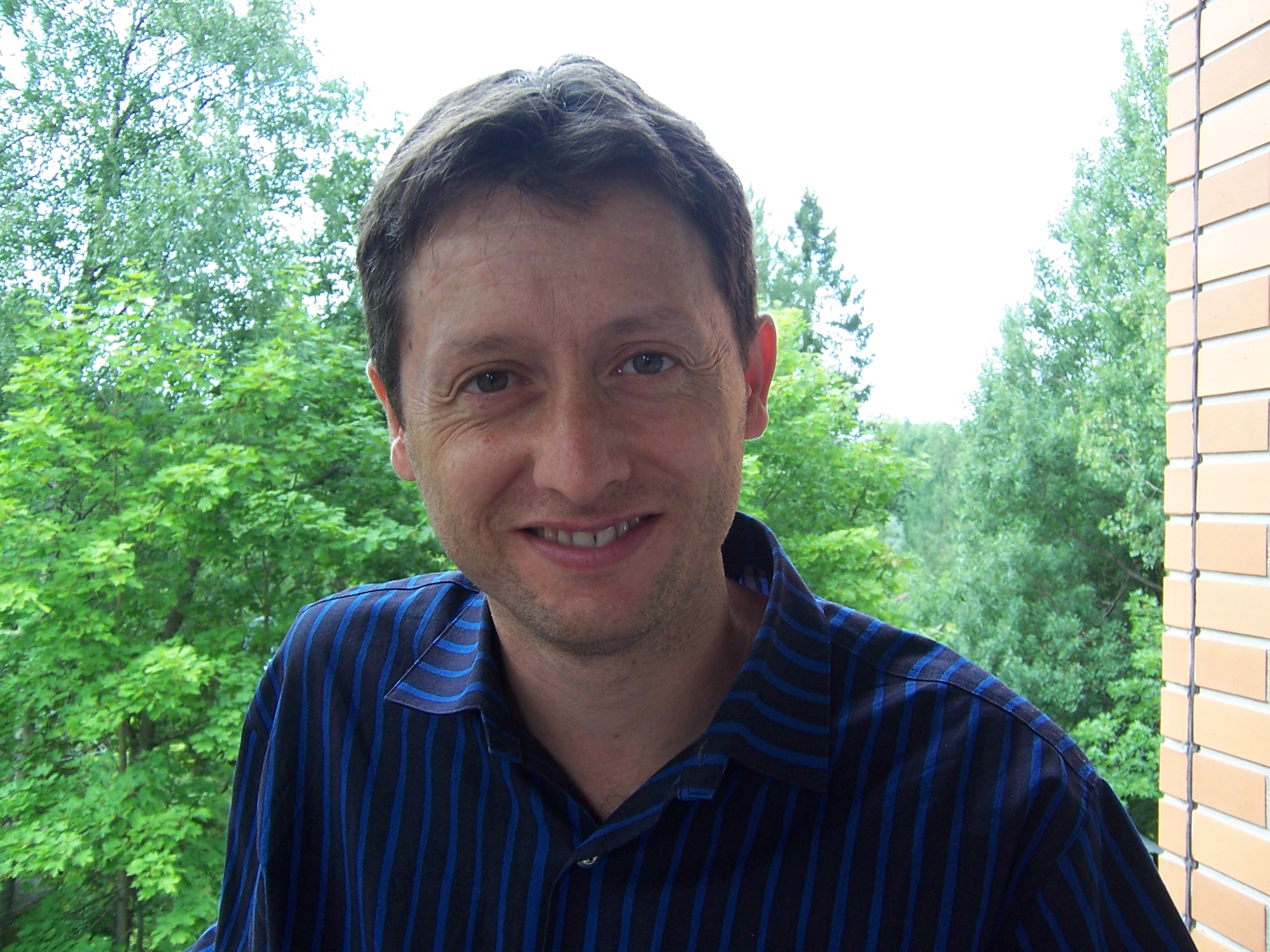
Nonappa Nonappa is an Associate Professor (tenure track) in Nanochemistry at Tampere University's Faculty of Engineering and Natural Sciences since 2020. With a multidisciplinary background spanning organic chemistry, supramolecular systems, nanoparticle self-assembly, and advanced electron microscopy, he leads research at the intersection of materials science and biomedical applications. PhD in Organic Chemistry (IISc Bangalore, 2008) Docent in Soft Matter Microscopy (Aalto University, 2017) Executive MBA (Quantic School, 2020) Research focuses on bio-based optical materials using nanocellulose for sustainable photonics, breast cancer models via lab-on-a-chip systems, and precision nanomaterials through tailored self-assembly mechanisms. His team develops 3D extracellular matrices for cancer tissue culture and plasmonic nanodevices for photonic applications. Recent publications highlight gold/silver nanocluster assemblies (43+ citations in 2021-2025), electron tomography for structural analysis, and metastasis modeling systems. Key awards include Italy's Abilitazione Scientifica Nazionale (2018) and Aalto University's Docent title (2017).
Jouko Peltonen is a Professor in Chemistry at Åbo Akademi University's Faculty of Natural Sciences and Engineering. He leads the Laboratory of Molecular Science and Technology, focusing on sustainable material development and biomedical applications. His work aligns with UN Sustainable Development Goals through green chemistry innovations. Ph.D. in Chemistry (Åbo Akademi, 1994) Licentiate in Chemistry (Åbo Akademi, 1992) Master's in Chemistry (University of Helsinki, 1988) Peltonen's research spans materials science , polymer chemistry , and sustainable technology , with emphasis on nanocellulose composites , antibacterial materials , and bio-based packaging . Recent projects explore biofilm modeling and lignin valorization. His publications (216 total) demonstrate interdisciplinary impact across biomedical engineering , environmental science , and chemical manufacturing . Key collaborations include NordForsk-funded initiatives and EU projects like PACKER 2020. Research grants include: Printed Intelligence Infrastructure (Academy of Finland, 2024-2028) Nordic POP (NordForsk, 2018-2025) ABC-Health (Jane och Aatos Erkkos Foundation, 2021-2024)
Dr. Sanandam Bordoloi is an Assistant Professor at the Department of Civil Engineering, Aalto University's School of Engineering, specializing in Geotechnical and Geo-environmental Engineering. He earned his PhD from Indian Institute of Technology (IIT) Guwahati and has held postdoctoral positions at Hong Kong University of Science and Technology (HKUST) and University of Illinois at Urbana-Champaign (UIUC). Expertise in unsaturated soil mechanics Specializing in biochar applications for geotechnical systems Focus on carbon capture and waste valorization Developed novel techniques for soft clay remediation Recipient of Telford Premium Prize His recent publications highlight trends in biochar-amended composites , CO2 mineralization , landfill restoration , and soil-hydrological interactions . Key subfields include contaminant transport mechanisms, cementitious material innovation, and root-soil feedback systems. Scientific Awards: Telford Premium Prize for exceptional civil engineering research
Marika Kokko is a Professor of Bio- and Circular Economy at the University of Tampere, affiliated with the Faculty of Engineering and Natural Sciences and the Department of Materials Science and Environmental Engineering. Her research focuses on sustainable solutions for carbon dioxide utilization, nutrient recovery, and bioelectrochemical systems. She leads projects such as isoSUS (developing short-chain fatty acid conversion) and BioNH4 (recovering ammonium nitrogen from wastewater). Education: Doctor of Science (Technology), Tampere University of Technology (2013) Postdoctoral Researcher, University of Freiburg, Germany (2014–2016) Tenure-track career progression at Tampere University since 2016 Research Interests: CO₂ conversion via microbial electrosynthesis and bioelectrochemical processes Electrochemical nitrogen recovery from wastewater Microplastic analysis in environmental matrices Bioremediation of industrial waste streams Grants & Collaborations: Funded by Business Finland, Ministry of the Environment, and international consortia Active in interdisciplinary projects like CICAT2025 and UPCE Labs/Teams: Her research group investigates bioelectrochemical systems, microbial communities, and circular economy innovations. They collaborate with industry partners to scale sustainable technologies.
Professor Hongbo Zhang is a leading academic at Åbo Akademi University , affiliated with the Faculty of Natural Sciences and Engineering and the InFLAMES (Innovation Ecosystem based on the Immune System) flagship program. With over 227 publications and 21 active/completed projects since 2006, his research spans Functional Materials , Drug Delivery , and Clinical Translation . Research Interests: His work focuses on Engineering nanostructures for blood-brain barrier penetration Microfluidics-enabled biomedical devices Antimicrobial resistance solutions Cellulose-based sustainable materials Mitochondrial delivery systems Theranostic hydrogels Scientific Awards: Fellow of the Royal Society of Chemistry (2024) MDPI Pharmaceutics Young Investigator (2020) Chinese Orthopedic Association 1st Prize (2019) Best Oral Drug Formulation (Control Release Society, 2014) 10 Leading Chinese Talents in Europe (2023) Collaborative Network: Actively hosts international researchers and contributes to EU/Nordic-funded projects like NAP4DIVE and Printed Intelligence Infrastructure . His recent publications demonstrate expertise in nanomedicine, biocomposites, and lignin valorization.
Jouni Paltakari is a Professor in Bioproducts and Biosystems at Aalto University. His research focuses on paper converting and packaging technology, with particular interest in value-added fiber-based substrates, nanocellulose applications, and intelligent packaging solutions. He leads research activities in material characterization, composite modeling, and sustainable manufacturing processes. Institution: Aalto University Department: Bioproducts and Biosystems Research Areas: Paper converting, Packaging technology, Nanocellulose, Sustainable composites Email: jouni.paltakari@aalto.fi
Liqiu Hu is a Doctoral Researcher at the Laboratory of Natural Materials Technology , affiliated with the Faculty of Science and Engineering at Åbo Akademi University. Their research focuses on bio-based materials , polymerization techniques , and nanocellulose applications , contributing to Sustainable Development Goals like responsible consumption and climate action. Key research areas: Lignin, Nanocellulose, Polymerization, Bio-based films, Green chemistry, Biocomposites Recent work trends: In-situ polymerization, Pickering emulsions, Drug delivery systems, Agricultural waste upcycling, Aqueous dispersion processing Collaborations include researchers from Åbo Akademi University and TAPPI Press. Publications span from 2017 to 2025, highlighting innovations in biopolymer interfaces and sustainable packaging . The laboratory's fingerprint indicates strong alignment with lignin (100%), nanocellulose (75%), and polymerization (66%) research.
Zekra Mousavi is a Senior Researcher at the Faculty of Science and Engineering , Åbo Akademi University , affiliated with the Laboratory of Molecular Science and Engineering . Her research focuses on analytical chemistry , materials science , and electrochemical sensor development . Key areas include ion-selective electrodes , lignin-based sustainable materials , and non-invasive chemical sensing . Her recent publications highlight advancements in solid-contact ion-selective electrodes , lignin fractionation for porous carbon , and wearable sensor technology . These works span electrochemistry , green chemistry , and biomedical applications . At the institutional level, her work contributes to the UN Sustainable Development Goals , particularly in health-related solutions and environmentally sustainable technologies . She collaborates with researchers in electrochemistry and materials science , with a focus on dielectric spectroscopy and solid-state sensors .
Rosangela A. Maia serves as a Research Fellow in the Department of Bioproducts and Biosystems, specializing in the interdisciplinary field of Bio-based Colloids and Materials. Her work bridges biological resource utilization with advanced material science. Her research interests prioritize Bio-based Materials and Colloids , examining sustainable synthesis methods for biopolymer-derived colloidal systems. Additional focus areas include Bioproducts Engineering for industrial applications, Sustainable Materials lifecycle analysis, Biosystems integration, and Green Chemistry principles in material design. This portfolio emphasizes renewable feedstocks and eco-friendly processing techniques. Dr. Maia is actively affiliated with the Bio-based Colloids and Materials research group, which investigates nanostructured biomaterials for applications ranging from drug delivery to sustainable packaging. The group's work centers on colloidal stability, interfacial phenomena, and functional properties of plant-derived polymers.
Juha Lipponen is a Professor at Aalto University's Department of Bioproducts and Biosystems. His work focuses on developing sustainable materials using bio-based components and circular economy principles. Affiliation: Aalto University Department: Bioproducts and Biosystems Research Interests His research spans Materials Science , Biotechnology , and Sustainable Engineering , emphasizing: Composite materials from renewable resources Waste valorization for high-performance applications Green polymer synthesis techniques Thermal energy storage systems Circular economy in forest industry Recent Publications demonstrate expertise in lignin-based composites, cellulose nanomaterials, and eco-friendly packaging solutions. Collaborative work includes biomedical hydrogels and carbon fiber recycling.
Sesilja Aranko is an Assistant Professor at Aalto University , affiliated with the Department of Bioproducts and Biosystems. Her research focuses on protein engineering, biomolecular condensates, and sustainable materials derived from biological macromolecules. Research Groups : Cellular Engineering Email : sesilja.aranko@aalto.fi Her work explores protein self-assembly mechanisms, particularly in spider silk and collagen systems, leveraging liquid-liquid phase separation for advanced biomaterial design. Recent studies investigate how polymer length and modular protein architecture control condensate properties, alongside developing bio-inspired adhesives from recombinant proteins and nanocellulose. She has pioneered the use of Catcher/Tag click-reaction tools for protein engineering and developed sustainable methods for spider silk production with inherent functionalization potential. Collaborative projects span marine biology (sea cucumbers) and keratin waste upcycling for textile applications. Key methodologies include intein-mediated protein splicing, segmental isotopic labeling, and structural characterization of protein ligation systems. Her research bridges fundamental biophysics with industrial applications in sustainable chemistry and biomimetic composites.
Hossein Baniasadi is a Staff Scientist in the Department of Chemical and Metallurgical Engineering at Aalto University's School of Chemical Engineering. His research focuses on advanced materials development with applications in sustainable manufacturing and biomedical engineering. Education: Doctoral degree in Engineering and Technology from Sharif University of Technology (awarded May 11, 2015) Baniasadi's research spans multiple areas of materials science, with particular expertise in composite materials (100% fingerprint match), polyamide science (70%), hydrogels (52%), biocomposites (48%), 3D printing (45%), biochar applications (39%), phase change materials (33%), and polymerization processes (32%). His work emphasizes sustainable materials development with applications in tissue engineering, energy storage, and food packaging. His recent publication trend shows a strong focus on biochar-enhanced composite materials, with multiple 2025 publications exploring biochar applications in polyamide composites, cellulose foams, and food packaging films. These works integrate materials science with environmental sustainability considerations and demonstrate expertise in both fundamental material properties and practical applications. Awards: Recipient of 1 research prize Baniasadi serves as Principal Investigator for multiple research projects including '3D-GRINO-PPCI / POTE' (2023-2027) and 'Bio-oils based polymeric composites; value chain from synthesis to additive manufacturing.' He has supervised at least one thesis and collaborates extensively across disciplinary boundaries with numerous co-investigators. His research connects with UN Sustainable Development Goals, particularly through sustainable materials development and environmentally conscious manufacturing processes.
Sara Pakseresht is a Postdoctoral Researcher at Aalto University's Department of Chemistry and Materials. Her work focuses on advanced materials for energy storage systems, particularly lithium-oxygen batteries, and sustainable synthesis methods. Research Groups: Electrochemical Energy Conversion Key Areas: Nanotechnology, Solid-State Electrolytes, Green Synthesis Her recent publications highlight breakthroughs in hybrid solid polymer electrolytes, graphene composites, and biosynthesized catalysts for next-generation batteries. She also explores eco-friendly antimicrobial coatings for medical devices and antibiotic-producing bacterial metabolites. Selected affiliations and collaborations span institutions like Aalto University, with expertise in electrochemical systems, nanomaterials, and biomedical applications.
Juan Valle Delgado is a Lecturer in the Department of Bioproducts and Biosystems at Aalto University, where he focuses on nanotechnology, biomaterials, and interfacial science. His research explores sustainable materials derived from biopolymers like cellulose and lignin, with applications in biomedicine, green chemistry, and advanced composites. Research Interests: Dr. Delgado's work spans atomic force microscopy, nanocellulose functionalization, colloidal systems, and surface chemistry. Key themes include: Design of lignin nanoparticles for drug delivery and 3D bioprinting Cellulose nanofibril hydrogels for biomedical applications Interfacial interactions in bio-based composites Surface modification techniques for sustainable materials His recent publications (2019–2023) demonstrate a strong emphasis on biomaterial interfaces , with recurring studies on cellulose-lignin systems, nanoparticle synthesis, and cell-biomaterial interactions. Collaborative projects frequently involve tissue engineering, cancer research, and green nanotechnology. Dr. Delgado collaborates extensively with the Bioproduct Chemistry research group, focusing on interdisciplinary approaches to develop functional materials from renewable resources.
Orlando Rojas Gaona serves as a Visiting Professor in the Department of Bioproducts and Biosystems at Aalto University, where he leads the Bio-based Colloids and Materials (BiCMat) research group. His work spans multiple disciplines focusing on sustainable materials science with significant contributions to the field of biobased materials. Dr. Rojas' research interests center on biobased materials at various size scales, particularly those displaying large interfacial areas such as micro/nano fibers, fiber networks, particles, and colloidal systems. His work encompasses nano/microfibrillar cellulose, cellulose nanocrystals, lignin particles, fat colloids, chitin, alginates, proteins, and biopolymer assemblies. His laboratory investigates thin films, cellulose derivatives, enzymes, and bio-based dispersions including emulsions, foams, gels, and aerogels. He employs advanced techniques such as piezoelectric and surface plasmon sensing, XPS, AFM, imaging, and light scattering to study adsorption behaviors of surfactants and biopolymers at various interfaces. His recent publications demonstrate a strong trajectory toward sustainable materials innovation with applications spanning biomedical engineering, energy efficiency, water harvesting, and waste valorization. The research shows increasing interdisciplinary collaboration and practical applications addressing global sustainability challenges. Best Paper Award 2015 Bioresource Technology, Netherlands Divisional Service Award, American Chemical Society (2009) Fellow of the American Chemical Society (July 2013) Foreign Member of the Finnish Academy of Science and Letters (2017) Imerys FiberLean Prize IMERYS, USA (2015) Dr. Rojas has supervised 23 theses and has been principal investigator for 11 significant research projects including EU Horizon Europe MC SAFEPCM, ERC BioELCell, and multiple Academy of Finland FlagShip CERES projects. His research portfolio includes over 700 publications and artistic outputs with substantial funding support from EU programs, ERC grants, and national research councils. His work directly contributes to multiple UN Sustainable Development Goals, particularly those related to sustainable materials and environmental protection. As leader of the BiCMat research group, Dr. Rojas oversees a multidisciplinary team conducting cutting-edge research on biobased materials. The group maintains strong international collaborations and has developed expertise in surface characterization, nanomaterial synthesis, and sustainable material design. Their work bridges fundamental science with practical applications in areas ranging from biomedical devices to sustainable packaging and energy solutions.