Prof. Walter Leal Filho is a distinguished academic and researcher holding professorial positions at Hamburg University of Applied Sciences (Germany) and Manchester Metropolitan University (UK). He is the founding director of the European School of Sustainability Science and Research (ESSSR) and the Inter-University Sustainable Development Research Programme (IUSDRP). With over 30 years of editorial experience, he has authored over 500 publications, focusing on sustainability, climate change, and environmental management. His research interests span Climate Change, Urban Resilience, Natural Resource Management, and Sustainability Education. He emphasizes interdisciplinary approaches to address global challenges, such as space debris mitigation and bio-based materials for sustainable packaging. His work bridges policy, education, and practical solutions for sustainable development. Prof. Leal Filho’s recent articles highlight trends in sustainable urban planning, space sustainability, and ecosystem conservation in the Amazon. He has been recognized as a Top Cited Scholar 2024, reflecting his impactful contributions. With 1,200+ co-authors and a global network, he collaborates widely, fostering international research and education initiatives. As director of ESSSR and IUSDRP, he leads programs advancing sustainability science and interdisciplinary research. His academic leadership and prolific publications underscore his role as a pivotal figure in global sustainability efforts.
Bradley D. Olsen is a full professor in the Department of Chemical Engineering at the Massachusetts Institute of Technology (MIT), where he leads research at the intersection of polymer science, soft matter physics, and bioengineering. His work focuses on designing materials for critical applications in biotechnology, hemostasis, and sustainable polymer development while advancing fundamental understanding of polymer network mechanics and self-assembly. Education: Ph.D. in Chemical Engineering, University of California Berkeley (2007) S.B. in Chemical Engineering, Massachusetts Institute of Technology (2003) Olsen's research spans protein-based materials, block copolymer phase behavior, and mechanochemical hydrogels. He has pioneered methods for quantifying polymer network topology, developing hemostatic nanoparticles, and creating bio-inspired materials for selective biomolecular transport and medical applications. His recent publications emphasize data-driven approaches to polymer characterization and educational outreach in materials science. Scientific Awards: American Physical Society (APS) Fellow (2023) Fulbright Amazonia Scholar (2023) Alexander and I. Michael Kasser Chair in Chemical Engineering (2021) ACS Macro Letters Young Investigator Award (2021) MIT Committed to Caring Honor (2019) AIChE Owens Corning Early Career Award (2019) APS Dillon Medal (2018) Kavli Emerging Leader in Chemistry (2017) ACS Polymer Division Fellow (2016) Camille Dreyfus-Teacher Scholar (2015) Alfred P. Sloan Research Fellow (2014) NSF Career Grant (2013) NIH Postdoctoral Fellowship (2008-2009) Hertz Fellow (2003-2007) Barry M. Goldwater Scholarship (2002) Olsen has received significant grant support including NSF Career (2013) and AFOSR (2012) awards. His teaching activities include innovative international outreach like the 2025 soccer-themed science camp in Brazil. The Olsen Group at MIT explores advanced materials with applications ranging from trauma care to sustainable polymers.
Michael McAlpine is a Professor in the Mechanical Engineering department at the University of Minnesota . He also holds affiliations with the Biomedical Engineering and Electrical and Computer Engineering departments. His research focuses on 3D printing functional materials & devices , Nanoscale inks , Biomedical devices , Bioelectronics , and Flexible Microsystems . Research Interests : 3D Printing, Biomedical Engineering, Nanotechnology, Flexible Electronics, Microfluidics Labs : ME 361/363 Contact : mcalpine@umn.edu , (612) 626-3303, ME 117 Recent Research Trends include 3D Printed Biomedical Devices , Flexible Electronics , and Bioprinting Applications . His work spans from Spinal Organoid Formation to Programmable Drug Release Capsules . Scientific Award : Circulation Research 2020 Best Manuscript Award
Michael Bartlett is an Associate Professor in the Department of Mechanical Engineering at Virginia Tech , leading the Soft Materials and Structures Lab within the College of Engineering. His research focuses on bio-inspired materials , soft robotics , and multifunctional composites with applications in adaptive adhesives , stretchable electronics , and self-healing systems . Education: Ph.D., Polymer Science & Engineering, University of Massachusetts Amherst (2013) B.S.E., Materials Science & Engineering, University of Michigan (2008) His work explores the intersection of soft materials , morphing structures , and functional composites , leveraging techniques like kirigami and liquid metal integration to create innovations such as octopus-inspired underwater gloves and shape-shifting drones . His recent articles highlight advancements in programmable adhesion , liquid metal conductors , and multiscale material design . Scientific Awards: National Academy of Inventors Senior Member (2024) NSF CAREER Award (2023) Office of Naval Research Young Investigator Award (2021) Soft Matter Emerging Investigator (2021) DARPA Director’s Fellowship (2020) Adhesion Society Early Career Scientist (2020) DARPA Young Faculty Award (2018) 3M Non-Tenured Faculty Award (2017) Bartlett has mentored over 40 undergraduate students and numerous graduate researchers, resulting in 12 peer-reviewed articles with student co-authors. His lab receives funding from federal agencies like NSF , ONR , and DARPA , as well as industry partnerships. The group also engages in K-12 outreach programs and collaborates with institutions such as University of Nebraska-Lincoln and Iowa State University .
John Baillieul is Distinguished Professor at Boston University with joint appointments in Mechanical Engineering, Systems Engineering and Electrical & Computer Engineering. He directs experimental laboratories for real-time control of lightweight robotic systems and applies nonlinear control theory to complex multi-body, networked, and bio-inspired systems. Education: Ph.D., Harvard University Research Interests: Baillieul’s work spans robotics, nonlinear control, and networked systems. Early contributions resolved motion-planning for kinematically redundant manipulators; current themes include neuromimetic learning, vision-based navigation, and resilience of infrastructure networks such as power grids. His group couples rigorous geometric control with real-time hardware to create lightweight, high-performance robots and to uncover fundamental information limits in feedback systems. Recent Publication Trends (2021-2025): Over the past five years his output has concentrated on three synergistic directions: (i) neuromimetic and Koopman-based data-driven methods for estimating and controlling nonlinear systems, (ii) vision-based guidance and sparse optical-flow primitives for agile autonomous flight, and (iii) network-theoretic decomposition and information-rate studies for resilient operation of power grids and collective dynamics. Honors & Awards: IEEE Fellow 2025 Roger W. Brockett Control Systems Award Former Editor-in-Chief, IEEE Transactions on Automatic Control Affiliations & Service: He is a member of Boston University’s Center for Information and Systems Engineering (CISE), has served as Editor-in-Chief of IEEE Transactions on Automatic Control, and remains active in editorial and organizational roles across the IEEE control systems community.
Abbas Milani is a tenured Professor of Mechanical Engineering at the University of British Columbia's Okanagan campus, where he holds the Tier 1 Principal's Research Chair in Sustainable & Smart Manufacturing and serves as Director of the Materials and Manufacturing Research Institute (MMRI). He also serves as Technical Director of the Composites Research Network (CRN), Lead of the Canadian-International Biocomposites Research Network, and leads multiple major initiatives including the UBC-Pacific Economic Development Canada-Advancing Circular Economy (ACE) program and the UBC-NRC IRAP National Circular Economy CtO Program. Dr. Milani's primary research focuses on advanced modeling, simulation, and multi-criteria design optimization of composite and biocomposite materials, structures, and manufacturing processes. His expertise spans Textile Composites/Biocomposites, Materials Constitutive Relations, Finite Element Modeling, Robust Inverse Methods, Material Selection for End-of-Life Design Strategies, Multiple Criteria Decision Making, and Industry 5.0 applications. His interdisciplinary research bridges mechanical engineering, sustainable materials science, and smart manufacturing technologies. Analysis of his recent publication record reveals a strong emphasis on sustainable materials development, with particular focus on biocomposites, life cycle assessment methodologies, and optimization of manufacturing processes. His work integrates computational modeling with experimental validation across diverse application areas including medical devices, sustainable packaging, and circular economy strategies. The publications demonstrate increasing integration of artificial intelligence and machine learning approaches with traditional engineering methods. 2015 UBC Okanagan Researcher of the Year Award Killam Faculty Research Award (2016) Inducted into Royal Society of Canada - College of New Scholars (2020) Gold Medal Service Contribution Award by Academics World Reviewer Contribution Award by ASM International Multiple teaching excellence awards from UBC Dr. Milani has successfully mentored over 100 students and postdoctoral fellows who have secured positions in both industry and academia. His research program has been supported by more than $15 million in funding from government and industrial organizations. He leads the NSERC CREATE in Immersive Technologies (CITech) program and co-leads the Advanced Materials and Fabrication Core Competency within the Survive and Thrive Applied Research (STAR) program, demonstrating his commitment to training the next generation of engineers and advancing applied research.
Prof. Raffaele Mezzenga is a Full Professor at ETH Zürich's Department of Health Sciences and Technology and Head of the Institute of Food, Nutrition, and Health. He earned his master's from Perugia University (Italy) and a PhD in Polymer Physics from EPFL, followed by postdoctoral work at UC Santa Barbara. His career includes roles at the Nestlé Research Center and the University of Fribourg before joining ETH in 2009. His research focuses on self-assembly processes in polymers, biopolymers, and colloidal systems, with applications in environmental remediation, bioplastics, and biomedical materials. Key contributions include pioneering protein-based materials and advancing understanding of amyloid fibrils. Education: Master's, Materials Science & Engineering, Perugia University PhD, Polymer Physics, EPFL Research Interests: Self-assembly, biopolymers, amyloid materials, sustainable technologies, food colloids, and soft condensed matter. Awards: 2011 AOCS Award, 2017 APS Fellowship, and 2013 Biomacromolecules Young Investigator Award. Visiting Roles: Held visiting professorships at Aalto University, RMIT, Monash University, Nanyang Technological University, and others. Labs/Teams: Leads the Institute of Food, Nutrition, and Health at ETH, focusing on interdisciplinary research in food science and biomaterials. His work bridges fundamental science and applied innovation, addressing global challenges in sustainability and health through materials science. Recent projects include creating bioplastics from food waste, developing amyloid-based water purification systems, and advancing targeted drug delivery via lipidic mesophases.
Dr. Li Shen is an Associate Professor at the Copernicus Institute of Sustainable Development , Utrecht University since 2015. She holds the Energy & Resources group and has been active in sustainability assessment of materials and energy systems since completing her PhD in 2011. Education: BEng (Mechanical Engineering, cum laude 1999, Shanghai) MSc (Sustainable Development, track Energy and Resources 2006, Utrecht University) PhD (2011, Utrecht University, thesis: Bio-based and Recycled Polymers for Cleaner Production – an Assessment of Plastics and Fibres ) Research Interests: Dr. Shen specializes in Life Cycle Assessment and Technological Sustainability Evaluation of Bio-based Plastics , Plastics Recycling , Waste Management , and Nanomaterials . Her work bridges Environmental Science , Chemical Engineering , and Sustainable Development through rigorous system analysis. Scientific Publications: Leading expert in Circular Economy applications for plastics Developed Ex-ante LCA frameworks for emerging materials Key contributor to PEF Bio-based Bottle sustainability analysis Active in Telescope Energy Systems sustainability Published in Nature Communications , Science of the Total Environment , and Journal of Cleaner Production Teaching: Responsible instructor for Advanced Energy Analysis in the Master Energy Science program. Also teaches Life Cycle Assessment and Sustainable Resources Use in the Global Sustainability Science bachelor program. Supervises numerous master thesis projects from Energy Science (ES), Sustainable Development (SD-EM), and Science for Energy Innovation (SBI) programs.
Distinguished Professor Peter Ralph is a faculty member at the University of Technology Sydney (UTS), holding the position of Professor of Marine Biology within the Faculty of Science and serving as the Executive Director of the Climate Change Cluster (C3). He is also the founder of the NSW Deep Green Biotech Hub and an influential member of global initiatives such as UNESCO’s Blue Carbon Scientific Working Group and the Czech Academy of Sciences’ Global Change Research Centre. Leadership Roles: Director of the Climate Change Cluster, Deputy-Chair of Sydney Institute of Marine Sciences. Research Collaborations: Partnerships with CSIRO, industry, NGOs, and international institutions. Key Contributions: Over 280 publications and $15M+ in research funding. His research focuses on algae-based solutions to climate change and sustainability, including carbon capture, bioplastic production, waste-water remediation, and circular bio-economy models. He explores advanced manufacturing through Industry 4.0 integration and zero-waste bio-refinery approaches, while also advancing algal phenomics using automated high-throughput screening systems. Recent articles highlight innovations in AI-driven biorefinery optimization, microalgal bioprospecting, and mutagenesis techniques for rare earth element extraction. His work bridges environmental science with engineering, addressing challenges in algae cultivation scalability and commercialization. Scientific Awards: 2012 and 2018 UTS Vice-Chancellor’s Research Excellence Awards. Peter has secured major grants, including the Fermentalg PhD Project on Microalgae Screening, PNG Natural Seafood’s Macroalgae Product Development, and the Winifred Trust Foundation’s Aquaculture initiative. His research teams collaborate across disciplines to transform algae into sustainable resources for food, energy, and biomanufacturing. He leads UTS’s Climate Change Cluster (C3), a hub for interdisciplinary climate research, and actively promotes algae-building technologies and carbon storage innovations through biomasonry products.
Dr. Carla Vilela is an Assistant Professor in the Department of Chemistry at the University of Aveiro and Principal Researcher at CICECO. She coordinates the Sustainable Materials research line and leads projects on cellulose-based materials and circular economy. Her research focuses on sustainable materials from cellulose and renewable resources for applications in water remediation, food packaging, and textiles. Education includes a PhD in Chemistry from the University of Aveiro and postdoctoral work at CICECO and ISIS Neutron and Muon Source (UK). Research interests include: Development of cellulose-based functional materials Nanocomposites for biomedical applications Sustainable packaging solutions Biopolymer modification and characterization Publications demonstrate strong focus on cellulose nanocomposites, bioprinting bioinks, and active packaging. Recent articles frequently involve nanocellulose modifications, drug delivery systems, and sustainable material design. Awards include being named among World's Top 2% Scientists annually since 2020. Funding includes national projects (Cell4Janus) and EU collaborations (PRIMA Im-Pack). Leads the BioPol4Fun research group and supervises 6 PhD students. Current projects explore cellulose-based microrobots, resin valorization, and marine biopolymers.
Dr James Herbert-Read is an Associate Professor and Whitten Lecturer in Marine Biology at the Department of Zoology, University of Cambridge. He serves as Deputy Head of Department (Postgraduate Education) and leads the Marine Behavioural Ecology Group. His research focuses on understanding how animals, particularly marine organisms, collect and process information from their environments to make behavioral decisions, with emphasis on social interactions, adaptation mechanisms, and ecological constraints. His group employs theoretical frameworks, controlled experiments, and quantitative field studies to investigate behavioral diversity in marine species. Key themes include collective behavior, predator-prey dynamics, camouflage strategies, and the impacts of environmental stressors on animal decision-making. Recent publications highlight work on lionfish vocalization mechanisms, cuttlefish camouflage, citizen science applications in marine research, and behavioral responses to visual and acoustic noise. Scientific awards and affiliations include: Whitten Lecturer in Marine Biology Associate Professor, University of Cambridge He has supervised research projects on topics such as: Social attraction in invasive fish species Evolution of coordinated movement Neurophysiological basis for leadership in shoals Maternal effects on offspring exploration
Professor Bing-Jie (Bruce) Ni is an Adjunct Professor at the University of Technology Sydney (UTS) within the School of Civil and Environmental Engineering and a full Professor at UNSW Sydney. He is an internationally recognised leader in environmental engineering, wastewater treatment, greenhouse-gas mitigation, microplastics fate, electrocatalysis and sustainable energy systems. Education PhD in Environmental Engineering, University of Science and Technology of China, Hefei (2005–2009) Research Interests Professor Ni’s research integrates process engineering, microbial biotechnology, materials science and mathematical modelling to develop sustainable technologies for high-efficiency pollutant removal, minimal carbon footprint and maximal energy recovery from wastewater. He is a global pioneer in: Modelling and control of nitrous oxide (N₂O) and methane (CH₄) emissions from wastewater systems, Micro- and nano-plastics ecotoxicity and mitigation in anaerobic digestion, Transforming sewage sludge into high-value liquid bio-energy (medium-chain fatty acids and long-chain alcohols), Designing cost-effective electrocatalysts from natural minerals for green hydrogen production and wastewater electrolysis. Research Output & Impact Over the last decade he has published 2 research books, 30 book chapters and >400 refereed journal papers , including 35 in Environmental Science & Technology and 85 in Water Research . His work has influenced global policy: the IPCC adopted his nitrous-oxide-emission model in 2019 to revise national greenhouse-gas inventories for the first time in 13 years. Awards & Recognition ARC Future Fellowship & ARC DECRA Fellowship Clarivate Analytics Highly Cited Researcher (Web of Science) Royal Society of Chemistry Highly Cited Researcher (2020–present) Mendeley Data Top 2 % Cited Researchers worldwide Listed among “Australia’s Most Innovative Engineers” (Engineers Australia, 2018) 50+ additional awards including Scopus Young Researcher Award, South Australian Water Awards, UQ Research Excellence Awards, and Outstanding Doctoral Dissertation Awards. Research Funding & Leadership He has secured ≈ AUD $10 million in competitive funding (six major ARC grants plus >20 government, university and industry projects). He serves as: Lead Guest Editor, Water Research Editorial Advisory Board, Environmental Science & Technology Associate Editor for Journal of Cleaner Production , Environmental Chemistry Letters , Environmental Research , Journal of Environmental Management Editorial Board member for five additional high-impact journals. Teaching & Supervision At UTS he teaches Renewable Energy Technologies , Environmental and Sanitation Engineering , Process Dynamics and Control , and Water and Wastewater Treatment . He is available to supervise Masters and PhD students in environmental biotechnology, process modelling and sustainable energy systems. Laboratory & Commercial Translation He heads active research teams at both UNSW and UTS and is the inventor of >10 granted patents , some of which are currently being commercialised to deliver real-world impacts in greenhouse-gas-neutral wastewater treatment and renewable energy production.
Virginia Davis is the Dr. Daniel F. and Josephine Breeden Professor in the Department of Chemical Engineering at Auburn University's College of Engineering. She holds a Ph.D. in Chemical and Biomolecular Engineering from Rice University, and M.S. and B.S. degrees in Chemical Engineering from Tulane University. Research Focus: Self-assembly of nanomaterials, rheology, lyotropic liquid crystals, additive manufacturing, polymers, nanocomposites, and biosensors Key Projects: USDA-funded agricultural outreach, NSF grant for MXene dispersion studies, Alabama STEM Council member Her recent publications explore cellulose nanocrystals, MXene 3D printing, and sustainable polymer recycling. Davis has received multiple honors including the Breeden Professorship, AIChE Fellowship, and Auburn University Faculty Awards for research and mentorship. Research Trends: Dominated by bio-based nanomaterials (cellulose nanocrystals, MXenes), with applications in additive manufacturing, environmental remediation (PFAS adsorption), biosensors (carbofuran detection, cancer biomarkers), and agricultural delivery systems. Scientific Awards Auburn University Faculty Awards (2023, 2025) AIChE Fellow (2023) Dr. Daniel F. and Josephine Breeden Professorship Davis leads outreach initiatives like the Tomorrow’s Community Innovators camp and collaborates with interdisciplinary teams on plastic recycling innovations. Her work emphasizes both fundamental material science and practical applications addressing environmental and agricultural challenges.
Aji Mathew is a Professor at the Department of Materials and Environmental Chemistry, Stockholm University. He holds a PhD in polymer chemistry from Mahatma Gandhi University (2001) and conducted postdoctoral research at CERMAV (Grenoble, France) and NTNU (Trondheim, Norway). His academic career includes roles as an assistant professor (2007–2011) and associate professor (2011–2015) at Luleå University of Technology before becoming an associate professor (2015) and subsequently a professor (2017) at Stockholm University. His research focuses on bio-based nanocomposites and sustainable materials, particularly nanocellulose and its applications in environmental remediation, advanced materials, and circular economy solutions. His group, the Aji Mathew Group , specializes in designing bio-based materials for diverse applications, including water treatment, 3D printing, and biomedical uses. Key projects involve upcycling textile waste, developing eco-friendly composites, and creating functional hydrogels. His work bridges fundamental polymer chemistry with practical sustainability challenges. Publications highlight innovations like nanocellulose-based foams, zeolitic frameworks for water purification, and bio-based coatings. While no awards are explicitly mentioned, his extensive peer-reviewed contributions reflect significant scholarly impact. His research emphasizes scalability and real-world applicability, addressing global environmental and material science challenges.
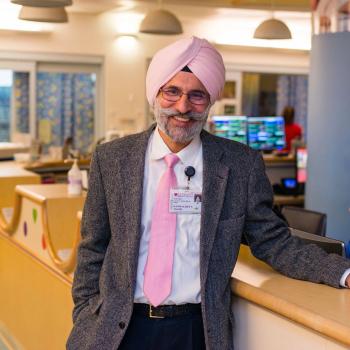
Dr. Kanwaljeet S. Anand is a dual-appointed Professor of Pediatrics (Pediatric Critical Care) and Anesthesiology, Perioperative & Pain Medicine at Stanford University School of Medicine. As director of the Pain/Stress Neurobiology Lab and Jackson Vaughan Critical Care Research Fund, he serves as Editor-in-Chief of Pediatric Research and maintains active membership in Bio-X, MCHRI, and Wu Tsai Neurosciences Institute. Rhodes Scholar with D.Phil from University of Oxford Harvard postdoctoral fellowship and Boston Children's Hospital residency Founded Harmony Health Clinic - Arkansas' largest charitable medical-dental facility A translational researcher with 30+ years of impact, Dr. Anand established the first scientific framework for infant pain perception and developed novel pain assessment methodologies. Current research focuses on: Hair biomarker analysis for stress and social affiliation (cortisol/oxytocin) Machine learning systems for objective pain detection in non-verbal infants Biopsychosocial interventions for stress reduction in disadvantaged youth Neurotoxicity mechanisms of sedatives in developing brains Global NICU opioid usage patterns through the NeoOpioid Consortium His work has yielded over 260 publications and significant advances in: Pediatric pain management protocols Neonatal stress biomarker development Critical care neurobiology insights Community health initiatives AI-driven clinical decision support systems Scientific Recognition 9th Annual 'In Praise of Medicine' Public Address, Erasmus University (2014) Nightingale Excellence Award (2016) Honorary Doctorate from University of Örebro (2019) NIH SBIB-H82 Study Section Chair (2018) Multiple IASP and American Pain Society awards Swedish Academy of Medicine's Nils Rosén von Rosenstein Award (2009) St. Jude Endowed Chairholder (2010) As mentor to Med Scholar Anjali Gupta and advisor to numerous professional bodies, Dr. Anand maintains active clinical leadership in Pediatric Intensive Care while advancing computational approaches to pain detection through collaborations with Stanford's AI researchers.