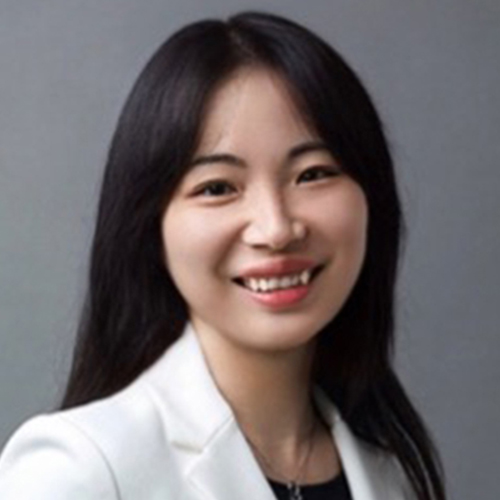
Dr. Minliang Yang is an Assistant Professor in Food Sustainability at North Carolina State University's Department of Food, Bioprocessing & Nutrition Sciences. Her research focuses on system-level analyses (TEA, LCA, machine learning) to advance food sustainability, particularly through plant-based foods, cellular agriculture, and greenhouse gas mitigation strategies. She holds a B.S. in Food Science from Henan University of Technology (2012), M.S. and Ph.D. in Agricultural and Biosystems Engineering from Iowa State University (2014/2018), and a postdoctoral fellowship at Lawrence Berkeley National Laboratory (2022). Her work spans biofuel production, bioproduct valorization, and sustainable biorefinery systems. Key contributions include optimizing biomass pretreatment methods (e.g., low-moisture anhydrous ammonia), developing plant-based platforms for human milk oligosaccharides, and evaluating the economic viability of carbon-negative fuels. Dr. Yang's interdisciplinary approach integrates engineering, biology, and economics to address global food system challenges. Recent publications emphasize co-processing agricultural residues, machine learning-driven process modeling, and cost-benefit analyses of bio-based materials. Her research highlights the potential of integrating plant biotechnology with advanced analytics to create scalable, sustainable solutions for food and energy systems.
Zhixin Yu is a Professor of Natural Gas Technology at the Department of Energy and Petroleum Technology, Faculty of Science and Technology, University of Southeastern Norway. His research is centered on advanced energy technologies with a strong focus on CO 2 utilization, hydrogen production, electrocatalysis, and next-generation battery systems. He actively collaborates with a broad network of researchers in materials science and chemical engineering. His research interests span CO 2 capture and conversion , green hydrogen production via electrocatalysis and photocatalysis , design of single-atom and nanostructured catalysts (including MOFs, carbon-based materials) , and advanced energy storage systems such as lithium-ion, lithium-sulfur, and lithium-ion capacitors . His work integrates experimental synthesis with theoretical modeling, particularly density functional theory (DFT), to understand and optimize catalytic and electrochemical processes. The recent publications (2021–2025) reveal a strong thematic trend toward electrocatalytic CO 2 reduction to value-added chemicals , hydrogenation reactions using sustainable catalysts , and interface engineering in battery materials to improve stability and performance . The keywords consistently include catalysis, energy materials, CO 2 utilization, and electrochemistry, highlighting his role at the forefront of sustainable energy technology development. Scientific Awards: No scientific awards mentioned in the provided text. Advising and Grants: While specific students or grant details are not listed, Professor Yu appears to lead or significantly contribute to a research group focused on energy materials. His extensive co-authorship with early-career researchers (e.g., Song Lu, Obinna Egwu Eleri, Frederik Thorbjørn Huld) suggests active mentorship and advising. The volume and quality of publications indicate successful acquisition of research funding, likely from national and international sources supporting sustainable energy and materials science. Labs and Teams: No specific lab or research team name is provided. However, his frequent collaboration with colleagues such as Fengliu Lou, Song Lu, and Kun Guo indicates a well-integrated research group within the Department of Energy and Petroleum Technology, likely focused on catalytic materials and energy storage devices.
Associate Professor Ken Chiang is a faculty member at RMIT University's School of Engineering under the STEM faculty. He holds an Associate Professor rank and has over 20 years of academic and industrial research experience, securing over $12 million in research funding. His work focuses on innovative catalyst technologies, sustainable processes, and liquid metal catalysis for applications in CO2 utilization, hydrogen generation, and environmental engineering. Research Interests Chemical Engineering, Macromolecular and Materials Chemistry, Materials Engineering, Environmental Engineering, and catalytic systems for renewable energy. Key Projects Recent projects include development of next-generation liquid metal catalysts for CO2 reutilization, low-emission hydrogen generation via ammonia utilization, and novel reactor concepts for process intensification. His research also addresses wastewater purification and solar-to-chemical energy conversion. Advising & Grants He has supervised 10 PhD students, 2 Master's students, and 2 industrial trainees. His funding includes government and industry projects totaling over $12 million. Labs & Collaborations Collaborates on decarbonization technologies and liquid metal systems, with contributions to RMIT's research network in sustainable energy and catalysis.
Prof. Julio Lloret-Fillol is a Group Leader at the Institute of Chemical Research of Catalonia (ICIQ) and an ICREA Research Professor since 2015. His work bridges homogeneous catalysis , material science , and automation to develop sustainable chemical processes and solar fuels. He earned his PhD in 2006 from Universidad de Valencia under Prof. Lahuerta and J. Pérez-Prieto, followed by postdoctoral research at University of Heidelberg (MEyC and Marie Curie Fellowships). Awards: 2024 RSEQ-GEQO Award on Excellence 2023 Fellow of the Royal Society of Chemistry 2022 Ramón Areces Grant 2019 Thieme Chemistry Journals Award 2017 Young Academy of Europe 2015 Young Researcher RSEQ Award Research Interests: Water oxidation catalysis CO₂ reduction to value-added chemicals Artificial photosynthesis Electrocatalytic hydrogen generation Spin-off technologies for green hydrogen and photoreactors Notable Publications: 2024: Angew. Chem. Int. Ed. (electrocatalytic ketones from CO₂) 2024: ACS Catal. (Fe-doped NiO for OER) 2023: ACS Catal. (COF-based cobalt catalysts) 2022: JACS (OER mechanism with cobalt complexes) 2022: Angew. Chem. Int. Ed. (chloroalkane activation) Spin-offs: Treellum Technologies (photoreactors) JOLT Solutions (electrodes for hydrogen production)
Prof. Ing. Juraj Beniak, PhD is a leading academic at the Institute of Production Engineering and Production Quality (Faculty of Mechanical Engineering, Slovak University of Technology in Bratislava, STU). He serves as a Professor CSc., PhD and holds external collaborator roles at the Institute of Computer Engineering and Applied Informatics (FIIT) and the Institute of Manufacturing Technologies (MTF). His research bridges mechanical engineering and sustainable production. Office: U.V.I.P. SjF, Office 537 Contact: +421 2 57296 537 | +421 905 593 953 (mobile) Beniak's research focuses on additive manufacturing , biomass compaction , and smart production technologies . He investigates 3D printing parameter optimization, surface modification techniques, and composite material development from renewable sources. His work addresses both industrial applications and environmental sustainability through advanced manufacturing. Key projects include: OP R&I: Automation in freight railway vehicle production (2019–2023) APVV-18-0527: Additive manufacturing technology development (2019–2022) Recovery Plan: AI-driven waste management systems (2024–2026) As a KEGA grant guarantor and APVV co-investigator , he leads initiatives in CAx education, virtual laboratories, and biofuel production optimization. His contributions span from experimental equipment design to mathematical modeling of compaction processes.
Stephan Pfister is a Professor at ETH Zurich in the Department of of Civil, Environmental and Geomatic Engineering, where he leads research in the Ecological Systems Design group. His office is located at HIF D 85.2, Laura-Hezner-Weg 7, 8093 Zürich, Switzerland. Professor Pfister teaches multiple courses including Introduction into Environmental Engineering, Advanced Environmental Assessments, and Computer Laboratory courses for the Autumn Semester 2025. Dr. Pfister received his PhD from ETH Zurich in 2011 with a dissertation on 'Environmental evaluation of freshwater consumption within the framework of life cycle assessment.' Following his doctoral studies, he completed a one-year post-doctoral position at UC Santa Barbara in 2011. His academic journey has resulted in over 100 original research publications spanning more than a decade of scholarly contributions. Professor Pfister's research is highly interdisciplinary, focusing on methodological advancements in the impact assessment of water consumption, land use, and biodiversity loss within Life Cycle Assessment (LCA) and Multi-Regional Input-Output Analysis (MRIO). His work spans multiple sectors including agriculture and forestry, material extraction and processing, and power production. He has notably advanced water footprint concepts, including future scenario analyses and assessment of international trade implications. His research integrates environmental science with practical applications for sustainable resource management, addressing critical global challenges related to freshwater scarcity and ecosystem preservation. Analysis of Professor Pfister's recent publication record (2024-2025) reveals a strong trend toward integrated environmental assessment methodologies, particularly at the intersection of water resources, climate change, and sustainable systems design. His work increasingly addresses complex supply chain analyses, with growing emphasis on policy-relevant applications in sustainable food systems, urban mobility, and resource extraction. The methodological focus remains firmly rooted in Life Cycle Assessment while expanding into complementary frameworks like Water Footprint Assessment, demonstrating his leadership in advancing environmental assessment science. Professor Pfister's research has been supported by various funding mechanisms including the Swiss National Science Foundation (SNF) project 'Minimizing Energy Input, Exergy Loss and Environmental Impacts of Greenhouse Systems in Iran and Switzerland Exploiting Industrial Symbiosis Opportunities' (Grant No. 192875). His interdisciplinary approach has fostered collaborations across multiple institutions and research groups, contributing to the advancement of environmental assessment methodologies globally. The Ecological Systems Design group at ETH Zurich, led by Professor Pfister, serves as a hub for innovative research at the intersection of environmental science, engineering, and policy. The group maintains strong connections with international research networks focused on sustainability assessment, contributing to methodological standardization efforts and practical applications of environmental assessment tools in industry and policy contexts.
Ming Zheng is a Professor in the Department of Mechanical, Automotive & Materials Engineering at the University of Windsor, Faculty of Engineering. He is the Director of the Clean Combustion Engine Laboratory and holds a Canada Research Chair in Clean Diesel Engine Technologies. He is a Fellow of both SAE and ASME and a Professional Engineer (PEng). Education: Ph.D., Mechanical Engineering, University of Calgary, Canada, 1993 M.Sc., Thermal Energy and Automotive Engineering, Tsinghua University, China, 1988 B.Sc., Mechanical Engineering, Transport Technology Institute, China, 1982 PDF, Mechanical Engineering, Hokkaido University, Japan, 1995 Dr. Zheng's research focuses on clean and high-efficiency combustion technologies for internal combustion engines. His key interests include low-temperature combustion (LTC), homogeneous charge compression ignition (HCCI), active flow control aftertreatment for emission reduction, advanced ignition systems (e.g., multi-coil, corona), alternative and biofuels (e.g., ethanol, n-butanol), combustion modeling, diagnostics, and real-time adaptive control. His work aims to achieve simultaneous reductions in NOx and soot emissions while improving fuel efficiency. The analysis of his recent publications reveals a strong and consistent research trend centered on advanced combustion strategies using alternative fuels like ethanol and n-butanol. His work extensively explores dual-fuel combustion, the impact of fuel injection strategies, and the use of advanced control algorithms (e.g., extremum seeking control) to manage complex combustion processes. A significant portion of his research is dedicated to developing and optimizing active aftertreatment systems, such as Lean NOx Traps, to handle the unique exhaust characteristics of these clean combustion modes. Scientific Awards: SAE Fellow (2016) ASME Fellow University Award for Excellence in Research, Scholarship and Creative Activity (2007 and 2005) Canada Research Chair in Clean Diesel Engine Technologies (awarded 2003) Dr. Zheng has been a prolific advisor, supervising numerous PhD and Master's students on topics ranging from biofuel testing and low-temperature combustion to aftertreatment modeling and control. His research is highly collaborative, supported by significant grants and contracts from government agencies (NSERC, Auto21, CRC) and major industrial partners like Ford, International Truck and Engine Company, and Imperial Oil. He has secured over $2.6 million in cash awards and approximately $2.1 million in-kind contributions since 2003. Dr. Zheng leads the Clean Combustion Engine Laboratory , a state-of-the-art facility equipped with multiple modern diesel engine test cells (including a Ford common-rail engine and a Yanmar single-cylinder engine), advanced emission analyzers, real-time control systems (FPGA, Can-Bus), and sophisticated diagnostic and modeling tools (LabVIEW, GT-Power, Chemkin, MATLAB/Simulink). The lab specializes in experimental research on combustion, emissions, and aftertreatment, with a focus on active flow control technologies.
Dr. Priya Samudrala is a Senior Lecturer and Deputy Director of Education in Monash University's Department of Chemical and Biological Engineering. Her research spans heterogeneous catalysis, green chemistry, and sustainable processes, with expertise in biomass conversion, glycerol valorization, and 3D-printed catalysts for renewable fuel production. Recent publications (2017-2025) demonstrate consistent focus on sustainable catalyst design for biomass conversion, including catalytic reforming, hydrogenolysis, and CO2 valorization. Article trends emphasize catalyst innovation for circular economy applications, particularly in waste glycerol utilization and biomass-derived chemical production. Professional credentials include a PhD in Applied Chemistry from RMIT University and Master of Teaching from Monash University. Research contributions have been recognized through awards including the Martin Bennett Research Excellence Award.
Prof. Atsushi Urakawa is a Full Professor in the Department of Chemical Engineering at the Faculty of Applied Sciences, Delft University of Technology (TU Delft) . He leads the Urakawa Group , which focuses on developing sustainable heterogeneous catalytic processes with minimal environmental impact. PhD, ETH Zurich (2006) MSc, TU Delft BSc, Kyushu University, Japan His research is centered on heterogeneous catalysis , employing in situ/operando spectroscopy and reaction engineering to understand catalytic mechanisms. Key research themes include CO₂ conversion to chemicals , methane activation , hydrogen production , and environmental catalysis (NOx abatement) . The group also pioneers advanced in situ/operando tools for studying solid-gas and solid-liquid interfaces at the reactor scale. The recent publications reflect a strong focus on CO₂ hydrogenation under high pressure, design of bimetallic and supported catalysts , and mechanistic elucidation using operando techniques. The work bridges fundamental understanding with industrial sustainability. Scientific Awards: Fellow of the Royal Society of Chemistry (2016) JSPS Prize (2020) The Japan Academy Medal (2021) Advising: Prof. Urakawa supervises PhD and postdoctoral researchers, including Nat Phongprueksathat , George Tierney , and Gerben-Jan Hooijer . His group collaborates with industrial partners such as Toyota on carbon capture and reduction (CCR) projects. While specific grants are not detailed, his research is clearly supported by high-impact publications and international recognition. Labs & Teams: The Urakawa Group is embedded within the Catalysis Engineering section at TU Delft, fostering interdisciplinary research at the intersection of materials science, catalysis, and process engineering.
Professor Dmitry Murzin holds the position of Professor in Chemical Technology at Åbo Akademi University, Turku, Finland, since August 2000. He has held senior roles at BASF Rus GmbH in Moscow (1996–2000) and has conducted research at institutions including BASF AG (Germany), Université Louis Pasteur (France), and the Karpov Institute of Physical Chemistry (Russia). His research focuses on catalytic processes, biomass transformations, and chemical reaction engineering. Education: Dr.Sc. (1999), Karpov Institute of Physical Chemistry, Moscow Ph.D. (1989), Karpov Institute of Physical Chemistry, Moscow M.Sc. (1986), Moscow Institute of Chemical Technology Research Interests: Biomass valorization and catalytic conversion Development of heterogeneous catalysts and reaction engineering principles Design of sustainable processes for bio-based chemicals and fuels His work bridges fundamental catalysis research with industrial applications, emphasizing renewable resources and green chemistry. Awards & Recognition: 2017 Honorary Professor, Tianjin University 2016 Knight, First Class, Order of the White Rose of Finland Member of Finnish Academy of Science and Letters (2017) Recipient of the Gadd Prize (2018) and Chancellor of Åbo Akademi Prize (2013) Leadership & Contributions: Organized major conferences such as Europacat VIII (2007), CAFC-10 (2013), and CatBior-5 (2019) Editorial roles in Catalysis Today , Chemical Engineering Journal , and others Member of European Federation of Catalysis Societies (Vice President, 2009–2013) Research Funding: EU Framework projects: Coordinator of Nanocat (2005–2007), Partner in KnowNOx, Ammonore, Copiride, Polycat, SusFuelCat Grants from Academy of Finland and National Technology Agency Academic Engagement: Opponent in 14 doctoral defenses across multiple countries Expert evaluator for research councils in Norway, Belgium, the Netherlands, and others
Prof. Dr.-Ing. Katharina Schmitz serves as Institute Director and Vice Dean at the Institute for Fluid Power Drives and Systems, RWTH Aachen University. Her leadership within the Production Technology Cluster and extensive contributions to fluid power engineering establish her as a leading authority in mechanical engineering research and education. Her research spans fluid power systems, hydraulic component design, tribology, and physics-informed machine learning applications. She pioneers sustainable propulsion solutions through bio-hybrid fuels research while addressing fundamental challenges in polymer material behavior under hydraulic stresses. Current work focuses on carbon-neutral heavy-duty transportation, physics-based neural networks for lubrication modeling, and advanced control systems for electro-hydraulic actuators. Analysis of her 15 most recent publications reveals a dominant trend toward integrating physics-based modeling with deep learning to solve complex engineering problems. Her team consistently develops novel frameworks for cavitation prediction, flow rate determination, and material compatibility assessment - significantly advancing fluid power system reliability, efficiency, and digitalization. Scientific recognition includes: GfT Förderpreis 2023 for experimental and simulative investigation of partially hydrostatic relieved contacts in variable speed axial piston machines As head of the Institute for Fluid Power Drives and Systems, she leads cutting-edge research in sustainable fluid power technologies. The institute maintains strong industry partnerships while driving innovation in hydraulic component design, digital twins for condition monitoring, and next-generation propulsion systems through its position within RWTH Aachen's Production Technology Cluster.
Dominic Pjontek is an Associate Professor in the Department of Chemical and Biochemical Engineering within the Faculty of Engineering at Western University. He is based in Room 377 of the Thompson Engineering Building and serves as an active researcher and educator in multiphase reactor engineering. His work is conducted both on the Western University campus and at the Institute for Chemicals and Fuels from Alternative Resources (ICFAR), a specialized facility for sustainable technology development. Dr. Pjontek received his Ph.D. and B.A.Sc. in Chemical Engineering from the University of Ottawa, where he earned multiple prestigious scholarships including the NSERC Postgraduate Scholarship for Doctoral Studies and the University of Ottawa Excellence Scholarship for Graduate Studies. His research focuses on the development and optimization of multiphase reactors through experimental studies, process modeling, and scale-up considerations. Key research areas include CO 2 conversion/utilization using gas-liquid-solid reactors, fundamental understanding of interfacial area and flow behavior in multiphase reactors, and innovative sustainable technologies for converting waste streams to value-added products. His work addresses critical technological barriers in developing next-generation reactors for sustainable chemical production. Analysis of Dr. Pjontek's recent publications reveals a strong trend toward carbon dioxide conversion technologies, fluid coker optimization, and sustainable process development. His research group has published extensively on gas-liquid-solid fluidized beds, reactor fouling mechanisms, and CO 2 hydrogenation processes, with increasing focus on sustainable chemical production methods that align with global decarbonization efforts. Scientific Awards and Recognitions: R. Mohan Mathur Award for Excellence in Teaching (2018) Maurice Bergougnou Teaching Award for Heat Transfer Operations (2015-2018) NSERC Postgraduate Scholarship for Doctoral Studies Multiple University of Ottawa Excellence Scholarships NSERC Canada Graduate Scholarship for Master's Studies Dr. Pjontek actively supervises numerous graduate students working on cutting-edge projects related to multiphase reactor engineering. His research group includes multiple Ph.D. and M.E.Sc. students working on projects such as CO 2 conversion to commodity chemicals, biosurfactant production, fluid coker heater modifications, and stripper shed fouling monitoring. He has successfully graduated numerous students who have completed theses on topics including fluid coker cyclone fouling, hydrodeoxygenation processes, and particle agglomeration phenomena. His research is supported through collaborations with industry partners like Syncrude Canada Ltd. and Origin Materials, as well as government funding agencies. Dr. Pjontek's laboratory work is conducted within the Chemical and Biochemical Engineering facilities at Western University, with specialized equipment for studying multiphase reactor systems. His research group maintains collaborations with other faculty members including Cedric Briens, Lars Rehmann, and Jose Herrera, forming a strong research cluster focused on sustainable process engineering and reactor technology development.
Dr. Stephanie Lansing is a Professor in the Department of Environmental Science & Technology at the University of Maryland's College of Agriculture and Natural Resources. She directs the Bioenergy and Biotechnology Lab, focusing on renewable energy systems, waste treatment, and the Food-Energy-Water Nexus. Her work spans ecological engineering, antimicrobial resistance mitigation, and sustainable bioplastic production from organic waste. College of Agriculture and Natural Resources Environmental Science & Technology Bioenergy and Biotechnology Lab Her research integrates anaerobic digestion , microbial fuel cells , and nutrient recovery to address global sustainability challenges. Recent projects examine bioplastic formation from food waste and AMR dynamics in manure systems , with fieldwork in the US, Africa, and Latin America. She co-developed the NourishNet platform combining real-time surplus food distribution ( FoodLoops ) with spoilage detection ( Quantum Nose ). Active grants exceed $6 million, including two major DOE awards for biofuel and bioplastic production from food waste. Her lab collaborates with institutions like Virginia Tech, Idaho National Laboratory, and international partners. Current team members include PhD candidates Maureen Nabulime and Adanyro Atilago, MS student Rafian Aziz, and undergrad researchers exploring waste-to-energy systems.
Dr. Min Yu is an Imperial College Research Fellow (ICRF) in the Department of Mechanical Engineering at Imperial College London . He leads an independent research program focused on in-situ multimodal sensing of mechanical interfaces , integrating advanced materials, intelligent control, multiphysics modeling, and data-driven technologies. His work bridges tribology, robotics, and sensing with applications in lubrication systems and robotic haptic interfaces. Education: PhD in Mechanical Engineering, Imperial College London (2014–2018) MSc in Engineering, Zhejiang University (2011–2014) BEng in Engineering, Xi’an Jiaotong University (2007–2011) Research Interests: Dr. Yu’s core research areas include tribology , ultrasonic sensing , robotic haptics , lubrication systems , and data-driven control . He develops novel sensing technologies for real-time monitoring of mechanical interfaces, with applications in engines, bearings, transmissions, and robotic systems. His work emphasizes closed-loop intelligent lubrication and bio-inspired robotic sensing . Publications & Trends: Dr. Yu has authored over 60 peer-reviewed papers and holds 6 patents . His recent work (2024–2025) focuses on ultrasonic-based oil film measurement, triboelectric sensors for robotics, and advanced control systems for automotive suspensions. These publications reflect a strong interdisciplinary approach combining mechanical engineering , AI-driven control , and sensor innovation . Awards & Grants: Imperial College Research Fellowship (ICRF 2022–2026) Royal Society International Exchanges – Cost Share Scheme State Key Laboratory of Fluid Power and Mechatronic Systems Open Foundation Taiho Kogyo Tribology Research Foundation Grant Dame Julia Higgins Engineering Postdoc Collaborative Research Fund (2019) Peter Jost Travel Fund (2022) Collaborations & Labs: Dr. Yu collaborates with multiple groups at Imperial College London including the Tribology Group , Non-Destructive Evaluation (NDE) Group , Control and Power Group , Optical & Semiconductor Devices Group , and Geotechnics Group . He also partners with international institutions such as Georgia Tech , Xi’an Jiaotong University , Zhejiang University , HUST , and Tsinghua University , as well as industry leaders like Shell , ExxonMobil , Toyota , and Jaguar Land Rover .
Dr. Matthieu Gresil is a Senior Lecturer in both the Department of Materials Science and Engineering and the Department of Mechanical and Aerospace Engineering at Monash University. He joined Monash in 2020 and leads the Circular Plastic Research Node within the Faculty of Engineering, focusing on advancing sustainable materials and recycling technologies. His expertise spans multifunctional composites, vitrimers, bio-based materials, and structural health monitoring. Gresil holds a PhD from École Normale Supérieure of Cachan (2009), with postdoctoral experience at the University of South Carolina and the University of Manchester. Education: BSc in Physics, University of Nantes (2004) MSc in Physics (Matter and Materials), University of Nantes (2006) PhD in Physics/Materials, École Normale Supérieure of Cachan (2009) Research Interests: Multifunctional composites (health monitoring, self-healing) Vitrimers and bio-based polymers Nanocomposites and recycling technologies Bio-inspired morphing materials via 3D printing and nanotechnology Grants and Projects: "Vitrimer composites - a new material for Defence applications" (2025–2026) "Developing vitrimers: next generation reusable plastics" (2024–2027) "Recycled Materials for Tram Stop Platforms" (2021–2024) Labs and Roles: Leads the Circular Plastic Research Node, fostering collaboration on sustainable materials and circular economy initiatives.