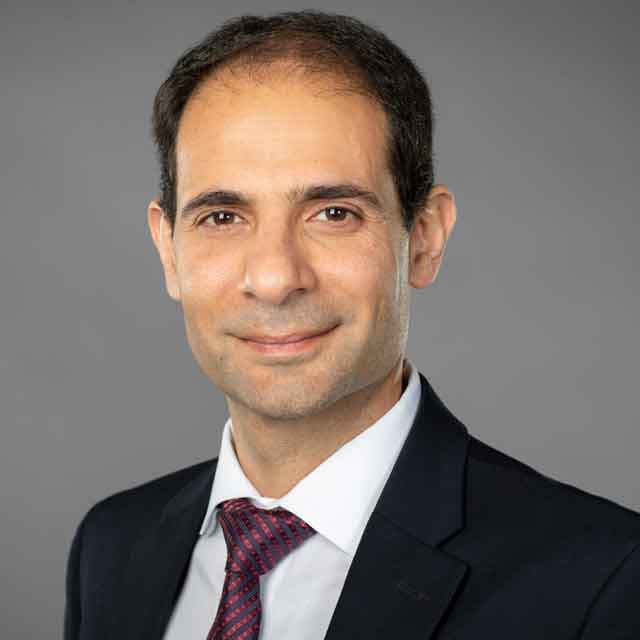
Jan Knippers is a Professor and Institute Director at the University of Stuttgart's Faculty of Architecture and Urban Planning , leading the Institute of Building Structures and Structural Design (ITKE) . He co-founded Knippers Helbig Advanced Engineering and established Jan Knippers Ingenieure in 2018 to focus on innovative fiber composite and timber structures. Key roles: Deputy Executive Director of Cluster of Excellence IntCDC , former Vice-Rector for Research (2019-2021), and Dean of Faculty of Architecture (2021-2023) Technical focus: Hybrid FRP-Timber systems, computational design, and biomimetic principles His projects include the 2024 Hybrid Flax Pavilion , Urbach Tower (2024), and BUGA Fiber Pavilion (2019). He contributes to European standardization committees and serves as 2024 Leverhulme Visiting Professor at University College London.
Professor Asterios Bakolas is affiliated with the Department of Materials Science and Engineering at the School of Chemical Engineering, National Technical University of Athens (NTUA). His research focuses on materials science, cultural heritage conservation, and sustainable construction technologies. Key areas include the development of compatible restoration mortars for historic structures, analysis of traditional building materials, and application of non-destructive testing (NDT) techniques for heritage assessment. He has contributed to projects involving Hagia Sophia, the Parthenon, and Cretan architectural heritage. Research interests span materials characterization, composite materials, and environmental impact assessment of construction materials. Notable work includes studies on polychromy in ancient art, weathering phenomena in historic buildings, and integration of AI for material property prediction. His interdisciplinary approach combines chemistry, civil engineering, and digital humanities to address challenges in conservation and sustainable building practices. No scientific awards are explicitly listed, but his extensive publications reflect recognition in academic circles. Advising and grants are not detailed here, though his involvement in restoration projects implies active collaboration with funding bodies. He is part of the School’s research groups focused on materials science and heritage preservation.
Professor Phil Purnell is a Professor of Materials and Structures at the School of Civil Engineering, University of Leeds. His expertise spans materials science, infrastructure systems, circular economy, and interdisciplinary research. He leads projects addressing decarbonization, waste-to-resource systems, and sustainable construction materials. His roles include Deputy Head of School and advisor to UKRI, DEFRA, and the UK Government’s Circular Economy Taskforce. He holds visiting positions at the Royal College of Art and University of Cambridge. Education: PhD, BEng (Civil), and teaching qualifications (PCPCE, ACTLHE). His research focuses on circular economy applications in textiles, offshore wind, and foundational industries. Notable projects include the Textiles Circularity Centre, Yorkshire Circular Economy Living Lab, and Complex Value Optimisation for Resource Recovery (C-VORR). He advocates for systemic approaches to sustainability, integrating economic, technical, and environmental values. Research outputs emphasize decarbonization pathways, material lifecycle assessments, and robotics in infrastructure management. Collaborations with industry and policy bodies drive practical solutions for resource efficiency. His work bridges engineering, economics, and environmental science to address global challenges like waste management and climate change.
Rhett C. Smith is a Professor of Chemistry at Clemson University, leading a research group dedicated to sustainable materials innovation since 2006. His work focuses on transforming industrial waste streams into high-performance composites through green chemistry approaches. His academic background includes: B.S. in Chemistry from the University of Toledo Ph.D. in Chemistry from Case Western Reserve University NIH Postdoctoral Fellowship at MIT Professor Smith's research pioneers waste valorization using elemental sulfur and biomass derivatives. Key areas include: Upcycling mixed plastic and food waste into structural materials Developing sulfur-based polymers for sustainable construction Creating circular economy solutions for agricultural byproducts His group's work bridges fundamental chemistry with commercial applications in South Carolina's industrial sector. Recent publications reveal a strong trend toward atom-economical processes using waste sulfur and biomass. The research emphasizes scalable technologies for plastic recycling and sustainable cement alternatives, with increasing focus on food waste upcycling and flame-retardant composites. Major recognitions include: National Merit Scholar and NIH Postdoctoral Fellowship Two-time InnoVision Award Finalist (2024 Sustainability category) Fats and Proteins Research Foundation Innovate Award Fred Bisplingoff Research Innovation Award Professor Smith has mentored over a dozen Ph.D. students to successful careers in national labs and industry. His group secured seven major grants in Spring 2024 from NSF, USDA, and industry partners to advance sustainable materials for structural applications. Current projects focus on upcycling post-consumer waste streams and developing carbon-negative building materials. The Smith Research Group operates as a collaborative hub within Clemson's chemistry department, recently expanding to include four faculty co-leaders (Tennyson, Ashlyn Smith, and Sauceda). The team maintains strong industry partnerships while promoting academic accessibility through open educational resources.
Julian Jauk is a Researcher at the Institute for Architecture and Media, TU Graz. His work focuses on innovative material systems, digital fabrication, and sustainable architectural design. He explores the integration of clay composites, mycelium-based materials, and knitted structures with advanced manufacturing techniques like 3D printing. Key research themes include lightweight ceramic structures, biocomposite materials, and computational design methodologies. His research emphasizes material-driven innovation, structural optimization, and environmental sustainability. Notable projects include MyCera (clay-mycelium composites) and ClayKnit (3D-printed clay-knitted hybrids). He also investigates mixed reality tools for architectural sketching and kinetic architectural prototypes. Publications from 2021–2024 highlight trends in bio-based materials, additive manufacturing, and material-property analysis. His work bridges traditional craftsmanship with cutting-edge digital fabrication, aiming to redefine sustainable building practices.
Professor Jing Meng is a leading academic at University College London's Bartlett School of Sustainable Construction, holding the position since 2023 after progressing from Lecturer (2019-2021) to Associate Professor (2021-2023). She concurrently serves as a fellow at the Cambridge Centre for Environment, Energy and Natural Resource Governance and maintains active editorial roles as Executive Editor of the Journal of Cleaner Production and Associate Editor for Journal of Geophysical Research: Atmospheres. Her research spans three interconnected domains: Energy Transitions and Technology Innovation (examining cost forecasts and structural emission declines in China), Climate Change Policies (analyzing South-South trade effects and multinational enterprise emissions), and Emission-Health-Socioeconomics Nexus (assessing air pollution impacts and integrated co-mitigation strategies). This interdisciplinary approach is reflected in her publication record across Nature family journals and PNAS. Analysis of her recent publications reveals a consistent focus on global carbon accounting methodologies, with increasing attention to subnational (city-level) analyses, health co-benefits of climate policies, and technological innovation pathways for hard-to-abate sectors. Her work frequently employs multi-regional input-output modeling to trace emissions through complex supply chains. AGU Global Environmental Change Early Career Award (2023) MIT Technology Review Innovators Under 35 Asia Pacific (2022) Clarivate Highly Cited Researcher (2020-2024) Nature Communications Top 50 Earth Sciences Article (2018) MDPI Emerging Sustainability Leader Award (2020) Environmental Research Letters Best Early Career Article (2017) Professor Meng has secured substantial funding from diverse sources including NERC, the British Council, Quadrature Climate Foundation, The Royal Society, and UCL internal grants. She leads an interdisciplinary research group focused on technology innovation and climate policy, with particular emphasis on China's role in global emissions systems. Her work directly supports Sustainable Development Goal 13 (Climate Action) through actionable policy insights.
João F. Mano is a Full Professor at the Department of Chemistry, University of Aveiro, and Director of the Doctoral Program on Biotechnology. He leads the COMPASS Research Group and serves as Vice-Director at CICECO - Aveiro Institute of Materials. His academic appointments include Invited Professor at University of Lorraine (France), Visiting Professor at KAIST (South Korea), and Adjunct Professor at Ajou University (South Korea). Education: PhD in Chemistry (1996, Technical University of Lisbon); D.Sc. in Tissue Engineering, Regenerative Medicine and Stem Cells (2012, University of Minho) Research Interests focus on Biomaterials for Regenerative Medicine , integrating Nanotechnology , Microtechnology , and Biofabrication . His group develops Bioinspired Materials using polymer chemistry, Decellularized Extracellular Matrix , and 3D Bioprinting to engineer Cell Microenvironments for therapeutic applications. Recent Publications highlight advancements in Human-Derived Hydrogels , Photopolymerizable Scaffolds , Magneto-Responsive Biomaterials , and Programmable Bioinks . Trends show emphasis on Organ-on-a-Chip integration, Smart Living Materials , and Green Bioprinting methodologies. Scientific Awards include: European Research Council Advanced Grants (2015, 2020) Fellow at IUPAC, European Academy of Sciences, and American Institute of Medical and Biological Engineering ERC Proof of Concept Grants Doctor Honoris Causa from University of Lorraine and Utrecht UNESCO Chair on Biomaterials George Winter Award (European Society for Biomaterials) Supervisions & Collaborations encompass 74+ MSc, 26+ PhD students, and 40+ postdocs. He co-founded METATISSUE and CELLULARIS Biomodels , and serves as Editor-in-Chief of Materials Today Bio .
Dr. Bhavna Sharma is an Associate Professor and Director of the Chase L. Leavitt Master of Building Science Program at the USC School of Architecture. Her work focuses on decarbonization, bio-based materials innovation, and sustainable healthcare infrastructure. She leads the Keck USC Sustainable Healthcare Initiative (KUSHI) to advance environmentally conscious healthcare systems. Dr. Sharma holds a Ph.D. in Civil and Environmental Engineering from the University of Pittsburgh, with additional degrees in Art History and Architecture. Her research spans structural systems optimization from material harvesting to building-scale applications, emphasizing bio-composites like bamboo and timber. She co-chairs USC's Presidential Working Group on Sustainability, contributing to Assignment: Earth climate goals. Courses taught include seismic design, structural systems, and building science integration. Key research areas include lifecycle assessment in healthcare, seismic-resistant designs, and interdisciplinary standards for non-conventional materials. Her work bridges material science, architectural practice, and policy to address global sustainability challenges.
Prof. Dr. Wolfgang Nejdl is a Professor at the Institute for Data Science within the Faculty of Electrical Engineering and Computer Science at Leibniz University Hannover. He serves as Executive Director of the L3S Research Centre and Leibniz Forschungszentrum Inclusive Citizenship. Web Science Information Retrieval Artificial Intelligence Deep Learning His recent research focuses on AI applications in medicine , multimodal data fusion , and ethical AI systems . Projects include CAIMed (AI in Causal Medicine) and DAISEC (AI & Cybersecurity). His publications span conferences like AAMAS, WWW, and SIGIR. Notable awards include membership in the National Academy of Science and Engineering (acatech) . Former students hold positions at institutions like Stanford, TU Dresden, and ETH Zürich. Current projects involve climate resilience AI , federated learning for healthcare , and quantum-inspired data science .
Elie Hajj is a Professor in the Department of Civil & Environmental Engineering at the University of Nevada, Reno (UNR), serving as Associate Director of the Western Regional Superpave Center. His research focuses on asphalt pavement engineering, sustainable materials, and infrastructure resilience. He specializes in pavement rehabilitation, numerical modeling of dynamic load impacts, and economic analysis of pavement preservation strategies. Dr. Hajj has received recognition for his 2016 ASTM award for outstanding work on pavement rehabilitation economics. He actively engages in professional service, including TRB webinars and academic seminars on topics like pavement damage assessment and vehicle operating costs. His teaching spans graduate and undergraduate courses in pavement design, materials engineering, and advanced pavement analysis. His research integrates experimental and computational methods to address challenges in pavement performance under superheavy loads, recycled material utilization, and energy-efficient construction practices. Collaborations with industry and government agencies enhance the practical applicability of his findings.
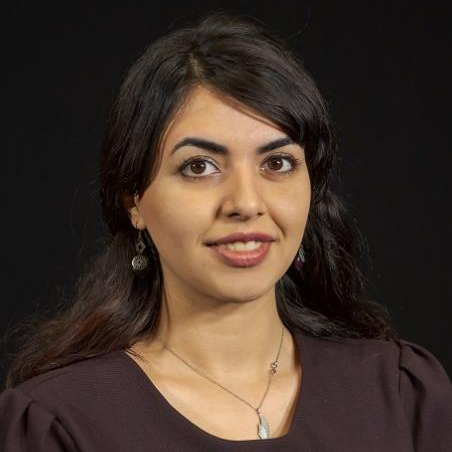
Dr. Ava Hedayatipour is an Assistant Professor of Electrical Engineering at California State University at Long Beach (CSULB), where she joined in Fall 2020. She holds a Ph.D. from the University of Tennessee, Knoxville (2020), and degrees from Iran University of Science and Technology (B.S., 2012) and Shahid Rajaee Teacher Training University (M.S., 2015). Her research focuses on analog/mixed-signal circuit design, bio-implantable devices, low-power systems, and hardware security. Notable contributions include a first-of-its-kind integrated secure multimodal sensor and a flexible paper electrode for remote electrochemical experiments. Education: Ph.D., Electrical Engineering, University of Tennessee, Knoxville, 2020 M.S., Electrical Engineering, Shahid Rajaee Teacher Training University, Iran, 2015 B.S., Electrical Engineering, Iran University of Science and Technology, 2012 Research Interests: Analog and mixed-signal circuit design Biomedical devices and lab-on-chip applications Low-power, low-noise microelectronics Hardware security for IoT and biomedical sensors Flexible electrodes for wearable systems Awards: University of Tennessee Fellowship Award (2019) Outstanding Teaching Assistant Award (2018) BEST PAPER AWARD at IEEE DCAS 2025 2nd Place Winner at IEEE BIOCAS 2023 Innovation Challenge Advising & Grants: Lead CSULB LEAP program project on medical imaging braces Funded NSF project on chaotic analog security (2018–present) Collaborated with industry partners like Applied Medical and Synaptics Labs & Teams: Next Generation Wearable Lab at CSULB Focus on sensor design, hardware security, and biomedical applications
Adam Feinberg is a Professor in the Departments of Biomedical Engineering and Materials Science and Engineering at Carnegie Mellon University (CMU). He leads the Regenerative Biomaterials & Therapeutics Group, focusing on cell-material interactions, 3D bioprinting, and bioengineered tissues. His work integrates nanofabrication, molecular biology, and 3D imaging to address challenges in muscle repair, corneal regeneration, and cancer. Key innovations include the FRESH bioprinting platform, enabling soft ECM gel-based constructs, and ECM shrink-wrapping techniques for cell encapsulation. Feinberg holds a Ph.D. and MS in Biomedical Engineering from the University of Florida (2004, 2002) and a BS in Materials Science and Engineering from Cornell University (1999). He has secured major grants, including ARPA-H funding for diabetes treatments and Canada’s New Frontiers Fund for heart disease therapies. His research has led to over 45 peer-reviewed articles and 20 patents. His scientific awards include the NIH Director’s New Innovator Award and NSF CAREER Award. Media highlights include breakthroughs in vascularized tissue models and biodegradable actuators. Feinberg collaborates widely, advancing clinical translation of bioprinted tissues and sustainable bio-bots.
Prof. Vera Meyer is a Professor in the Department of Applied and Molecular Microbiology at Technische Universität Berlin’s Faculty III - Process Sciences. Her research focuses on optimizing fungal production systems for bioactive compounds, antifungal agents, and secondary metabolites. She leads projects such as the MY-CO SPACE exhibition, exploring fungal-based materials in architecture and sustainability. Notable contributions include work on Aspergillus niger morphology, pyomelanin synthesis for radiation shielding, and co-authoring over 150 publications. Meyer holds patents on fungal biosynthetic processes and collaborates internationally on interdisciplinary bioeconomy initiatives. Contact: vera.meyer@tu-berlin.de . Education details are not explicitly listed, but her career includes leadership roles in TU Berlin’s biotechnology programs and UniCat collaborations. Research emphasizes systems biology approaches to microbial engineering, combining microbiology, mathematics, and engineering for predictive models of cellular processes. Recent projects include the MY-CO SPACE exhibition at Bundeskunsthalle Bonn (2025-2026), showcasing fungal-based construction materials.
Peyman Karami is a Postdoctoral Researcher at the Laboratory of Biomechanical Orthopedics (LBO) within École Polytechnique Fédérale de Lausanne (EPFL)'s College of Engineering . Research focuses on adhesive hydrogels for cartilage repair and orthopedic applications Investigates biomimetic stimuli (hydrostatic pressure, temperature) in chondrocyte homeostasis Develops ligin-based multifunctional hydrogels for sustainable biomedical applications Expertise in mechanobiology and thermomechanical regulation of tissue-engineered constructs Scientific Contributions: Leads 15+ publications on hydrogel technologies for cartilage regeneration, thermomechanical stimulation effects, and lignin functionalization, including breakthrough work in NIR-light photocuring , malacic trachea repair , and biomimetic temperature gradients . Current Research Trends: Prioritizes injectable adhesive hydrogels , noninvasive tissue repair , and multi-functional biomaterials that couple mechanical and biochemical cues for enhanced regeneration.
Dr. Sanandam Bordoloi is an Assistant Professor at the Department of Civil Engineering, Aalto University's School of Engineering, specializing in Geotechnical and Geo-environmental Engineering. He earned his PhD from Indian Institute of Technology (IIT) Guwahati and has held postdoctoral positions at Hong Kong University of Science and Technology (HKUST) and University of Illinois at Urbana-Champaign (UIUC). Expertise in unsaturated soil mechanics Specializing in biochar applications for geotechnical systems Focus on carbon capture and waste valorization Developed novel techniques for soft clay remediation Recipient of Telford Premium Prize His recent publications highlight trends in biochar-amended composites , CO2 mineralization , landfill restoration , and soil-hydrological interactions . Key subfields include contaminant transport mechanisms, cementitious material innovation, and root-soil feedback systems. Scientific Awards: Telford Premium Prize for exceptional civil engineering research