- Biophysics
- Cell Biology
- Chemistry
- +۶ مورد دیگر
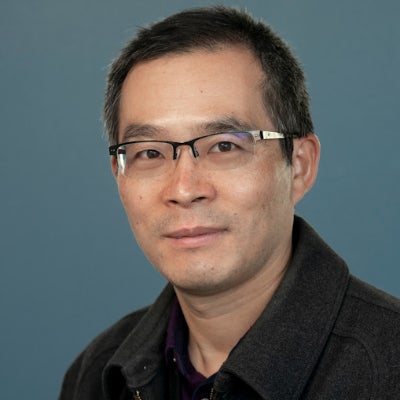
Professor Bianxiao Cui is the Job and Gertrud Tamaki Professor of Chemistry at Stanford University and a fellow of the Wu Tsai Stanford Neuroscience Institute. Her research integrates biophysics, cell biology, chemistry, and nanotechnology to develop tools for studying the nano-bio interface, membrane curvature, electrophysiology, and signal transduction in health and disease. Ph.D. in Chemistry, University of Chicago (2002) B.S. in Material Science & Engineering, University of Science & Technology of China (1998) Her group bridges biochemistry, material science, and neuroscience to probe cellular processes at nanoscale. Key projects include: Mechanisms of Membrane Curvature: How nanoscale topography regulates integrin adhesions, ER-PM contacts, and ion channel activity. Electrophysiological Tools: Nanoelectrode arrays (NEAs) and electrochromic optical recording (ECORE) for scalable, label-free action potential monitoring. Protein Relocalization: Using shuttle proteins to rewire subcellular localization for disease intervention. Recent articles highlight advancements in 3D cell adhesion , AI-driven electrophysiology , and optogenetic pain models . Her work spans biochemical assays, nanofabrication, and in vivo studies . Scientific Awards: Ono Pharma Breakthrough Science Initiative Award (2022-2025) NIH New Innovator Award (2012-2017) NSF CAREER and INSPIRE Awards Packard and Searle Fellowships Teaching & Advising: She mentors PhD students in Chemistry and Biophysics, including Krishna Raghavan and Pengwei Sun , and supervises postdoctoral fellows like Dr. Wei Zhang . She teaches Biophysical Chemistry and advises on cellular nanomechanics and optogenetics . Labs & Collaborations: The Cui Lab collaborates with the Melosh and Khosla labs, focusing on cell-material interactions and neurotechnology development (e.g., Kirigami electronics for organoid stimulation).