Dr. Igor Berinskii is a Senior Lecturer at the Iby and Aladar Fleischman Faculty of Engineering , Tel Aviv University, affiliated with the School of Mechanical Engineering . He leads the Multiscale Mechanics of Solids (MSMS) Lab , focusing on the relationship between microstructure and macroscopic mechanical behavior through analytical and computational methods. His research aims to explain unconventional mechanical properties and predict novel features for engineering applications. 2005 : B.S. (Cum laude) in Applied Mechanics, Peter the Great Polytechnic University 2007 : M.S. (Cum laude) in Applied Mechanics, Peter the Great Polytechnic University 2010 : Ph.D. in Mechanics of Solids, Institute for Problems in Mechanical Engineering, Russian Academy of Sciences His research spans Mechanics of media with microstructure , Cellular materials/Metamaterials , Nanomechanics/NEMS/MEMS , and Micromechanics of fracture . Recent publications highlight work on origami-inspired structures , graphene and MoS2 mechanics , bio-inspired metamaterials , and computational homogenization , with a focus on multiscale modeling and dynamic systems. The MSMS Lab employs HiDRA (Hierarchical Deformable and Rigid Assemblages) for coarse-grained modeling, contributing to advancements in lattice materials and elastic wave propagation.
David Bierbach is a Researcher at the Biology and Ecology of Fishes group within the Faculty of Life Sciences at Humboldt University . His work focuses on collective behavior, animal welfare, and evolutionary ecology in aquatic species. Key Research Areas: Collective decision-making in fish shoals Behavioral plasticity in clonal and sexual fish species Environmental stress responses and adaptations Science of Intelligence Cluster collaborations Methodological Innovations: Use of biomimetic robots in studying social behavior Development of standardized fish husbandry protocols Current Projects: Thermal tolerance in extremophile fish Predator avoidance dynamics in collective systems Behavioral individuality in clonal vertebrates In recent publications (2024-2025), Bierbach's research spans fish social networks, aquaculture standards, and computational modeling of collective behavior. His work emphasizes interdisciplinary approaches combining biology with robotics and data science to advance both ecological understanding and animal welfare practices.
Prof. Dr. Pawel Romanczuk is a faculty member at Humboldt University's Faculty of Life Sciences, Institute of Biology, where he leads research in complexity science and adaptive systems. His work bridges biological collective behavior with robotics and computational modeling. Research Focus: Collective decision-making, swarming dynamics, animal behavior, and bio-inspired robotics Key Collaborations: Interdisciplinary work with robotics, physics, and ecological modeling His recent publications explore metric-free alignment in active matter, human-swarm interaction , and escape cascades in biological systems. He investigates how network topology influences decision-making and studies vision-based navigation algorithms. Scientific trends include: Understanding phase transitions in animal collective behavior Developing biomimetic robots for experimental studies Modeling social contagion in multi-agent systems
Tess Homan is an Assistant Professor at the Power & Flow group within the Department of Mechanical Engineering at Eindhoven University of Technology (TU/e). Her research focuses on fundamental fluid dynamics , with an emphasis on data analysis and experimental techniques to study fluid-particle flows , bubbly flows , and biological systems . She is also involved in the Complex Multiphase Flows theme at TU/e. Research Trends: Articles span microfluidic mixing , metal particle combustion , and deep learning applications in fluid dynamics. Key subfields include artificial cilia dynamics , hyperspectral thermometry , and hydrogen-based metal regeneration . Scientific Contributions: Developed low-cost deep learning segmentation for bubble detection in industrial processes Advanced high-speed imaging techniques to analyze metal dust flames Investigated metachronal wave programming for fluid control in artificial cilia systems Education & Outreach: Teaches Experimentation for Mechanical Engineering and MATLAB Homologatie at TU/e.
Mahdieh Zabihimayvan is an Assistant Professor in the Computer Science Department at Central Connecticut State University , specializing in Cybersecurity and Artificial Intelligence applications. Her research focuses on enhancing proactive cyber threat intelligence and privacy protection using applied machine learning and complex systems analysis . Areas of Expertise: Machine learning for Cybersecurity, Complex systems analysis Memberships: European Society for Fuzzy Logic and Technology, ACM-W Women in Network Science, Women in Machine Learning, WomenTech Network Courses Taught: Computer Security, Secure Software Development, Big Data Programming, Systems Programming, Secure Software Designs, Introduction to Internet Programming Research Interests include cybersecurity , machine learning , and complex systems . She has published extensively on topics such as darknet traffic classification , phishing attack detection , and web robot identification , often leveraging fuzzy logic and deep learning techniques. Scientific Awards include a nomination for the Undergraduate Research Competition in 2022. Her work intersects cybersecurity , machine learning , and privacy protection , particularly in analyzing Tor networks , dark web systems, and biomedical data .
Dr Jose Santos serves as Associate Head of the School of Computing and Lecturer in the Faculty of Computing, Engineering and the Built Environment at Ulster University. Based at the Belfast campus (2-24 York Street), he maintains an active research profile with 54 publications since 2000 and a Scopus h-index of 9. His leadership extends to the Computer Science Research group where he contributes to the university's UN Sustainable Development Goal initiatives. Dr Santos' research centers on networking and communications, with foundational work in geographical routing protocols for mobile ad-hoc networks (MANETs) evidenced by his highly-cited survey (193 citations). His expertise spans quality of service optimization , location-aware routing for disaster telemedicine , and multimedia streaming in emergency scenarios . Recent expansions include Robotics: Bio-inspired control systems using reinforcement learning for coverage and navigation Emerging technologies: Blockchain-based edge computing (BECA architecture) and SLAM systems for autonomous navigation Sustainability applications: Low-cost environmental monitoring and battery health estimation His work consistently bridges theoretical networking concepts with real-world emergency response challenges. Analysis of recent publications (2021-2025) reveals strategic convergence of AI with physical systems. Key trends include sensor fusion for robotics (monocular-LiDAR SLAM), blockchain for secure IoT edge computing, and neural networks for battery diagnostics. This evolution maintains his core networking expertise while addressing sustainability through pollution monitoring and energy-efficient systems, aligning with Ulster University's focus on practical technological solutions for global challenges. Dr Santos has supervised 4 research students and secured funding for impactful projects including: KTP Programme with Fire Glass Direct Ireland Ltd (2012-2015): Transferred academic knowledge to industrial applications Ja.NET location awareness proposal (2008): Pioneered cooperative positioning techniques for indoor environments His external engagement includes serving as External Examiner at Griffith College (2015-2017), demonstrating commitment to academic standards beyond Ulster University. As part of Ulster's Computer Science Research group, Dr Santos contributes to multidisciplinary teams addressing UN Sustainable Development Goals. His current work integrates drone communications for fire emergency response, particulate matter monitoring, and blockchain architectures - reflecting a trajectory toward intelligent systems that enhance community resilience and environmental sustainability through rigorous networking research.
Professor Ashish Dutta is a distinguished faculty member in the Department of Mechanical Engineering at the Indian Institute of Technology Kanpur. He earned his PhD from Akita University, Japan in 2002 under the supervision of Prof. Obinata Goro from Nagoya University, with additional academic credentials including an M.E. from Jadavpur University (1994) and a B.Tech from R.E.C. Calicut (1989). His research expertise spans Robotics, Intelligent Control systems, Microsensors and actuators, and Bio-robotics. Professor Dutta has pioneered work in Ionic Polymer Metal Composite (IPMC) actuators and compliant robotic mechanisms, with applications ranging from micro-assembly to human-robot interaction. His research bridges mechanical engineering, materials science, and robotics to solve complex engineering challenges. Professor Dutta's recent publications demonstrate significant contributions to bipedal locomotion, precision assembly techniques, and dexterous manipulation systems. His work shows a consistent focus on developing innovative robotic solutions with practical applications in manufacturing and biomedical engineering. Japan Ministry of Education fellowship for robotics research in Japan (1998-2002) Professor Dutta has held leadership positions including Associate Dean (Digital Infrastructure) since 2014 and Head of the Computer Centre since 2012. He serves as Secretary of the Robotics Society of India and is a member of IEEE. His teaching portfolio includes Introduction to Robotics (ME 762), Robot Dynamics and Control (ME 763), and several other core mechanical engineering courses.
Benjamin Wheatley is an Associate Professor of Mechanical Engineering at Bucknell University, where he leads the Mechanics and Modeling of Orthopaedic Tissues Laboratory (MMOT Lab) . His research integrates experimental and computational biomechanics to understand soft-tissue and musculoskeletal mechanics, with applications spanning orthopaedics, rehabilitation engineering, and bio-inspired design. Education B.S. in Engineering, Trinity College, 2011 Ph.D. in Mechanical Engineering, Colorado State University, 2017 Research Interests Wheatley’s work centers on finite-element modeling and experimental characterization of biological soft tissues, particularly skeletal muscle, tendon, and bone. He investigates structure–function relationships in orthopaedic tissues, neuromuscular biomechanics, and bio-inspired protective structures such as bighorn sheep horns. Applications include improving prosthetic gait, understanding knee-joint loading, and designing impact-mitigating materials. Publication Trends Across more than 30 peer-reviewed articles since 2015, Wheatley’s scholarship exhibits two dominant trajectories: (1) high-fidelity computational modeling of skeletal muscle and orthopaedic tissues under multiaxial loading, and (2) experimental biomechanics studies combining motion capture, EMG, imaging, and mechanical testing. Recent work increasingly couples optimal-control theory with gait simulations to predict clinical outcomes for individuals with limb loss. Scientific Awards & Honors (none explicitly listed in provided text) Advising & Funding Wheatley actively mentors undergraduate and graduate researchers in the MMOT Lab; interested students are invited to attend weekly lab meetings after contacting him via email. Grant and funding details are not provided in the supplied text. Laboratory & Team He directs the Mechanics and Modeling of Orthopaedic Tissues Laboratory located in Academic East 302, Bucknell University. The lab emphasizes student-led collaborative research that bridges mechanical engineering, orthopaedics, and biology.
Pierre Mozer is a University Professor and Hospital Practitioner affiliated with the RPI-Bio team. His work focuses on medical robotics and image-guided urological procedures, particularly prostate cancer diagnosis and minimally invasive surgeries. Academic affiliation: University Professor (no specific university named) Professional role: Hospital Practitioner Team: RPI-Bio at ISIR Research themes include: Medical robotics for prostate biopsies MRI-ultrasound fusion imaging 3D ultrasound-guided surgical precision Robotic ureteroscope applications Testosterone level correlations with cancer severity Publication trends (2010–2024) show consistent contributions to medical robotics, prostate cancer diagnosis, and imaging technologies. Key collaborations include researchers from Université Pierre et Marie Curie and other French medical institutions. His work has advanced MRI-TRUS fusion biopsy techniques and robotic systems for urological procedures. Clinical trials include first-in-man validation of robotic probe-holders and comparative studies between MRI-targeted and systematic biopsies.
Geert A. Folkertsma is a Lecturer affiliated with the Digital Society Institute at the University of Twente, specializing in Robotics and Mechatronics. His work focuses on energy-aware robotic systems, autonomous vehicles, and biomimetic actuation technologies. Research Interests: Energy-efficient robotic architectures Biomimetic actuation and control Autonomous aerial and ground vehicles Embedded safety-critical systems Research Trends: His publications demonstrate expertise in applying bond graph modeling to UAV control, developing distributed robotic architectures with stability guarantees, and creating energy-aware actuation systems. Work spans aerospace robotics, dexterous manipulation, and bio-inspired design. Academic Contributions: Active in robotics education Developing simulation tools for autonomous systems Advancing energy-aware actuation for humanoid robots
Marco Tamborini is a historian and philosopher of science and technology currently serving as a substitute full professor at the University of Regensburg for the summer semester of 2025. He is based at the Technical University of Darmstadt where he holds the position of Privatdozent and serves as Principal Investigator for a German Research Foundation (DFG) project on 'Hybrid Systems, Bionics, and the Circulation of Morphological Knowledge.' Tamborini is also a member of the Junge Akademie | Mainz, a fellow of the Johanna Quandt Young Academy, and an associate member at the Cluster of Excellence »Matters of Activity«. Tamborini completed his Habilitation (venia legendi for 'Philosophy') at the Technical University of Darmstadt in 2022. He earned his Ph.D. in philosophy from Ruprecht-Karls-Universität, Heidelberg in 2015, following pre-doctoral work at the Max Planck Institute for the History of Science. He also holds the Italian National Habilitation in Science (Abilitazione Scientifica Nazionale) for both full professorship in philosophy of science and associate professorship in theoretical philosophy. Dr. Tamborini's research lies at the intersection of (bio)science, technology and ethics, with particular focus on life sciences and bio-inspired engineering disciplines including AI, robotics, biorobotics, biofabrication, synthetic biology, bionics, and bio-inspired architecture. He also works extensively on classical philosophical topics from the 18th to 21st century, with special attention to Kant, Herbart, Lotze, Husserl, Neo-Kantianism, Phenomenology, Neo-Empiricism, philosophy of culture, and philosophical anthropology. His recent publications demonstrate a consistent focus on the dissolution of boundaries between biology and technology, examining how morphological knowledge circulates between scientific disciplines and informs bio-inspired engineering. Tamborini's work bridges historical analysis with philosophical reflection, particularly in exploring how concepts of form, structure, and function evolve across biological and technical domains. Dr. Tamborini has received several prestigious awards for his scholarship and teaching: Athene Preis Gute Lehre 2022 - Prize for outstanding teaching at TU Darmstadt Everett Mendelsohn Prize (2017) - For the best article published in Journal of the History of Biology Honorable mention from Italian Society of the History of Science (2020) As Principal Investigator for the DFG-funded project 'Hybrid Systems, Bionics, and the Circulation of Morphological Knowledge,' Tamborini leads research examining how morphological knowledge circulates between biological sciences and engineering disciplines. His work has been supported by various institutions including the Ernst Ludwig Mobility Grant that facilitated his visiting fellowship at Clare Hall, Cambridge. Tamborini has supervised numerous students through his teaching positions at multiple institutions and has been an active mentor in the Junge Akademie | Mainz. Dr. Tamborini collaborates with several research groups including the Cluster of Excellence »Matters of Activity« and has worked with the Biorobotics Laboratory at EPFL. His DFG project involves interdisciplinary teams examining the historical and philosophical dimensions of bio-technical systems. Tamborini has also been affiliated with the Cluster of Excellence Living, Adaptive and Energy-autonomous Materials Systems (liv MatS) at the University of Freiburg, contributing philosophical perspectives to their bio-inspired materials research.
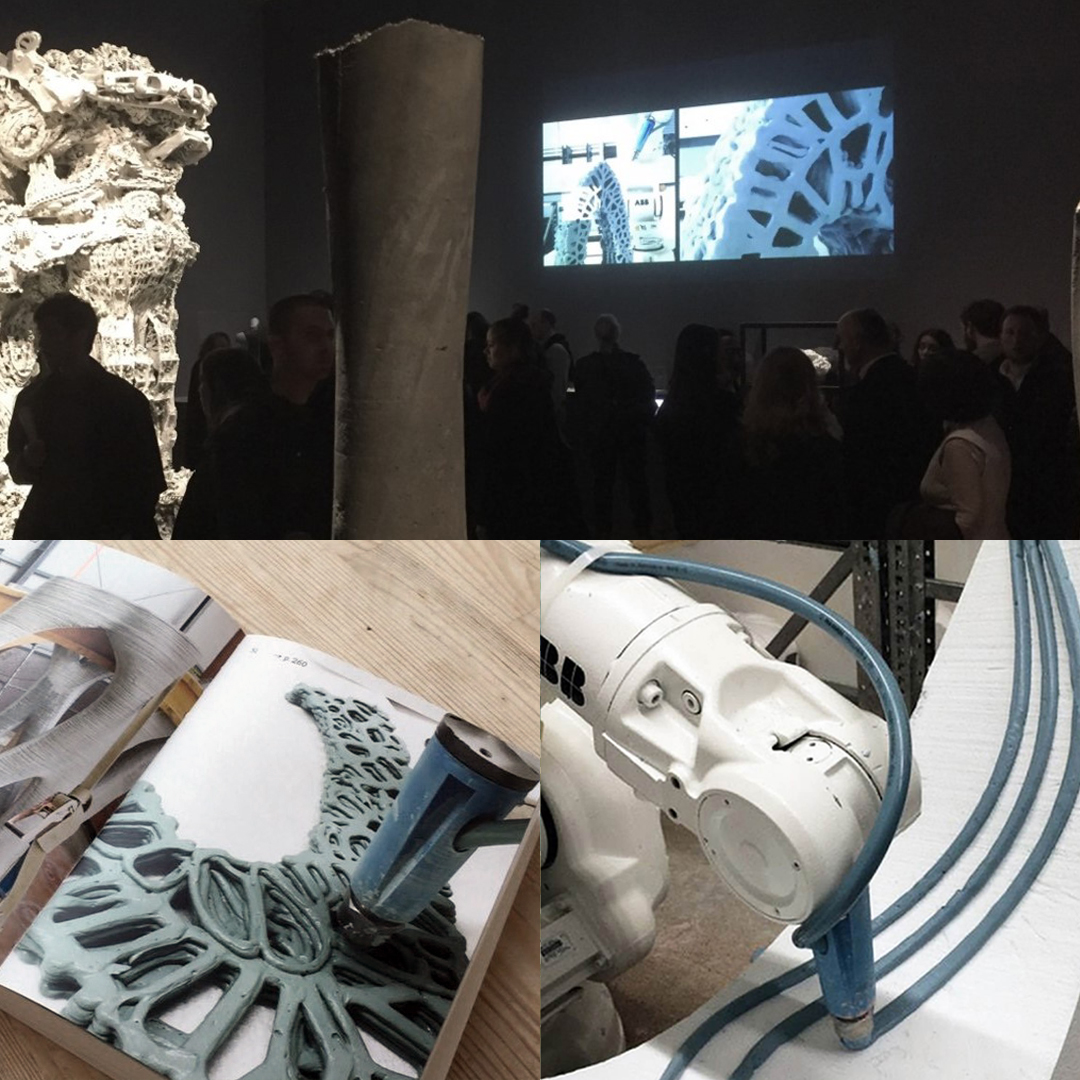
Dr. Sina Mostafavi is an Associate Professor at the Huckabee College of Architecture at Texas Tech University. With expertise in computational design and architectural robotics, his research explores hybrid human-machine intelligence for integrated design, inclusive automation, and circular production. He holds a PhD from TU Delft and has led research roles at institutions like Bauhaus Dessau and Hyperbody Research Group. Ph.D. in Architecture, Delft University of Technology, Netherlands Founder of SETUParchitecture, a studio focused on digital design-to-production technologies His work spans smart materials , 3D printing , and urban resilience , with international projects such as the 100 Years Bauhaus Pavilion and Adaptive City Car. He has authored the book Hybrid Intelligence in Architectural Robotic Materialization and presented at institutions like ETH Zurich and IAAC Barcelona. Recent publications highlight data-driven design , AR-enabled co-production , and socio-environmental justice . His research integrates topology optimization , bioplastic fabrication , and collaborative robotics to address global challenges in sustainable construction and equitable urban development. Architizer A+ Awards 2020 2A Continental Euro-Asia Award 2018 Emerging Scholar Digital Futures 2021 He supervises graduate students and collaborates with journals/conferences including eCAADe, ACADIA, and Automation in Construction . Contact: Sina.Mostafavi@ttu.edu
Dr. Ailish O'Halloran serves as Deputy Provost at Beijing Dublin International College (BDIC), University College Dublin, a position held since December 2017. Previously, she was Vice Principal Teaching & Learning (2014-2017) and Acting Provost (2019) at BDIC. Her academic career began as a Lecturer and Assistant Lecturer in Engineering at Institute of Technology Tallaght (2010-2014). She earned a BE in Electronic Engineering from University College Dublin and a PhD from NUI Galway focused on filled elastomers for dielectric elastomer actuators. Additional credentials include a UCD Professional Diploma in Creativity & Innovation for Education. Her research expertise spans dielectric elastomer actuators and electroactive polymers, with seminal contributions to artificial muscle technology and biomechanical applications. The 2008 review article established foundational understanding of material properties and actuation mechanisms in this emerging field. Current teaching activities include coordinating Intercultural Encounters (2024-2025) and Circle of Cultures (2021), reflecting BDIC's international educational mission and her engagement with cross-cultural pedagogy.
Alessandro Nitti is an Assistant Professor in the Department of Mechanics, Mathematics & Management at Politecnico di Bari, Italy, specializing in Fluid Dynamics (ING-IND/06). His research integrates computational methods and biomechanics to study complex fluid-structure interactions, cardiac electrophysiology, and bio-inspired robotics. Position: Assistant Professor Department: Mechanics, Mathematics & Management Email: alessandro.nitti@poliba.it His research spans Fluid Dynamics (e.g., vortex-induced vibrations, valvular leaflet motion), Cardiac Electromechanics (e.g., myocardial activation, electrophysiology coupling), and Isogeometric Analysis (e.g., thin shell modeling, mixed collocation methods). He also explores Swarm Robotics through collective intelligence models. Recent publications highlight trends in Fluid-Structure Interaction (e.g., energy harvesting, jellyfish locomotion), Biomedical Engineering (e.g., aortic valve turbulence, cardiac muscle simulation), and Computational Methods (e.g., immersed boundary techniques, isogeometric shell models). These works often involve interdisciplinary approaches combining Biomechanics , Electrophysiology , and Multiphysics Simulation .
Silvia Schintke is a full professor at Haute école d'Ingénierie et de Gestion du Canton de Vaud (HEIG-VD), part of HES-SO University of Applied Sciences and Arts Western Switzerland. She leads the Laboratory of Applied NanoSciences (COMATEC-LANS) and the Industrial Systems Engineering program. Professor since 2002 Executive Diploma HSG in General Management (2012-2014) St. Gallen Leadership Certificate (2011) Her research focuses on Nanotechnology and Advanced Materials , particularly Functional Surfaces , Nanofiber Fabrication , and Flexible Electrodes . She has developed bio-sourced packaging solutions and metal-free conductive polymers for medical applications. Key projects include: Current: SIENA (electrophysiology networks in agriculture) PRONANO (nanotechnology development) Completed: NAPARDI (France-Switzerland), CORRAL (EU FP7 corrosion protection), NanoSkills (European nanotechnology training) She has secured multiple grants from: innosuisse Swiss National Science Foundation EU FP7 Leonardo da Vinci Program Her publications span conductive hydrogels , nanofiber electrodes , and molecular self-assembly techniques. She collaborates with institutions like Agroscope, Vivent SA, and international universities.