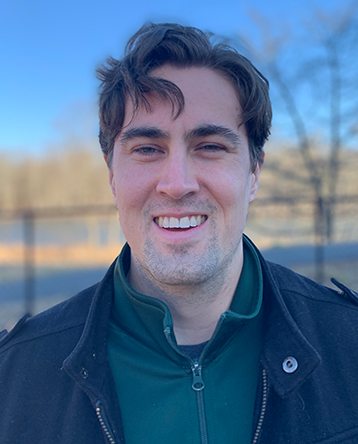
Prof. Heinz Koeppl is a Professor in the Department of Electrical Engineering and Information Technology at TU Darmstadt. His research focuses on self-organizing systems, systems biology, and control theory, with applications in synthetic biology, robotics, and stochastic processes. He explores interdisciplinary topics such as genetic circuit design, UAV swarm dynamics, and machine learning-driven modeling of biochemical systems. Key research areas include the development of deep learning frameworks for kinetic modeling, Bayesian optimization for riboswitch design, and mean field control theory for sparse networks. His work bridges theoretical foundations with practical engineering solutions, addressing challenges in molecular communication, gene regulation, and robotic swarm coordination. Publications from 2023–2025 highlight advancements in bio-inspired algorithms, swarm intelligence, and computational biology. Notable contributions include studies on RNA-based circuits, active matter dynamics, and optimization strategies for large-scale systems. His research emphasizes interdisciplinary collaboration, leveraging tools from electrical engineering, mathematics, and life sciences. No scientific awards are explicitly listed in the provided text. Advising and grants details are not available. Prof. Koeppl’s lab focuses on integrating systems biology approaches with engineering principles to solve complex problems in healthcare, environmental sustainability, and technological innovation.
Prof. Dr. Wolfgang Nejdl is a Professor at the Institute for Data Science within the Faculty of Electrical Engineering and Computer Science at Leibniz University Hannover. He serves as Executive Director of the L3S Research Centre and Leibniz Forschungszentrum Inclusive Citizenship. Web Science Information Retrieval Artificial Intelligence Deep Learning His recent research focuses on AI applications in medicine , multimodal data fusion , and ethical AI systems . Projects include CAIMed (AI in Causal Medicine) and DAISEC (AI & Cybersecurity). His publications span conferences like AAMAS, WWW, and SIGIR. Notable awards include membership in the National Academy of Science and Engineering (acatech) . Former students hold positions at institutions like Stanford, TU Dresden, and ETH Zürich. Current projects involve climate resilience AI , federated learning for healthcare , and quantum-inspired data science .
Robert F. Shepherd is an Associate Professor and Director of Graduate Studies for Mechanical Engineering at Cornell University's College of Engineering. He holds appointments in Aerospace Engineering, Fiber Science, Materials Science, Mechanical Engineering, Systems Engineering, and Theoretical and Applied Mechanics. Educational background: B.S. Material Science & Engineering, University of Illinois (2002) M.B.A. General Management, University of Illinois (2009) Ph.D. Material Science & Engineering, University of Illinois (2010) His research focuses on disruptive manufacturing technologies (3D printing, microfluidics) and functional materials for novel devices. He develops soft actuators mimicking biological functions and enhances fabrication techniques for efficient biomimetic machines. His work bridges materials innovation with robotic applications. Publications primarily explore soft robotics, biomimetic systems, and advanced manufacturing, with consistent emphasis on material behavior and actuator design across diverse applications. Scientific awards: Senior Member, National Academy of Inventors (2022) ONR Young Investigator (2016) Cornell Engineering Teaching Award (2016) Extreme Mechanics Letters Award (2016) NAE FOE Fellow (2016) NAS KAVLI Fellow (2016) Leads the Shepherd Group Research Laboratory and Organic Robotics Lab, focusing on soft material systems and bio-inspired machines.
Akio Kodaira is affiliated with the Institute of Science Tokyo as a researcher. His work focuses on soft robotics, mechatronics, and advanced actuator design using materials like IPMC (Ionic Polymer-Metal Composites) and flexible fuel cells. Primary institution: Institute of Science Tokyo Research Interests Kodaira's research spans the development of soft robots, thin-film actuators, and bio-inspired mechanical systems. Key areas include IPMC fabrication techniques, energy-efficient actuators using Au/Pt electrodes, and 3D crafts using paper/fabric materials. Publication Trends Recent publications emphasize soft robotics, material hybridization (e.g., paper/fabric-assisted IPMC), and flexible fuel cell applications. His collaborations with researchers like Koichi Suzumori and Hiroyuki Nabae highlight interdisciplinary efforts in mechatronics and mechanical engineering. Collaborations Frequent co-authors include Koichi Suzumori (Professor, Institute of Science Tokyo), Kinji Asaka , and Hiroyuki Nabae . Projects involve thin-film robotics, McKibben muscles, and simulator-based navigation software.
Boxin Zhao is a Professor and University of Waterloo Endowed Chair in Nanotechnology in the Department of Chemical Engineering at the University of Waterloo. His research spans surface science, bionanomaterials, and biomimetic adhesion, with a focus on advanced polymers, hydrogels, and smart materials for biomedical and industrial applications. He leads the Surface Science and Bio-nanomaterials Laboratory Group, which develops innovative materials such as self-cleaning surfaces and antimicrobial coatings. Education: Doctorate in Chemical Engineering, McMaster University (2004); Master's from Chinese Academy of Sciences (1999); Bachelor's in Mineral Engineering from Central South University (1996). He has held prestigious fellowships, including the NSERC Postdoctoral Fellowship and IMMS Research Fellow at UC Santa Barbara and Los Alamos Lab. Research Interests: Biomimetic adhesion, soft robotics, polymer composites, and advanced manufacturing. Notable contributions include gecko-inspired adhesives, self-healing hydrogels, and conductive polymers for electronics. Recent work focuses on 3D-printed medical hydrogels, soft robotic devices, and microplastic degradation. His lab collaborates with industries like Proctor & Gamble and 3M, addressing real-world challenges in materials science and biomedical engineering. Awards: 1996 IET Scholarship, 2005 NSERC Postdoctoral Fellowship, 2007 IMMS Research Fellow. Teaching: CHE 313 (Heat/Mass Transfer), CHE 612 (Interfacial Phenomena). Lab Facilities: Advanced equipment for nanomaterial synthesis, surface characterization, and soft robotics prototyping.
Professor Bing Chu is an academic at the University of Southampton, actively contributing to research in control systems, robotics, and machine learning. They are a member of the Vision, Learning and Control Centre for Internet of Things and Pervasive Systems and the Centre for Robotics, focusing on interdisciplinary approaches that combine control theory with data-driven methodologies. Current research interests include: Iterative learning control Human-robot interaction Wind farm power optimization Robot behavior modeling Control system architectures Collaborative learning systems Recent publications highlight trends in data-driven control systems, human-robot interaction datasets, and optimization techniques for both continuous-time systems and wind energy applications. Professor Chu supervises multiple PhD students across robotics and electronic engineering, including Balint Gucsi, Haonan Shen, and Aleksander Wolski, while leading projects funded by Zhengzhou University and the Royal Society.
Amit Lal is a Professor in the School of Electrical and Computer Engineering at Cornell University, with affiliations in Biomedical Engineering, Applied Engineering Physics, and Mechanical and Aerospace Engineering. He is a member of key research centers including Cornell CCMR, NBTC, and KAUST-CU. Education: B.S. in Electrical Engineering, California Institute of Technology, 1990 Ph.D. in Electrical Engineering, University of California, Berkeley, 1996 Prof. Lal's research focuses on the development of integrated microsystems using micro- and nanoscale fabrication. His work spans ultrasonic MEMS, low-power IoT sensors, atomic microsystems, and bio-robotics. He directs the SonicMEMS Laboratory, advancing technologies in GHz ultrasonics, inertial sensing, and chip-scale manipulation of particles. His interdisciplinary interests include biomedical imaging, solid-state devices, nanotechnology, and plasma science. His recent publications highlight innovation in energy harvesting, MEMS gyroscopes, and biologically integrated systems. The works reflect strong trends in autonomous sensing, miniaturized power sources, and hybrid bio-electromechanical systems, particularly for medical and navigation applications. Scientific Awards and Honors: NSF CAREER Award Whitaker Foundation Award Department of Defense Exceptional Service Award Best Program Manager Award, DARPA IEEE Ultrasonics and Frequency Control Symposium Best Paper Award IEEE NEMS Best Paper Award Robert M. Scharf 1977 Professor, Cornell Engineering HHMI Visiting Scientist, Janelia Farms Intel Fellowship (awarded to advisee) Prof. Lal has advised numerous students who have gone on to win awards and publish impactful research. He has secured significant research funding through DARPA and other agencies, managing and initiating multiple high-impact programs. His leadership extends to service on technical committees for IEEE conferences and journals, including Transducers and the IEEE Sensors Council. He has also contributed to academic recruiting within ECE. He leads the SonicMEMS Laboratory , a multidisciplinary research group focused on transforming sensing, communication, and computation at the microscale. The lab fosters collaboration across engineering and life sciences, pushing the boundaries of what integrated microsystems can achieve.
Prof. Dr. Metin Sitti is a leading academic and researcher currently serving as Director at the Max Planck Institute for Intelligent Systems and affiliated faculty at Carnegie Mellon University's Robotics Institute and Koç University's Schools of Medicine and Engineering. His interdisciplinary work bridges robotics, materials science, and biomedicine. His research interests center on medical microrobotics , bio-inspired robotics , and physical intelligence , exploring how intelligent behaviors can emerge from material properties and system design. He leads the Physical Intelligence Research Group , pioneering novel approaches in soft and micro-robotic systems. The scientific publications attributed to Prof. Sitti span diverse areas including micro-robotic locomotion, stimuli-responsive materials, and collective behavior in synthetic systems. Though specific titles are not listed, his body of work consistently contributes to robotics, nanotechnology, and biomedical engineering. Rahmi M. Koç Science Award ERC Advanced Grant IEEE Fellow National Science Foundation CAREER Award SPIE Nanoengineering Pioneer Award IEEE/ASME Best Mechatronics Paper Award Robotics: Science and Systems Conference Best Paper Award IEEE/RSJ Intelligent Robot Systems Conference Best Paper and Video Awards IEEE Robotics and Automation Conference Best Paper and Video Awards IEEE Robotics and Biomimetics Conference Best Paper and Video Awards Prof. Sitti has secured major grants including the ERC Advanced Grant and NSF CAREER Award, supporting high-impact research in intelligent materials and robotic systems. He has mentored numerous researchers and students across institutions, though specific advisees are not listed. His entrepreneurial initiative led to the founding of nanoGriptech Inc. in 2009, commercializing gecko-inspired microfiber adhesives. He leads the Physical Intelligence Department at the Max Planck Institute, where his team develops novel robotic materials and microsystems that exhibit intelligence through physical design rather than computation alone.
Joanna Aizenberg is the Amy Smith Berylson Professor of Materials Science and Professor of Chemistry and Chemical Biology at Harvard University’s School of Engineering and Applied Sciences (SEAS). She is a Core Faculty Member at the Wyss Institute for Biologically Inspired Engineering and Co-Director of the Kavli Institute for Bionano Science and Technology. Her research focuses on understanding biological architectures and applying these principles to develop advanced synthetic materials and devices. Current Positions: Amy Smith Berylson Professor of Materials Science, Harvard SEAS Professor of Chemistry and Chemical Biology, Harvard Core Faculty Member, Wyss Institute Co-Director, Kavli Institute for Bionano Science and Technology Research Interests: Joanna Aizenberg’s lab explores adaptive materials, biomineralization, surface science, bio-inspired optics, self-assembly, and bio-nano interfaces. The group investigates how biological systems economically design multifunctional, adaptive materials to inspire new synthetic routes and nanofabrication strategies. These advancements aim to impact fields such as architecture, energy efficiency, and medicine. Recent Article Trends: Her recent publications emphasize bio-inspired materials, catalysis, surface engineering, and fluid dynamics. Topics include superhydrophobic coatings, PdAu alloy catalysts, liquid crystal elastomers, and microbial contamination reduction. The interdisciplinary work integrates nanofabrication, computational modeling, and environmental applications. Research Group Members: Kathy Liu Gurminder Paink Haritosh Patel Atalaya Wilborn Garrick Lim
Guy Hoffman is Associate Professor and Associate Director of Undergraduate Affairs at Cornell University's Sibley School of Mechanical and Aerospace Engineering. He holds faculty appointments in Aerospace Engineering, Computer Science, Information Science, and Mechanical Engineering. Hoffman earned his Ph.D. in Human-Robot Interaction from MIT and M.Sc. in Computer Science from Tel Aviv University. His research explores computational, design, and social aspects of Human-Robot Interaction (HRI), with focus areas including: Embodied cognition for social robots Anticipation and timing in HRI Nonverbal behavior in human-robot collaboration Robotics for performing arts Non-anthropomorphic robot design Publications demonstrate interdisciplinary work spanning social robotics, adaptive interfaces, inclusive design, and AI education. Recent articles explore shadow-based interaction privacy, emotional conveyance through shape-changing interfaces, and cultural aspects of robot morphology. Major recognitions include: Andrew P. Sage Best Transactions Paper Award (IEEE, 2020) Dennis G. Shepherd Teaching Award (Cornell, 2019) Best Paper Award, IEEE/ACM HRI Conference (2015) His research group develops robotic platforms like Blossom and investigates human-robot collaboration in workspaces, inclusive play for children with mixed abilities, and open-source educational tools for AI literacy.
Dr. Todd D. Murphey is a Professor of Mechanical Engineering at Northwestern University's Robert R. McCormick School of Engineering and Applied Science. He serves as Director of Transformative Research and Director of the Master of Science in Robotics Program at Northwestern, leading initiatives in computational dynamics, control systems, and robotics. His work bridges engineering, neuroscience, and biomedical applications, with a focus on developing systems that interact effectively with humans and their environments. Dr. Murphey received his Ph.D. in Control and Dynamical Systems from the California Institute of Technology in 2002, with a thesis titled "Control of Multiple Model Systems." Prior to that, he earned a B.S. in Mathematics, summa cum laude, from the University of Arizona in 1997. Dr. Murphey's research centers on computational methods in dynamics and control, with applications spanning neuroscience, health science, robotics, and automation. His work in the Interactive & Emergent Autonomy Lab focuses on computational models of embedded control, biomechanical simulation, dynamic exploration, and hybrid control. The group develops mathematical approaches that lead to orders of magnitude improvement in computational efficiency for real-time implementation. Key application areas include assistive exoskeleton control, stabilization of energy networks, bio-inspired active sensing, entertainment robots, robotic exploration, and software-enabled stroke rehabilitation. Analysis of Dr. Murphey's recent publications reveals a strong emphasis on human-swarm interaction, algorithmic matter, and control of cyber-physical systems in uncertain environments. His work increasingly integrates information theory with physical systems, exploring how both autonomous and biological systems interact with environments to learn and improve behaviors. Recent trends show growing applications in rehabilitation technology, with particular focus on human-machine interaction in biomedical devices and embodied intelligence. Dr. Murphey has received numerous honors and awards for his contributions to robotics and engineering: Named Director of Transformative Research at Northwestern University (2025) Appointed IEEE Robotics and Automation Society Vice President of Publication Activities (2022) Co-recipient of Best Paper Award for IEEE Transactions on Robotics (2020) Appointed to Air Force Scientific Advisory Board (2019) Recipient of ABB Best Student Paper Award for CPL-SLAM research (2019) Cole-Higgins Award from Northwestern Engineering (2015) Dr. Murphey has supervised numerous graduate students including Taosha Fan, Giorgos Mamakoukas, and Ian Abraham, with research spanning robotic exploration using electrosense and mechanical contact, human-in-the-loop control, and shared control for rehabilitation devices. His lab has secured significant funding from the National Science Foundation, DARPA, and industry partners including Siemens and Ekso Bionics, supporting research in algorithmic matter, emergent behavior, and human-swarm collaboration. The Interactive & Emergent Autonomy Lab, led by Dr. Murphey, investigates how both autonomous systems and biological systems interact with their environments to learn and improve behaviors. Current projects include active learning and data-driven control, active perception in human-swarm collaboration, algorithmic matter and emergent computation, control for nonlinear and hybrid systems, cyber physical systems in uncertain environments, harmonious navigation in human crowds, information maximizing clinical diagnostics, reactive learning in underwater exploration, robot-assisted rehabilitation, and software-enabled biomedical devices. The lab collaborates with researchers across Northwestern and institutions including Georgia Tech, MIT, and industry partners.
João F. Mano is a Full Professor at the Department of Chemistry, University of Aveiro, and Director of the Doctoral Program on Biotechnology. He leads the COMPASS Research Group and serves as Vice-Director at CICECO - Aveiro Institute of Materials. His academic appointments include Invited Professor at University of Lorraine (France), Visiting Professor at KAIST (South Korea), and Adjunct Professor at Ajou University (South Korea). Education: PhD in Chemistry (1996, Technical University of Lisbon); D.Sc. in Tissue Engineering, Regenerative Medicine and Stem Cells (2012, University of Minho) Research Interests focus on Biomaterials for Regenerative Medicine , integrating Nanotechnology , Microtechnology , and Biofabrication . His group develops Bioinspired Materials using polymer chemistry, Decellularized Extracellular Matrix , and 3D Bioprinting to engineer Cell Microenvironments for therapeutic applications. Recent Publications highlight advancements in Human-Derived Hydrogels , Photopolymerizable Scaffolds , Magneto-Responsive Biomaterials , and Programmable Bioinks . Trends show emphasis on Organ-on-a-Chip integration, Smart Living Materials , and Green Bioprinting methodologies. Scientific Awards include: European Research Council Advanced Grants (2015, 2020) Fellow at IUPAC, European Academy of Sciences, and American Institute of Medical and Biological Engineering ERC Proof of Concept Grants Doctor Honoris Causa from University of Lorraine and Utrecht UNESCO Chair on Biomaterials George Winter Award (European Society for Biomaterials) Supervisions & Collaborations encompass 74+ MSc, 26+ PhD students, and 40+ postdocs. He co-founded METATISSUE and CELLULARIS Biomodels , and serves as Editor-in-Chief of Materials Today Bio .
Isuru Godage is an Assistant Professor in the Department of Engineering Technology & Industrial Distribution at Texas A&M University's College of Engineering. He holds affiliated faculty positions in Mechanical Engineering and Multidisciplinary Engineering. His work focuses on advanced robotics systems, particularly soft robots, continuum arms, and their applications in surgery and blockchain-based collaboration. He earned a B.Sc. (Hons) in Electronic and Telecommunication Engineering from the University of Moratuwa, Sri Lanka (2007), and a Ph.D. in Robotics, Cognition, and Interaction Technologies from the University of Genova – Italian Institute of Technology, Italy (2013). Research Interests: Soft robots and continuum robots Modular robotic systems MRI-compatible surgical robotics for intracerebral hemorrhage evacuation Motion planning and control of underactuated systems Blockchain-enabled trustless collaboration between humans and robots His publications emphasize dynamic control of soft robotic arms, kinematic modeling of continuum systems, and bio-inspired designs for medical and industrial applications. Recent work explores locomotion strategies for soft quadrupeds and snake-like robots, alongside innovations in decentralized robotic data frameworks. Dr. Godage has secured grants such as the NSF CAREER Award (2021) focused on transformable soft robots and collaborative projects with the National Robotics Initiative (NRI). His research bridges robotics mechanics, control theory, and emerging technologies like blockchain for swarm robotics.
Tan Yu Jun is an Assistant Professor at the National University of Singapore (NUS), joining in January 2021. She earned her BEng and PhD from Nanyang Technological University (NTU), focusing on additive manufacturing and biomaterials, followed by postdoctoral work on stretchable and self-healing electronics. Her research lies at the intersection of manufacturing technologies and functional materials , with a focus on developing soft machines and electronics using 3D printing, self-healing materials, and bio-inspired designs. She leads the YJ Laboratory , which emphasizes eco-friendly and smart materials. Her lab has produced high-impact publications in journals like Nature Materials , Nature Electronics , Science Robotics , and Advanced Materials , with recent work on transparent, conductive, self-healing magnetic rubber published in Science Advances (2025). This aligns with her expertise in materials engineering and soft robotics. Scientific Awards & Recognition Student-led teams from her lab won gold, silver, and healthcare special awards at the 25th Singapore Science & Engineering Fair. Her postdoc Zhang Xuan and student Eddy Pang received Best Poster Awards at MRS Fall 2024 and ICMAT 2025, respectively. Her student Max Ang Yi Neng was awarded the NUS-JTC Medal for Sustainability (2021). Advising & Collaborations Advised MSc students Zhou Jinrun and Zhang Biteng to achieve A+ in ME5001. Mentored high school students from Hwa Chong Institution (HCI) and Anglo Chinese School (Independent) through research projects. Participated in organizing RoboSoft 2023 and served as a mentor in student publicity efforts.
Trevor J Jones is an Assistant Professor in the Department of Mechanical Engineering at Carnegie Mellon University's College of Engineering, where he leads the Mechanically Intelligent Engineered Structures (MInEnS) Lab. His research integrates soft matter mechanics, nonlinear dynamics, and indigenous knowledge to develop novel technologies in soft robotics, meta-materials, and manufacturing. Education: Ph.D., Chemical Engineering, Princeton University (2023) B.S., Chemical Engineering, Vanderbilt University (2017) His research focuses on harnessing mechanical instabilities, fluid-solid interactions, and granular matter to create intelligent, adaptive materials. Inspired by natural phenomena and Ojibwe beadwork traditions (reflected in the MInEnS Lab's name from the Ojibwemowin word manidoominens ), his work spans soft robotics, deployable structures, and beadwoven metamaterials. He employs an interdisciplinary approach combining crafting, experimentation, and theoretical modeling. His recent publications (2022–2024) demonstrate a strong trend in leveraging buckling, plasticity, and fluid dynamics to achieve emergent intelligence and multifunctionality in soft engineered systems, particularly through innovative fabrication techniques like bubble casting and beadwork-inspired design. Scientific Awards: AISES Lighting the Pathway Fellow Trailblazer in Engineering Rising Star in Soft and Biological Matter Jones actively mentors graduate and undergraduate researchers, including PhD students Eddie Beck and Angela Lee, and undergraduates Eleni Georgountzos and Adela Qiu. He is currently recruiting PhD students and postdocs for projects in bead-woven materials and soft matter mechanics. The MInEnS Lab fosters a highly interdisciplinary environment that values curiosity, craftsmanship, and the integration of diverse cultural perspectives in scientific inquiry.