Dr. Ray Fertig is the Department Head and Professor of Mechanical Engineering at the University of Wyoming, where he has held academic roles since 2011. He received his Ph.D. (2010) and M.S. (2005) in Materials Science from Cornell University, and M.S. (2003) and B.S. (2001) in Mechanical Engineering and Mathematics from the University of Wyoming. Department Head, 2024–present Professor, 2023–present Faculty, Materials Science and Engineering Program His research focuses on physics-based multiscale modeling of composite fatigue and failure, with specific interests in dislocation dynamics simulations , bio-inspired composite design , and microcracking in porous ceramics . He investigates how microstructural randomness affects composite reliability and develops stochastic models for failure prediction. Key publication trends include multiscale fracture mechanics , stochastic microstructure modeling , and applications of bio-inspired algorithms to composite optimization. His work spans material characterization, computational modeling, and integration into commercial finite element codes. Dr. Fertig advises graduate students in the Fertig Research Group , which combines virtual experiments , in-situ observations , and macroscale testing to validate failure models. Current projects link composite processing variations to microstructural and property distributions.
Philippe Chatelain is a Full Professor at the Louvain Polytechnic School (EPL) , Institute of Mechanics, Materials and Civil Engineering (iMMC) , and leads the Thermodynamics and Fluid Mechanics (TFL) team at the Catholic University of Louvain . His research focuses on fluid dynamics, wind energy, and computational methods. Education: Doctor of Philosophy in Aeronautics (2005), California Institute of Technology Master in Aeronautics (2000), California Institute of Technology Master of Science in Mechanical Engineering (1999), Université catholique de Louvain Research Interests: Chatelain specializes in vortex particle-mesh (VPM) methods, wake dynamics in wind farms and aircraft, aeroelasticity, and bio-inspired flow control. His work bridges large-eddy simulations (LES) with practical applications in renewable energy and aerospace engineering. Recent Publications (2024-2025) Trends: His recent articles emphasize wind energy optimization via dynamic wake modeling, vortex tracking algorithms, and bio-inspired strategies for drones and turbines. Key methods include VPM, LES, and actuator line/disk frameworks. Laboratory Affiliation: He works at the Stevin laboratory (L5.04.03, Place du Levant 2, Louvain-la-Neuve) and leads the Thermodynamics and Fluid Mechanics (TFL) team, focusing on aerodynamic and thermodynamic challenges.
Vahid Saranirad serves as a Research Associate in Image & Vision Processing at Ulster University's School of Computing, Engineering and Intelligent Systems, based at the Derry~Londonderry campus. His academic role focuses on advancing computer vision and artificial intelligence through innovative computational frameworks. He completed his PhD in Computer Science at Ulster University in 2024 with the dissertation 'CDNA-SNN: a new spiking neural network for pattern classification using neuronal assemblies', supervised by McGinnity, Coyle, and Dora. His educational trajectory demonstrates deep specialization in neural computation. Saranirad's research centers on bioinspired artificial intelligence, with core expertise in spiking neural networks for pattern classification and industrial IoT systems. He bridges computational neuroscience with practical engineering, developing cloud-based frameworks using AWS for industrial automation while optimizing neural models through high-performance computing. His work uniquely integrates biological principles into machine learning architectures. Publication analysis (2021-2024) reveals an evolution from theoretical neural network innovations (DoB-SNN, Assembly-based STDP) toward applied industrial implementations (AWS IoT framework). This trajectory demonstrates increasing translational impact, with recent work emphasizing scalable solutions for real-world manufacturing and automation challenges. He actively collaborates within Ulster's Image & Vision Processing research group, contributing to interdisciplinary projects that connect neural computation with engineering applications. Current research directions indicate continued development of biologically plausible AI models for industrial computer vision systems.
Prof. Dario Floreano serves as Full Professor at École Polytechnique Fédérale de Lausanne (EPFL), directing the Laboratory of Intelligent Systems within the School of Engineering's Institute of Microengineering. He maintains additional teaching appointments in Microengineering, Mechanical Engineering, and the Doctoral School, while serving on EPFL's Committee of Academic Evaluation. His academic credentials include: M.A. in Vision M.S. in Neural Computation PhD in Robotics Research at the convergence of biology and engineering defines Prof. Floreano's work, with pioneering contributions across multiple robotics domains. His laboratory specializes in bio-inspired approaches that transform theoretical concepts into functional systems: Aerial Robotics : Avian-inspired morphing wings/tails for agile drone flight Evolutionary Robotics : Algorithmic co-design of morphology and control Soft Robotics : Transient edible systems and variable-stiffness mechanisms Swarm Intelligence : Emergent control through Hebbian learning Medical Robotics : Fiber-jamming catheters for cardiac procedures Recent publications (2024-2025) reveal three dominant trajectories: (1) biomimetic aerial systems with avian-inspired morphing capabilities for energy-efficient flight, (2) transient edible robotics using biodegradable materials for environmental/medical applications, and (3) advanced variable-stiffness mechanisms enabling new medical interventions. These themes reflect his consistent focus on bio-inspired solutions to engineering challenges. His scientific impact is recognized through prestigious honors: 2000: SNSF Assistant Professorship (Swiss National Science Foundation) 2021: Fellow of the ELLIS Society 2022: IEEE Fellow (Robotics and Automation Society) 2024: Julian Francis Miller Award (The Species International Society) As mentor to 44+ PhD students and founding director of Switzerland's National Center of Competence in Robotics (2010-2022), Prof. Floreano has shaped robotics education through EPFL's Master's program and Swiss Robotics Day. His research leadership generated 15+ spinoffs (including senseFly and Flyability) and secured major grants from Swiss National Science Foundation and European Commission programs. The Laboratory of Intelligent Systems maintains strong industry partnerships while advancing fundamental research in embodied intelligence, with current projects focusing on edible robotics, swarm autonomy, and bio-hybrid systems for medical applications.
Jakub Orłowski is a Research Fellow at the Insight Centre for Data Analytics, specializing in neuroscience and biomedical engineering with a focus on deep brain stimulation for Parkinson's disease. He holds an MSc in Applications of Physics in Biology and Medicine from the University of Warsaw and a PhD in Control Theory from the University of Paris-Saclay. Previously, he worked as a Marie Curie Fellow at University College Dublin (UCD). Current Project: Employing large-scale computational models to analyze deep brain stimulation parameters for Parkinson's disease treatment. Education: MSc (University of Warsaw), PhD (University of Paris-Saclay). Volunteer Work: Organizing Polish scientific and business diaspora networking conferences with Polonium Foundation; developing educational board games with the Canadian NGO Kytos. His research bridges control theory with neuroscience, emphasizing adaptive control strategies to disrupt pathological brain oscillations. He has contributed to the development of closed-loop deep brain stimulation systems, demonstrating expertise in both theoretical and applied aspects of biomedical engineering. Scientific awards include the prestigious Marie Curie Fellowship, underscoring his contributions to interdisciplinary research. His publications span computational modeling, adaptive control systems, and neurodegenerative disease therapy.
Soojeong Lee is an Assistant Professor in the Department of Computer Science and Engineering at Sejong University, focusing on Deep Learning, Machine Learning, and Uncertainty Estimation for biomedical processing. She completed her Ph.D. (2008), M.Sc. (2000), and B.Sc. (1997) in Computer Engineering at Kwangwoon University and Korea National Open University. Research Interests: Biometric signal processing, wearable health devices, AI-driven medical diagnostics Collaborations: University of Ottawa, Carleton University, Federal University of Uberlandia (Brazil) Her recent projects include AI vision-based defect detection , PPG signal-based blood pressure algorithms , and uncertainty reduction in bio-signal measurement . Selected for 15 most recent publications spanning biomedical AI , respiratory rate estimation , and blood pressure monitoring . Scientific Awards: Acoustical Society of Korea Outstanding Presentation (2006, 2008) Bronze Award in Vocational Multimedia Contest (2002) Professional Engineer License (2003) Supervised Ph.D. and Master's students in speech enhancement and biomedical signal processing. Grants include National Research Foundation of Korea projects on deep learning-based bio-signal processing (2016-2019) and blood pressure measurement algorithms (Samsung Electronics, 2018-2019).
Prof. Dr.-Ing. Paul Motzki holds the professorship ' Smart Material Systems for Innovative Production - SMiP ' at Saarland University (Department of Systems Engineering) and leads the research area ' Smart Material Systems ' at ZeMA - Center for Mechatronics and Automation Technology gGmbH . His work focuses on smart materials like shape memory alloys (SMA) and electroactive polymers (EAP), which exhibit property changes under external stimuli (electric fields, temperature) to enable energy-efficient systems such as self-sensing actuators, soft robotics, and smart textiles. Research Themes : Bio-inspired actuation, elastocaloric cooling, self-sensing technologies, and industrial automation. Scientific Trends : Recent publications emphasize advancements in dielectric elastomer actuators (DEAs), SMA-driven robotics, thermal management in smart materials, and predictive modeling for industrial applications. Key subfields include triply periodic minimal surfaces for elastocalorics, hybrid actuator systems, and textile-integrated feedback mechanisms. Labs & Collaborations : Research is conducted in collaboration with ZeMA, leveraging joint appointments under the Thuringian Model. Key projects involve energy-efficient grippers, soft robotic modules, and medical devices.
Dr. Mikkel Elle Lepperød is a Research Fellow at the Department of Biosciences , Faculty of Mathematics and Natural Sciences , University of Oslo . He works in the intersection of causal inference , computational neuroscience , and machine learning , focusing on biologically inspired artificial intelligence and causal learning in neural networks. Education : MSc in Applied Mathematics, PhD in Neuroscience (Centre for Integrative Neuroplasticity, University of Oslo) His research explores learning mechanisms in both biological and artificial neural networks, with applications to spatial navigation, memory systems, adversarial robustness, and neural cellular automata. He develops computational models like MIIND and Spikeometric to bridge gaps between neuroscience and AI. Publications (2025–2023) cover topics such as causal inference in brain networks , neural cellular automata for memory modeling , grid/place cell dynamics , and biologically inspired AI . His work integrates computational geometry, spiking networks, and developmental AI approaches. He supervises Computational Science projects on bio-inspired continual learning and causal learning in neural networks . His email address is mikkel@simula.no .
Professor Matsuda Yu at Waseda University 's Faculty of Science and Engineering (School of Creative Science and Engineering) is a leading researcher in fluid engineering and aerospace systems. With a Doctor of Engineering from Nagoya University, he has developed innovative measurement techniques for micro/nano-scale phenomena. Current position: Professor, Waseda University (2022-present) Previous roles: Japan Science and Technology Agency (2018-2022), Nagoya University (2008-2018) Research Focus spans thermal engineering , microfluidics , and quantum-inspired data analysis . His recent work involves pressure-sensitive paint optimization, single-particle tracking , and quantum annealing applications for fluid dynamics. Scientific Recognition includes multiple JSME awards, MEXT Commendation for Young Scientists, and the 2025 Ichiro Tanaka Award . His 45+ scientific awards highlight contributions to measurement science and fluid dynamics. Technical Innovations include ambient-light-resistant PSP methods, quantum-optimized sensor placement, and bioluminescent temperature-pressure sensors. His 95+ publications with 1497 Google Scholar citations demonstrate significant impact in microscale flow analysis and nanoparticle dynamics .
Masao Yanagisawa is a Professor at Waseda University's School of Fundamental Science and Engineering, with over 25 years of academic experience since 1998. An IEEE and ACM member, he holds a Doctor of Engineering degree from Waseda University.
Dr. Xia Chen is a Postdoctoral Fellow at the Technical University of Munich (TUM), working at the Georg Nemetschek Institute (GNI) within the Chair of Computing in Civil and Building Engineering. His research focuses on human-AI alignment, knowledge-integrated machine learning, and bio-inspired adaptive intelligence, with applications in engineering and scientific contexts. Dr. Chen earned his Ph.D. with summa cum laude distinction from Leibniz University Hannover and Technical University Berlin. His dissertation, "Beyond Predictions: Alignment between Prior Knowledge and Machine Learning for Human-Centered Augmented Intelligence," established foundational work in aligning AI systems with human cognition and decision-making processes. Prior to his current position, he was a Visiting Scholar at UC Berkeley's Center for the Built Environment (CBE). Dr. Chen's research interests center on developing AI systems that enhance rather than replace human capabilities in engineering contexts. His work spans several interconnected areas: human-AI alignment, where he explores how artificial systems can dynamically align with human cognition and values; knowledge representation and reasoning, focusing on integrating domain knowledge with data-driven approaches; machine learning methodologies that incorporate physics-based constraints; and applications of AI in the built environment for energy-efficient design and sustainable infrastructure. His publication record demonstrates a consistent focus on bridging the gap between theoretical AI advancements and practical engineering applications. Dr. Chen has pioneered approaches like component-based machine learning (CBML), which transforms system-level extrapolation problems into component-level interpolation challenges, making AI more robust with limited data. His recent work on symbolic neural networks for building physics and causal inference in design processes represents cutting-edge integration of domain knowledge with machine learning. summa cum laude PhD distinction from Leibniz University Hannover and TU Berlin Dr. Chen has contributed to several national research initiatives (DFG, BMBF), with projects ranging from component-based machine assistance to forecasting frameworks for energy systems. His work at the E.ON Energy Research Center (RWTH Aachen) involved meta-neural network ensembles for renewable prediction and economic evaluations of the German Energy Transition. He actively serves as a reviewer for venues including Advanced Engineering Informatics, Energy and Buildings, EG-ICE, and IBPSA. Dr. Chen's research is conducted within TUM's vibrant ecosystem for computational engineering, with connections to the Georg Nemetschek Institute's focus on digital transformation in the built environment. His work intersects with several research groups including those focused on Information Management, Digital Twinning, and Knowledge Representation and Reasoning within the Department of Civil and Environmental Engineering.
Sanjay Dutta is a Technical Research Assistant at the School of Education, Aberystwyth University. His research focuses on developing advanced machine learning techniques, particularly deep learning architectures for image and video analysis, with applications in egocentric video processing and interdisciplinary collaboration with Life Sciences and Veterinary Sciences departments. Primary affiliation: Aberystwyth University (School of Education) Research areas: Machine learning, neural networks, computer vision, and bio-inspired computing Contributions to UN Sustainable Development Goals: Interdisciplinary problem-solving in biological and veterinary sciences Recent work includes noise injection regularization in deep learning models and publications on human activity recognition. His collaborative projects span educational technology, virtual laboratories, and remote experimentation systems. Key research outputs reflect expertise in both theoretical and applied machine learning.
Prof. Dr. Martin Bogdan is a faculty member at the University of Leipzig since 2008, currently holding the Professorship for Neuromorphic Information Processing in the Faculty of Mathematics and Computer Science . His academic career spans roles as a research assistant, assistant professor, and department head at institutions including the University of Tübingen and University of Leipzig. Education : Studied technical computer science at Fachhochschule Offenburg (1987–1993) and industrial informatics at Université Grenoble I (1991–1993); earned PhD in 1998 from University of Tübingen. Research Interests focus on: Neuromorphic Information Processing Spiking Neural Networks Brain-Computer Interfaces (BCI) Embedded Systems for Bio-Analogous Processing Real-Time Signal Processing in Medicine Machine Learning Applications in Neurology Mainframe Computing Techniques Article Trends show expertise in: spiking neural networks for real-time applications; BCI systems for locked-in syndrome patients; hyperspectral imaging for agricultural analysis; FPGA-based evolving hardware; and machine learning applications in medical diagnostics. His work bridges neuroscience, computer science, and biomedical engineering. Academic Roles include leadership of the NeuroTeam (2000–2015), editorial positions, and extensive teaching experience in technical computer science and neuromorphic systems. Labs & Teams : Leads the Neuromorphic Information Processing division; collaborates with researchers including Dr. Sophie Adama, Dr. Jörn Hoffmann, and engineers like Max Braungardt.
Jason Yoder serves as Associate Professor of Computer Science and Software Engineering at Rose-Hulman Institute of Technology's College of Engineering. His dual appointment bridges computational and cognitive sciences through interdisciplinary research. His educational background includes: Dual Ph.D. in Computer Science and Cognitive Science, Indiana University (2018) M.S. in Computer Science, Indiana University (2011) B.A. in Computer Science and Mathematics, Goshen College (2008, 2009) Yoder's research spans two interconnected domains. In evolutionary systems, he investigates developmental exaptations, neuromodulation in neural networks, and evolvable hardware through computational modeling. His cognitive science work examines metacognition, emotion theory, and consciousness frameworks. This dual focus manifests in bio-inspired AI approaches that integrate biological principles with computational efficiency. His publication portfolio reveals consistent contributions to artificial life conferences and computational neuroscience journals since 2014, with recent emphasis on developmental strategies in NK fitness landscapes and meta-learning architectures. Key trends include the convergence of evolutionary computation with neuromodulatory principles for adaptive systems. Notable recognitions include: National Science Foundation Research Opportunity Award (2021) Indiana University Male Big of the Year Award (2019) Sarah D. Barder Fellowship (2017) Associate Instructor of the Year Award (2016) Yoder has pioneered educational innovations in software engineering pedagogy, notably implementing exam wrappers to improve student performance. His teaching portfolio covers bio-inspired AI, evolutionary computation, and object-oriented development. Beyond academia, he maintains an active role coaching college ultimate frisbee teams and competing in multiple sports.
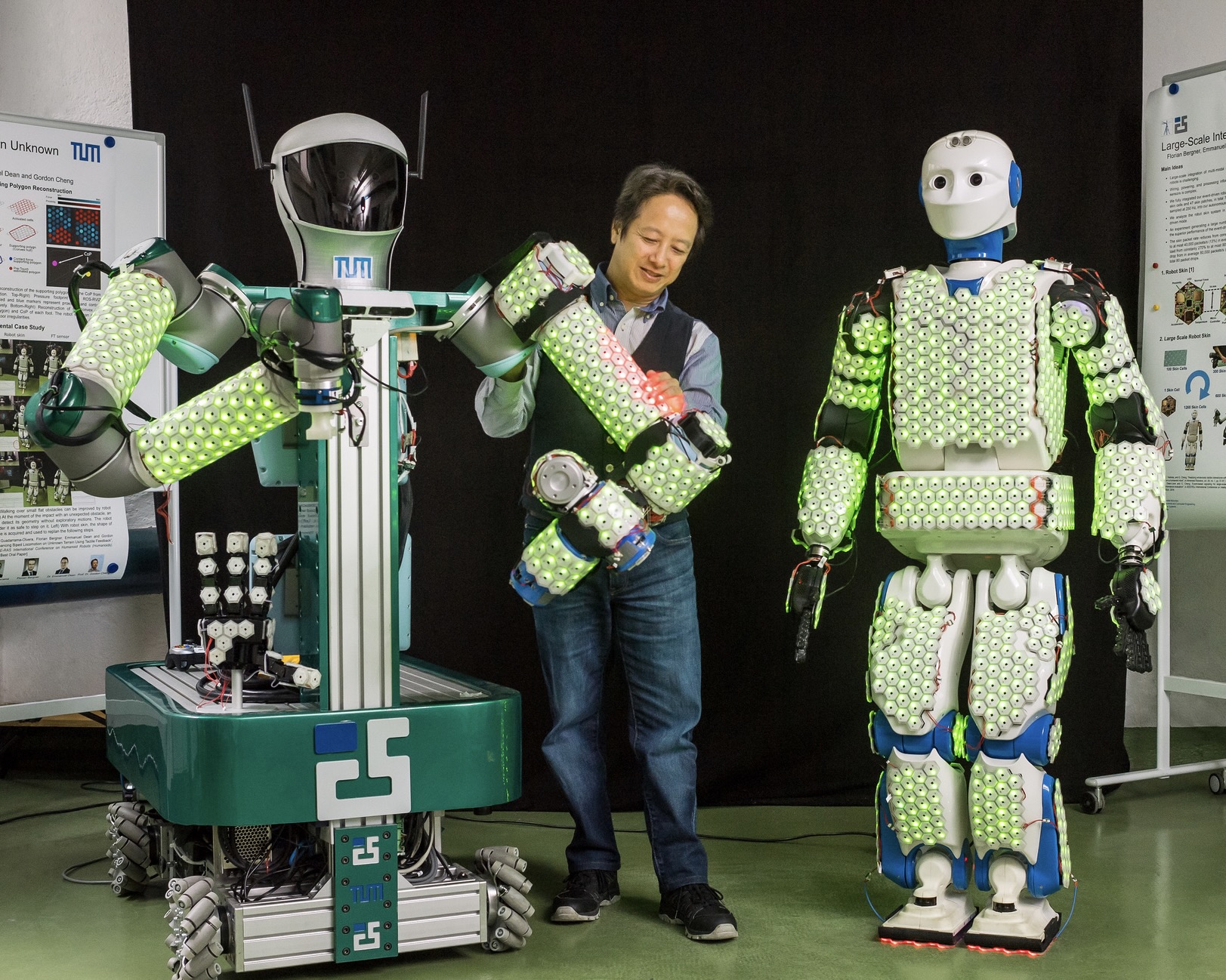
M.Sc. Simon Armleder is a PhD candidate and lecturer at the Technical University of Munich (TUM), affiliated with the Chair of Cognitive Systems under Prof. Gordon Cheng. His research focuses on autonomous systems, robot dynamics, optimal/adaptive control, humanoid robotics, and bio-inspired robotics. He holds a Master's in electrical engineering and information technology from TUM, with prior work in optical receivers for satellite systems at Airbus Defence and Space. Education : Master of Science in Electrical Engineering and Information Technology (TUM) Dual study program in Electrical Engineering with Airbus Defence and Space Teaching : Lecturer for courses like "Multi-sensory Based Robot Dynamic Manipulation" and "Modelling and Control of Legged Robots" Supervised practical projects in robotics, including RoboCup@Home and Advanced RoboCup@Home Research Trends : His work emphasizes tactile-based manipulation, human-robot collaboration, and real-time adaptive control systems. Notable contributions include motion planning with diffusion models, tactile navigation in unstructured environments, and enhancing teleoperation agency through RNN-based visual guidance. Labs/Teams : Part of the Institute for Cognitive Systems (ICS), collaborating with researchers like Prof. Cheng, Dr. Emmanuel Dean-Leon, and teams developing humanoid robots and bio-inspired systems.