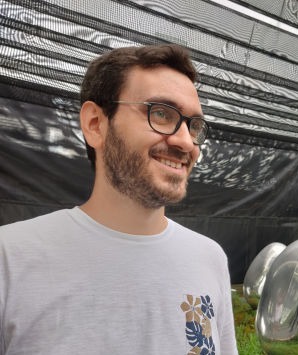
Tom Knowles is a Lecturer in Robotics at the University of the West of England , affiliated with the School of Engineering . He teaches technical subjects such as C Programming , Matlab Programming , Python Programming , Robotics , and Neuroscience . Education: MSc BSc Mr. Knowles bridges conventional and spiking neural networks to develop artificial systems that mimic biological capabilities, particularly in navigation. His work explores how mammalian brains represent space and models robust, flexible behaviors through robotics, intersecting Robotics , Neuroscience , and Artificial Intelligence . Publications trends highlight biomimetic robotics , spiking neural networks , and computational neuroscience . His research integrates machine learning , bio-inspired models , and sensory reconstruction to solve navigation challenges, with collaborations at the University of Sussex and Technische Universität München (TUM) . Collaborations: University of Sussex TUM (Technische Universität München) Contact: Email: Tom.Knowles@uwe.ac.uk Phone: +44117 965 6261
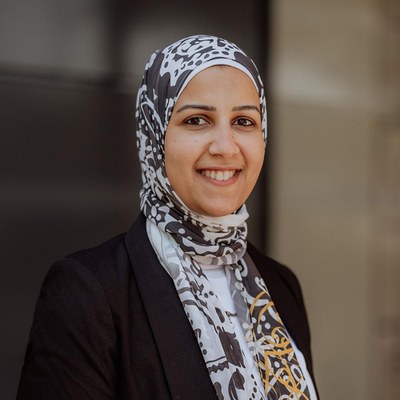
Dr. Yomna Abdelrahman is a Professor of Usable Security and Privacy at the Bundeswehr University Munich . Her research focuses on thermal imaging for security and privacy , virtual reality usability, eye tracking , and biometric authentication . She collaborates with researchers like Florian Alt and Albrecht Schmidt on projects exploring how thermal sensing can enhance user identification and privacy awareness . Key Research Areas : Thermal Imaging, Human-Computer Interaction, Virtual Reality, Password Security, Biometric Authentication, Eye Tracking, Privacy Her recent publications address VR emotion detection , password usability , and privacy implications of thermal imaging . She has contributed to conferences like CHI, MUM, and INTERACT, often examining security-privacy trade-offs and non-invasive biometric systems . Notably, her work on thermal attacks reveals vulnerabilities in mobile authentication through thermal residue. She holds a PhD in Computer Science from the University of Stuttgart (2018), where her thesis, "Thermal Imaging for Amplifying Human Perception," laid the foundation for her later work on thermal-based interaction and cognitive load estimation . Her collaborations span diverse domains, from smart home notifications to industrial worker assistance , reflecting her interdisciplinary approach to usable security and interactive systems .
Carlo Ricciardi is a Full Professor in the Department of Applied Science and Technology (DISAT) at the Polytechnic University of Turin, where he serves as Coordinator of basic subjects for the 2nd year of Engineering and is a member of the Interdepartmental Center CWC - CleanWaterCenter@PoliTo. His research focuses on nanomechanical sensing and memristive nanodevices, with applications spanning biomedical engineering, environmental monitoring, and brain-inspired computing systems. His research interests center on the intersection of nanotechnology and biological systems, particularly in developing bio-inspired nanodevices for sensing applications. Ricciardi's work bridges fundamental nanoscience with practical implementations in memristive devices , nanomechanical sensors , and brain-inspired computing architectures . His research group explores how nanoscale phenomena can be harnessed for biomedical applications, environmental monitoring, and next-generation computing paradigms that mimic neural processing. The recent publications reveal a strong trend toward neuromorphic computing using nanowire networks, with significant work on self-organizing systems that exhibit brain-like computational properties. His research spans multiple disciplines including nanotechnology, materials science, electronics, and biophysics, with a particular emphasis on creating sustainable and efficient computing systems inspired by biological principles. The work often combines experimental fabrication with theoretical modeling to understand complex phenomena at the nanoscale. Young Scientist Award (European Materials Research Society, 2002) Keynote Paper Finalist, Biosensors 2010 (2010) Premio Giovedì Scienza (2012) National Scientific Qualification as Associate Professor Sector 02/B1 (MIUR, 2013) National Scientific Qualification - Second Band - Sector 02/B3 (MIUR, 2013) Ricciardi actively mentors doctoral students and serves on multiple PhD program committees across Physics and Engineering disciplines. He has secured substantial research funding through competitive national and international projects including the EU-funded GreenChips-EDU (2023-2027), NEURONE (2023-2025), and MEMQuD (2021-2024) projects. His collaborations span academia and industry, with partnerships including the University of California Berkeley and various European research institutions. As Principal Investigator of the NaMeS research group, Ricciardi leads investigations into two interconnected research domains: nanomechanical sensing and memristive nanodevices. The group operates specialized laboratories including the CHILAB Laboratory in Chivasso and the Nanoscience Vibrometric Lab, focusing on developing innovative sensor technologies and neuromorphic computing architectures that draw inspiration from biological systems.
Marco Simonetti is an Associate Professor at the Department of Energy (DENERG) of Politecnico di Torino, with affiliations to the CleanWaterCenter@PoliTo and Energy Center Lab. He serves as a Course Instructor for Solar Thermal Technologies and Thermotechnical System Design in the Energy and Nuclear Engineering department, and as a Lecturer for Energy Transition and Low-Carbon Architecture modules. Research Interests: Atmospheric water harvesting, Building energy simulation, Natural ventilation, Solar cooling Skills: Computational Fluid Dynamics (CFD), Environmental Engineering, Sustainable Building Physics His recent research focuses on atmospheric water harvesting systems using biocomposite hydrogels, airborne disease mitigation through ventilation strategies, and climate-responsive architectural design. He leads the SMAP project on alginate-bentonite hydrogel for water vapor capture and participates in international collaborations like PRINCETO with Princeton University. Marco holds multiple patents including Bio-Stopper for infection control, ventilation systems with biofilters, and water harvesting technologies. He supervises PhD student Hamed Rasam, who analyzes aerosol spread in indoor environments.
Ludovic Sacchelli is an Inria researcher (CR) affiliated with the McTAO team at the Centre Inria d'Université Côte d'Azur and the Laboratoire J.A. Dieudonné of Université Côte d'Azur. His research spans control theory, sub-Riemannian geometry, and mathematical neuroscience, focusing on optimal control, observers, and estimation problems. His work on sub-Riemannian manifolds and control systems includes stabilization techniques for non-uniformly observable systems and applications to UAV control, neural fields, and bioprocess modeling. He has contributed to heat kernel analysis, line fields interpolation, and geometric models for sound processing. His recent publications address topics like distributed state estimation in neural models, polynomial state-affine control systems, and geometric algorithms for orientation field interpolation. He has also explored observability singularities in bilinear systems and stabilization of weakly contractive systems. Teaching roles include instructing Measure Theory , Stochastic Processes , and applied mathematics at institutions such as Université Côte d'Azur, Polytech Nice, Lehigh University, and École Polytechnique. His mentorship includes supervising a Masters research project on numerical implementation of line fields interpolation in 2019.
Catherine Achard is a full Professor at Sorbonne University, affiliated with the RPI-Bio team under Polytech Sorbonne. She has served as Deputy Director at Polytech Sorbonne since 2020 and has been actively involved in research and teaching in artificial intelligence and computer vision. Research Focus: Artificial Intelligence, Deep Learning, Action/Gesture Recognition, Multi-modal Interaction, Person Re-identification Teaching: AI courses at Sorbonne University (M1/M2) and Polytech Sorbonne, Image Processing for L3. Her recent publications (2023-2025) demonstrate expertise in 3D point cloud registration, adaptive virtual agents, and multimodal interaction analysis. Key trends include geometric constraint handling, deep reinforcement learning for action spotting, and biomedical applications of AI. Technical Contributions: Development of RoCNet++ for point cloud registration, ASAP framework for agent adaptation, and SALAD for action detection. Collaborations span robotics, medical imaging, and human-computer interaction projects across international conferences.
Dr. Paride Azzari is a researcher in the Sustainable Food Processing group at ETH Zurich , focusing on interdisciplinary approaches at the intersection of food science, biophysics, and soft matter physics. His work emphasizes scalable and sustainable bioprocessing techniques, particularly for microalgae and plant-based proteins. Key Research Areas : Pulsed electric field processing, liquid-liquid crystalline phase separation, and viscoelastic material behavior. Methodologies : Multiphysics simulations, experimental rheology, and open-source software development (e.g., Extrudion for tensile testing analysis). Recent publications highlight his contributions to optimizing biocompound extraction, understanding amyloid fibril organization, and advancing environmental bioremediation using agricultural waste. Notably, his work bridges fundamental soft matter research with industrial food processing applications.
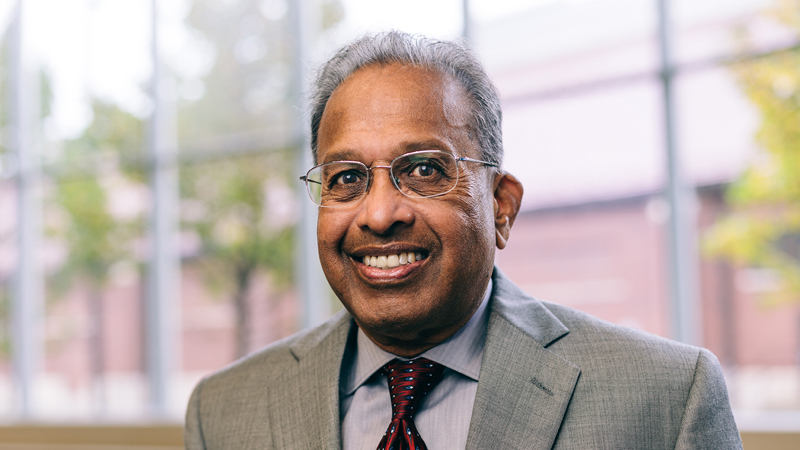
Bharat K. Bhargava is a Professor of Computer Science at Purdue University with a courtesy appointment in the School of Electrical & Computer Engineering. He joined Purdue in Fall 1984 and specializes in cybersecurity, distributed systems, and machine learning. His research focuses on security and privacy in distributed systems, including host authentication, secure routing, and resilience against malicious attacks. Recent work explores intelligent autonomous systems and data analytics. Education includes a BS in Mathematics (Punjab University, 1966), BE in Electrical & Computer Engineering (Indian Institute of Science, 1969), and PhD in Electrical Engineering (Purdue University, 1974). He pioneered the IEEE Symposium on Reliable Distributed Systems and ACM Conference on Information and Knowledge Management. His research impacts critical areas like nuclear waste transport, bio-security, and disaster management. Recipient of numerous awards, including IEEE Technical Achievement Award (1999), Fellowships from IEEE and IETE, and Purdue's Book of Great Teachers (2003). He has advised the largest number of PhD students in Purdue’s CS department and actively supports minority and differently-abled students.
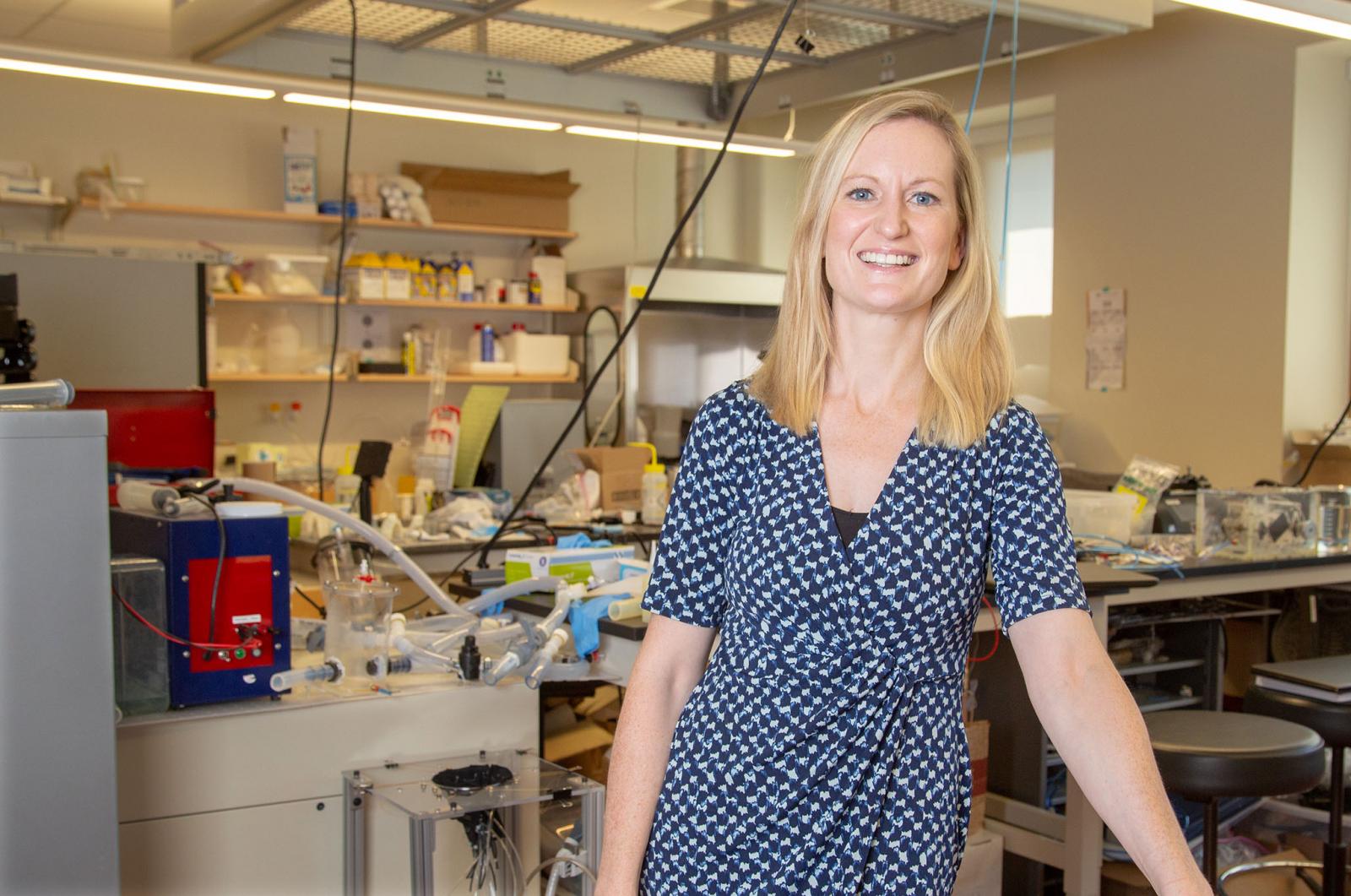
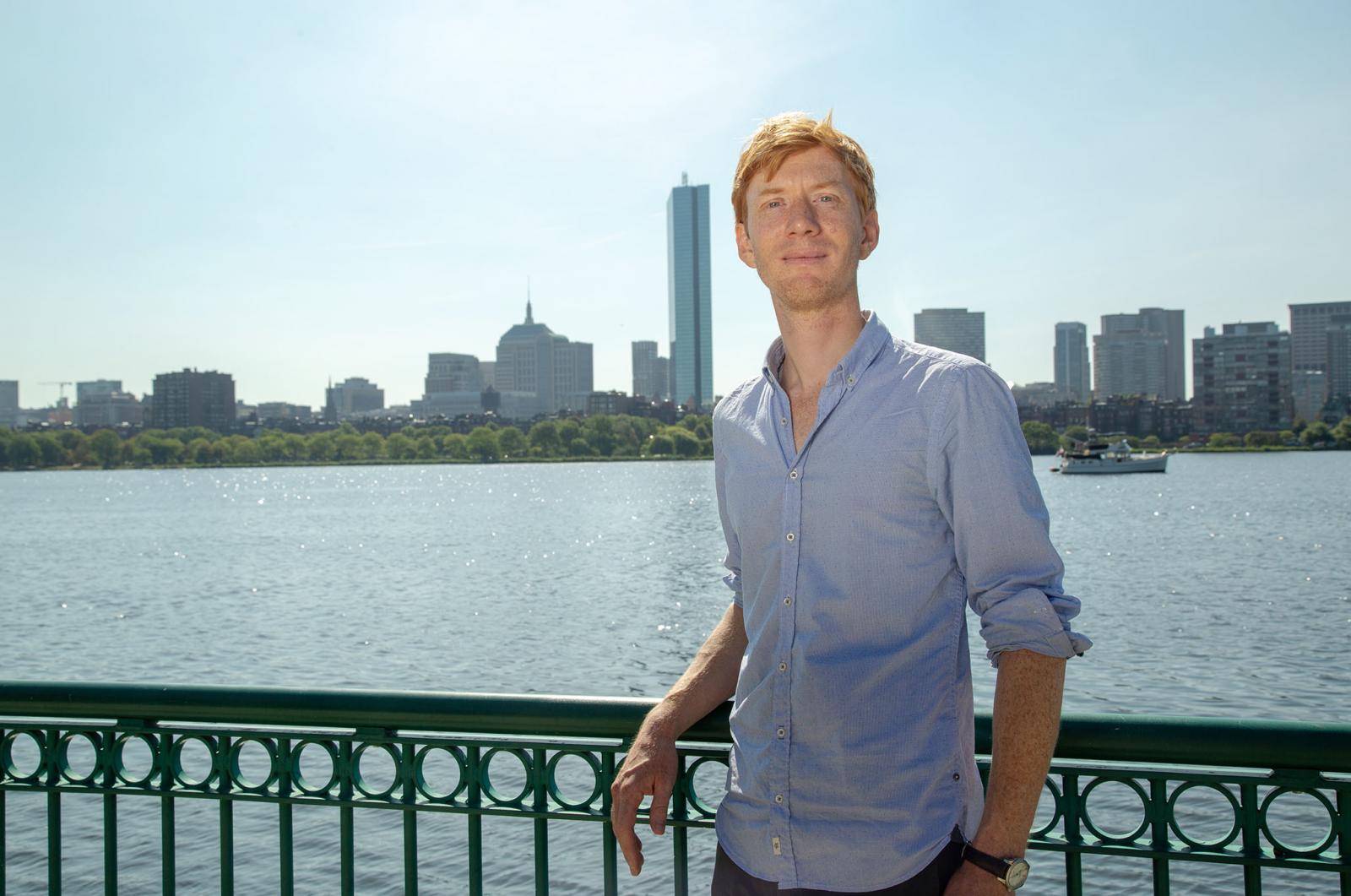
Ellen Roche is the Abby Rockefeller Mauzé Professor in the Department of Mechanical Engineering at the Massachusetts Institute of Technology (MIT). She serves as Associate Department Head for Research and directs the Therapeutic Technology Design and Development (TTDD) Lab, focusing on cardiac and pulmonary device innovation through soft robotics, biomimetics, and advanced biomaterials. Her work bridges mechanical engineering, bioengineering, and clinical medicine via collaborations with Boston Children’s Hospital, Brigham and Women’s Hospital, and others. PhD in Bioengineering, Harvard University (2015) MSc in Bioengineering, Trinity College Dublin (2011) BE in Biomedical Engineering, National University of Ireland, Galway (2004) Her research integrates soft robotics , biomaterials , and computational modeling to develop implantable devices that augment cardiac function, modulate immune responses, and deliver therapies to the heart. Key innovations include a bioinspired cardiac simulator , extra-cardiac compression devices , and a biorobotic hybrid heart combining organic tissue with synthetic robotics. Her recent publications emphasize dynamic therapy reservoirs , biomimetic heart models , and minimally invasive delivery systems . Scientific accolades include the Presidential Early Career Award (2025) , NSF CAREER Award (2019-2024) , and the Nature Research Inspiring Women in Science Award (2021) . She serves as Associate Scientific Advisor for Science Translational Medicine and contributes to peer review for the National Science Foundation and journals like Nature Medicine and Science Robotics . Her teaching includes Medical Device Design and Product Design at MIT.
Associate Professor Wim van Rees is affiliated with the Department of Mechanical Engineering at Massachusetts Institute of Technology. His research focuses on computational methods for fluid-structure interactions, bio-inspired propulsion, and shape-shifting structures. PhD, ETH Zurich (2014) BSc/MSc, Delft University of Technology (2008) Postdoctoral Fellow, Harvard University (2015) Research Interests : Develops advanced numerical simulations to study: Bio-inspired propulsion – optimizing swimmers' gait and shape using evolutionary techniques Vortex dynamics – analyzing vortex interactions and helicity dynamics Shape-shifting structures – designing stimuli-responsive materials that deform under environmental triggers Recent Publications span computational methods (e.g., immersed finite-difference techniques), vortex dynamics, and bio-inspired design across mechanics, ocean engineering, and materials science. US Department of Energy Early Career Award (2020) Army Research Office Early Career Award (2021) DOE Mission Science award (2022) Laboratory : The van Rees Lab develops high-performance numerical methods and applies evolutionary optimization to design fluid-driven systems and responsive materials.
Prof. Menghao Qin is a leading expert in Building Physics and Materials at ESPCI Paris, France. His research focuses on advanced building physics, innovative energy materials, and indoor environmental quality. He holds the Saint-Gobain Chair and leads projects on smart materials like metal-organic frameworks (MOFs) for moisture regulation and energy efficiency. His work emphasizes hygrothermal control, green building design, and zero-energy building systems such as the P+ Demonstration Building. Prof. Qin has led international initiatives like IEA Annex 68 and 92, addressing energy-efficient IAQ management and smart materials for residential buildings. His group develops novel materials and models to enhance building performance while reducing energy consumption. Research highlights include MOF-based humidity control materials, moisture buffering theory, and predictive hygrothermal models. He collaborates globally on projects such as the Wujin Green Building Industry Cluster in China and has authored over 180 peer-reviewed papers and three books. His work bridges material science, environmental engineering, and sustainable architecture to address climate challenges in built environments.
Brian Ross is a Professor at the Department of Computer Science, Brock University. He holds a BSc (Hon) from the University of Manitoba, MSc from the University of British Columbia, and PhD in Artificial Intelligence from the University of Edinburgh. His research focuses on evolutionary computation , particularly genetic programming , with applications in computational biology , evolutionary design , and computational aesthetics . Education: BSc Computer Science (Hon), University of Manitoba MSc Computer Science, University of British Columbia PhD Artificial Intelligence, University of Edinburgh Research Interests: Computational Intelligence: genetic programming, evolutionary algorithms, multi-objective optimization Evolutionary Design: computational aesthetics, 2D/3D modeling, energy-efficient architecture Applications: computational biology, stochastic process algebra, GPU-based image analysis Article Trends: His recent work combines deep learning with evolutionary algorithms to enhance diversity in agent behavior and design optimization. Earlier studies focused on stochastic modeling of biological networks and procedural texture generation . Collaborations span computational aesthetics, passive solar architecture, and non-photorealistic rendering techniques. Students & Collaborations: He has supervised diverse projects including evolved intelligent agents , passive solar building design , and evolutionary art systems . Notable students include Marshall Joseph (2023), Tyler Cowan (2021), and Sheikh Faishal Basher (2021).
Mohammad Habib Rahman is the Richard and Joanne Grigg Professor and Chair of the Department of Mechanical Engineering at the University of Wisconsin-Milwaukee (UWM), within the College of Engineering & Applied Science. He also holds affiliate professorships in Computer Science and Biomedical Engineering. His research focuses on bio-robotics, rehabilitation robotics, intelligent control systems, and teleoperation technologies. He directs the Biorobotics Lab and has secured significant grants for projects like the 'smart robotic assistive arm.' Education: PhD in Engineering from École de technologie supérieure (2012), MEngg in Mechanical Engineering from Saga University (2005), and BSc from Khulna University of Engineering & Technology (2001). Research interests include wearable robots, exoskeletons, human-machine interfaces, and applications of IIoT and digital twins in healthcare. He has published extensively on topics like robotic exoskeleton control, rehabilitation systems, and adaptive algorithms. Key achievements include grants from NASA and the National Science Foundation, and recognitions like the Marquis Who's Who Excellence Award (2018) and Excellence in Mentoring (2019). Grants and Projects: $1.49M grant for robotic assistive arm development (2020), NASA-Wisconsin Space Grant Consortium funding (2019), and leadership in the UWM Digital Manufacturing Research Center. His work bridges robotics, control systems, and clinical applications, emphasizing assistive technologies for disabilities and telerehabilitation.
Adam E. Smith is an Associate Professor in both the Department of Biomedical Engineering and the Department of Chemical Engineering at the University of Mississippi, serving as Associate Dean for Undergraduate Programs in the School of Engineering and Co-Director of the Center for Nano-Bio Interactions. He holds a B.S. in Chemical Engineering (2002), M.S. in Engineering Science (2004) from the University of Mississippi, and a Ph.D. in Polymer Science and Engineering from the University of Southern Mississippi (2010). His research focuses on stimuli-responsive polymers for drug delivery, including RAFT polymerization techniques and nanocarrier design. Notable awards include the 2016 Faculty Service Award and 2020 Outstanding Engineering Faculty Award. Dr. Smith’s expertise spans polymer chemistry, biomaterials, and targeted drug delivery. His research emphasizes the synthesis of stimuli-responsive block copolymers for applications in cancer therapy, immunotherapy, and controlled release systems. He has pioneered methods for enhancing nanoparticle stability and tumor targeting through glycopolymer engineering and shell-crosslinked micelles. His recent work explores gas separation membranes using ionic liquid-infused block copolymers and ROS-responsive nanoparticles for macrophage targeting. These studies leverage molecular simulations and experimental validation to advance material design. His contributions have been recognized through multiple teaching and research awards, reflecting his dual role as an educator and researcher. Awards: 2016 Faculty Service Award, 2016 Junior Faculty Research Award, 2018 Faculty Teaching Award, 2020 Outstanding Engineering Faculty Award. Labs/Teams: Center for Nano-Bio Interactions, Biomedical Engineering Research Group. Grants: Not explicitly listed, but his research aligns with NIH and NSF priorities in biomaterials and drug delivery.
Andrew Eckford is an Associate Professor in the Department of Electrical Engineering & Computer Science at York University's Lassonde School of Engineering, Toronto. His research bridges information theory with biological systems, focusing on unconventional communication channels. Education: B.Eng. from Royal Military College of Canada (1996) M.A.Sc. from University of Toronto (1999) Ph.D. from University of Toronto (2004) His research explores molecular communication, computational biology, and information theory applications in biological systems. Key areas include nanoscale networking, kinetic proofreading in immune responses, and energy-efficient molecular transmitters. The lab investigates how living systems process information, with implications for nanotechnology and synthetic biology. Recent publications reveal a strong trend toward interdisciplinary work connecting physics, biology, and communication theory. Articles examine viral communication mechanisms, T-cell activation models, and fundamental limits of biological information processing, demonstrating increasing convergence between information theory and life sciences. Scientific Recognition: 2015 IET Communications Innovation Award 2014 Bell Labs Prize Finalist Co-author of Molecular Communication textbook (Cambridge University Press) Eckford leads the Molecular Communication and Information Theory Laboratory, advising graduate students while collaborating with international researchers. His work has received significant media coverage including The Economist and The Wall Street Journal. Current projects include organizing the 3rd Workshop on Molecular, Biological, and Multi-Scale Communications (Glasgow, 2026) and exploring fundamental principles of information in living systems. The EckfordLab is affiliated with York University's Centre for Innovation in Computing @ Lassonde, maintaining active collaborations across engineering and biological disciplines to advance molecular-scale communication technologies.