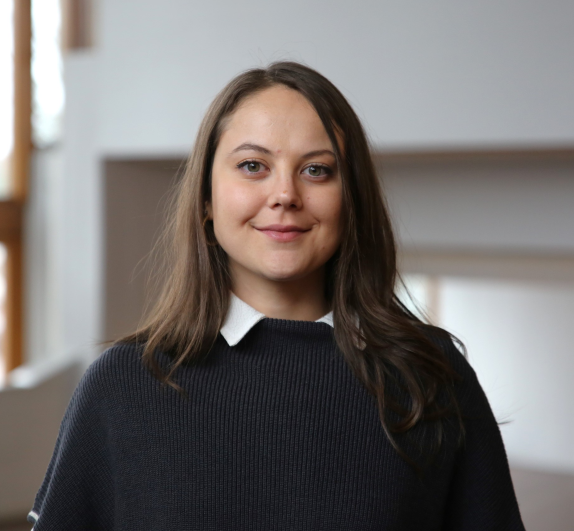
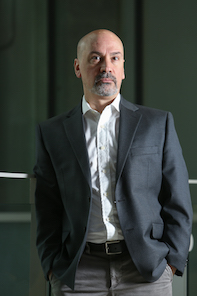
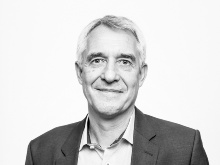
Magda Posani is an Assistant Professor in the Department of Civil Engineering at Aalto University, focusing on building physics, hygrothermal behavior of materials, and environmental sustainability. Her research explores the use of bio-based insulation, thermally massive stone and earth walls, and additive manufacturing techniques to enhance indoor comfort and address climate change challenges in Nordic regions. Integrated Master's Degree in 'Building Engineering and Architecture' from the University of Bologna (Italy) Ph.D. in Civil Engineering from the National Laboratory for Civil Engineering (LNEC) and the University of Porto (FEUP, Portugal) Postdoctoral Research at ETH Zürich (Switzerland) Her research integrates vernacular solutions with modern technology, such as combining additive manufacturing with super-hygroscopic materials to develop components for passive humidity regulation. She addresses critical issues like occupant comfort, health risks from improper humidity, and climate change impacts on traditional constructions. The articles highlight her work on low-carbon materials, 3D-printed building components, and strategies for enhancing hygrothermal performance in both modern and historic structures. Key themes include moisture buffering, thermal insulation compatibility, and climate-resilient renovation.
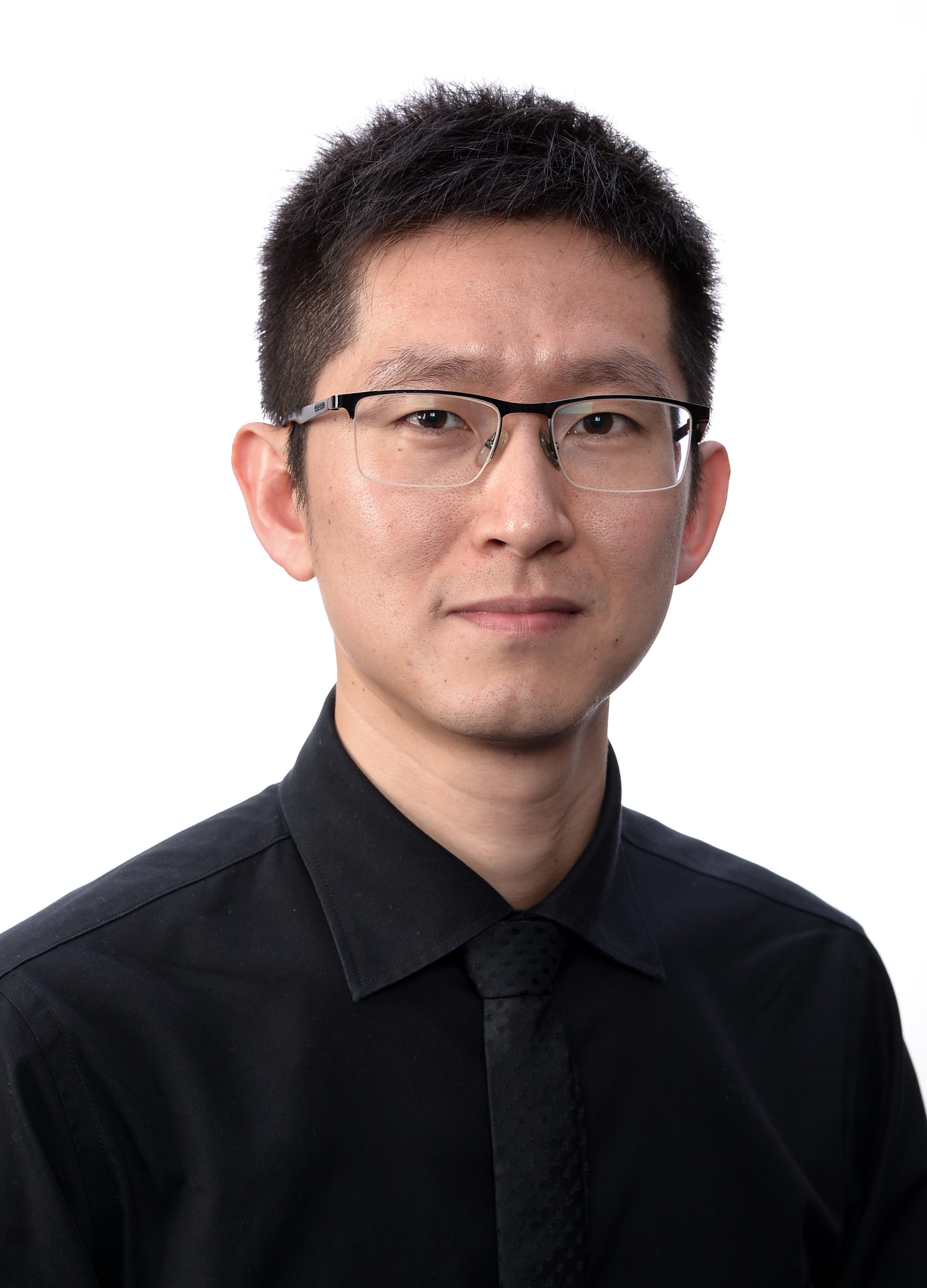
Dr. Geng Guoqing is an Assistant Professor in the Department of Civil and Environmental Engineering at the National University of Singapore (NUS). He holds concurrent roles as East Asian Regional Convener for RILEM and board member of ACI-Singapore Chapter. His research focuses on sustainable construction materials, particularly durability, microstructural characterization, and waste material utilization. Geng earned his PhD from UC Berkeley (2017), followed by postdoctoral research at the Paul Scherrer Institute (Switzerland). He has authored over 50 papers and leads multiple projects funded by Singapore’s Ministry of Education, Energy Center, and National Research Foundation. Education: Bachelor of Engineering, Southeast University, China (2010) Master of Science, UC Berkeley, USA (2013) PhD, UC Berkeley, USA (2017) Research interests center on sustainable construction materials, multi-scale characterization, and material durability . Key themes include recycling low-grade materials, mitigating degradation in concrete, and developing high-performance binders like LC3. His work employs advanced techniques like molecular modeling, X-ray diffraction, and NMR. Recent articles explore hydration kinetics, CSH matrix mechanics, and waste clay applications. Awards include the 2023 RILEM Medal and multiple teaching excellence recognitions. Current projects address CO 2 absorption, sustainable cement blends, and resilient façade materials. Professional service includes editorial roles at Cleaner Materials and Frontiers in Materials , plus organizing the 2022 EASEC Conference. His lab focuses on bridging microstructural insights with macro-scale material performance.
Dr. Qian Shunzhi is an Associate Professor and Program Director for the Bachelor of Engineering (Civil) at NTU's School of Civil and Environmental Engineering. He holds a PhD from the University of Michigan (2007), with prior faculty experience at Southeast University (2009-2013) and postdoctoral research at TU Delft (2007-2009). His research focuses on advanced construction materials like Engineered Cementitious Composites (ECC), self-healing concrete, and 3D-printable concrete, alongside life cycle assessment of infrastructure. Key interests include sustainable materials, CO2 sequestration, and material durability. Education: Bachelor's: Southeast University (Nanjing, 1998) Master's: Chinese Ministry of Transport Highway Research Institute (Beijing, 2001) PhD: University of Michigan (Ann Arbor, 2007) Research Interests: Novel cementitious composites for infrastructure resilience Recycled materials in construction 3D printing applications in concrete Material lifecycle analysis Notable contributions include bacterial encapsulation for self-healing, graphene-enhanced antibacterial surfaces, and CO2 sequestration via reactive materials. His work bridges material science, sustainability, and advanced manufacturing techniques.
Professor Hao Wang is a distinguished academic and researcher in materials science and manufacturing at the University of Southern Queensland (UniSQ). He holds the position of Professor (Materials and Manufacturing) within the School of Engineering and serves as the Theme Leader for Functional Materials at the Centre for Future Materials. His career spans over 30 years, with a PhD from the University of Queensland (2001) and a GCertEd from Queensland (2005). Professor Wang’s research focuses on advanced materials, including carbon fiber composites, flame retardants, CO2 conversion technologies, and green concrete (geopolymer). He has authored over 450 papers, earning a Google Scholar H-index of 100 and recognition as a Clarivate Highly Cited Author (2023) and Top 2% World Scientist. He leads the Asian-Australasian Association for Composite Materials and was Chair of the 2018 Asian-Australasian Conference on Composite Materials. His recent publications emphasize sustainable materials, recyclable polymers, and fire-safe composites. Over 150 doctoral students have been supervised under his mentorship, focusing on topics like CO2 electrolysis, geopolymer concrete, and flame-retardant epoxy resins. His work bridges academia and industry, addressing global challenges in materials innovation and environmental sustainability.
Jing Li is a Staff Scientist at Stockholm University's Department of Chemistry, leading operations at the MACAL Soft Matter Characterization Lab and Surface Analysis Core. She holds two PhDs in Physical Chemistry (Xiamen University, China) and Surface Science (KTH Royal Institute of Technology, Sweden), with postdoctoral experience at University of Alberta and Swedish University of Agricultural Sciences (SLU). Her interdisciplinary research bridges electrochemistry, atomic force microscopy (AFM), and bio-based nanomaterials. PhD in Physical Chemistry (2004-2010), Xiamen University PhD in Surface Science (2011-2015), KTH Royal Institute of Technology Postdoctoral Fellow, University of Alberta (2010-2011) Researcher, Swedish University of Agricultural Sciences (2016, 2017-2018, 2020) Guest Researcher, BOKU Vienna (2017-2018) Research Focus: Development of advanced AFM methodologies for nanoscale surface science, electrochemistry of conductive nanomaterials, and functionalization of cellulosic composites. She investigates corrosion mechanisms through in situ electrochemical-AFM, with applications in water treatment membranes and renewable energy systems. Her work employs quantitative force mapping and nanomechanical analysis of bio-based materials. Scientific Leadership: Manages MACAL's multimode AFM, DMA, tensile testing, and gas adsorption analyzers. Teaching responsibilities include two advanced courses: Introduction into AFM (KZ41005) and Introduction into Dynamic Mechanical Analysis (KZ41021) , emphasizing practical data acquisition and interpretation.
Gonzalo Barluenga Badiola is a Professor at the Department of Architecture within the School of Architecture at the University of Alcalá. His research focuses on advanced construction materials, including 3D-printable mortars, self-healing concrete, phase change materials (PCM), and nanomaterials for sustainable architecture. He leads the 'Promarq' research group, specializing in architectural projects and building materials. He holds a Ph.D. from the Universidad Politécnica de Madrid (2002), with a thesis on joint systems in facade construction. His research interests emphasize material innovation for energy efficiency, structural health monitoring, and environmental adaptation. Key areas include bio-based composites, thermal/acoustic mortar properties, and the integration of nanotechnology into construction materials. Recent work explores post-fire self-healing mechanisms, PCM-enhanced mortars, and additive manufacturing applications. His publications (2023–2025) highlight advancements in 3D-printed cement-lime mortars, nano-modified self-compacting concretes, and fiber-reinforced composites. He investigates rheological properties of materials at early stages and their structural performance. No scientific awards are explicitly mentioned, but his work is widely cited in sustainable construction and materials science. Grants and collaborations are inferred from his research output, though specific funding details are not provided here. His lab, 'Promarq,' likely focuses on experimental and numerical analysis of building materials. No student advising records are listed in the provided data.
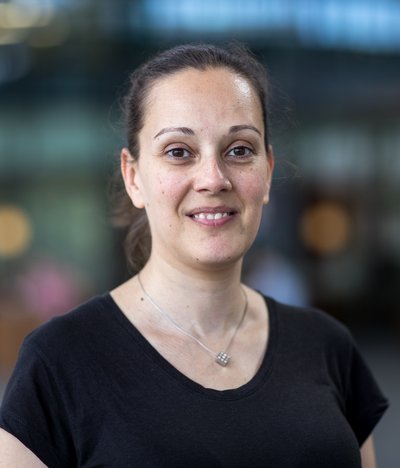
Sandra Simaria de Oliveira Lucas is an Associate Professor in the Department of the Built Environment at Eindhoven University of Technology (TU/e). Her research focuses on autonomous manufacturing of construction materials, leveraging machine learning and data science to develop sustainable and functional materials. She leads two NWO-funded projects on smart, sustainable 3D-printed concrete and previously held a senior lecturer position at the University of Greenwich. Education: BEng in Ceramic and Glass Engineering from University of Aveiro MSc in Environmental Management and Materials PhD in Civil Engineering (2011, University of Aveiro) Marie Curie Postdoctoral Researcher at Fraunhofer Institute UMSICHT (Germany) Visiting Researcher at EPSI ParisTech (France) and TU/e Research Interests: Sandra explores machine learning applications in material discovery, sustainable construction materials, and additive manufacturing. Her work emphasizes materials with adaptive properties and environmental impact mitigation. Recent projects include 3D-printed concrete waste valorization and bio-based materials education frameworks. Key Achievements: Marie Curie Postdoctoral Fellowship Principal Investigator (PI) for multiple Innovate UK and NWO projects Grants & Advising: Currently leads two NWO projects. Prior roles include PI for industry-academia collaborations via Innovate UK. Advises on structural design and materials education through TU/e assignments like the 'Bouwkundewinkel' practicals. Labs & Teams: Core member of the Concrete Structures research group at TU/e, focusing on 3D printing and material functionality.
Thomas Schnabel is a Research Group Leader and Senior Researcher in Design and Green Engineering at Salzburg University of Applied Sciences, where he heads the Green Materials and Processing research group and leads the Salzburg Center for Smart Materials 2.0 initiative. His work bridges academic research with practical industrial applications in sustainable materials science. His research focuses on: Valorization of wood byproducts, particularly tree bark extracts for multiple applications Development of natural fiber insulation materials from recycled wood residues Life cycle assessment of sustainable material production processes Application of bioactive compounds from bark for biomedical uses Green chemistry approaches to material processing and purification Dr. Schnabel's publication record shows a cohesive research trajectory focused on extracting maximum value from wood processing byproducts. His recent articles demonstrate increasing sophistication in characterizing bark extracts and developing practical applications across construction, biomedical fields, and sustainable manufacturing. The research directly contributes to UN Sustainable Development Goals related to responsible consumption, climate action, and industry innovation. He leads multiple significant research initiatives including: NETTLE: Cross-border cooperation for alpine plant bioactive compounds (2024-2026) DRWO4.0: Danube Region Wood Industry Transformation toward Industry 4.0 (2024-2025) SCSM 2.0: Salzburg Center for Smart Materials 2.0 (2023-2026) User-centered teaching materials development in forestry and bioeconomy (2023-2026) His collaborative network spans the Danube region and beyond, reflecting the international significance of his work in advancing sustainable materials science and engineering practices.
Pablo D. Zavattieri is the Jerry M. and Lynda T. Engelhardt Professor in Civil Engineering at the Lyles School of Civil Engineering, College of Engineering, Purdue University. His research focuses on solid mechanics applied to the multiscale modeling of advanced and innovative engineering materials, with emphasis on bridging between atomistics to continuum-based models and combining computational tools with experimental validation. Education: B.S./M.S., Instituto Balseiro, Argentina, 1995 Ph.D., Purdue University, 2000 Professor Zavattieri's research spans solid mechanics applied to multiscale analysis and design of advanced architectured materials, interfaces, and complex structures. His work lies at the intersection of Solid Mechanics and Materials Engineering, focusing on developing novel materials with exceptional properties inspired by natural systems. His contributions include micromechanical models for polycrystalline materials, new fracture models for thin-walled structures, and pioneering work on biomimetic materials using 3D printing technology. Current projects investigate the multiscale modeling of heterogeneous and hierarchical materials, micro and nanomechanics of biological materials, bioinspired materials, architectured materials, micropatterned interfaces, and smart materials. His publication record demonstrates a strong focus on understanding natural materials like chiton radular teeth, nacre, and mantis shrimp structures, translating these biological designs into engineered solutions. His recent work spans biological materials characterization, phase-transforming cellular materials, cellulose nanocrystal composites, and 3D printing of cementitious materials, consistently combining computational modeling with experimental validation across multiple length scales. Scientific Awards and Recognitions: NSF CAREER award (2013) Roy E. & Myrna G. Wansik Research Award (2013) Purdue University Faculty Scholar (2015-2020) Kavli Frontier of Science Fellow of the National Academy of Science (2015) National Academy of Engineering US Frontier of Engineering Symposium attendee (2014) Engineering Fracture Mechanics Journal Most Cited Articles award (2005-2009 period) Second Most Cited Journal of the Mechanics and Physics of Solids Article (2007-2012) Cover page of Cellulose journal (2013) Cover page of Advanced Functional Materials journal (2014) Professor Zavattieri has mentored numerous graduate students who have received prestigious awards including William and Mary Goetz Graduate Scholarships, William L. Dolch Graduate Scholarships, Purdue Doctoral Fellowships, and SURF Research Symposium awards. His research has been supported by NSF, AFOSR, INDOT/JTRP, Forest Product Laboratory, General Motors, Velcro, and the Purdue Research Foundation. Notable projects include a $7.5M DoD/MURI award for 'Convergent Evolution to Engineering: Multiscale Structures and Mechanics in Damage Tolerant Functional Bio-Composite and Biomimetic Materials' and multiple NSF grants focusing on biomimetic materials and 3D printing of civil infrastructure. He directs the Multi-Scale Mechanics and Materials by Design Lab at Purdue University, which maintains a strong collaborative network with institutions including UC Riverside (David Kisailus' group), UC San Diego, Northwestern University, and UC Berkeley. The lab has produced significant research on biological materials like chiton radular teeth, mantis shrimp structures, and nacre, translating these natural designs into engineered solutions for applications in infrastructure, lightweight structural materials, and energy absorption systems.
Prof. Dr.-Ing. Katharina Schmitz serves as Institute Director and Vice Dean at the Institute for Fluid Power Drives and Systems, RWTH Aachen University. Her leadership within the Production Technology Cluster and extensive contributions to fluid power engineering establish her as a leading authority in mechanical engineering research and education. Her research spans fluid power systems, hydraulic component design, tribology, and physics-informed machine learning applications. She pioneers sustainable propulsion solutions through bio-hybrid fuels research while addressing fundamental challenges in polymer material behavior under hydraulic stresses. Current work focuses on carbon-neutral heavy-duty transportation, physics-based neural networks for lubrication modeling, and advanced control systems for electro-hydraulic actuators. Analysis of her 15 most recent publications reveals a dominant trend toward integrating physics-based modeling with deep learning to solve complex engineering problems. Her team consistently develops novel frameworks for cavitation prediction, flow rate determination, and material compatibility assessment - significantly advancing fluid power system reliability, efficiency, and digitalization. Scientific recognition includes: GfT Förderpreis 2023 for experimental and simulative investigation of partially hydrostatic relieved contacts in variable speed axial piston machines As head of the Institute for Fluid Power Drives and Systems, she leads cutting-edge research in sustainable fluid power technologies. The institute maintains strong industry partnerships while driving innovation in hydraulic component design, digital twins for condition monitoring, and next-generation propulsion systems through its position within RWTH Aachen's Production Technology Cluster.
Prof. Stanislav Unčík is a Professor at the Slovak University of Technology (STU), holding positions in the Department of Materials Engineering and Physics and serving as Dean of the Faculty of Civil Engineering. He also collaborates with the Faculty of Architecture and Design. His research focuses on advanced construction materials, including cement composites for 3D printing, acoustic properties of recycled materials, and sustainable lightweight concretes. Key projects include environmentally friendly materials development and quality management in construction. Unčík has advised students like Adam Uhlík on doctoral research. He teaches courses in construction technology, materials science, and building components. His work integrates material innovation with practical applications in civil engineering.
Götz Gresser is a Professor at the Institute for Textile and Fiber Technologies (ITFT) , affiliated with the University of Stuttgart . He serves as Principal Investigator in the Integrative Computational Design and Construction for Architecture (IntCDC) cluster and Director of the German Institutes for Textile and Fiber Research Denkendorf (DITF) . His work spans technical textiles, fiber-reinforced composites, and adaptive architectural systems. Experience in textile value chain research Focus on coreless filament winding and bio-inspired compliant mechanisms Developed adaptive façades with integrated photovoltaics (FlectoSol, Flexafold) Contributed to planetary sunshade concepts for climate mitigation Research Trends : His recent publications emphasize coreless filament winding for lightweight structures pneumatically actuated adaptive systems integration of sensors and feedback in composite manufacturing space-based applications of fiber composites digital fabrication workflows sustainable material systems
Zeynep Başaran Bundur is an Associate Professor and Chair of Civil Engineering at Özyeğin University in Istanbul, Turkey. She leads the Sustainable and Adaptive Materials (SAM) Research Group and oversees the Construction Materials Laboratory at the university. Her academic journey began with a Bachelor's degree in Civil Engineering from Bogazici University in 2009, followed by Master's and Ph.D. degrees from The University of Texas at Austin in 2011 and 2013, respectively. Dr. Başaran Bundur's educational background is impressive and well-focused on her research interests: Bachelor's in Civil Engineering, Bogazici University, 2009 Master's in Civil Engineering, University of Texas at Austin, 2011 Doctorate in Civil Engineering, University of Texas at Austin, 2013 Dr. Başaran Bundur's research focuses on the development of sustainable and adaptive materials for civil engineering applications. Her work centers on understanding the relationship among processing, chemistry, properties, and performance of cement-based materials to develop novel, sustainable, and durable construction solutions. She is particularly known for her pioneering work in bio-based self-healing concrete technologies, where microorganisms are incorporated into cementitious materials to enable automatic crack repair. Her research spans several key areas: Advanced cementitious and mineral building materials (self-healing, self-cleaning) Effect of supplementary cementitious materials and geopolymers Additive manufacturing (3D printing) of cement-based composites Development of bio-based rheology modifying admixtures Use of end-of-life materials as alternative binders in concrete Her publication record demonstrates a consistent focus on sustainable construction materials, with over 40 publications and more than 500 citations as of 2022. The trend in her research shows a progression from fundamental studies on biomineralization in cement-based materials toward practical applications in construction technology, particularly in additive manufacturing and sustainable material development. Her work bridges the gap between biological processes and civil engineering materials, creating innovative solutions for the construction industry's environmental challenges. Dr. Başaran Bundur has received significant recognition for her research contributions: Patent for "CEMENT-BASED COMPOSITIONS WITH IMPROVED RHEOLOGICAL PROPERTIES AND METHODS FOR PRODUCTION THEREOF" (2016) Development of BioCrete, an eco-friendly cement-based mortar with adaptive performance Multiple research grants from TÜBİTAK (The Scientific and Technological Research Council of Turkey) Funding from industrial partners like ÇİMSA A.Ş. for applied research International collaborations with universities in Belgium, France, and the USA As an educator, Dr. Başaran Bundur has supervised numerous graduate and undergraduate students, many of whom have continued their academic careers at prestigious institutions worldwide. Her research group, SAM, actively works on cutting-edge projects that address global challenges in the construction sector, particularly focusing on reducing CO2 emissions and developing sustainable alternatives to traditional construction materials. The group's work aligns with the urgent need to transform the construction industry, which accounts for approximately 8% of global CO2 emissions. The SAM Research Group operates at the intersection of biology, material science, and civil engineering, developing innovative solutions such as: BioCrete: A sustainable and self-healing cement-based grout with improved rheology Geo-3D: Additive manufacturing using fiber-reinforced geopolymers Conc-3D: Additive manufacturing of fiber-reinforced cement-based composites ReCement: Regenerating end-of-life materials for reuse in cement/concrete
Marti Roger is an Ordentlicher Professor (Full Professor) of Organic Chemistry and Process Chemistry at the University of Applied Sciences and Arts Western Switzerland (HES-SO), specifically at the Haute école d'ingénierie et d'architecture de Fribourg (HEIA-FR). He is a member of the ChemTech Institute of Chemical Technologies and holds a leadership role in research and education in sustainable chemistry. His academic career includes positions at ZHAW Winterthur/Wädenswil (2004–2009) and HEIA-FR since 2009. Education: B.Sc. in Chemistry from Technikum Winterthur and ETH Zurich, followed by a Ph.D. under Prof. Dr. D. Seebach at ETH Zurich. Postdoctoral research at Sandoz Pharma USA and industrial experience at Carbogen AG in pharmaceutical development and scale-up. Research focuses on synthetic organic chemistry, green chemistry, process development, and polymer science. Key projects include biodegradable facemasks (Public Mask project), smart hydrogels for tissue engineering, and sustainable biofuels from PHA. He leads or collaborates in HES-SO-funded projects addressing environmental challenges in materials and energy sectors. Teaching responsibilities include B.Sc. courses in organic chemistry (aromatic compounds, carboxylic acids, organometallic reactions) and M.Sc. courses in process chemistry and polymer applications. He emphasizes flow chemistry education and sustainable process design. Notable achievements include scaling up diformylxylose production from biomass, designing mini-CSTR reactors for oxidation reactions, and developing biodegradable polymers for medical use. His work balances academic innovation with industrial relevance, guided by life-cycle assessments for environmental impact minimization. Labs/Teams: Active in ChemTech Institute and collaborates with partners like Hepia, iTEC, and VS-Instituts. Projects span from bio-based materials to CO2-neutral fuels and eco-concretes.
Marcin Janczarek is a researcher at the Poznań University of Technology, Faculty of Chemical Technology, Institute of Chemical Technology and Engineering. He holds a DSc in Chemical Sciences (2019) and a PhD in Chemical Technology (2005) from Gdańsk University of Technology. Research Interests: His work focuses on heterogeneous photocatalysis , semiconductor nanomaterials , and advanced oxidation processes for water and air purification. He investigates photocatalytic reactors and TiO2-based materials with applications in environmental engineering and construction industries. Recent Publications: His recent studies include TiO2-polymer composites for water treatment, visible-light photocatalysts for pollutant degradation, and antimicrobial cement applications. Collaborations span Hokkaido University, Gdańsk University of Technology, and Hubei University of Technology. Honors: Guest editor for MDPI Catalysts special issues (2017-2021) Editorial board member of IET Micro & Nano Letters Teaching: Conducts classes on process equipment and chemical engineering materials. Utilizes AutoCAD for engineering graphics.