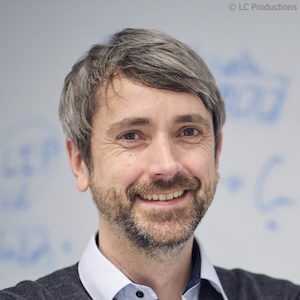
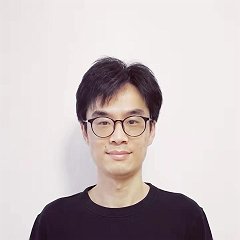
John R. Thorstensen is a Professor of Physics and Astronomy at Dartmouth College since 1980. He serves as Director of the MDM Observatory (since 2007) and President of the MDM Observatory Corporation. His research focuses on observational studies of cataclysmic binary stars and X-ray binaries. He developed the widely-used astronomical planning software JSkyCalc and its predecessors. Education: B.A. in Physics from Haverford College (1974), Ph.D. in Astronomy from University of California, Berkeley (1980). Research emphasizes cataclysmic variable stars' orbital dynamics and population studies. Maintains a comprehensive catalog of cataclysmic variables using multi-source data (ASASSN, ZTF, Gaia). Collaborates internationally through the MDM Observatory consortium. Formerly led ground-based parallax studies before Gaia satellite data rendered this obsolete. Award-winning contributions to astronomical software and observational astronomy methodologies. Actively involved in observational campaigns at Kitt Peak, Arizona. Encourages queries from astronomers about unpublished orbital period data.
Reed Essick is an Assistant Professor at the Canadian Institute for Theoretical Astrophysics (CITA), University of Toronto. His research focuses on experimental gravity, astrophysical signals, and nuclear physics, with particular emphasis on neutron stars, black holes, and gravitational waves. He develops advanced statistical methods like hierarchical Bayesian inference and nonparametric analysis for interpreting observational data from pulsars and gravitational wave detectors. Dr. Essick collaborates extensively with international observatories such as LIGO, Virgo, and KAGRA, contributing to cutting-edge projects like multimessenger astronomy and precision cosmology. His work bridges computational astrophysics with observational techniques, addressing fundamental questions about dense matter and strong-field gravity. Key contributions include studies on gravitational wave equation-of-state constraints, pulsar timing analysis, and the application of machine learning to detector data. His research leverages both ground-based interferometers and space-based observations to explore extreme astrophysical environments.
Steve Hanneke is an Assistant Professor in the Computer Science Department at Purdue University, specializing in statistical learning theory, machine learning, and algorithmic information theory. His research focuses on understanding the fundamental limits of learning from data, including questions about what can be learned and how efficiently it can be done. Prior to Purdue, he held positions at Toyota Technological Institute at Chicago (2018–2021), Carnegie Mellon University (2009–2012), and Princeton University (2018 visiting lecturer). He earned his PhD from Carnegie Mellon University in 2009, advised by Eric Xing and Larry Wasserman, with a thesis on active learning foundations. Key research interests include active learning, adversarial robustness, online learning, and the theoretical analysis of learning algorithms. He has contributed to foundational work on PAC learning, sample complexity, and universal learning frameworks. Notable awards include the Best Paper Awards at ALT 2021 and COLT 2020, and his 2007 ICML paper received an Honorable Mention for the ICML Test of Time Award in 2017. Teaching experience includes courses at Purdue (Machine Learning Theory, Data Mining and Machine Learning), Princeton (Statistical Learning and Nonparametric Estimation), and Carnegie Mellon (Advanced Probability and Statistical Theory). His work has been published in top venues like COLT, NeurIPS, and the Journal of Machine Learning Research, with over 50 peer-reviewed articles. Research highlights include developing the theory of universal learning under general stochastic processes, characterizing minimax rates in active and online learning, and exploring adversarial robustness in PAC learning frameworks. Current projects focus on bandit learning, non-stationary environments, and the theoretical limits of learning algorithms.
Yihan Sun is an Assistant Professor at the University of California, Riverside (UCR) since January 2020. He earned his Ph.D. in Computer Science from Carnegie Mellon University (CMU) , advised by Guy Blelloch , and holds a Bachelor's degree in Computer Science from Tsinghua University . Research Interests: Yihan Sun focuses on the theory and practice of parallel computing , including Parallel algorithms and data structures Write-efficient algorithms for Non-Volatile Memory (NVM) Computational geometry (range trees, Delaunay triangulations) Graph algorithms (SSSP, SCC, cluster-based BFS) Concurrent and persistent data structures Multi-version concurrency control (MVCC) with garbage collection Applications in databases, transactional systems, and computational biology Recent Research Trends: His work on join-based parallel balanced trees has been foundational, supporting four balancing schemes (AVL, red-black, weight-balanced, treaps) and enabling efficient implementations in graph analytics, spatial queries, and dynamic programming. Recent publications focus on output-sensitive algorithms , scalable graph libraries (PASGAL) , and pedagogical approaches to teaching parallel algorithms. Teaching: He teaches CS260 (Parallel Algorithms) at UCR and has served as a guest lecturer for MIT 6.886 (Algorithm Engineering) and CMU 15-859 (Algorithms in the real world) . He also contributed to algorithm education through a tutorial at the ACM Symposium on Principles and Practice of Parallel Programming (PPoPP 2019) . Labs & Collaborations: Yihan is a core contributor to the PAM (Parallel Augmented Maps) library, which has been integrated into systems like Aspen (graph-streaming) and C-trees . He collaborates with teams at CMU-Parlay , PBBS , and Ligra , with his code available on Github for community feedback.
Dr. Jessica Sunshine is a Professor in the Department of Geology at the University of Maryland. Her research focuses on planetary materials and processes, particularly using spectroscopy and morphological analysis to study comets, asteroids, meteorites, and lunar geology. She is a principal investigator on NASA missions such as the Double Asteroid Redirection Test (DART) and the Lucy Mission, contributing to breakthroughs in planetary defense and asteroid composition analysis. Dr. Sunshine holds a Ph.D. from Brown University (1994). Her work integrates field-based and remote sensing techniques, including thermal infrared spectroscopy, to explore topics like the origins of spinel-rich deposits on the Moon, the composition of Trojan asteroids, and the dynamics of impact ejecta. She leads the Lunar Vulkan Imaging and Spectroscopy Explorer (Lunar-VISE) mission to study non-mare volcanic regions on the Moon. Her recent studies include analyzing the DART mission's impact on Dimorphos, revealing insights into asteroid deflection mechanics and surface material responses. She has also contributed to understanding the geological history of Ceres and the compositional diversity of Jupiter Trojans through the Lucy mission's data.
Alicia Rivas Vaño serves as Associate Professor in the Department of Public Law at the School of Law, Universidad Pablo de Olavide (UPO). Her academic career focuses on constitutional and European legal frameworks governing human rights, with particular emphasis on sexual and gender diversity protections. Research Interests: Her scholarly work spans Constitutional Law, European Union Law, Sexual Diversity Law, Gender Identity Law, Anti-Discrimination Law, and Human Rights Law. She examines the intersection of political activism and legal development in advancing LGBTIQ+ rights across European jurisdictions, analyzing judicial interpretation trends and legislative reforms. Her publication record reveals consistent scholarly contributions since 2001, with recent work (2021-2025) increasingly focusing on contemporary challenges in gender identity recognition, international human rights mechanisms, and Spanish constitutional implementation. The research demonstrates methodological rigor through comparative legal analysis, treaty interpretation, and examination of judicial reasoning patterns across European and international courts. Academic Background: PhD from Universidad Pablo de Olavide (2015) Thesis: "The evolution of the protection of sexual diversity in European law, political activism and legal development" Supervised by Dr. Manuel José Terol Becerra
Prof. Dr. Michael Kramer is a Professor of Astrophysics at the University of Manchester and a Scientific Member (Managing Director) at the Max Planck Institute for Radio Astronomy. He leads the COMPACT Research Group and specializes in radio astronomical fundamental physics. University of Manchester: Professor for Astrophysics Max Planck Institute for Radio Astronomy: Managing Director, Radio Astronomical Fundamental Physics Research Interests: Dr. Kramer focuses on pulsars , neutron stars , and gravitational physics , using these as tools to test general relativity , detect gravitational waves , and study transients in the Milky Way. Recent Research Trends: His 15 most recent publications emphasize fast radio bursts (FRBs) , axion dark matter searches , black hole imaging , and pulsar timing arrays for gravitational wave detection. Studies include the M87 jet, Galactic Center magnetars, and MeerKAT telescope optimizations.
Oleg Shpyrko is a Professor and Department Chair in the Department of Physics at the University of California, San Diego (UCSD). He leads a research group focused on nanoscale structural dynamics using advanced x-ray scattering techniques. His work bridges hard and soft condensed matter systems, including magnetic materials, energy storage materials, and biophotonic nanostructures. Shpyrko earned his Ph.D. in Physics from Harvard University in 2004. His research leverages national facilities like the Advanced Photon Source (APS) and Linac Coherent Light Source (LCLS). Key areas include coherent x-ray imaging, domain dynamics in magnetic systems, and operando studies of battery materials. His research interests span: Coherent X-ray Scattering and Imaging Magnetic Domain Dynamics Nanostructured Materials Energy Storage (battery cathodes) Biophotonic Structures Phase Transitions Notable achievements include pioneering X-ray Photon Correlation Spectroscopy (XPCS) for antiferromagnetic domain studies and revealing dislocation dynamics in battery materials. His work has been featured in Nature , Science , and Physical Review Letters . Shpyrko has mentored over 15 graduate students and postdocs, many of whom have become faculty at top institutions. Awards include the NSF CAREER Award (2010), Hellman Fellowship (2009), and the Rosalind Franklin Young Investigator Award (2008). His group operates facilities including Dynamic Light Scattering labs, AFM/EFM microscopes, and collaborates with synchrotron and neutron sources globally.
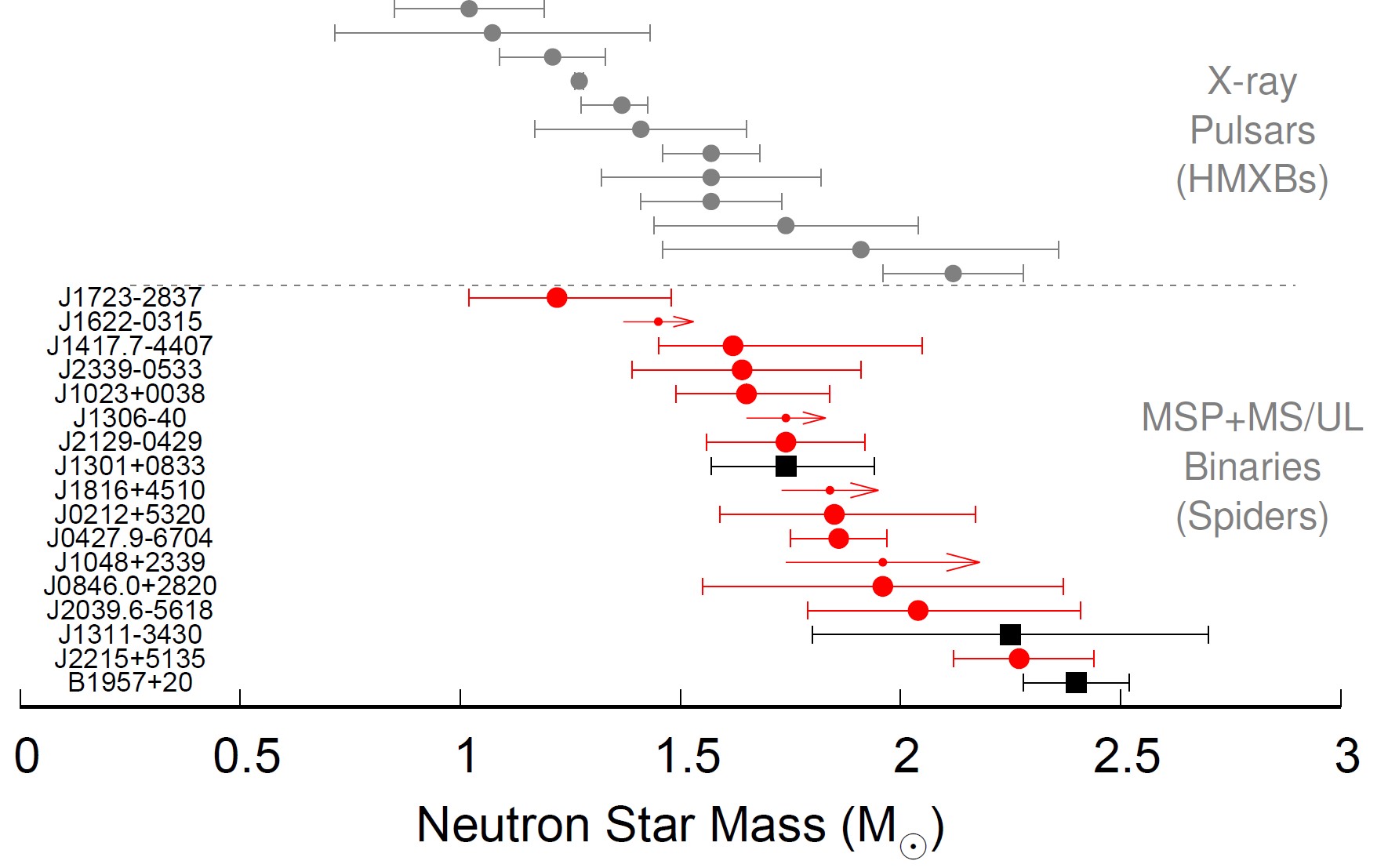
Manuel Linares Alegret is a Professor in the Department of Physics at the Norwegian University of Science and Technology (NTNU) in Trondheim, Norway, where he has been employed since September 2021. He also holds an Associate Professor position at the Polytechnic University of Catalonia (UPC) in Barcelona, Spain, since 2018. His research focuses on high-energy astrophysics with particular emphasis on neutron stars, black holes, white dwarfs, and compact objects in binary systems. Dr. Linares earned his Physics Degree from Universitat de Barcelona (1998-2004) followed by a PhD in Astronomy from Universiteit van Amsterdam (2004-2009). His subsequent career includes prestigious fellowships including Rubicon Fellow at MIT (2009-2012), IAC Fellow (2012-2017), and Marie Curie Fellow at UPC (2017-2018). His research interests primarily center on compact binary systems, particularly millisecond pulsars known as 'spiders' (including black widows and redbacks), neutron star physics, accretion flows, thermonuclear bursts, and the search for super-massive neutron stars. His work combines observational astronomy with theoretical modeling to understand extreme physics in these systems. He leads the LOVE-NEST project, which investigates compact binary millisecond pulsars to find the most massive neutron stars and understand the interaction between accretion flows, pulsar winds, and neutron star magnetospheres. An analysis of his recent publications reveals a strong focus on spider pulsar systems, with particular attention to mass measurements, orbital dynamics, irradiation effects, and the relationship between accretion and rotation-powered states. His work spans multiple observational wavelengths including optical, X-ray, and radio, often utilizing data from major telescopes and space observatories. ERC Consolidator Grant for LOVE-NEST project Marie Curie Fellow IAC Fellow Rubicon Fellow Dr. Linares has supervised numerous students at various levels, including PhD candidates, Master's students, and undergraduate research projects. He currently leads a substantial research team under the LOVE-NEST project, which has received 2M EUR in funding. His group includes multiple postdoctoral fellows and PhD candidates working on various aspects of compact object astrophysics. He teaches Observational Astrophysics (FY3215) at NTNU and has previously taught Quantum Physics and Physics I at UPC. He is the principal investigator of the LOVE-NEST (Looking for Super-Massive Neutron Stars) research group at NTNU, which focuses on compact binary millisecond pulsars. This team conducts research using multiple observational facilities worldwide and collaborates with international groups including those at the Instituto de Astrofísica de Canarias and the University of Manchester.
Pearl Sandick is a Professor in the Department of Physics and Astronomy and Interim Dean in the College of Science at the University of Utah. She has previously served as Associate Chair of the Department of Physics and Astronomy and Associate Dean for Faculty and Research in the College of Science. Her academic journey at the University of Utah began in 2011 as an Assistant Professor, progressing to Associate Professor in 2017, and achieving the rank of Professor in 2022. Her educational background includes: BA in Mathematics from New York University (2003) PhD in Physics from the University of Minnesota (2008) Sandick is a theoretical particle physicist whose research focuses on physics beyond the Standard Model, with particular emphasis on dark matter. Her work spans theoretical modeling, connections to astrophysical observations, and implications for experimental detection. She investigates various dark matter candidates and their potential signatures in current and future experiments, including collider searches, direct detection experiments, and indirect detection through astrophysical observations. Her research also extends to connections between particle physics and cosmology, including early universe phenomena and implications for cosmic structure formation. She has developed computational tools like MADHAT for dark matter analysis and has made significant contributions to understanding how stellar evolution can constrain axion physics. Her scholarly contributions have been recognized with several prestigious awards: University of Utah Early Career Teaching Award (2016) University of Utah Distinguished Mentor Award Linda K. Amos Award for Distinguished Service to Women University of Utah Presidential Scholar Sandick has been actively involved in mentoring graduate students, as evidenced by her teaching of PhD thesis research and Master's research courses. She has secured significant research funding from the National Science Foundation and other agencies to support her work on dark matter, dark energy, and new physics. Her grant portfolio includes projects on theoretical particle physics, connections to astrophysical observations, and studies on graduate education reform following a departmental tragedy. She is an active member of the American Physical Society, having served as Chair of the regional Four Corners Section in 2021-2022, demonstrating her commitment to the broader physics community and leadership in her field.
Ken Duffy is a Professor and Chair of the Department of Mathematics at Northeastern University, with a joint appointment in the Department of Electrical and Computer Engineering. He joined Northeastern in 2023 and previously served as Interim Chair of the latter department. Previously, he was a professor at the National University of Ireland, Maynooth, where he directed the Hamilton Institute (2016–2022) and co-directed the Science Foundation Ireland Centre for Research Training in Foundations of Data Science. He earned a PhD in Mathematics from Trinity College Dublin. His research focuses on collaborative, multi-disciplinary algorithm design using probability and statistics, with applications in digital circuits, DNA, and network coding. Notable contributions include the Royal Statistical Society’s Applied Probability Section (co-founded in 2011) and numerous award-winning papers in IEEE conferences and journals. Recent work emphasizes decoding algorithms like GRAND (Guessing Random Additive Noise Decoding), applied to error correction, wireless systems, and biomedical imaging. His articles address topics like soft-output decoding, interference mitigation, and cellular lineage tracing. Awards: Best Paper Awards (IEEE ICC 2015, IEEE TNSE 2019), COMSNETS Best Demo (2022–2023), and the IEEE Ellersick Award (2024). Advising: The SFI Centre he co-directed funded over 120 PhD students. Labs/Teams: Hamilton Institute, Royal Statistical Society’s Applied Probability Section, and collaborative projects in cellular dynamics and secure communication.
Jarle Brinchmann is an Associate Professor at Leiden University's Leiden Observatory, part of the Faculty of Science. He holds a PhD from the University of Cambridge and has held postdoctoral positions at Oxford University, the Max Planck Institute for Astrophysics, and the University of Porto. His research focuses on galaxy evolution, active galactic nuclei (AGN), and interstellar medium dynamics. Notable contributions include studies on gas outflows in galaxies and emission line diagnostics for AGN identification. Recent work includes analysis of Lyman-alpha emitters and binary star systems in globular clusters using the MUSE instrument. Education: BSc and MSc in Astronomy from the University of Oslo, PhD from the University of Cambridge (thesis: 'The physical evolution of galaxies'). Research emphasizes observational and theoretical astrophysics, with a focus on high-redshift galaxies, intergalactic medium interactions, and stellar populations. Collaborates widely on large-scale surveys and spectroscopic analyses.
Seok-Won Lee is an Associate Professor of History at Rhodes College, specializing in East Asian intellectual and cultural history with emphases on Chinese and Japanese history. He teaches courses on traditional and modern China while incorporating transnational perspectives that highlight underrepresented voices, borderlands, minorities, and outlaws through critical thinking frameworks developed during his training at Cornell University. Dr. Lee's academic background includes: Ph.D. in History, Cornell University (2010) M.Phil. in History, Cornell University (2007) M.A. in Interdisciplinary Program in Area Studies, Yonsei University (2003) B.A. in History, Yonsei University (2001) His research centers on intellectual history during East Asia's wartime period (1931-1945), examining how imperial intellectuals redefined concepts of nation, space, and community to justify colonial aggression while challenging Western social sciences' universality. Current projects include revising his dissertation into a book manuscript and conducting archival research on Japanese intellectuals' writings about Chinese and Korean history from the 1920s-1940s, with particular focus on Pan-Asianism and China studies in wartime Japan. Analysis of his twelve publications (2008-2021) reveals consistent engagement with wartime intellectual history, racial discourse, and empire-colony dynamics. Key thematic clusters include: Pan-Asianism's evolution across wartime/postwar contexts; intersections of race, empire, and social sciences; and critical examinations of colonial knowledge production. His work bridges history, Asian studies, and postcolonial theory through transnational methodologies. No scientific awards are documented in available materials. While active in teaching and research, no student advisement details or grant information are provided. Dr. Lee maintains affiliations with Rhodes College's Asian and Asian American Studies program and Chinese studies initiatives, though no dedicated labs or research teams are mentioned.
Prof. Dr. Johannes Kinder is a Professor and Chair of Programming Languages and Artificial Intelligence at the Institute of Informatics , Ludwig Maximilian University of Munich. His research focuses on software security through program analysis and machine learning, particularly targeting malware detection , vulnerability analysis , and reverse engineering . He has held faculty positions at Royal Holloway, University of London, and Bundeswehr University Munich. Research Interests include: Securing software systems via program and machine learning techniques Detection of software vulnerabilities and malware Preventing exploitation through binary analysis Applications of formal methods in systems security Recent Publications highlight advancements in binary function embedding , malware detection in npm , and speculative execution attack modeling . His work appears in top venues like USENIX Security and IEEE S&P . Education : Diplom from TU Munich (2005), Doctorate from TU Darmstadt (2010). Professional Roles : General Chair, ACM CCS 2019 Doctoral Symposium Chair, ESSoS 2016 Program Committee member for NDSS 2026, IEEE S&P 2022-2025
Bihuan Chen is an Associate Professor at the College of Computer Science and Artificial Intelligence, Fudan University, specializing in software engineering with focus on software supply chain security and trustworthy AI systems. His research spans multiple programming languages including JavaScript, Python, Java, and C/C++ across application and AI domains. Dr. Chen earned his B.Sc. and Ph.D. in Computer Science from Fudan University in 2009 and 2014 respectively, followed by postdoctoral research at Nanyang Technological University (2014-2017). His research interests include software supply chain risk assessment, trustworthy AI systems, and program analysis. His recent publications demonstrate strong focus on malicious package detection in NPM/PyPI ecosystems, vulnerability patch porting using LLMs, and safety verification for autonomous driving systems. The work shows increasing integration of machine learning techniques with traditional program analysis approaches, particularly evident in the 2024-2025 publications that leverage LLMs for vulnerability detection and code refinement. ACM SIGSOFT Distinguished Paper Award (FSE 2016, ASE 2018, ASE 2022, FSE 2025) IEEE TCSE Distinguished Paper Award (ICSME 2020, SANER 2023) CCF Prototype Competition Awards (2nd and 3rd Prizes) Dr. Chen has advised over 50 students including current PhD candidates and notable alumni now at Huawei, ByteDance, and other leading tech firms. His fuxi platform assesses security, legal, and maintenance risks across the software engineering lifecycle. He serves on program committees for major conferences including ICSE, FSE, ASE, and ISSTA, and as Associate Editor for the Journal of Software: Evolution and Process.