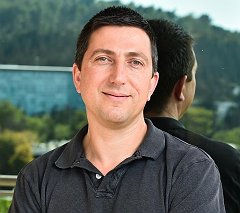
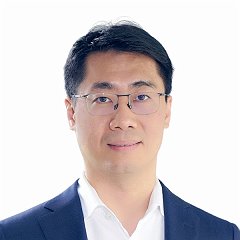
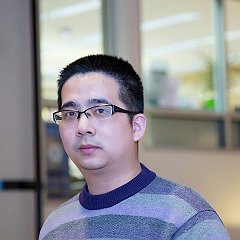
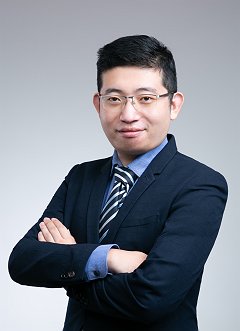
Giuseppe Antonio Di Luna is an Associate Professor at the Dipartimento di Ingegneria Informatica, Automatica e Gestionale (DIAG), Sapienza University of Rome . His research spans critical areas of Distributed Computing, Distributed Systems , and Computer Security , with a focus on Dynamic Networks, Mobile Agents, Anonymous Communication , and NLP techniques applied to binary analysis . Current research themes include anonymity in distributed environments Security challenges in confidential computing Algorithm design for mobile robots and dynamic networks Applying NLP to enhance binary analysis security His recent publications across top venues like DSN, EuroS&P, and JPDC reflect these interdisciplinary interests, with notable work on: Black hole detection in dynamic rings Robustness of binary similarity systems Confidential virtual machine evaluation tools Self-stabilizing computation in anonymous networks He has received prestigious awards including the Axa Fellowship (2020-2022) , ASPLOS 2019 Distinguished Paper Award , and DIMVA 2019 Best Paper Runner-Up . His collaborative efforts include organizing the EuroSys 2023 conference in Rome.
Dr. Ying Wang is an Associate Professor and Assistant Dean at the Software College of Northeastern University in China, where she also serves as a doctoral supervisor. She received her PhD in Software Engineering from Northeastern University in January 2019 and joined the faculty in February 2019. Her academic career includes a postdoctoral fellowship at the Hong Kong University of Science and Technology (2022-2023) and a visiting scholar position at Microsoft Research Asia (2021) through the StarTrack Program. Her research focuses on dependency management, software ecosystem governance, software refactoring, and software supply chain security. She has made significant contributions to understanding cross-language dependencies, vulnerability propagation across ecosystems, and developing tools for dependency conflict detection and resolution. Her work spans multiple programming language ecosystems including Java, C#, Python, Go, JavaScript, Android, and Rust. Dr. Wang's publication record shows a consistent trajectory of high-impact research in top software engineering conferences (CCF-A level) including ASE, ICSE, ESEC/FSE, and ISSTA. Her recent work increasingly integrates large language models with traditional software engineering techniques, particularly in dependency analysis and software refactoring. The publications demonstrate a strong emphasis on practical tool development with industry applications. Microsoft Research Asia Star Program Scholar (2020) CCF Outstanding Doctoral Dissertation Award nomination (2020) Liaoning Province Outstanding Doctoral Dissertation Award (2021) ACM SIGSOFT Distinguished Paper Award (ICSE 2021 and ESEC/FSE 2023) Multiple CCF ChinaSOFT Software Prototype Competition awards (2020, 2023) OpenHarmony Community Security Governance Contributions (2024, 2025) Dr. Wang actively mentors a large group of graduate students working on various aspects of software engineering, with many graduates securing positions at major technology companies including Huawei, Microsoft, Alibaba, and Tencent. She serves on the editorial board of IEEE Transactions on Software Engineering and has held numerous program committee positions at top software engineering conferences. Her research has strong industry connections, with several tools developed by her team being integrated into commercial platforms at Huawei and Microsoft.
Işıl Dillig is an Associate Professor of Computer Science at the University of Texas at Austin, where she leads the UToPiA research group. Her academic career spans over a decade of significant contributions to programming languages research, particularly in program analysis, verification, and synthesis. Dr. Dillig received all her academic degrees (BS, MS, and PhD) from Stanford University before joining the faculty at UT Austin. Her educational background established the foundation for her innovative research approach that bridges theoretical computer science with practical applications. Her research focuses on developing techniques to make software systems more reliable, secure, and easier to build through advanced program analysis, verification, and synthesis methods. She has pioneered approaches that combine symbolic reasoning with machine learning to tackle complex software engineering challenges across multiple domains including security, databases, and programming language theory. Her work demonstrates exceptional depth in creating practical tools that address real-world software development problems while maintaining strong theoretical foundations. Analysis of Dr. Dillig's publication record reveals a consistent trajectory of innovation in program synthesis, with recent work expanding into neurosymbolic approaches that bridge neural networks with formal methods. Her research shows strong connections between theoretical foundations and practical applications, particularly in security-critical systems, database technologies, and blockchain applications. The evolution of her work demonstrates increasing sophistication in handling complex program structures while maintaining practical usability. Dr. Dillig has received prestigious recognition for her research contributions: Sloan Fellowship NSF CAREER award As a dedicated educator and research leader, Dr. Dillig has served in significant roles including Program Chair for PLDI 2022 and Steering Committee member for PLDI. She has mentored numerous students through her UToPiA research group, guiding research in program synthesis, verification, and analysis. Her work has been supported by substantial research grants that have enabled innovative projects at the intersection of programming languages and security. Dr. Dillig leads the UToPiA (UT Austin Programming, Languages, and Analysis) research group, which focuses on developing novel techniques for program analysis, verification, and synthesis. The group maintains strong collaborations with industry partners and academic institutions worldwide, translating theoretical advances into practical tools that address real software engineering challenges.
Eran Yahav is an Associate Professor in the Computer Science Department at the Technion - Israel Institute of Technology. He previously served as a research staff member at IBM T.J. Watson Research Center from 2004 to 2010. His academic journey began with a B.Sc. from the Technion in 1996, followed by a Ph.D. from Tel Aviv University in 2005. Yahav's research focuses on program analysis, program synthesis, program verification, and machine learning for programming. His work bridges theoretical foundations with practical applications, particularly in developing techniques that help programmers work more effectively with complex frameworks and APIs. He has pioneered approaches that combine static analysis with machine learning to address challenges in code search, completion, and understanding. His recent work heavily intersects with neural network applications to programming tasks, demonstrating how deep learning can enhance traditional program analysis techniques. His publication record shows a clear evolution from traditional program analysis and verification toward integrating machine learning with programming language processing. The most recent articles reveal a strong focus on neural methods for code understanding, including structural language models, adversarial examples for code models, and neural approaches to binary analysis and program synthesis. This represents a significant shift toward leveraging AI techniques to solve longstanding problems in programming languages and software engineering. Yahav has received numerous accolades including the prestigious Alon Fellowship for Outstanding Young Researchers, the Andre Deloro Career Advancement Chair in Engineering, and an ERC Consolidator Grant. He also earned best paper awards at ISSTA 2006 and 2007. As an advisor, Yahav has mentored numerous Ph.D. and Master's students who have gone on to make significant contributions in academia and industry. His research has been supported by substantial grants, including the ERC Consolidator Grant. He also serves as CTO at Tabnine, demonstrating the practical impact of his research. Yahav leads multiple research projects including PRIME (Programming with Millions of Examples), Fender (Preserving Correctness under Weak Memory Models), Saint (Synthesis using Abstract Interpretation), and several others focused on program analysis, verification, and synthesis. His work often involves building practical tools that translate theoretical advances into usable software engineering solutions.
Yang Liu is a Full Professor and University Leadership Forum Chair at the School of Computer Science and Engineering, Nanyang Technological University (NTU) in Singapore. He serves as Programme Director for HP-NTU Digital Manufacturing Corp Lab, Deputy Director of the National Satellite of Excellence of Singapore, and Cluster Director in Cybersecurity at Energy Research Institute @NTU. His research spans Cybersecurity , Software Engineering , and Artificial Intelligence . He leads research in malware modeling and detection, vulnerability analysis using machine learning and program analysis, formal verification of security systems, program specification learning, performance analysis, Android system security, and AI security, robustness, fairness, and explainability. His notable work includes the Process Analysis Toolkit (PAT) for model checking and the Deep-Series tools for deep learning testing. Professor Liu has published extensively in top-tier conferences including ASE, ICSE, FSE, ISSTA, and S&P. His research demonstrates strong trends toward integrating AI/ML techniques with traditional software engineering and security approaches, particularly focusing on large language models for code analysis, vulnerability detection, and program repair. Recent publications show a growing emphasis on blockchain security, smart contract analysis, and addressing security challenges in AI systems. NRF Investigatorship (Class 2020) ACM's Distinguished Speaker Nanyang Research Award (Young Investigator) Microsoft Asia Research Fellowship 20 Year ICFEM Most Influential System Award for PAT Multiple ACM SIGSOFT Distinguished Paper Awards Professor Liu actively advises students and has seen notable student achievements, including Singapore Data Science Consortium research award winners and AISG PhD Fellowship recipients. His research is supported by numerous grants including a $900,000 NTU-NAP grant for Formal Verification on Cloud and a $471,000 grant for Vulnerability Detection in Binary Code. He leads the HP-NTU Digital Manufacturing Corp Lab and contributes to RollsRoyce@NTU Corporate Lab research on complex business systems simulation.
Xin Xia is a Qiushi Distinguished Professor at the College of Computer Science and Technology, Zhejiang University. Previously, he served as the Chief Expert and Director of the Software Engineering Application Technology Lab at Huawei Technologies, China from 2021 to 2025. His academic career spans software engineering research with a focus on AI applications in the field. Ph.D. from Zhejiang University (2014) Supervised by Prof. Xiaohu Yang and Prof. Jianling Sun Visiting student at Singapore Management University (2012-2014) under Prof. David Lo Xin Xia's research primarily focuses on applying data science techniques to software engineering problems. His work spans AI for Software Engineering, Mining Software Repositories, Empirical Software Engineering, and Large Language Models for code understanding and generation. He employs data mining, information retrieval, natural language processing, search-based algorithms, and program analysis to transform software engineering data into automated tools and insights. His recent publications show a strong trend toward leveraging Large Language Models for various software engineering tasks, including code generation, vulnerability detection, and test generation. He has been exploring how to make these models more effective, reliable, and practical for real-world software development scenarios, with a particular focus on Java and Python ecosystems. ACM SIGSOFT Early Career Researcher Award (2022) ACM Distinguished Member 16 best or distinguished paper awards, including nine ACM SIGSOFT Distinguished Paper Awards Recipient of the IEEE Transactions on Software Engineering 2021 Best Paper Award Runner-Up Xin Xia has advised numerous students who have gone on to publish in top software engineering venues. His research has been supported by grants from both academic institutions and industry partners, particularly during his time at Huawei. He actively collaborates with researchers worldwide, especially with David Lo at Singapore Management University. At Zhejiang University, Professor Xia leads research in the intersection of AI and Software Engineering. His work has practical applications in improving developer productivity through automated tools that analyze software repositories and provide actionable insights.
Dr. Yutian Tang serves as an Assistant Professor (UK Lecturer) and Principal Investigator at the School of Computing Science, University of Glasgow, where he supervises PhD students and leads research in AI-driven software engineering. His academic journey includes a PhD from The Hong Kong Polytechnic University's Department of Computing. His research spans AI+SE integration , particularly focusing on Large Language Models for program analysis, software testing, and Android security. Key areas include: LLM-assisted vulnerability detection and repair Empirical studies of real-world software systems Privacy protection mechanisms Configuration compatibility in mobile applications Smart contract security optimization His publication portfolio shows a clear trajectory toward AI-augmented software engineering , with recent work demonstrating how LLMs can enhance taint analysis, binary code similarity detection, and test generation. This evolution reflects the field's broader shift toward AI integration while maintaining rigorous empirical validation. Award highlights include: Best Industry Paper Award at ISSRE'18 Elevation to IEEE Senior Member (2024) Three Android OS defects confirmed by Google Security Team As an active researcher and community contributor, Tang serves on 40+ program committees including PLDI, ICSE, and FSE. His work receives funding from National Natural Science Foundation of China, Shanghai Science Commission, OpenAI, and Google. Current projects focus on automated bug localization and LLM-based testing frameworks, with recent grants from OpenAI Cybersecurity and Google Cloud programs. He leads research groups investigating Android security and AI-assisted program analysis, collaborating with institutions like Lund University.