Joanna Paliszkiewicz is a Full Professor at the Warsaw University of Life Sciences (WULS-SGGW) and Director of the Management Institute . She also holds an Adjunct Professor position at the University of Vaasa in Finland. Expertise: Knowledge management, trust management, digital business, and AI in organizational contexts. Publications: Author/co-author/editor of 21 books, including recent works on generative AI ethics, social media trust, and economic-media interactions. Research Trends: Focuses on trust dynamics in digital economies, ethical implications of AI, and media's role in economic decision-making. Collaborations: Works with international academics on topics spanning generative AI, communication in organizations, and trust-based marketing.
Dr. Alfredo Hernandez Sanchez is a Research Fellow at the Institute for International Relations and Political Science (TSPMI) at Vilnius University and a Senior Fellow at the Institute for Studies on the Mediterranean and the Middle East (IBEI). He holds a PhD in Political Science from Central European University and a BA in International Relations from UNAM, with expertise in Computational Social Sciences, Natural Language Processing (NLP), and Quantitative Text Analysis. His work bridges FinTech, International Political Economy, and anti-corruption research, including policy contributions for UNESCO, Transparency International, and the IADB. PhD in Political Economy, Central European University (2020) BA in International Relations, UNAM His research focuses on FinTech regulation , Big Data applications in governance, and corruption risk measurement using large-scale datasets. Current projects include the Political Economy of FinTech grant and the Water Integrity Risk Index initiative with UNESCO. Publications span Springer, Bloomsbury, and Emerald, covering topics like pandemic-era procurement ethics and defense corruption networks. Recent work highlights FinTech policy , anti-corruption metrics , and quantitative methods in political economy, with a trend toward AI-driven analysis of governance structures. He is also a Data Visualization enthusiast, contributing to the D·Viz blog and academic discourse via Bluesky. Notable affiliations include: Marie-Curie ERA Postdoctoral Fellow (Vilnius University) Research Fellow (IBEI) Contributor to UNESCO and IADB projects
Roles & Affiliations: Assistant Professor at the Department of Organizational Information and Communication Research, Faculty of Communication, Vilnius University. Active in research projects, academic conferences, and editorial roles. Education: PhD in Mathematics and Informatics (2012), Vilnius University, Thesis: 'The applications of datamining methods to personalized learning environments.' MA in Informatics (1995), Vilnius Pedagogical University. Research Interests: Focus on e-learning methodologies, big data processing, educational technology, and business intelligence. Explores applications of machine learning in finance and personalized learning systems. Publications & Projects: Over 15 articles in peer-reviewed journals and conferences (e.g., Applied Sciences, Mykolas Romeris University Proceedings). Led the EU-funded project 'Development and Introduction of Multilingual Teacher Education Programmes in Georgia and Ukraine (DIMTEGU)' (2012–2016). Active in conference organizing and editorial work. Grants & Memberships: Participated in EU-funded projects. Member of the National Association of Distance Education (NADE), Lithuanian Association of Distance and e-Learning (LieDM), and Lithuanian Computer Society (LIKS). Labs & Teams: Involved in research groups focused on educational technology, data analytics, and digital transformation initiatives within the Faculty of Communication.
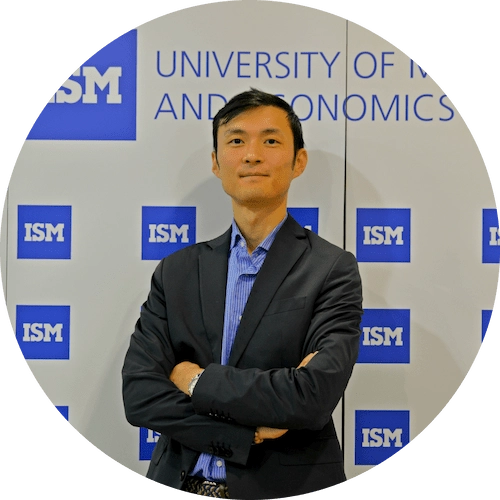
Dr. Jason Li-Ying is an Associate Professor at the Department of Management Engineering, Technical University of Denmark (DTU), and holds a visiting position at ISM. He leads the Innovation, Design, and Entrepreneurship (IDE) research group and is affiliated with the Eurotech Universities alliance. His expertise spans innovation strategy, technology transfer, and open innovation, with a focus on SMEs and public sector innovation. Jason co-edited key works like Innovation Management: Perspectives from Strategy, Product, Process and Human Resources Research (2020) and publishes in journals such as Technovation and R&D Management . His research addresses innovation ecosystems, digital business models, and the socio-economic impacts of big science facilities like the European Spallation Source (ESS). He explores how firms balance external technology sourcing with internal capabilities, emphasizing strategic alliances and governance in virtual communities. Recent work highlights challenges in digital innovation units, business model innovation for sustainability, and managing innovation in public sectors. Jason’s contributions bridge theoretical frameworks and practical applications, influencing policy and corporate strategies globally.
Laura Ringienė is a Researcher and Information Technology Administrator at Vilnius University's Institute of Data Science and Digital Technologies, where she works in the Interdisciplinary Statistical Research Group. She holds a PhD in Computer Science Engineering obtained in 2014 from Vilnius University's Institute of Mathematics and Informatics. Her professional activities span research, teaching, and technical administration within the academic environment. Dr. Ringienė earned her educational credentials at Vilnius Pedagogical University, completing her Bachelor's degree in Informatics in 2006 and Master's degree in Informatics in 2008, both from the Faculty of Mathematics and Informatics. Her doctoral dissertation, Hybrid Neural Network for Multidimensional Data Visualization , was defended in 2014 and falls under Technological Sciences, Computer Science Engineering. Her research focuses on statistical analysis of educational data, with particular expertise in multilevel regression, structural equation modeling, and analysis of international large-scale assessment data (PISA, TIMSS, PIRLS). She has developed the R program package EFECTAS specifically designed for analyzing international education research data. Her work examines educational equity, reading achievement gaps across EU countries, socioeconomic factors affecting student performance, and the impact of preschool education on later academic outcomes. Analysis of her publication record from 2020-2025 reveals a strong concentration on educational data science, with recurring themes of statistical modeling of international assessment data, educational equity analysis, and application of advanced statistical techniques to understand educational systems across Europe. Her work frequently employs PISA, TIMSS, and PIRLS datasets to examine cross-national educational patterns and policy implications. Dr. Ringienė has been actively involved in the EFECTAS project (2018-2022), which was financed by the European Social Fund under a grant agreement with the Research Council of Lithuania. This project focused on analyzing the efficiency and productivity of education systems in EU countries using secondary large-scale data. She teaches undergraduate courses at Vilnius University, including Big Data Analytics and Business Process Robotization since 2019. Her professional development includes extensive training in Robotic Process Automation (UIPath), Structural Equation Modeling, Multilevel Linear Modeling, and various Big Data technologies. She is part of the Interdisciplinary Statistical Research Group, which focuses on applying advanced statistical methods to solve complex problems in education and other domains.
Justas Gribovskis is an Assistant Professor at the Department of Organizational Information and Communication Research , Faculty of Communication, Vilnius University. He holds a PhD (2021), Master's (2013), and Bachelor's (2006) degrees in Communication and Information fields from Vilnius University. His research focuses on knowledge management systems, business process optimization, big data analytics, and digital archiving. Education: 2021 – PhD, Vilnius University: Thesis on 'The influence of knowledge management on value creation in business processes' 2013 – Master's in Information Management, Faculty of Communication 2006 – Bachelor's in Communication and Information, Faculty of Communication Research Highlights: 2020-2023: Researched in the project 'Connective Digital Memory at the Margins' (ESF-funded), led by Dr. Costis Dallas, focusing on cultural identity and digital curatorial practices Developed models for evaluating knowledge-business process integration (2020) Explored big data-driven user knowledge creation (2018) Teaching: Courses include Information Marketing, Modern ICT, and Business Management Systems. Awards: No specific awards listed, but active in national and international conferences presenting on topics like blockchain in organizations and big data. Grants: Participated in the ESF-funded project (2020-2023) totaling €200k+.
Prof. Dr. Virginijus Marcinkevičius is a Professor at Vilnius University , serving as the head of the Smart Technologies Research Group and the Artificial Intelligence Laboratory within the Institute of Data Science and Digital Technologies . He is also a Senior Researcher , Project Lead Researcher , and Group Leader . Based in Vilnius, Lithuania, he has been instrumental in advancing research in machine learning , artificial intelligence , cybersecurity , and natural language processing . Research Interests: Machine Learning & AI Cybersecurity & Threat Detection Natural Language Processing Hyperspectral Imaging & Remote Sensing Autonomous Systems & Robotics Big Data & Cloud Computing His work spans both theoretical and applied aspects, including IoT security , visual analytics , and intelligent decision support systems . Recent projects include the development of propaganda detection systems , hyperspectral unmixing algorithms , and autonomous driving agents . Doctoral Supervision: He has supervised 19+ PhD students and 5+ consultants , covering topics from machine learning in cybersecurity to neural machine translation and autonomous UAV navigation . Projects & Grants: He has led or contributed to 15+ national and EU-funded projects , including: CognitiveSTATS – COVID-19 data literacy platform Propaganda and Disinformation Research – ML-based detection DAMIS – Data mining system for national research Raštija 2 – Lithuanian language resource integration Publications: He has authored or co-authored 60+ peer-reviewed publications in journals like IEEE Access , Informatica , Frontiers in Psychology , and Machine Vision and Applications . Professional Memberships: He is a member of the Lithuanian Computer Society , Lithuanian Mathematical Society , and Lithuanian Operations Research Society .