Marketta Kyttä is a Professor of Land Use Planning at Aalto University's Department of Built Environment. She holds a PhD in Architecture from Helsinki University of Technology (2004) and leads the Spatial Planning and Transportation Engineering Master’s program. Research Interests: Child- and age-friendly urban environments SoftGIS methodology for participatory mapping Social sustainability and urban health Public participation in planning Activity space modeling Scientific Awards: Lea Pulkkinen award Tapio Nummenmaa award Geospatial World Forum's WebGIS Innovation Award (2010) Oskari Vilamo award (2020) Oppikirja-palkinto for urban planning literature Methodological Contributions: SoftGIS (PPGIS innovation) Commercialization as Maptionnaire software International Collaborations: Affiliated with universities in Italy, Australia, and the US. Her work spans 80+ countries through Maptionnaire’s global adoption.
Eero Vaara serves as a Visiting Distinguished Professor in the Department of Management Studies at Aalto University, where his research centers on organizational and strategic change through discursive and narrative lenses. His work critically examines strategy processes, radical transformations like mergers and acquisitions, institutional legitimation, multinational corporation dynamics, and historical perspectives on management. His research interests encompass organizational change, strategic discourse, narrative analysis, institutional theory, and multinational corporate identity. Vaara investigates how language constructs organizational realities during crises, mergers, and cross-cultural interactions, with particular attention to power dynamics in identity politics and the role of historical narratives in strategic renewal. His scholarship bridges theoretical rigor with practical implications for managing complex change in global contexts. Recent publications (2020-2022) reveal consistent thematic focus across top management journals including Academy of Management Journal and Strategic Management Journal. Key trends include the interplay of language and social inequality during global crises like COVID-19, entrepreneurial phenomena in isolated economies such as North Korea, strategic ambiguity in organizational protection, and national identity construction within multinational corporations. His methodological innovations integrate critical discourse analysis with computational approaches like structural topic modeling. Scientific awards highlight his scholarly impact: Best Article Finalist 2023 (Academy of Management Discoveries) 2014 OMT Best Published Paper Award for advancing theoretical understanding of organizations While specific advising relationships and grant funding details aren't documented in the source material, Vaara's collaborative publications demonstrate extensive international research partnerships. His work with scholars across Europe and North America indicates active supervision of doctoral research and leadership in multinational research consortia, particularly in discourse-focused organizational studies. Though laboratory affiliations aren't specified, his methodological work suggests engagement with digital humanities research groups and discourse analysis laboratories, especially evident in publications combining computational text analysis with critical theoretical frameworks.
Eetu Mäkelä is a Professor of Digital Humanities at the University of Helsinki, leading the research group at the Helsinki Centre for Digital Humanities. He focuses on computational methods in humanities and social sciences, including datafication and interdisciplinary collaboration. He serves as Technical Director of DARIAH-FI and a Research Programme Director at the Helsinki Institute for Social Sciences and Humanities. Currently, he heads the preparatory group for the Helsinki Liberal Arts and Sciences Bachelor’s Programme. His research emphasizes technological and theoretical foundations of computational research, with notable contributions to linked open data, sociolinguistic analysis, and historical text mining. He has developed widely used tools like Recon, Palladio, and Octavo, which are employed in academic and public sectors. His work has garnered over 20 awards, including best paper and open science recognitions. Key areas of expertise include digital humanities methodologies, data integration, and open science practices. He actively contributes to teaching, designing courses such as 'Methods for Digital Humanities' and demonstrating innovative pedagogical approaches. His recent projects involve analyzing 18th-century philosophical texts and sociolinguistic change using computational methods. Awards: Multiple best paper awards, open data awards, and open science awards. Grants/Advising: Leads research initiatives funded by the Academy of Finland and other bodies. Mentors interdisciplinary research teams but no specific student names listed. He maintains active roles in academic infrastructure, including the DARIAH-FI initiative and the Helsinki Institute’s datafication program. His work bridges technical innovation with humanities scholarship, emphasizing practical, enduring systems for academic and public use.
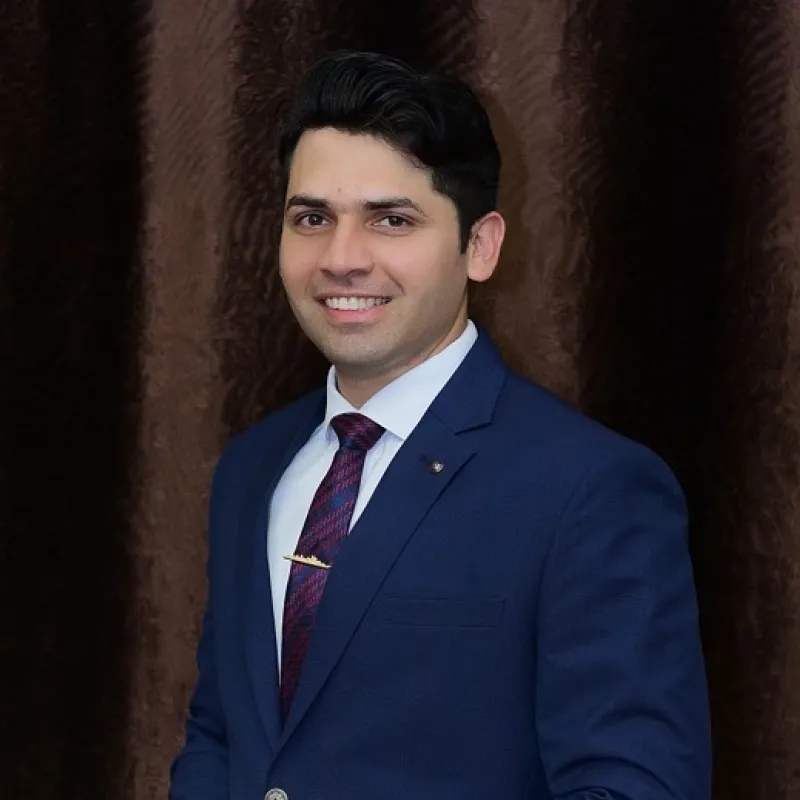
Adeel Tariq is a Post-Doctoral Researcher at the Industrial Engineering and Management department of LUT School of Engineering Sciences , Lappeenranta University of Technology, Finland. He completed his Ph.D. (2019) and MBA (2014) at the School of Management , Asian Institute of Technology, Thailand. Research Focus: Technology and innovation management, digital transformation, sustainable development, knowledge management, and leadership studies. Peer Review: Active reviewer for journals including Leadership & Organization Development Journal , Journal of Intellectual Capital , and European Journal of Innovation Management . Collaborations: Regular co-author with Waqas Tariq, Muhammad Saleem Sumbal, and Marko Torkkeli on topics like digital governance, fintech, and SME sustainability.
Esa Ollila serves as Associate Professor in the Department of Signal Processing and Acoustics at Aalto University, Finland, and holds an adjunct professorship in Statistics at the University of Oulu. His academic appointments include Academy of Finland Research Fellow (2010-2015) and prior senior research/lecturing roles at both institutions. His educational background features: M.Sc. in Mathematics, University of Oulu (1998) Ph.D. in Statistics (with honors), University of Jyväskylä (2002) D.Sc.(Tech) in Signal Processing (with honors), Aalto University (2010) Professor Ollila's research centers on statistical signal processing and robust statistical methodologies , with significant contributions to array processing, high-dimensional data analysis, and covariance matrix estimation. His work bridges theoretical statistics with practical applications in radar systems, wireless communications, and big data analytics, emphasizing robustness against outliers and computational efficiency in modern data-intensive environments. Current focus areas include compressed sensing, sparse approximation, and blind source separation techniques. Analysis of his 15 most recent publications (2024-2025) reveals three dominant trends: (1) robust covariance learning for massive random access systems, (2) integrated sensing and communications (ISAC) for 6G networks using advanced beamforming, and (3) geometric approaches to elliptical distributions in statistical inference. His work increasingly incorporates deep learning (GANs, graph neural networks) while maintaining strong foundations in classical signal processing theory. Key recognitions include: Academy of Finland Postdoctoral Fellowship (2004-2007) Academy of Finland Research Fellowship (2010-2015) His research has been supported through prestigious Academy of Finland grants totaling over a decade of continuous funding. Professor Ollila currently leads an active research group at Aalto University, supervising doctoral candidates and collaborating internationally with institutions including Princeton University (where he served as Visiting Post-doctoral Research Associate during 2010-2011). He maintains strong ties with the University of Oulu through his adjunct professorship and has contributed to EURASIP's Special Area Team on Theoretical and Methodological Trends in Signal Processing. The Esa Ollila Research Group focuses on cutting-edge challenges in statistical signal processing, with current projects spanning robust DOA estimation under non-Gaussian noise, covariance matrix learning for massive MIMO systems, and machine learning-enhanced radar-communication integration. The group actively develops open-source tools like the fitHeavyTail R package for heavy-tailed distribution modeling and maintains collaborations with industry partners in wireless communications.
Professor Jaana Kaarina Bäck is affiliated with the University of Helsinki, serving in the Faculty of Agriculture and Forestry's Department of Forest Sciences. She leads the 'Ecosystem processes' research group and oversees ecosystem research at the SMEAR measurement network. Her work bridges forest ecology, atmospheric science, and climate change mitigation, focusing on forest-atmosphere interactions and biogenic volatile organic compounds (BVOCs). PhD in Physiological Plant Ecology (University of Oulu, 1994) Docentship in Forest-Atmosphere Interactions (University of Helsinki, 2010) Docentship in Plant Ecophysiology (University of Oulu, 1998) Bäck's research explores how boreal forests influence atmospheric composition, carbon cycling, and climate dynamics. She investigates BVOC emissions, ecosystem responses to climate change, and feedback mechanisms between vegetation and the atmosphere. Her recent publications (277 total) analyze carbon dynamics after forest thinning, aerosol production in boreal ecosystems, and harmonized environmental observations via eLTER. These works span soil functions, air quality, and climate risk research. Knight, First Class, Order of the White Rose of Finland (2021) Open Science Award (University of Helsinki, 2018) Pro Scientia Award (Finnish Academy of Sciences and Letters, 2017) Bäck supervises 3 postdoctoral researchers, 4 doctoral students as main supervisor, and 12 as co-supervisor. She has secured over 6 M€ in research funding, including EU Horizon grants and Academy of Finland projects.
Teemu Malmi is a Professor in the Department of Accounting at the School of Business, Aalto University, Finland. He has been an influential figure in management accounting research, particularly in management control systems and performance measurement. His academic qualifications include a Doctoral degree (1997), Licentiate degree (1994), and Master's degree (1990), all in Business and Economics from the Helsinki School of Economics. His research interests span management control, performance measurement, digitalization in finance, public sector accounting, and organizational behavior. His work often integrates empirical analysis with case studies, including a notable investigation into Nokia’s management control challenges. He has published extensively in top-tier journals and contributed to major handbooks in accounting and information systems. The recent trend in his publications (2020–2025) reflects a growing emphasis on digital transformation, blockchain, data analytics, and the evolving role of finance functions. His research increasingly bridges traditional accounting with technology and public policy, especially in healthcare financing and sustainability. Scientific Awards: “Thirst for knowledge” (“Tiedon Jano”) award by JOKO Executive Education Oy (2001) Teemu Malmi has supervised at least five theses and led externally funded research projects, including the SOTE/Kaks project (2015–2016) on social and healthcare services. He has been actively involved in academic service, such as serving on editorial boards, hosting international scholars, presenting keynote lectures, and participating in funding organization committees. His media appearances demonstrate his engagement in public discourse on welfare policy and regional financing in Finland. There is no indication of part-time status, retirement, or former staff designation; he remains an active academic.
Joel Mero is an Associate Professor at the School of Business and Economics, University of Jyväskylä , leading the Digital Marketing and Communication (DMC) research group and directing the International Master's Program in Digital Marketing and Corporate Communication (DMCC) . He holds a D.Sc. (Econ.) from Jyväskylä University (2016) and has designed over 20 courses across 10 institutions, covering all academic levels from Bachelor to Doctoral. His research focuses on B2B digital marketing management , particularly leveraging digital data and technologies in business markets. Notable achievements include two Best Paper Awards (2017 & 2019) in the Industrial Marketing Management journal. His work explores topics such as influencer marketing, big data analytics, marketing agility, and AI-driven strategies. Current research groups include the Sound Science Lab (music perception) and Digital Marketing and Communication (DMC) . He collaborates on projects like the Finnish Quantum Flagship , aiming to advance quantum technology applications. Mero emphasizes practical applications of digital tools, bridging academic insights with industry needs. Publications span conceptual frameworks, empirical studies, and industry guides, with a focus on B2B customer journeys, AI in content creation, and data-driven decision-making. His teaching and research highlight agility, innovation, and the ethical use of emerging technologies in marketing.
Prof. Pia Fricker is an Associate Professor and Vice Head of the Department of Architecture at Aalto University's School of Arts, Design and Architecture in Finland. She holds the Professorship of Computational Methodologies in Landscape Architecture and Urbanism, directing the Urban Studies and Planning Programme. Her research integrates urban design, landscape architecture, and digital design culture, focusing on data-driven methods, immersive environments, and adaptive urban development. Collaborations include ETH Zurich, Singapore University of Technology and Design, and Hafencity University Hamburg. Key projects include the Metaversity and Future Smart Cities initiatives. Fricker has led over 80 publications and exhibitions globally, including at the Venice Biennale and National Design Centre Singapore. She is an editorial board member for the Journal of Digital Landscape Architecture and peer reviewer for multiple journals. Awards include the Digital Landscape Architecture Award (2018) and DLA Scientific Merit Award (2021). Her teaching emphasizes computational pedagogy and digital innovation in design education. Education: PhD in Architecture (ETH Zurich, 2021) Postgraduate in Didactics (ETH Zurich, 2011) MAS in Computer Aided Architectural Design (ETH Zurich, 2003) MSc Arch in Urban Design & Landscape Architecture (Technical University of Karlsruhe, 2001) Research Interests: Computational design, parametric modeling, mixed reality, climate-adaptive ecosystems, generative AI, and sustainable urban development. Her work bridges emerging technologies with ecological and urban challenges, emphasizing interdisciplinary collaboration. Grants & Projects: Metaversity (2023–2025, Principal Investigator) Future Smart Cities Sasakawa (2023–2024, Principal Investigator) ABRA (2020–2023, Project Member) Awards: DLA Awards (2018, 2021) DLA Review Committee Awards (2020–2022) Exhibition Recognitions (Venice Biennale, National Design Centre Singapore) Labs/Teams: Leads the Urban Studies and Planning Programme and collaborates with interdisciplinary teams on projects like the RAILCORRIDOR Singapore initiative. Active in digital twin development and AI-driven design tools.
Tarmo Lipping is a Professor in the Department of Computer Science and Engineering at the Faculty of Information Technology and Electrical Engineering, University of Oulu. His work bridges computing sciences with biomedical engineering, environmental modelling, and data-driven societal applications. Doctor of Science (Technology), Information Technology – Awarded 14 Feb 2001 Master of Science (Technology), Information Technology – Awarded 10 Sept 1993 His research focuses on electroencephalography (EEG) , mental workload assessment , depth of anesthesia monitoring , and machine learning applications in healthcare and human-computer interaction. He also contributes to environmental informatics , particularly in land uplift modelling and radionuclide transport , aligning with UN Sustainable Development Goals. Recent publications highlight trends in transformer networks for EEG analysis , wearable HCI systems , data-driven food safety , and participatory municipal governance . His work integrates deep learning, signal processing, and real-world deployment. Scientific awards include: CIMO opettajavaihto (2017) Lipping has supervised numerous master’s students and served as an examiner in diverse topics including data vault modelling , telecom revenue estimation , and EEG hyperscanning . He has evaluated funding applications, acted as a journal reviewer (65 times), and contributed to editorial work. His activities reflect strong engagement in academic service and interdisciplinary research mentorship. He has contributed datasets on Fennoscandian land uplift , lake isolation , and archaeological shorelines to PANGAEA, supporting open science in geosciences and environmental history.
Henrikki Tenkanen is an Assistant Professor in the Department of Built Environment at Aalto University, specializing in Geoinformatics. His research focuses on geospatial analysis, urban planning, transportation accessibility, and open data applications for sustainable development. His primary research interests include Geospatial Analysis , Urban Planning , Transportation Accessibility , and Population Dynamics . Tenkanen's work integrates mobile phone data, social media, and open geospatial sources to understand urban environments, accessibility patterns, and carbon emissions. His research contributes significantly to UN Sustainable Development Goals related to sustainable cities and communities. Tenkanen's recent publications demonstrate strong trends in high-resolution spatial analysis of urban environments, with particular emphasis on transport equity , carbon emissions mapping , and rural population representation . His work combines advanced geocomputing techniques with practical urban planning applications, often developing open-source tools to enhance reproducibility and accessibility of geospatial research. As an active member of the academic community, Tenkanen serves as a peer reviewer for journals including Big Data & Society and Environment and Planning B, and participates in conference committees such as the International Conference on Location Based Services. His research has garnered significant attention, with multiple publications featured in news outlets and academic platforms. Tenkanen leads several major research projects including Geo-R2LLM (developing geographic large language models), Geoportti (open geospatial infrastructure), MAPICO (mapping commute-related carbon emissions), and LIH: Location Innovation Hub. His work bridges academic research with practical applications for urban planning and sustainable mobility.
Dr. Sabine Graf is a Full Professor at the School of Computing and Information Systems, Athabasca University. She holds a PhD in Computing and Information Systems from Vienna University of Technology (2007) and has been a faculty member since 2009. Her research focuses on user adaptive systems, learning/academic analytics, personalization, and game-based learning, with over $2.3M in external funding and 130+ peer-reviewed publications (cited 8,200+ times). She leads the OMEGA+ educational game project and the User Adaptive Systems (UAS) research cluster. Education: PhD in Computing and Information Systems, Vienna University of Technology, 2007 MSc in Computing and Information Systems, University of Vienna, 2003 Research Interests: Dr. Graf specializes in making learning systems more intelligent through adaptive interfaces, AI-driven recommendations, and data analytics. Her work bridges educational technology, artificial intelligence, and collaborative learning. Recent projects include developing OMEGA+, analyzing student behavior in online courses, and enhancing adaptive learning systems with context-aware features. Grants & Funding: NSERC Discovery Grant ($205,000), 2020 CFI John R. Evans Leaders Fund ($164,573), 2020 AU IDEA Lab Grant ($5,000), 2021 Multiple Mitacs Globalink Internships, NSERC awards, and AU-funded projects. Advising & Team: Dr. Graf has mentored over 30 students, including PhD, MSc, and postdoctoral fellows. Notable advisees include Moustafa Mahmoud (NSERC Scholar) and Mohammad Belghis-Zadeh (3MT Competition winner). The research team collaborates globally, with members from Brazil, Taiwan, Spain, and beyond. Labs & Initiatives: The Academic Analytics Tool (AAT) project and the OMEGA+ game platform are central to her work. The UAS cluster connects researchers worldwide to advance adaptive systems research.
Anton Berg is a Postdoctoral Researcher at the University of Helsinki, affiliated with the Department of Digital Humanities within the Faculty of Arts and the Helsinki Institute for Social Sciences and Humanities (HSSH). He is also a member of the methodological unit at HSSH, focusing on interdisciplinary research at the intersection of cognitive science, religious studies, and artificial intelligence. His educational background spans computer science, cognitive science, and religious studies, enabling him to bridge technical and humanistic approaches to AI. His research primarily investigates how commercial image recognition systems interpret and categorize religious content, exploring issues of bias, representation, and the datafication of religion. Berg's research interests include computer vision systems, automatic image recognition, machine and deep learning, large language models, and the relationship between religions, worldviews, and values related to AI technologies. He particularly focuses on inequality issues, the datafication of religion, the datafication of societies, the social scientific study of religion, and the cognitive science of religion. His work combines technical analysis of AI systems with social scientific perspectives on religion and technology. His recent publications demonstrate a strong focus on examining biases in commercial image recognition services, particularly regarding religious content, with significant contributions to understanding representational silence and racial biases in these systems. He has also conducted important work on pandemic psychology, contributing to large-scale international studies on COVID-19 responses across 69 countries. Berg has been actively involved in numerous academic activities, including presentations at international conferences on topics such as computer vision in religious studies, mediatized religious populism, and biases in image recognition services. His research has been presented at venues including the International Association for the Cognitive Science of Religion. His teaching areas include religious studies, cognitive science, data science, and religion and technologies, reflecting his interdisciplinary approach to understanding the relationship between digital technologies and religious phenomena.
Sami Äyrämö is an Associate Professor at the Faculty of Information Technology , University of Jyväskylä. His research bridges machine learning and health science , focusing on innovative applications in biomechanics , medical imaging , and exercise physiology . Specializes in automated scoring systems for medical diagnostics Pioneer in domain-specific transfer learning for healthcare data Develops synthetic data for wellbeing sector innovation His work spans colorectal cancer tissue analysis , ACL injury risk modeling , and dementia detection from speech , with recent studies applying cluster analysis and deep learning to sports biomechanics challenges. Current projects include the WellbeingDataLab initiative for synthetic exercise data, and collaborations with the Computational Data Science Research Group on spectral imaging and health analytics.
Hannu Hyyppä is a Research Director and Project Employee at Aalto University's Department of Built Environment, affiliated with the MeMo research group. He leads the Research Institute of Measuring and Modelling for the Built Environment, focusing on advanced laser scanning, 3D modeling, and geoinformatics. His work spans interdisciplinary collaborations across engineering, geography, and arts, with a strong emphasis on applications in cultural heritage preservation, urban planning, and environmental monitoring. Education: Doctoral degree (D.Sc.) in Engineering and Technology, Helsinki University of Technology (2000) Licentiate degree in Engineering and Technology, Helsinki University of Technology (1989) Master's degree in Engineering and Technology, Helsinki University of Technology (1986) Research Interests: Laser scanning technologies, point cloud utilization in forestry and urban mapping, virtual reality for cultural heritage, and sustainable infrastructure modeling. His expertise includes photogrammetry, geographic information systems (GIS), and decision support systems for environmental management. Recent Contributions: Over 550 publications and 30+ active projects, including the Centre of Excellence in Laser Scanning Research (2014-2019) and the Pointcloud project (2015-2021). His work advances applications in autonomous road inspection, 3D cultural reconstructions, and smart city technologies. Awards: Recipient of the 2019 Kansallinen avoimen tieteen palkinto for innovative open science contributions. Grants & Leadership: Principal Investigator for projects like DICA (Digital Cultural Heritage) and ToToRo (Automatic Road Inspection). Active in organizing workshops and international conferences on 3D technologies and laser scanning. Labs/Teams: Oversees the MeMo group and collaborates with national organizations like the Finnish Geospatial Research Institute. Develops tools for real-time 3D mapping and virtual environments.