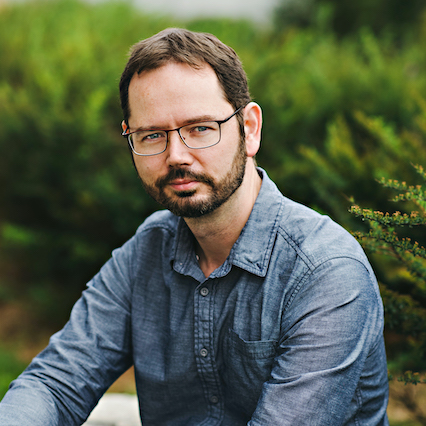
Professor Ihab Ilyas is a leading figure in data management and machine learning at the Cheriton School of Computer Science , University of Waterloo , where he holds the Thomson Reuters Research Chair in Data Quality . He is currently on leave from the university, serving as a Distinguished Engineer, Proactive Intelligence at Apple Inc . His research focuses on data cleaning , large-scale data integration , knowledge graphs , and machine learning applications in data quality . He has pioneered systems like HoloClean and Saga , with commercial impacts through co-founded startups Inductiv (acquired by Apple) and Tamr . PhD in Computer Science from Purdue University Co-founder of Inductiv (acquired by Apple) Co-founder of Tamr Research Interests include: Probabilistic and uncertain data management Machine learning for data quality and enrichment Big data systems and information extraction Knowledge graph construction and optimization Scientific Awards and Recognitions include: Fellow of the Royal Society of Canada (2024) C.C. Gotlieb Computer Award (2024) IEEE Fellow (2021) ACM Fellow (2020) Cheriton Faculty Fellowship (2013-2016) Ontario Early Researcher Award
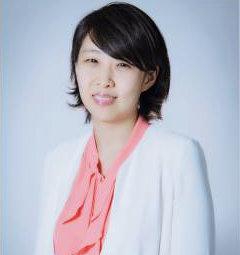
Yaping Zheng serves as an Assistant Professor in the Department of Accounting and Business Analytics within the Alberta School of Business at the University of Alberta. Her current teaching responsibilities include ACCTG 222: Introduction to Accounting for Management Decision Making, a course focused on cost behavior analysis, budgeting, and performance measures for management decisions, scheduled for Winter Term 2026 with office location at 3-21C Business Building. Her research spans critical areas in contemporary accounting: Financial Reporting and Corporate Disclosure mechanisms Textual Analysis applications in accounting contexts Big Data integration for financial analysts Management decision-making through accounting information systems Dr. Zheng's recent publication in Management Science (2025) examines empirical evidence of big data adoption by financial analysts, revealing its impact on disclosure practices and reporting usefulness. This work bridges advanced analytics with traditional accounting frameworks to address evolving market demands. No scientific awards were documented in the source materials, though publication in this premier journal signifies substantial scholarly contribution. Information regarding student supervision, research grants, or laboratory affiliations was not provided in the available texts.
Mark Crowley is an Associate Professor in the Department of Electrical and Computer Engineering at the University of Waterloo, with a cross-appointment in the Cheriton School of Computer Science. He is a member of the Waterloo Artificial Intelligence Institute (WAII) and the Waterloo Institute for Complexity and Innovation (WICI), and serves as National Secretary of the Canadian Artificial Intelligence Association (CAIAC). His educational background includes a Ph.D. and M.Sc. in Computer Science from the University of British Columbia, where he worked in the Laboratory for Computational Intelligence, and a B.A. in Computer Science from York University. He completed a postdoctoral fellowship at Oregon State University working with Tom Dietterich's machine learning group. Crowley's research focuses on developing dependable and transparent algorithms to augment human decision-making in complex domains with multiple agents, spatial structure, or uncertainty. His work spans Reinforcement Learning , Deep Learning , Ensemble Methods , and Manifold Learning . He frequently collaborates with researchers in applied fields including Computational Sustainability, Sustainable Forest Management, Autonomous Driving, Medical Imaging, and Material Design. His research is motivated by both theoretical opportunities and real-world challenges such as forest fire management, automotive applications, and medical imaging. His recent publications demonstrate a strong focus on addressing challenges in reinforcement learning, particularly around observation costs, multi-agent systems, and causal representation learning. His work on ChemGymRL provides a significant contribution to digital chemistry and material design through reinforcement learning frameworks. The textbook Elements of Dimensionality Reduction and Manifold Learning represents a major contribution to the theoretical foundations of machine learning. Crowley actively supervises graduate students, with recent thesis completions including Shayan Shirahmadi Gale Bagi (PhD, Feb 2025) and Oleksandra Nahorna (MASc, Dec 2024). His lab, UWECEML (Waterloo ECE Machine Learning Lab), focuses on developing new algorithms at the intersection of Machine Learning, Optimization, and Probabilistic Modeling. He teaches courses including ECE 457C (Reinforcement Learning), ECE 657A (Data & Knowledge Modelling & Analysis), and ECE 457B (Fundamentals of Computational Intelligence). His blog Computationally Thinking explores AI, machine learning, and the societal impact of these technologies.
Ming-Syan Chen is a distinguished academic holding dual roles as a Distinguished Research Fellow and Director of the Research Center for Information Technology Innovation (CITI) at Academia Sinica, Taiwan, and a Distinguished Professor jointly appointed across multiple departments at National Taiwan University (NTU), including Electrical Engineering (EE), Computer Science and Information Engineering (CSIE), and the Graduate Institute of Communication Engineering (GICE). His career spans academia and industry, with prior roles as a research staff member at IBM Watson Research Center and leadership positions in Taiwan's technology sector. Education: He earned a B.S. in Electrical Engineering from National Taiwan University, followed by M.S. and Ph.D. degrees in Computer, Information, and Control Engineering from the University of Michigan, Ann Arbor. Research Interests: Chen's work focuses on databases, data mining, machine learning, multimedia networking, and cloud computing. He has authored over 350 papers and holds numerous patents, contributing to foundational advancements in query processing, data management, and networked systems. Award Highlights: Recipient of ACM and IEEE Fellowships, National Chair Professorship (lifetime honor), Teco Award, Pan Wen Yuan Distinguished Research Award, and IBM's Outstanding Innovation Award. His contributions span research, teaching, and technology commercialization. Leadership & Service: Former Dean of NTU's College of Electrical Engineering and Computer Science, CEO of Taiwan's Networked Communication Program, and Editor-in-Chief of the International Journal of Electrical Engineering. He has chaired international conferences and served on editorial boards of journals like IEEE TKDE and VLDB. Labs & Teams: Leads the Network Database Laboratory and collaborates on national initiatives in information and communication technologies. His research groups focus on data science, distributed systems, and social network analysis.
Rafael Grohmann is an Assistant Professor of Media Studies at the University of Toronto Scarborough (UTSC), with a graduate cross-appointment at the Faculty of Information (iSchool). He leads the DigiLabour Initiative and is a researcher with Fairwork, focusing on Critical Platform and Data Studies. His research emphasizes platform labour, the platformization of work, and resistance strategies among workers in Latin America. Grohmann holds a PhD in Communication from the University of São Paulo and has held prior academic positions at institutions in Brazil, including Unisinos University. His research interests span platform cooperativism, public policies for technology and labor, AI's impact on work, and data-driven labour practices. He is an editorial board member for Big Data & Society and Work, Employment and Society , and contributes to UCLA’s Center for Critical Internet Inquiry (C2i2). His work examines intersections of technology, labour precarity, and solidarity economies, with a focus on global South contexts. Recent publications analyze click farm labour in Brazil, gender dynamics in platform cooperatives, and global-local trends in platform worker organizing. Grohmann’s work bridges critical theory with action research, advocating for fair work standards in digital economies. He participates in initiatives like the Platform Cooperativism Consortium and the Labor Tech Research Network.
Tina Dacin is a Professor of Strategy and Organizational Behavior at the Smith School of Business, Queen's University, Canada. She holds the Stephen J.R. Smith Chair and serves as Director of the Community Impact Research Program. Her roles include former Director of the Smith School’s Centre for Social Impact, former University Senate member, and former Chair of the Principal’s Innovation Fund Committee. She co-founded the Community of Social Innovation Chair and holds affiliations with the Academy of Management and Informs. Education: Ph.D. (1993) in Business Administration from the University of Toronto and M.A. in Psychology from the University of New Brunswick. Research focuses on cultural heritage, social innovation/entrepreneurship, strategic alliances, and globalization. Key themes include custodianship, tradition preservation, place-making, and institutional dynamics. Recent work explores craft-based ventures, place-sensitive organizational practices, and institutional renewal in crises like the Detroit water wars. Awards: None explicitly listed, though her chair position reflects academic distinction. Teaching includes courses on global social impact and analytics/ethics policy. Labs/Teams: Leadership in the Community Impact Research Program and the Scotiabank Centre for Customer Analytics.
Dr. Euijin (Alley) Choo is an Assistant Professor in the Department of Computer Science at the University of Alberta, specializing in data-driven cybersecurity and big data analytics. Her research focuses on AI-based cybersecurity solutions, anomaly detection in network traffic, and adversarial attacks on federated learning systems. She holds a Ph.D. from North Carolina State University and has held roles at Qatar Computing Research Institute, Korea University, and the University of Missouri-Rolla. Education: Ph.D., Computer Science, North Carolina State University (2015) M.S., Computer Science & Engineering, Korea University (2008) B.S. Dual Degree in Computer Science & Mathematics, Korea University (2006) Research Interests: Security and big data analysis intersections Federated learning security and privacy Anomaly detection in network logs and enterprise systems Malware/phishing detection using graph inference AI-driven threat intelligence aggregation Recent Grants: Mitacs Accelerate Program Grant: Fraud Detection in Financial Graphs ($60,000, 2025) National CyberSecurity Consortium Grant: IntruderInsight ($2M, 2025-2027) NSERC Discovery Grant: Threat Detection Framework ($180,000, 2025-2031) Awards: Best Paper Award at DBSEC 2015 NSERC Early Career Researcher Award (2025) Provost Fellowship (NC State, 2009-2010) Labs/Teams: Leads the Data-driven Network and Cyber Security (DANS) Lab, focusing on federated learning defenses, compromised entity detection, and malicious domain analysis.
Dr. Xiaoxiao Li is an Assistant Professor in the Electrical and Computer Engineering Department at the University of British Columbia (UBC), with joint appointments in Computer Science (Associate Member) and the School of Medicine at Yale University (Adjunct Assistant Professor). She is also a Canada CIFAR AI Chair and Canada Research Chair (Tier II) in Responsible AI. Her research focuses on enhancing trustworthiness, fairness, and efficiency in AI algorithms and foundation models, particularly in healthcare applications. Education: B.S. (Honors) in Zhejiang University (2015), Ph.D. in Biomedical Engineering from Yale University (2020), Postdoc at Princeton University (2020-2021). She leads the Trusted and Efficient AI (TEA) Lab at UBC, which develops algorithms for federated learning, medical imaging analysis, and interpretable AI systems. Research interests include federated learning, generative models, medical image analysis, AI fairness, and graph-based methods for neuroimaging. Recent projects include GMValuator (data valuation for generative models), FairMedFM (fairness benchmarking in medical AI), and FedTextGrad (textual gradient-based FL optimization). Grants: Canada Foundation for Innovation Grant (2023), UBC Green Lab Fund (2023), Vector Institute funding Teaching: Courses on machine learning, federated learning, and AI ethics at UBC Awards & Recognition: Best Paper Award at FL@FM WWW 2024, Editorial Board Member of Medical Image Analysis , multiple top-tier conference acceptances (NeurIPS, ICLR, CVPR, MICCAI). Lab & Teams: TEA Lab collaborates with industry and hospitals to translate AI research into clinical tools. Current projects address AI fairness in healthcare, federated learning for medical data, and multimodal medical analytics.
Professor Alexandra M. Schmidt is a leading academic in Biostatistics at McGill University, holding an endowed University Chair. She specializes in spatial and spatio-temporal modeling, particularly in epidemiology and environmental health. Previously, she served as a Full Professor at the Federal University of Rio de Janeiro (2012–2016). Her research focuses on Bayesian methodologies for analyzing complex processes, including disease spread, environmental hazards, and socio-economic disparities. She has authored influential books such as Spatio-Temporal Methods in Environmental Epidemiology with R (2023) and contributed to over 150 peer-reviewed articles. Key awards include the ISBA Fellowship (2024), ASA Fellowship (2020), and the Abdel El-Shaarawi Award (2008). Education: PhD in Statistics (2001, University of Sheffield, UK), MSc and BSc in Statistics (Federal University of Rio de Janeiro, Brazil). Research interests span Bayesian inference, spatial statistics, and environmental epidemiology. She has advised numerous PhD/MSc students and collaborated on projects linking statistical methods to public health challenges, such as modeling dengue outbreaks and air pollution impacts. Active in academic service, she has chaired major conferences (e.g., 2022 ISBA World Meeting) and serves on editorial boards of top journals like Bayesian Analysis and Canadian Journal of Statistics . Teaching includes advanced courses on generalized linear models, spatial epidemiology, and Bayesian analysis. Her work bridges theoretical statistics with practical applications, addressing global health issues through innovative spatio-temporal modeling techniques.
Julie Rak is the HM Tory Chair and Professor in the Department of English and Film Studies at the University of Alberta. She holds a BA and PhD from McMaster University and an MA from Carleton University. Her research focuses on auto/biography, life writing, and nonfiction in North America, with specialties in gender, Canadian literature, and publishing studies. She has authored or co-edited numerous books, including False Summit: Gender in Mountaineering Nonfiction (2021) and The Routledge Introduction to Auto/biography in Canada (2023). Rak’s academic roles include interim Chair of the EFS Department (2023–2024) and leadership in the Stories of Change research group. She has received prestigious awards such as the J. Gordin Kaplan Award (2023) and the Killam Annual Professorship (2017–2018). Her research explores marginalized narratives, including Inuit literature and digital life writing, with a commitment to inclusivity and community engagement. Her teaching spans undergraduate and graduate courses on autobiography, gender theory, and Canadian literature. She actively supervises research projects and supports student initiatives like the Roger Smith Undergraduate Research Award. Rak’s work bridges academic rigor with public scholarship, with over 90 media engagements. Education: PhD in English, McMaster University MA in Canadian Studies, Carleton University BA in English, McMaster University Grants & Projects: SSHRC Insight Grant for Government Agents, Literary Agents: Inuit Books and Government Intervention, 1968–1985 Leadership in the Stories of Change initiative Awards & Honors: Fellow of the Royal Society of Canada (2022) Henry Marshall Tory Chair (2019–2025) 2024 Visiting Professor at Merton College, Oxford
Ning Nan is an Associate Professor at the University of British Columbia's Sauder School of Business, specifically within the Department of Accounting and Information Systems. With a BA from Peking University, an MA from the University of Minnesota, and a PhD from the University of Michigan, Dr. Nan focuses on digital business strategy, evolvable IT infrastructure, and complex adaptive systems. His research explores blockchain applications, agent-based modeling, and the intersection of AI with societal challenges like sustainability. Education: PhD in Information Systems, University of Michigan MA in Information Systems, University of Minnesota BA in Computer Science, Peking University Research Interests: Dr. Nan investigates how technology shapes organizational and societal systems, with a focus on AI ethics, sustainability through personalized recommendations, and blockchain's role in decentralized supply chains. He employs agent-based modeling to simulate complex phenomena like innovation diffusion and online community dynamics. Recent work addresses explainable AI in smart cities and carbon-reduction gamification strategies. Teaching: In 2024-2025, he teaches Data Management for Business Analytics , emphasizing practical applications of data-driven decision-making. Key Research Themes: His articles highlight trends in AI sustainability (e.g., carbon footprint impacts of recommendation systems), digital business strategy (blockchain governance, app update strategies), and foundational IS theory (hyperturbulence and IS strategy).
Tong Lam is an Associate Professor in the Department of Historical Studies and the Graduate Department of History at the University of Toronto, where he also directs the Dr. David Chu Program in Asia-Pacific Studies at the Asian Institute. His research sits at the intersection of media studies, environmental history, and science and technology studies (STS), focusing on the politics and aesthetics of mobilization in China’s special zones across socialist and postsocialist eras. Employing interdisciplinary methodologies, his work explores themes such as state-precipitated violence, industrial ruination, and the socio-political implications of technology. He is a visual artist whose lens-based projects interrogate military violence, surveillance, and postindustrial landscapes. His recent scholarship analyzes postsocialist urbanism, digital governance, and the temporalities of infrastructure. While the absence of explicit scientific awards or student advisement records in the provided text precludes their inclusion here, his publications and creative practice reflect a sustained engagement with critical historical inquiry and contemporary socio-technological challenges.
Nick Koudas is a Professor in the Department of Computer Science at the University of Toronto, specializing in large-scale data management, data systems, and applied machine learning. His research integrates machine learning techniques into scalable data platforms to enhance the analysis of massive datasets. He holds a PhD from the University of Toronto, an MSc from the University of Maryland, and a Bachelor's degree from the University of Patras. Education: PhD, University of Toronto MSc, University of Maryland at College Park Bachelor's degree, University of Patras, Greece Research Interests: Relational Deep Dive (ReDD): Natural language query execution over unstructured documents Streaming Video Queries (SVQ): Interactive query processing for video streams Reliable Text-to-SQL: Generating accurate SQL queries with human-in-the-loop assistance Machine Learning Integration in Data Systems Publications: Focus on video analytics, query processing, and reliable natural language interfaces. Notable works include optimizing video queries, declarative frameworks for temporal constraints, and abstention-based SQL generation. Awards: Inventor of the Year (1st Prize), University of Toronto (2011) Best Paper Awards at international conferences Entrepreneurship & Advising: Co-founder of Sysomos (Meltwater Group), Aislelabs (Constellation Software), and Workorb Advisor to mapintent and ktau Labs & Teams: Leads research groups developing systems like ReDD and SVQ, emphasizing collaboration between academia and industry.
Mazdak Nik-Bakht is an Associate Professor at Concordia University's School of Building, Civil, and Environmental Engineering. His work bridges construction engineering with digital innovation, focusing on smart infrastructure and sustainable development. PhD, Construction Engineering & Mgmt., University of Toronto PhD, Structural Engineering, Iran University of Science & Technology MASc & BASc, Structural and Civil Engineering, Iran University of Science & Technology His research integrates Artificial Intelligence and Social Network Analysis into construction management systems. Key areas include: Smart infrastructure and urban computing Deconstruction and circular economy principles Building Information Modeling (BIM) and digital twinning Process mining in Architecture, Engineering, and Construction (AEC) industry Decision models in construction project management Semantic computing and computational linguistics applications Recent publications show a focus on BIM analytics , urban resilience , and social media's role in infrastructure planning . Papers often combine AI and network theory to solve complex construction challenges. 2015 Outstanding paper award - Built Environment Project and Asset Management journal He teaches courses on: Big Data Analytics for Smart City Infrastructure Building Information Modeling (BIM) for Construction Building Economics Project Cost Estimating
Sarah Sharma is a Professor of Media Theory at the University of Toronto’s Faculty of Information and Director of the Institute of Communication, Culture, Information and Technology (ICCIT). Her work interrogates intersections of technology, temporality, and labor through a feminist lens. She has held leadership roles in the McLuhan Centre (2017–2022) and is recognized for advancing critical media theory. Research focuses include: • Temporality’s role in cultural politics • Feminist reimaginings of McLuhan’s media theory • Digital platforms’ socio-political impacts • Labour dynamics in gig economies (e.g., TaskRabbit). Her upcoming book Insufferable Tools: Big Tech and the Broken Machine critiques tech industry failures. Key achievements: • 2024 Desmond Morton Research Excellence Award • 2014 NCA Critical Cultural Book of the Year for In the Meantime: Temporality and Cultural Politics . Her edited volume Re-Understanding Media (2022) exemplifies feminist extensions of media theory. Recent engagements include keynote addresses at the Canadian Communication Association (June 2025) and University of Michigan’s Digital Ideas Workshop (June 2025). She critiques ‘accelerationist’ narratives about technology and advocates for rethinking media through marginalized perspectives.