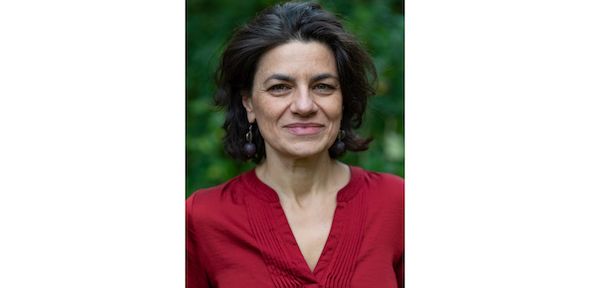
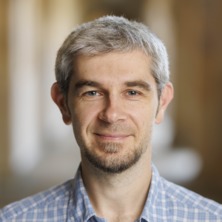
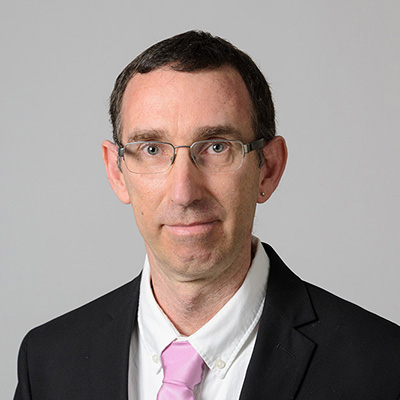
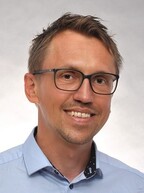
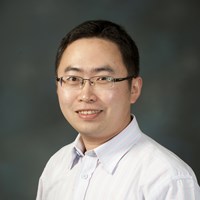
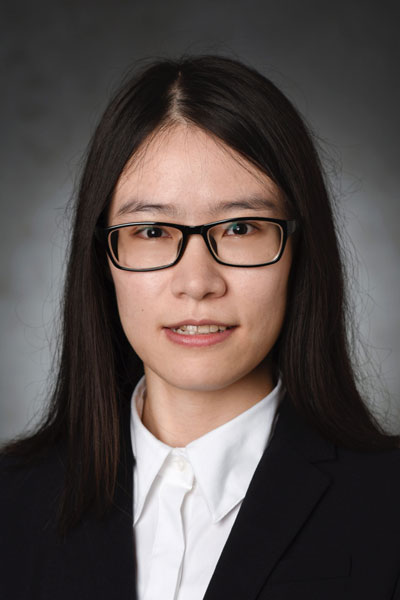
Dr. Steven Coy is a Professor in the Department of Management at the University of Houston-Downtown , where he has been employed since 2002, progressing from Assistant Professor (2002-2009) to Associate Professor (2009-2016) and Professor (2016-present). He teaches courses in Operations & Supply Chain Management (MGT 3332) and Problem Solving & Decision Making (MGT 4317), with over 20 years of teaching experience in these areas. Degrees: Ph.D. in Management Science (University of Maryland), MS in Operations Research, BS in Business Administration (University of Vermont), and additional credentials including AAS in Culinary Arts. Dr. Coy's research focuses on Operations Research , Supply Chain Management , and Decision Modeling , with applications in Artificial Neural Networks , Fuzzy Logic , and Educational Technology . His recent work explores Buyer-Supplier Relationships , Sustainable Fisheries , and Big Data Analytics in environmental contexts. Key trends in his publications include: Integration of Machine Learning for predictive modeling in ecology and business Application of Fuzzy Logic to airline performance and artificial reef analysis Advancements in Supply Chain Pedagogy through flipped classroom methodologies Empirical studies on Small Business Management in China and Pakistan Development of Metaheuristic Optimization for operations problems Analysis of Purchasing Maturity in SMEs
Ankit Agrawal is a Research Professor in the Department of Electrical and Computer Engineering at Northwestern University's McCormick School of Engineering and Applied Science. He also holds an Honorary Professor position at Amity University in India. With over 200 peer-reviewed publications (100+ as first/last author), 15,000+ citations (h-index: 50+), and 75+ invited/keynote talks, he is a leading researcher at the intersection of artificial intelligence and materials science. His work spans multiple disciplines with significant contributions to both theoretical frameworks and practical applications. Ankit earned his Ph.D. in Computer Science with a minor in Bioinformatics and Computational Biology from Iowa State University (2006-2009), followed by a B.Tech. in Computer Science and Engineering from the Indian Institute of Technology, Roorkee (2002-2006). His academic journey progressed from Graduate Assistant at Iowa State to Postdoctoral Fellow at Northwestern, eventually leading to his current position as Research Professor. Dr. Agrawal's research focuses on Artificial Intelligence, High Performance Data Mining, Materials Informatics, Healthcare Informatics, Social Media Analytics, and Bioinformatics. His work bridges computational methods with domain-specific applications, particularly in developing AI-driven approaches for materials discovery, healthcare analytics, and social media analysis. He has pioneered techniques for materials property prediction using deep learning, microstructure optimization, and AI-driven nanocombinatorics for accelerated structural characterization. His extensive publication record demonstrates a clear trajectory toward increasingly sophisticated AI applications in materials science, with recent work focusing on hybrid AI models (combining LLMs with graph neural networks), structure-aware transfer learning, and inverse design frameworks. The publications reveal a strong emphasis on practical applications that bridge the gap between computational prediction and experimental validation in materials science. Featured in Stanford/Elsevier's list of top 2% scientists worldwide (09/2024) Named a Top Scholar by ScholarGPS for being in top 0.5% of scholars worldwide in machine learning, deep learning, and informatics (07/2024) Dr. Agrawal has secured substantial research funding as PI or Co-PI on over 20 projects totaling millions of dollars from prestigious agencies including NSF, DOE, NIST, DARPA, and industry partners like Toyota. His current projects include the Center for Hierarchical Materials Design (CHiMaD) Phase III, AI-Driven Nanocombinatorics for Accelerated Structural Characterization, and Explainable AI for Science and Engineering (XAISE). He has also developed multiple software tools that have advanced the field of materials informatics. As a key contributor to Northwestern's Center for Nanocombinatorics and the Center for Hierarchical Materials Design, Dr. Agrawal leads interdisciplinary teams that integrate AI expertise with domain knowledge in materials science. His work has established important frameworks for data-driven materials discovery and has been instrumental in advancing the 'fourth paradigm' of science in materials research through informatics and big data approaches.
Dr Dora Alexopoulou is an Associate Professor in First and Second Language Acquisition and Language Typology at the Faculty of Modern and Medieval Languages and Linguistics, University of Cambridge. She leads the EF Lab for Applied Language Learning and serves as an Alan Turing Fellow (2021-2023), while also contributing to interdisciplinary initiatives like the Humanities and Data Science Special Interest Group. Education: BA in Greek Philology (University of Athens), MSc in Natural Language and Speech Processing (University of Edinburgh), PhD in Linguistics Current Affiliations: Murray Edwards College, Cambridge, Cambridge Bilingualism Network co-founder Her research focuses on syntax as a cognitive capacity and its role in language learning, particularly crosslinguistic influence in L2 acquisition. She combines generative syntax theory with experimental and corpus methodologies, including big data from online platforms, to study topics like article acquisition, semantic processing, and linguistic complexity in L2 development. Recent projects include collaborations with EF Education First and Cambridge Language Sciences, examining typological similarity effects on L2 proficiency and developing data-driven learning tools. Her publications address computational approaches to SLA, syntactic learnability, and applications of machine learning in learner corpus analysis. Scientific Awards: Albert Valdman Award for Outstanding Publication in SSLA (2016) She supervises PhD students in syntactic theory and applied linguistics, with past advisees including Kateryna Derkach and Itamar Shatz. Her lab utilizes NLP techniques for analyzing learner data, focusing on morphosyntactic complexity and input processing instruction.
Dr. Richelle Tanner is an Assistant Professor at Chapman University, jointly appointed between Schmid College of Science and Technology and Wilkinson College of Arts, Humanities, and Social Sciences. She serves as Co-Director for the Environmental Science and Policy program and Science Director for the National Network for Ocean and Climate Change Interpretation. Ph.D. in Integrative Biology from UC Berkeley B.S. and B.Mus. from University of Southern California Her research focuses on climate change impacts on coastal ecosystems, with expertise in: Ecological physiology and genomics Invasive species management (particularly Phragmites australis) Values-driven science communication Eelgrass restoration under climate extremes Recent publications analyze: Invasion dynamics in brackish marshes Machine learning vegetation mapping Climate stress responses in marine invertebrates Stakeholder-driven conservation strategies She leads the SeaCR research lab (www.seacrlab.com) and has received funding from NSF and California Sea Grant. Current projects include remote sensing of invasive species and development of science communication frameworks for the California Delta.
Professor Gianluca Demartini is a Professor in Data Science and an ARC Future Fellow at the School of Electrical Engineering and Computer Science, Faculty of Engineering, Architecture and Information Technology at the University of Queensland, Australia. He also serves as an affiliate of the Centre for Enterprise AI. His research focuses on human-in-the-loop artificial intelligence systems with applications for public good, bridging structured knowledge graphs and unstructured text analytics to address societal challenges. Dr. Demartini earned his Ph.D. in Computer Science from Leibniz University of Hannover in Germany in 2011, with a focus on Semantic Search. His academic journey includes positions as a Lecturer at the University of Sheffield (UK), post-doctoral researcher at the eXascale Infolab at the University of Fribourg (Switzerland), visiting researcher at UC Berkeley, junior researcher at the L3S Research Center (Germany), and intern at Yahoo! Research (Spain). His research interests span four major interconnected domains: Misinformation (studying human interaction with misinformation and AI-based mitigation strategies), Crowdsourcing and Human Computation (improving efficiency of human-in-the-loop systems), Big Data Analytics (designing scalable algorithms for large datasets), and AI for Public Good (applying AI for societal and environmental benefits). His work consistently addresses real-world challenges in information quality, human-AI collaboration, and ethical technology deployment. Analysis of Professor Demartini's recent publications reveals a clear trajectory toward addressing misinformation through sophisticated human-AI collaboration frameworks, with increasing emphasis on cognitive aspects of fact-checking, data bias management, and strategic application of large language models. His research bridges theoretical advances in information retrieval with practical applications for societal challenges, particularly in media literacy, online safety, democratic discourse, and environmental conservation. Professor Demartini has received numerous prestigious awards recognizing the quality and impact of his work: Best Paper Award at ACM SIGIR International Conference on the Theory of Information Retrieval (ICTIR) in 2023 Best Paper Award at AAAI Conference on Human Computation and Crowdsourcing (HCOMP) in 2018 Best Paper Awards at European Conference on Information Retrieval (ECIR) in 2016 and 2020 Best Demo award at International Semantic Web Conference (ISWC) in 2011 Honorable Mention Award at CSCW 2020 (Top 2% of submissions) As an active supervisor, Professor Demartini currently guides PhD students working on cutting-edge topics including Retrieval Augmented Generation, Human-in-the-Loop Decision Systems for Online Safety, Human-Centred Artificial Intelligence for Democracy, and Bias in Data Pipelines. His research program is generously funded through multiple major grants: ARC Future Fellowships (2025-2028): PBIAS - A Principled Approach to Data Bias Management Swiss National Science Foundation (2022-2025): Large-Scale Political Participation: Issue Identification, Deliberation, and Co-creation ARC Training Centre for Information Resilience (2021-2026) Previous funding from Wikimedia Foundation, Meta, Google, and Facebook for projects on misinformation detection and human-AI collaboration Professor Demartini's work sits at the critical intersection of human computation, information retrieval, and AI ethics. Through extensive collaborations with industry partners including Facebook, Google, Microsoft, Yahoo!, IBM, SAP, and The National Archives (UK), he has developed practical systems that address real-world challenges in misinformation detection, data quality, and human-AI collaboration. His research group actively explores how to make AI systems more transparent, accountable, and beneficial for society through principled human-in-the-loop approaches that leverage both machine intelligence and human expertise.
Ofer Harel is a Professor in the Department of Statistics at the University of Connecticut , where he also serves as Dean of the College of Liberal Arts and Sciences . His research focuses on advanced statistical methodologies for handling incomplete data, with applications spanning epidemiology, health research, clinical trials, and social sciences. Primary Affiliation: University of Connecticut Roles: Professor of Statistics, Dean of College of Liberal Arts and Sciences Research Focus: Missing data analysis, Bayesian methods, latent class modeling, and statistical applications in public health Research Interests span critical areas including: Missing Data Mechanisms: Developing and refining multiple imputation techniques Latent Class Analysis: Applying to health outcomes and behavioral studies Bayesian Modeling: For spatial and longitudinal health data Statistical Disclosure Control: Protecting sensitive demographic information Health Applications: Covering HIV prevention, cancer survivorship, and mental health Educational Statistics: Integrating computing tools into statistical pedagogy Publication Trends demonstrate expertise in: Advanced imputation frameworks for clinical and epidemiological research Latent class and multilevel modeling for diverse health outcomes Statistical ethics and data confidentiality in public health research Spatial and longitudinal analysis of disease patterns Methodological innovations in handling missing data across multiple disciplines Advising and Collaborative Work includes methodological contributions to: Non-inferiority trial designs with missing data challenges Bayesian spatial modeling applications in global health Improving statistical reporting and reproducibility
Dr. Roeland Berendsen is an Assistant Professor and Independent Research Group Leader in the Institute of Environmental Biology at Utrecht University, Faculty of Science. He leads research in Plant-Microbe Interactions and serves as Managing Director of the Netherlands Plant Eco-phenotyping Center (NPEC) Utrecht, a state-of-the-art facility for high-throughput plant phenotyping. Research Interests: His work integrates microbiome sequencing, molecular biology, and data science to understand how plants interact with their microbial communities. Key areas include disease-induced microbiome recruitment, predictive modeling of plant vigor from microbiome data, and the ecological mechanisms behind soil-borne protective legacies. His research aims to develop sustainable, microbiome-based strategies for crop protection and yield improvement. The recent publications reflect a strong trend in leveraging machine learning and advanced data science to decode plant-microbiome interactions, with applications in potato and soybean systems. Themes include predictive microbiome analytics, stress resilience, nitrogen fixation, and field application of protective microbial consortia. Scientific Leadership and Projects: Managing Director, NPEC Utrecht Principal Investigator, NWO Open Technology Program (SPOTM) Lead of Microbiomes4Soy and CropXR Potato Satellite Program Researcher in the MiCRop Gravitation Program Advising and Grants: Dr. Berendsen supervises multiple PhD candidates and postdoctoral researchers across several funded projects. His research is supported by national and international grants focusing on sustainable agriculture, microbiome engineering, and climate-resilient crops. He mentors a dynamic team working on cutting-edge solutions for future food security. Labs and Teams: He leads the Plant-Microbe Interactions group at Utrecht University and oversees operations at NPEC Utrecht, which provides advanced phenotyping capabilities to academic and industry partners.
Dr. Rachel Brackenridge is a Senior Lecturer at the School of Geosciences, University of Aberdeen, based at Kings College. Her work integrates sedimentology, petroleum geology, and geohazards research with a focus on sustainable energy solutions aligned with UN SDGs. She specializes in contourite systems, subsurface storage (e.g., hydrogen, CCS), and energy transition technologies. Her teaching includes MSc Sustainable Energy Geoscience program leadership and courses on geophysics, reservoir modeling, and subsurface storage. Research interests span sediment transport dynamics, paleoceanographic influences on margin evolution, and applying 'Big Data' and machine learning in subsurface characterization. Notable projects include studies on North Sea hydrocarbon prospectivity, Indonesian submarine landslide mechanisms, and basin-scale storage potential in Permian evaporites. She co-authored a special issue on contourites and pioneered virtual field trip methodologies for geoscience education. Key contributions include defining play fairways in the Mid North Sea High and demonstrating the critical role of contourites in hydrocarbon reservoirs. Her work bridges academia and industry, addressing energy equality and subsurface utilization for renewable energy storage.
Arooran Sounthararajah is an Adjunct Professor in the Department of Civil & Environmental Engineering at Monash University, affiliated with research projects focused on pavement engineering, smart construction technologies, and infrastructure sustainability. He leads and collaborates in projects involving big data analytics, machine learning for pavement life prediction, and geotechnical solutions for road durability. Education: While specific academic credentials aren’t detailed, his extensive involvement in advanced material testing and computational modeling suggests expertise in civil engineering and materials science. Research Interests: His work spans pavement material innovation, intelligent compaction systems, dust emission quantification via AI, and infrastructure resilience against environmental stresses. Key techniques include discrete element modeling, fiber optic sensing, and semantic segmentation for real-world applications. Publications: Recent works emphasize data-driven approaches to pavement performance, fatigue analysis of cement-bound materials, and 3D printing for rehabilitation. His contributions bridge traditional engineering methods with emerging technologies like IoT and machine learning. Awards/Grants: No explicit awards are listed, but his projects have attracted funding for initiatives like geogrid-reinforced asphalt and smart sensing systems. Advising & Labs: While students aren’t listed, his project roles as 'Project Manager' indicate leadership in multi-institutional teams. Collaborations include institutions like the University of Melbourne and industry partners in construction tech. Labs/Teams: Engaged with Monash’s civil engineering labs specializing in pavement testing and smart infrastructure systems, though specific lab names aren’t provided.
Dr Daniel Wiechmann is a researcher at the University of Amsterdam's Faculty of Humanities, Department of Literature and Language Science, affiliated with the Institute for Logic, Language and Computation (ILLC). His primary focus lies in Natural Language Processing with applications in mental health informatics and computational psycholinguistics. His research interests center on explainable AI for mental health detection , specializing in hybrid models that integrate transformer architectures with psycholinguistic features. He investigates German-language social media analysis (evidenced by SMHD-GER and FANG-COVID datasets), personality detection through verbal behavior, and text simplification techniques. Recent work emphasizes cross-lingual mental disorder classification and feature fusion strategies for improved model interpretability in clinical contexts. Analysis of his 15 most recent publications (2021-2024) reveals a strong trajectory toward multilingual mental health detection systems, with significant contributions to German-language NLP resources. His work consistently bridges computational linguistics and clinical psychology through Hybrid transformer-psycholinguistic model architectures Large-scale dataset creation for mental health screening Explainability frameworks for clinical decision support Dr Wiechmann maintains active research output with 20+ publications since 2021, primarily through the MANTIS research group, focusing on social media-based mental health detection systems and German-language NLP applications.
Francesco Viti is an Associate Professor in Engineering Science (Traffic Planning and Management) at the University of Luxembourg, leading the MobiLab Transport Research Group within the Department of Engineering. His research focuses on mobility analysis, transport electrification, intelligent transport systems, and data science applications in transportation. He coordinates projects on public transport electrification, Mobility-as-a-Service (MaaS), and freight logistics optimization. Viti has authored over 250 publications and serves as an associate editor for journals like Transportation Research Part C. He advises the Luxembourgish government and the European Commission on transportation policy. Research Interests: Viti’s work spans traffic flow theory, transport electrification, MaaS modeling, and data-driven solutions for urban mobility challenges. Current projects include optimizing electric feeder bus services, analyzing ride-hailing fleet management under dynamic energy prices, and enhancing freight train operations through maintenance simulation. Key Contributions: His group develops models for synthetic population generation, demand estimation using crowdsourced data, and network equilibrium under interacting mobility providers. Recent studies explore the integration of digital twins for urban mobility and CCAM systems, as well as the impact of total cost of ownership on MaaS adoption.
Professor Lu Liu is an Honorary Professor at the University of Leicester's School of Computing and Mathematical Sciences, specializing in AI, Data Science, Sustainable Systems, and IoT. He focuses on developing trustworthy and sustainable systems using machine learning for healthcare, Net Zero, and digital manufacturing. He leads projects on self-learning digital twin models and has secured 30+ grants from UKRI/EPSRC, EU, Innovate UK, etc. His work includes carbon footprint reduction in data centers and communication systems. Education: PhD from the Surrey Space Centre (University of Surrey). Previously held roles including Head of School (2019-2023) and Research Fellow at the WRG e-Science Centre (University of Leeds). Extensive industry collaborations with BT, Rolls-Royce, and CGI. Research Interests: Machine learning for sustainable ICT systems, edge computing, medical image analysis, autonomous systems, and formal methods for safety-critical systems. His work bridges theory and practical applications in energy efficiency, healthcare, and smart manufacturing. Awards: Stanford's World Top 2% Scientists (2023), 7 Best Paper Awards, and 9 keynote invitations. Recognized with the Staff Excellence Award in Doctoral Supervision (2018). Grants & Projects: Principal Investigator for UKRI AI for Health (£750K), Leicester Innovation Accelerator (£2.5M), and Co-Investigator for AI4NetZero (£2.5M). Over 300 publications in top journals/conferences. Labs & Leadership: Co-Director of Leicester Centre for Digital Manufacturing (LCDM), Deputy REF Lead for UoA 11, and Fellow of BCS. Served as General Chair for IEEE EUC 2023, IEEE/ACM UCC 2021, and other major conferences.
Bing Yao is an Assistant Professor in the Department of Industrial and Systems Engineering at the University of Tennessee Knoxville, where she holds the Dan Doulet Early Career Assistant Professor title and serves as Director of the RME Program. She previously served as an Assistant Professor at Oklahoma State University's School of Industrial Engineering and Management from Fall 2019 to Summer 2022. Education: Dual-Title PhD in Industrial Engineering and Operations Research, The Pennsylvania State University, 2019 MS in Physics, The Pennsylvania State University, 2015 BS in Physics, University of Science and Technology of China, 2012 Dr. Yao's research centers on developing physics-informed machine learning models for decision optimization in complex systems, with applications in healthcare and advanced manufacturing. Her work integrates statistical learning with physical constraints to model spatiotemporal dynamics, particularly in cardiac electrophysiology and EHR-based disease prediction. She employs deep learning, simulation optimization, and signal processing to address challenges in data quality, missing values, and system complexity. Her recent publications demonstrate a strong trend toward AI-driven healthcare solutions, including personalized cardiac surgery planning, diabetic retinopathy screening, and sepsis prediction using longitudinal EHR data. The research consistently leverages multi-branching neural networks, physics constraints, and tensor-based imputation to improve model robustness and accuracy. Scientific Awards: Best Poster Award, NERCCS, 2018 Susan Schall Fellowship, Penn State, 2018 First Place, IISE Healthcare Systems Student Paper, 2017 IMS/ASA Spring Research Conference Scholarship, 2017 First Place, Penn State IEGA/IME Poster Competition, 2017 Best Poster Finalist, INFORMS MIF, 2016 Samsung Scholarship, USTC, 2011 Dr. Yao actively mentors PhD students, including Jianxin Xie, Zekai Wang, and others, many of whom have received prestigious awards such as the Gilbreth Fellowship and Best Paper Finalist recognitions. She is the Lead PI on a $1.1M NSF/NIH grant for cardiac surgical planning and a Co-I on a $1.2M grant for diabetic retinopathy screening. Her research is supported by the AI TENNessee Initiative as well. She leads a research group focused on spatiotemporal system dynamics, EHR analytics, and deep learning for medical diagnostics, currently recruiting PhD students with strong backgrounds in data science and engineering.
Pere Barlet-Ros is a Full Professor in the Department of Computer Architecture at the Universitat Politècnica de Catalunya (UPC), affiliated with the Barcelona School of Informatics (FIB) and the Barcelona Neural Networking Center (BNN-UPC). He leads research in AI-driven network technologies and is a key member of the UPC CBA and IDEAI-UPC research groups. Ph.D. in Computer Science, UPC (2008) M.Sc. in Computer Science, UPC (2003) His research focuses on applying artificial intelligence, particularly graph neural networks, to solve critical challenges in network monitoring, traffic classification, congestion control, and cybersecurity. His work bridges theoretical innovation with practical deployment, as evidenced by integration into commercial tools like Auvik TrafficInsights and Talaia Polygraph. He explores digital twins for network optimization, privacy-preserving technologies, and next-generation web tracking detection. The recent publications highlight a strong trend toward leveraging graph-based machine learning for network modeling, anomaly detection, and traffic compression. His work spans top-tier journals like IEEE/ACM Transactions on Networking and conferences such as IEEE EuroS&P and ACM SIGCOMM workshops, emphasizing robust, real-world AI/ML applications in networking. 2nd VALORTEC prize for best business plan (2014) Fiber Entrepreneurs award, best entrepreneur at FIB (2015) Pere Barlet-Ros has served as Principal Investigator on seven competitive research projects and has advised at least 14 PhD students, including Paul Almasan, Miquel Ferriol, and Ismael Castell. His lab, BNN-UPC, fosters interdisciplinary collaboration in neural networking and AI for infrastructure. His entrepreneurial experience with Talaia Networks underscores a commitment to translating research into impactful technology.
Ingrid Chieh Yu is an Associate Professor in the Department of Informatics at the University of Oslo, where she also serves as Head of Research and Vice Head of Department (2021-2024) and Deputy Centre Director of SIRIUS. Her academic home is within the Data and Knowledge Management (DKM) research group, with additional affiliations to the Concurrent Security and Robustness for Networked Systems (ConSeRNS) initiative. Professor Yu's research spans multiple domains in computer science, with early work focused on formal methods, software product lines, and concurrent systems. In recent years, her research has expanded significantly into explainable AI, counterfactual explanations, and machine learning interpretability. She has made substantial contributions to feature model evolution, software configuration, and model checking techniques. Her work demonstrates a consistent thread of applying formal methods to practical software engineering challenges, with a notable pivot toward AI explainability in the past five years. Her publication record shows a clear evolution from foundational work in software engineering and formal methods (2006-2015) to increasingly AI-focused research (2016-present). The most recent publications (2020-2025) predominantly address explainable AI, counterfactual explanations, and robust recourse methods, reflecting her adaptation to emerging challenges in machine learning. She maintains strong collaborative relationships with researchers including Einar Broch Johnsen, Crystal Chang Din, and Peyman Rasouli. Professor Yu teaches core computer science courses including INF2220 Algorithms and Data Structures, INF3230 Formal Modeling and Analysis of Communicating Systems, and INF5130 Selected Topics in Rewriting Logic. Her teaching reflects her research expertise, bridging theoretical foundations with practical applications. She leads significant research projects including HyVar: Scalable Hybrid Variability for Distributed Evolving Software Systems and Leveraging Energy-Aware Programming (LEAP), demonstrating her capacity to secure and manage substantial research initiatives. Her work with the SIRIUS center indicates strong industry connections and applied research focus.