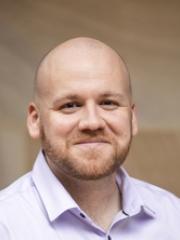
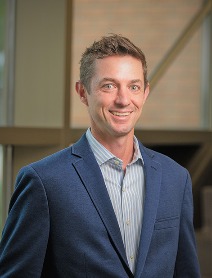
Upinder Kaur is an Assistant Professor in the Department of Agricultural & Biological Engineering at Purdue University , part of the College of Engineering. Her research focuses on robotics, precision agriculture, and cyber-physical systems, with a strong emphasis on integrating data science and digital technologies into agricultural practices. Her work spans areas such as agricultural robotics , cybersecurity for robotic systems , and animal health monitoring . Notable projects include developing multimodal datasets for animal-robot interaction and creating self-powered in-vivo sensing systems for precision dairy farming. She also explores cybersecurity solutions to protect robotic networks against emerging threats. Her articles highlight a trend toward cross-disciplinary innovation , blending robotics with agriculture, healthcare, and cybersecurity. Recent work demonstrates advancements in soft robotics design, zero-day malware detection frameworks, and traceability systems for commodity supply chains. No scientific awards are listed, though her contributions to precision agriculture and robotic cybersecurity are significant. Advising and grants details are currently unavailable, but her research aligns with Purdue's focus on sustainable and technology-driven solutions for modern agricultural challenges.
Sahar Validi serves as Senior Lecturer and Deputy Head of the Strategy, Operations and Entrepreneurship (SOE) group at Essex Business School, University of Essex since June 2024, following her role as Associate Director of Education from October 2023 to June 2024. She joined the institution in October 2022 after eight years at the University of Huddersfield. Her academic credentials include: PhD in Management Science (Dublin City University) Master's in Industrial Management-Operational Research Postgraduate Certificate in Higher Education Bachelor's in Business Management Validi's research bridges Operational Research and Supply Chain Management with a critical focus on sustainability-driven digital transformation. Her work integrates evolutionary algorithms, AI, and multi-criteria decision analysis to develop low-carbon logistics systems and intelligent decision support frameworks. She emphasizes real-world impact through industry collaboration, particularly in supply chain risk management and net-zero transition strategies. Analysis of her 15 most recent publications reveals a dominant trajectory toward AI-enhanced sustainable supply chain design, with 73% of works since 2018 focusing on carbon reduction, circular economy integration, and resilience engineering. Her research increasingly combines metaheuristic optimization with real-time data analytics for dynamic decision support in complex logistics networks. Validi has secured over £2 million in research funding through competitive grants: AI for Net Zero (UKRI, 2023, PI) Management KTP for ERP Implementation (Innovate UK, 2022, PI) Cloud-Based Supply Chain Control Tower (Huddersfield, 2021, PI) Net Zero Innovation Programme (UCL, 2022, PI) Multiple Innovate UK Knowledge Transfer Partnerships She maintains active industry partnerships with Local Enterprise Partnerships, SMEs, and manufacturing firms including Wealmoor Limited and Swann Engineering Group, driving knowledge transfer in digital transformation and sustainable operations.
Dr. Huy Truong-Ba is a Lecturer at Queensland University of Technology (QUT), affiliated with the School of Mechanical, Medical and Process Engineering and the Centre for Data Science. He holds a Doctor of Philosophy from QUT. His research focuses on reliability and degradation modeling, maintenance optimization, and engineering asset management, with expertise in Markov decision processes and condition-based maintenance strategies. His academic journey includes roles as an Associate Supervisor for multiple PhD projects, such as 'Dispatch Optimisation for Concentrating Solar Tower Power Plant Under Uncertainty' and others in solar energy systems and mechanical engineering. He has collaborated with institutions like the Asset Institute and contributed to interdisciplinary projects in energy systems and transportation. Research interests span mechanical engineering, manufacturing engineering, and engineering practice, with a strong emphasis on applying data-driven methods to optimize maintenance and asset management. His work often integrates statistical modeling and stochastic optimization to address challenges in energy infrastructure, solar power, and industrial equipment degradation. Key collaborations involve Associate Professor Michael Cholette and Professor Tommy Chan, focusing on solar thermal systems, rail infrastructure maintenance, and material degradation under high-temperature conditions. Dr. Truong-Ba's contributions bridge theoretical models with practical applications, driving advancements in sustainable energy and infrastructure resilience.
Mitch Dunn serves as an Advance Queensland Industry Research Fellow within the School of Mechanical and Mining Engineering at The University of Queensland, affiliated with the Centre for Advanced Materials Processing and Manufacturing (AMPAM). His research integrates materials science with electromagnetic applications, focusing on functional composites for aerospace and defence systems. Educational background: PhD in Mechanical Engineering (2018), The University of Queensland Bachelor of Engineering (Honours) (2011), The University of Queensland Research interests center on three interconnected domains. First, functional composite antenna structures for aerospace applications including load-bearing antennas and hypersonic vehicle systems. Second, nondestructive testing methodologies using nonlinear ultrasonics for damage detection in composites. Third, hybrid composite material development with emphasis on thermoset-thermoplastic systems and cost-effective manufacturing. His work bridges theoretical modeling with industry-driven applications, particularly in defence technology. Publication trends reveal consistent focus on composite material characterization (85% of works), with growing emphasis on RF-composite integration (40% of recent works). Key methodological approaches include nonlinear ultrasonics (65% of publications), finite element analysis (50%), and experimental validation of multifunctional structures. Key recognition: Advance Queensland Industry Research Fellowship Dunn actively supervises research projects including functional composite antennas for UAVs and hypersonic vehicle antenna systems. Current funding includes National Intelligence Discovery Grants for compact multi-mode antennas (2025-2027) and Advance Queensland grants for hypersonic vehicle antennas (2025-2028). Past projects include Defence Materials Technology Centre initiatives on functional antenna structures and high-temperature sub-assemblies. As part of the UQ Composites group within AMPAM, Dunn collaborates on industry technology development projects focused on functional composite materials and conformal antenna structures, with strong links to defence and aerospace sectors.
Daniel Harabor is an Associate Professor in the Department of Data Science & AI at Monash University, Australia. He holds a PhD and BSc (Honours) in Computer Science from the Australian National University (ANU). His research focuses on pathfinding algorithms, multi-agent systems, and optimization, with notable contributions to multi-agent pathfinding (MAPF), transportation routing, and constraint-based reasoning. He leads or collaborates in projects like the 2023 MAPF Competition and the Future of Urban Routing initiative. Education: PhD in Computer Science, ANU (2014) BSc (Honours) in Computer Science, ANU (2007) Research Interests: His work emphasizes practical and efficient solutions for combinatorial search problems, including real-time pathfinding, public transport optimization, and large-scale multi-agent coordination. He develops algorithms for dynamic environments with applications in robotics, urban planning, and logistics. Awards: DECRA Research Fellowship (Australian Research Council) Projects & Grants: He has secured funding for projects such as 'Personalised Public Transport' (2019–2025) and 'Improved Constraint Reasoning for Robust Multi-agent Path Planning' (2021–2024). His work often involves collaboration with global experts in AI and robotics. Labs & Teams: Active in the Data Science & AI research group at Monash, contributing to MAPF competitions and open-source pathfinding tools like JPS (Jump Point Search).
BEZOUI Madani is a Researcher-Lecturer at CESI, affiliated with the 'Engineering and Numerical Tools' research team. He holds a PhD in Operational Research from the University of Science and Technology Houari Boumediène (2019), with a focus on multi-objective programming in portfolio optimization. His academic roles include serving as a pedagogical tutor for FISA training courses and heading the 'Data Sciences' program for 5th-year Computer Science Engineers at CESI. His research interests center on Industry 4.0/5.0, optimization of complex systems, machine learning, IoT/BIM technologies, and scheduling. Notable work includes integrating human-centricity and sustainability into digital twin models and advancing hybrid metaheuristics for multi-objective manufacturing optimization. Recent publications (2021–2024) address preference-driven optimization methods, tabu search algorithms, and IoT network vulnerability detection. He has authored a book on Euclidean graph boundaries and contributed to frameworks for flexible job shop scheduling. His ongoing research focuses on decision-maker preference integration in dynamic scheduling under Industry 5.0 contexts. Advising and grants: No specific advising roles or grants mentioned in the CV. His educational activities emphasize pedagogical leadership in data science and operational research. Labs/teams: Active member of CESI’s Engineering and Numerical Tools group, collaborating on IoT, digital twins, and optimization projects.
Sherazade Boussag is a Teaching Fellow in the School of Engineering and Applied Science at Aston University, Birmingham, United Kingdom, holding this position since 2020. Her industry background spans 15 years in business intelligence and data analytics leadership across major organizations including Électricité de France (EDF), Gaz de France (GDF), L’Oréal group, and the French Ministry of Defence. Education Baccalaureate in Maths and Physical Sciences – Lycée Georges Pompidou, Villeneuve La Garenne (France), 1995 DEUG in Mathematics and Applied Computer Sciences – Université Paris XIII, Paris (France), 1999 BSc Mathematics – Université Paris XIII, Paris (France), 2000 Master's degree in Computing and Software Engineering – Institut Scientifique Polytechnique Galilée, Université Paris XIII, Paris (France), 2002 Research and Teaching Focus Dr. Boussag specializes in Business Intelligence and Data Analytics , with deep expertise in Big Data systems and IT Project Management . Her teaching directly integrates real-world industry experience, covering critical areas like data governance, business case design, ROI strategies, and end-user optimization. Current modules developed include Data Analytics (DC4200) and Digital Technology Management (DC4100), emphasizing practical application in corporate environments. Professional Development COBIT 5 Foundation Certified (IT Governance) Prince 2 Foundation & Practitioner Certified (IT Project Management) ITIL Foundation V3 Certified (IT processes and organisation) Advising and Professional Activities No doctoral advisees or research grants are documented in the provided information. Her professional narrative centers on building high-performance BI teams, end-to-end project delivery within budget constraints, and developing pre-sales solutions for major tenders. Technical proficiencies include SAP BW 7.3, Informatica PowerCenter, Business Objects, Oracle, and Microsoft Power BI.
Andrew P. Murray is a Professor and Director of Mechanical Engineering Graduate Programs in the Department of Mechanical and Aerospace Engineering at the University of Dayton's School of Engineering. He has been a full-time faculty member since 1997 and leads the Design of Innovative Machines Lab (DIMLab), focusing on machine design and kinematic synthesis theory. Ph.D. in Engineering, University of California, Irvine (1996) M.S. in Engineering, University of California, Irvine (1993) B.S. in Mechanical Engineering, Rose-Hulman Institute of Technology (1989) His research spans machine design, kinematics, robotics, and biomechanics , with applications in continuum robots, assistive tricycles for FES-stimulated riders, variable-geometry dies, and strain-energy mechanisms. He employs advanced geometric and computational methods to solve complex motion synthesis and mechanism design problems. His collaborative work includes long-standing partnerships with Dave Myszka and researchers at the Laboratoire d’Informatique, de Robotique et de Microélectronique in Montpellier, France. The recent trend in his publications (2016–2024) reflects a strong focus on kinematic synthesis of planar and spatial mechanisms , particularly four-bar and six-bar linkages, with increasing emphasis on biologically inspired and medical applications such as FES cycling and continuum robotics. His work combines theoretical rigor with experimental validation, often published in top-tier journals like the ASME Journal of Mechanisms and Robotics and IEEE Robotics and Automation Letters . His scientific honors include: ASME Fellow (2014) A.T. Yang Memorial Award in Kinematics (2023) University of Dayton Alumni Award for Faculty Teaching (2013) Best Paper Award, ASME Mechanisms and Robotics Conference (2006) Multiple teaching excellence awards from student organizations Dr. Murray has advised numerous students and mentored research in the DIMLab. He has secured research grants supporting innovation in mechanical design and has served in key academic roles, including General Program Chair for the ASME International Design Engineering Technical Conferences (2010) and Associate Editor for the ASME Journal of Mechanisms and Robotics since 2009. He teaches graduate and undergraduate courses such as Theory of Machines, Kinematics of Mechanisms and Robots, and Computational Methods for Design. He directs the Design of Innovative Machines Lab (DIMLab) , which fosters interdisciplinary research in mechanism design, combining theoretical development with practical prototyping and application in assistive technology, aerospace, and manufacturing.
Matti Järvisalo is a Professor in the Department of Computer Science at the University of Helsinki, Finland, holding the title of Docent and serving as Supervisor for the Doctoral Programme in Computer Science. He is affiliated with the Helsinki Institute for Information Technology (HIIT), a leading collaborative research institute between the University of Helsinki and Aalto University. His research centers on computational logic and constraint-based reasoning, with core expertise in Boolean optimization, SAT/MaxSAT solving, and argumentation frameworks. He develops declarative approaches for combinatorial problems in computational social choice, judgment aggregation, and fair division, emphasizing certified algorithms and preprocessing techniques. His work bridges theoretical computer science with practical implementations in optimization and AI. Recent publications (2024-2025) reveal a strong focus on multi-objective optimization, certified reasoning, and argumentation under incomplete information. Key trends include symmetry-aware core learning for Pseudo-Boolean optimization, Pareto-optimality certification in MaxSAT, and novel algorithms for manipulation analysis in judgment aggregation, demonstrating his leadership in advancing SAT-based AI methods. Professor Järvisalo's significant contributions have been recognized by prestigious awards: IJCAI-JAIR Best Paper Prize (2019) Best Researcher Award from University of Helsinki Department of Computer Science (2011) CP 2017 Distinguished Paper Award ECAI 2016 Runner-Up Best Student Paper Award Honorary Mention at ICCMA 2015 He actively mentors the next generation of researchers and secures major research funding: Supervision: 6 doctoral theses and 6 Master's/Licentiate theses Active Grant: Academy of Finland project 'Next-generation Unsatisfiability-based Declarative Optimization' (2023-2027) Past Projects: 'Symbolic Techniques for Formally Verified and Explainable AI' (2020-2022), 'Declarative Boolean Optimization: Pushing the Envelope' (2019-2023) As a core member of HIIT, he collaborates within Finland's premier information technology research ecosystem, contributing to the institute's mission of advancing fundamental and applied IT research through interdisciplinary teamwork and international partnerships.
Ansgar Zerfass is Professor and Chair in Strategic Communication at the Institute of Communication and Media Studies at the University of Leipzig, Germany, and Professor in Communication and Leadership at BI Norwegian Business School in Oslo, Norway. With a distinguished career spanning academic and professional communication fields, he has established himself as a leading scholar in strategic communication, corporate communication, and public relations. His work bridges theory and practice through extensive research collaborations and leadership roles in major international communication studies. Dr. Zerfass earned his Dipl.-Kfm. (equivalent to MBA) in Business Administration from the University of Erlangen-Nuremberg in 1990, followed by a Dr. rer. pol. (PhD) in Business Administration summa cum laude in 1995. He completed his Habilitation (second doctorate) in Communication Science at the same university in 2005. His academic journey includes significant industry experience, having worked for 10 years in corporate communications and political consulting, including an executive position at MFG Baden-Württemberg. Zerfass's research focuses on strategic communication, corporate communication, digital transformation, communication evaluation, and communication management. His work examines how organizations can optimize their communication functions to create value, navigate digital transformation, and maintain ethical standards in an increasingly complex media environment. He has pioneered research on communication business models, communication maturity, and the role of communication in agile organizations. His extensive publication record reveals a consistent focus on bridging theory and practice in communication management. His recent work explores the impact of digitalization and AI on communication departments, stress resilience among communication professionals, and the evolving business models for communication functions. His research demonstrates increasing attention to digital transformation challenges while maintaining core interests in communication evaluation, strategic alignment, and organizational integration of communication functions. Multiple Top Paper Awards at EUPRERA Annual Conferences (2012-2016) Koichi Yamamura International Strategic Communication Award (2014, 2016) Pathfinder Award from the Institute for Public Relations (2014) Impact Award from the Journal of Communication Management (2016) Albert-Oeckl-Prize from the German Public Relations Society (1995) PhD Award from the University of Erlangen-Nuremberg (1995) As Editor of the International Journal of Strategic Communication and director of the European Communication Monitor (a 15+ year study spanning 40+ countries), Zerfass has significantly shaped communication research methodology and practice. He serves as Academic Advisor for the Corporate Communication Cluster Vienna and Plank Scholar at the Plank Center for Leadership in Public Relations. His leadership extends to founding the Academic Society for Corporate Management and Communication, which connects over 35 global companies with academic institutions for knowledge transfer and research funding. Zerfass leads several major research initiatives including the European Communication Monitor (since 2007), the Asia-Pacific Communication Monitor, and the multi-year research program Value Creating Communication. His work with these initiatives has established longitudinal datasets that track global trends in strategic communication practices, providing invaluable insights into the evolution of the field.
Peter Schelkens is a Professor at the Department of Electronics and Informatics (ETRO), Vrije Universiteit Brussel (VUB). He holds additional roles including Department Chair and Head of Research Group, focusing on technology transfer and innovation in electronics and informatics. His research spans fundamental signal processing, holography, medical imaging, and standardized multimedia coding frameworks like JPEG Pleno. Education and Academic Background: Postdoctoral Fellowship (2002–2011) funded by the Research Foundation – Flanders (FWO). His work bridges theoretical advancements with applied domains such as eHealth, bio-informatics, and cultural heritage preservation. Research Interests: Holography and digital signal processing dominate his focus, including holographic compression, Fourier-based techniques, and light field imaging. Strategic projects involve error-resilient coding, computer architectures (e.g., GPU/GPGPU), and quality assessment metrics. His applied research addresses medical imaging, 3D media broadcasting, and immersive technologies. Article Trends: Recent work emphasizes holographic video codecs (e.g., INTERFERE), high-throughput hologram generation, and JPEG Pleno standardization. He explores computational methods for 3D metrology and deep learning applications in hologram optimization. Scientific Awards: Gauss Award (2000), ERC Consolidator Grant (2014), Best Associate Editor Award (2014), and multiple industry accolades. Grants/Projects: Leads major initiatives like the SRP-Onderzoekszwaartepunt LSDS (2022–2027) and GEAR (2021–2025), focusing on health tech and learning-based systems. Labs/Teams: Active in ETRO, the interdisciplinary research group at VUB, collaborating globally on holography, multimedia standards, and biomedical imaging systems.
Mostafa Khatami is a Lecturer in Business Analytics at the University of Wollongong (UoW), School of Business within the Faculty of Business and Law. Previously, he served as a Research Fellow at Queensland University of Technology (QUT) from June 2022 to January 2024. His research focuses on Operations Research and Computer Science, addressing challenges in scheduling, facility location, and supply chain optimization, particularly in healthcare and transportation sectors. His work has been published in prestigious journals like the European Journal of Operational Research and Transportation Research Part A. He coordinates courses such as BALA302 Business Analytics Industry Project and MBAS902 Techniques and Tools for Business Analytics. His recent grants include an internal UoW project on last-mile delivery technologies and a QUT-funded project on parcel locker network design. He actively reviews for journals including the Journal of the Operational Research Society and Health Care Management Science. His publications highlight expertise in scheduling algorithms, optimization models, and multicriteria analysis, with contributions to both theoretical and applied operational research. He has developed innovative methods for coupled task scheduling and flow-shop scheduling problems, emphasizing practical applications in logistics and manufacturing.
Thomas Sharkey is a Professor in the Department of Industrial Engineering at Clemson University's College of Engineering, Computing and Applied Sciences (CECAS). His research focuses on network optimization, interdiction, and resilience with applications in public sector problems including human trafficking disruption and Arctic emergency response. Education: Ph.D. in Industrial and Systems Engineering, University of Florida (2008) M.S.E. in Mathematical Sciences, Johns Hopkins University (2004) B.S. in Mathematical Sciences, Johns Hopkins University (2004) Research Interests: Dr. Sharkey's work centers on network optimization and interdiction, with a strong emphasis on real-world applications. His research spans network resilience , supply chain security , and public sector operations research . Recent efforts have concentrated on disrupting human trafficking networks through sophisticated network interdiction models and enhancing emergency response in the Arctic. His interdisciplinary approach often involves collaboration with law enforcement, policymakers, and community stakeholders to address complex societal challenges. Publication Trends: Over the past five years, Dr. Sharkey's research has increasingly focused on human trafficking disruption and Arctic emergency response. His work integrates network interdiction models with real-world data to develop actionable strategies for law enforcement. A notable trend is the application of bilevel and multi-objective optimization to model attacker-defender dynamics in illicit networks. Additionally, his research on fundamental surprise events, such as the COVID-19 pandemic, has contributed to operational resilience frameworks for critical infrastructure. Professional Affiliations: Institute of Industrial and Systems Engineers (IISE) Institute for Operations Research and the Management Sciences (INFORMS) Advising and Grants: Dr. Sharkey has led multiple federally funded projects, including an NSF CAREER award (2013) for "New Scheduling Models for Supply Chain Restoration, Construction, and Redesign" and a Collaborative Research grant (2013) on "Dynamic Resource Allocation Models for Law Enforcement Operations against Illegal Drug Trafficking". His research portfolio also includes RAPID and D-ISN TRACK 1 grants addressing infrastructure restoration and human trafficking disruption. As a professor, he mentors graduate students in operations research and industrial engineering, though specific advisee names are not provided in the source material. Labs and Teams: Dr. Sharkey contributes to the Resiliency and Security in Complex Networks research thrust within the Department of Industrial Engineering. He collaborates with interdisciplinary teams, including the Network Science Center at Clemson, to develop models for critical infrastructure protection and illicit network disruption. His transdisciplinary projects often involve partnerships with law enforcement agencies, non-governmental organizations, and community stakeholders.
Prof. Amparo Galindo is a Professor of Physical Chemistry at Imperial College London's Department of Chemical Engineering, affiliated with the Institute for Molecular Science and Engineering and the Centre for Process Systems Engineering. She holds leadership roles as Co-Director of the Institute for Molecular Science and Engineering. Her work bridges statistical mechanics and industrial applications, focusing on molecular systems engineering, phase equilibria, and sustainable process design. She has held roles including EPSRC Advanced Research Fellow (2000–2005) and EU TMR Fellow (1999). Education: PhD in Physical Chemistry (University of Sheffield, 1996), BSc in Chemistry (Universidad Complutense de Madrid, 1993) Affiliations: Industrial Biotechnology Hub, Imperial's Faculty of Engineering Research interests include statistical mechanical modeling of complex systems (e.g., charged systems, polymers, liquid crystals), CO₂ capture technologies, and computer-aided solvent design. Her work emphasizes translating theoretical models into industrial tools for process optimization. Recent projects include the HiRECORD initiative for scalable CO₂ capture and pharmaceutical process design. Awards and grants include EPSRC and EU funding. She collaborates with industry partners on topics like electrolyte solutions, drug formulation, and sustainable manufacturing. Her lab develops SAFT-γ Mie-based models for thermodynamic predictions in polymers, peptides, and electrolytes. Key contributions span 100+ peer-reviewed articles, with recent focus on solvent design for pharmaceuticals and CO₂ capture, algorithmic optimization for bi-objective programming, and molecular modeling of complex fluids.
Guoyuan Li is a Professor at the Department of Ocean Operations and Civil Engineering, Faculty of Engineering, Norwegian University of Science and Technology (NTNU), Ålesund Campus. His work bridges digitalization , artificial intelligence , and maritime engineering , focusing on ship maneuvering, robotics, and human-machine interaction. Ph.D. in Computer Science, University of Hamburg (2013) M.S. & B.S. in Computer Science, Chongqing University (2009 & 2006) Research Interests: Digital twin systems for ships, adaptive locomotion control in bio-inspired robotics, trajectory prediction for marine vessels, and human visual attention analysis in maritime operations. He integrates machine learning and physics-based models to enhance safety and efficiency in marine environments. Publications highlight trends in ship motion prediction , collision avoidance , and environmental disturbance modeling , with applications in digital twin technology and remote control centers . His work spans IEEE and Springer journals. Awards include multiple Best Paper Awards at IEEE conferences (2024-2014). He serves as Associate Editor for IEEE Journal of Oceanic Engineering and IEEE Transactions on Intelligent Transportation Systems . Projects include EU’s RoboSapiens (robot adaptation), Digital Twin for Green Ship Operations (Norway), and AuReCo (remote control systems). He collaborates with the Intelligent Systems Lab at NTNU.