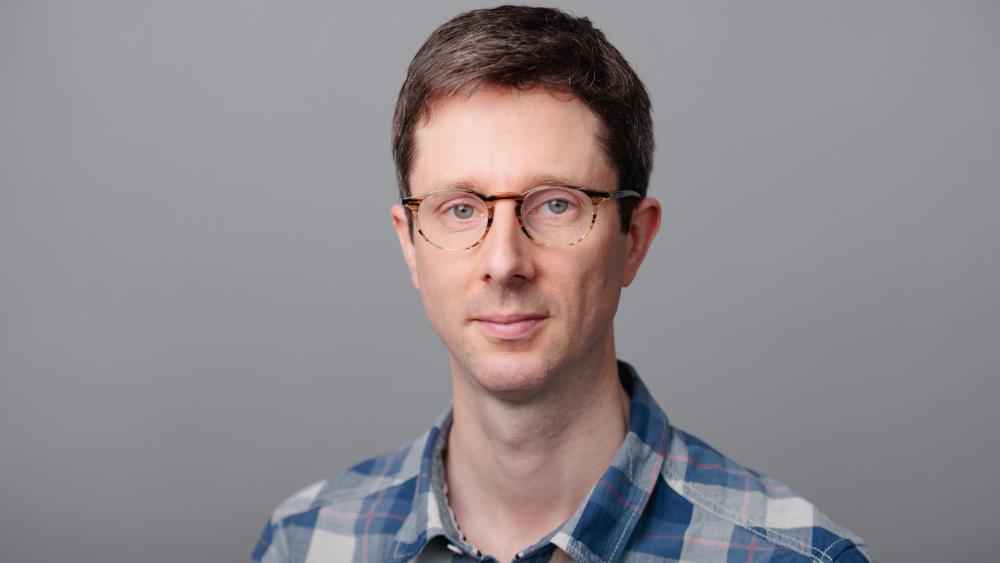
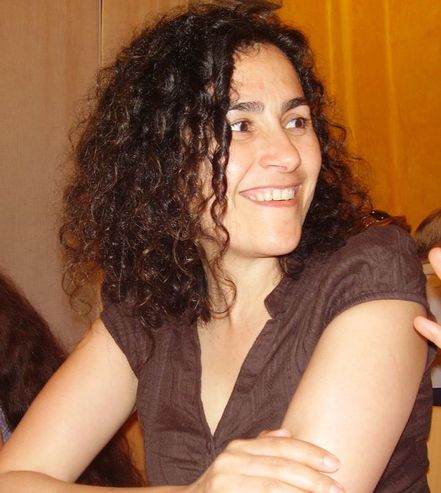
Dr. Christopher Lucas is a Senior Lecturer in Arabic Linguistics at SOAS University of London, affiliated with the School of Languages, Cultures and Linguistics. He holds a BA in Arabic from SOAS and an MPhil and PhD in Linguistics from the University of Cambridge. Prior to his current role, he served as a Research Associate at the University of Cambridge and a British Academy Postdoctoral Fellow at SOAS. His research focuses on linguistic variation and change, particularly in Arabic and Maltese, examining topics like negation, definiteness, and contact-induced grammatical change. He actively supervises PhD students in Arabic/Maltese linguistics and grammatical change. Key publications include works on negation typology, Maltese phonology, and historical linguistics. Dr. Lucas has authored/co-authored books such as *The History of Negation in the Languages of Europe and the Mediterranean* and edited volumes on contact-induced change. His work bridges theoretical linguistics with empirical analysis, contributing to understanding language evolution through contact and historical processes. He is reachable at cl39@soas.ac.uk and office 447, Russell Square campus. Current research includes LADO applications in Arabic and Maltese language dynamics.
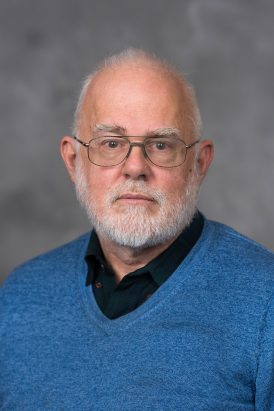
Jeffrey Heath is a Professor of Linguistics at the University of Michigan, with a dry-line appointment in Near Eastern Studies. His research focuses on language documentation, historical linguistics, morphology, and the study of African languages. He has conducted extensive fieldwork in Mali, Morocco, Australia, and other regions, particularly on Dogon, Songhay, and Berber languages. Heath holds a Ph.D. from the University of Chicago (1976) and a B.A. from Harvard University (1971). His work includes over 20 books and numerous articles on linguistic typology, language contact, and morphological evolution. He has received significant grants from the National Science Foundation, Guggenheim Foundation, and Fulbright Program. His research emphasizes functional morphosyntax and the role of prosody in linguistic systems. Education: Ph.D. (University of Chicago, 1976), M.A. (1973), A.B. (Harvard, 1971) Affiliations: Department of Linguistics, Near Eastern Studies (UMich) Key Projects: Dogon Language Documentation Project, Tamashek (Tuareg) studies, Songhay grammar series Heath’s research interests span morphology, tonosyntax, and the historical development of African languages. His fieldwork in Mali has produced detailed grammars of Dogon languages, while his work on Moroccan Arabic explores language contact and borrowing. He has also contributed to the documentation of Songhay and Gur languages in West Africa. Grants and awards highlight his commitment to endangered language preservation, including NEH and NSF funding for Dogon and Songhay projects. His contributions to linguistic typology and historical morphology have influenced debates on morpheme renewal and syntactic change.
Karim Achab serves as a Part-time Professor in the Department of Linguistics within the Faculty of Arts at the University of Ottawa, holding dual teaching responsibilities in linguistics and French as a Second Language. His research centers on Amazigh studies with deep expertise in Tamazight (Berber, Kabyle, Tuareg) linguistics, spanning syntax, morphology, and lexical semantics. He maintains a strong focus on North African geopolitics alongside broader interests in bilingualism, language contact, heritage languages, dialectal variation, minority languages, and second-language pedagogy. His multilingual capabilities in French, English, Tamazight varieties, Hungarian, and Spanish directly inform his interdisciplinary approach to linguistic diversity. While the source text confirms his active faculty status and research domains, it does not specify details regarding student advising, grant funding, laboratory affiliations, or collaborative research teams. No information about scientific awards or publications was provided in this institutional profile.
Corné Hanssen is an Assistant Professor in the Department of Philosophy and Religious Studies at Utrecht University's Faculty of Humanities, specializing in Islam and Arabic studies. His academic profile bridges Middle Eastern and East Asian studies, with particular focus on Islamic influences in Chinese contexts. His research interests include Arabic language and literature, Berber Studies, Islam (particularly Shia Islam), Chinese politics, and the intersection of Islamic studies with contemporary Chinese society. His work explores topics such as Islamic influences along the Silk Road, the Uighur minority in Xinjiang, Chinese Communist Party ideology, and Arabic language studies. Hanssen's publications from 2001-2015 demonstrate an interdisciplinary approach connecting Middle Eastern and East Asian studies. His research reveals consistent interest in Chinese politics, Islamic studies, and linguistic diversity, with particular attention to the Xinjiang region, Chinese Communist Party ideology, and Islamic theological perspectives. He has been active in academic outreach through invited talks on diverse topics including Bedouin culture (2001), languages and peoples in Europe (2007), and languages and cultures of Morocco (1997), showcasing his broad expertise in cultural and linguistic diversity across regions.
Prof. Axel Fanego Palat Fleisch holds the Chair of African Studies at Goethe University Frankfurt since 2018. As Managing Director of the Institute, he focuses on linguistic research with expertise in Bantu languages, migration linguistics, and African cultural studies. His career includes positions at the University of Helsinki (2008–2018), Leipzig, and Berkeley. He completed his PhD (2000) on Lucazi, an Angolan Bantu language, at Cologne University, followed by postdoctoral research in California. Research Interests: Language & Identity, Migratory Linguistics, Postcolonial Discourse Analysis Regional Specializations: Southern Africa, Portuguese-speaking Africa, Morocco/Kenya/Ethiopia Current projects include LOEWE-funded minority studies (2020–2023) examining Berber speakers in the Rhine-Main region, and a DAAD-partnered linguistic development initiative with Addis Ababa University. He co-leads the 'Africa makes schools' outreach program and participates in interdisciplinary networks like ZIAF. Key publications explore conceptual history in Africa, Amazigh linguistic repertoires, and Ndebele language diversity. His work bridges descriptive linguistics with critical social theory, addressing media representations and academic discourses about Africa.
Dr. Aicha Belkadi is a Lecturer in Linguistics at SOAS University of London, affiliated with the School of Languages, Cultures and Linguistics and the Department of Linguistics. She holds a PhD and MA in Linguistics from SOAS. Her teaching focuses on syntax, semantics, morphology, and sociolinguistics. Education: MA in Linguistics, SOAS (University of London) PhD in Linguistics, SOAS (University of London) Research Interests: Dr. Belkadi’s work centers on descriptive and theoretical syntax (LFG, Minimalism, Construction Grammar), lexical semantics, syntax-semantics interface, linguistic typology, and African languages—particularly Berber (Taqbaylit). Key areas include motion and deixis, agreement systems, pronouns, lexical aspect, and language policy. She is a research assistant on the OWRI-funded 'Multilingualism and Language Learning' project since 2018. Publications: Her research explores associated motion, deictic directionality in Berber and Bantu languages, and typological studies. Recent works include analyses of Rangi deictic motion and Berber clitic semantics. Grants/Projects: OWRI-funded project on multilingualism (since 2018) Labs/Teams: Collaborates with SOAS Working Papers in Linguistics and the Berber Studies network.
Christophe Pereira is a Professor of Arabic Linguistics at the National Institute of Oriental Languages and Civilizations (INALCO) in Paris, France. He specializes in Maghrebi Arabic dialects, with particular focus on Libyan and Moroccan Arabic. His academic roles include Director Adjunct of LACNAD (Languages and Cultures of North Africa and Diasporas), and responsibility for the Master's program in LLCER (Languages, Literatures, and Foreign Civilizations) with a specialization in Maghrebi Arabic. His educational background includes a Master's degree (2001) on "L'arabe de Tripoli (Libye): État des lieux et nouvelle approche," a DEA (Diplôme d'Études Approfondies) in 2002 on "La transmission de l'arabe dialectal en France," a PhD in 2008 on "Le parler arabe de Tripoli (Libye): phonologie, morphosyntaxe et catégories grammaticales," and an HDR (Habilitation à Diriger des Recherches) in 2018 on "Dialectologie, linguistique et sociolinguistique de l'arabe maghrébin: approches comparatives." Professor Pereira's research interests span multiple areas of Arabic linguistics. His primary focus is on Dialectology of Maghrebi Arabic, particularly Libyan and Moroccan varieties. He has conducted extensive fieldwork on Tripoli Arabic, documenting its phonology, morphology, and syntax. His work in Sociolinguistics examines language variation and change in North African contexts, including urbanization effects on dialects. More recently, he has made significant contributions to Gender Studies through his research on masculinity construction in Libyan Arabic. He is also deeply involved in the study of Andalusi Arabic , co-authoring multiple volumes of the Encyclopédie Linguistique d'Al-Andalus. His research often bridges traditional linguistic analysis with contemporary sociocultural contexts, particularly focusing on how language reflects and constructs social identities. His publication record demonstrates consistent output across multiple formats - monographs, edited volumes, encyclopedia entries, and journal articles. His research trajectory shows an evolution from detailed dialect description toward broader comparative and theoretical frameworks, while maintaining empirical grounding in North African Arabic varieties. Recent work increasingly engages with gender studies and sociolinguistic variation, showing interdisciplinary reach beyond traditional linguistic boundaries. Among his notable achievements are the coordination of the CorpAfroAs project, which created a corpus for Afro-Asiatic languages including detailed documentation of Tripoli Arabic, and his leadership in the Association Internationale de Dialectologie Arabe (AIDA), where he serves as Vice-President. His work has been recognized through invitations to edit special journal issues and conference proceedings. Professor Pereira has supervised numerous graduate students, directing multiple Master's theses on Maghrebi Arabic varieties across North Africa, and co-directing several PhD dissertations on topics including linguistic urbanization in Morocco, language policy in the Maghreb, and sociolinguistic aspects of the Hirak movement in Algeria. His mentorship extends to HDR (post-PhD qualification) candidates as well. His research is primarily conducted through the LACNAD research team at INALCO, where he collaborates with colleagues on projects related to North African languages and cultures. He has been instrumental in developing digital resources for Arabic dialectology, including annotated corpora that facilitate comparative research across Maghrebi varieties.
Naït Zerad Kamal is a University Professor at the Institut National des Langues et Civilisations Orientales (INALCO), specializing in Berber linguistics within the Africa and Indian Ocean department. His academic work focuses on the Berber language family, with particular expertise in Kabyle and Tuareg languages. As Head of the Berber section and a member of the LACNAD research board, he plays a significant role in shaping Berber language studies at INALCO. Professor Kamal's research interests span Berber linguistics, dialectology, grammaticalization processes, lexicology, lexicography, translation studies, and linguistic planning. His work demonstrates deep engagement with both theoretical linguistic frameworks and practical language documentation. He has made substantial contributions to understanding the structural properties of Berber languages, their historical development, and their contemporary sociolinguistic status. His publication record reveals a consistent focus on Berber language documentation and analysis over two decades, with a notable intensification of output around 2020-2021. The publications demonstrate expertise across multiple Berber varieties (Kabyle, Tuareg, Libyan Berber), with particular attention to grammatical structures, lexical semantics, and the institutionalization of Tamazight. His recent work shows increasing engagement with digital humanities approaches, as evidenced by the 2020 project digitizing the Arabic-Berber lexicon of Ibn Tunart. Professor Kamal has demonstrated leadership in the field through edited volumes honoring prominent scholars like Salem Chaker and Abdellah Bounfour, indicating his standing within the international Berber studies community. His collaborative work with researchers like D. Merolla, D. Caubet, and S. Djemai shows active engagement with a broader scholarly network.
Dr. Vera Tsukanova serves as a Researcher at the Department of Semitics within the Center for Near and Middle Eastern Studies (CNMS) at Philipps University of Marburg since October 2016. She is a founding member of Halqa arabiyya—an initiative promoting scholarly Arabic—and has been active in the Deutsche Morgenländische Gesellschaft since 2018. Her editorial contributions include co-editing the 2019 special issue 'Contacts' for the open-access journal 'Middle East – Topics and Arguments'. Her educational background includes: Russian State University for the Humanities (Moscow), 2001: Degree in Theoretical Linguistics and Arabic Language with thesis on Kuwaiti Arabic phonology and morphology Kuwait University, 1999-2000: Scholarship for Arabic language studies at the university's language center Dr. Tsukanova's research centers on Semitic linguistics, specializing in Arabic dialectology and historical evolution of verb systems. She investigates morphological changes across Semitic languages using typological frameworks and corpus analysis, with current projects focused on Arabian Peninsula Semitic languages. Her work bridges theoretical linguistics with practical applications in language documentation and academic communication. Her publication portfolio reveals consistent contributions to Arabic and Semitic linguistics through monographs, edited volumes, and critical book reviews. Key thematic threads include historical language change in Arabic verb morphology, dialectological studies of understudied varieties, and sociolinguistic analyses of Arabic's role in scholarship. The 2025 monograph 'The evolution of the derivational verbal system in Arabic' represents a major theoretical contribution, while her editorial work on language contacts demonstrates interdisciplinary engagement. Dr. Tsukanova's academic service includes peer reviewing for Orientalistische Literaturzeitung and editorial work for Middle East – Topics and Arguments. Early career support came through a Kuwait University scholarship for language studies. Her teaching encompasses Classical Arabic reading, Arabic Dialectology, Syriac, and Phoenician-Punic at Marburg. Embedded within international scholarly networks, she collaborates through the Deutsche Morgenländische Gesellschaft and presents at major conferences on topics spanning Phoenician epigraphy to contemporary Arabic dialectology. Her Halqa arabiyya initiative actively cultivates Arabic-language academic discourse, reflecting her commitment to linguistic diversity in scholarship.
Hamid Ouali is Professor of Linguistics at UW-Milwaukee's College of Letters & Science, specializing in syntactic theory within the Minimalist Program framework. His research comparatively analyzes Arabic and Berber languages to understand universal grammatical principles. Primary research examines agreement systems, tense-aspect morphology, negation patterns, and syntactic interfaces in Semitic languages. His work contributes to understanding parametric variation across Arabic dialects and Berber languages. Professor Ouali teaches graduate and undergraduate courses in syntax, Arabic linguistics, and general linguistic theory. He maintains active research collaborations focusing on micro-comparative syntax across North African languages.
Acrisio Pires is a Professor of Linguistics at the University of Michigan's College of Literature, Science, and the Arts. His research program focuses on syntactic theory and comparative syntax within the Minimalist framework, with significant contributions to understanding language acquisition and bilingualism. Professor Pires explores fundamental questions about linguistic knowledge, cross-linguistic variation, and the relationship between syntactic theory and language change, with particular expertise in Portuguese, Spanish, and other languages. His educational background includes a Ph.D. from the University of Maryland, College Park. Professor Pires' research investigates how syntactic theory can explain linguistic variation across human languages and what contribution comparative syntax makes to scientific models of language. His work examines how linguistic theory and language acquisition research contribute to explaining language change mechanisms and what factors lead to differences in bilingualism and second language acquisition outcomes. Current projects include a book on syntactic theory from a comparative perspective for Cambridge University Press and collaborative studies with PhD students examining differential object marking in L2 Spanish, constraints on wh-movement, acquisition of Indian English by Bengali-English bilinguals, and Chinese syntax acquisition by English-Chinese bilinguals. Analysis of Professor Pires' publication record reveals a consistent focus on syntactic theory within the Minimalist framework and its applications to language acquisition across diverse language pairs. His work spans comparative syntax of Portuguese, Spanish, Chinese, Greek, Sinhala, Berber, Russian, Hawaiian, Croatian, Korean and Arabic, with particular attention to phenomena like differential object marking, wh-movement, null subjects, and the syntax-semantics interface. A significant thread throughout his research is the examination of how theoretical syntax interfaces with experimental and acquisition data to build comprehensive models of human language knowledge. Professor Pires has advised numerous PhD students who have secured academic positions worldwide, including at Taipei Medical University, University of New Hampshire, National Taiwan Normal University, University of North Texas, University of Wisconsin-Milwaukee, and the University of Michigan. His current PhD advisees include Will Nediger, Sujeewa Hettiarachchi, and Tridha Chatterjee (co-advisor), with research focusing on various aspects of syntactic theory and language acquisition. He has also mentored many undergraduate honors students whose work centered on syntactic theory, Minimalism, and syntactic change, including Natasha Abner, Emily Coppess, Charles Crissman, Nayana Dhavan, Ed Cormany, Lauren Friedman, and Shang Kong. Professor Pires is affiliated with the Center for Latin American and Caribbean Studies (LACS) at the University of Michigan, reflecting his research focus on Portuguese and Spanish linguistics. His teaching portfolio includes courses in syntax (introduction to syntax, graduate syntax, syntactic theory, Minimalism, comparative syntax), semantics, language and cognition, and language acquisition and bilingualism.
Mena Lafkioui is a Full Professor (Directeur d'études) in Berber linguistics at the Ecole des hautes études en sciences sociales (EHESS) in Paris, holding a concurrent position as Research Director at the Centre National de la Recherche Scientifique (CNRS). She has been affiliated with these institutions since 2018 and 2014 respectively, following previous academic positions at Università degli Studi di Milano-Bicocca, Università della Calabria, and Ghent University. Her educational background includes a Habilitation in 'Sciences du langage' from EHESS (2010), a Ph.D. in Linguistics from INALCO, Paris (1999), a Postgraduate degree in Linguistics from INALCO (1995), and a Master's in Oriental Languages and Cultures from Ghent University (1994). Lafkioui's research spans Berber linguistics, geolinguistics, sociolinguistics, Afroasiatic linguistics, Arabic dialectology, and negation typology. Her work integrates structural linguistic analysis with sociocultural contexts, particularly focusing on the Rif Berber language continuum, language contact phenomena, and the impact of digital communication on Amazigh identity construction. Analysis of her recent publications reveals a consistent focus on Berber language structures, particularly examining negation patterns, topicalization mechanisms, geolinguistic variation, and the impact of language contact with Arabic. Her methodological approaches blend traditional linguistic analysis with computational and algorithmic perspectives, reflecting an innovative approach to language documentation and analysis. Elected as Academician, Accademia Ambrosiana, Milan (2014) Elected as founding member of the 'Classe Africa' of the Accademia Ambrosiana, Milan (2014) Elected as founding member of the 'Section Berbero' of the Accademia Ambrosiana, Milan (2014) Lafkioui has supervised 10 PhD students and 55 Master's dissertations while securing competitive research grants across Europe. She serves on multiple editorial boards including the International Journal Dialectologia et Geolinguistica and Afrika Focus. Her institutional roles include membership on the Scientific Council of the Laboratoire d'excellence Empirical Foundations of Linguistics in Paris and participation in numerous academic committees overseeing PhD programs in African languages and cultures. She has organized 17 international scientific meetings and is an active member of 10 scientific societies, including the Société de Linguistique de Paris, demonstrating her significant contribution to the academic community in linguistics and African studies.
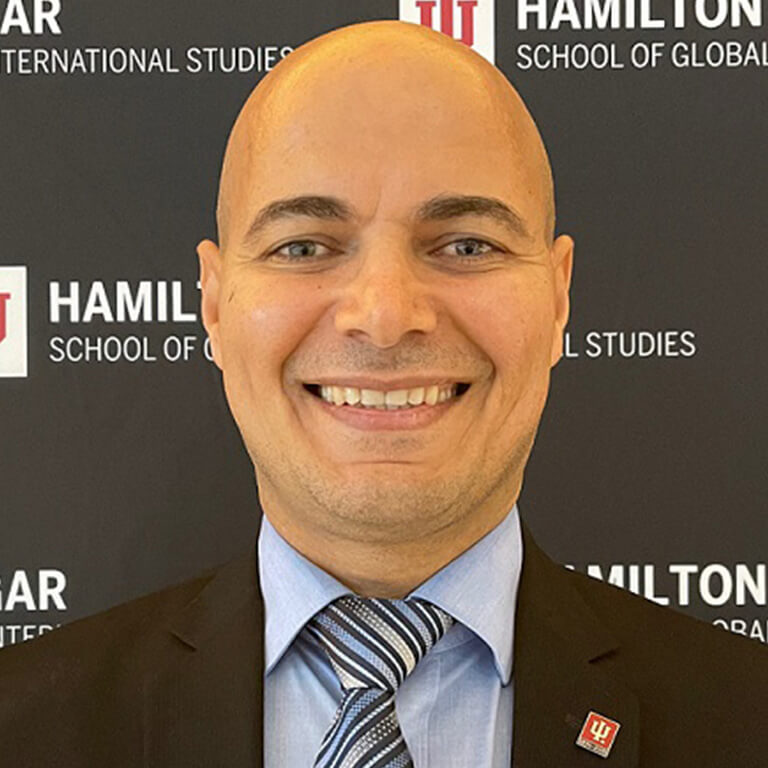
Attia Youseif is a Senior Lecturer in the Department of Middle Eastern Languages and Cultures at Indiana University, Bloomington, affiliated with the Hamilton Lugar School of Global and International Studies. He serves as Director of the Tutoring in Arabic Flagship Program, contributing to advanced Arabic language education. His academic base is in linguistics, with a strong focus on pedagogical innovation and cultural integration in language learning. Dr. Youseif earned his Ph.D. in Linguistics from Alexandria University. His scholarly background reflects deep engagement with both theoretical and applied aspects of language. His research interests span a broad spectrum of linguistic disciplines, including Sociolinguistics, Semantics, Dialectology, Discourse Analysis, Phonetics, Applied Linguistics, and Second Language Acquisition . He emphasizes the interplay between language, culture, and identity, advocating for modern pedagogical methods that reflect this relationship. His work often bridges academic research and practical teaching applications, particularly in the context of Arabic as a foreign language. The recent publications reflect a consistent trajectory in linguistic research with applications in education. Themes include cross-linguistic comparison (Arabic-Georgian, Arabic-Berber), semantic analysis in poetry and religious texts, Arabic phonological heritage, and innovative methods in teaching Arabic using literature and technology. These works demonstrate a commitment to both scholarly rigor and practical impact in language education. While no formal scientific awards are listed in the provided text, Dr. Youseif's extensive publication record and leadership in the Arabic Flagship Program underscore his contributions to the field. He has advised or mentored students in linguistics and Arabic studies, though specific names are not listed. There is no mention of external grants, but his role as Director of a Flagship Program suggests involvement in federally funded or institutional initiatives. His work likely involves collaboration with language educators, curriculum developers, and international academic partners. Although specific lab affiliations are not mentioned, his leadership in the Tutoring in Arabic Flagship Program indicates active involvement in a structured, high-level language training initiative that likely includes tutoring teams, instructional designers, and assessment specialists.