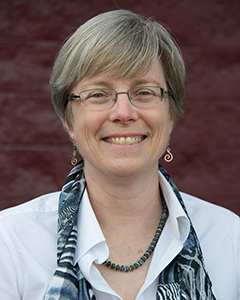
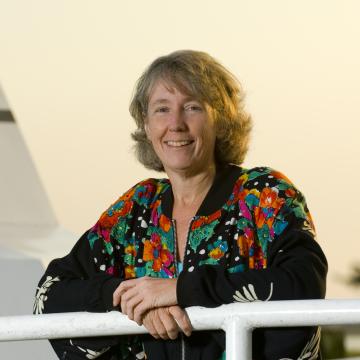
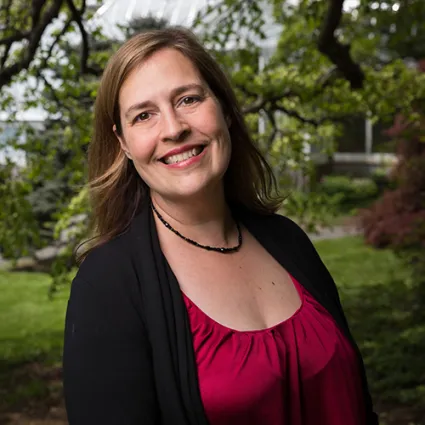
Dawn Y. Sumner is a Professor in the Department of Earth and Planetary Sciences at the University of California, Davis. Her research focuses on geobiology, paleobiology, and planetary science, particularly reconstructing ancient environments on Earth and Mars. She is a key member of NASA’s Mars Science Laboratory team, contributing to the Curiosity rover’s exploration of Gale Crater on Mars. Sumner’s work integrates field studies, lab analyses, and interdisciplinary approaches to understand microbial life’s role in shaping Earth’s history and potential habitability on other planets. Education: Ph.D., Massachusetts Institute of Technology (1995). Research interests include microbialite formation, Antarctic lake ecosystems, and the evolution of oxygenic photosynthesis. She investigates modern microbial communities in ice-covered lakes (e.g., Lake Vanda) to understand ancient environments and their biosignatures. Her scientific awards include the California Academy of Sciences Academy Fellow (2020) and Geological Society of America Fellow (2014). Sumner emphasizes inclusive education and supports student success in STEM through feminist research practices. Labs/Teams: W.M. Keck Center for Active Visualization in the Earth Sciences (KeckCAVES), Antarctic Lake Research Group.
Jennifer Smith is a faculty researcher at the Scripps Institution of Oceanography, University of California, San Diego, where she leads the Smith Lab within the Center for Marine Biodiversity and Conservation. Her work focuses on coral reef ecosystems, integrating ecology with conservation, restoration, and sustainability. Her research explores how human activities such as nutrient pollution, invasive species, and climate change affect benthic marine communities. She has pioneered the use of large-area imaging and structure-from-motion technology to monitor long-term changes in Maui's coral reefs, including responses to sequential bleaching events and wildfire impacts. Her lab investigates microbial interactions with corals and the role of algae in reef degradation and resilience. Dr. Smith’s publication record reveals a strong focus on coral-algal interactions, nutrient dynamics, invasive seaweeds, and ecosystem-scale analyses. Her work spans tropical regions including Hawaii and the Great Barrier Reef, contributing to global understanding of reef resilience. She mentors graduate students and collaborates widely across marine science disciplines. Scientific Awards: No awards mentioned in the provided text. Advising and Grants: Dr. Smith advises graduate students such as Orion McCarthy and Morgan Winston. Her lab conducts long-term monitoring supported by institutional and likely federal funding, though specific grants are not listed. She leads field campaigns in Hawaii and publishes in high-impact journals. Labs and Teams: The Smith Lab is actively engaged in coral reef research, focusing on resilience, restoration, and human impacts. The team includes researchers and volunteers who conduct field surveys, analyze imagery, and produce outreach materials such as the 'Underwater Gardens' film.
Seth Finnegan is a Professor in the Department of Integrative Biology at the University of California, Berkeley, and affiliated with the University of California Museum of Paleontology. His research focuses on understanding the processes shaping marine ecosystems and biota from the late Neoproterozoic to the present, with a particular emphasis on the Ordovician Period and mass extinctions. He integrates field observations, laboratory data, and literature databases to study extinction selectivity, environmental proxies (e.g., stable isotopes, biomarkers), and ecosystem reconstructions. His lab, the Finnegan Lab, explores themes such as organism-environment interactions and the drivers of biodiversity changes. Finnegan’s work has been widely published in journals like Proceedings of the National Academy of Sciences and Geology , and he collaborates with institutions globally. Despite no listed awards here, his contributions to paleontology are significant.
Ricardo Matano is a Professor at Oregon State University's College of Earth, Ocean, and Atmospheric Sciences (CEOAS), Department of Oceanography. His research focuses on large-scale ocean circulation, western boundary currents, ocean modeling, and geophysical fluid dynamics, with a particular emphasis on the Southern Ocean and South Atlantic dynamics. He holds a Lic. in Physical Oceanography from Universidad Nacional del Sur (1983), an MA in Geophysical Fluid Dynamics from Princeton University (1988), and a PhD in Atmospheric and Oceanic Science from Princeton (1991). Research interests include low-frequency variability of South Atlantic circulation, interocean exchanges, shelf circulation in the southwestern Atlantic, and dynamics of shelfbreak formation. Recent work explores climate change impacts on Patagonian shelf systems and larval connectivity in marine species. His studies often involve numerical modeling and satellite data analysis to understand coastal and open-ocean interactions. Recent publications (2022–2025) highlight studies on Agulhas Bank circulation, Patagonia shelf-break dynamics, and California Current poleward transports. His work contributes to understanding climate-driven variability in marine systems and informing coastal management strategies.
Anya L. Brown is an Assistant Professor in the Department of Evolution and Ecology at the University of California, Davis, based at the Bodega Marine Lab. Her research focuses on the community ecology of marine systems, particularly coral reefs, investigating how host-associated microbes and trait variation influence species resilience to stress, ecological interactions, and adaptive plasticity. Education: B.S. (Brown University, 2009), M.S. in Biology (California State University, Northridge, 2012), Ph.D. in Ecology (University of Georgia, 2018). Postdoctoral Experience: Ewel Postdoctoral Fellow in Tropical Ecology (University of Florida, 2018-2020); Postdoctoral Scholar in Marine Chemistry and Geochemistry (Woods Hole Oceanographic Institution, 2020-2022). Her recent publications highlight microbial dynamics in coral reefs, antibiotic effects on reef microbiomes, and trait-mediated interactions. She emphasizes interdisciplinary approaches, combining molecular tools with observational and experimental studies. The Brown Lab actively engages students in cross-system marine research, prioritizing inclusivity in scientific communities. Key trends in her work include understanding microbial responses to environmental stressors, coral disease mechanisms, and the role of extended phenotypes in reef ecology. These studies span tropical and temperate marine ecosystems, with implications for conservation and restoration. Scientific Awards: Hellman Fellowship 2024-25 Ewel Postdoctoral Fellowship in Tropical Ecology Dr. Brown's lab fosters research across coral reefs and local coastal systems, integrating ecological and microbial perspectives. She advocates for inclusive teaching and research practices while advancing microbial ecology frameworks in marine conservation.
Eric Roberts is a Professor of Geology and Geological Engineering and Director of the Potential Gas Agency at the Colorado School of Mines. His research focuses on basin analysis, energy exploration, and sedimentary geology with specializations in Mesozoic-Cenozoic basins of Gondwana and North America. He leads projects in U-Pb geochronology, critical minerals exploration, and paleoenvironmental reconstruction through vertebrate paleontology and stratigraphy studies. Roberts' work integrates advanced geochronological techniques with field-based analyses to address questions in paleobiology, resource exploration, and earth system dynamics. Key research themes include: Geochronology of sedimentary and volcanic deposits Paleoclimate reconstruction using paleosols Stratigraphic frameworks for dinosaur fossil records Resource potential of helium/hydrogen reserves Antarctic and African vertebrate paleontology His exploration of hominin burial practices in the Rising Star Cave System has provided critical insights into early human behavior. Roberts' interdisciplinary approach bridges geological, biological, and environmental sciences to advance understanding of Earth's history and resource management strategies.
Dr. Tessa M. Hill is a Professor in the Department of Earth and Planetary Sciences at the University of California, Davis, and serves as the Associate Vice Provost for Academic Programs, Public Scholarship & Engagement. She is affiliated with the Bodega Marine Laboratory, leading the Bodega Ocean Acidification Research (BOAR) group and the Ocean Climate Lab. Her work focuses on climate change impacts, particularly ocean acidification and deoxygenation, and integrates research with policy and education initiatives. Tessa holds a B.S. in Marine Science from Eckerd College (1999) and a Ph.D. in Marine Science from UC Santa Barbara (2004). She was a UC President’s Postdoctoral Fellow at UC Davis before joining the faculty. Her research examines marine species responses to environmental changes, leveraging interdisciplinary approaches to inform management strategies. Notable projects include collaborations with shellfish farmers and K-12 educators to address ocean acidification challenges. Tessa is a Fellow of the California Academy of Sciences and the American Association for the Advancement of Science (AAAS), and serves on the West Coast Ocean Acidification and Hypoxia Panel. She advocates for inclusive academic reward systems and equitable impact metrics in science. Key Roles: Faculty member, BOAR group leader, AAAS panelist, science education advocate Research Groups: Bodega Ocean Acidification Research (BOAR), Ocean Climate Lab, Hill Biogeochemistry Lab Her outreach efforts emphasize bridging science and policy, including workshops on paleoceanography’s relevance to decision-making. Tessa’s work highlights the importance of seagrass ecosystems in mitigating coastal ocean acidification and the need for adaptive strategies in marine conservation. She also addresses microplastic pollution and its effects on shellfish health, reflecting her broad commitment to environmental science and societal impact.
Ginny Eckert is a Professor and Director of Alaska Sea Grant at the University of Alaska Fairbanks' College of Fisheries and Ocean Sciences. Her research focuses on marine invertebrate ecology, aquaculture, and fisheries management, particularly in crab species and ecosystem sustainability. She leads interdisciplinary programs like the NSF-funded Marine Ecosystem Sustainability in the Arctic and Subarctic (MESAS). Education: Ph.D. in Ecology, University of California Santa Barbara (1999) M.S. in Zoology, University of Florida (1994) B.A. in Biology, Dartmouth College (1990) Research Interests: Early life history ecology of marine invertebrates, larval dispersal patterns, sustainable fisheries management, and aquaculture innovations. Her work emphasizes the ecological and management implications of marine invertebrate reproduction, larval survival, and habitat use. Current Projects: Sea otter predation impacts on commercial species in Alaska, Dungeness crab larval dynamics in Glacier Bay, and king crab hatchery enhancement through the AKCRRAB program. She collaborates with NOAA and integrates field studies with lab experiments. Advising/Grants: Advises Carter Johnson and oversees NSF grants for MESAS and crab research. Her team includes graduate students like Zac Hoyt and Heidi Herter, focusing on population dynamics and habitat restoration. Labs/Teams: Leads the Alaska king crab research program (AKCRRAB) and collaborates with UAF's School of Fisheries and Ocean Sciences on ecosystem sustainability initiatives.
Dr. John Lehrter is a Professor of Marine Sciences and Associate Director of the Stokes School of Marine & Environmental Sciences at the University of South Alabama, as well as a Senior Marine Scientist at the Dauphin Island Sea Lab. He holds a Ph.D. in Marine Sciences from the University of Alabama (2003). His research focuses on coastal biogeochemistry, ecosystem modeling, and satellite ocean color remote sensing, with an emphasis on understanding eutrophication, hypoxia, and multiple stressor impacts on coastal ecosystems. Dr. Lehrter has advised numerous graduate and undergraduate students and leads a lab engaged in field studies, numerical modeling, and satellite data analysis. His work addresses societal challenges in coastal management and climate change adaptation. Research Interests: Multiple Stressor Impacts to Coastal Ecosystems, Marine Biogeochemistry, Ecosystem Modeling, Satellite Remote Sensing, and Hypoxia Dynamics. His lab develops tools to quantify nutrient pollution effects and predict ecosystem responses to management actions. Advising and Grants: Dr. Lehrter oversees a dynamic lab with graduate students, postdocs, and technicians. Current projects include modeling nutrient dynamics, satellite data applications for water quality, and experimental studies on multiple stressors (e.g., temperature, pH) impacting marine organisms. His lab collaborates with agencies like the EPA and NOAA, contributing to coastal policy and restoration efforts. Labs/Teams: Dauphin Island Sea Lab (DISL) and the University of South Alabama’s Stokes School of Marine & Environmental Sciences. The lab recently established a state-of-the-art facility for multiple stressor experiments on marine species.
Cindy Lee Van Dover is a deep-sea biologist and the Harvey W Smith Distinguished Professor of Biological Oceanography at Duke University. She serves as Chair of Duke's Division of Marine Science and Conservation and Director of the Duke University Marine Laboratory in Beaufort, N.C. Her research focuses on chemosynthetic ecosystems, biodiversity, and deep-sea policy frameworks. Ph.D. in Biological Oceanography, MIT/Woods Hole Oceanographic Institution (1989) M.A. in Ecology, UCLA (1985) B.S. in Biological Oceanography, Rutgers University (1977) Van Dover's work spans deep-sea ecology, hydrothermal vent biodiversity, and environmental policy. She investigates gene flow in vent invertebrates, ecological impacts of deep-sea mining, and conservation strategies for chemosynthetic ecosystems. Her research integrates field programs using submersibles and telepresence technologies to study vent connectivity and microbial roles in extreme environments. Her scientific leadership includes 80+ peer-reviewed publications and roles as Chief Scientist in NSF- and NOAA-sponsored expeditions. She pioneered studies on geothermal light at vents and deep-sea symbiosis, with recent work on dual symbiotic relationships in vent snails and methane seep ecology. Virginia Outstanding Scientist (2006) Fulbright Scholar (France 2004) Fellow, American Association for the Advancement of Science Mines Medal for Leadership and Innovation NSF Career Awardee Van Dover's grants include NSF EAGER funding for deep-submergence science leadership and Pew Charitable Trusts' support for deep-sea mining impact assessments. She leads interdisciplinary initiatives like Science and Art at the Moment of Discovery , integrating artists into marine research expeditions. Her outreach includes authoring two books: Deep-Ocean Journeys for public audiences and The Ecology of Deep-Sea Hydrothermal Vents as the first textbook in the field. Her work has been featured in Science News , Discover Magazine , and National Public Radio .
The University of Tennessee at ChattanoogaUnited States
Rich Walker is an Assistant Professor in the Department of Biology, Geology, and Environmental Science at the University of Tennessee at Chattanooga (UTC). His research focuses on freshwater ecosystems, particularly understanding how stressors affect stream biodiversity and ecological processes. He leads the Freshwater Ecology and Conservation Lab, emphasizing interdisciplinary approaches to environmental challenges. Education: PhD in Ecology (University of Wyoming, 2019), MS in Biology (University of Central Arkansas, 2011), and BS in Environmental Science (University of Central Arkansas, 2008). Research interests include freshwater salinization, non-perennial stream dynamics, and fisheries conservation. His work bridges basic and applied questions, such as how climate change and human activities alter water quality and habitat availability. Recent studies explore predictive modeling of conductivity in the Chesapeake Bay watershed and biogeochemical responses in intermittent streams. Publications span Environmental Science & Technology Water , Nature Water , and Science of the Total Environment . His 2024 studies address conductivity trends and non-perennial stream management. Key findings include global gaps in salinization research and crayfish population dynamics under climate variability. Service roles include membership in UTC’s Curriculum Committee, Izaak Walton League’s Save Our Streams, and the Hartman Nature Reserve Board. Teaching covers ecology, limnology, and fisheries management.
Matthew A. Reidenbach is a Professor and Department Chair of Environmental Sciences at the University of Virginia, with a courtesy appointment in Mechanical and Aerospace Engineering. His research focuses on coastal oceanography, particularly the interplay between hydrodynamics and marine ecosystems, including coral reefs, seagrass meadows, and oyster reefs. He investigates topics such as larval transport, wave dynamics, and nature-based coastal resilience strategies. His work emphasizes ecological engineering solutions for climate change adaptation, combining field observations with computational modeling. Reidenbach holds a Ph.D. (2004) and M.S. (1998) in Civil and Environmental Engineering from Stanford University, and a B.S. (1997) from Cornell University. He has received prestigious awards including the NSF Career Award and the University of Virginia’s All-University Teaching Award. His research group utilizes advanced techniques like LiDAR remote sensing, PIV flow visualization, and eddy covariance systems to study coastal processes. Key research themes include: 1) Biophysical interactions in marine ecosystems (e.g., mussel aggregations, sponge filtration); 2) Coastal protection via living breakwaters; 3) Ecosystem metabolism and nutrient cycling in tidal systems. He collaborates with engineers and ecologists to bridge theoretical and applied science, addressing real-world challenges like sea-level rise and habitat restoration. Notable grants: NSF CAREER award, collaborative NSF projects on biophysical feedbacks Labs: Coastal Ecosystem Dynamics Lab, affiliated with UVA’s Batten Institute for Climate Theory and Practice Public engagement: Advises on oyster reef restoration strategies for Chesapeake Bay and Gulf Coast communities
Sara Pruss is the Esther Cloudman Dunn Professor of Geosciences at Smith College, where she has established herself as a leading researcher in geobiology and paleontology. Her work focuses on critical transitions in Earth's history, particularly mass extinctions and the evolution of early life forms. She maintains an active research program that combines field work, laboratory analysis, and theoretical approaches to understand the complex interactions between life and Earth's environments through geological time. Education: Ph.D., University of Southern California M.S., University of Southern California B.S., University of Rochester Professor Pruss's research spans several interconnected areas within geobiology and paleontology. Her primary focus is on understanding mass extinction events, particularly the end-Permian extinction and Cambrian-Ordovician transitions. She investigates how these events affected marine ecosystems and the subsequent recovery patterns. Her work on Neoproterozoic carbonates and early animal evolution has provided important insights into the environmental conditions that facilitated the emergence of complex life. Professor Pruss also examines microbial sedimentary structures and their implications for interpreting ancient environments. Her research often combines detailed field observations with geochemical analyses to reconstruct paleoenvironments and understand the taphonomic processes that affect fossil preservation. Analysis of Professor Pruss's recent publications reveals a consistent focus on critical transitions in Earth's history. Her work spans the Ediacaran-Cambrian boundary, the Cambrian-Ordovician transition, and the Permian-Triassic extinction. A recurring theme is the relationship between environmental changes (particularly oxygenation and redox conditions) and biological evolution. Her research increasingly incorporates geochemical proxies like mercury chemostratigraphy to identify potential volcanic triggers for extinction events. The geographical scope of her work is global, with field sites in North America, Scotland, Namibia, and the Arctic. Scientific Awards: Outstanding Contributions to Geobiosciences by the Society for Geobiology and Geomicrobiology (2014) Sherrerd Prize for Distinguished Teaching by Smith College (2015) Professor Pruss has mentored numerous undergraduate students through her research lab at Smith College. Several of her former students, including Katie Castagno, Jana Burke, Kelsey Moore, Sophie Westacott, and Kiara Gomez, have gone on to earn PhDs from prestigious institutions like MIT, Yale, and Woods Hole. Her research has been consistently supported by major funding agencies including the National Science Foundation and the National Geographic Society. Beyond her research mentorship, Professor Pruss has been actively involved in programs aimed at supporting underrepresented women in STEM fields, demonstrating her commitment to inclusive excellence in science education. Professor Pruss leads an active research laboratory at Smith College that combines field, laboratory, and analytical approaches to geobiological research. Her lab has produced numerous publications with undergraduate co-authors, reflecting Smith's strong emphasis on undergraduate research. The lab's work often involves international collaborations with researchers from institutions around the world. Current research directions include investigating the relationship between oxygenation and early animal evolution, studying microbial influences on sedimentary structures, and examining the environmental triggers for major extinction events throughout Earth's history.
Stephen Jane is a Society of Science Postdoctoral Fellow at the University of Notre Dame, affiliated with the Galvin Life Science Center and Freimann Life Science Center. His research focuses on the impacts of climate change on aquatic ecosystems, particularly the deoxygenation of lakes and its cascading effects on biodiversity, nutrient cycles, and human health. Jane employs multi-disciplinary approaches including long-term dataset analysis, field observations, and predictive modeling to understand planetary boundary frameworks and feedback mechanisms in lake systems. Key research themes include dissolved organic matter dynamics, thermal stratification impacts, and the interplay between climate drivers and aquatic oxygen levels. His work highlights critical thresholds in ecosystem resilience and explores hidden ecological consequences of extreme events like hurricanes. Jane has contributed to high-impact studies on lake browning, cold-water fish habitat loss, and the interplay between selenium and mercury bioaccumulation in food webs. Publications span over two decades of lake monitoring data, revealing global patterns of deoxygenation and its implications for Earth system stability. His datasets from 822 lakes and case studies like the Müggelsee provide foundational evidence for climate policy development. Jane’s research bridges environmental chemistry, biogeochemistry, and biodiversity conservation, emphasizing both local and global scales.
Dr. Mary E. Power is a Professor of the Graduate School at the University of California, Berkeley. She specializes in river ecology, focusing on algal-based food webs and their interactions with hydroclimatic regimes. Her research integrates field experiments and long-term monitoring in the South Fork Eel River, examining how flow variations and environmental conditions drive ecosystem state transitions. Primary Research Site: Angelo Coast Range Reserve (Mendocino Co., CA) Key Methodologies: In situ incubations, stable isotope probing, nanoSIMS analysis Current Focus: 2024- study of three alternative algal food web states during summer low flows Her work reveals critical thresholds where reduced summer flows and warming pools shift nutritious algal ecosystems toward toxic cyanobacterial dominance, impacting salmon and cross-ecosystem linkages. Selected Research Trends: Hydrological control of food web structure Cyanotoxin dynamics in river networks Climate change impacts on freshwater ecosystems Long-term ecological reconstructions via sediment cores Top-down and bottom-up regulation of river communities Her lab employs cutting-edge techniques to analyze microbiome elemental exchanges and successional patterns in Cladophora glomerata, a dominant green macroalga in the Eel River system.