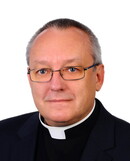
Rev. Prof. Dr. hab. Waldemar Pałęcki serves as Professor at the Department of the History of the Liturgy , John Paul II Catholic University of Lublin, Poland. A Missionary of the Holy Family (MSF), he earned his doctorate in 2005 and habilitation in 2012, focusing on liturgical theology and post-Tridentine traditions. He has led the department since 2013 and served as Professor (2020-2022). His roles include chairing the Association of Liturgical Lecturers (2015-2021) and advising doctoral and master's theses.
Gisela Muschiol is a Professor of Medieval and Modern Church History at the University of Bonn's Faculty of Catholic Theology. She has held this position since 2002 and leads the Arbeitsstelle für Theologische Genderforschung (Center for Theological Gender Research) since 2004. Previously, she served as Dean (2013-2015) and Vice-Dean (2015-2019) of her faculty, and as Deputy Chair of the University of Bonn Senate (2020-2024). Education : Studied Catholic Theology, History, and Folklore at the University of Münster (1978-1984), earned a doctorate in Catholic Theology (1990), and habilitated in Church History (2000). Her research focuses on medieval and modern church history , particularly female religious communities, gender dynamics in liturgy, and regional history of the Rhineland and Westphalia. Her publications include monographs on Merovingian women's monastic liturgy, Münster diocese history, and co-edited works on Catholic women's movements. She has extensively analyzed liturgical practices in female monasticism, gender roles in hagiography, and late medieval convent reforms. Recent articles explore liturgy and gender in late medieval female convents, liturgical transfer during reforms, and gendered perspectives on saintly death. She contributes to lexicographic projects like LThK and regional church historiography. Leadership : Active in the Görres Society, German Historical Association, and Benedictine Academy Salzburg. Editorial : Co-edited volumes on Vatican II, women's emancipation, and medieval liturgical texts.
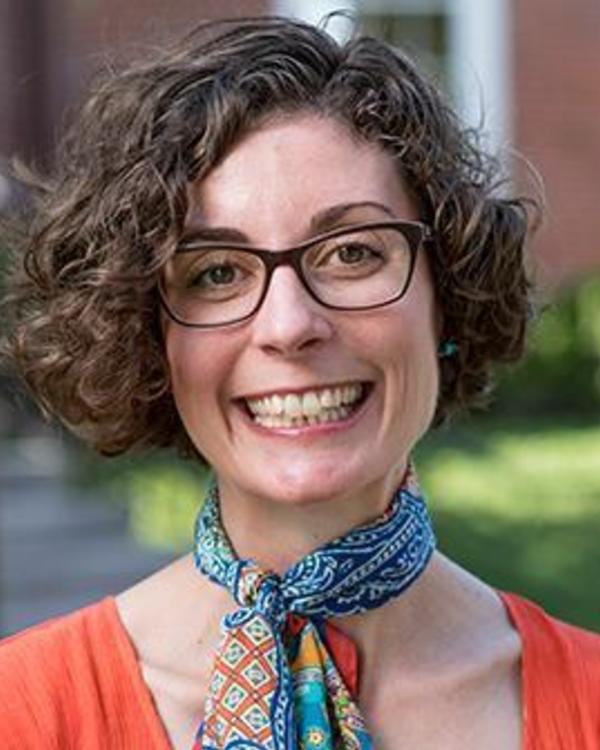
Katie Bugyis is the Rev. John A. O’Brien Associate Professor in the Program of Liberal Studies at the University of Notre Dame, with a concurrent appointment in the Department of Theology . She additionally serves as Faculty Fellow of the Medieval Institute and the Nanovic Institute for European Studies , and as Director of Postdoctoral Studies for the College of Arts and Letters. Education: L.M.S. (summa cum laude), Pontifical Institute of Mediaeval Studies, Toronto Ph.D. in Medieval Studies, University of Notre Dame M.M.S. (summa cum laude), University of Notre Dame M.A.R. (summa cum laude) with Certificate from the Yale Institute of Sacred Music, Yale Divinity School B.A. in History (summa cum laude), University of Notre Dame Research & Teaching Interests: Dr. Bugyis is a historian of Christian theology, liturgical practice, and material culture , specializing in the lived experiences of medieval religious women . Her work reconstructs the liturgical ministries —public teaching, preaching, sacramental care, and intercessory prayer—performed by Benedictine nuns in England (c. 900–1225) through close study of the manuscripts they produced and used . Methodologically she integrates ritual studies, manuscript archaeology, paleography, codicology, and gender analysis. Major Publications & Trends: Her monograph The Care of Nuns: Benedictine Women’s Ministries in England during the Central Middle Ages (Oxford, 2019) received the American Society of Church History’s 2020 Frank S. & Elizabeth D. Brewer Prize. Subsequent articles and edited volumes continue to illuminate female monastic authorship, liturgical innovation, manuscript patronage, and the metaphorical deployment of nature imagery (e.g., bees) in women’s spiritual writings . Current book-length projects include studies on Barking Abbey’s hagiographical dossier, the materiality of liturgy, and medieval bee symbolism among religious women. Awards & Fellowships: Frank S. and Elizabeth D. Brewer Prize, American Society of Church History (2020) American Council of Learned Societies Fellowship Medieval Academy of America Research Grant Andrew W. Mellon Foundation Fellowship Pontifical Institute of Mediaeval Studies Fellowship Radcliffe Institute for Advanced Study Fellowship, Harvard University Advising & Grants: She is available to direct doctoral dissertations and mentors postdoctoral scholars as Director of Postdoctoral Studies. External funding from ACLS, Mellon, Radcliffe, and Notre Dame institutes supports her multiple ongoing book projects and collaborative translations. Labs & Research Teams: While no laboratory is listed, Dr. Bugyis collaborates closely with the Medieval Institute and Nanovic Institute communities, co-directs international manuscript translation projects, and leads interdisciplinary working groups on medieval manuscripts and gender studies at Notre Dame.
Maria Dolors Vidal Casellas is a Professor at the Faculty of Tourism of the Universitat de Girona , where she is also the Director of the Calonge and Sant Antoni Chair of Gastronomy, Culture and Tourism and co-director of the Multidisciplinary Laboratory in Tourism Research (LMRT) . She belongs to the UNESCO-UNITWIN Network 'Culture, Tourism and Development' and serves as editor for 'Edicions Vitel.la' cultural tourism collection. Education : PhD in Cultural Tourism Research Focus : Cultural and religious tourism, heritage valorization, AI integration in cultural contexts Leadership Roles : Former Dean of the Faculty of Tourism, current chair director Her research explores the intersection of cultural heritage and sustainable tourism , emphasizing intangible heritage , religious spaces , and technological innovations for heritage interpretation. Recent work highlights gender dynamics in food tourism , soundscapes of sacred sites , and UNESCO geopark biocultural models . She advocates for holistic cultural landscape management through initiatives like the Camí de Ronda coastal pathway. Key publication themes include: Gastronomy and Cultural Identity (e.g., cheese tourism in Argentina, wine traditions in monasteries) Heritage Interpretation (sacred sites management, digital museum applications) Temporal Dimensions in Tourism (seasonality, historical pathways, 20th-century promotional analysis) UNESCO World Heritage Challenges (over-tourism, sustainable practices) Community Tourism Models (Mexico-Spain collaborations, stakeholder dynamics) Art-Tourism Interactions (Dali souvenirs, artistic heritage promotion)
Alison Altstatt serves as Associate Professor of Musicology/Music History at the University of Northern Iowa's School of Music, specializing in medieval chant and liturgical traditions. Her work bridges historical scholarship with performance practice. Education: M.A. in History, University of California, Berkeley Ph.D. in Musicology with second field in Historical Performance Practice, University of Oregon Her research centers on Benedictine convent music rituals, sequence genres, and medieval manuscript transmission. Notably, she reconstructed a thirteenth-century Wilton Abbey processional manuscript missing since 1860, forming the basis of her book-in-progress Wilton Abbey in Procession . Altstatt actively presents at major international forums including the American Musicological Society and Medieval Academy of America, while leading workshops on authentic medieval chant performance. Scientific Awards: H.P. Krause Visiting Research Fellow, Yale University's Beinecke Library (2018) for English medieval liturgical manuscript research Prior to UNI, she held instructional roles at University of Oregon, Western Oregon University, and served as Visiting Assistant Professor of Musicology at Indiana University's Jacobs School of Music. Her current research examines twentieth-century reception of medieval manuscripts and their ritual contexts.
Johan Belaen (born 1992) is a historian specializing in the Central Middle Ages at Ghent University's Department of History within the Faculty of Arts and Philosophy. He serves as a Scientific Collaborator at the Henri Pirenne Institute for Medieval Studies (HPIMS) and the Henri Pirenne Institute for Medieval Studies Digital Humanities (HPIMSDH). His work focuses on Benedictine monasticism, religious orders, and papal reform during the medieval period. Belaen earned his Master's degree in History from Ghent University in 2015. Since October 2016, he has been working as a PhD researcher under the supervision of Professor Steven Vanderputten, completing his doctoral project "The Reluctant Order: a Bottom-up Approach to the Shaping of Supra-institutional Structures in Twelfth- and Thirteenth-century Benedictine monasticism," which was FWO-funded from 2016-2020. Dr. Belaen's research interests span traditional religious orders including Cistercians, Cluniacs, and Premonstratensians, with particular focus on Benedictine monasticism. He examines papal reform policy, the episcopacy's role in monastic supervision, rituals of the chapter office, and monastic preaching. His work challenges conventional views about Benedictine resistance to reform, arguing instead for Benedictine receptiveness to new trends in monastic government through the development of decentralized associations between monastic houses. His publications demonstrate a consistent focus on Benedictine responses to papal reform legislation, monastic confraternities, and the development of supra-institutional structures within medieval monasticism. Belaen's work frequently analyzes primary sources such as chapter books, sermons, and legislative texts to understand how Benedictine communities implemented and adapted to ecclesiastical reforms during the 12th and 13th centuries. While specific major awards are not prominently documented in the available information, Belaen's research has been supported by the FWO (Fonds Wetenschappelijk Onderzoek) funding for his PhD project from 2016-2020. His publications appear in respected journals in the field of medieval studies and ecclesiastical history. As a relatively early-career researcher, Belaen has focused on his own scholarship rather than advising students. His research has been conducted within the framework of the Henri Pirenne Institute for Medieval Studies at Ghent University, contributing to collaborative projects on medieval religious history and monastic studies. His work on the Peace as an instrument of social competition (2013-2017) demonstrates his engagement with broader medieval social dynamics beyond purely religious institutions. Belaen works within the research groups HPIMS (Henri Pirenne Institute for Medieval Studies) and HPIMSDH (Henri Pirenne Institute for Medieval Studies Digital Humanities) at Ghent University. His research benefits from the interdisciplinary environment of these institutes, which bring together scholars working on various aspects of medieval history, literature, and culture.