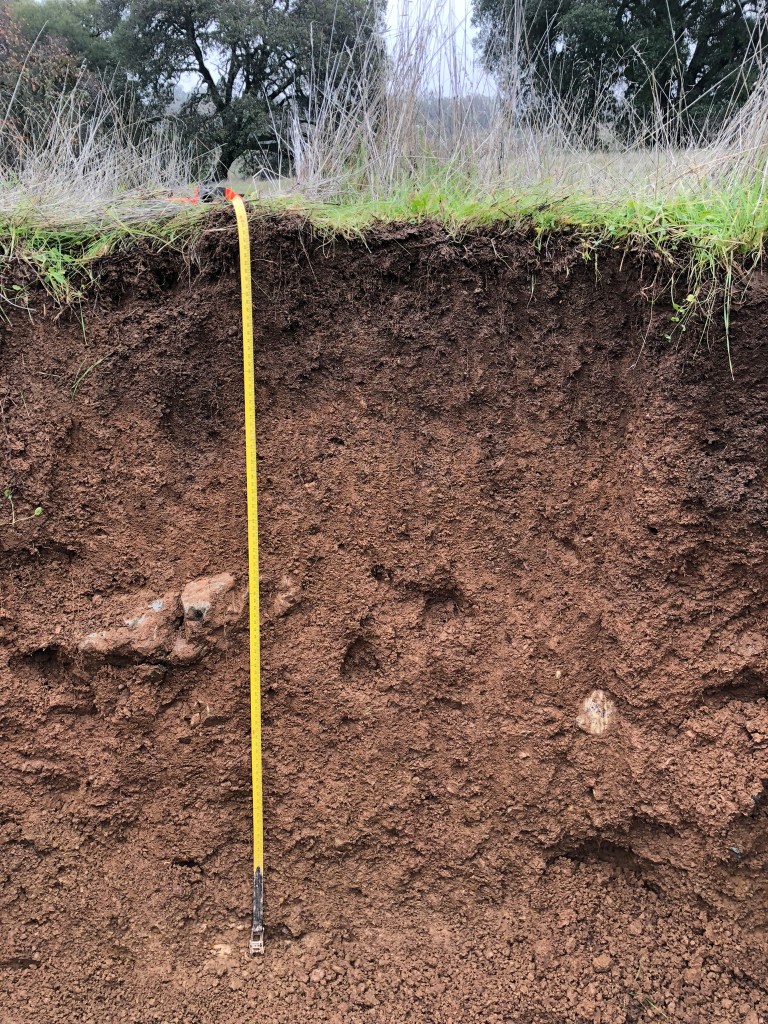
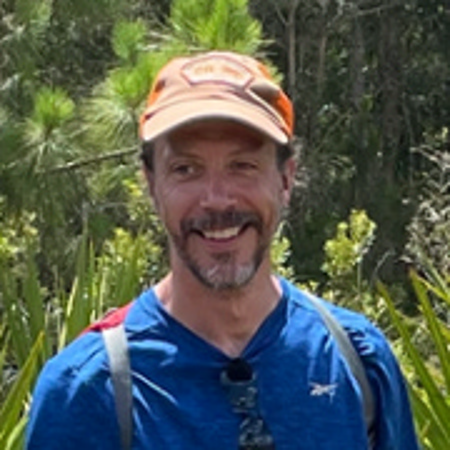
Eric Slessarev is an Assistant Professor at Yale University , affiliated with the Department of Ecology and Evolutionary Biology and the Yale Center for Natural Carbon Capture. His research focuses on soil biogeochemistry, particularly how soil properties influence carbon and nutrient cycling in terrestrial ecosystems, with applications to climate change mitigation strategies like enhanced rock weathering and perennial grass cultivation. Teaches Ecology of Landforms and General Ecology Labs located at KGL 318 (research) and KGL 417 (office) His recent publications highlight interdisciplinary approaches to understanding mineral-organic matter interactions, microbial controls on carbon cycling, and policy implications for soil-based carbon removal strategies. Key methodologies include global data synthesis, isotope tracing, and experimental manipulation of soil-plant systems across depth profiles. Notably, his 2025 work demonstrates drought impacts on carbon persistence, microbial harnessing for CO2 removal, and economic modeling of reversible carbon storage. 2024 studies explore deep-rooted plant effects on carbon fractions, calcium's role in mollisol formation, and policy optimization for carbon sequestration.
Lara A. Souza is an Associate Professor and Associate Director of the School of Biological Sciences at the University of Oklahoma. Her research focuses on global change impacts on plant communities and ecosystem processes, including climatic change, biological invasions, and resource gradients. She investigates how biodiversity mediates ecosystem properties like productivity and carbon dynamics across spatial and temporal scales, working in temperate prairies, tropical savannas, and montane meadows. Education: PhD in Ecology and Evolutionary Biology (University of Tennessee), MS in Biology (Appalachian State University). Her work integrates field experiments, remote sensing, and data modeling to address global change challenges. She holds no explicit scientific awards listed here but has an extensive publication record. Research emphasizes functional diversity and ecosystem responses to global stressors. Recent studies explore fire exclusion effects, drought impacts, and warming interactions with plant communities. She collaborates on projects involving environmental DNA for endangered species detection and satellite-based ecosystem modeling. No advising or grant details are provided in the text. Lara’s lab focuses on climate-ecosystem interactions, with ongoing projects in Oklahoma and tropical regions. Her work highlights the need for adaptive management strategies in the face of climate shifts and invasive species pressures.
Deepak R Mishra is the Merle C. Prunty, Jr. Professor of Geography at the University of Georgia, where he serves as Professor and Head of the Department of Geography. He directs both the Center for Geospatial Research (CGR) and the UGA Small Satellite Research Laboratory (SSRL), demonstrating leadership across multiple significant research initiatives. His academic career spans geospatial science, remote sensing applications, and environmental monitoring with particular focus on coastal ecosystems. Dr. Mishra earned his PhD in Natural Resources from the University of Nebraska, Lincoln in 2006 and completed his M. Tech in Civil Engineering at the Indian Institute of Technology, Kanpur in 2002. His research focuses on combining field-based remote sensing with satellite technologies to monitor and study coastal and inland water resources. His work addresses critical environmental challenges including harmful algal blooms, salt marsh conservation, carbon sequestration in tidal wetlands, and sea level rise impacts. Dr. Mishra's research portfolio reveals strong trends in geospatial analytics for environmental monitoring, with increasing integration of artificial intelligence and small satellite technologies. His recent publications show a growing emphasis on climate change impacts on coastal ecosystems, particularly salt marsh vulnerability and carbon sequestration capacity. The work demonstrates innovative applications of remote sensing for tracking cyanobacterial blooms and developing early warning systems through platforms like CyanoTRACKER. Outstanding Service Award, SEDAAG 2019 Creative Research Medal, University of Georgia, 2017 Best Poster Award, TROPMET 2016, India Article ranked #4 in Altmetric Attention Score in Nature Climate Change 2016 Mississippi State University Faculty Research Award (2012) GRI Academic Faculty of the year (2011) Dr. Mishra has secured substantial research funding, including a $7.5 million NSF LTER grant and a $4.7 million Army Research Lab grant for autonomous navigation systems. His lab actively mentors graduate students including Tyler Lynn, Lishen Mao, and Chintan Maniyar, who contribute to projects spanning coastal monitoring, small satellite development, and AI applications. The Small Satellite Research Laboratory recently achieved a historic milestone with the launch of SPOC satellite to the International Space Station, marking UGA's first satellite deployment.
Tancredi Caruso is an Associate Professor at the School of Biology and Environmental Science, University College Dublin. He holds a PhD in Ecology from the University of Siena (2006) and a Postgraduate Certificate in Higher Education Teaching (2015). His career includes roles as Reader and Lecturer at Queen's University Belfast, and research fellowships at Freie Universität Berlin and the University of Siena. Research Interests : Caruso's work focuses on biodiversity processes, aboveground-belowground linkages, ecological networks, and ecosystem responses to perturbations. His research has led to over 100 peer-reviewed publications and grants from the Alexander von Humboldt Foundation, NERC, EU Marie Sklodowska-Curie program, and others. Teaching & Professional Activities : Coordinates modules on environmental science, soil ecology, and conservation. Active in professional committees, including the IEA Committee. Languages: Italian, English, German (fluent), and French (reading). Grants & Collaborations : Leads projects like the ReEcoNet initiative. Recent grants include funding for wheat genetic diversity (EU), soil-microbe interactions (Leverhulme Trust), and climate-land use impacts (NERC). Key Contributions : Pioneered studies on mycorrhizal networks, soil microbial responses to drought, and the ecological role of oribatid mites. His work bridges theoretical ecology and applied conservation, emphasizing stochastic processes and biodiversity resilience.
Paul Leadley is a Professor at the University of Paris-Saclay, France, where he directs the Population and Community Ecology group within the Ecology, Society and Evolution Laboratory (IDEES). His research focuses on global change impacts on terrestrial ecosystems, biodiversity, and ecosystem functioning through field experiments and mathematical modeling. His educational background includes a B.S. in Science from Pennsylvania State University (1981), an M.S. in Botany from North Carolina State University (1985), and a Ph.D. in Ecology from San Diego State University and UC Davis (1993). Prior to his professorship, he worked as a research technician at San Diego State University, Smithsonian Environmental Research Center, and New Mexico State University, followed by post-doctoral research at the University of Basel. Leadley investigates climate change and rising CO2 impacts on plant diversity, biodiversity-ecosystem functioning relationships, and nutrient competition between plants and soil microorganisms. His experimental work centers on California and temperate grasslands, examining fire, temperature, CO2, nitrogen deposition, and precipitation interactions. He develops multi-scale models from rhizosphere nutrient fluxes to regional climate change projections, collaborating with institutions like INRA, Stanford University, and Northern Arizona University. His research integrates field experiments with mathematical modeling to quantify uncertainties in global change projections. His recent publications (2008-2012) reveal consistent themes: climate change impacts on biodiversity via species distribution modeling, interactive effects of multiple global change drivers on soil nitrogen cycling, and development of biodiversity scenarios for policy. Key methodological approaches include multi-model comparisons, experimental manipulations of grassland ecosystems, and trait-based biodiversity assessments. Scientific Awards: No specific awards listed in the provided text. Leadley has directed five Ph.D. students: Alexandra Gastine, Romain Barnard, Xavier Raynaud, Audrey Niboyet, and Sandrine Fontaine. He has secured major research grants including QDiv (770 k€, 2005-2009), SCION (470 k€, 2010-2012), and HumboldtCES (450 k€, 2010-2012). Current projects focus on biodiversity modeling (MOBILIS), biome boundary shifts, and climate change impacts on forests. He participates in international assessment processes including IPBES and IPCC. He leads the Population and Community Ecology team at IDEES Laboratory, comprising approximately 30 researchers, engineers, technicians, and graduate students. The team operates experimental sites in California grasslands and collaborates with national networks including FRB, AllEnvi, and GIS Climat, Environnement, Société. Current initiatives include eco-evolutionary approaches to climate change impacts and development of adaptive forest management strategies.
Forest Isbell is an Associate Professor in the Department of Ecology, Evolution and Behavior at the University of Minnesota. As a prominent ecologist, his work focuses on biodiversity, ecosystem stability, and environmental change across natural and urban systems. Key Research Areas: Biodiversity, Grassland Ecosystems, Ecosystem Stability, Plant Traits, Invasive Species, Climate Change, Carbon Sequestration, Urban Ecosystems Recent Publications highlight spatial scaling laws, invasive species impacts on productivity, and biodiversity's role in carbon storage. His research integrates field experiments, modeling, and remote sensing approaches. Major Grants: NSF-funded Long-Term Ecological Research (LTER) projects, Spencer Foundation collaborations on tribal college STEM initiatives He actively contributes to science communication, with media coverage on prairie restoration challenges.
Dr. Marion Schrumpf is a Group Leader in the Soil Biogeochemistry research group at the Max Planck Institute for Biogeochemistry, affiliated with the Department of Biogeochemical Processes. Her work focuses on soil carbon dynamics, mineral-organic matter interactions, and climate change impacts on soil systems. Research areas: Soil biogeochemistry, carbon cycling, mineral-soil interactions, nutrient stoichiometry, microbial ecology, and climate modeling. Email: mschrumpf@... Phone: +49 3641 57-6182 Office: B2.015 Her recent publications address themes like mineral control over soil carbon stabilization, drought effects on soil processes, microbial stoichiometric adaptation, and the Jena Soil Model's role in simulating carbon-nutrient interactions. She leads efforts to disentangle the complex relationships between land use, mineralogy, and soil organic matter turnover across diverse ecosystems.
Dr. Jianbei Huang is a Group Leader at the Max Planck Institute for Biogeochemistry in Jena, Germany, within the Department of Biogeochemical Processes (BGP). His research focuses on understanding mechanisms driving plant-soil carbon cycling, particularly in dryland ecosystems and plant allocation strategies. Key areas include how environmental stresses like drought affect carbon partitioning, tree defense mechanisms, and ecosystem resilience. His work integrates field experiments, isotopic labeling (e.g., 13C, 14C), and advanced analytical techniques (e.g., LC/GC-MS, PTR-MS) to study carbon dynamics, secondary metabolites, and BVOC emissions. Collaborations with Prof. Susan Trumbore and Prof. Sönke Zaehle highlight interdisciplinary approaches to model ecosystem responses under climate change. Research themes emphasize trade-offs between growth, carbon storage, and defense in trees, as well as the impact of extreme climate events on vegetation and soil carbon. Current opportunities include postdoc and PhD positions on dryland forest ecology and carbon-water relations in changing climates. Affiliations: Max Planck Institute for Biogeochemistry (Jena, Germany) Labs/Teams: Dryland Ecosystem Processes Group, Plant Allocation Research Notable projects include investigating Mediterranean forest responses to drought, carbon storage prioritization in spruce trees, and modeling tree defense against bark beetles in drying environments.
Dr. Katja Wehner is a Postdoctoral Researcher in the Faculty of Biology at the Technical University of Darmstadt, Germany, specializing in soil arthropod ecology with a focus on oribatid mite communities across forest microhabitats including litter, soil, dead wood, and tree bark. Her work examines their role in forest food webs and responses to environmental stressors. Education: PhD in Biology, Technical University of Darmstadt (2009). Dissertation: 'Parthenogenesis and Sexuality in Oribatid Mites' Diploma in Biology, Technical University of Darmstadt (2004). Thesis: 'Variability at the hsp82-locus of the parthenogenetic oribatid mite Platynothrus peltifer' Research Focus: Dr. Wehner investigates biotic interactions and acarological dynamics in Central European forests, emphasizing how land-use intensity, drought, and structural factors shape oribatid mite biodiversity. Her work integrates community ecology, soil science, and microhabitat specialization to understand ecosystem resilience and food-web interactions, with particular attention to parthenogenetic versus sexual reproduction strategies in microarthropods. Publication Trends: Recent publications (2018-2022) reveal a strong emphasis on anthropogenic impacts, including land-use change effects on aboveground-belowground linkages, drought/storm damage consequences for soil communities, and microhabitat-driven variations in mite sex ratios and seasonal dynamics. Her collaborative work in journals like Nature Communications and Global Ecology and Conservation demonstrates methodological integration of field surveys, controlled experiments, and multi-taxon analyses. Collaborative Networks: Dr. Wehner actively participates in large-scale ecological initiatives including the Biodiversity Exploratories project, collaborating with researchers from institutions like the Technical University of Munich and University of Würzburg on cross-taxa biodiversity studies. Her co-authorship on multi-investigator papers indicates strong engagement with Germany's ecological research infrastructure.
Benton Taylor is an Assistant Professor of Organismic and Evolutionary Biology and Faculty Fellow at the Arnold Arboretum, Harvard University. His research focuses on terrestrial ecosystem responses to global change drivers such as rising CO2, nutrient pollution, and extreme weather. He leads the Taylor Lab, investigating symbiotic nitrogen fixation, below-ground tree responses, and soil carbon dynamics across tropical to boreal ecosystems. His work integrates field experiments, observational studies, and global data analyses to understand feedbacks between ecosystems and climate change. Key research themes include nitrogen-fixing plant symbiosis, CO2 effects on root systems, and soil carbon sequestration mechanisms. Taylor collaborates internationally, with projects ranging from Costa Rican rainforests to Alaskan tundra. His lab emphasizes interdisciplinary approaches to address questions at molecular to ecosystem scales. Recent publications highlight novel insights into root exudation under elevated CO2, tropical nitrogen cycling gaps, and microbial mediation of tree responses. The lab actively mentors graduate students (e.g., Calvin Heslop, Carina Berlingeri) and postdocs (e.g., Lindsay McCulloch) exploring nutrient-cycling frontiers. Taylor’s team also prioritizes environmental justice through science communication and inclusive research practices, as stated in their lab’s diversity value statement.
Dr. Sara Tomiolo is an Assistant Professor in the Plant Ecology Group at the Institute of Evolution and Ecology, University of Tübingen, Germany. She holds a PhD in plant evolutionary ecology from Tübingen University (2013). Her research focuses on plant-plant and plant-soil biota interactions under climate change, drought, and microplastic contamination, using interdisciplinary methods including greenhouse and field experiments. She explores how abiotic stressors and biotic factors influence plant performance, community composition, and range shifts. Professional experience includes postdoctoral roles at Aarhus University (Denmark), Kent State University (USA), and Tübingen University. Her work emphasizes science communication and open science, reflecting her commitment to accessible research practices. She is affiliated with the Institute of Evolution and Ecology within the Faculty of Science, contributing to initiatives like the 'Bunte Wiese' project. Her research addresses critical global challenges such as climate-driven species migration and soil pollution impacts on ecosystems. Key research interests include drought effects on plant interactions, microplastic pollution consequences, and evolutionary responses to environmental stressors. Her publications span topics from niche partitioning under drought to modeling plant competition dynamics. While no awards are listed, her contributions to ecological theory and experimental methodologies are notable. She advises within the Plant Ecology Group and engages in collaborative projects across institutions. Dr. Tomiolo’s lab focuses on integrating field observations with controlled experiments to understand ecological processes at multiple scales. Her work bridges basic research with applied challenges, offering insights into biodiversity maintenance and ecosystem resilience under global change scenarios.
Christopher Blackwood is a Professor in the Department of Plant Biology at Michigan State University, with additional appointments in Plant Soil and Microbial Sciences and the Ecology, Evolution & Behavior Program. Based in the Plant Biology Lab (S124), his research examines soil-plant-microbe interactions and their critical roles in ecosystem processes and soil carbon dynamics. Education: Ph.D. from Michigan State University His research spans community ecology of plants and microorganisms, plant-fungal interactions, root traits, and soil biogeochemistry. Current projects investigate coexistence mechanisms of closely related plant species, cascading effects of tree root traits on pathogens and soil carbon, forest restoration dynamics, and urban green roof performance. His work integrates field studies with molecular approaches to understand belowground ecological processes. Analysis of recent publications (2021-2025) reveals consistent focus on plant-soil feedbacks, fungal community ecology, and soil carbon dynamics. Key themes include mycorrhizal influences on plant-fungal coevolution, root trait evolution across plant lineages, and applications to sustainable land management. His work bridges fundamental ecological theory with practical restoration ecology. Dr. Blackwood leads an active research laboratory funded by competitive grants, mentoring graduate students in plant and soil ecology. His team investigates soil biota across diverse ecosystems including temperate forests, agricultural landscapes, and urban green infrastructure. His laboratory conducts research on soil organism ecology, plant-microbe interactions, and ecosystem functioning, with ongoing projects in forest restoration, green roof optimization, and soil carbon dynamics across multiple spatial scales.
Prof. Martijn Bezemer is a Professor of Ecology of Plant-Microbe-Insect Interactions at Leiden University's Institute of Biology Leiden (IBL), Department of Plant Sciences. His research focuses on understanding how plants influence soil biota and how these changes affect subsequent plant growth and insect interactions. Key areas include grassland ecosystems, horticultural soils, and soil microbiome applications in restoration and agriculture. He leads a team of PhD students and postdocs conducting experiments in greenhouses, growth chambers, and field settings. Current projects include TRIPS (Thrips Reduction In Production Systems), Self Defense (mimicking plant defense mechanisms), and Soils2Guts (soil microbiome health impacts). Collaborations with restoration practitioners aim to enhance grassland biodiversity through soil inoculation and plant-driven soil improvements. Recent work includes studies on blue-green roof vegetation dynamics, plant community legacy effects on decomposition, and steering crop microbiomes via soil feedback principles. His research bridges fundamental ecology with applied solutions for sustainable agriculture and ecosystem restoration.
Andrew Kulmatiski , Associate Professor in the Wildland Resources department at Utah State University , specializes in plant-soil interactions and their ecological implications. His research focuses on soil ecology, plant physiology, and climate change adaptation in rangeland systems. PhD in Biology (Plant-soil interactions), Utah State University (2005) Forest Soils training, Yale School of Forestry and Environmental Studies (1999) BA in Biology (Environmental Science, Chemistry), Colby College (1994) Research highlights include: Plant-soil feedback mechanisms driving invasion and productivity Woody encroachment in grasslands linked to precipitation patterns Activated carbon applications for native plant restoration Depth-controlled tracer techniques for water/nutrient uptake Key awards: 2014 Oikos article ranked #16/769 via Altmetrics 2013 Nature Climate Change special feature Top 1% most cited in Ecology (2012) Invited expert in invasion ecology literature (2011) Academic mentorship includes guiding 11 graduate students (MS and PhD), and teaching courses on Wildland Soils , Rangeland Plant Taxonomy , and Plant Physiological Ecology . His lab investigates belowground processes for managing invasive species, enhancing productivity, and restoring native communities.
Karen E. Mock is a Professor in the Wildland Resources department at Utah State University’s Quinney College of Natural Resources. She holds a Ph.D. in Biology from Northern Arizona University (2000), an M.S. in Environmental Health from Colorado State University (1985), and a B.S. in Microbiology from the University of Texas at Austin (1980). With over 10 years of prior teaching at Yavapai Community College and extensive experience at USU, she teaches Genetics in Conservation and Management and graduate special topics in landscape genetics and Bayesian data analysis. Education: Ph.D., Biology, Northern Arizona University, 2000 M.S., Environmental Health, Colorado State University, 1985 B.S., Microbiology, University of Texas at Austin, 1980 Her research focuses on molecular ecology , examining landscape patterns of gene flow and genetic diversity in species such as aspen, freshwater mussels, frogs, mountain pine beetles, bears, Phragmites, and wild turkeys. She employs molecular markers to inform conservation strategies, habitat management, and population monitoring. Recent publications highlight her work on aspen clonality , freshwater mussel phylogeny , and invasive species genetics . Her research integrates landscape genetics , phylogenetics , and conservation genomics across terrestrial and aquatic ecosystems. Scientific Awards: Quinney College of Natural Resources Researcher of the Year, 2014 Quinney College of Natural Resources Undergraduate Advisor of the Year, 2010 College of Natural Resources Undergraduate Mentor of the Year, 2008 College of Natural Resources Teacher of the Year, 2007 Best Student Paper Award, Arizona-New Mexico Wildlife Society, 2000 Roger Hungerford Student Award, Arizona-New Mexico Wildlife Society, 2000 Mock has mentored numerous graduate students, including Ph.D. candidates in Wildland Resources and Watershed Sciences , with research spanning population genetics , conservation strategies , and molecular ecology . She contributes to journals such as Molecular Ecology , Conservation Genetics , and Forest Science .