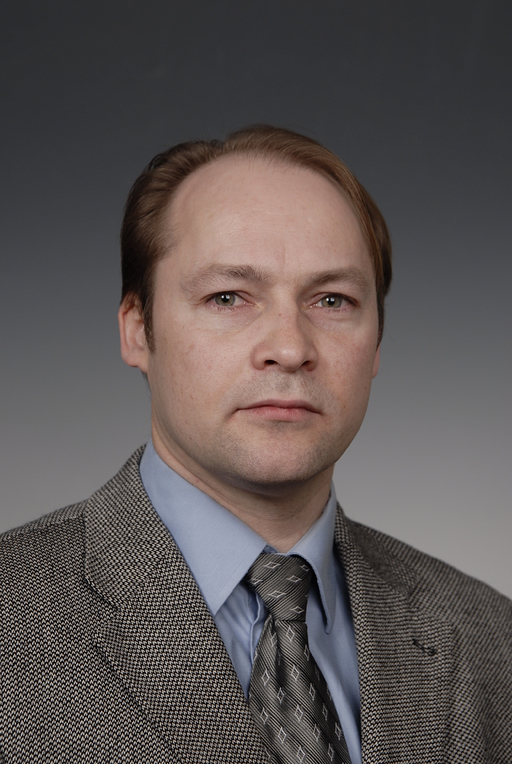
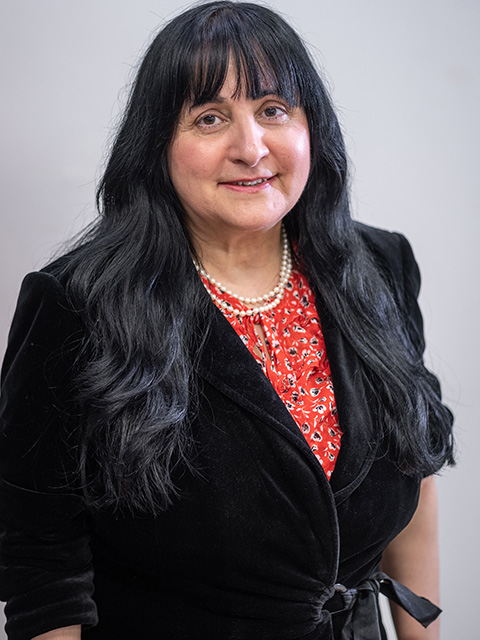
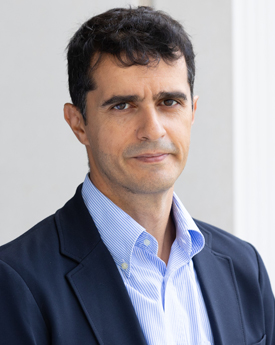
Elena Asparouhova is a Professor of Finance at the David Eccles School of Business , University of Utah. She holds a doctorate in Social Sciences from the California Institute of Technology and a Masters in Statistics from Sofia University , Bulgaria. Her research focuses on theoretical and experimental financial economics , including asset pricing theory , experimental finance , general equilibrium theory , and econometrics . Recent work examines financial market competition under delegation , information percolation in dark markets , and human-robot interaction in trading . Best Paper Award, Journal of Financial Markets (2025) Best Paper Award, Review of Finance (2024) Best Paper, Behavioral Finance and Capital Markets Conference, Australia (2025) Continuous National Science Foundation funding for 10+ years Contact: e.asparouhova@utah.edu , University of Utah, Salt Lake City, Utah 84112.
Guiru Nash Liu is a Global Professor in the Department of Materials Science and Engineering at the University of Arizona. She holds a PhD from Illinois Institute of Technology and has prior industrial experience as a senior experimental metallurgist at Progress Rail (Caterpillar Company) and as an adjunct professor at Illinois Institute of Technology. BS: Tianjin University, P.R. China MS: University of Southern California PhD: Illinois Institute of Technology (Materials Science and Engineering) Her research focuses on materials science and metallurgy , with specialization in corrosion, fatigue analysis, microstructural characterization, and alloy development . She has contributed to understanding fatigue failure in metallic components, environmental effects on crack propagation, and corrosion behavior in extreme conditions. Guiru Nash Liu's publications highlight expertise in corrosion kinetics, sintering mechanisms, alloy performance, and fatigue mechanics , particularly for titanium, copper, and steel alloys used in locomotive engines and aerospace applications. Fellow of ASM International (2020) Allan Ray Putnam Service Award (ASM International, 2022) Caterpillar CEO Award (2022) She has authored over 150 internal publications and 14 peer-reviewed works, served as a reviewer for the Journal of Materials Science and Journal of Metallography, Microstructure and Analysis , and was a founding member of the ASM International Failure Analysis Society.
Lorin D. Warnick is currently serving as the Austin O. Hooey Dean of Veterinary Medicine at Cornell University College of Veterinary Medicine. He is a tenured Professor in the Department of Population Medicine and Diagnostic Sciences, where his research focuses on the epidemiology of Salmonella infections and antimicrobial resistance in enteric bacteria affecting both domestic animals and humans. A key contributor to Cornell's response to the COVID-19 pandemic, he has led research on SARS-CoV-2 diagnostic testing and campus outbreak dynamics. Education : B.S. in Microbiology (1984) from Brigham Young University DVM (1988) from Colorado State University Ph.D. in Veterinary Medicine (Epidemiology) and Statistics from Cornell University (1994) Professional Experience : Assistant Professor (1994-1996) at Virginia-Maryland Regional College of Veterinary Medicine Assistant/Associate Professor (1996-2008) and Professor (2008-present) at Cornell University Section Chief in Ambulatory and Production Medicine (1997-1999) Research Interests span veterinary epidemiology, antimicrobial resistance, foodborne pathogens, and public health. His work connects animal and human health through One Health frameworks, particularly in Salmonella transmission dynamics between dairy cattle and humans. He has pioneered surveillance systems for infectious diseases, including the model used during Cornell's COVID-19 response. Scientific Awards include: Phi Zeta Veterinary Honor Society (1987) Phi Kappa Phi Honor Society (1988) Honorary Diploma from American Veterinary Epidemiology Society (2018) One Cornell Award for Leadership in Pandemic Testing (2021) Advising and Grants highlight his role in mentoring students and leading interdisciplinary research teams. His grants focus on antimicrobial resistance mitigation, dairy calf health, and pandemic response infrastructure. He has collaborated extensively with institutions like USDA and CDC on foodborne disease research. Labs and Collaborations include leadership in Cornell's Veterinary Diagnostic Laboratories and contributions to the American College of Veterinary Preventive Medicine. His work integrates epidemiological modeling, microbiome analysis, and policy development for sustainable agricultural practices.
Prof. Dr. Jürgen Biela serves as Full Professor at ETH Zurich within the Department of Information Technology and Electrical Engineering, where he leads the Laboratory for High Power Electronic Systems. His academic career at ETH Zurich has progressed from doctoral studies to his current position as head of his research laboratory, with significant contributions to power electronics research and education. Biela earned his diploma with honors from Friedrich-Alexander University in Erlangen, Germany in 2000 and completed his Ph.D. at ETH Zurich in 2005, both in electrical engineering. His educational background includes specialized work on resonant DC-link inverters at Strathclyde University and active control of series connected IGCTs at the Technical University of Munich. His research program focuses on multi-physics modeling, design and optimization of power electronic systems , with particular emphasis on applications for future energy distribution and transmission, pulsed power systems, and advanced medium voltage power electronics based on novel semiconductor technologies like silicon carbide (SiC). He also investigates integrated passive components for ultra-compact and ultra-efficient high-power converter systems, pushing the boundaries of power density and efficiency in electronic power conversion. Analysis of his recent publications reveals strong trends in high-frequency power conversion , with significant work on transformer and inductor design, insulation systems for medium-frequency applications, thermal management of power components, and advanced modeling techniques for electromagnetic phenomena. His research bridges fundamental electromagnetic theory with practical engineering applications, particularly in high-voltage and high-power scenarios where traditional approaches face limitations. As a prolific researcher, Biela has published over 85 journal papers and 210 conference papers while holding more than 35 patents. He serves as an Associate Editor for the IEEE Transactions on Power Electronics and regularly reviews for leading journals and conferences in the field. His work demonstrates consistent contributions to advancing power electronic systems through rigorous theoretical analysis combined with practical implementation. Biela has supervised numerous doctoral and master's students, with recent publications indicating active mentorship of researchers working on advanced power electronic components and systems. His laboratory at ETH Zurich serves as a hub for innovation in high-power electronics, with connections to industry research projects that translate theoretical advances into practical applications. Current research directions include developing cost-effective alternatives to traditional components like Litz wire, improving insulation systems for high-voltage applications, and creating more accurate models for predicting thermal and electromagnetic behavior in power electronic systems.
Heikki Remes serves as Associate Professor in the Department of Energy and Mechanical Engineering at Aalto University's School of Engineering, where he investigates high-performance steel structures for marine environments with emphasis on lightweight ship designs using advanced materials and manufacturing techniques. His research integrates fundamental fatigue and fracture mechanics with practical structural challenges, spanning from crystal-level material behavior to continuum-scale modeling. Key focus areas include welded joint integrity, additive manufacturing defects, and computational analysis of marine structures under extreme conditions. Recent publications reveal strong trends in fatigue assessment methodologies for complex welded geometries, experimental validation of distortion effects, and AI-enhanced damage prediction systems, reflecting his commitment to bridging theoretical mechanics with shipbuilding applications. Scientific Awards: Aalto Education Impact Award (2018) for establishing Marine Technology study programs SNAME Honorable Mention for 2018 Vice Admiral E. L. Cochrane Award Teaching Award of Aalto School of Engineering (2012) for educational tools No specific student advising or grant information appears in available sources, though his active publication record indicates ongoing research leadership. He contributes significantly to the Marine and Arctic Technology research group, driving projects on structural integrity assessment and advanced manufacturing solutions for next-generation marine vessels.
Hanna Eklof is an Associate Professor at Umeå University's Department of Applied Educational Science within the Faculty of Social Sciences. Her research focuses on educational psychology and assessment, particularly examining test-taking motivation in international large-scale assessments. Her primary research interests include: Educational Psychology and Assessment Test-taking Motivation and Effort Mathematics Anxiety and Performance Working Memory and Cognitive Processes Large-scale Educational Studies (PISA, TIMSS) Psychometric Methods and Validation Dr. Eklof's recent publications demonstrate a consistent focus on understanding how student motivation affects performance in international assessments, particularly examining response processes, questionnaire-taking behavior, and the relationship between cognitive factors and academic achievement. Her work often employs sophisticated psychometric methods including Item Response Theory and process data analysis to investigate test-taking behavior. Her scientific contributions include numerous publications in high-impact journals examining test-taking motivation across different cultural contexts, the development of assessment tools like the Swedish MARS-E for measuring mathematics anxiety, and investigations into how cognitive factors like working memory mediate relationships between anxiety and performance.
Professor Jonathan Herring serves at the Faculty of Law, University of Oxford with a focus on Medical Law and Ethics, Family Law, Criminal Law, and Vulnerability Theory . His work bridges feminist ethics of care with legal frameworks, challenging traditional individualistic approaches. DM Wolfe-Clarendon Fellow, Exeter College Editorial Board: Child and Family Law Quarterly Research Interests He investigates law's interaction with human relationships , emphasizing areas like domestic abuse as human rights violation , pregnancy regulation , mental capacity ethics , and dementia-related legal reforms . His Law Through the Life Course (2021) examines age-based legal assumptions. Publication Trends Recent works focus on obstetric violence (with Pickles), fragile X syndrome ethics (with Johnson), and revising sexual offense consent models . Articles span 2017-2025 , showing sustained engagement with vulnerability theory and relational legal philosophy . Teaching Contributions He instructs Criminal Law , Family Law , and Medical Law and Ethics for Oxford's BA Jurisprudence, plus Medical and Family Law BCL courses. Supervises DPhil topics across domestic abuse , obstetric violence , and trans parenthood .
Naranker Dulay is a Professor in the Department of Computing at Imperial College London, part of the Faculty of Engineering. He holds affiliations with the Centre for Cryptocurrency Research and Engineering, Centre for Smart Connected Futures, and the Distributed Software Engineering group. His research focuses on Distributed Computing, Applied Economics, Policy and Administration Law, Computer Software, and Information Systems. His work explores blockchain technologies, smart contracts, consensus algorithms, and distributed systems. Recent research includes optimizing post-trade processing using distributed ledgers and developing adaptive protocols for dispute resolution in smart contracts. He is also involved in cybersecurity and privacy-preserving technologies for data management. Key contributions include frameworks like Chainlog for logic-based smart contracts and FADE for self-destructing data. His articles span over a decade, emphasizing blockchain scalability, energy-efficient neural networks, and decentralized macro-programming in wireless sensor networks. Dr. Dulay collaborates across interdisciplinary domains, blending technical innovation with socio-technical challenges. His affiliations reflect a commitment to advancing smart connected futures through cutting-edge research.
Professor Mahroo Eftekhari is a Professor in Building Services Engineering at Loughborough University, leading the Low Energy Building Services Engineering MSc programme. Her research focuses on energy-efficient building systems, thermal comfort, HVAC optimization, and renewable integration. She has pioneered control systems for airports and buildings, including MPC-based strategies to reduce energy use while enhancing occupant well-being. Notable contributions include the development of BISPA (Building & Industrial Services Pipework Academy), a national center for BIM and pipework training. Education: Holds qualifications including CEng (Chartered Engineer), DPhil (Doctor of Philosophy), FCIBSE (Fellow of Chartered Institution of Building Services Engineers), and SFHEA (Senior Fellow of the Higher Education Academy). Her academic career is marked by collaborations with Tata Steel, Mitsubishi R&D, and Vexo, yielding applied research in sustainable building technologies. Research Interests: Indoor Air Quality, Thermal Comfort Modeling, Zero Energy Buildings, Digital Twins, and Advanced Control Systems. She has developed innovative solutions like AI-driven thermal management for Building Energy Management Systems (BEMS) and interfaces to synchronize airport operations with energy systems. Awards & Grants: Secured funding from diverse bodies for projects such as adaptive thermal comfort models, BISPA infrastructure, and energy-efficient HVAC strategies. Her work emphasizes practical applications, including reducing CO₂ emissions via airport terminal optimization and improving renewable energy use in buildings. Lab & Teams: Leads the Building Energy Research Group, managing projects in closed-loop heating systems, IEQ monitoring, and hydronic system efficiency. The Civil Engineering labs house interactive BIM rigs launched with institutional and industry support.
Dr. R. Michael Bagby is a Full Professor in the Departments of Psychology and Psychiatry at the University of Toronto Scarborough, and a Full Member of the Institute of Medical Sciences. He holds appointments in the Graduate Departments of Psychology, Psychological Clinical Science, and the Institute of Medical Sciences. His research focuses on psychopathology diagnosis, psychological assessment validity, personality’s role in depression treatment, and detection of non-credible responses in self-reports. He directs the Clinical Laboratory for Personality, Psychopathology, and Psychodiagnostics and collaborates with CAMH’s Clinical Research Department. Dr. Bagby is an editorial board member of several journals, including Psychological Assessment , and has received prestigious awards for his contributions to psychological assessment. He teaches courses in psychopathology, personality disorders, and forensic psychology at both undergraduate and graduate levels. His clinical practice specializes in forensic assessments and major depression treatment using eclectic approaches. Research Interests: Phenotypic structure and classification of psychopathology, particularly personality disorders Psychometric validation of assessment tools Personality as a mediator/moderator in depression treatment Strategies for detecting non-credible self-report responses Key Awards: APA’s Distinguished Assessment Psychologist Award SPA’s Bruno Klopfer Award for Lifetime Contributions Teaching and Clinical Work: Teaches courses in psychological assessment, psychodiagnosis, and forensic psychology. Maintains a small private practice in civil/criminal forensic evaluations. His treatment approach combines cognitive-behavioral and psychodynamic methods for depression. Labs and Affiliations: Director of the Clinical Laboratory for Personality, Psychopathology, and Psychodiagnostics at UofT. Collaborative Scientist at CAMH’s Clinical Research Department and Research Imaging Centre.
Professor Efthymios Pavlidis is a faculty member in the Department of Economics at Lancaster University Management School (LUMS). He holds the rank of Professor and specializes in macroeconomics, international finance, and time series econometrics. His research focuses on housing market dynamics through collaborations like the International Housing Observatory (with the Federal Reserve Bank of Dallas) and the UK Housing Observatory. He is a Fellow of the Higher Education Academy, reflecting his commitment to academic excellence in teaching and research. His research interests include speculative bubble detection, real estate price forecasting, and testing parity conditions in financial markets. Pavlidis actively supervises PhD students in applied time series econometrics, emphasizing practical applications in financial markets and housing economics. He is involved in numerous academic activities, including organizing conferences and workshops such as the Dynare Conference and the Lancaster Economics Seminar. Key contributions include developing econometric methods for detecting market exuberance and analyzing real exchange rates. His work bridges theoretical econometrics with practical policy implications, particularly in housing and energy markets. Pavlidis collaborates internationally, evidenced by his participation in global academic networks and institutions like the European Economic Association and the Royal Economic Society. His teaching includes the course ECON222 Intermediate Macroeconomics I, and he maintains an office in the Management School (B015), with weekly office hours on Tuesdays. A comprehensive overview of his research and projects is available at his personal webpage: https://sites.google.com/view/etpavlidis/ .
Prof. Coen Teulings is a Professor of Economics at Utrecht University's Department of Economics, part of the Law, Economics, Governance and Organisation faculty. He holds concurrent roles as a Fellow at CEPR, IZA, and CES-Ifo. Previously, he served as Professor of Economics at the University of Cambridge (2013–2017) and part-time Professor at the University of Amsterdam (2004–2017). His professional history includes seven years as President of the Netherlands Bureau for Economic Policy Analysis (CPB), CEO of SEO Economic Research (2004–2006), and Director of the Tinbergen Institute (1998–2004). Teulings earned a Master's degree in Economics (cum laude, 1985) and a PhD (1990) from the University of Amsterdam. He has advised governmental and international bodies, including the Dutch House of Commons Economic Advisors and the UK's Office for Budget Responsibility. His research focuses on labor economics, macroeconomics, urban economics, and policy analysis, with notable work on minimum wages, income inequality, and secular stagnation. He co-edited the 2014 E-book on Secular Stagnation with Richard Baldwin. Teulings' recent publications address topics like agglomeration effects, urban retail dynamics, and wealth distribution. He contributes to policy debates through roles on the AFM Capital Markets Committee and supervisory boards of institutions like the Boekmanstichting. His ancillary activities include a biweekly column in the Financial Daily (FD) and academic governance roles in the Netherlands and Europe.
Claire Acevedo is an Assistant Professor in the Department of Mechanical and Aerospace Engineering at the University of California San Diego (UCSD), affiliated with the Jacobs School of Engineering. Her lab, the Fracture and Fatigue of Skeletal Tissues Laboratory (F² Lab), focuses on understanding mechanisms of deformation, fracture, and biological responses in skeletal tissues and biomaterials across molecular to macro scales. She holds a Ph.D. from the Swiss Federal Institute of Technology Lausanne (EPFL) and completed postdoctoral research at UC San Francisco and UC Berkeley/Lawrence Berkeley National Laboratory. Dr. Acevedo’s research is funded by the National Science Foundation (NSF), National Institutes of Health (NIH), and the Advanced Light Source. Her work bridges biomechanics, materials science, and high-energy X-ray physics to address bone fragility in aging and diabetes. Key projects include investigating collagen cross-linking effects on bone mechanics and developing novel imaging techniques like deep learning-enhanced synchrotron micro-CT. Education: Ph.D., Swiss Federal Institute of Technology Lausanne (EPFL) Postdoctoral Research: UC San Francisco & UC Berkeley/Lawrence Berkeley National Lab Previous Faculty Position: University of Utah (Mechanical Engineering) Recent contributions include the NSF CAREER Award for studying fracture mechanisms in fragile bones and an NIH R21 grant to explore collagen-level diabetes impacts. Her lab collaborates with the University of Utah Tanner Dance Program to develop K-12 educational initiatives linking dance with biomechanics. Publications span topics like synchrotron imaging innovations, diabetes-induced bone fragility, and collagen nanomechanics. Students in her lab have contributed to advancements in fatigue testing, cross-link analysis, and imaging algorithms. Awards: NSF CAREER Award (2024) NIH R21 Grant (2023) Alice L. Jee Award (2022) Nikon Small World Image of Distinction (2024) The F² Lab hosts a dynamic team with ongoing projects on glycemic effects, synchrotron techniques, and biomaterial design. Future work emphasizes translating findings into clinical fracture prevention strategies and educational outreach.
Professor Kourosh Kalantar Zadeh is the Head of School of Chemical and Biomolecular Engineering at the University of Sydney. He also holds adjunct professorships at UNSW and RMIT. His research focuses on sensors, nanotechnology, liquid metals, and medical devices. He has over 500 publications and is a member of prestigious editorial boards. **Awards**: Includes AAAS Fellowship (2021), Robert Boyle Prize (2020), Walter Burfitt Prize (2019), and multiple Clarivate Highly Cited recognitions. His work has been featured in over 350 media outlets, including BBC, Time Magazine, and Nature. **Research**: Innovations include ingestible gas-sensing capsules, smart paints, and liquid metal-based catalysis. Supervises 10 PhD students in areas like functional materials and medical devices. **Grants**: Leads ARC Laureate Fellowship projects on liquid metals and NHMRC grants for gut metabolite sensing. Part of the ARC Centre of Excellence in Future Low-Energy Electronics. **Engagement**: Media engagements highlight breakthroughs in sensors, liquid metals, and environmental technologies. Collaborates across disciplines to translate research into practical applications.
Li Song is a Professor and holds the Lesch Centennial Chair & Lloyd G. and Joyce Austin Presidential Professor at the University of Oklahoma's Aerospace & Mechanical Engineering Department. He leads the Building Energy Efficiency Lab and serves as AME Associate Director for Research. His expertise spans building energy systems, HVAC optimization, and fault detection technologies. Education: Ph.D. (Thermal/Fluid Science, 2004) from University of Nebraska-Lincoln; M.S. (Thermal/Fluid Science, 1996) from Harbin Institute of Technology; B.S. (Thermal Energy Systems, 1993) from Shengyang University of Civil Engineering and Architecture. Research focuses on energy-efficient HVAC systems, fault detection algorithms, and building performance analytics. Notable contributions include the ULEM-FDD system for high-performance buildings and virtual sensor technologies for airflow/water flow measurement. Awards include the ConocoPhillips Energy Prize (2011 finalist) and Bes-Tech Innovation Award (2006). Publications emphasize HVAC control strategies, energy modeling, and IoT-enabled diagnostics. Courses taught include Thermodynamics, Energy Efficient Building Systems Design, and HVAC Systems Engineering.