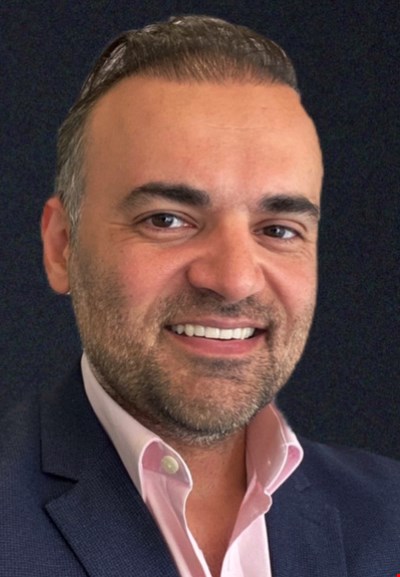
Dr Georgios Batsakis is a Reader in International Business & Economics at Brunel Business School, Brunel University London. His research and teaching focus on internationalization processes of multinational enterprises (MNEs), strategic management, and digitalization in global markets. PhD in Management Studies (2014) - Brunel Business School MSc in Business Economics (2010) - Erasmus School of Economics BSc in Business Administration (2006) - University of The Aegean, School of Business His research spans international business, examining temporal dimensions of MNE internationalization, product/geographic diversification, foreign market entry modes, and the impact of digitalization on global operations. He has published extensively in top journals like the Journal of International Business Studies and Global Strategy Journal , with recent work highlighting the intersection of digital transformation and international diversification. Scientific recognitions include Poets&Quants' Best 40-Under-40 Business School Professors in 2022 and Fellowship of the Higher Education Academy (2019). He serves as Track-Chair for academic conferences and ad-hoc reviewer for leading journals. Advisor to pre-seed startups in Greece on business model formulation Mentor and judge in global startup competitions (e.g., VISA Innovation Program, Disrupt Greece)
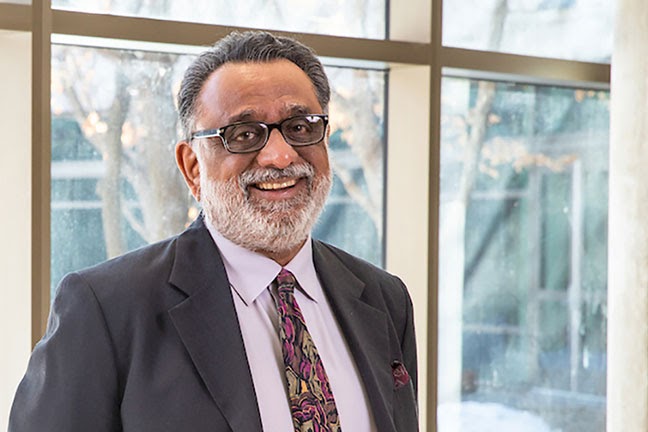
Prof. Tine De Moor is a leading scholar at Rotterdam School of Management, Erasmus University Rotterdam , holding the Chair of Social Enterprise and Institutions for Collective Action . With a PhD in History from Ghent University (2003), she specializes in long-term institutional analysis of collective action across historical and modern contexts. Department of Business-Society Management ERIM Research Member Former Utrecht University Professor (2012-2020) Research Focus: Her work examines institutions for collective action from medieval commons to modern cooperatives, with key contributions to understanding energy cooperatives, citizen collectives, and social enterprises. She leads innovative citizen science projects and investigates labor market participation patterns over the past millennium. Publication Trends: Recent articles focus on platform cooperatives in the gig economy , energy prosumerism motivations , and institutional grammar applications . She explores paradoxes in cooperative governance and develops computational models for historical institutional analysis. Awards & Grants: Recipient of prestigious honors including ERC Starting Grant NWO-VIDI Grant International Association for Study of the Commons Leadership Advising & Collaboration: She has co-authored with scholars like Daan van Weeren and David Bunders, with significant citations in environmental and social science domains. Her work informs policy on collective resource management and sustainable transitions. Labs & Teams: Founding editor of the International Journal of the Commons , she leads the CollectieveKracht knowledge platform and collaborates with Triodos Bank stakeholders. Her research integrates GIS, archival analysis, and agent-based modeling.
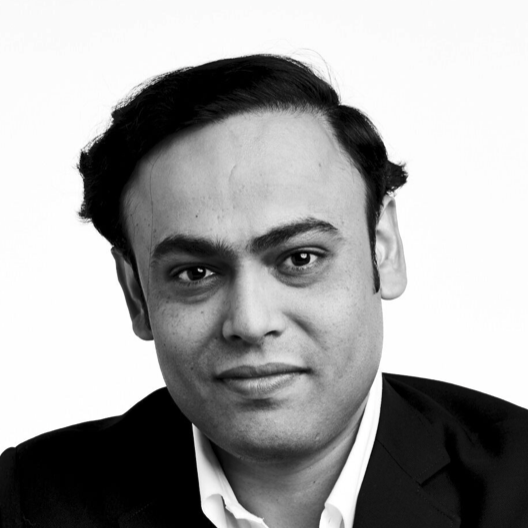
Akshay R. Rao is a Professor and General Mills Chair in Marketing at the University of Minnesota's Carlson School of Management . He holds a PhD in Marketing from Virginia Tech and has served as founding Director of the Institute for Research in Marketing (2005-2010) and Chairman of the Marketing & Logistics Management Department (2003-2006). Rao has also held visiting positions at MIT and Hong Kong University of Science & Technology. Bachelor of Arts in Economics (Honors), Madras University (1978) Master of Business Administration in Marketing, XLRI - Xavier School of Management (1980) Doctor of Philosophy in Marketing, Virginia Polytechnic Institute and State University (1986) Rao's research spans consumer behavior, pricing strategy, brand management , and political marketplace segmentation , with recent work examining vaccine hesitancy , political ideology effects on consumer behavior , and fake news dynamics . His work appears in top journals including Journal of Consumer Research , Journal of Marketing , and Harvard Business Review , covering topics from neuromarketing to information economics . Scientific recognition includes: Robert Ferber Award (1987) Harold Maynard Award (2000) Distinguished Alumnus, XLRI (2011) He has testified before the Federal Trade Commission and served on editorial boards of Journal of Consumer Research and Journal of Marketing . Beyond academia, Rao consults for global firms like 3M and Medtronic, and has conducted the Minnesota Orchestra twice in 2024-2025.
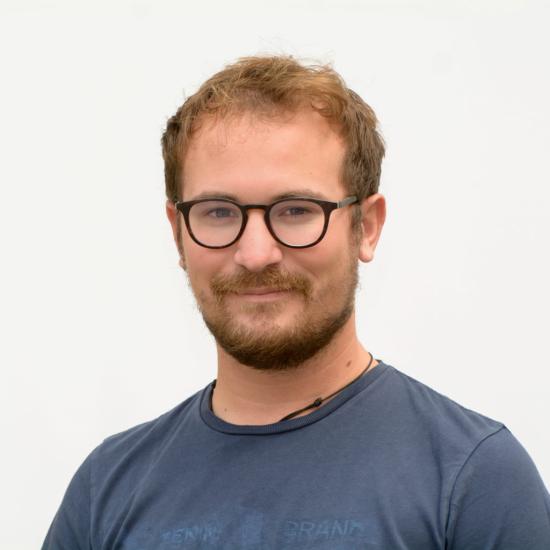
Kimberly A. Whitler serves as the Frank M. Sands Sr. Associate Professor of Business Administration at the University of Virginia's Darden School of Business. With nearly 20 years of industry experience in general management, strategy, and marketing roles within CPG and retailing sectors, she brings practical expertise to her academic work. Her career includes significant positions at Procter & Gamble, Aurora Foods, David's Bridal, and PetSmart, where she helped build $1B+ brands including Tide, Bounce, Downy and Zest. Dr. Whitler's educational background includes: B.A. in psychology and business administration from Eureka College MBA from the University of Arizona, Eller School of Business M.S. and Ph.D. from Indiana University, Kelley School of Business Whitler is an authority on marketing strategy, brand management, and marketing performance, with particular expertise in understanding how a firm's marketing performance is affected by its C-suite and board. Her research focuses on C-level marketing management challenges, digital marketing transformation, employer branding, and the emerging field of athlete branding through NIL (Name, Image & Likeness). She has authored over 350 articles as a Forbes senior contributor and published in top journals including Harvard Business Review, Journal of Marketing, and Journal of the Academy of Marketing Science. Her award-winning publications demonstrate a consistent progression from traditional brand management topics toward more strategic considerations of marketing's role at the executive and board levels. Recent work examines digital transformation, brand purpose, and the evolving CMO role, reflecting her deep understanding of how marketing strategy intersects with organizational leadership. Whitler has received numerous professional accolades: Ranked as a Top Influencer of CMOs Named Favorite Professor of Top MBA Students in Poets and Quants Winner of Darden's Morton Award in 2018 and 2021 Finalist for Journal of Marketing's 2018 MSI/Paul H. Root Award Winner of 2017 Robert D. Buzzell Best Paper award Winner of 2020 Sheth Foundation Award As an active consultant and speaker, Whitler has worked with numerous C-level organizations including Coca-Cola, McDonald's, U.S. Department of Defense, and Gartner. She has been cited over 3,600 times in major media outlets including Wall Street Journal, New York Times, and Bloomberg, establishing herself as a leading voice in marketing strategy. Her industry experience informs her teaching and research, creating a valuable bridge between academic theory and practical application. Whitler leads research initiatives focused on marketing leadership and brand strategy, often collaborating with industry partners to ensure practical relevance of her work. Her recent projects include examining the impact of marketers on corporate boards and developing frameworks for effective marketing technology implementation, positioning her at the forefront of strategic marketing research.
Sanford E. DeVoe is a Professor of Management and Organizations at UCLA Anderson School of Management. He currently serves as Senior Associate Dean of MBA Programs and teaches leadership foundations to Full-Time, Fully Employed, and Executive MBA students. Ph.D. in Organizational Behavior, Stanford University (2007) B.A. in Psychology with High Honors, Swarthmore College (2000) DeVoe's research explores the psychological impacts of monetizing time, including trade-offs between time and money, workplace stress, and societal well-being. His work uses experimental and survey methods to analyze how organizations can improve quality of life through behavioral interventions. His recent scholarly trends examine temporal psychology in organizational contexts, financial impatience, and stressor mitigation in service industries. Articles span behavioral economics, consumer culture analysis, and time-use optimization. Excellence in Teaching award (6 times) Dean’s Award for Excellence in Research (2011, Rotman School of Management) Featured in top media outlets like New York Times , Economist , and Wall Street Journal DeVoe has served as Senior Editor at Organization Science and sits on editorial boards of leading management journals. He actively bridges academic research with public discourse through media engagements and advisory roles.
Dr James Herbert-Read is an Associate Professor and Whitten Lecturer in Marine Biology at the Department of Zoology, University of Cambridge. He serves as Deputy Head of Department (Postgraduate Education) and leads the Marine Behavioural Ecology Group. His research focuses on understanding how animals, particularly marine organisms, collect and process information from their environments to make behavioral decisions, with emphasis on social interactions, adaptation mechanisms, and ecological constraints. His group employs theoretical frameworks, controlled experiments, and quantitative field studies to investigate behavioral diversity in marine species. Key themes include collective behavior, predator-prey dynamics, camouflage strategies, and the impacts of environmental stressors on animal decision-making. Recent publications highlight work on lionfish vocalization mechanisms, cuttlefish camouflage, citizen science applications in marine research, and behavioral responses to visual and acoustic noise. Scientific awards and affiliations include: Whitten Lecturer in Marine Biology Associate Professor, University of Cambridge He has supervised research projects on topics such as: Social attraction in invasive fish species Evolution of coordinated movement Neurophysiological basis for leadership in shoals Maternal effects on offspring exploration
Saurabh Amin is a Professor in the Department of Civil and Environmental Engineering at the Massachusetts Institute of Technology (MIT), where he also serves as the Edmund K. Turner Professor and Undergraduate Officer. He is a Principal Investigator at the Laboratory of Information and Decision Systems and holds affiliations with the Operations Research Center and the Center for Computational Science and Engineering. His educational background includes: B.Tech. 2002, Indian Institute of Technology (IIT) Roorkee M.S. 2004, University of Texas (UT) Austin Ph.D. 2011, University of California (UC) Berkeley Saurabh Amin's research focuses on the design and control of infrastructure systems using game theory and optimization in networks. His work spans three main areas: resilient network control, information systems and incentive design, and optimal resource allocation in large-scale infrastructure systems. By concentrating on critical infrastructure domains including highway transportation, electric power distribution, and urban water networks, his research develops innovative theory and tools to enhance system performance against both stochastic and adversarial disruptions. His approach involves modeling cyber-physical interactions in infrastructures to assess vulnerabilities, developing detection and response tools for failures at various scales, and designing economic incentive schemes that improve aggregate public good while accounting for dependencies and private information among strategic entities. Amin's work bridges mathematical systems theory with practical civil engineering applications, creating a rigorous theoretical foundation for infrastructure resilience that addresses diverse failure mechanisms from natural disasters to deliberate malicious actions. His recent publications demonstrate a strong focus on decarbonization of energy systems, resilient infrastructure planning under climate uncertainty, optimization methods for complex networked systems, and game-theoretic approaches to sustainable infrastructure management. His work increasingly integrates artificial intelligence and machine learning techniques with traditional control theory to address contemporary challenges in infrastructure resilience and sustainability. The research shows a clear trajectory toward addressing climate change impacts on infrastructure systems while maintaining economic efficiency and operational reliability. Professor Amin has received numerous prestigious awards and honors: Common Ground Excellence in Teaching Award, 2025 HSCC Test-of-Time Award, 2024 MIT CEE, Distinguished Service and Leadership Award, 2023 Samuel M. Seegal Prize (SoE) – inspiring students in pursuing and achieving excellence, 2022 Earll M. Murman for Excellence in Undergraduate Advising, 2022 C3.ai Digital Transformation Institute Research Award, 2020 MIT, Ole Madsen Mentoring Award, 2020 MIT, Energy Initiative Research Award, 2020 National Academy of Engineering, China-America Frontiers of Engineering Symposium speaker, 2019 MIT, Robert N. Noyce Career Development Professor, 2015-2018 Google Faculty Research Award, 2015 National Science Foundation CAREER Award, 2015 Siebel Energy Institute Research Award, 2015 MIT, Solomon Buchsbaum AT&T Research Fund Award, 2012 Professor Amin has been actively involved in significant research projects including the C3.ai DTI project on Causal Reasoning for Real-Time Attack Identification in Cyber-Physical Systems and another on Learning in Routing Games for Sustainable Electromobility. He serves as the chief scientist on multi-institutional NSF grants, including the $9 million Foundations of Resilient Cyber-Physical Systems (CPS) project. His teaching portfolio includes courses such as 1.008 Engineering for a Sustainable World, 1.104 Sensing and Intelligent Systems, 1.020 Engineering Sustainability: Analysis and Design, and 1.208 Resilient Networks. As Undergraduate Officer, he plays a key role in shaping the educational experience for civil and environmental engineering students at MIT. Professor Amin leads the Resilient Infrastructure Networks Lab at MIT, where his team develops theoretical foundations and practical tools for infrastructure resilience. The lab focuses on the intersection of control theory, game theory, and optimization applied to cyber-physical infrastructure systems. Current research directions include pandemic-resilient urban mobility and hurricane-resilient smart grid operations, reflecting the lab's commitment to addressing pressing societal challenges through rigorous systems engineering approaches.
Maxime Menuet is a Professor of Economics at Université Côte d'Azur (GREDEG) and a Research Associate at IPAG Business School in Paris. His academic credentials include a PhD in Economics and dual M.Sc. degrees in Macroeconomics/Finance and Mathematics from the University of Orléans, complemented by a 2023 HDR (Habilitation à Diriger des Recherches) from Paris VIII. 2023: HDR in Economics, Paris VIII 2018: PhD in Economics, University of Orléans 2015: M.Sc in Macroeconomics and Finance, University of Orléans 2015: M.Sc in Mathematics (Theoretical Probability), University of Orléans His research focuses on Economic Theory and Political Economy , with specialized expertise in public debt , macroeconomic stability , conflict dynamics , and interdisciplinary intersections with theology and history . Recent work explores environmental sustainability through fiscal policy, ideological clashes in macroeconomic governance, and historical economic thought from Jansenist perspectives. Maxime's publications since 2023 show strong interdisciplinary trends, blending theological analysis with economic modeling (e.g., New Testament debt language), refining game-theoretic conflict models , and advancing ecological macroeconomic frameworks for sustainable debt management. ANR Young Researcher Grant Best Paper Award, TIMTED Conference Visiting Scholarships: Duke University, Osaka University, UCAM Montreal As Deputy Director of EUR ELMI and co-director of the European Research Group on Money, Banking, and Finance, he leads major interdisciplinary initiatives. His teaching portfolio mirrors his research, covering economic theory, political economy, and debt/conflict dynamics.
Sarah Shirazyan is a Lecturer in Law at Stanford Law School , where she designed the Interpol-Stanford Policy Lab. She also serves as Director and Head of Meta's GenAI Product Policy work, overseeing responsible AI development across Meta's platforms. Doctor of Juridical Sciences (J.S.D.) from Stanford Law School LL.M. from SOAS/UCL, University of London Her research focuses on the intersection of national security , public policy , and international law , particularly examining: Effectiveness of UN Security Council responses to WMD terrorism Framework for regional organization collaboration in WMD prevention Platform content policy development and misinformation governance Responsible AI implementation under legal frameworks Key publication themes include: Platform algorithmic accountability Media capture in digital domains Content policy development during crises UN Security Council institutional limitations Regional organization synergies in security Recipient of Gerald J. Lieberman Award for research, teaching, and community service Professional affiliations: Stanford Law School Stanford Center for International Security and Cooperation (CISAC) INTERPOL European Court of Human Rights Council of Europe United Nations
Alexandra Paige Fischer is an Associate Professor at the University of Michigan School for Environment and Sustainability (SEAS) . Her research focuses on the human dimensions of environmental change , with emphasis on climate change adaptation , wildfire risk governance , and collective action in forested ecosystems . She collaborates with interdisciplinary teams and serves as a contributing author to the IPCC Sixth Assessment Report . PhD, Oregon State University (Forest Resources Social Science) MS, Oregon State University (Forest Resources Social Science) BA, Hampshire College (Cultural Anthropology) Her research integrates theories from natural resource sociology and human-environment geography , employing qualitative interviews , quantitative surveys , and social network analysis . She leads the Western Forest and Fire Initiative and investigates socio-ecological systems in fire-prone regions and coastal communities. Her work spans the U.S. West and Chile , where she explores global wildfire challenges and flammable plantation impacts. Recent publications highlight her contributions to climate adaptation frameworks , collective risk mitigation , and socio-ecological network analysis . She has received recognition as a Fulbright Scholar and leading fire science researcher . Fulbright Scholar, Facultad de Ciencias Forestales y Recursos Naturales, Universidad Austral de Chile 50 Female Leading Scholars in Fire Science Grants include USDA Forest Service projects on climate change impacts on family forestlands and forestry responses to climate change . She actively contributes to Nature Sustainability , Global Environmental Change , and serves as Associate Editor for Ecology and Society and Frontiers in Climate .
Steffi Haag is a Professor of Digital Innovation and Entrepreneurship at the Institute of Computer Science , Heinrich Heine University Düsseldorf (HHU) . She bridges the Faculty of Mathematics and Natural Sciences and Faculty of Business Administration and Economics , collaborating with the Center for Entrepreneurship Düsseldorf (CEDUS) to inspire tech startups. Her research focuses on sustainable information systems, digital experiences, and business models. Steffi Haag’s research integrates Shadow IT , Usable Cybersecurity , and Digital Idea Management . Her work emphasizes theoretical , quantitative , qualitative , and mixed-methods research , including experimental and survey methodologies. Steffi Haag’s publications (2018–2024) span Information Systems , Cybersecurity , Digital Twins , and Sustainable Design . Common themes include Shadow IT dynamics , user behavior in security , and innovation management . Hermann Gutmann Award for special scientific achievements (2023) Schöller Fellow (2020) HMD Best Paper Award (2018) Research Award in Data Protection and Data Security (2017) Dissertation Prize (2017) Steffi Haag has secured grants such as the TU Darmstadt Postdoctoral Fellowship for Female Researchers (2016–2018) and Deloitte Foundation Fellowship (2009–2011). She actively moderates conferences and serves as Associate Editor of Business & Information Systems Engineering .
Ali Lazrak is an Associate Professor at the Sauder School of Business , University of British Columbia , specializing in Finance . He holds the Peter Lusztig Professorship in Finance and teaches courses such as International Financial Markets and Institutions and Theory of Finance (2024-2025). His research bridges Political Economy , Asset Pricing , and Behavioral Finance , with a focus on ESG concerns , Voting Theory , and Time Inconsistency . Education: ENSAE (B.Sc.), Sorbonne (M.Sc.), Toulouse (Ph.D.) Contact: Henry Angus Building (HA 872), +1 604.822.9481, ali.lazrak@sauder.ubc.ca His work explores group decision-making in corporate investment, green finance (e.g., the green premium in ESG markets), and time-inconsistent preferences in continuous games. Recent publications highlight how responsible consumption and demand elasticity shape asset prices, and how institutional divestiture impacts harmful asset stranding through informational and economic channels. Scientific accolades include the Jacob Gold & Associates Best Paper Prize (2019), Best Paper Awards at HEC-McGill, UBC, Luxembourg, and Stanford conferences, and the Peter Lusztig Professorship . His methodological expertise spans stochastic control , recursive utility , and dynamic equilibrium analysis .
Jennifer Curtis is a Full Professor in the School of Physics at Georgia Institute of Technology and serves as an ADVANCE Professor for the College of Sciences. Her research focuses on the physics of cell-cell and cell-extracellular matrix interactions, particularly within glycobiology and immunobiology contexts. Dr. Curtis earned her Ph.D. in Physics from the University of Chicago (2002) and her B.A. in Physics from Columbia University (1997). Her research interests span biophysics at interfaces, quantitative modeling of collective cellular interactions, cell mechanics, motility, adhesion, and the role of bulky sugars in tissue organization. Her laboratory investigates collective and single cell migration, immunophage therapy (combining immune cells with phages to combat bacterial infections), and molecular biophysics of hyaluronan synthase. Recent work demonstrates applications in soft materials, biomaterials, tissue engineering, and advanced characterization techniques. Analysis of her publication record reveals consistent focus on glyco-biophysics and cellular mechanics, with increasing emphasis on microbial communities and therapeutic applications. Her work bridges physics, biology, and engineering through interdisciplinary approaches. Honors include the NSF CAREER Award (2010), Georgia Tech College of Sciences Faculty Mentor Award (2015), and Cullen Peck Award (2020). She serves on the Biophysical Journal editorial board. Dr. Curtis actively mentors students through the Georgia Tech Physics REU program (which she directs) and collaborates with biologists, chemists, and materials scientists. Her laboratory maintains strong partnerships with institutions including Emory University and international collaborators. The Curtis Lab operates the Cell Physics Laboratory in the Molecular Science & Engineering Building, utilizing advanced techniques including holographic optical tweezers, thermochemical nanolithography, and single-molecule imaging to study cellular mechanics and polymer physics at biological interfaces.
Professor Sir Nigel Shadbolt is Principal of Jesus College Oxford and Professor of Computing Science at the University of Oxford. He is Chairman and Co-founder of the Open Data Institute which he established with Sir Tim Berners-Lee. His career spans multiple prestigious institutions including the University of Southampton and University of Nottingham, where he held leadership roles in AI research. He has served in significant government advisory positions including as Information Advisor to the UK Prime Minister and member of the Public Sector Transparency Board. Nigel Shadbolt earned his undergraduate degree in Philosophy and Psychology from the University of Newcastle (1st Class Honours, 1978) followed by a PhD in Artificial Intelligence from the University of Edinburgh. His academic journey includes positions as the Allan Standen Professor of Intelligent Systems at Nottingham and leadership of the Web and Internet Science Group at Southampton before joining Oxford. Shadbolt's research spans the interdisciplinary field of Web Science, which he helped originate, focusing on human-centered AI, social machines, open data, and ethical considerations in technology. His work examines how humans and computers integrate at web scale to create novel applications, with recent emphasis on children's digital autonomy and privacy. He has published over 500 articles exploring topics from cognitive psychology to computational neuroscience, Artificial Intelligence to the Semantic Web. His notable contributions include the development of data.gov.uk and leadership in establishing Oxford's Institute of Ethics in AI. His 2018 book 'The Digital Ape: how to live (in peace) with smart machines' has been described as a 'landmark book' in the field. Knighted in 2013 for services to science and engineering Fellow of The Royal Society (FRS) Fellow of the Royal Academy of Engineering (FREng) Fellow of the British Computer Society (FBCS) Technology Pioneer status by the Davos World Economic Forum UK national BT Flagship IT Award As an advisor, Shadbolt has supervised numerous PhD students who have gone on to positions at Google DeepMind, the World Bank, and other prestigious institutions. His research has been supported by multiple grants including SOCIAM, KOALA, and ReTiPS projects. He co-founded Garlik Ltd, which was acquired by Experian, demonstrating his commitment to translating research into practical applications that benefit society. Shadbolt leads the Web and Internet Science research group at Oxford, focusing on social machines - applications that succeed at web scale by integrating humans and computers in novel ways. His work on the KOALA Hero Toolkit and CHAITok system addresses critical challenges in children's data autonomy on social media platforms, reflecting his commitment to ethical technology design.
Dustin Tingley is a Professor of Government at Harvard University and holds a joint appointment at the Harvard Kennedy School of Public Policy . He serves as Interim Vice Provost for Advances in Learning and directs the Data Science and Technology Group and the Harvard Initiative on Learning and Teaching . He earned a PhD in Politics from Princeton and a BA in political science and math from the University of Rochester. Key Roles : Deputy Vice Provost (past), Chair of Harvard's Standing Committee on Climate Education Research Focus : Climate change politics, data science, causal inference, and international political economy His recent work explores the political economy of climate transitions , public opinion on carbon policies , and machine learning applications in social sciences . He co-founded ABLConnect , a repository for active learning pedagogy, and organized conferences on causal mechanisms , teaching with AI , and equitable classrooms . Awards : Gladys M. Kammerer Award (2015) for co-authored book Sailing the Water’s Edge Notable Publications : Uncertain Futures: How to Unlock the Climate Impasse (2023, with Alex Gazmararian) The Political Economy of the Clean Energy Transition (2025)