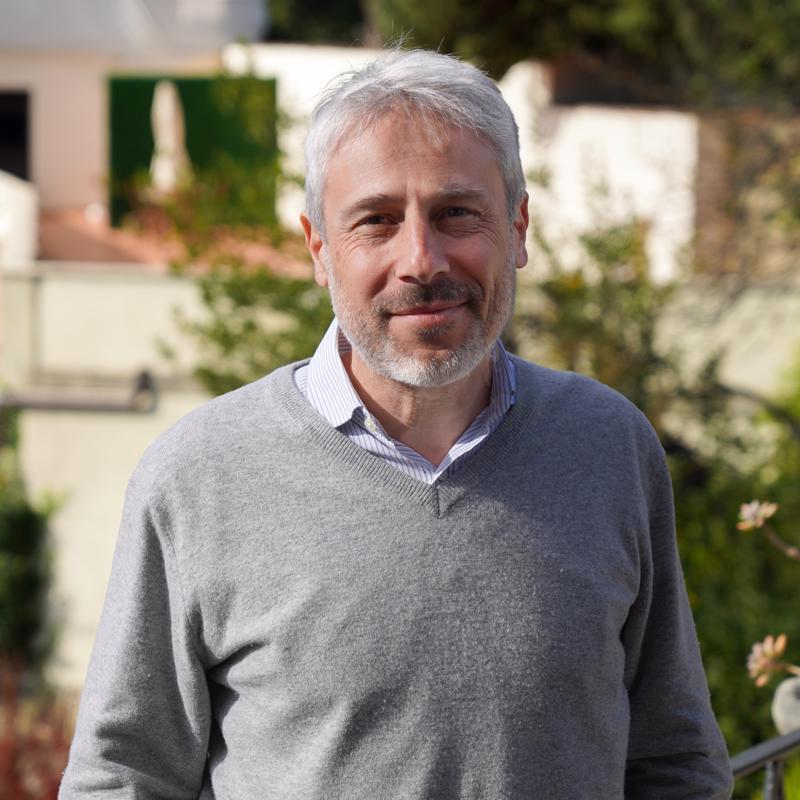
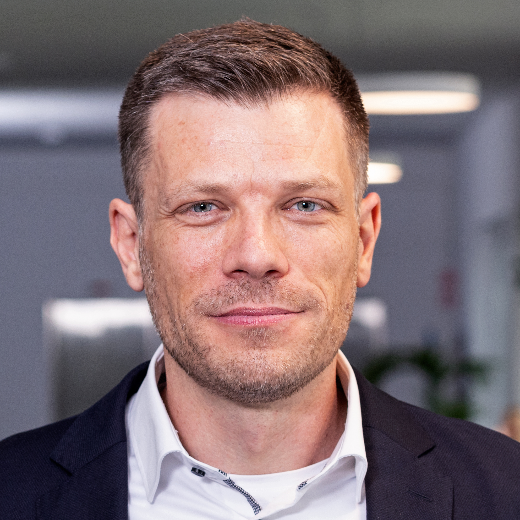
Sara Zaniboni is an Associate Professor in Work and Organizational Psychology at the University of Bologna's Department of Psychology 'Renzo Canestrari'. Her research focuses on workplace diversity, age-related issues, and organizational inclusion. She holds a PhD and has led international research initiatives, including the 'Age in the Workplace Meeting' conference. Her work bridges psychological theory with practical applications, addressing challenges like age discrimination, mental health, and work design. She has contributed to EU and national grants (e.g., PRIN, PNRR), and serves on editorial boards such as Work, Aging and Retirement . Awards include the 2015 outstanding paper award and 2018 outstanding author contribution award. She has held visiting roles at institutions like ETH Zurich and the University of Essex, emphasizing global collaboration. Her research explores how organizational policies can enhance diversity outcomes, reduce stereotypes, and support older workers. Key areas include uncertainty mindset development, workaholism effects, and workplace accommodations for people with mental health challenges. She advocates for policies promoting sustainable careers and inclusive work environments. Key Projects: LeverAge (EU network), Age in the Workplace Meeting Grants: PRIN, PNRR, EU grants International Collaboration: Visiting positions at 6+ universities, including ETH Zurich Editorial Roles: Work, Aging and Retirement , among others
Agar Brugiavini is a Full Professor at Ca' Foscari University of Venice's Department of Economics with significant institutional roles including Member of the Steering Committee of the Ca' Foscari International College, Ethics Committee member, and Coordinator of the Master's Degree Programme in Data Analytics for Business and Society. Her research focuses on: Economics of aging and retirement systems Social security policy evaluation Health economics and long-term care Labor market dynamics for older workers Impacts of demographic changes on social policies Her recent publications demonstrate strong emphasis on pandemic impacts on labor markets, social care systems, and elderly populations, with methodological approaches spanning econometric analysis of survey data and cross-national comparative studies. The research shows consistent focus on vulnerable populations and policy-relevant outcomes. Dr. Brugiavini maintains active research collaborations as evidenced by multi-country studies using SHARE survey data and participates in key academic leadership positions within her institution.
Fabio Sabatini is a Full Professor of Political Economy at Sapienza University of Rome and a Research Fellow at the Institute of Labor Economics (IZA). His work focuses on the intersection of communication technologies, social capital, and political behavior. He teaches Political Economy and Economics of Sustainable Development, and actively engages in public discourse through Substack newsletters like The Civic Economist . His research explores how digital media shapes societal values, economic outcomes, and political preferences. Notable themes include the behavioral impacts of social media, the role of social capital in crises, and the geopolitical tensions between the US and EU under Trump's administration. Sabatini critiques policies that undermine academic freedom and democratic institutions, frequently analyzing authoritarian trends in global governance. He maintains an extensive publication record with over 50 papers in peer-reviewed journals, focusing on topics like terrorism radicalization, disaster politics, and digital economy effects. His work bridges theoretical frameworks with empirical analysis, often addressing contemporary policy challenges. Sabatini's academic networks include collaborations with institutions like the European Commission and IZA. His Substack articles and social media activity reflect a commitment to public engagement, translating complex economic concepts for broader audiences while critiquing populist policies and advocating for evidence-based governance.
Alexia Delfino serves as Assistant Professor in the Department of Economics at Bocconi University, with affiliations spanning CEPR DEV & OE, J-PAL, IZA, IGIER, LEAP, CESIfo, and BAFFI. She maintains a dual research presence as Visiting Research Fellow at STICERD. Her academic foundation includes a PhD in Economics from the London School of Economics (2020). Delfino operates at the intersection of Development, Organizational, and Behavioral Economics, employing experimental and survey methodologies to investigate how social norms, institutions, and identity shape labor market disparities and organizational productivity. Her fieldwork spans both developed and developing economies, with particular emphasis on gender dynamics in entrepreneurship and workplace culture. Recent projects examine trauma's impact on economic decision-making and value alignment in corporate environments. Her publication trajectory reveals a consistent focus on gender economics and institutional analysis, with increasing methodological sophistication in field experiments and cross-national comparisons. The 2024-2025 publications demonstrate expansion into historical data analysis and team dynamics while maintaining core themes of gender barriers and entrepreneurial ecosystems. Recognition includes: UniCredit Foundation Best Paper Award on Gender Economics (2021) Research funding reflects policy relevance through partnerships with major development institutions: J-PAL Global Economic Affairs and Policy & Performance Evaluation Innovations for Poverty Action (IPA) Exploratory and Research Grants LEAP and Weiss Fund support for gender-focused field experiments IGA-Rockefeller Research and Impact Fund for trauma economics research She leads international collaborations examining reskilling interventions in Italy, lactation infrastructure in Kenya, and teenage job experimentation in Switzerland, demonstrating strong cross-institutional research networks with Harvard, LSE, and World Bank affiliates.
Giacomo Calzolari is a Full-time Professor of Economics at the European University Institute (EUI) in Florence, Italy, and serves as Provost for Research and External Relations. He holds a Ph.D. from the University of Toulouse. His research focuses on Industrial Organization, Competition Policy, Artificial Intelligence, and Banking Regulation, with notable contributions to understanding algorithmic pricing, collusion, and regulatory frameworks. Education: Ph.D. in Economics from the University of Toulouse. Research Interests: Artificial Intelligence and Market Dynamics Competition Policy and Antitrust Economics Algorithmic Pricing and Collusion Banking Regulation and Supervision Behavioral and Experimental Economics Publications: Recent work includes studies on AI-driven markets, algorithmic collusion, and regulatory policy. His research emphasizes the intersection of technology and competition, with over 50 publications in top-tier journals like the American Economic Review and International Journal of Industrial Organization. Awards: Recognized with the 'Best Paper Award' from the Association of Competition Economics (2013) and the 'Young Economist Award' (2005). Advisory Roles: Advises the European Commission on competition policy and the European Parliament on AI in financial markets. Serves as Editor of the International Journal of Industrial Organization and European Economy - Banks and Regulation. Research Groups: Leads projects on digital transformations, technological change, and AI's impact on competition. Supervises numerous graduate students and collaborates with institutions like the Centre for Economic Policy Research (CEPR).
Imran Rasul is a Professor of Economics at University College London (UCL) and Director of the ESRC Institute for the Microeconomic Analysis of Public Policy at the Institute for Fiscal Studies (IFS). He co-directs the James M. and Cathleen D. Stone Centre on Wealth Concentration, Inequality, and the Economy at UCL, and is Co-President of the Bureau for Research and Economic Analysis of Development (BREAD). His research focuses on labor economics, development economics, and public policy, with notable contributions to understanding inequality, tax compliance, and field experiments in development. He has held editorial roles at leading journals, including the Review of Economic Studies and the Journal of the European Economic Association. Rasul has received prestigious awards such as the Yrjö Jahnsson Award (2019), IZA Young Labour Economist Prize (2007), and an ERC Starter Grant (2012). He is a Fellow of the British Academy, the Academy of Social Sciences, and the Econometric Society. His work often combines rigorous empirical methods with policy relevance, addressing topics like gender empowerment, youth unemployment, and public service delivery in developing economies. Affiliations: UCL, IFS, BREAD Editorial Roles: Co-editor, Review of Economic Studies (2009-2017); Past Managing Editor, Journal of the European Economic Association (2016-2022) Leadership Roles: President-elect of the Royal Economic Society (2024), Vice-President of the European Economic Association (2024) His research interests span labor market dynamics, development interventions, and the design of effective public policies. He has advised on projects globally, including in Uganda, Nigeria, and Bangladesh, focusing on issues like job creation, tax compliance, and educational equity.
Ivan Franceschini is a Research Fellow at the Department of Asian and North African Studies, Ca' Foscari University of Venice, and a Postdoctoral Fellow at The Australian National University's Coral Bell School of Asia Pacific Affairs. His work focuses on Chinese labor movements, civil society, and political transformations. University: Ca' Foscari University of Venice Department: Department of Asian and North African Studies Email: ivan.franceschini@unive.it Franceschini's research spans labor activism, NGO strategies, and historical narratives in China. His publications in journals like The China Quarterly and Pacific Affairs analyze state-labor relations, digital activism, and garment industry exploitation. He co-edits the Made in China Journal , exploring labor and civil society dynamics. Key article trends include comparative labor studies across China and Cambodia, legal mobilization by workers, and historical reinterpretations such as the Taiping Rebellion. His 2019 work on collective bargaining and 2018 comparative analysis of garment workers highlight systemic labor challenges.
Giuseppe Tipaldo is an Associate Professor at Politecnico di Torino's Department of Control and Computer Science (DAUIN), with affiliations to the SmartData@PoliTO Big Data and Data Science Laboratory and the DBDM Database and Data Mining Group. His interdisciplinary work bridges Sociology, Science and Technology Studies, and Digital Media Research. Research interests focus on epistemic instability, technoscientific conflicts (anti-vax, pseudoscience, infrastructure opposition), and methodological innovations in Computer-Assisted Text Analysis. He explores intersections between postmodern relativism and contemporary epistemic wars, examining truth negotiation in political decision-making and Gen-AI's impact on research methodologies. Recent publications analyze: 2024: Vaccine hesitancy trust dynamics in Europe 2023: Epistemic authority transitions in social media and science-society relations 2022: Xylella fastidiosa epidemics as epistemic wars and pandemic expert discourses He contributes to editorial boards (Italian Review of Sociology, Sinapsi) and serves on advisory panels for Circular Economy symposia. Teaching spans Master's and Doctoral programs in Management Engineering, Cybersecurity, and Communication Sciences.
Richard Lang is an Extraordinary Professor at the University of Bolzano within the Faculty of Economics , specializing in cooperative management, social entrepreneurship, and housing policy. He leads the Competence Center for Cooperative Management , focusing on innovative models for community-led housing and nonprofit sector development. His research emphasizes the role of social capital, institutional contexts, and collaborative governance in fostering sustainable urban and rural development. Recent work highlights his engagement with cooperative housing initiatives , including studies on social innovation in Vienna, grassroots movements in England, and rural entrepreneurship across Europe. Lang’s interdisciplinary approach bridges economics, sociology, and urban planning to address systemic challenges in housing equity, community integration, and policy implementation. Education Background: Not explicitly stated in provided texts. Labs/Teams: Competence Center for Cooperative Management (University of Bolzano). Grants/Awards: None listed in the provided texts. His articles consistently analyze the intersection of institutional frameworks and grassroots action, emphasizing how cooperative models can drive social and economic sustainability. Key themes include contextual adaptation of policies, multilevel social capital utilization, and the governance challenges in collaborative housing systems.
Luigi Aldieri is a Full Professor in the Department of Economic and Statistical Sciences (DISES) at the University of Salerno , Italy. His research spans applied econometrics, innovation economics, environmental sustainability, and knowledge spillovers. He holds a PhD from the Solvay Brussels School of Economics and Management at Université Libre de Bruxelles. Research Interests: His work focuses on the economic impact of innovation, particularly green and environmental technologies, knowledge diffusion, R&D spillovers, energy efficiency, and their effects on employment, productivity, and well-being. He investigates how innovation interacts with migration, education, and institutional quality across regions and countries. Recent Research Trends: His recent publications (2023–2025) emphasize the digital economy, regulatory quality, circular economy, migration-innovation nexus, food security under SDGs, and energy resilience. He employs advanced econometric models such as panel data, spatial analysis, and stochastic frontier analysis, often using international datasets from OECD, EU, and global firms. Scientific Editorial Roles: Associate Editor, Journal of Environmental Management (Environmental Policy, Economics, Social Science section) Associate Editor, Environment, Development and Sustainability Associate Editor, Energy Engineering Editorial Board Member, Sustainability , Energies , Clean Technologies , International Journal of Knowledge-Based Development , and others Guest Editor for special issues in MDPI Energies and Sustainability on climate change, green growth, and total environment Advising and Grants: While no direct PhD advisees are listed, Aldieri leads a robust research network, frequently collaborating with scholars from Russia, Finland, Belgium, and Italy. He is affiliated with the International Centre for Innovation, Technology and Education Studies (iCite) at ULB. His work is supported by extensive co-authorship networks and institutional research projects focused on innovation, sustainability, and economic development. Laboratories and Research Groups: He is part of the research ecosystem at the University of Salerno’s DISES department and collaborates with international research groups. His work is associated with empirical research in innovation economics and environmental policy, often leveraging large datasets and cross-country comparisons.
Ida Zilio-Grandi is an Associate Professor in the Department of Asian and North African Studies at Ca' Foscari University of Venice, where she specializes in Arabic Language and Literature (SSD L/OR-12). She also holds teaching responsibilities in Islamic Thought and Theology (SSD L/OR-10) and has been actively involved in multiple interdisciplinary programs, including Master’s degrees in Interfaith Dialogue, Islamic Philosophy, and Mediterranean Studies. From 2019 to 2023, she served as Director of the Italian Cultural Institute in Abu Dhabi under the Ministry of Foreign Affairs, reflecting her deep engagement with cultural diplomacy. Education Graduated in Oriental Languages and Literatures (Arabic) from Ca' Foscari University of Venice. PhD in “Studies on the Middle East and the Maghreb from the founding of Islam to the Present day” at the University of Naples “L’Orientale”. Research Interests Her scholarly work centers on Quranic studies, Islamic ethics, and Arabic literature. She investigates religious figures in the Quran (e.g., Mary, Cain, Pharaoh, Jonah), Islamic moral concepts such as gratitude (šukr), patience (ṣabr), tolerance, and mercy, and the ethical dimensions of employment, speech, and hospitality. Her research draws on classical exegesis, adab literature, and contemporary Islamic thought, bridging historical analysis with modern applications. She also explores interfaith dialogue, particularly between Islam, Christianity, and Judaism, and cultural relations between the Islamic world and the West. Publication Trends Her recent publications (2020–2025) reflect a sustained focus on Islamic virtues, ethics, and Quranic interpretation. These include monographs on the moral life of Muslims, studies on Sufism in the UAE, Abraham’s legacy, and environmental ethics in Islam. Her work combines rigorous philological analysis with philosophical insight, often published in high-impact journals and academic volumes. Scientific Service and Recognition Member of the “Committee for Islam in Italy” at the Ministry of Interior (since 2015). Member of the Scientific Committee of the “Dialogue méditerranéen sur la modernité et le religieux” at Collège des Bernardins, Paris. Sits on the editorial boards of Annali di Ca’ Foscari , Islamo-Christiana , and L’opera Comune . Invited Researcher at the Pontificio Istituto di Studi Arabi e d’Islamistica (PISAI), Rome (since 2017). Advising, Grants, and Leadership She has coordinated several Master’s programs at Ca' Foscari, including the LM “Languages, Economies and Societies of Asia and Mediterranean Africa (LEISAAM)” and the international LM “MIM – Crossing the Mediterranean.” She is the Erasmus+ Coordinator for partnerships with the University of Jordan and Mohammed V University in Rabat. She led the research project The Languages of the Absolute (2011–2015), funded by Ca' Foscari University. Though no formal students are listed, her mentorship is evident through her academic leadership and editorial roles. Labs and Research Groups She is affiliated with several research centers, including the Ca' Foscari Center for Studies on Human Rights (CESTUDIR), the Center for Contemporary Middle East Studies (CEM), and the Religion, Law and Economy in the Mediterranean Area Center (REDESM). She is also a member of the Arab-Christian Research Group (GRAC) and the Lay Association for Biblical Culture “Biblia.”
Giorgio Fagiolo is a Full Professor of Economics at Sant'Anna School of Advanced Studies. His work spans agent-based computational economics, economic networks, and macroeconomic policy analysis. University: Sant'Anna School of Advanced Studies (Scuola Superiore Sant'Anna) Department: Economics Email: giorgio.fagiolo@sssup.it Research interests focus on agent-based modeling , macroeconomic instability , and climate-economy interactions . He develops computational models to study industrial dynamics, financial integration, and policy design in complex systems. Key themes: Endogenous growth cycles, R&D network stability, and green transition policies. Methodological emphasis: Empirical validation of agent-based models and nonlinear economic dynamics. Scientific awards include collaboration with leading institutions like ETH Zurich, Columbia University, and OFCE Sciences Po. His publications appear in journals such as Journal of Economic Dynamics and Control and Ecological Economics .
Leonardo Becchetti is a Full Professor at the University of Rome Tor Vergata's Department of Economics and Finance, teaching Microeconomics and Topics in Applied Economics for the 2025-2026 academic year. Based in room P2 S55, he maintains an active research profile with email contact becchetti@economia.uniroma2.it. His research centers on Corporate Finance, Corporate Social Responsibility, and Happiness Economics, extending to Sustainable Development and Ecological Transition. He investigates how economic structures influence well-being through relational goods, generativity, and sustainability frameworks, employing game-theoretic and empirical methodologies to analyze climate action, AI impacts, and cooperative behavior. Analysis of his 2024-2025 publications reveals intensifying focus on ecological transition mechanisms, including renewable energy communities, circular economy governance, and sustainable investment models. His work increasingly integrates climate economics with behavioral insights, examining conditional cooperation in environmental actions and AI's disruption of labor markets. No scientific awards or student advising information is publicly documented. He participates in departmental research initiatives including DEF Seminars and ROBO Seminars, contributing to the university's research centers on economic and social impact.
Germain Gauthier is an Assistant Professor at the Department of Social and Political Sciences, Bocconi University. His work bridges economics and political science with a focus on political economy, public economics, and machine learning methods. He develops AI tools for social scientists, particularly for analyzing unstructured data like texts and images. Ph.D. in Economics, Ecole Polytechnique (2018–2023) Postdoctoral Researcher, ETH Zürich (2023) M.Sc. in Analysis and Policy in Economics, Paris School of Economics (2017–2018) M.Sc. in Quantitative Economics, HEC Paris (2013–2017) His research spans two main areas: applied studies on digital technologies' societal consequences (e.g., X's algorithms, #MeToo's impact) and methodological innovations in machine learning for social science data. Recent publications include work on protest dynamics, inequality, and narrative extraction from texts. Key trends in his publications include: Machine learning applications to political and economic analysis Text mining for social science narratives Empirical studies on protest movements and digital governance Algorithmic bias in labor markets Economic policy evaluation using big data He has received significant funding: Swiss National Sciences Foundation Grant (300K CHF, 2023–2026) Swiss National Sciences Foundation Grant (100K CHF, 2020) Laboratoire d’Excellence Ph.D. Grant (2018–2023) He teaches courses on Public Finance (Bocconi) and Text as Data for Social Sciences (LMU München), and has developed open-source software packages like relatio and DeepLatent for text analysis and latent variable modeling.
Stefano CAMPOSTRINI is a Full Professor in the Department of Economics at Ca' Foscari University of Venice, specializing in Social Statistics (STAT-03/B). He serves as a Member of the technical-scientific Committee of the Ca' Foscari Challenge School and the Department of Economics' Committee. His research activities are supported by affiliations with the Research Institute for Social Innovation and the Research Institute for Innovation Management. Professor CAMPOSTRINI's research spans the intersection of statistical methodology, public health, and social policy. His work demonstrates expertise in advanced statistical techniques including Bayesian modeling, spatial analysis, and complex survey methodology. His primary focus areas include healthcare systems analysis, social innovation, public administration, and the economic aspects of health policy. He frequently addresses issues related to comorbidity patterns, healthcare service accessibility, and the application of artificial intelligence in healthcare settings. His publication record from 2021-2025 reveals significant trends in healthcare innovation, with particular emphasis on virtual hospital systems, AI applications in medicine, sustainable healthcare practices, and the statistical analysis of social services like early childhood education. His methodological contributions include novel approaches to analyzing regional health disparities and developing web-based tools for disease prevalence estimation. His research often employs expert consensus methods like Delphi techniques to address complex healthcare organizational challenges. Professor CAMPOSTRINI maintains active involvement in research initiatives through the Research Institute for Social Innovation and the Research Institute for Innovation Management. His work bridges advanced statistical methodology with practical applications in healthcare policy and social service delivery, making significant contributions to evidence-based decision making in public health and social policy domains across Italy and European contexts.