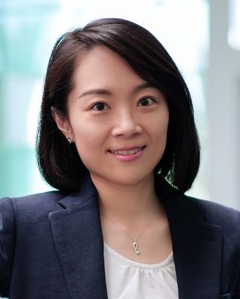
Patrick Jermann is a Lecturer at EPFL’s School of Computer and Communication Sciences, affiliated with the Centre for Digital Education (CEDE) , SIN-ENS , and SSC-ENS departments. As Executive Director of CEDE since 2013, he leads Swiss MOOC Service (SMS), NOTO, and Campus Analytics initiatives. His research focuses on Computer Supported Collaborative Learning (CSCL) , Learning Analytics , and MOOCs , analyzing student interactions, gaze patterns, and attrition behaviors through clickstream data. Recent work explores pedagogical design, statistical methods, and software development for educational tools. His publications (2001–2015) reveal trends in eye-tracking for MOOCs, interaction analysis, and collaborative learning technologies. Notable contributions include frameworks for gaze-based feedback and metrics for perceived video difficulty. He has mentored PhD students such as Sharma Kshitij and Nüssli Marc-Antoine , and secured grants via the DRIL fund . As a CDS Member, he contributes to institutional digital education strategies.
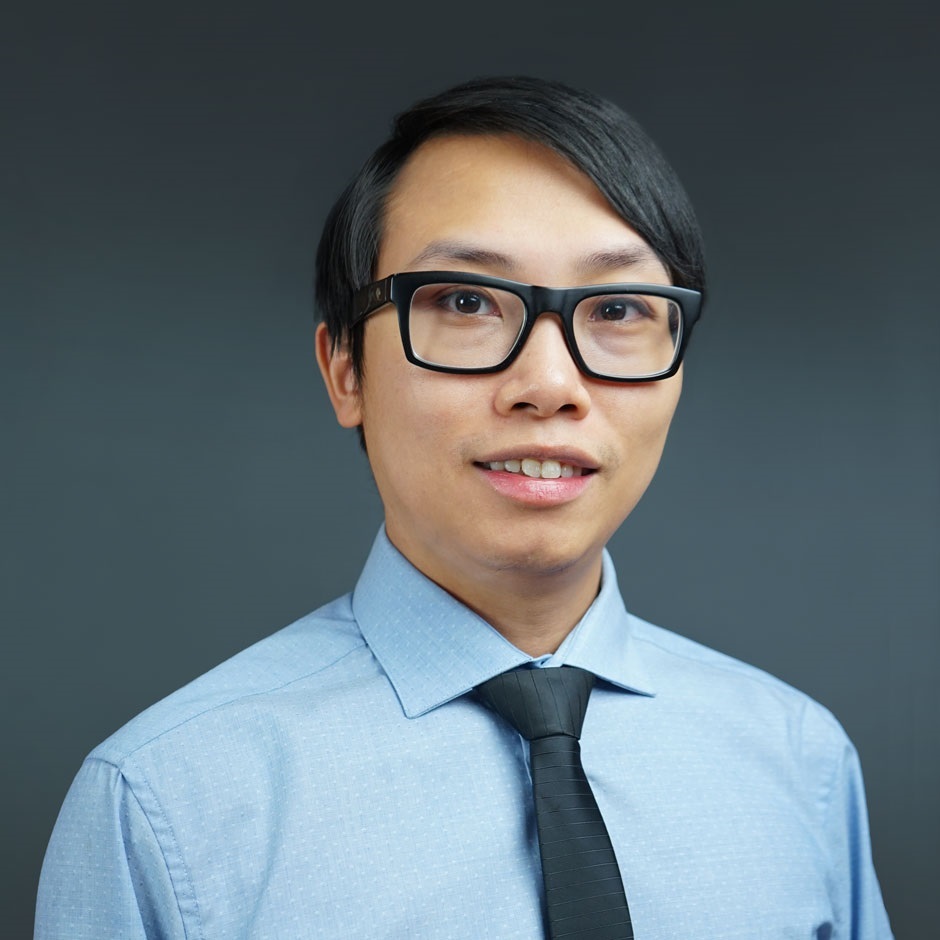
Shurui Zhou is an Assistant Professor at the University of Toronto , with primary appointment in the Department of Electrical & Computer Engineering and cross-appointments in the Department of Computer Science and the Department of Mechanical & Industrial Engineering . She is also affiliated with the Schwartz Reisman Institute and a member of the Data Sciences Institute . Zhou directs the FORCOLAB , focusing on enhancing collaboration in distributed software teams, especially in open-source and AI-enabled systems development. Her research integrates software engineering principles with human collaboration insights from organizational behavior, aiming to improve collaboration efficiency through tooling and interdisciplinary methods. Recent publications (2023-2025) explore LLM integration in software development , sustainability in scientific open-source communities , and collaborative challenges in computer-aided design . Education: PhD (2020) from Carnegie Mellon University's Software and Societal Systems Department , MSc from Peking University , BSc from Xi'an Jiaotong University Scientific Awards: Gordon Slemon Teaching of Design Award (2022) Grants: Collaborator on NSERC Alliance-Mitacs Accelerate Grant (2025) for LLM analysis in political data Her lab, FORCOLAB, develops tools like forks-insight.com to analyze GitHub forks and Redundant PR detection bots . Zhou organizes events like the Responsible LLM-Human Collaboration Hackathon (2024) and actively serves on conference committees including ICSE 2025 and ICSME 2024 .
Steven Ding is an Adjunct Assistant Professor and Lab Director at the School of Computing, Queen's University , leading the L1NNA Artificial Intelligence and Security Lab. His research focuses on the intersection of machine learning, data mining, and cybersecurity with applications in malware analysis, reverse engineering, and authorship attribution. Education: PhD in Information Studies (McGill University, 2019), M.A.Sc. in Information Systems Security (Concordia University), B.S. in Information Systems (University of the Fraser Valley), B.S. in Computer Science (University of Shanghai for Science & Technology) Research Interests: His work integrates artificial intelligence and security systems to develop solutions for malware phenotype decomposition, neural malware analysis, binary provenance, and explainable AI in cybersecurity. He explores data analytics for assembly code evolution and authorship analysis using machine learning and differential privacy . Publication Trends: His peer-reviewed work (IEEE Transactions, ACM conferences) emphasizes binary code analysis , neural networks , and cybersecurity , with a focus on static malware characterization , authorship attribution , and cross-architecture code similarity . Scientific Awards: FRQNT Doctoral Research Scholarship (2017-2018) Dean’s Graduate Award at McGill University (4 years, 2014-2018) NSERC Alliance Grant (2021-2024) Best Poster Award, SERENE-RISC Research Showcase (2016) Second Prize, Hex-Rays Software Plug-in Contest (2015) ACM SIGKDD Student Travel Award (2016) Advising & Grants: Dr. Ding has supervised numerous Ph.D. and Master’s students (e.g., Li Tao Li, Mark M. Adams) and secured significant funding from BlackBerry Cylance , DRDC , and NSERC , including a 1.24M CAD NSERC Alliance Grant (50%) and 1.5M CAD DRDC Contract (50%). Labs & Teams: The L1NNA lab collaborates with DRDC Canada, NVIDIA, and IEEE Security & Privacy, focusing on AI-driven security tools (e.g., Kam1n0 assembly clone search engine) and neural malware analysis . The lab is located in Goodwin Hall, Queen's University, and emphasizes practical software development and industrial partnerships .
Paul Blanc is a Professor at the University of California San Francisco (UCSF) School of Medicine, Department of Medicine. His research focuses on pulmonary epidemiology and toxicology, occupational/environmental health impacts on respiratory diseases, and the history of occupational medicine. A principal investigator on multiple NIH, CDC/NIOSH, and HRSA grants, his work examines interactions between workplace exposures and lung disease severity, with particular emphasis on COPD, asthma, interstitial diseases, and autoimmune conditions like rheumatoid arthritis in occupational cohorts. Education: BA in Liberal Arts (Goddard College, 1974) MSPH in Industrial Hygiene (Harvard School of Public Health, 1977) MD in Medicine (Albert Einstein School of Medicine, 1982) Blanc's research spans occupational toxicology and controlled human exposure studies, including military deployment-related respiratory illnesses, coal mining health risks, and environmental burden in rare lung diseases. His funded projects (2020-2025) address topics like occupational safety training programs, rheumatoid arthritis among miners, and veterans' pulmonary outcomes. Recent publications analyze deployment-related smoking behaviors, COPD exacerbation reporting accuracy, and autoimmune disease outbreaks linked to occupational exposures. His work integrates clinical research with historical perspectives on industrial illnesses. Scientific awards include: Elected Fellow, Collegium Ramazzini (2011) Jarsolav Teisinger Medal (2013-2014) Honorary Doctorate from Sahlgrenska Medical Academy (2017) Viseltear Prize for public health history book (2019) Multiple teaching and research excellence awards (2021-2022) Blanc has served as Principal Investigator on over 15 grants since 1992, including NIH-funded studies on adult asthma disability, COPD outcomes, and deployment-related respiratory diseases. His interprofessional teaching work at UCSF earned recognition in 2022.
Selim Sametoglu is a Postdoctoral Researcher in the Department of Language Development at the Max Planck Institute. His work focuses on the interplay between genetic and environmental factors in children's development, with a particular emphasis on language acquisition and psychological wellbeing. He utilizes advanced methodologies including genetically informed designs and digital behavioral assessment through social media text mining. His educational background includes a Research Master’s in Individual Differences and Assessment from Tilburg University (2020) and a PhD from Vrije Universiteit Amsterdam (2025), where his research investigated heritable influences on social media use and wellbeing, pioneering the use of digital language as a proxy for mental health indicators. His research interests lie at the intersection of developmental psychology, behavioral genetics, and computational social science. He specializes in unobtrusive, large-scale behavioral assessment methods that enable longitudinal tracking of psychological traits using naturalistic digital data. This approach allows for cost-effective, population-level insights into human development and wellbeing. The available text does not list specific publications, but his methodological focus suggests a strong trajectory in interdisciplinary research combining psychometrics, behavioral genetics, and natural language processing for psychological assessment. His work bridges traditional survey-based methods with innovative digital tools to enrich understanding of individual differences. Awards: No scientific awards are mentioned in the provided text. Selim Sametoglu is actively engaged in research and mentoring within the Max Planck Institute. While no formal advisees are listed, his role as a postdoctoral researcher in a leading developmental science department implies involvement in collaborative projects and potential supervision of junior researchers. His work is supported by institutional research infrastructure and likely involves grant-funded projects related to language development and digital phenotyping. He is part of the research team in the Department of Language Development, contributing to cutting-edge studies on how genetic and environmental factors shape early cognitive and linguistic growth. The department leverages large-scale datasets and innovative analytical techniques, positioning Selim at the forefront of data-driven developmental science.
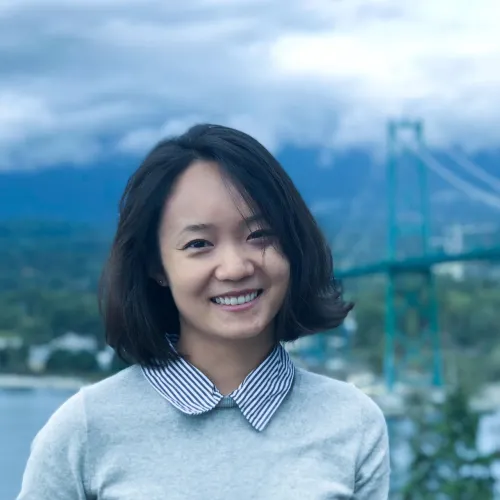
Hanlin Li is an Assistant Professor at the School of Information , University of Texas at Austin . She holds a Ph.D. in Technology and Social Behavior from Northwestern University (2022). Her research focuses on the intersection of data governance and human-computer interaction, analyzing societal and economic impacts of public-generated data. Education : Ph.D. in Technology and Social Behavior (2022), Northwestern University Li’s work addresses policy interventions for responsible data collection, examining topics like data labor, monetization, and collective action. She emphasizes cross-platform dynamics and economic incentives in AI systems. Her publications appear in top venues such as ACM CHI, ACM CSCW, ACM FAccT, and ICWSM, with media coverage in NY Times , MIT Technology Review , and Bloomberg . Recent research trends include: 2025 : Algorithmic collective action frameworks at NeurIPS 2024 : Data governance practices at NeurIPS 2023 : Data labor empowerment in ACM FAccT 2022 : Platform moderation economics Scientific Recognition : Best Paper Honorable Mention at ICWSM’22 Li teaches Responsible Data Management and Data and Society courses, exploring intersections of technology, ethics, and policy. She advocates for equitable data economies through white papers and collaborations with institutions like the Berggruen Institute and Federal Reserve Bank of St. Louis .
Christophe Hurter is a Researcher at the National School of Civil Aviation , specializing in Artificial Intelligence , Data Visualization , and Human-Computer Interaction . His work bridges Aviation Technology , Neuroscience , and Extended Reality (XR) , focusing on enhancing human performance through AI-driven systems. Affiliation: National School of Civil Aviation (Faculty Member, AI axis) Research Interests include: Explainable AI for aviation systems Neurophysiological monitoring using thermal imaging Eye tracking and cognitive processes in memory retrieval Graph and trajectory visualization for air traffic control Augmented/Virtual Reality interfaces for remote collaboration Event-based vision systems for spiking neural networks Recent article trends highlight his expertise in machine learning for medical diagnostics , XR applications in aviation , and visual analytics for human factors research . His work often addresses real-world challenges in air traffic control, piloting training, and biomedical data interpretation.
D.G. Webster is an Associate Professor in the Environmental Studies Department at Dartmouth College, specializing in environmental governance, political economy, and social-ecological systems. Her research focuses on "precursors to governance," examining the processes social-ecological systems undergo before effective environmental policies can be designed and implemented. Dr. Webster holds a B.A. from Connecticut College and both an M.A. and Ph.D. from the University of Southern California. She serves as Editor of the journal Global Environmental Politics and contributes to her field through service to the Environmental Studies Section of the International Studies Association and the Ocean Taskforce of the Earth Systems Governance Project. She was awarded the Fulbright Distinguished Fellowship in Oceans Governance at the University of Sao Paulo, Brazil for 2024-2025. Her research examines how power disconnects and problem narratives affect environmental governance across various contexts including fisheries, mining, oil production, nutrient pollution, climate change, and public health. She has developed three key conclusions: institutional design cannot be ahistorical; shifting to effective precursors to governance is necessary for successful environmental management; and synergies between environmental and social justice movements are crucial for breaking down governance barriers. Dr. Webster's work employs diverse methodologies including historical analysis, computational modeling, and interdisciplinary collaboration. She has led projects such as the Chesapeake Governance Project, Media Coverage of Climate Related Extreme Events, and the development of the Oceans Governance Toolkit. Her research has been funded by organizations including NSF's Social-Environment Synthesis Center (SESYNC). Among her notable awards and recognitions are her editorship of Global Environmental Politics , service on multiple editorial boards including Environmental Politics and Earth Systems Governance Journal , and her role as a contributor to the International Science Council's Policy Brief on Global Sea-Level Rise. She has also served as a panelist at the UN Oceans Conference in Lisbon, Portugal (2022). Dr. Webster teaches courses including Marine Policy (ENVS 17), Political Economy of US Environmental Governance (ENVS 56), Global Environmental Politics (ENVS 65), and Business, Growth, and the Environment (ENVS 16). She has advised numerous students and collaborated with researchers across disciplines to advance understanding of environmental governance challenges and solutions.
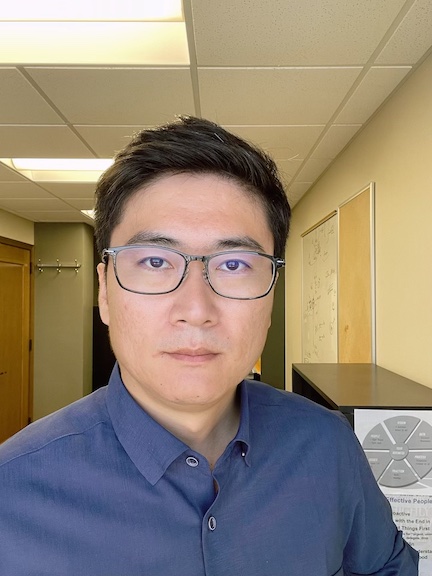
Jake S. Truscott is an Assistant Professor of Political Science at the University of Florida in Gainesville. He received his Ph.D. from the University of Georgia in 2023 with focuses in American Politics (Major) & Formal Theory (Minor). Prior to his appointment at Florida, he held a postdoctoral appointment with the Center for C-SPAN Scholarship and Engagement at Purdue University. Dr. Truscott's research program focuses on merging conventional studies of judicial politics with emerging computational methods. His principal research interests include examining the American federal judiciary using high-performance computing systems and non-conventional data sources like text and audio. He is particularly interested in applying computational approaches to study the latent and explicit properties of language within the American legal community, with specific projects on judicial ideology as text, Supreme Court confirmation hearing rhetoric, and social media coverage of the Court. His research has been published in leading journals including The Journal of Law and Courts, Political Research Quarterly, and The Justice System Journal, and has been featured in major media outlets such as The Washington Post, Newsweek, and SCOTUSBlog. Dr. Truscott is the creator of scotustext, a comprehensive R package for working with Supreme Court documents, demonstrating his commitment to methodological innovation and research transparency. His scholarly contributions reflect a growing trend in political science toward computational approaches to traditional questions of judicial behavior, with particular emphasis on text analysis and high-performance computing applications to understand how language reveals judicial ideology and behavior.
Dr. Danny Toohey is a Senior Lecturer in Business Information Systems at Curtin University’s School of Management and Marketing, within the Faculty of Business and Law. Previously, he held roles at Murdoch University including Senior Lecturer, Interim Dean of Learning and Teaching, and Associate Dean of Learning and Teaching. His academic career spans over two decades, combining teaching excellence with impactful research in educational technology. He holds a BSc (Hons) and PhD, and is a Senior Member of the Australian Computer Society (ACS). Key research focuses include Transnational Education (TNE) , Learning Analytics , and IoT applications in agriculture . Notably, his PhD work on TNE earned the International Education Association of Australia’s award for Outstanding Postgraduate Thesis. His research explores student-facing learning analytics dashboards, ethical data use in education, and smart hydroponic systems. He has published in journals like Journal of Studies in International Education and Australasian Journal of Educational Technologies , and his teaching innovations were nationally recognized through an OLT Citation for Outstanding Contribution to Student Learning. Awards: Murdoch VC Teaching Excellence Citation (201?), OLT Citation (201?), IEEA PhD Award (201?) Grants & Projects: Led projects on student retention analytics, TNE workforce challenges, and IoT-based agricultural systems. He advises on educational technology policy and collaborates internationally, with teaching and research activities across Curtin’s global campuses in Dubai, Malaysia, and Singapore.
Mu Zhu is a Professor and University Research Chair at the Department of Statistics & Actuarial Science, University of Waterloo. His roles include leading research in statistical methodology and its applications. He holds a prestigious University Research Chair, recognizing his academic contributions. Education: Mu Zhu earned his undergraduate degree from Harvard University and a PhD from Stanford University. Research Interests: His work spans machine learning, statistical learning theory, healthcare informatics, and genomics. Recent focuses include dependence modeling, large covariance matrices, and generative neural networks. Earlier contributions include kernel machines, ensemble methods, and personalized recommendation algorithms. Selected Publications: His notable works include a textbook on data science and influential papers on recommendation systems, kernel methods, and projection pursuit algorithms. Awards: Elected Fellow of the American Statistical Association (ASA). Advising & Grants: No student advisees or grants explicitly listed in the provided texts.
Rhongho Jang is an Assistant Professor in the Department of Computer Science at Wayne State University's College of Engineering. He holds a PhD from the University of Central Florida and directs the Networked Intelligence and Distributed Security (NIDS) Lab. His research advances security and privacy in distributed systems, networks, and AI. Research spans cybersecurity, AI security, network algorithms, and distributed systems, with applications in intrusion detection, malware analysis, and in-network computing. Recent publications focus on data plane security, adversarial ML, and IoT security. Awards include NSF grants (2022-2023), Best Paper Award at DSN 2021, and KISA's Outstanding Young Researcher (2018). Current PhD advisees include Seyed Mohammad Mehdi Mirnajafizadeh, Seungsam Yang, Fatima Kamal Khaja, and Sian Kim. Manages NIDS Lab with projects on cyber-physical security and in-network computing.
Eun-Hee Kim is an Associate Professor and Area Chair of Strategy and Statistics at Fordham University's Gabelli School of Business. She joined the university in 2017. Her office is located at 140 W. 62nd Street, Room 353, New York, NY 10023, and she can be reached at ehkim@fordham.edu. Kim's research examines corporate environmental strategy, ESG transparency, and regulatory responses in sustainability contexts. Her work critically analyzes corporate carbon disclosure practices, environmental reporting ethics, and how regulatory uncertainty shapes business strategies. Research employs diverse methodologies including social media analytics and longitudinal target assessment.
Pouyan Ahmadi is an Associate Professor in the Department of Information Sciences and Technology at George Mason University. His research focuses on wireless networks, IoT security, machine learning, and education technology. He holds a PhD in Electrical and Computer Engineering (George Mason University), MS in Architecture of Computer Systems (Iran University of Science and Technology), and BS in Computer Engineering (Azad University). Research interests include cooperative communications, cross-layer network design, relay deployment strategies, and applying machine learning to network security and educational analytics. Notable areas of expertise involve IoT intrusion detection, supply chain RFID implementations, and analyzing student performance through LMS data. His publications span cybersecurity, machine learning applications in education, and wireless network optimization. Recent work emphasizes predictive modeling for student outcomes and improving intrusion detection systems using advanced algorithms. He has contributed to both theoretical frameworks and practical implementations in MANETs and emergency response networks. Labs/Teams: No specific lab/team affiliations explicitly mentioned in the provided information.
Glenn Porter is an Associate Professor at the University of New England’s School of Humanities, Arts, and Social Sciences, specializing in interdisciplinary work across forensic science, criminology, and art photography. An award-winning photographer, he holds qualifications including Ph.D. (Communication Arts), M.App.Sc.(Photog.), and ASIS FRPS credentials. His research examines humanity, environment, and being through visual narratives, aiming to effect social change. Projects include forensic applications in facial recognition, cultural heritage protection, and bloodstain analysis at crime scenes. Publications demonstrate consistent focus on forensic innovation and artistic expression, with recent works exploring facial biometrics, heritage conservation, and colonial historiography. Notable articles address forensic biosecurity and art crime. Awards include FRPS fellowship and finalist positions in international photography competitions. Extensive supervision includes 25+ higher-degree students across forensic imaging, criminology, and art practice.