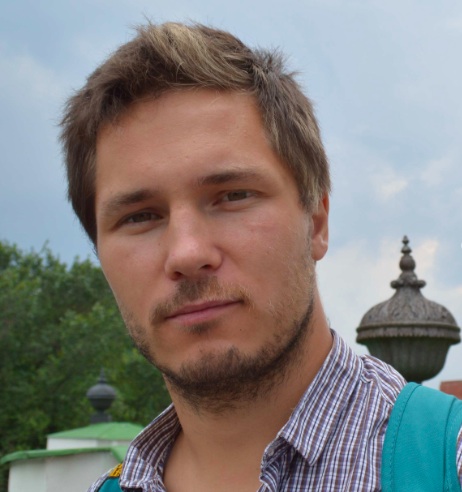
Thomas Augustin is a Professor at the Department of Statistics, Faculty of Mathematics, Computer Science and Statistics, Ludwig-Maximilians-Universität München. He serves as Dean of Studies and Program Coordinator, with contact details at Ludwigstr. 33, Munich. Research Interests Augustin specializes in methodological foundations of statistics and their applications, particularly focusing on imprecise probability theory, Bayesian inference under epistemic uncertainty, and machine learning under complex uncertainty scenarios. His work addresses statistical modeling, robust regression analysis, and decision-making with non-randomly coarsened observations. Publications & Research Trends Recent publications highlight advancements in imprecise Bayesian optimization, human-AI collaboration frameworks, and statistical methods for handling undecided voter data. Key themes include robust machine learning, survival analysis with frailty models, and multi-criteria benchmarking techniques. Contact & Affiliation Email: thomas.augustin@stat.uni-muenchen.de | Office: Room L250 | Phone: +49 89 2180 3520
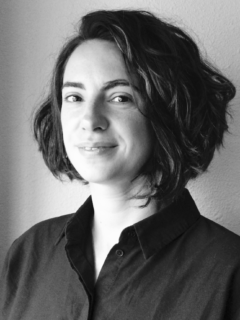
Onja Razafindratsima is an Assistant Professor in the Department of Integrative Biology at the University of California, Berkeley. Her research focuses on tropical ecology, conservation biology, and ecological networks, with an emphasis on plant-frugivore interactions and seed dispersal in Madagascar's tropical forests. Research Interests Tropical forest conservation Ecological community structure Seed dispersal dynamics Species interactions under defaunation Functional and phylogenetic diversity Publication Trends Her recent work examines ecological network fragility in forest edges, the conservation implications of nonrandom seed dispersal, and the cascading effects of anthropogenic threats on tropical biodiversity. She integrates field surveys, simulation modeling, and phylogenetic tools across spatial-temporal scales. Honors Featured cover article in Ecology (2016) Contact Email: onja@berkeley.edu | Office: Valley Life Sciences Building, 5075
Dr. Paul Pang is an Associate Professor of Cyber Security at Federation University Australia's Institute of Innovation, Science and Sustainability (IISS). Previously, he held a Professorship in Data Analytics and directed the Center for Computational Intelligence for Cybersecurity at Unitec Institute of Technology, New Zealand. His research focuses on Cognitive Cyber Security Intelligence, Cyber Resilience, and Applied Data Analytics for Digital Health, leveraging over NZD$3.5M in grants from organizations like MBIE and HRC. He has authored over 100 refereed articles and holds 1 patent with 3 pending applications. Education: PhD in Engineering from Shanghai Jiao Tong University (2000). Research Interests: Pang's work spans cybersecurity, digital health, and big data analytics. He develops intelligent systems for cyber threat detection, resilience frameworks, and healthcare applications. His methods include machine learning for data streams, incremental learning algorithms, and multi-agent cooperative systems. Publications Trends: His articles emphasize cybersecurity (e.g., darknet traffic analysis, malware grouping), healthcare analytics (e.g., schizophrenia prediction), and foundational machine learning (e.g., SVMs, LDA algorithms). Collaborations span institutions in Japan, China, and the U.S. Awards: IEEE Best Paper Awards (2003, 2008), Unitec Excellence Awards (2011-2015), ARC Assessor (Australia). Advising & Grants: Supervised 10+ PhD/Masters students; led 13 grants totaling NZD$3.5M. Notable students include Snjezana Soltic (Pest Survival Analysis) and Simon Dacey (Land Use Management). Professional Roles: IEEE Senior Member, Vice President of APNNS, Global AI Summit Judge (2018). Labs/Teams: Active in Federation University's Cybersecurity and Digital Health research groups. Collaborates with industry partners like NICT Japan and Telecom NZ.
Sumon Datta is an Assistant Professor and Irrigation Engineer in the Department of Biosystems and Agricultural Engineering at Oklahoma State University. His work focuses on smart-engineered technologies for irrigation water management, particularly for major crops in Oklahoma. He is actively involved in the Master Irrigator Program, conducts irrigation uniformity tests, and organizes the Oklahoma Irrigation Conference. He collaborates with the Oklahoma Water Resources Center and producer focus groups to promote efficient water use. Education: PhD, Biosystems Engineering, Oklahoma State University (2017–2020) MS, Agricultural and Biosystems Engineering, North Dakota State University (2015–2016) BS, Agricultural Engineering, Bangladesh Agricultural University (2010–2014) Dr. Datta's research interests include irrigation engineering, water conservation, machine learning in irrigation management, and hydrological impacts of irrigation. He emphasizes the development of packaged irrigation management modules to improve water use efficiency. His scholarly work spans irrigation scheduling, soil water sensors, remote sensing, and groundwater sustainability. The recent publications highlight a strong trend toward data-driven modeling, sensor performance evaluation, and region-specific irrigation practices, particularly in the Southern High Plains and Oklahoma. He has received funding from the U.S. Department of Agriculture, U.S. Geological Survey, Cotton Incorporated, and Kansas State University for projects on sustainable irrigation, climate adaptation, and smart water conservation technologies. His work supports Sustainable Development Goals related to clean water, zero hunger, climate action, and quality education. Professional Affiliations: Member, American Society of Agricultural and Biological Engineers (ASABE) Member, American Society of Civil Engineers (ASCE) Member, Evapotranspiration, Irrigation, and Hydrology Committee (since 2020) Dr. Datta teaches courses such as Agricultural Water Management and Advanced Techniques in Irrigation Water Management. He supervises master's and doctoral research, guiding students in irrigation technology and water conservation. He also contributes to extension publications and outreach, enhancing farmer education and adoption of best practices.
Camille Stevens-Rumann is an Associate Professor in the Department of Forest and Rangeland Stewardship at Colorado State University (CSU) and serves as the Interim Director of the Colorado Forest Restoration Institute (CFRI) . Her research focuses on post-wildfire ecological recovery, forest resilience, and the impacts of climate change on fire regimes. She leads CFRI, a transdisciplinary institute addressing forest restoration and wildfire risk management in the Interior West. Stevens-Rumann’s work emphasizes collaborative applied research with land managers, integrating ecological and social dimensions. CFRI, part of CSU’s Warner College of Natural Resources , employs 29 full-time staff and supports over 200 students annually, many from underrepresented backgrounds. Her leadership ensures CFRI’s mission aligns with CSU’s land-grant commitment to community-driven solutions. Her research spans wildfire behavior, post-fire tree regeneration, and invasive species dynamics. Key themes include forest management strategies under climate change , ecological transformations post-disturbance , and community resilience in fire-prone regions . Recent publications highlight drought’s role in ecosystem shifts and the efficacy of prescribed burns in mitigating wildfire risks. Scientific contributions include advancing understanding of aspen’s role in fire suppression and the impacts of beetle outbreaks on forest recovery. Her work directly informs policy and practice, such as strategic fire zone planning and reforestation techniques. Stevens-Rumann mentors students through CFRI’s programs, fostering the next generation of natural resource professionals.
Doug Tallamy is a Professor in the Department of Entomology & Wildlife Ecology at the University of Delaware’s College of Agriculture & Natural Resources. He teaches courses in Insect Ecology and Conservation, Behavioral Ecology, and Advanced Ecology. His research focuses on the Behavioral Ecology of Insects, Conservation of Biodiversity, and the Impact of Alien Plants on Native Ecosystems through Plant-Insect Interactions. PhD in Entomology, University of Maryland, 1980 MS in Entomology, Rutgers University, 2006 BS in Biology, Allegheny College, 1973 His recent publications emphasize invasive plant impacts on insect communities, urban biodiversity conservation, and plant-insect mutualisms. Key themes include Lepidoptera decline, avian conservation, and roadside habitat ecology. He has collaborated with institutions like the Ecological Society of America and the Entomological Society of America. Over 28 graduate students and postdocs have worked under his mentorship, exploring topics like non-native plant effects on food webs, bird dietary choices, and trophic restructuring from plant invasions. He has secured grants for research on insect declines, pollinator conservation, and habitat restoration in both suburban and agricultural contexts.
David Wahl is a Research Professor in the Department of Biology at Utah State University , specializing in the systematics and taxonomy of Hymenoptera , particularly the family Ichneumonidae . His career spans decades of research in parasitoid wasps, biogeography, and evolutionary biology. Ph.D. , Entomology, University of Kansas (1985) M.A. , Entomology, University of Kansas (1982) B.S. , Entomology, University of California, Davis (1978) Wahl’s research focuses on the cladistics, morphology, and ecology of parasitoid wasps. His work explores phylogenetic relationships within Ichneumonidae subfamilies, including the application of taxonomic keys, evolutionary divergence, and biogeographic patterns such as Gondwanan origins and Sky Islands biodiversity. Key trends in his publications include systematic revisions of genera like Cratichneumon and Trogus , studies on host-parasitoid interactions, and contributions to the biogeography and cladistics of Hymenoptera. His work often bridges taxonomy with biological control applications. Fellow, Willi Hennig Society (1988) National Science Foundation Postdoctoral Fellowship in Environmental Biology (1986) Smithsonian Institution Postdoctoral Fellowship (1985) Wahl served as curator of the American Entomological Institute from 1991–2016. His collaborations span ecological surveys, conservation strategies, and interdisciplinary studies involving parasitic insects.
Matthias Birkner is a Professor of Probability Theory at the Institute of Mathematics, Faculty of Physics, Mathematics and Informatics, Johannes Gutenberg University Mainz. His research focuses on probability theory, stochastic processes, and their applications in mathematical biology and population genetics. His primary research interests include: Probability Theory, particularly branching processes and coalescent theory Stochastic processes in population genetics and evolutionary biology Mathematical modeling of population dynamics Spatial stochastic processes and random walks Applications of probability theory in economics and finance Analysis of Birkner's recent publications reveals a strong focus on probabilistic models for population genetics, particularly examining branching processes, coalescent theory, and spatial population models. His work often bridges rigorous mathematical theory with applications in evolutionary biology, investigating phenomena like fixation probabilities, genealogical structures, and the effects of skewed offspring distributions. More recently, he has expanded into mathematical economics, studying wealth distribution models. Professor Birkner actively collaborates with researchers across Europe and North America, evidenced by his extensive list of co-authors from institutions in Germany, France, Switzerland, the UK, and the United States. His teaching portfolio includes advanced courses in stochastic processes, population models, and biostatistics. His academic leadership is evident through his involvement in organizing workshops and conferences on probability theory and its applications, including events focused on branching processes and multiple merger coalescents in population genetics.
Markus Franzén is a researcher at Linnaeus University's Faculty of Health and Life Sciences , affiliated with the Department of Biology and Environmental Science and the Linnaeus University Centre for Ecology and Evolution in Microbial model Systems (EEMiS) . His work focuses on ecological and evolutionary interactions across diverse ecosystems, particularly oak forests, coastal habitats, and agricultural landscapes. Key research areas include climate change impacts on biodiversity , drought-grazing interactions , insect dispersal patterns , and urban adaptation of nocturnal species . Major projects: Carbon flows in coastal ecosystems , Adaptation of forest ecosystems , and Drought cascading effects on farmland biodiversity . Recent publications highlight his expertise in saproxylic beetles (2025), moth phenology shifts (2025), butterfly conservation (2024), and long-term insect trait analysis (2023). His work integrates DNA metabarcoding and phenotypic trait studies to address ecological generalization and climate-smart conservation strategies.
Ioan Manolescu is a professor in the Department of Mathematics at the University of Fribourg, Switzerland. His research focuses on probability theory and statistical mechanics, particularly percolation, random-cluster models, Potts models, and self-avoiding walks. He obtained his PhD from the University of Cambridge under Geoffrey Grimmett in 2012 and was a postdoc at the University of Geneva (2012-2015). Education ENS Paris (student) University of Cambridge (PhD, 2012) Supervisors: Geoffrey Grimmett Research Specializes in critical phenomena in statistical mechanics Key techniques: FKG inequality, Russo-Seymour-Welsh methods, star-triangle transformations Focus on universality and scaling relations across models His recent publications analyze arm exponents in FK-percolation, crossing widths in Poisson Boolean models, and universality in loop O(n) models. He teaches Analyse I & II at University of Fribourg, supported by assistants. Contact: ioan.manolescu@unifr.ch
Slava Novgorodov is an Associate Professor in the Department of Computer Science at Tel Aviv University's Faculty of Engineering. His research focuses on data management systems with applications in e-commerce, information retrieval, and machine learning. He leads research projects at the intersection of database systems and artificial intelligence, particularly exploring how large language models can enhance traditional data management tasks. Novgorodov's research interests center around data management, database systems, information retrieval, and e-commerce applications. His work addresses practical challenges in data cleaning, category tree construction, and product information extraction. Recent research has increasingly focused on leveraging large language models for cost-effective data processing, with applications in visual search, review analysis, and personalized recommendation systems. His approach combines theoretical algorithm design with practical system implementation, often addressing resource constraints in real-world applications. His publication record shows a clear progression from foundational data management research to increasingly sophisticated applications of machine learning and LLMs. Early work focused on data cleaning, fraud detection, and collaborative filtering, while more recent publications demonstrate a strategic shift toward LLM applications in e-commerce contexts. This evolution reflects broader trends in the field while maintaining his core expertise in database systems and information management. Novgorodov has established productive collaborations with researchers including Tova Milo, Ido Guy, and Kira Radinsky, resulting in numerous publications at premier venues like SIGMOD, VLDB, and WWW. His research has practical applications in e-commerce systems, particularly in product information management, review analysis, and visual search capabilities.
Wang Wei is a researcher at the University of Skövde's School of Engineering Science. His work spans multiple domains including manufacturing processes, laser welding, digital twin applications, and sustainable supply chain strategies. Key affiliations: University of Skövde, The Virtual Systems Research Centre, SYMBIO-TIC project, VF-KDO project Collaborations with institutions: Nanjing University of Aeronautics and Astronautics, Innovation Fund Denmark, Vinnova Research interests focus on: Advanced manufacturing techniques (machining deformation prediction, thin-walled part optimization) Laser welding process improvement (porosity reduction, dissimilar material joints) Digital twin security frameworks for cyber-physical systems Green technology adoption and sustainable supply chain coordination Recent publications demonstrate expertise in: Neural operator applications for manufacturing Multi-objective optimization in machining Cybersecurity modeling for industrial systems Environmental economics and consumer behavior analysis Co-funded by: Knowledge Foundation (SIMPLE, VF-KDO projects) Vinnova (QWELD, LaserBATMAN projects) EU H2020 SYMBIO-TIC M-ERA.NET 3 call
Professor Rachel Warnock leads the Systems Paleobiology research group at the GeoZentrum Nordbayern , part of Friedrich-Alexander University Erlangen-Nuremberg (FAU). Her work bridges paleontological and molecular data through advanced phylogenetic methodologies. Develops Bayesian phylodynamic frameworks Specializes in fossil data integration Focus on speciation/extinction processes Recent publications emphasize Bayesian phylogenetic inference , fossilized birth-death modeling , and macroevolutionary analysis across biological and cultural systems. She co-authored the FossilSim and FossilSimShiny packages for fossil occurrence simulation. Her research team includes collaborators from computational biology, paleontology, and evolutionary ecology domains, operating within FAU's Paleontology Department .
Jie Tang is a Professor at the Department of Computer Science, Tsinghua University , and a Fellow of ACM, AAAI, IEEE . His research focuses on Artificial General Intelligence (AGI) , with significant contributions to large pre-trained models like GLM-130B, ChatGLM, CogView, CogVideo, and CodeGeex. Research Trends : Jie Tang's work spans AGI development with human-like reasoning Graph Neural Networks for network representation Social network mining and influence modeling Academic knowledge graph construction (AMiner system) Advancing foundation models for cross-modal tasks Scientific Awards : SIGKDD Test-of-Time Award SIGKDD Service Award NSFC Distinguished Young Scholar 2nd National Award for Science & Technology Advising and Grants : He mentors highly-motivated students and postdocs in AGI research. His work has received extensive funding and recognition, including over 400 publications in top conferences (IJCAI, AAAI, NeurIPS, KDD) and journals (TPAMI, TKDE).
Don Baker is a Full Professor in the Department of Earth and Planetary Sciences at McGill University, part of the Faculty of Science. His research focuses on cosmochemistry, geochemistry, and igneous petrology, with a particular emphasis on magmatic processes, volatile elements, and Large Igneous Provinces (LIPs). He investigates topics such as melt inclusion analysis, sulfur and fluorine partitioning in magmas, and the environmental impacts of volcanic eruptions, including links to mass extinctions. His work integrates experimental petrology, synchrotron-based imaging, and field studies to understand volcanic degassing mechanisms and magma dynamics. Dr. Baker has contributed significantly to understanding the role of LIPs in Earth's history, such as the Deccan Traps and Central Atlantic Magmatic Province. Research Interests: Magmatic degassing and volatile behavior in LIPs Bubble nucleation and magma foam stability Sulfur and halogen partitioning in silicate melts Environmental consequences of massive volcanic eruptions Crystallization dynamics in hydrous melts X-ray tomography applications to volcanic systems Key Achievements: Recipient of the Norman L. Bowen Award (2014) Pioneered 4D synchrotron tomography studies of magma degassing Developed novel methods for sulfur concentration quantification in basaltic melts Leader in linking LIP magmatism to mass extinction events Advising and Grants: While specific student names are not listed, Dr. Baker's research group engages in interdisciplinary projects supported by grants from institutions like the Natural Sciences and Engineering Research Council (NSERC). His work often involves international collaborations in volcanic field studies and synchrotron facilities. Labs/Teams: Active member of the McGill Earth and Planetary Sciences research group, leveraging cutting-edge facilities for geochemical analysis and 3D imaging of igneous rocks.