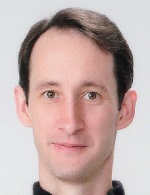
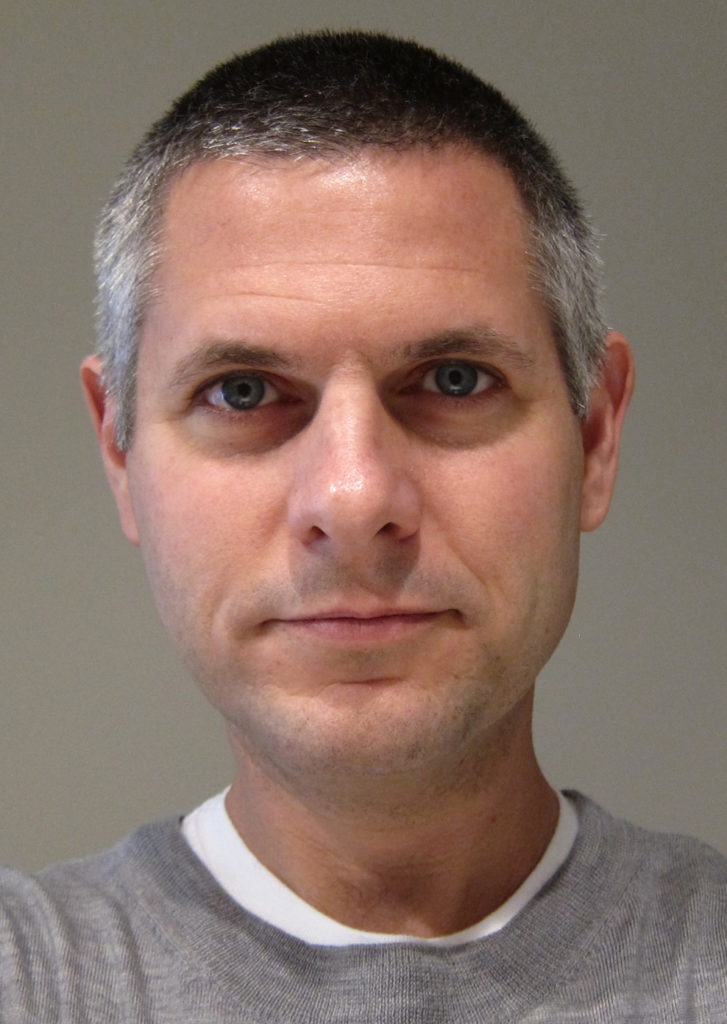
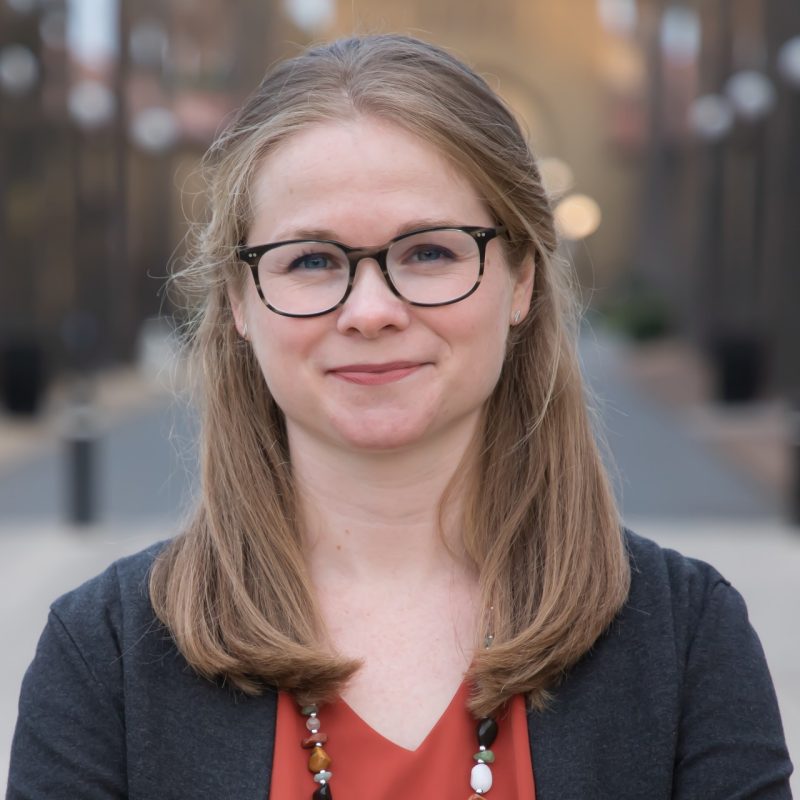
Michael P. Wellman is a Professor of Computer Science and Engineering at the University of Michigan, specializing in computational game theory and its applications to economics and finance. He has advised 28 PhD graduates and currently mentors 6 students, emphasizing independent research and tailored advising approaches. His work focuses on multi-agent systems, strategic interactions, and agent-based modeling of financial markets. He holds the endowed Lynn A. Conway Professorship and created the Morris Wellman Faculty Development Professorship. His research group meets weekly for progress reports, paper discussions, and practice presentations. Wellman encourages internships, teaching experience, and conference participation (e.g., ICAIF, AAMAS, EC) to foster career readiness. His scientific contributions span empirical game-theoretic analysis (EGTA), market manipulation detection, and cybersecurity strategies. He prioritizes student independence, collaborative problem-solving, and ethical considerations in AI-driven financial systems.
Song Mei is an Assistant Professor in the Department of Statistics and Department of Electrical Engineering and Computer Sciences at the University of California, Berkeley. She received her Ph.D. from Stanford University in 2020 under Andrea Montanari and maintains active research collaborations with institutions including Amazon (as a 2023 Amazon Research Award recipient) and OpenAI (where she is currently on leave). Her research spans the intersection of statistics, machine learning, information theory, and computer science, with particular emphasis on foundational theories for modern AI systems. Key interests include language models, diffusion models, quantum algorithms, and high-dimensional statistics, often leveraging insights from statistical physics literature. Analysis of her recent publications reveals a strong focus on theoretical underpinnings of generative AI, with significant contributions to understanding contrastive pre-training (CLIP), attention mechanisms in LLMs, and mathematical foundations of diffusion models. Her work demonstrates consistent interdisciplinary connections between statistical theory and practical AI development. Sloan Research Fellowship (2025) Noether Early Career Scholar Award (2025) Google Research Scholar Award (2024) Amazon Research Award (2024) She actively advises graduate students through MA programs and has secured significant research grants including Amazon Research Awards. Her work with AGI Labs at Amazon demonstrates applied impact of theoretical research. Current projects focus on mechanistic interpretability of large language models and mathematical frameworks for generative AI. Professor Mei leads research on the statistical principles behind frontier AI models, with particular focus on developing rigorous theoretical frameworks for understanding emergent behaviors in large-scale systems.
Roles and Affiliations: Tien Foo Sing is the Provost's Chair Professor in the Department of Real Estate at the NUS Business School, National University of Singapore. He serves on the Management Board of the Institute of Real Estate and Urban Studies (IREUS) and was its former Director (2017–2022). He has held leadership roles including Head of the Department of Real Estate (2020–2022) and past President of the Asian Real Estate Society (AsRES). He is a CLC Fellow (2024–2026), Fellow of AsRES, and a Fellow of the Weimer School of Advanced Studies. He edits the International Real Estate Review and serves on editorial boards of journals like Real Estate Economics and Journal of Real Estate Finance and Economics. Education: PhD (Land Economy) and MPhil (Land Economy) from the University of Cambridge, UK; BSc (Estate Management) from NUS. Research Interests: Focuses on urban planning, real estate economics, housing markets, climate finance, transport economics, and environmental policy. His work bridges theory and policy, addressing issues like urban resilience, intergenerational mobility, and environmental externalities. Recent studies include impacts of sea level rise on housing prices, ESG-REIT linkages, and PropTech adoption. Awards: Recognized with the Outstanding Referee Award (2017) for Real Estate Economics, Fellowships from AsRES and the Weimer School, and book awards for his 'Kiasunomics' series. Professional Activities: Serves on government boards (e.g., Valuation Review Board, Singapore Chapter of APREA) and advises organizations like the PropTech Association of Singapore. His work influences policy on housing, transportation, and sustainable development. Labs/Teams: Leads research initiatives through IREUS and collaborates with institutions like the Sustainable & Green Finance Institute (SGFIN). His projects often involve large-scale data analysis (e.g., smart card transit data, housing transactions).
Qimin Liu is an Assistant Professor at Boston University, serving as Lab Director of the Quantitative Psychopathology Laboratory. He holds a PhD in Psychological Sciences from Vanderbilt University with specializations in Clinical Science and Quantitative Methods. His research focuses on emotional disturbances across development, statistical methodology development, and health equity with an emphasis on intersectional marginalization. He has expertise in analyzing intensive longitudinal data and has published extensively on topics like irritability, suicidality, and mental health disparities among sexual and gender minority populations. Dr. Liu’s work frequently integrates advanced statistical techniques such as latent variable modeling, network analysis, and machine learning. His recent studies explore the temporal dynamics of affect, the impact of stigma on mental health, and the role of childhood adversity in psychiatric outcomes. Notable contributions include developing methods for analyzing zero-inflated longitudinal data and creating algorithms for digital phenotyping of mood disorders through mobile device usage patterns. His scholarship emphasizes bridging clinical phenomena with rigorous quantitative approaches, addressing gaps in understanding how social determinants and individual differences shape mental health trajectories. He has collaborated on large-scale datasets like the Collaborative Psychiatric Epidemiological Surveys and contributed to interdisciplinary research on public health outcomes among aging sexual minority men. Dr. Liu’s methodological innovations include the DACF framework for ceiling/floor effect data and the lamme package for log-analytic multiplicative effects modeling. He actively publishes in high-impact journals such as Psychological Methods and Journal of Abnormal Psychology , focusing on both empirical findings and statistical best practices.
John C. Butler is a Clinical Associate Professor in the Finance Department at the McCombs School of Business, University of Texas at Austin. He holds leadership roles as Academic Director of the Kay Bailey Hutchison Energy Center, Director of the MS Finance Program, and Director of the Energy Management Minor. His academic journey includes a PhD in Management Science and Information Systems from UT Austin (1998) and a BBA from Texas A&M University (1991). His research focuses on applications of decision analysis across domains including operations, finance, and information systems. Key areas include risk analysis, optimization, multi-attribute utility theory, and energy finance. His work integrates theoretical modeling with empirical validation to address complex decision-making challenges in both public and private sectors. Butler's publications demonstrate a consistent focus on decision modeling methodologies, with recent work emphasizing risk quantification and utility theory applications. His articles frequently intersect operations research, behavioral economics, and systems optimization, reflecting interdisciplinary approaches to solving managerial and policy problems. Awards and Honors: MBA Applause Award (2008, 2011) Finalist, INFORMS Franz Edelman Award (2004) INFORMS Decision Analysis Society Practice Award (2000) Fred Moore Teaching Award Dean's Research Fellowship, Ohio State University (2004) Leadership & Advising: Butler has supervised 11 PhD students to completion and secured significant grants including DOE funding for nuclear terrorism risk analysis. He directs multiple energy finance initiatives and serves on editorial boards for Decision Analysis and previously Decision Support Systems . Centers & Programs: As Academic Director of the Kay Bailey Hutchison Energy Center, he leads interdisciplinary energy research. He also developed the Energy Finance concentration and redesigned the MS Finance curriculum to incorporate quantitative energy market analysis.
Christian Schlag is a Professor at the Finance Department of Goethe University Frankfurt’s Faculty of Economics and Business , where he also serves as Dean. He leads the Chair of Derivatives and Financial Engineering and coordinates young researchers at the Leibniz Institute for Financial Research SAFE. His research focuses on equilibrium asset pricing, derivative securities, and empirical capital market analysis. Research Trends : Schlag’s recent work explores volatility dynamics, climate risk in asset pricing, return predictability, and investor behavior. His 2023 publications examine time-varying consumption growth risk, equity factors, and individual stock volatility models. Earlier studies (2021–2015) address pricing kernels, welfare costs of temperature volatility, and model mis-specification in hedging. Student Placements : Former advisees hold positions at institutions like the European Central Bank, INSEAD, Australian National University, and Warwick Business School. His Chair of Derivatives and Financial Engineering collaborates with networks across Europe, North America, and Asia.
Steve Hailes is a Professor of Wireless Systems at the Department of Computer Science, University College London. He has served as Head of Department since 2019 and Deputy Head from 2005. His research spans wireless networks, computational trust, AI, and sensor systems for health, ecological, and environmental applications. Education: PhD and undergraduate degree from Cambridge University Appointment: Joined UCL in 1991 (postdoc), Lecturer in 1992 Research interests include: Trust and security in networked systems (co-founder of computational trust) Security of industrial control systems AI/ML applications in security and causal discovery Multi-agent reinforcement learning and moral behavior modeling Gas sensor fabrication and deployment for diverse applications Recent publications focus on feature selection for cybersecurity , moral alignment in LLM agents , trust-based consensus algorithms , and causal discovery using reinforcement learning . Collaborations include co-authors like Westphal, Musolesi, and Tennant. Applications span healthcare (dementia, JIA), ecology (endangered species in Botswana), and environmental monitoring (CO distribution, meth lab detection).
David Croydon is an Associate Professor at the Research Institute for Mathematical Sciences (RIMS), Kyoto University. His research focuses on probability theory, particularly diffusions on random fractals and scaling limits of random walks on random graphs. He also investigates discrete integrable systems with random initial conditions. Dr. Croydon's primary research interests span several areas of probability theory and mathematical physics. His work centers on diffusions on random fractals and how these processes can be constructed as scaling limits of related random walks on random graphs. He has made significant contributions to understanding random walks on critical structures including Galton-Watson trees, uniform spanning trees, and percolation clusters. More recently, he has developed a growing interest in the behavior of discrete integrable systems such as the box-ball system, particularly when started from random initial conditions. His research often bridges theoretical probability with applications in statistical physics and mathematical physics. Dr. Croydon's recent publications demonstrate a dual focus on theoretical probability and mathematical physics. His work on random walks spans various structures including binary trees, critical percolation clusters, and uniform spanning trees. He has made significant contributions to understanding aging phenomena, heat kernel fluctuations, and scaling limits in random media. Simultaneously, his research on discrete integrable systems explores the connections between probability theory and soliton theory, particularly through the lens of the box-ball system and related models. These two research strands converge in his investigations of scaling limits and invariant measures for complex stochastic systems. Dr. Croydon's scientific contributions have been recognized through publications in top-tier journals across probability theory and mathematical physics, though specific awards are not mentioned in the available information. Dr. Croydon has supervised several doctoral students to completion, including Adam Bowditch (2017), George Andriopoulos (2019), Eleanor Archer (2020), and Takumu Ooi (2024). He has also served in advisory roles for other students including John Sylvester (2017). His collaborative research spans multiple international institutions, suggesting involvement in various research grants supporting his work in probability theory and mathematical physics. While specific lab names aren't mentioned, Dr. Croydon is part of the vibrant probability theory research group at the Research Institute for Mathematical Sciences (RIMS) at Kyoto University. His extensive collaborations with researchers worldwide, particularly in the UK, France, and Japan, indicate active participation in international research networks focused on stochastic processes, random media, and discrete integrable systems.
Anna Grigolon is an Assistant Professor at the University of Twente , Netherlands, affiliated with the Transport Engineering and Management Research Group . Her research focuses on sustainable urban mobility , user-centric transport solutions , and travel behavior analysis using tools like discrete choice modeling , spatial analysis , and social psychology theories . Research Interests : Sustainable Urban Mobility Accessibility Modeling Travel Behavior Discrete Choice and Latent Class Modeling Spatial Analysis and GIS Shared Micromobility and Mobility Hubs Equity in Transport Planning Article Trends : Anna’s recent work (2025–2024) emphasizes mobility justice , 15-minute city transitions, and equity in transport access , particularly for marginalized communities like São Paulo favelas. She integrates digital tools (e.g., serious games, kiosks) and space-time metrics to evaluate mobility solutions. Projects : She currently leads the SmartHubs project and contributes to DREAMS and R-map , focusing on smart, equitable mobility systems in Europe and Saudi Arabia.
Michael Stamm is Chairperson and Professor in the Department of History at Michigan State University, within the College of Social Science. His research focuses on media and journalism history, with specialties in cultural, political, and environmental history. He has authored influential books like Sound Business (2011) and Dead Tree Media (2018), which explore the material and economic dimensions of print media. His work bridges media studies with environmental history, examining global commodity chains and the geopolitical impact of newsprint production. Stamm’s research has been recognized with awards including the Canadian Business History Association’s Best Book Prize (2019) and the Richard E. Sullivan Teaching Excellence Award (2022). He leads courses on North American history, media, business, and environmental history. From 2017–2020, he directed MSU’s participation in the American Historical Association’s Career Diversity initiative, fostering innovative historian training. His recent projects expand into international media comparisons and digital-age publishing challenges. Stamm’s academic profile combines rigorous historical scholarship with interdisciplinary engagement, reflecting his dual role as a researcher and educator.
Professor Irena Koprinska is a faculty member at the School of Computer Science, University of Sydney, specializing in Machine Learning, Data Mining, and Neural Networks. Her research focuses on practical applications in education, health, and energy sectors. She has received multiple awards, including the Dean’s Award for Outstanding Teaching (2017, 2008) and Best Paper Awards at CHI 2019 and other conferences. Koprinska has supervised 11 PhD and over 60 Honours students, many of whom have won prestigious scholarships like the Google Fellowship. Education: PhD and MSc in Computer Science, MEd in Higher Education. Research Interests: Develops algorithms for pattern extraction and predictive modeling in healthcare (e.g., sleep apnea prediction), education (student behavior analysis), and energy (solar power forecasting). Her work bridges algorithmic innovation with multidisciplinary collaboration. Publications: Over 100 articles in top journals/conferences, emphasizing applications of machine learning in health, energy, and education. Recent works include deep learning for sleep apnea and ensemble methods for solar forecasting. Awards: Highlighted awards include the Dean’s Teaching Awards, Best Paper recognitions, and the Thompson Research Fellowship (2018). Advising & Grants: Currently supervises Hanxue Yao. Previously led initiatives like the Data Science for Social Good workshop at ECML PKDD. Served as Associate Head for Research Education and Sub-Dean for Teaching & Learning. Labs/Teams: Leads the Computer Human Adapted Interaction Research Group, focusing on human-centric technology solutions.
Aishwarya Ganesan is an Assistant Professor at the Siebel School of Computing and Data Science, University of Illinois Urbana-Champaign. Her research focuses on distributed systems, storage systems, and fault tolerance mechanisms, with emphasis on high-performance computing and datacenter infrastructure. She leads projects addressing challenges in replicated storage, consensus protocols, and system resilience. Her work explores fault tolerance in disaggregated datacenters, log abstractions for low-latency applications, and novel replication strategies for modern storage systems. She has developed frameworks like LazyLog and IONIA to improve system efficiency and reliability. Her research also extends to automatic reliability testing for cluster management controllers and analyzing distributed storage vulnerabilities. Key contributions include demonstrating how redundancy alone does not guarantee fault tolerance, and proposing consistency-aware durability mechanisms for storage systems. She received the NSF CAREER Award in 2024 for her research on storage-aware fault tolerance. Her work spans 21 peer-reviewed publications, with notable contributions in conferences like SOSP, EuroSys, and FAST. Current projects investigate fault tolerance in emerging memory technologies and system recovery protocols for consensus-based storage.
Katy Börner is a Professor affiliated with Indiana University, Bloomington, USA. Her research focuses on data visualization, scientometrics, and the science of science, with contributions to tools like Network Workbench (NWB) and Sci2. She leads interdisciplinary projects such as the Human Reference Atlas and explores visualization literacy in education and public health. Her work spans virtual reality applications, biomedical knowledge networks, and AI-driven scientific discovery. Key research interests include mapping scientific collaboration networks, analyzing scholarly publications, and developing visualization frameworks for big data. She collaborates widely with institutions like NIH and VIVO, advancing open science and interdisciplinary research. Her projects often bridge computational methods with human-centric design, enhancing understanding of complex systems in health, technology, and social sciences. Publications highlight innovations in interactive visualization tools (e.g., opioid crisis research networks), data integration (Human Reference Atlas), and AI applications in biomedical research. She emphasizes translating data into actionable insights through visual analytics, impacting policy, education, and healthcare.
Elinor Benami is an **Assistant Professor** in the Agricultural and Applied Economics Department at Virginia Tech. She holds affiliations with the VT Remote Sensing & Global Change Center, the Center for Advanced Innovation in Agriculture, and Stanford’s RegLab. Her research focuses on environmental and development economics, leveraging satellite imagery and machine learning to enhance disaster financing and environmental compliance. She earned a B.A. from UNC Chapel Hill, a Ph.D. from Stanford University, and a postdoc at UC Davis. **Research Interests**: Climate risk management, agricultural resilience, remote sensing applications, and policy design for sustainable agriculture. Current projects include NASA-funded work on Moroccan irrigation and drought financing, and evaluating U.S. environmental compliance using AI. **Awards/Grants**: Led a $650K NASA Harvest grant, part of a $80M climate-smart agriculture initiative, and received the VT Early Career Scholarly Impact Award Nominee. Active in policy, including advising the EPA on environmental compliance algorithms. **Teaching**: Courses include 'Remote Sensing in Social Sciences', 'Climate Risk Management', and 'Environmental and Sustainable Development Economics'. Mentors students at all levels, emphasizing computational skills and social impact. **Affiliations**: NASA Harvest, VT Remote Sensing IGEP, and the Alliance for Climate-Smart Agriculture. Collaborates with global institutions on drought financing and satellite data applications.
Professor Oula Ghannoum is a renowned plant scientist and academic leader at the Hawkesbury Institute for the Environment (HIE), Western Sydney University. She serves as Director of the ARC Training Centre for Smart and Sustainable Horticulture and holds leadership roles, including Biological Sciences Discipline Lead and Associate Editor at Functional Plant Biology . Her research focuses on photosynthesis, global change biology, and protected cropping, aiming to enhance food security and climate resilience through crop improvement and sustainable agricultural practices. Education: BSc (Honours) in Plant Biochemistry, University of NSW (1993) PhD in Plant Physiology, Western Sydney University (1998) Research Interests: Professor Ghannoum’s work addresses global challenges like food security and climate change by exploring plant responses to environmental stress. Her lab uses advanced technologies like smart glasshouses and hyperspectral imaging to optimize crop yield and quality. Key areas include sugar signaling pathways in C3/C4 plants, water use efficiency, and heat tolerance in cereal crops. Grants & Funding: She has secured over $25M in research funding, leading projects on C4 photosynthesis, automated crop monitoring, and protected cropping systems. Notable collaborations include the ARC Centre of Excellence for Translational Photosynthesis and Future Food Systems CRC. Awards: 2024 Vice-Chancellor’s Excellence in Research Award 2023 Education and Outreach Award (Australian Society of Plant Scientists) 2001 ARC Postdoctoral Fellowship Labs & Teams: Her team develops innovative frameworks for sustainable horticulture, combining biology with AI and smart technologies. Ongoing work includes imaging-based crop monitoring and phenotyping for climate-resilient crops.