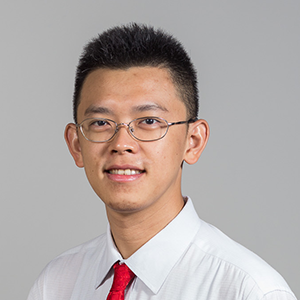
Heeseung Andrew Lee is an Assistant Professor at the Naveen Jindal School of Management, University of Texas at Dallas, specializing in Information Systems. His research explores the economics of information technology and human-AI collaboration, with applications in digital marketing and content consumption. Affiliation: Assistant Professor, Information Systems Department (UTD) Education: PhD & MS from KAIST (2022), BS from KAIST (2017) Teaching: Business Analytics with R, Colloquium in Management Information Systems Research interests span multiple domains in digital transformation: Economics of IT: Quantifying technology ROI in modern organizations AI-Human Collaboration: Understanding human-AI interaction dynamics Digital Marketing: Analyzing consumer behavior in online environments Content Consumption: Studying digital media engagement patterns Recent publications focus on digital content partitioning strategies (2025), behavioral nudges in e-commerce (2024), pandemic mobile tracing effectiveness (2023), and book consumption patterns (2021). These works demonstrate expertise in combining empirical analysis with digital platform research.
David E. Breen is a Professor in the Department of Computer Science within the College of Computing & Informatics (CCI) at Drexel University. He leads the Geometric Biomedical Computing Group and is affiliated with the Metadata Research Center and the Center for Biological Discovery from Big Data. His research spans interdisciplinary domains including biomedical image informatics, geometric modeling, textile modeling, and bio-inspired self-organization algorithms. Education: PhD, Computer and Systems Engineering, Rensselaer Polytechnic Institute MS, Computer and Systems Engineering, Rensselaer Polytechnic Institute BA, Physics, Colgate University His research interests focus on computational methods for biomedical applications, including shape and image analysis for cancer diagnosis, 3D reconstruction of biological tissues, and video analysis of animal behavior. He also investigates geometric modeling techniques for textiles and self-organizing systems. His work integrates computer science with biology, medicine, and engineering to solve complex problems in biomedical computing. The recent publications highlight a strong trend in computational modeling of textiles, biomedical image informatics, and AI-driven data analysis. Key themes include geometric modeling of knitted fabrics, deep learning for medical image classification, agent-based modeling of cancer metastasis, and metadata generation for biological image collections. His work bridges fundamental geometric algorithms with practical applications in healthcare and digital archives. Scientific Awards: No specific awards mentioned in the provided text. Breen has advised numerous students and collaborators across multiple domains, particularly in biomedical computing and textile modeling. His research has been supported through affiliations with major centers and collaborations with institutions such as Johns Hopkins University and the Max Planck Institute. He has been involved in projects related to NSF Center for Visual & Decision Informatics and has contributed to over 100 technical publications. He leads the Geometric Biomedical Computing Group , which conducts research at the intersection of biology, medicine, engineering, and computer science. The group develops algorithms and software for geometry-related computing problems in biomedical applications. Collaborations include the Drexel Integrated Laboratory for Cellular Tissue Engineering, Dr. Dan Marenda's Lab, and Dr. Aleister Saunder's Lab in Drexel's Biology Department.
Dr. Clare Hume is a Senior Lecturer in the School of Public Health at the University of Adelaide, within the Faculty of Health and Medical Sciences. She serves as Program Director for the Honours program in the School and teaches courses in Infant, Child and Adolescent Health, and Communication for Health Sciences. Her research focuses on sustainable environments and children’s health, emphasizing physical activity promotion, reducing sedentary behaviors, and improving nutrition through innovative interventions in family, school, and community settings. She is an Editorial Board member for the American Journal of Health Promotion and Associate Editor for the Health Promotion Journal of Australia . Currently supervising two MPH students and an Honours student, her work bridges environmental sustainability and public health, particularly addressing waste reduction and healthy eating strategies. Key research themes include the impact of built environments on physical activity, interventions targeting screen-time reduction, and policy analysis for health and environmental co-benefits. Dr. Hume’s publications highlight school lunchbox innovations, community garden effects, and the Transform-Us! trial’s impact on children’s cardiometabolic health. Her contributions emphasize translational research to translate evidence into actionable strategies for healthier lifestyles and sustainable practices among children and families.
Alexander Refsum Jensenius is a Professor of Music Technology and Director of the RITMO Centre for Interdisciplinary Studies in Rhythm, Time and Motion at the University of Oslo. He also leads the fourMs Lab and co-founded the MishMash Centre for AI and Creativity. His work bridges musicology, psychology, and technology, focusing on embodied music cognition, human motion analysis, and creative applications of AI. Notably, he pioneered research on air guitar motion and human micromotion through projects like the Oslo Standstill Database . Educated at the University of Oslo (BA in Music and Mathematics, MA in Musicology) and Chalmers University of Technology (MSc in Applied IT), Jensenius holds a PhD in Music Technology from UiO. He has held visiting researcher roles at UC Berkeley, McGill University, and KTH. Leadership roles include Department of Musicology Head (2013–2016) and Steering Committee Chair for the International Conference on New Interfaces for Musical Expression (NIME, 2011–2022). Research interests span music-related body motion, AI in creative contexts, and open research practices. Key contributions include the Music Moves and Motion Capture MOOCs, the Musical Gestures Toolbox software, and monographs like Sound Actions and Sonic Design . His work emphasizes interdisciplinary collaboration, with projects addressing ventilation systems' acoustic properties and cell culture vibrational effects. Awards include the European Open Data Champion recognition. He advocates for open science and maintains extensive digital archives of research materials, emphasizing institutional web pages as critical research infrastructure.
Teresa Harms serves as an Honorary Research Fellow in the Management and Organisations department at the UWA Business School, The University of Western Australia. Her academic work bridges business, health, and transportation research through innovative time-use methodologies. Her research profile centers on Time Use , Travel Behavior , and Mixed Methods analysis, with significant contributions to understanding patient work in healthcare contexts and active travel patterns. The fingerprint of her work includes intersections with Self-Management, Comorbidity, and Organizational Methods, reflecting interdisciplinary applications across medical and urban planning domains. Analysis of her 2018 publications reveals cohesive methodological threads: both studies leverage time-use data to examine behavioral patterns—one in healthcare settings exploring patient work through mixed methods, the other analyzing UK travel behavior using wearable technology. This demonstrates her signature approach of applying temporal frameworks to diverse real-world systems. She contributed as Investigator 02 to the Healthway-funded Exploratory Research Grant Active travel: Using wearable technology to analyse daily travel behaviour (2018-2021), collaborating with D. Olaru, M. Rosenberg, and P. Hooper. This project generated substantial academic engagement with 125 Mendeley readers and social media coverage.
Steven Halim is an Associate Professor (Educator Track) in the Department of Computer Science at the School of Computing, National University of Singapore (NUS). He has been a full-time educator since 2007, teaching a wide range of courses including Data Structures and Algorithms, Competitive Programming, and Design and Analysis of Algorithms. He currently serves as the Director of the Centre for Nurturing Computing Excellence (CeNCE) and is a Fellow of the NUS Teaching Academy. Ph.D. in Computer Science, National University of Singapore B.Sc. in Computer Science, National University of Singapore His research and teaching interests focus on algorithms, competitive programming, visualization, and optimization. He is renowned for creating VisuAlgo , an interactive online platform that visualizes data structures and algorithms, used by students and educators worldwide. He is also the co-author of the widely acclaimed book "Competitive Programming" , now in its fourth edition, which is a key resource for programming contest preparation. His recent scholarly work centers on pedagogical innovations in computer science education, particularly algorithm visualization and competitive programming methodologies. Earlier publications from his PhD work focused on stochastic local search, metaheuristics, and algorithm tuning through visualization. The articles span topics from educational technology to combinatorial optimization, reflecting a transition from research in algorithm engineering to leadership in computing education. Commendation Medal (Pingat Kepujian), National Day Awards 2018 NUS Annual Teaching Excellence Award (ATEA) 2014/15, 2017/18, 2018/19 (with Honour Roll) Faculty Teaching Excellence Award (FTEA) 2011/12, 2012/13, 2014/15 (with Honour Roll) Best Teaching Assistant Award 2007/08 Steven Halim has advised numerous students through his courses and competitive programming teams. He has served as the head coach for NUS ICPC teams since 2008 and team leader for Singapore IOI teams since 2009, leading them to multiple international medals. He has also held leadership roles in major international competitions, including Deputy Director for IOI 2020 and 2021, and Regional Contest Director for ICPC Asia Singapore 2015 and 2018. He was a Resident Fellow at NUS Sheares Hall for nine years, deeply engaging with student life. He leads the Centre for Nurturing Computing Excellence (CeNCE), where he manages programming competition activities for both NUS and Singapore national teams. His work integrates education, competition, and mentorship, creating a synergistic environment that has significantly elevated Singapore's performance in international informatics olympiads.
Dr. David C Mohr is a Professor at Northwestern University Feinberg School of Medicine, holding joint appointments in Preventive Medicine, Medical Social Sciences, and Psychiatry. He serves as Director of the Center for Behavioral Intervention Technologies (CBITs) and Chief of Behavioral Medicine in the Department of Preventive Medicine. With a PhD in Clinical Psychology from the University of Arizona (1991), he transitioned from UCSF to Northwestern in 2006. His research focuses on designing digital mental health interventions leveraging user-centered design and smartphone sensor data. Notable contributions include developing smartphone apps for depression/anxiety management and pioneering implementation strategies for scalable digital mental health solutions. He has led over 400 publications, with recent work emphasizing AI ethics, wearable sensing, and healthcare workforce burnout. Education: BA: University of California, Berkeley (1980) MA/PhD: University of Arizona (1988/1991) Affiliations: Center for Behavioral Intervention Technologies (CBITs) Institute for Augmented Intelligence in Medicine Robert H. Lurie Comprehensive Cancer Center Dr. Mohr’s honors include APA and Society for Behavioral Medicine Fellowships. He advises global initiatives like ImplMentAll (EU-funded) and chairs the Society for Digital Mental Health. His work bridges clinical innovation with real-world implementation, emphasizing equity and sustainability in digital health solutions.
Wendy Meiring is a Professor in the Department of Statistics and Applied Probability at the University of California, Santa Barbara. Her research focuses on statistical methods for analyzing complex data in neuroscience, environmental science, and biomedical applications. She specializes in spatial and temporal processes, computational statistics, machine learning, and uncertainty quantification. Her work integrates advanced statistical techniques with real-world challenges, such as analyzing brain imaging data, pharmacokinetic models, and environmental monitoring. She has contributed to methodologies for functional data analysis, clustering-based correlation estimation, and spatial-temporal modeling. Dr. Meiring has published extensively in top journals, including The Journal of Computational and Graphical Statistics , focusing on topics likeFréchet regression, pharmacokinetic modeling, and environmental phenology. Her research bridges theoretical statistics with practical applications in health, neuroscience, and ecology. She collaborates across disciplines, contributing to programs like the Interdepartmental Graduate Program in Dynamical Neuroscience at UCSB. Her lab develops innovative statistical tools for analyzing high-resolution datasets, emphasizing reproducibility and methodological rigor.
José Manuel Ferreira Machado is a Full Professor at the Department of Informatics, School of Engineering, University of Minho, where he has been affiliated since 1988. His research integrates Artificial Intelligence, Medical Informatics, and Data Mining, with applications in healthcare, industrial systems, and public services. He founded ALGORITMI's 'Knowledge Engineering' group and served as Director of the ALGORITMI R&D Center (2018-2024). Education: Agregado in Informatics (AI), Universidade de Trás-os-Montes e Alto Douro (2011-2012) PhD in Informatics (AI), Universidade do Minho (1995-2002) Licenciatura in Systems and Informatics Engineering, Universidade do Minho (1982-1988) Research Interests: Machado's work focuses on intelligent systems for healthcare (e.g., AIDA medical platform), industrial automation, and smart cities. He emphasizes real-world applications, including clinical decision support, predictive maintenance, and sustainable urban infrastructure. Publications: His recent articles (2022-2025) demonstrate a strong focus on healthcare AI (e.g., disease prediction, COVID-19 analytics) and smart systems (e.g., traffic optimization, energy sustainability), utilizing data mining and machine learning. Awards: Hospital of the Future (2007, 2008, 2009) Good Practices in Health (2014) Portugal Digital Awards (2016) IHF Awards (2021) Advising & Grants: Supervised 16 PhD, 101 MSc, and 4 post-doc students. Leads sub-projects in PRR agendas GReenAuto and Be.Neutral. Secured funding from FCT, EU, and industry partners (e.g., Bosch) for 50+ projects. Labs & Teams: Coordinates the 'Knowledge Engineering' research group at ALGORITMI, focusing on intelligent decision support and interoperability in healthcare and industry.
João Magalhães is a Full Professor in the Department of Computer Science at the Faculty of Science and Technology, Universidade NOVA de Lisboa, Portugal. He serves as Group Coordinator of the Multimodal Systems Group at the NOVA Laboratory for Informatics and Computer Science and leads the NOVASearch research group at FCT/UNL. His research focuses on vision and language information understanding, with particular emphasis on multimodal information understanding, multimodal conversational AI, multimedia search and summarization, temporal and memory models, and social media information quality. His work spans both theoretical foundations and practical applications across web, social media, and clinical domains. Analysis of his recent publications reveals a strong trajectory in multimodal conversational AI systems, with increasing sophistication in handling both voice and visual inputs. His research has evolved from foundational work in cross-modal embeddings to advanced large language models for dual-goal conversational settings, demonstrating consistent innovation in the field of multimodal understanding. 1st prize winner of the second Alexa TaskBot Challenge (2023) Award-winning solution in the Alexa TaskBot Challenge (2022) Best paper award at the Portuguese NLP conference (PROPOR) (2020) Best paper nominations at ACM conferences (2018) Professor Magalhães has advised numerous graduate students through the NOVASearch group and has secured substantial research funding through projects including Amazon Alexa TaskBot Challenge (2021-2023), iFetch (2020-2023), SmartyFlow (2017-2020), COGNITUS (2016-2019), GoLocal (2016-2020), QSearch (2012-2015), ImTV (2010-2013), and CS4SE (2010-2013). He actively serves the research community as ACM Multimedia 2026 Program Committee Chair and has held leadership roles in numerous conferences including ACM Multimedia 2022 General Chair and ECIR2020 General Chair. He leads the Multimodal Systems Group within the NOVA Laboratory for Informatics and Computer Science, where his team develops cutting-edge solutions for multimodal understanding with applications in conversational AI, multimedia search, and social media analysis.
Jonny Holmström serves as Professor at Umeå University's Department of Informatics and directs the Swedish Center for Digital Innovation (SCDI), which he co-founded. He holds an additional affiliation as Professor at the Centre for Transdisciplinary AI, focusing on bridging theoretical research with practical AI applications across sectors including forestry, banking, and public services. His work appears in premier journals such as MIS Quarterly, Information Systems Journal, and Journal of Information Technology. His research centers on digital innovation, transformation, and entrepreneurship, examining how organizations navigate digital change through platform governance, AI integration, and entrepreneurial storytelling. Recent work investigates generative AI's impact on business model design, data work practices, and organizational transformation, emphasizing practical frameworks for managing digital transitions while addressing resistance and ethical considerations. Analysis of his 15 most recent publications (2024-2026) reveals a dominant focus on generative AI's organizational implications, particularly its role in reshaping platform governance, facilitating innovation through prompting, and transforming business models. Concurrent themes include digital platform evolution, data flow management in innovation networks, and citizen-centric digital government design, reflecting a consistent emphasis on practical implementation challenges in real-world contexts. Holmström leads significant research initiatives including a 28 MSEK program at Umeå University and the Kempe Foundation-funded SCDI AI Business Lab. His current project 'Using No-Code AI to Teach Machine Learning in Higher Education' (2024) aims to democratize AI education. He serves on editorial boards for CAIS, EJIS, Information and Organization, and JAIS, and heads the Swedish Center for Digital Innovation research group while participating in 'AI and society' collaborations. He founded and directs the Swedish Center for Digital Innovation (SCDI), which operates the SCDI AI Business Lab exploring practical AI applications for businesses. His work integrates with the Centre for Transdisciplinary AI to advance cross-sector AI implementation, particularly in public services and sustainable business models within the circular economy framework.
Ulf Hedestig is a Senior Lecturer at the Department of Informatics, Umeå University. Based in MIT building, Umeå, Sweden, he focuses on technology-mediated education and digital government research. Contact: ulf.hedestig@umu.se , +46 90 786 61 32. Research Themes : IoT in public spaces, user-centered design, digitalization in education and government, mobile learning environments, knowledge transfer challenges Recent Trends : 2020 work on IoT urban applications, 2018 publications on China's digital strategies and O2O business models Key Collaborations : Mikael Söderström, Daniel Forest, Victor Kaptelinin Scientific Recognition : Excellent Teacher pedagogical qualification Distinguished University Teacher educational qualification
Dr. Yan Tian is a Professor in the Department of Communication and Media at the University of Missouri–St. Louis, College of Arts and Sciences. Her research focuses on audience analysis and media effects in health contexts, with publications in journals like Health Communication , Journal of Health Communication , and Human Communication Research . She teaches courses in communication theories, research methods, intercultural communication, and global media systems. Ph.D. in Communication from Temple University M.A. and B.A. in Journalism from Peking University Her research explores: Media effects on health behaviors (e.g., vaccine hesitancy, exercise intentions, organ donation) Parasocial relationships in medical dramas and their impact on trust in physicians Communication theories applied to health contexts (Theory of Planned Behavior, Normative Social Behavior Theory) Media complementarity in health information seeking Recent trends in her work include: Cross-lagged panel analyses of media effects Psychological reactance and autonomy in health messaging Interdisciplinary approaches combining communication, psychology, and public health Analysis of social media's role in health communication Contact: tiany@umsl.edu | Office: 569 Lucas Hall | Phone: 314.516.5600
Rui Prada is a Full Professor at the Department of Computer Engineering, Instituto Superior Técnico, University of Lisbon. His research focuses on Artificial Intelligence , Game Development , and Human-Machine Interaction , with emphasis on socially intelligent agents and affective computing. His work explores Multi-Agent Systems , XR Testing , and Educational Game Design , particularly for neurodiverse populations. Recent publications highlight Procedural Content Generation , Human-AI Collaboration , and Social Power Dynamics in agent-based systems. Scientific contributions include the Best Poster Award and leadership in projects like PartiPlay and RAGE , advancing Inclusive AI and Game Technologies Marketplace frameworks.
Zhu Yan serves as Professor at Tsinghua University's School of Economics and Management, Department of Management Science and Engineering. He concurrently holds leadership positions as Dean of Tsinghua's Internet Industry Research Institute, Director of the Advanced Information Technology Business Application Laboratory, and Executive Deputy Director of the Medical Management Research Center. Education: Postdoctoral Fellow (1998-2000) and Ph.D. in Nuclear Energy Technology (1994-1998) at Tsinghua University, Bachelor's in Engineering Physics (1989-1994) Professional Experience: Professor (2010-present), Associate Professor (2002-2010), Lecturer (2000-2002); Visiting Scholar at MIT Sloan, CUHK, and Lancelot Institute Professor Zhu's research spans digital transformation , industrial blockchain , and digital production relations , with emphasis on practical applications in healthcare, construction, and finance. His work bridges theoretical frameworks with industry implementation, particularly in China's digital economy evolution. Current projects focus on industrial internet integration and digital finance systems. His 15 most recent publications demonstrate strong interdisciplinary focus, connecting information systems with healthcare analytics (40%), industrial digitalization (35%), and economic policy (25%). The research shows increasing emphasis on AI-driven diagnostic systems and pandemic-responsive economic strategies since 2020. Beijing Philosophy and Social Sciences Excellent Achievement Award (2020) China Petroleum and Chemical Automation Association Science and Technology Progress Award (2010) Multiple Beijing Science and Technology Progress Awards (2001, 2005) Tsinghua University Outstanding Teaching Award (1999) As academic advisor to national initiatives, Professor Zhu leads the China Technology Economics Society's Blockchain Division and serves as Chief Academic Officer for Chengdu University of Information Technology's Blockchain Industry College. His industry partnerships include SAP Global HR Advisory role since 2000 and CCTV Financial Commentary position since 2015. Current research funding focuses on digital infrastructure development through the Industrial Digital Finance Technology Application Laboratory. He directs the Advanced Information Technology Business Application Laboratory, which develops enterprise digital transformation frameworks, and co-leads the Medical Management Research Center's AI diagnostic initiatives. Current projects include national blockchain infrastructure development and pandemic-resilient supply chain systems.