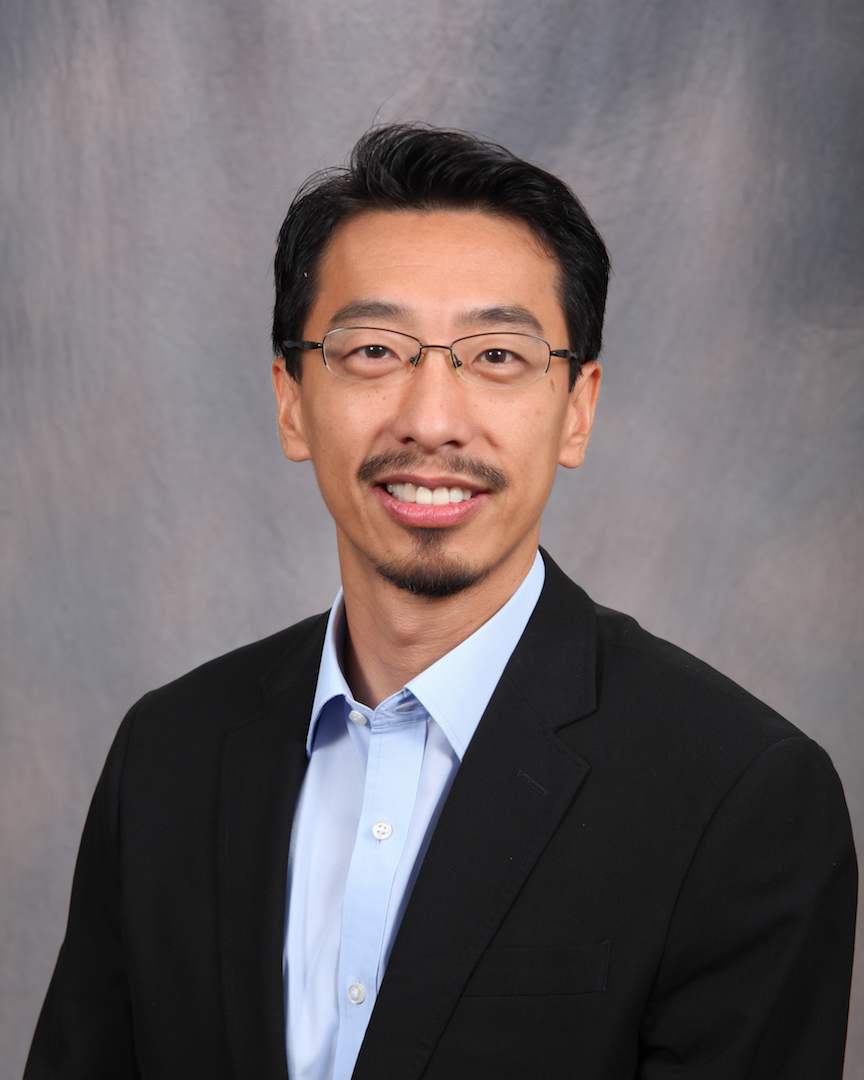
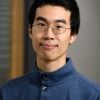
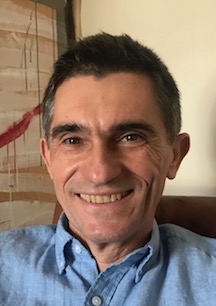
Shan Yu is an Assistant Professor in the Department of Statistics at the University of Virginia. His research focuses on developing statistical and machine learning methods for large-scale, complex data, with applications in neuroimaging, genomics, spatial epidemiology, and health disparities. He employs advanced techniques including non/semi-parametric regression, functional data analysis, and distributed learning while emphasizing data privacy. Yu received his Ph.D. in Statistics from Iowa State University (2020), advised by Professors Lily Wang and Dan Nettleton, following a B.S. from the University of Science and Technology of China. His work bridges statistical methodology and real-world problems, addressing challenges in environmental science (e.g., nitrogen dioxide inequalities), public health (e.g., pandemic forecasting), and computational biology (e.g., genotype-environment interactions). He collaborates on tools like the GgAM R package for generalized geoadditive models and contributes to open-source projects such as fFLM for functional linear regression. Key research trends include spatially varying coefficient models, fusion learning for heterogeneous data, and integration of satellite data with environmental health studies. His publications span journals in statistics, epidemiology, and environmental science, reflecting interdisciplinary impact.
Douglas H Fisher is an Associate Professor of Computer Science and Computer Engineering at Vanderbilt University's School of Engineering. His research focuses on artificial intelligence, particularly machine learning, and computational sustainability. He holds a Ph.D., M.S., and B.S. in Computer Science from the University of California - Irvine. His work bridges AI with societal challenges, emphasizing sustainability, education technology, and cognitive modeling. Notable areas include integrating sustainability into computing curricula, leveraging AI for peer review systems (pReview), and exploring bias mitigation in neural networks. He has contributed to foundational machine learning techniques, such as rule induction for medical data analysis and decision tree optimization. Fisher's research spans interdisciplinary applications: from geospatial water resource modeling to MOOCs' social incentives. His educational contributions include blended learning frameworks and open educational resources advocacy. He has authored over 100 publications across AI, sustainability, and education, reflecting a commitment to both technical innovation and societal impact.
Dr. Svetlana Yanushkevich is a Professor in the Department of Electrical and Software Engineering at the Schulich School of Engineering, University of Calgary. She is also a Full Member of the Hotchkiss Brain Institute and the Mathison Centre for Mental Health Research and Education. Her research focuses on biometric technologies, decision support systems, biomedical applications, and computational intelligence. She leads the Biometric Technologies Laboratory, developing strategies for risk assessment in biometric systems and healthcare monitoring through machine reasoning and signal processing. Education : BSc/MSc in Electrical Engineering (1989), State University of Informatics and Radioelectronics, Minsk PhD in Electrical Engineering (1992), same institution Dr. Habilitated in Technical Sciences (1999), Warsaw University of Technology Research Interests : Dr. Yanushkevich’s work spans biometric system design (e.g., gait analysis, facial attributes), decision support via probabilistic models (Bayesian networks, causal inference), biomedical applications (stroke rehabilitation, wearable sensors), and computational intelligence for data science. She emphasizes fairness, bias mitigation, and trustworthiness in AI systems, particularly in healthcare and accessibility contexts. Recent Research Trends : Her recent publications address causal modeling for accessibility barriers, UAV operator cognitive workload, and medical device optimization in radiation therapy. She explores AI ethics, stress contagion in human-robot teams, and cross-spectral biometric systems. Awards & Recognition : 2024 FEIC Fellow (Engineering Institute of Canada) 2019 Research Excellence Award (Schulich School of Engineering) 2001 Senior IEEE Membership Advising & Grants : She coordinates courses like ENCM 509 (Biometric Systems Design) and ENEL 610 (Biometric Technologies). Her research is supported by grants focusing on healthcare AI, accessibility technologies, and computational epidemiology. Labs & Collaborations : Her Biometric Technologies Lab collaborates with institutions like Hokkaido University and the IEEE Computational Intelligence Society. Projects include wearable health monitoring, decision support platforms, and AI-driven epidemiological modeling.
Dr. Chao Tian is an Associate Professor in the Department of Electrical and Computer Engineering at Texas A&M University, part of the College of Engineering. He holds a Ph.D. from Cornell University (2005) and a B.E. from Tsinghua University (2000). His research focuses on information theory, distributed storage systems, coding theory, and machine learning applications, including large language models (LLMs) and privacy-preserving techniques like steganography and private information retrieval (PIR). He has received notable awards, including the 2017 IEEE Jack Wolf ISIT Best Student Paper Award and the 2014 IEEE ComSoc DSTC Best Paper Award. Dr. Tian’s work bridges theoretical foundations and practical applications, such as optimizing storage codes for distributed systems, developing secure PIR protocols, and exploring LLMs in energy and steganographic contexts. His group has pioneered methods for variable-order Markov chain modeling with transformers and designed quantization techniques for perceptual quality. Recent activities include a faculty development leave at MIT/Harvard and delivering distinguished lectures globally on AI and information theory. He advises students on cutting-edge topics like LLM-based steganography and diffusion models. His publications span journals like IEEE Transactions on Information Theory and conferences such as NeurIPS and ISIT, with a focus on coding theory, privacy, and machine learning. He has also contributed to open-source tools like the CAI toolbox for investigating information-theoretic limits. Current projects include optimizing cryptocurrency mining in energy markets and advancing federated learning with adversarial robustness.
Sharmistha Guha is an Assistant Professor in the Department of Statistics at Texas A&M University, part of the College of Arts & Sciences. Her research focuses on Bayesian methods for analyzing complex, high-dimensional data, with applications in neuroscience, network security, and social sciences. She develops techniques for supervised network data analysis, causal inference, and data privacy preservation. Education: Ph.D. in Statistical Science (Duke University, implied by dissertation recognition). Research Interests: Bayesian high-dimensional regression, object-oriented regression, causal inference in randomized trials, probabilistic record linkage, Bayesian nonparametric mixture models, and integration of heterogeneous data types like networks and functional data. Her work addresses challenges in neuroimaging (dMRI/fMRI) and big data analytics. Recent Contributions: Her articles span Bayesian methodologies for network analysis, differential privacy in treatment effect estimation, and applications in environmental health (e.g., PM2.5 exposure studies). Notable trends include leveraging Bayesian hierarchical models for complex data structures and advancing causal inference frameworks. Awards: 2022 Blackwell-Rosenbluth Award (ISBA) 2021 Savage Award Honorable Mention 2024 NSF-DMS Grant 2413721 Grants & Advising: Secured NSF funding for heterogeneous data integration research. Mentored students like Jose Rodriguez-Acosta (NSF GRFP Fellow) and Jacob Pagel (NIH-funded CoSIBS participant). Lab/Team: Leads a research group integrating statistical method development with domain collaborations in neuroscience and network security. Active in organizing workshops and serving on panels to foster academic engagement.
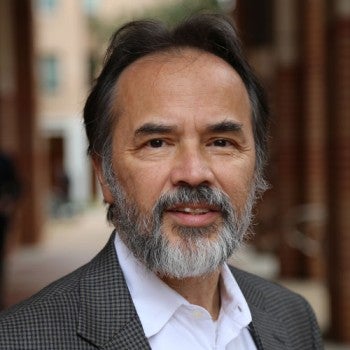
Rudy Guerra is a Professor and Chair of the Department of Statistics at Rice University, where he has been since 2000. His research spans biomedical applications of statistics, including bioinformatics, statistical genetics, and medical imaging, alongside sociological research in education and Mexican migration. He holds academic leadership roles, including Director of the Data Science Minor and member of the BRIDGE and Doerr Institute steering committees. Guerra earned his Ph.D. in Statistics from UC Berkeley, M.A. in Mathematics from UC Berkeley, and B.S. in Applied Mathematics from UT San Antonio. Education: Ph.D., Statistics, UC Berkeley (1992) M.A., Mathematics, UC Berkeley (1987) B.S., Applied Mathematics, UT San Antonio (1984) Key Roles: Department Chair, Statistics (2019–present) Associate Chair, Statistics (2016–2019) Former Jones College Magister (Residential College Leader, 2005–2011) Research Interests: Dr. Guerra’s work integrates statistical methods with biomedical and social science challenges. His biomedical focus includes cancer genomics (e.g., osteosarcoma metastasis, biomarker discovery), medical imaging (e.g., CT ventilation analysis), and bioinformatics. In social sciences, he examines educational inequities and Mexican migration impacts on health. His recent projects include collaborations with Texas Medical Center institutions and sociologists at Rice. Articles Trends: His publications emphasize interdisciplinary applications, combining statistical rigor with domain-specific insights. Recent work spans oncology, public health, and computational biology, reflecting a commitment to bridging theory and practical medical/sociological challenges. Awards & Roles: Panel Member, Ford Foundation Fellowship (2016–present) Associate Editor, BMC Genetics (2014–present) Former Residential College Master of Jones College (2005–2011) Advising & Grants: Guerra advises students on statistical research and curricula. He has led initiatives like the Keck Center for Quantitative Biomedical Sciences Training and co-founded the Empowering Leadership Alliance (ELA) to support underrepresented minorities in STEM. His grants include funding for bioinformatics consortia and educational outreach programs. Labs & Teams: Active in the Gulf Coast Consortia for Bioinformatics and collaborates with multidisciplinary teams at MD Anderson, Baylor College of Medicine, and UT Health Science Center.
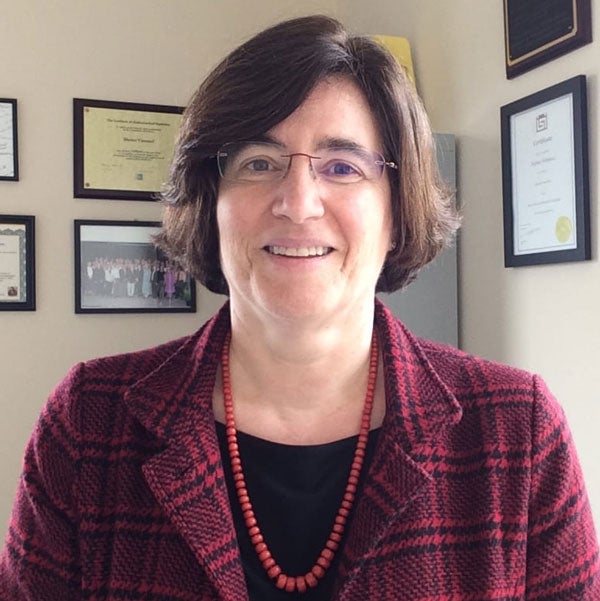
Marina Vannucci is the Noah Harding Professor of Statistics at Rice University, with an adjunct appointment at the UT MD Anderson Cancer Center. She holds a Ph.D. and Laurea in Mathematics from the University of Florence, Italy. Her research focuses on Bayesian statistical methods for complex problems in genomics, neuroimaging, and engineering. She has supervised 31 Ph.D. students and 13 postdocs, published over 185 papers, and received prestigious awards including the Mitchell Prize, Zellner Medal, and Don Owen Award. She has served as Editor-in-Chief of Bayesian Analysis and co-Editor of the Journal of the American Statistical Association. Education: Ph.D. in Statistics (University of Florence, 1996), Laurea in Mathematics (University of Florence, 1992). Research Interests: Bayesian statistics, variable selection, graphical models, statistical computing, applications in genomics, neuroscience, and engineering. Awards: Includes Fellowships from ASA, IMS, AAAS, ISBA, and the 2020 Zellner Medal. Recent recognitions include the 2025 Don Owen Award for excellence in research and contributions to the statistical community. Grants/Advising: Over 30 Ph.D. students and 13 postdocs trained. Key roles include Department Chair (2014–2019) and President of the International Society for Bayesian Analysis (2018). Labs/Teams: Affiliated with Rice Neuroengineering, Ken Kennedy Institute, and the W.M. Keck Center for Interdisciplinary Bioscience Research.
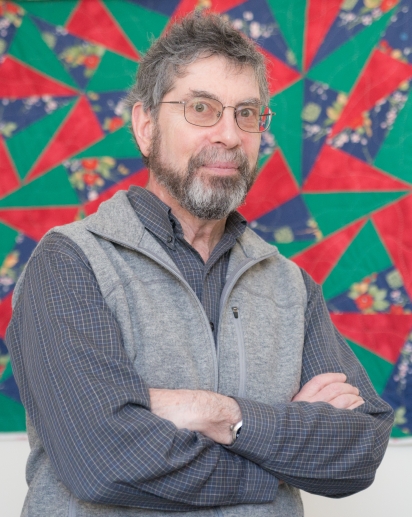
Peter Winkler is William Morrill Professor of Mathematics and Computer Science at Dartmouth College, conducting research in discrete mathematics, probability, and theoretical computer science. His work connects combinatorial problems with statistical physics and algorithmic complexity. Key research areas include: Probabilistic methods in combinatorics and game theory Phase transitions in discrete structures Geometric probability and optimization Mathematical puzzles and paradoxes Winkler's publications resolve fundamental questions in pursuit-evasion theory, geometric set optimization, and combinatorial phase transitions. His work on mathematical puzzles has influenced both academic research and popular mathematics. Current projects explore limit permutations, abelian networks, and new puzzle collections. Honored with the Mathematical Association of America's Lester R. Ford Award and David P. Robbins Prize, Winkler has held visiting positions at the Institute for Advanced Study and Mathematical Sciences Research Institute.
Holden Lee is an Assistant Professor in the Department of Applied Mathematics and Statistics at Johns Hopkins University, where he joined in 2022. His research focuses on the theoretical foundations of machine learning, probability, and their intersections with theoretical computer science. He explores probabilistic methods in modern machine learning, including deep learning-based generative models and convergence guarantees for sampling algorithms like Markov Chain Monte Carlo. Prior to JHU, he was a postdoc at Duke University and a Simons Fellow at UC Berkeley. He holds a PhD in Mathematics from Princeton University and degrees from MIT and the University of Cambridge. Education: PhD in Mathematics, Princeton University, 2019 MASt in Pure Mathematics, University of Cambridge, 2014 BSc in Mathematics, MIT, 2013 Research Interests: Machine Learning Theory Probabilistic Sampling Methods Generative Models Statistical Learning Theory His work emphasizes theoretical rigor, particularly in understanding the success and limitations of deep learning algorithms and designing efficient sampling techniques beyond classical log-concave settings. Articles Trends: Lee’s recent publications (2022–2024) focus on advancing sampling algorithms for complex distributions, analyzing generative models, and improving convergence guarantees for methods like MCMC and score-based diffusion. His work bridges theory and practice, with applications in multimodal data, text generation, and dynamical systems. Awards: Simons Fellow at UC Berkeley (2021) Advising & Grants: Lee has contributed to projects at NeurIPS and collaborates on research in AI efficiency and theoretical guarantees. He teaches courses on probability and applied mathematics at JHU and Duke. Labs/Teams: His research group focuses on theoretical machine learning and probabilistic methods, with ongoing projects on scalable sampling algorithms and generative model analysis.
Ahmed M. Attia is a computational mathematician at the Mathematics and Computer Science Division, Argonne National Laboratory, Lemont, IL, USA. He is also a member of the Laboratory for Applied Mathematics and Numerical Software (LANS) at Argonne. Previously, he was a postdoctoral researcher at Argonne and a research fellow at SAMSI, with affiliation to the Department of Mathematics at North Carolina State University. Education: Ph.D. in Computer Science and Applications, Virginia Tech, 2016 M.S. in Statistics and Computer Science, Mansoura University, 2008 B.S. in Mathematics, Statistics and Computer Science, Mansoura University, 2004 His research spans computational science and engineering, focusing on data assimilation, uncertainty quantification, optimal experimental design, PDE-constrained optimization, Bayesian inference, and high-performance computing . He integrates machine learning and statistical methods into scientific computing frameworks. His work enables robust and scalable solutions for inverse problems in complex physical systems. The primary trend in his recent publications centers on the development of PyOED, an open-source framework that unifies variational and Bayesian data assimilation with optimal experimental design, featuring novel optimization and machine learning solvers. This work bridges applied mathematics, computational science, and software engineering. Scientific Awards: No awards explicitly mentioned. Advising and Grants: Ahmed has mentored and collaborated with researchers such as Abhijit Chowdhary and Shady E. Ahmed on the PyOED project. His research is supported by the U.S. Department of Energy (DOE), particularly through the Office of Science and the Advanced Scientific Computing Research (ASCR) program. Labs and Teams: He is an active member of the Laboratory for Applied Mathematics and Numerical Software (LANS) at Argonne National Laboratory, contributing to national efforts in applied mathematics and scientific computing.
Professor Viktoria Spaiser is a Professor of Climate Politics and Computational Social Science at the University of Leeds' School of Politics and International Studies (POLIS), holding this position since March 2025. Previously, she served as an Associate Professor (2020–2025) and a University Academic Fellow (2015–2020). She is affiliated with the Priestley Centre for Climate Futures and the Leeds Institute for Data Analytics (LIDA). Her research focuses on societal transitions to sustainability, climate governance, and computational social science methods. Education: PhD in Sociology (Bielefeld University, 2012), MA in Conflict, Security and Development (King’s College London, 2008), German Diploma in Computer Science (University of Applied Sciences Trier, 2013). Postdoctoral research included roles at ETH Zurich, the Institute for Futures Studies Stockholm, and Uppsala University. Research interests emphasize rapid, fair transitions to zero-emissions societies, leveraging mathematical and computational tools. Current projects include a UKRI Future Leaders Fellowship on 'Understanding normative change to address the climate emergency.' She explores topics like climate narratives, behavioral change, tipping points governance, and AI applications in social science. Methodological expertise spans agent-based modeling, big data analysis, and Bayesian statistics. Teaching focuses on quantitative and computational methods, including modules on programming for social science, statistical analysis, and climate justice. She supervises PhD students in climate politics, AI ethics, and advanced quantitative methods. Her work bridges academia and policy, addressing global challenges such as disinformation, democratic engagement, and socio-ecological system dynamics. Recent projects include studies on climate protests' impact on policy, smartphone-based behavioral interventions, and EU governance of tipping points.
Andrea Volkamer is a computational chemist and active principal investigator in the field of computer-aided drug design (CADD), with a focus on kinase targets, druggability prediction, and machine learning applications. She has published extensively in journals such as the Journal of Chemical Information and Modeling and Journal of Medicinal Chemistry , with recent work up to 2025 indicating an ongoing academic research program. Her research group, referred to as 'volkamerlab,' develops open-source tools including DoGSite, KiSSim, KinFragLib, and TeachOpenCADD, which are widely used in both academic and industrial drug discovery settings. Her research interests span computational drug discovery , structural bioinformatics , kinase inhibitor design , off-target and polypharmacology prediction , and educational platforms for CADD . She emphasizes open science and reproducibility, particularly through the TeachOpenCADD initiative, which provides interactive Jupyter Notebooks and KNIME workflows for teaching cheminformatics concepts. The 15 most recent publications reflect a strong trend toward integrating machine learning and deep learning (e.g., transformers, graph neural networks) with structure-based methods such as molecular docking, free energy calculations, and binding site comparison. Her work increasingly addresses real-world challenges in drug discovery, including kinase mutation resistance, selectivity optimization, and in vivo toxicity prediction using conformal and hybrid models. Scientific Contributions and Awards: Development of key computational tools: DoGSite, KiSSim, KinFragLib, TeachOpenCADD. Leadership in open-source and open-education initiatives in cheminformatics. Active publication record in top-tier journals with interdisciplinary impact. Advising and Grants: While specific student names and grant details are not mentioned in the provided text, her role as a corresponding author on numerous publications and the existence of a dedicated research lab ('volkamerlab') imply that she mentors students and postdoctoral researchers. She likely secures competitive funding to support her research in computational drug discovery and method development. Labs and Teams: She leads the Volkamer Lab ('volkamerlab'), which focuses on developing and applying computational methods for drug discovery. The lab collaborates with both academic and pharmaceutical partners and emphasizes open-source software development and educational outreach.
Erik Quaeghebeur is an Assistant Professor at Eindhoven University of Technology's School of Mathematics and Computer Science, focusing on uncertainty modeling in artificial intelligence. His work spans probabilistic circuits, imprecise probability theory, and wind energy applications. PhD in Applied Mathematics (Ghent University, 2002-2009) Master's in Applied Mathematics (Université catholique de Louvain, 2001-2002) Master's in Physics Engineering (Ghent University, 1998-2001) Research interests include probabilistic modeling under uncertainty, with applications in AI and wind energy systems. His recent work explores tensor factorizations, equivariant graph neural networks, and scalable probabilistic circuits. Scientific contributions include 60 research outputs and 2 datasets . Awards encompass the ERCIM Alain Bensoussan Fellowship (2013), BOF Postdoc (2010), and B.A.E.F. Francqui Fellowship (2009). He serves on committees for the Society for Imprecise Probability and acts as editorial board member for related conferences. Foundations of Artificial Intelligence course (since 2020) Uncertainty Representations and Reasoning course (since 2021)
Eric F. Lock is an Associate Professor in the Division of Biostatistics & Health Data Science at the University of Minnesota's School of Public Health. He is also a Member of the Masonic Cancer Center (MCC) and has been at the University of Minnesota since 2014, after completing his PhD in Statistics from the University of North Carolina in 2012 and a postdoctoral fellowship in Statistical Genomics at Duke University in 2014. Lock's research focuses on developing methods for the analysis of multi-faceted high-dimensional data, particularly in "omics" fields such as genomics, metabolomics, and proteomics. His work emphasizes the integrated analysis of data from multiple sources (e.g., gene expression, metabolomics, imaging) or measured in multiple dimensions (e.g., multiple tissue types or body regions). He also specializes in exploratory factorization and clustering methods, and Bayesian nonparametric inference. His recent publications demonstrate significant contributions to tensor data imputation (BAMITA), matrix decomposition (EV-BIDIFAC), and methods for handling complex genomic data. His work bridges statistical theory with practical applications in molecular biology, addressing challenges in data integration across multiple biological measurement platforms. Delta Omega, Honorary Society in Public Health (2019) As an active researcher and educator, Lock serves on dissertation committees, including for Mykhaylo M. Malakhov who recently defended his PhD at the University of Minnesota School of Public Health. He is involved in organizing and participating in major conferences such as STATGEN 2025, demonstrating his leadership in the biostatistics community.
Patrick Jaillet is the Dugald C. Jackson Professor in the Department of Electrical Engineering and Computer Science at MIT's School of Engineering. He holds joint appointments with the Laboratory for Information and Decision Systems (LIDS), the Operations Research Center (ORC), the Operations Research and Statistics Group at MIT Sloan, and the Department of Civil and Environmental Engineering. Previously, he served as Head of Civil and Environmental Engineering at MIT (2002-2009) and Chair of the Department of Management Science and Information Systems at UT Austin (1997-2002). Dr. Jaillet's research focuses on online optimization and learning, sequential decision-making under uncertainty, and security and resilience in complex networks. His work spans theoretical foundations in optimization and machine learning with applications in transportation, online market analytics, and network security. He has developed mathematical frameworks for problems involving uncertainty, dynamic resource allocation, and strategic behavior in complex systems. His recent publications reveal strong trends in bridging theoretical optimization with practical machine learning applications. Key themes include Bayesian optimization for black-box functions, online learning with limited information, mechanism design for resource allocation, and network security applications. His work increasingly integrates large language models with traditional optimization techniques, reflecting the evolving landscape of AI-driven decision-making systems. Fulbright Scholar (1990) Fellow of the Institute for Operations Research and Management Science (INFORMS) Best Applications Paper Award at ICAPS 2019 Long-standing Associate Editor for top journals including Operations Research and Transportation Science Dr. Jaillet has advised over 40 doctoral students who now hold prominent positions in academia and industry, including faculty positions at MIT, Georgia Tech, and ETH Zurich, and research scientist roles at Amazon, Microsoft Research, and Google. His research has been consistently funded by major agencies including NSF, ONR, AFOSR, and international partners like Singapore NRF, with current projects focusing on learning algorithms for autonomous security and fundamental tradeoffs in optimization. He leads a vibrant research group spanning MIT's EECS department and ORC, with current funding supporting work on neural bandits, federated optimization, and network security applications. His research group operates at the intersection of theory and practice, with strong connections to industry through collaborations with IBM, Microsoft, Google, and various transportation and technology companies. The group maintains active partnerships with international institutions, particularly through SMART in Singapore, reflecting Dr. Jaillet's global research impact.