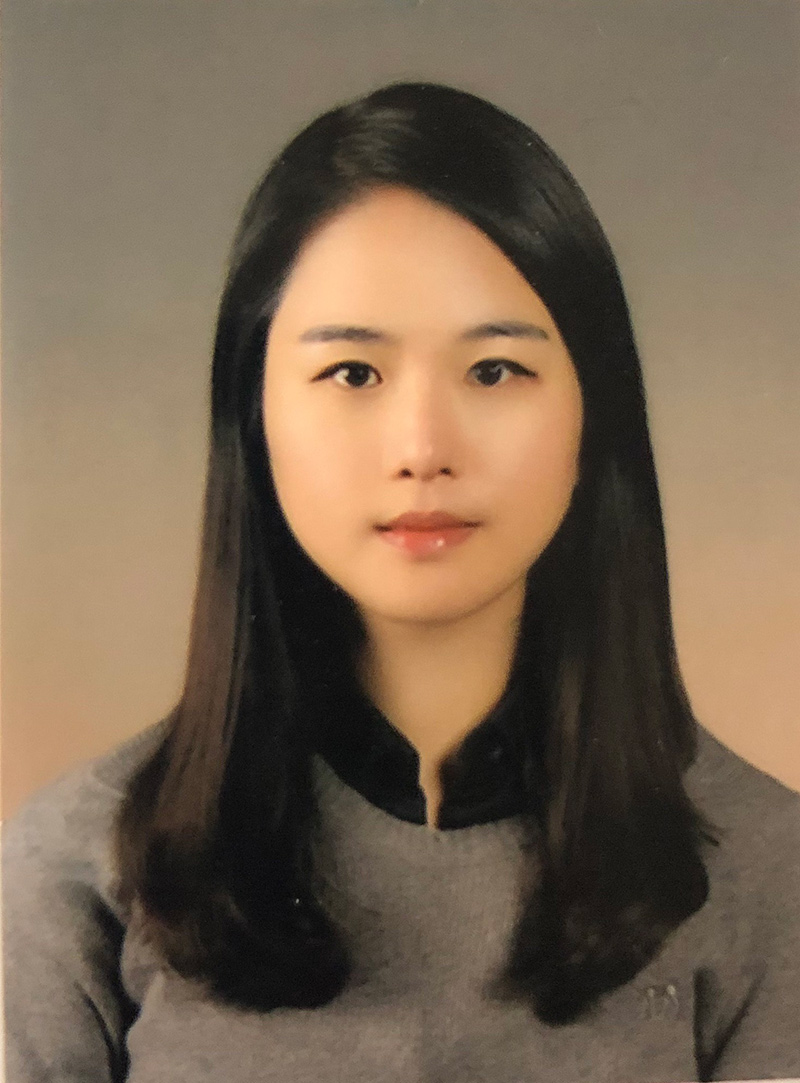
Seul ki Kang is an Assistant Professor in the Mathematics Department at the University of St. Thomas's College of Arts and Sciences. With dual PhDs in Risk Management and Insurance from Georgia State University and Applied Mathematics from Texas A&M, Kang's research spans actuarial mathematics, extreme value theory, and statistical modeling of financial losses. His publications focus on innovative risk analysis methodologies for insurance applications, developing multi-step approaches for ratemaking and risk assessment. Kang's computational modeling expertise includes spectral methods for analyzing flows in heterogeneous media. Courses taught include Foundations of Actuarial Mathematics (ACSC 451), covering life insurance mathematics, annuities, and premium calculations using probabilistic approaches.
Soumendra Lahiri is a Professor and Stanley A. Sawyer Professor in Mathematics and Statistics at Washington University in St. Louis's Department of Statistics and Data Science. He earned his PhD from Michigan State University in 1989 and has held faculty positions at Iowa State University, Texas A&M University, and North Carolina State University before joining WashU in 2019. His research spans theoretical and applied statistics with cross-disciplinary impact. Lahiri's research integrates higher-order asymptotic theory , resampling methods , and high-dimensional inference . He develops novel statistical methodologies for complex data structures in neuroscience, astrophysics, and econometrics. His recent work focuses on bootstrap techniques for modern data challenges like network analysis and machine learning model uncertainty. His publication portfolio shows a consistent focus on: Advancing resampling methods for dependent and high-dimensional data Developing theoretical guarantees for machine learning algorithms Creating inference tools for spatial, temporal, and network-structured data Bridging statistical theory with applications in natural and social sciences Honors include the endowed Stanley A. Sawyer Professorship. He maintains an active research program with recent publications in statistical methodology and interdisciplinary applications, particularly in electoral modeling, network analysis, and extreme value theory.
Dr. Carlos Misael Madrid Padilla is Assistant Professor of Statistics & Data Science at Washington University in St. Louis, where he researches high-dimensional statistics, change point detection, and Bayesian methods. He holds a PhD in Mathematics from the University of Notre Dame and a BS from CIMAT Mexico. His recent publications focus on advanced change point detection methodologies and functional data analysis. Current research explores temporal-spatial modeling using trend filtering and neural networks.
Xuming He is the inaugural Chair of the Department of Statistics & Data Science at Washington University in St. Louis, holding the Kotzubei-Beckmann Distinguished Professorship. Previously, he served as the H.C. Carver Collegiate Professor at the University of Michigan and held roles at the National University of Singapore and the National Science Foundation. His research focuses on robust statistics, quantile regression, Bayesian inference, and interdisciplinary applications in bioinformatics, public health, and atmospheric science. Education: BS in Applied Mathematics (Fudan University, 1984); MS and PhD in Mathematics/Statistics (University of Illinois, 1988-1989). He is a Fellow of the American Statistical Association and the American Association for the Advancement of Science, and currently serves as President of the International Statistical Institute (2023-2025). His work bridges theoretical advancements in statistical methodology with practical applications in clinical trials, environmental science, and sports medicine. Notable contributions include developing scalable quantile regression techniques and promoting reproducible statistical practices through initiatives like the ASA Task Force on Statistical Significance. Awards: Kotzubei-Beckmann Professorship, ISI Presidency, ASA/AAAS Fellowships. His advising and grants focus on advancing statistical methods for complex data structures, with collaborations in concussion research and interdisciplinary data science. He leads the SDS department’s mission to integrate cutting-edge statistical theory with real-world problem-solving.
Sarah Filippi is a Professor and Reader in Statistical Machine Learning at the Department of Mathematics, Imperial College London, and Joint Director of the EPSRC Centre for Doctoral Training in Statistics and Machine Learning (StatML) at Imperial and Oxford. She holds affiliations with multiple interdisciplinary networks, including the CNRS-Imperial Abraham de Moivre UMI, AI for Healthcare, and the Wound Healing and Regeneration Network. Her research focuses on Bayesian methods, nonparametric approaches, and their applications in biomedical problems, including systems biology, pharmacology, and epidemiology. Dr. Filippi earned her Ph.D. in Statistical Machine Learning from Télécom ParisTech in 2010. She has held roles at Imperial College London (2011–2014 as an MRC Fellow, 2017–present in various senior positions) and the University of Oxford (2014–2017). Her work bridges statistical theory and practical biomedical challenges, emphasizing uncertainty quantification and scalable algorithms. Her research group develops methods for causal inference, kernel-based learning, and decision-making under uncertainty. Recent publications highlight contributions to clustering algorithms, reinforcement learning, and epidemiological studies. She has received the Medical Research Council Fellowship (2011–2014) and leads collaborative projects with clinicians and computational biologists. Dr. Filippi advises a vibrant research group, including Ph.D. students working on continual learning, Bayesian optimization, and healthcare applications. Her interdisciplinary collaborations span computational biology, chronic disease modeling, and material flow analysis, reflecting her commitment to translational research.
James Martin is an Honorary Research Fellow in the Statistics Section of the Department of Mathematics at Imperial College London, part of the Faculty of Natural Sciences. He previously served as a Senior Teaching Fellow, leading modules on the MSc in Machine Learning and Data Science. His research focuses on machine learning applications in engineering, spatial statistics for ecological systems, and Bayesian inference methods using likelihood-free approaches, particularly sequential Monte Carlo techniques. He is affiliated with the Artificial Intelligence Network, Mathematics research and teaching staff, and the Statistics group. His work bridges theoretical statistical methodologies with practical applications in environmental and engineering domains. Recent publications (2012–2025) emphasize advancements in Bayesian computational methods, spatial point processes, and network analysis, reflecting his interdisciplinary approach to solving complex data-driven problems. While no formal advising or grant details are provided, his academic contributions underscore a commitment to advancing computational and applied statistics. He collaborates within Imperial’s mathematics and AI communities, contributing to cutting-edge research initiatives in data science.
Riccardo Passeggeri is an Assistant Professor (with tenure) in Statistics at the Department of Mathematics, Imperial College London, within the Faculty of Natural Sciences. His research focuses on probability and mathematical statistics, particularly random measures, non-parametric Bayesian analysis, extreme value theory, robust statistics, and stochastic analysis. Research Interests: Random measures and their applications Non-parametric Bayesian methods Extreme value theory and robust statistical techniques Stochastic processes and analysis He is actively seeking PhD students interested in his research areas and encourages applications via email. His work spans theoretical advancements and applied methodologies in probability and statistics. Advising & Grants: While no grants are explicitly listed, Dr. Passeggeri emphasizes student mentorship and collaboration in his research endeavors.
Alastair Young is a Professor and Chair in Statistics at Imperial College London's Department of Mathematics within the Faculty of Natural Sciences. His research focuses on advanced frequentist statistical methods, including bootstrap techniques, saddlepoint approximations, and spatial data inference. He has held prior roles as Reader in Methodological Statistics at the University of Cambridge (pre-2005). Key research areas include computer-intensive statistical methods, parametric and non-parametric inference, and approximation strategies for complex models. He is a Fellow of the Institute of Mathematical Statistics and previously served as Joint Editor of the Journal of the Royal Statistical Society, Series B. Alastair's work bridges theoretical developments (e.g., hybrid bootstrap methods, quantile estimation) with applications in econometrics, artificial intelligence, and bioinformatics. Recent publications emphasize causal inference in clinical trials, high-dimensional statistics, and principled data science methodologies. Awards: Fellow of the Institute of Mathematical Statistics Editorial Role: Former Joint Editor, JRSS Series B Key Themes: Bootstrap methodology, likelihood-based inference, spatial statistics
Moulinath Banerjee is a Professor of Statistics at the University of Michigan, affiliated with the Department of Statistics within the College of Literature, Science, and the Arts (LSA). He holds a B.Stat and M.Stat from the Indian Statistical Institute and a Ph.D. from the University of Washington. His research focuses on non-standard statistical problems, empirical process theory, threshold estimation, graphical networks, and the intersection of statistics with machine learning, particularly in distributed computing and data integration. Education: B.Stat (Hons), Indian Statistical Institute, 1995 M.Stat (Mathematical Statistics and Probability), Indian Statistical Institute, 1997 Ph.D. in Statistics, University of Washington, 2000 Research Interests: Inference under shape-restrictions and non-differentiable models Statistics-ML interface, including transfer learning and weak supervision High-dimensional and low-dimensional statistical methods Applications in crime modeling, policy evaluation, and causal inference Recent work emphasizes statistical methodologies for modern challenges like distributed computing, data integration, and performativity in predictive systems. His articles span topics such as change-plane regression, Hawkes processes, and posterior drift in transfer learning, reflecting contributions to both theory and applied domains. Scientific Awards: 2011 IISA Young Investigators Award Fellow of the Institute of Mathematical Statistics (IMS) Fellow of the American Statistical Association (ASA) IMS Medallion Lecture Awardee (2024) Teaching includes advanced courses in statistical theory (e.g., Stats 610, 611, 612) and applied methods (e.g., Stats 412, 425). Collaborations span academia and industry, addressing interdisciplinary challenges in data science and statistical methodology.
Colin Fogarty is an Assistant Professor of Statistics at the University of Michigan, Department of Statistics within the College of Literature, Science, and the Arts. Previously, he held positions at MIT Sloan School of Management and completed his Ph.D. at the Wharton School of the University of Pennsylvania. His research focuses on causal inference, particularly in observational studies, experimental design, and applications in medicine and public health. He has contributed significantly to sensitivity analysis, heterogeneous treatment effects, and robust statistical methodologies. Education includes a Ph.D. in Statistics from Wharton (2016) and an A.B. in Statistics from Harvard University (2011). Awards include the Biometrics Early-Stage Investigator Award (2018), Tom Ten Have Award (2017), and J. Parker Bursk Memorial Prize (2015). His work often addresses methodological challenges in causal inference, with applications to healthcare outcomes and policy analysis. Teaching spans undergraduate and graduate levels, including courses like Applied Regression Analysis and Statistical Thinking. Fogarty has developed R software packages for Bayesian hierarchical models and sensitivity analysis, reflecting his commitment to computational tools for statistical practice.
Ya'acov Ritov is a Professor of Statistics at the University of Michigan, affiliated with the Department of Statistics under the Literature, Science, and the Arts (LSA) School. He also held the Francis Hock Emeritus Chair in Statistics at The Hebrew University of Jerusalem. His academic career includes positions as a Lecturer (1984), Senior Lecturer (1989), Associate Professor (1990), and Professor (1992) at Hebrew University before joining the University of Michigan as a Professor in 2015. Ritov's research focuses on statistical theory, semiparametric models, high-dimensional data analysis, and empirical Bayes methods. He has contributed to areas such as robust Bayes procedures, errors-in-variables models, and the analysis of contingency tables. His work bridges theoretical advancements with practical applications in fields like machine learning, biostatistics, and econometrics. Education: B.Sc. in Electrical Engineering (1973, Technion), M.Sc. in Electrical Engineering (1980, Technion), Ph.D. in Statistics (1983, Hebrew University of Jerusalem). His doctoral thesis, advised by Peter J. Bickel and Yosef Yahav, explored robust Bayesian procedures. Scientific Awards: Francis Hock Emeritus Chair in Statistics (Hebrew University). Students: Advised numerous Ph.D. and Master's students, including Michael Law, Hamid Eftekhari, and Debarghya Mukherjee. His academic mentorship spans foundational statistical theory and applied methodologies. Labs/Teams: Collaborates extensively with researchers in statistics and interdisciplinary fields, contributing to projects on algorithmic fairness, transfer learning, and high-dimensional inference.
Yixin Wang is an Assistant Professor of Statistics at the University of Michigan, affiliated with the Department of Statistics within the College of Literature, Science, and the Arts. His research focuses on Bayesian statistics, causal inference, and machine learning. Previously, he was a postdoctoral researcher at UC Berkeley under Michael Jordan and earned his Ph.D. in Statistics from Columbia University (2020) and B.Sc. in Mathematics & Computer Science from Hong Kong University of Science and Technology (2014). Education: Ph.D., Columbia University (2020); B.Sc., HKUST (2014) Research Interests: Probabilistic generative modeling and Bayesian statistics, including large language models and diffusion models Causal machine learning, including causal representation learning and causal inference for language models Applications in recommender systems, computational biology, and human-AI interactions His work emphasizes robust statistical methods and causal approaches to address real-world challenges, such as bias mitigation in algorithms and equitable treatment allocation in healthcare. He currently leads a research group seeking to advance causal machine learning and probabilistic models, with postdoctoral openings available. Key contributions include developing robust Bayesian methods, causal inference frameworks for unstructured data, and applications in electronic health records and materials discovery. He has been instrumental in bridging theory and practice in areas like feedback loop mitigation in recommenders and causal fairness assessment.
Matias Salibian-Barrera is a full Professor in the Department of Statistics at the University of British Columbia's Faculty of Science, where he leads research in robust statistical methodologies with applications across machine learning, biostatistics, and environmental sciences. His research focuses on developing computationally efficient robust techniques resistant to outliers and model misspecification. Key areas include: Robust regression and inference for high-dimensional data Robust causal inference with complex observational data Robust functional and spatial data analysis Integration of robust methods with deep learning architectures Applications in genomics, climate science, and finance His recent publications demonstrate a strong trend toward unifying robust statistics with modern machine learning, particularly in adversarial settings and high-dimensional inference, while maintaining rigorous theoretical foundations. Notable honors include: CRM–SSC Prize in Statistics Fellow of the American Statistical Association Killam Research Prize Coxeter-James Prize He actively supervises doctoral students and secures major grants from NSERC and CIHR, focusing on robust methods for biomedical and environmental data. His work involves collaborations with UBC's Machine Learning Group and the Pacific Institute for the Mathematical Sciences, where he develops open-source software for robust statistical computing.
Dr. Monica Pirani is a Lecturer in Biostatistics at the School of Public Health within the Faculty of Medicine at Imperial College London. She previously held roles as a Research Associate in Biostatistics at Imperial College and a Research Fellow in Statistics at the University of Southampton, collaborating with the Oceanographic Centre. Prior to this, she spent 10 years in Italy working as a Statistician and Sociologist for Public Health Agencies and the University of Modena and Reggio Emilia. Monica Pirani holds a PhD in Environmental Studies from King's College London, and multiple advanced degrees including an MSc and BSc in Biostatistics and Experimental Statistics from the University of Milano-Bicocca, an MSc in Epidemiology from the Catholic University of the Sacred Heart (Rome), and a Specialization in Sociology and a Degree in Political Science from the University of Bologna. Her research focuses on applying statistical methods to understand human-environment interactions, emphasizing the One Health framework. Key interests include spatial and spatio-temporal statistics, Bayesian methods, time-series analysis, and multi-source data fusion. She investigates ecological impacts of climate change, environmental health dynamics, and epidemiological phenomena, with notable work in São Paulo (Brazil) on temperature-related mortality and vector-borne diseases like dengue. Her methodological contributions span hierarchical Bayesian models and nonparametric statistics. Pirani’s articles (15 most recent listed) reflect a growing emphasis on climate change and pandemic health impacts. Recent work explores temperature-associated mortality trends, air pollution effects on brain health, and virtual collaboration strategies for interdisciplinary research. Her studies often bridge environmental science with public health policy, particularly in vulnerable populations and urban settings. She contributes to the Earth Observation Network, Epidemiology and Biostatistics department, and the Grantham Institute at Imperial College London. These affiliations support her focus on environmental monitoring, epidemiological analysis, and climate change mitigation strategies.
Nathan Kallus is an Associate Professor at Cornell Tech and Cornell University, affiliated with the Department of Operations Research and Information Engineering (ORIE), as well as Computer Science (CS), Economics, Statistics, and Computational Applied Mathematics (CAM). His research focuses on data-driven decision-making, causal inference, optimization, and machine learning. Kallus holds a PhD from MIT and undergraduate degrees from UC Berkeley. He leads the Netflix Machine Learning & Inference Research team and advises students in topics like reinforcement learning, causal ML, and policy evaluation. His work bridges theory and practical applications, with contributions to A/B testing, off-policy evaluation, and spatiotemporal causal inference. Education: PhD in Operations Research (MIT), BA in Pure Mathematics, BS in Computer Science (UC Berkeley). Current research emphasizes causal inference powered by ML, distributional RL for LLM post-training, and efficient sequential decision-making. Recent projects include GST-UNet for spatiotemporal data, Value-Guided Search for reasoning, and nonparametric IV inference. His work has been recognized for its methodological rigor and impact on fields like healthcare, digital platforms, and public policy. Students and Collaborators : Advises PhD students (e.g., Antonia Oprescu, Kaiwen Wang) and alumni in academia and industry roles. Collaborates on projects spanning causal ML, fair AI, and large-scale experimentation. Recruits motivated PhD candidates for interdisciplinary research. Labs and Teams : Research Director at Netflix’s Machine Learning & Inference group, leading work on decision rules, recommendation systems, and causal analysis. Active in Cornell’s ORIE department and affiliated with interdisciplinary initiatives in AI and statistics.