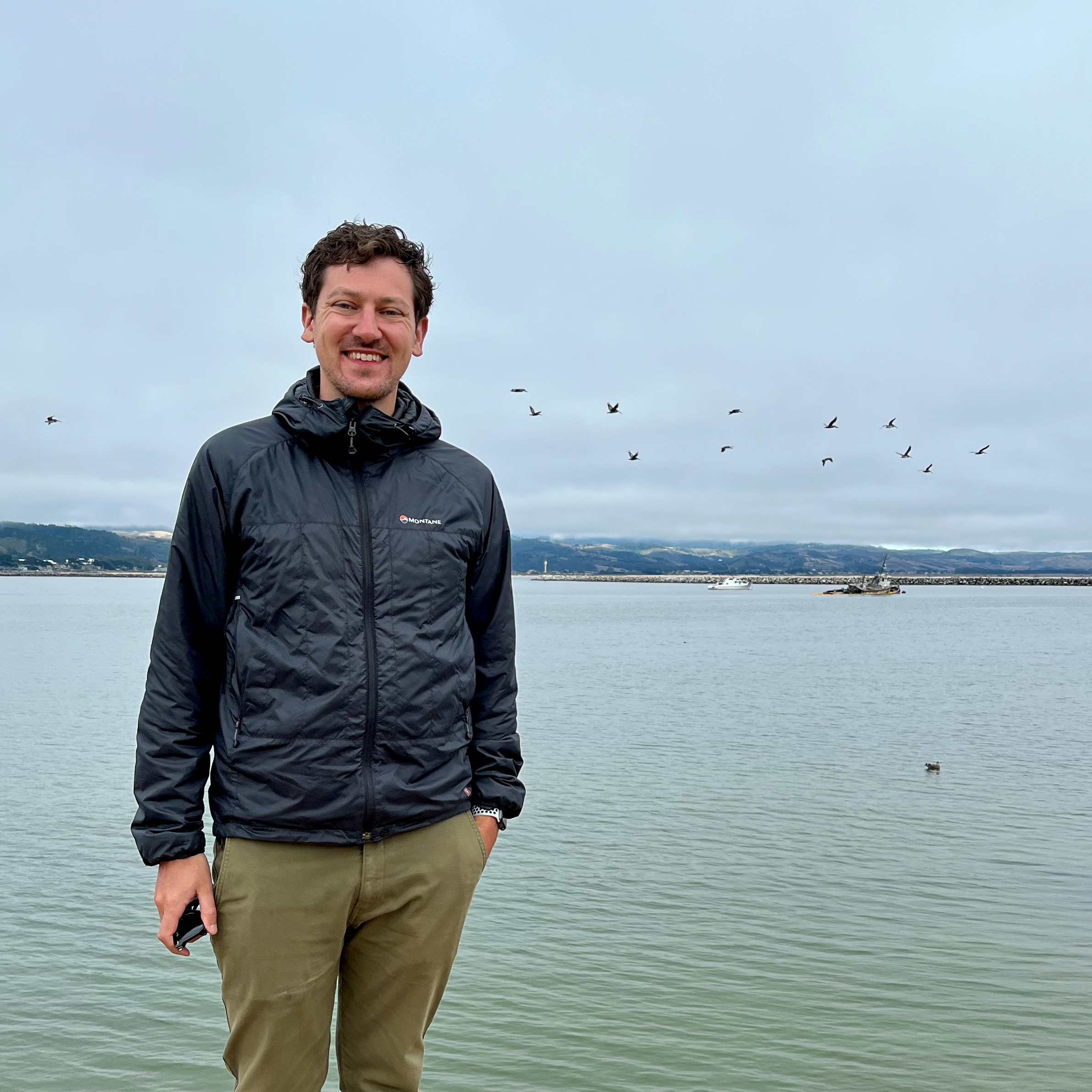
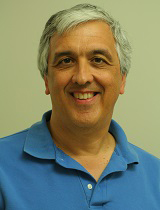
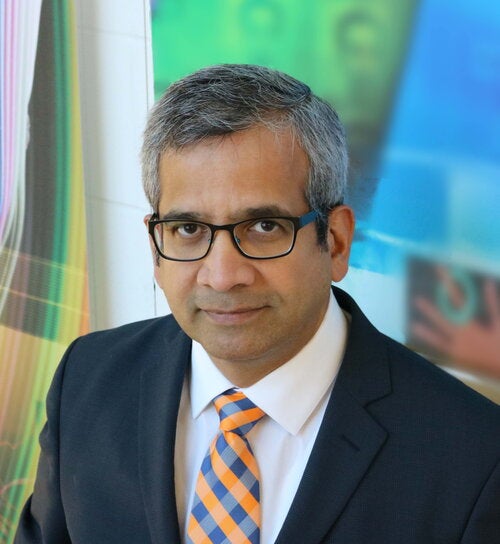
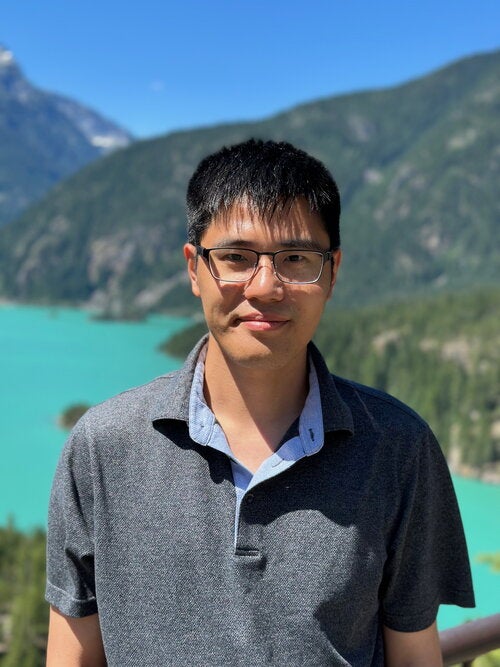
Li Ma is Professor of Statistical Science and Biostatistics at Duke University. She develops Bayesian methods for high-dimensional data, with applications in image compression, cytometry, and microbiome research. Her recent work includes probabilistic image representation techniques, hidden Markov Pólya trees for distribution modeling, and graphical models for microbiome data. She has contributed to pain research through genetic association studies and phenotypic clustering. Ma leads NIH- and NSF-funded projects on statistical modeling of microbiome data and scalable inference. She is an ISBA and ASA Fellow and holds a CAREER award.
Adam Smith is an Assistant Professor of Marketing at the UCL School of Management, affiliated with University College London since 2017. He holds a PhD in Marketing, MS in Statistics, and BA in Economics from The Ohio State University. Currently on academic leave for the 2022/23 and 2023/24 academic years, his research focuses on quantitative marketing, demand estimation, Bayesian statistics, and computational modeling in market definition and personalization. His work addresses high-dimensional demand models and optimal pricing strategies. Research Interests: Quantitative Marketing & Demand Estimation Consumer Heterogeneity & Targeted Marketing Bayesian Hierarchical Modeling Shrinkage Estimation & Nonparametric Methods Recent scholarly contributions span diverse fields including dementia research policy, epigenetic studies in neurodegenerative diseases, telehealth implementation, and interdisciplinary computational methods. His 2025 work on dementia career gender dynamics and 2024 analysis of Alzheimer’s epigenetic networks exemplify cross-disciplinary impact. Awards: No prizes explicitly listed in provided texts. Grants/Advising: No specific grants or advisee records documented here. Active in mentoring early career researchers via platforms like StepUp and global policy surveys. Labs/Teams: Collaborates across healthcare, economics, and computational research networks without formal lab designation mentioned.
Thomas Severini is a Professor of Statistics and Data Science at Northwestern University's Weinberg College of Arts & Sciences. He holds a Ph.D. from the University of Chicago (1987). His research focuses on likelihood-based statistical methods, including higher-order asymptotic approximations and applications in finance, econometrics, and sports analytics. He has authored influential works such as Introduction to Statistical Methods for Financial Models (2017) and Analytic Methods in Sports (2014). Key research interests include: (1) Development of statistical methodology for complex models, (2) Application of likelihood-based techniques in finance/econometrics, (3) Analysis of sports performance data. Notable contributions include work on integrated likelihood functions and jet lag effects on MLB performance. Publications span top journals like Biometrika , Journal of Econometrics , and Proceedings of the National Academy of Sciences . His work bridges theoretical statistics with practical applications in diverse domains.
Douglas G. Simpson is a Professor of Statistics at the University of Illinois Urbana-Champaign (UIUC) and Affiliate Professor at the Beckman Institute for Advanced Science and Technology. He has held leadership roles, including Chair of the Department of Statistics (2000–2019) and Associate Director of the Institute for Mathematical and Statistical Innovation (2020–2022). His research focuses on applied computational statistics, biostatistics, robust statistical methods, functional data analysis, and quantitative image analysis. Education: BA in Mathematics (Carleton College, 1980), MS and PhD in Statistics (UNC Chapel Hill, 1983 and 1985). He has served on editorial boards for journals like the Journal of the American Statistical Association and Biometrics , and on NIH’s Biostatistical Research and Design Study Section. Awards include Fellowships from the American Statistical Association (2000), Institute of Mathematical Statistics (1998), and AAAS (2017). Recent work emphasizes preterm birth risk prediction via quantitative ultrasound, leveraging interdisciplinary collaborations. His publications explore statistical methodologies for functional data, medical imaging, and clinical decision-making. He advises on external relations for the Statistics Department and maintains active roles in professional societies like the ASA and SIAM. Key contributions include advancing robust statistical techniques, developing algorithms for medical image analysis, and leading institutional initiatives in statistical innovation. His work bridges theory and application, addressing challenges in biomedicine, environmental science, and public health.
Venugopal Veeravalli is a Professor in the Department of Statistics at the University of Illinois at Urbana-Champaign, with affiliations in Electrical and Computer Engineering, the Information Trust Institute, and the Coordinated Science Lab. He holds the Henry Magnuski Professorship in Electrical and Computer Engineering. His work bridges statistical signal processing, machine learning, and distributed systems. Research interests focus on quickest change detection , reinforcement learning , multi-armed bandits , sensor networks , and robust learning . His recent work addresses challenges in non-stationary environments, adversarial attacks, and distributed algorithms for dynamic systems. Key contributions include adaptive algorithms for anomaly detection, optimal resource allocation in networks, and theoretical foundations of robust learning. He collaborates across disciplines to advance applications in security, communications, and IoT systems. Publications emphasize methodological innovations with applications to real-world problems like network monitoring and distributed decision-making. Current projects explore resilient algorithms for adversarial scenarios and scalable solutions for high-dimensional data analysis.
Yun Yang is an Associate Professor in the Department of Mathematics at the University of Maryland, College Park . Previously, he held positions as Associate Professor (2022–2022) and Assistant Professor (2018–2022) at the University of Illinois at Urbana-Champaign, and Assistant Professor at Florida State University (2016–2018). He earned a B.S. in Mathematics from Tsinghua University (2011) and a Ph.D. in Statistics from Duke University (2014). His research focuses on Bayesian inference , high-dimensional statistics , machine learning , and optimal transport . Recent work emphasizes applying optimal transport and Wasserstein gradient flows to statistical problems, including regression, clustering, and generative modeling. He also investigates algorithmic scalability and theoretical guarantees for modern statistical methods. Key contributions include advancements in diffusion models for manifold structures, minimax-optimal distribution estimation, and Bayesian model selection via variational approximations. His work bridges theoretical foundations with practical applications in data science and optimization. Service roles include Associate Editorships at Bayesian Analysis (2025–present) and Journal of Computational and Graphical Statistics (2023–present), and Area Chair for AISTATS (2022–present).
Gianluca Baio is a Professor of Statistics and Health Economics at University College London (UCL), Department of Statistical Science. He holds a PhD in Applied Statistics from the University of Florence and has worked extensively in Bayesian statistical modeling for healthcare applications, including cost-effectiveness analysis and causal inference. His research focuses on hierarchical models, missing data methods, and health economic evaluation, with notable contributions to HPV vaccination cost-effectiveness and policy impact assessments. Education: PhD in Applied Statistics, University of Florence (Italy) Master's in Statistics and Economics, University of Florence Visiting Researcher, MIT Sloan School of Management (USA) Research Interests: Bayesian methods in health economics Missing data imputation in clinical trials Cost-effectiveness analysis Interrupted time series for policy evaluation Value of Information analysis Healthcare resource allocation Key Grants: Wellcome Trust-funded study on Bayesian hierarchical frameworks for policy evaluation (2021–2025) MRC grant on regression discontinuity design for drug evaluation (2013–2015) NIHR grants on stepped-wedge trial methodologies Awards & Recognition: None explicitly listed, but recognized for contributions to Bayesian HTA methodologies. Professional Activities: Lead of UCL's Statistics for Health Economic Evaluation Group Author of R packages BCEA and survHE Editorial board member of Medical Decision Making
Radu Herbei is a Professor of Statistics at The Ohio State University, affiliated with the Department of Statistics. He joined the faculty in 2006 and has been funded by NSF and ONR. His research focuses on statistical inference for stochastic processes, including stochastic differential equations and stochastic partial differential equations, with an emphasis on 'exact' inference methods that avoid user-selected grids or approximations. He develops exact Markov chain Monte Carlo (MCMC) techniques using approximations of intractable probability density functions and explores high-performance GPU computing to address computational challenges. His education includes a PhD in Statistics from Florida State University (2006). Research areas include Bayesian statistics, Monte Carlo methods, inverse problems, and uncertainty quantification. Notable contributions include work on the Bernoulli factory algorithm for exact Bernoulli random variates and applications in phylogenetics and environmental modeling. Collaborations span computational biology, oceanography, and ecological systems. Key publications include developments in taxicab MCMC samplers for discrete spaces, Bayesian function registration, and statistical inference for stochastic differential equations. His work bridges theoretical advancements with computational tools, addressing complex modeling challenges in diverse scientific domains.
Leo Duan is an Associate Professor with Tenure in the Department of Statistics at the University of Florida since 2018. His research focuses on developing statistical methods, computational tools, and Bayesian frameworks to address challenges in neuroscience, engineering, and transportation science. He specializes in combinatorial structures like tree graphs, clustering, and signal pathways, integrating optimization and probabilistic techniques. Dr. Duan’s recent work includes advancements in Bayesian inference using optimization, such as bridged posteriors and gradient-based methods. He co-teaches a short course on optimization in Bayesian inference at JSM 2025. His funded projects include NSF-ATD grants for geospatial modeling and hurricane risk mitigation, alongside other institutional awards. His advising spans doctoral students in optimization and diffusion models. Past trainees include Edric Tam (Stanford Postdoc) and Maoran Xu (Indiana University faculty). Current students Zeyu Yuwen and Yu Zheng are nearing graduation. Dr. Duan’s lab actively recruits new graduate researchers. Key achievements include the 2018 NeurIPS Bayesian Non-parametrics Award and a series of high-impact publications in JASA, JMLR, and Biometrika. His research bridges theory and application, with contributions to spanning trees, graphical models, and Bayesian vector autoregression.
Kevin Song is a Professor at the Vancouver School of Economics (VSE), part of the Faculty of Arts at the University of British Columbia (UBC). He holds a B.A. from Seoul National University and a Ph.D. from Yale University. Prior to joining UBC in 2011, he served as an Assistant Professor at the University of Pennsylvania. His research focuses on econometric theory, particularly nonparametric and semiparametric models, optimal inference for nonregular and set-identified parameters, and structural models analyzing economic agent interactions. Education Background: B.A., Seoul National University, South Korea Ph.D., Yale University, USA Research Interests: Inference on nonparametric/semiparametric models Optimal estimation of nonregular parameters Set-identified parameters Structural models in economic interactions Recent Work Trends: His publications emphasize methodological advancements in econometric inference, including diffusion over networks, stable matching theory, and partial identification. His work bridges theoretical rigor with practical applications in service markets, education policy, and large-scale network analysis. Grants and Collaborations: Collaborations with institutions like the Lima Summer School and contributions to research centers such as the Stone Centre on Wealth and Income Inequality highlight his interdisciplinary reach. He oversees research streams in the VSE and contributes to policy discussions through structured empirical methodologies.
Paul Schrimpf is an Associate Professor at the Vancouver School of Economics (University of British Columbia). He obtained his Ph.D. from MIT and works at 112 Iona Building, Vancouver, BC. His research focuses on theoretical and applied econometrics , with particular emphasis on dynamic games , partial identification , and insurance markets . Key research contributions include: (1) developing nonparametric identification methods for production functions with unobserved heterogeneity, (2) analyzing bunching responses to health insurance kinks in Medicare Part D, (3) creating semiparametric estimators for dynamic games with continuous states, and (4) quantifying welfare costs of asymmetric information in annuity markets. His work frequently involves collaboration with leading economists like Liran Einav and Amy Finkelstein. Recent projects examine: (1) regulatory distortions in natural gas pipeline investments, (2) econometric methods for unknown group structures in regression models, and (3) the impact of school reopening policies on COVID-19 transmission. He has published in top journals including Quartely Journal of Economics , American Economic Review , and Econometrica . Contact Information: Email: Paul.Schrimpf@ubc.ca Office: 112 Iona Building, 6000 Iona Drive, Vancouver, BC, Canada, V6T 1L4 Phone: 604-822-5360 (primary), 773-710-4775 (alternate)
Jaehee Kim is an Assistant Professor in the Department of Computational Biology at Cornell University's College of Agriculture and Life Sciences (CALS). Her research integrates mathematical, statistical, and computational approaches to address fundamental questions in population genetics and evolutionary biology, with applications in epidemiology, forensic genetics, and ecological modeling. Education: Ph.D. in Physics, Stanford University B.A. in Physics, Columbia University B.A. in Mathematics, Columbia University Research Focus: Kim's work examines population-genetic dynamical systems, including evolutionary processes that generate genetic/phenotypic variation. She develops models to study dormancy in pathogens like tuberculosis, gene drive dynamics in plants, and methods for analyzing multi-omic data in cancer genomics. Her lab combines statistics, machine learning, and physics to bridge theoretical population genetics with real-world biomedical and ecological challenges. Recent Publications: Her recent studies explore Bayesian phylodynamic inference of dormancy in population dynamics, network-based frameworks for genetic monitoring of fragmented habitats, and multi-omic analyses of cancers like malignant pleural mesothelioma. These works highlight her interdisciplinary approach to linking evolutionary theory with practical applications.
Christopher Genovese serves as Professor and Department Head of the Department of Statistics within Carnegie Mellon University's Dietrich College of Humanities and Social Sciences. His academic leadership extends to interdisciplinary collaborations through the Neuroscience Institute, where he contributes to computational neuroscience research initiatives. Dr. Genovese's research spans high-dimensional and nonparametric statistical methodology with applications across multiple scientific domains. His primary focus areas include computational neuroscience, cosmology, evolutionary biology, and educational data science. Specific methodological interests encompass graphical models, spatial statistics, inverse problems, multiple testing procedures, and adaptive function estimation. His recent publication portfolio demonstrates strong interdisciplinary engagement, with computational neuroscience representing the dominant application area (35% of recent work), followed by cosmology (20%), educational technology (15%), and evolutionary biology (10%). Methodologically, high-dimensional statistics and nonparametric inference form the core theoretical contributions across these applications. Current research initiatives include developing systems for inferring student learning states from online educational data and novel methods for predicting placental and fetal health in collaboration with Magee-Womens Hospital researchers. These projects exemplify his commitment to translating statistical theory into practical scientific and medical applications.
Eugen Pircalabelu is a Lecturer at UCLouvain (Université catholique de Louvain) working at the Institute of Statistics, Biostatistics and Actuarial Sciences (ISBA) within LIDAM at the Faculty of Science. Prior to his current position, he held a Visiting Professor position at Ghent University and a Postdoctoral position at KU Leuven. Dr. Pircalabelu's research focuses on high-dimensional statistics, with particular emphasis on probabilistic graphical models, social network analysis, copula models, and information criteria. His work bridges theoretical statistics with practical applications in fields such as neuroscience (fMRI data analysis) and epidemiology (COVID-19 modeling). His recent publications reveal a strong trend toward distributed and federated learning approaches for high-dimensional graphical models, with applications spanning from financial time series to brain connectivity networks. His methodological contributions include innovations in model selection criteria, sparse estimation techniques, and time-varying network models that have advanced the field of high-dimensional statistical inference. Dr. Pircalabelu actively supervises multiple PhD students including Mengxue Li, Lise Léonard, and Lara Wautier, and has recently guided Ensiyeh Nezakati and Alexandre Jacquemain to completion of their doctoral studies. He teaches courses in nonparametric statistics, numerical methods for statistics, and statistical learning. He serves the statistical community through organizing regular Statistical/Econometrics seminars at ISBA and contributing to the RShiny@UCLouvain platform for open educational resources. Notably, during the COVID-19 pandemic, he developed a SHINY app for predicting hospitalizations and ICU admissions in Belgium.
Ronald Gallant is the Liberal Arts Professor of Economics at Pennsylvania State University. He earned his PhD from Iowa State University in 1971. His research specializes in econometric theory, Bayesian methods, and financial econometrics, with applications to asset pricing, industrial organization, and computational statistics. Gallant develops novel estimation techniques for complex economic models, including Bayesian nonparametrics, Markov chain Monte Carlo methods, and dynamic game theory. His recent work examines asset pricing under ambiguity aversion and high-frequency financial data analysis. He has extensive editorial experience in leading econometrics journals.