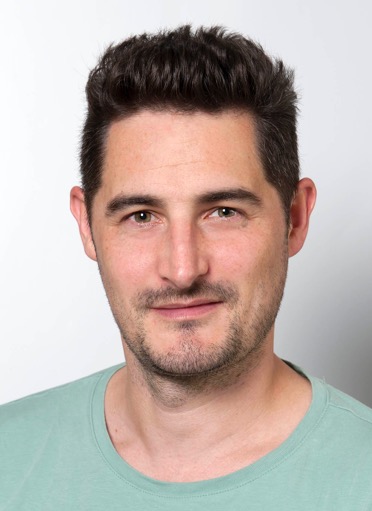
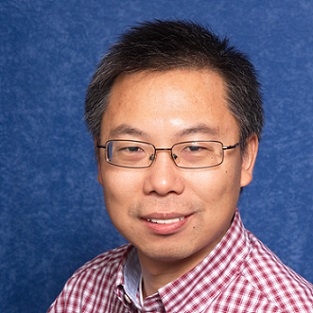
Raghavendra Selvan, an Assistant Professor (Tenure Track) at the University of Copenhagen, holds joint appointments in the Machine Learning Section (Department of Computer Science), Kiehn Lab (Department of Neuroscience), and the Data Science Laboratory. His academic journey includes a PhD in Medical Image Analysis (2018), MSc in Communication Engineering (2015), and BSc in Electronics and Communication Engineering (2009). PhD - Medical Image Analysis, University of Copenhagen (2018) MSc - Communication Engineering, Chalmers University (2015) BSc - Electronics and Communication Engineering, BMS Institute of Technology, India (2009) His research focuses on Bayesian Machine Learning with emphasis on Medical Image Analysis, Graph-based Learning, Tensor Networks, Approximate Inference, and Multi-Object Tracking Theory. Recent publications highlight his contributions to environmentally sustainable AI practices, efficient deep learning in medical imaging, and novel applications of tensor networks. Key research areas: Green AI and Environmental Sustainability Medical Image Analysis Graph Neural Networks Crystal Structure Prediction Model Compression Materials Science Applications
Alvaro Köhn-Luque is an Associate Professor at the Oslo Center for Biostatistics and Epidemiology, University of Oslo, and Group Leader at the Department of Medical Genetics, Oslo University Hospital. His work bridges mathematical modeling with clinical applications, particularly in cancer research. His academic background includes a PhD in Mathematical and Computational Biology from Complutense University of Madrid (2012), preceded by multiple Master's degrees in Mathematics and Physics from Spanish universities. Dr. Köhn-Luque's research focuses on mathematical oncology , developing computational models to understand cancer dynamics and improve treatment strategies. His work spans multiscale modeling of tumor growth, personalized cancer medicine through computer simulations, and biomarker discovery using machine learning approaches. He has made significant contributions to modeling breast cancer progression and treatment response, particularly in the context of endocrine therapy and CDK4/6 inhibition. His recent publications demonstrate a strong trend toward integrating mechanistic learning approaches that combine mathematical models with machine learning techniques. This hybrid methodology allows for more accurate prediction of treatment outcomes while maintaining biological interpretability. His work frequently involves collaboration with clinical researchers to ensure models are grounded in real patient data and have direct translational potential. Computational modeling of tumor heterogeneity and drug response Development of methods for phenotypic deconvolution in cancer cell populations Integration of multi-omics data for personalized treatment prediction Application of birth-death processes to model tumor evolution Creation of user-friendly computational tools for biomedical researchers Dr. Köhn-Luque has supervised multiple PhD students including Even M Myklebust, Salim Ghannoum, and Xiaoran Lai, and has secured funding for projects including RESCUE, BigInsight, and Integreat. His research demonstrates a consistent trajectory from theoretical mathematical biology toward increasingly clinically relevant applications in personalized cancer medicine.
Michael L. Madigan is a Professor in the Grado Department of Industrial and Systems Engineering at Virginia Tech. His research focuses on human factors engineering, biomechanics, and ergonomics, particularly addressing issues related to slips, trips, falls, and musculoskeletal disorders. He leads the Madigan Biomechanics Group, which investigates the biomechanics of human motion and neuromuscular control to enhance occupational safety and elderly health. Education: Ph.D., Biomedical Engineering, Virginia Commonwealth University, 2001 M.S., Bioengineering, Texas A&M University, 1996 B.S., Bioengineering, Texas A&M University, 1994 Research Interests: Obesity’s impact on mobility, aging-related biomechanics, workplace ergonomics, and biomechanical interventions for fall prevention. His work combines experimental and computational methods to develop preventive measures like exercise interventions and ergonomic designs. Professional Roles: Editor-in-Chief, Journal of Applied Biomechanics (2017–present) Formerly Editor, Medicine and Science in Sports and Exercise (2013–2017) Secretary, American Society of Biomechanics (2009–2012) Awards: Kevin P. Granata Faculty Fellow (2013–2014) Virginia Tech College of Engineering Certificate of Teaching Excellence (2014) Finalist for International Society of Biomechanics Clinical Award (2005) Advising & Grants: Advised over 20 doctoral and undergraduate students since 2007. His grants support studies on obesity-related falls, exoskeleton design, and biomechanical modeling. Collaborates with the Virginia Tech-Wake Forest School of Biomedical Engineering and Sciences. Labs/Teams: Director of the Madigan Biomechanics Group and core member of the Occupational Ergonomics and Biomechanics Laboratories. Active in developing smart prosthetics and wearable technologies for injury prevention.
Soora Rasouli is Full Professor of Urban Planning and Transportation at Eindhoven University of Technology, leading research on mobility behavior and sustainable cities. Education: PhD in Built Environment, Eindhoven University of Technology MSc in Civil Engineering (Transport) Her group develops behavioral models integrating emerging technologies like autonomous vehicles and MaaS. Research focuses on decision-making frameworks for urban policies that balance sustainability with human needs. Recent articles analyze activity-travel patterns, household mobility decisions, and EV adoption barriers using advanced statistical methods. Awards: Best Poster Award (2019) Veni Grant for outstanding early-career research (2018) She directs projects like LEVERAGE and NEON, collaborating with European partners on data-driven mobility solutions. As editor of Transportation Letters, she promotes interdisciplinary urban mobility research.
Alan Rooney is an Assistant Professor in the Department of Earth & Planetary Sciences at Yale University, affiliated with the Yale School of Arts and Sciences. He leads the Rooney Geochronology and Geochemistry Group, which is part of the Yale Metal Geochemistry Center. His research integrates radiogenic isotope geochemistry (e.g., Re-Os, Sr, Nd) with field-based methods like sedimentology and stratigraphy to investigate tectonic, climatic, and biologic transitions in Earth history. Current projects include refining Neoproterozoic chronology, studying Mid-Pleistocene ice sheet dynamics, and advancing EARTHTIME’s Re-Os geochronometer standards. His research interests are centered on three main areas: 1) Proterozoic tectonics and eukaryotic diversification, 2) ice sheet dynamics over the last 5 million years using multiple geochemical proxies, and 3) radiogenic isotopes as tracers of crustal-mantle processes. He collaborates with researchers at Dartmouth College, Oxford University, and other institutions to address these topics. The Rooney Lab emphasizes experimental approaches, such as simulating seafloor weathering of mafic rocks, to better understand isotopic fluxes into the sedimentary record. His articles highlight a focus on geochronology and isotopic analysis to unravel climate-tectonic interactions, with recent work emphasizing the Great Oxidation Event, Ediacaran biogeochemical shifts, and Mid-Pleistocene glacial variability. These studies often combine field observations with laboratory experiments to deconvolve complex Earth system processes. Dr. Rooney has no listed scientific awards. He advises three graduate students: Gryphen Goss, Sam Shipman, and Carey Ciaburri. The lab’s NSF-funded involvement in EARTHTIME underscores its commitment to advancing geochronological standards. The Rooney Geochronology Lab operates within ultra-clean facilities equipped with advanced mass spectrometers (e.g., Thermo Fisher Neptune-Plus MC-ICP-MS, Triton-Plus TIMS), adjacent to the Microprobe Facility’s electron microprobe resources, enabling precise geochemical and petrological analyses.
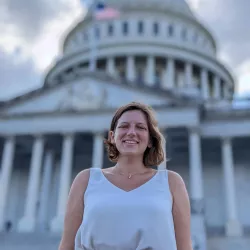
Serena Booth is an incoming Assistant Professor in Computer Science at Brown University. Previously, she served as an AAAS AI Policy Fellow in the U.S. Senate, advising the Senate Banking Committee on AI policy. She holds a PhD from MIT CSAIL (2023) and a BA from Harvard College (2016). Her research focuses on human-AI interaction, specification design for AI systems, and ethical AI practices. She also worked as an Associate Product Manager at Google, scaling ARCore to 100 million devices. Her research explores how humans specify AI behaviors, assess system success, and mitigate misalignment risks. Key contributions include Bayes-TrEx (model transparency via Bayesian sampling) and RoCUS (robot controller understanding). Her work has been supported by NSF GRFP and MIT Presidential Fellowships. She advocates for science policy equity through MIT's Science Policy Initiative and co-founded initiatives to support women in computing (e.g., GW6 at MIT). Education: PhD MIT CSAIL (2023), BA Harvard College (2016) Awards: Rising Star in EECS, HRI Pioneer, NSF GRFP Key Areas: Reward design pitfalls, human-robot trust, ethical AI curriculum development Her recent publications analyze reward function misdesign (AAAI 2023), human-AI teaching frameworks (HRI 2022), and feature attribution reliability (AAAI 2022). She currently seeks PhD students/postdocs focusing on human-AI alignment, reinforcement learning, and policy implications.
James Mitchell is a Professor of Public Policy at the University of Edinburgh’s School of Social and Political Science . He holds a MA (Political Studies) from the University of Aberdeen and a D.Phil. (Oxford). His research focuses on British politics, devolution, public policy, territorial politics, and Scottish nationalism. He has supervised over 30 years of PhDs and Masters in public policy, devolution, and constitutional politics. Key research themes include fiscal accountability in Scotland, party membership surges post-referendum, and multi-level governance. Research Projects: ESRC-funded study on SNP and Scottish Greens’ post-referendum membership growth Investigation of fiscal devolution’s accountability gaps Analysis of Scotland’s constitutional questions and local governance Research Interests: Mitchell explores territorial politics, public service reform, and political behavior in sub-state governments. He has contributed to debates on Scottish independence, EU referendum impacts, and intergovernmental relations. Recent work includes studies on the SNP leadership contest (2023) and Holyrood’s fiscal structures. Grants & Awards: He has secured grants from the Economic and Social Research Council (ESRC) for projects on party membership and constitutional dynamics. No specific scientific awards are listed, but his work is widely cited in political science and public policy. Labs & Teams: He is part of the Territorial Politics Research Group and has collaborated on regional economic forecasting and governance studies. His work often bridges academia and policy, influencing debates on devolution and public finance.
Michael Pawlovich is Assistant Professor of Civil and Environmental Engineering at South Dakota State University's Jerome J. Lohr College of Engineering. His research focuses on traffic safety analytics, statistical modeling of crash data, and transportation infrastructure evaluation. Research expertise includes: Statistical methods for safety evaluation (Empirical Bayes, Bayesian modeling) Geometric design safety impacts Rural intersection safety Infrastructure treatment effectiveness Honors include multiple National Roadway Safety Awards and AASHTO recognitions. Publications demonstrate consistent application of advanced statistics to traffic safety challenges.
Michael A. Newton is a Professor and Chair of the Department of Biostatistics and Medical Informatics at the University of Wisconsin–Madison, School of Medicine and Public Health. His research focuses on statistical methodologies for high-dimensional biomedical data, including cancer biology, immunology, and genomics. He is renowned for developing empirical Bayesian methods, stochastic models, and computational tools for analyzing molecular data. His work integrates statistical theory with interdisciplinary collaborations, contributing to advancements in translational biomedicine. Newton has held prestigious awards, including the Mortimer Spiegelman Award (2003) and the COPSS Presidents' Award (2004). He is an elected Fellow of the American Statistical Association and an elected Member of the International Statistical Institute. He leads the Biostatistics and Epidemiology Research and Design (BERD) core at the Institute for Clinical and Translational Research and is affiliated with the Carbone Comprehensive Cancer Center and the Center for Genome Science and Innovation. His teaching includes advanced courses in computational statistics, Bayesian analysis, and statistical methods in molecular biology. Newton directs graduate programs in Statistics and Biomedical Data Science, emphasizing interdisciplinary training.
Catherine Peters is the George J. Magee Professor of Geosciences and Geological Engineering, and Professor of Civil and Environmental Engineering at Princeton University. She serves as Director of the Program in Geological Engineering and holds associated faculty roles in the High Meadows Environmental Institute (HMEI), Princeton Institute for the Science and Technology of Materials (PRISM), and the Andlinger Center for Energy and the Environment. Her work focuses on environmental chemistry, geochemical reactions, and subsurface energy technologies, including carbon sequestration, geothermal energy, and shale gas extraction. Education: PhD (Joint degree in Civil Engineering and Engineering & Public Policy), Carnegie Mellon University, 1992 MS in Civil Engineering, Carnegie Mellon University, 1987 BSE in Chemical Engineering, University of Michigan, 1985 Research Interests: Dr. Peters explores environmental challenges of subsurface energy systems through experimental, imaging, and modeling approaches. Key areas include CO2 storage in saline aquifers, geochemical reaction kinetics, and remediation of organic pollutants. Her lab uses synchrotron-based techniques and reactive transport simulations to study processes at nanometer to basin scales. She emphasizes collaborative research with national labs and universities. Recent Article Trends: Her publications (2023-2025) highlight advancements in carbon mineralization, hydrogen storage security, microbial geochemical interactions, and multi-scale material characterization. These works bridge environmental engineering, geochemistry, and data science to address decarbonization challenges. Awards & Leadership: Fellow, Association of Environmental Engineering and Science Professors (AEESP) since 2016 2012 EPA P3 Award for the 'Power-in-a-Box TM' sustainable design project Princeton Commendation List for Outstanding Teaching Grants & Collaborations: Funded by NSF, DOE, and EPA, her projects address subsurface energy systems and climate mitigation. She collaborates with national labs via synchrotron facilities and leads initiatives like the Grand Challenges Program. Courses taught include environmental engineering, statistical methods, and geochemical kinetics modeling. Labs & Teams: Affiliated with HMEI, PRISM, and the Andlinger Center, she integrates interdisciplinary teams to advance sustainable energy and environmental solutions. Her group’s work often intersects with global sustainability and equity goals.
Liqiang Wang is a Professor in the Department of Computer Science at the University of Central Florida (UCF), where he directs the Big Data Lab. Previously, he served as faculty at the University of Wyoming (2006-2015). He holds a Ph.D. in Computer Science from Stony Brook University (2006) and spent a visiting research period at IBM T.J. Watson Research Center (2012-2013). His research focuses on big data analytics, high-performance computing, parallel systems optimization, and applying deep learning to detect programming errors and enhance model robustness. Education: Ph.D., Computer Science, Stony Brook University (2006); Visiting Researcher, IBM Watson (2012-2013). Research Interests: Improving accuracy and security of big data models, optimizing parallel computing systems (HPC, Cloud, GPUs), program analysis for concurrency errors, and deep learning applications in anomaly detection and adversarial robustness. Notable projects include scalable LSQR algorithms for seismic tomography and the OpenMP Analysis Toolkit (OAT) for concurrency error detection. Key Awards: NSF CAREER Award (2011), Castagne Faculty Fellowship (2013-2015), UCF Mid-Career Refresh Award (2020), and grants including a $50K NSF CIVIC-PG grant (2022) and Google/Meta donations. Advising and Grants: Supervises over 20 Ph.D./M.S. students and has secured grants totaling over $100K. Notable collaborations include seismic tomography with NCAR and cloud computing optimization. Labs/Teams: Director of UCF’s Big Data Lab, collaborating on projects like Parallel LSQR and Anti-Neuron Watermarking.
Dr. Yijing Li is a Senior Lecturer in Urban Informatics at King’s College London, Department of Informatics. She joined King’s in 2018 and previously held roles at the University of Warwick and China Executive Leadership Academy Pudong. Her research focuses on spatial analysis of urban crime, counter-terrorism strategies, climate change impacts on crime, and risk management using big data. She holds a PhD in Geography of Crime from the University of Cambridge and an MSc in Urban Ecology from Peking University. Her work integrates theories from sociology, criminology, and economics with quantitative and qualitative methods. Key research areas include crime patterns during pandemic lockdowns, One Belt One Road security strategies, and environmental sustainability assessments. She has authored over 30 publications, including studies on London’s crime dynamics, spatial disparities in crime data, and vegetation change modeling using remote sensing. Dr. Li is affiliated with the Centre for Urban Science and Progress (CUSP) London and the Computing Education Research Centre (CERC). She has supervised interdisciplinary projects on employability in data science programs and collaborated with organizations like Transport for London and Westminster City Council. Her recent work examines health resilience in European countries post-pandemic and employs Bayesian models to analyze crime patterns during lockdowns.
Bjoern Menze is a Professor and Rudolf Mößbauer Tenure Track Chair at the Technical University of Munich (TUM), leading the Image-based Biomedical Modeling Group within the Munich School of Bioengineering. His research focuses on medical image computing, tumor growth modeling, and computational physiology, with applications in clinical neuroimaging and personalized radiotherapy design. He holds a Ph.D. in Computer Science from Heidelberg University and has held positions at ETH Zurich, INRIA Sophia Antipolis, MIT, and Harvard Medical School. His academic journey includes a postdoc at MIT’s CSAIL and Harvard Medical School, followed by roles at ETH Zurich and INRIA. His work bridges biomedical imaging with machine learning, emphasizing model-driven analysis of physiological processes. He has been a visiting professor at Maastricht University and contributes to initiatives like the Center for Translational Cancer Research at TUM. Key research areas include tumor growth modeling, quantitative imaging biomarkers, and integrating mathematical models with clinical data. His awards include the MICCAI Young Scientist Award (2014), Leopoldina Fellowship (2009), and DFG Research Fellowship (2008). He advises on medical AI, leads interdisciplinary projects, and publishes extensively in top journals like Nature Neuroscience and IEEE Transactions on Medical Imaging. His lab’s work spans applications such as glioblastoma radiotherapy optimization, whole-body bone lesion detection, and neural connectivity imaging. Collaborations include institutions like Harvard, MIT, and ETH Zurich. He emphasizes translating computational methods into clinical practice for personalized healthcare solutions.
Dr. Swati Chandna is a Senior Lecturer at the School of Computing and Mathematical Sciences, Birkbeck, University of London. She holds an honorary position as an Honorary Lecturer in Statistics at University College London (UCL) from January 2023 to January 2026. She earned her PhD in Statistics from Imperial College London in 2013. Her research focuses on statistical modeling, network analysis, and bioinformatics, with notable contributions to stochastic networks, single-cell genomic data analysis, and complex-valued signal processing. Teaching responsibilities include modules such as Bayesian Methods, Analysing Data, Statistical Analysis, and Project Applied Statistics. She serves as Admissions Tutor for Graduate Certificate and Diploma in Statistics for Data Science and as School Ethics Lead at Birkbeck. Her work bridges theoretical statistics with practical applications in genomics, environmental modeling, and biomedical research. Dr. Chandna’s recent research explores topics like covariate-driven network estimation, stochastic modeling of genomic data, and bootstrap techniques in source separation. Her publications reflect interdisciplinary collaboration across statistics, computer science, and life sciences.
Professor Ian Marschner is a leading academic in biostatistics, currently holding the position of Professor of Biostatistics and Co-Director of Biostatistics at the NHMRC Clinical Trials Centre, University of Sydney. He has extensive experience spanning over 30 years, including roles as Professor and Head of the Department of Statistics at Macquarie University, Director of Biometrics at Pfizer, and Associate Professor at Harvard University. His research focuses on biostatistical applications in clinical trials, epidemiology, and public health, with a particular emphasis on adaptive trial designs, meta-analysis, and disease surveillance. Professor Marschner has contributed to major clinical trials in cardiovascular medicine, oncology, HIV/AIDS, neonatal/perinatal care, and COVID-19. He co-authored the book Inference Principles for Biostatisticians and is involved with the Biostatistics Collaboration of Australia (BCA) in developing and teaching the Masters of Biostatistics program. His grants include the NHMRC Centre of Research Excellence (AusTriM) and a National Critical Research Infrastructure Initiative grant totaling over $20 million. Research students under his supervision include Aydin HIBBERT, focusing on generalized joint regression models for longitudinal data. His work addresses methodological challenges such as bias in early-stopped trials, surrogate endpoints, and statistical frameworks for adaptive experiments. Recent contributions include risk modeling for diabetes, cardiovascular mortality prediction, and biomarker analysis in cancer therapies.