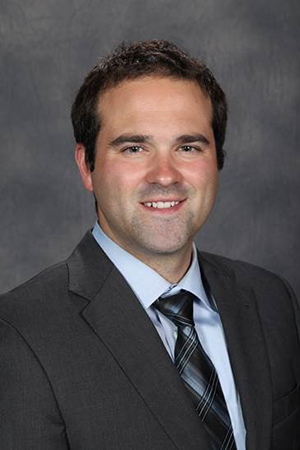
Christopher F. Barnes is an Associate Professor in the School of Electrical and Computer Engineering at the Georgia Institute of Technology, with adjunct status as a Principal Research Engineer at the Georgia Tech Research Institute (GTRI). He holds a Ph.D. from Brigham Young University (1989) and has over 27 years of experience in radar signal processing, software engineering, and applied research. His research focuses on synthetic aperture radar (SAR) analysis, data mining, and image/video-driven technologies with applications in remote sensing, medical imaging, and seismology. Dr. Barnes' expertise includes radar imaging algorithms, software architectures for radar systems, and object-oriented programming. He pioneered methods for three-dimensional coherently fused SAR imaging and developed image-driven systems for hurricane damage assessments and bioinformatics. His work in video tracking and content-based search leverages residual vector quantization and machine vision techniques. Notable achievements include the Georgia Tech Outstanding Professional Education Award (2009) and an Interdisciplinary Research Initiative Award (2006). His contributions span over 140 publications and one patent, with research supported by defense and academic collaborations. Dr. Barnes teaches SAR at professional and graduate levels and advises research in video-driven data mining and medical imaging applications. His current projects explore AI-driven SAR analysis and advanced radar system architectures.
O. Deniz Akyildiz is an Assistant Professor in Statistics at the Department of Mathematics, Imperial College London. His research focuses on computational statistics, machine learning, and generative modelling, with applications to sampling, optimization, and inverse problems. He holds affiliations with the Artificial Intelligence Network and Mathematics research groups. Previously, he obtained degrees in Electronics and Communications Engineering from İTÜ, followed by a PhD in Signal Processing at Universidad Carlos III de Madrid. Before joining Imperial, he worked as a postdoctoral researcher at Warwick CS and The Alan Turing Institute. His research interests span diffusion-based parameter estimation, score-based generative models, Langevin dynamics for optimization, and adaptive importance samplers. Recent work includes contributions to latent diffusion models, Sinkhorn semigroups, and stochastic filtering techniques. Notable publications include works on statistical finite elements, interacting particle Langevin algorithms, and physics-informed deep generative models. His technical blog almost stochastic and GitHub repository provide further insights into his research.
Marcelo Pereyra is an Associate Professor in the School of Mathematics and Computer Science at Heriot-Watt University and the Maxwell Institute for Mathematical Sciences. He is a visiting professor at the Physics Laboratory of École Normale Supérieure de Lyon (ENS de Lyon) from April 8–29, 2023, hosted by Julián Tachella. His research focuses on Bayesian analysis, computational imaging, and inverse problems, with applications in signal processing and machine learning. Education: Electronic engineering degrees from universities in Buenos Aires and Toulouse, followed by a PhD in signal processing from the Université de Toulouse (2012). Postdoctoral fellowships included roles at the University of Bristol (2012–2016), funded by Marie Curie, Brunel, and French Ministry of Defense grants. In 2019, he held a visiting professorship at the Institut Henri Poincaré. Current collaboration with ENS de Lyon’s SiSyPh team involves developing Bayesian-deep learning methods for blind/semi-blind inverse imaging problems and uncertainty quantification in pandemic modeling (e.g., COVID-19 reproduction number estimation). His work bridges Bayesian inference, convex optimization, and Monte Carlo sampling techniques. Awards: Marie Curie Fellowship, Brunel Postdoctoral Fellowship, French Ministry of Defense Fellowship. Key Projects: Bayesian imaging with Plug-and-Play priors, empirical Bayesian regularization estimation, sparse Bayesian mass-mapping in astronomy. He delivered a seminar on April 26, 2023, titled “Machine Learning and Signal Processing.”
Audrey Repetti is an Associate Professor in the Department of Actuarial Mathematics and Statistics within the School of Mathematical and Computer Sciences at Heriot-Watt University in Edinburgh, UK. She also holds a dual affiliation with the Institute of Sensors, Signals, and Systems in the School of Engineering and Physical Sciences, and is part of the Maxwell Institute for Mathematical Sciences - Edinburgh. Her research spans mathematical imaging, optimization, and computational methods with applications across astronomy, medical imaging, and optical engineering. Dr. Repetti's research focuses on developing advanced mathematical frameworks for solving imaging inverse problems. Her work centers on optimization algorithms, Bayesian uncertainty quantification, and the integration of machine learning with traditional mathematical approaches. She has made significant contributions to radio interferometric imaging, computational optical imaging with photonic lanterns, and uncertainty quantification in medical imaging. Her research bridges theoretical mathematics with practical applications in astronomy, healthcare, and engineering. Analysis of her recent publications reveals a clear trajectory toward integrating traditional mathematical imaging approaches with modern machine learning techniques. Her work increasingly focuses on 'hybrid' methodologies that combine data-driven models with optimization frameworks. Key themes include plug-and-play algorithms, uncertainty quantification in imaging, and the development of efficient computational methods for high-dimensional inverse problems. Her research demonstrates strong interdisciplinary connections between mathematics, signal processing, astronomy, and medical imaging. Dr. Repetti is actively involved in academic service, including co-organizing the 2026 ICMS Workshop on Imaging inverse problems and generating models. She has received research funding supporting her work in computational imaging and inverse problems, though specific grant details aren't listed in the provided materials. Her teaching portfolio includes advanced courses in scalable inference, deep learning, and statistics for sciences. She leads several research projects with associated software toolboxes including BUQO (Bayesian Uncertainty Quantification by Optimization), SARA-COIL (Compressive optical imaging with a photonic lantern), and CALIM (Self direction-dependent effect calibration and imaging in radio-interferometry). These projects demonstrate her commitment to developing practical computational tools that advance both theoretical understanding and real-world applications in imaging science.
Marcelo Pereyra is a Professor in Statistics at the School of Mathematical & Computer Sciences of Heriot-Watt University and the Maxwell Institute for Mathematical Sciences in Edinburgh, UK. His academic journey began with a double M.Eng. degree from ITBA (Argentina) and INSA Toulouse (France), followed by a M.Sc. from INSA Toulouse in 2009. He earned his Ph.D. in Signal Processing from the University of Toulouse in 2012, after which he served as a Research Fellow in Statistics at the University of Bristol from 2012 to 2016. In 2017, he joined Heriot-Watt University as an Assistant Professor in Statistics, was promoted to Associate Professor in 2019, and subsequently to Professor in Statistics in 2023. His educational background includes: Ph.D. in Signal Processing, University of Toulouse (2012) M.Eng. (double degree) from ITBA (Argentina) and INSA Toulouse (France), with M.Sc. from INSA Toulouse (2009) Professor Pereyra's research advances the statistical foundations of quantitative and scientific imaging. He has made important contributions to Bayesian imaging sciences and developed significant connections between statistical, variational, and machine learning approaches to imaging. His specific interests include robust uncertainty quantification in imaging inverse problems, automatic calibration and verification of statistical image models, scalable Bayesian computation algorithms derived from stochastic diffusion processes, and applications of imaging with high social or environmental value. His work sits at the intersection of statistics, computational mathematics, and imaging science, with a strong emphasis on developing mathematically rigorous methods that provide reliable uncertainty quantification alongside point estimates. His recent publications demonstrate a clear trajectory toward integrating modern machine learning techniques, particularly diffusion models and generative approaches, with traditional Bayesian statistical methods for imaging problems. The research spans applications from medical imaging to astronomical observations and industrial inspection, with consistent emphasis on uncertainty quantification. His work increasingly focuses on developing scalable computational methods that can handle the high-dimensional nature of modern imaging problems while maintaining statistical rigor. Professor Pereyra has received numerous prestigious awards throughout his career: SIAM SIGEST Award in Imaging Sciences for contributions to proximal Markov chain Monte Carlo methodology Marie Curie Intra-European Fellowship for Career Development (2013) Brunel Postdoctoral Research Fellowship in Statistics (2012) Postdoctoral Research Fellowship from French Ministry of Defence (2012) Leopold Escande PhD Thesis award from the University of Toulouse (2012) INFOTEL R&D award from the Association of Engineers of INSA Toulouse (2009) ITBA R&D award from the Buenos Aires Institute of Technology (2007) Professor Pereyra is deeply committed to developing early career talent, currently supervising five PhD students and two Postdoctoral Research Associates (PDRAs), having previously supervised four PhD students and three PDRAs to completion. His research has received significant support from Heriot-Watt University and the UK Engineering and Physical Sciences Research Council (EPSRC). He is known for fostering multidisciplinary collaboration, having organized eleven international interdisciplinary research meetings in the UK since 2012 and chaired the IMA Conference on Inverse Problems in Edinburgh (2022). As a leader in his field, Professor Pereyra has held Invited Professor positions at prestigious institutions including Institut Henri Poincaré (Paris, 2019), Ecole Normale Supérieure Lyon (2023), and Université Paris Cité (2024). He frequently delivers invited talks at leading mathematical centers worldwide (CIRM, BIRS, IHP, Flatiron, Hausdorff School, INI, and ICMS) to promote multidisciplinary collaboration in imaging sciences.
Selin Aslan serves as an Assistant Professor in the Department of Mathematics at Koç University, Istanbul, Turkey, where she conducts research at the intersection of computational mathematics and imaging science. Her academic appointments and research activities are centered within the university's mathematics department, contributing to both undergraduate and graduate education in mathematical sciences. Her educational qualifications include: PhD in Mathematics from Virginia Polytechnic Institute and State University (2018) Master's in Mathematics from Rochester Institute of Technology (2013) B.A. in Mathematics from Ege University (2010) Dr. Aslan's research program focuses on developing advanced computational methods for solving inverse problems in imaging, with particular expertise in phase retrieval, tomographic reconstruction, and ptychography. Her work bridges theoretical mathematics with practical applications in medical imaging, microscopy, and materials science, emphasizing algorithmic innovation and computational efficiency. She integrates techniques from deep learning, optimization theory, and high-performance computing to address challenges in image reconstruction under physical constraints. Analysis of her publication record reveals a consistent trajectory toward solving complex imaging problems through hybrid approaches that combine physics-based models with data-driven techniques. Her recent work demonstrates increasing emphasis on scalability for large datasets, robustness in photon-limited scenarios, and real-time processing capabilities, with applications spanning biomedical imaging to advanced microscopy. No scientific awards were documented in the available sources. Information regarding student advising and research grant activities was not specified in the provided materials, though her publication record suggests active research collaboration. Her computational focus implies engagement with high-performance computing resources for large-scale image reconstruction tasks. While specific laboratory infrastructure details were unavailable, her research on multi-GPU implementations and distributed computing indicates utilization of advanced computational facilities for handling large-scale imaging datasets.
Professor Dennis Kristensen is a faculty member at the Department of Economics, University College London (UCL). He holds affiliations with prominent institutions including CeMMAP, the Institute for Fiscal Studies, Aarhus Center for Econometrics (ACE), and the Centre for Macro and Financial Econometrics at Essex University. His research focuses on econometric theory, applied microeconomics, and quantitative finance. Key areas include structural dynamic models, nonlinear econometrics, and financial econometrics. His work integrates advanced computational methods and nonparametric techniques to address complex economic problems. Research interests span stochastic volatility models, demand inversion in consumer behavior, and indirect estimation methods. He has contributed to methodologies for handling unobserved heterogeneity and time-varying parameters in economic models. Prof. Kristensen's publications emphasize methodological innovation, with recent work addressing continuous-time Markov models, diffusion copulas, and dynamic discrete choice frameworks. His articles often bridge theoretical econometrics with applied contexts, such as corporate defaults and financial market analysis. He is actively engaged in the academic community, contributing to journal editorials and interdisciplinary collaborations. His affiliations reflect a commitment to advancing econometric theory and its applications in policy and finance.
Costas Smaragdakis is an Assistant Professor in Numerical Analysis and Scientific Computing at the Department of Statistics and Actuarial - Financial Mathematics, University of the Aegean. He is also a Member of the Institute of Applied and Computational Mathematics (IACM) at FORTH. His work bridges numerical methods, machine learning, and applied mathematics, with a focus on solving complex problems in finance and oceanography. Research Interests : Numerical Analysis Scientific Computing Mathematical Modelling Deep Learning Machine Learning Applications to PDEs/PIDEs Recent Research Trends : His articles highlight a strong focus on integrating deep learning with traditional numerical methods for functional minimization, PDE/PIDE solutions, and financial applications. Earlier work emphasizes acoustic signal processing, inverse problems in oceanography, and wavelet-based analysis. Events : Organized a mini-symposium on Machine Learning Methods in Finance (ICCF24, Amsterdam) and attended international workshops in Canada and Greece. Contact : kesmarag@aegean.gr , kesmarag@iacm.forth.gr , Office A5, Vourlioti Building, Karlovassi, Samos, Greece.
Douglas Allaire is an Associate Professor and Sallie and Don Davis '61 Faculty Fellow in the J. Mike Walker ’66 Department of Mechanical Engineering at Texas A&M University, part of the College of Engineering. He leads the Computational Design Laboratory, focusing on computational methods for complex engineered systems. His research spans multidisciplinary design optimization, Bayesian optimization, machine learning, and materials design. Education: Ph.D., Aerospace Engineering, Massachusetts Institute of Technology (2009) M.S., Aerospace Engineering, Massachusetts Institute of Technology (2006) B.S., Aerospace Engineering, Massachusetts Institute of Technology (2004) Research Interests: Bayesian optimization and uncertainty quantification Materials design using machine learning Autonomous experimentation and data fusion Predictive analytics for engineering systems Recent Trends in Publications: His work emphasizes integrating Bayesian methods with materials discovery, autonomous systems, and high-fidelity modeling. Key themes include optimizing multifidelity systems, inverse microstructure design, and real-time decision frameworks. Awards: ASEM Fellow (2024) AIAA Associate Fellow (2023) ASME Young Engineer Award (2018) Advising & Grants: Advised students like Jaylen James (Ph.D. 2022) and Danial Khatamsaz. Active in securing grants for computational design and materials research. Collaborates with institutions like the American Institute of Aeronautics and Astronautics. Labs & Teams: Directs the Computational Design Laboratory, part of the Engineering Systems Design Group. Engages in interdisciplinary projects with Texas A&M’s Multidisciplinary Engineering program.
Fadil Santosa is a Professor and the Yu Wu and Chaomei Chen Department Head of Applied Mathematics and Statistics at Johns Hopkins University (JHU). He is also affiliated with the Ralph S. O’Conner Sustainable Energy Institute, SNF Agora Institute, and the Data Science and AI Institute. His research focuses on inverse problems, wave phenomena, photonics, optimal design, and mathematical modeling. He holds a BS in Mechanical Engineering from the University of New Mexico (1976) and MS/PhD in Theoretical and Applied Mechanics from the University of Illinois at Urbana (1977/1980). Recent research projects include optimizing experiment design for inverse problems, developing models for direct air capture of CO 2 , and studying plasmons in graphene. He has pioneered work on bar code decoding algorithms and multifocal optical device design, with two patented innovations. Santosa has been honored with the 2023 SIAM Distinguished Service Award and the 2023 JHU Diversity Award. His work bridges academia and industry through initiatives like the Math-to-Industry Boot Camp. He actively mentors students via community-based projects, such as applying applied math to optimize Baltimore’s food distribution systems. Current technical interests span photonic band gaps, EIT imaging, and machine learning applications in biological systems. Key Affiliations: Applied Mathematics & Statistics Department Head, Sustainable Energy Institute Researcher Patents: Multifocal optical device design, Symbol-based bar code decoding Labs/Teams: Leads multidisciplinary teams in inverse problem research and sustainability modeling
Pau Batlle Franch is a Research Fellow in the Computing and Mathematical Sciences Department at California Institute of Technology (Caltech), working with Professor Houman Owhadi. He holds a PhD from Caltech (June 2025) and was a research affiliate at NASA Jet Propulsion Laboratory (JPL). His research focuses on the intersection of statistics and applied mathematics, including frequentist confidence intervals in inverse problems, game-theoretical uncertainty quantification, and Gaussian processes. He has applied his work to domains like remote sensing, biology, earthquake prediction, and telecommunications engineering. Education : PhD in Computing and Mathematical Sciences (Caltech, 2025); Double undergraduate degree in Mathematics and Engineering Physics from Universitat Politècnica de Catalunya (CFIS program); Research visitor at NYU's Center for Data Science. His research interests include optimization-based statistical methods, Gaussian process frameworks for scientific computing, and uncertainty quantification in physical systems. Notable contributions include resolving the Burrus conjecture and developing computational hypergraph discovery techniques applied to NASA JPL projects. His work bridges theory and application, addressing challenges in ill-posed inverse problems and robust statistical inference. Recent activities include presenting at SIAM conferences and workshops on inverse problems in Earth science. His Gaussian process methods have been published in journals like PNAS and SIMODS, with applications ranging from PDE solving to RNA classification. Collaborations include JPL and the Groningen seismic study. Grants & Collaborations : Ongoing work with NASA JPL on lunar rover control and computational graph discovery; Seismic modeling in the Groningen gas field with epistemic/aleatoric uncertainty frameworks. He maintains an active GitHub profile showcasing projects in machine learning and scientific computing, including repositories like DarwinProjectAnalytics and emb4class .
Dan Steinberg is a senior research scientist and team leader of the Decisions & Statistical Learning team at CSIRO Data61 in Canberra, Australia. His expertise lies in probabilistic machine learning, variational inference, Bayesian deep learning, causal inference, and their application to domains spanning synthetic biology, geospatial analytics, and algorithmic fairness. Education PhD in Computer Vision / Machine Learning (2013) – University of Sydney, Australian Centre for Field Robotics Bachelor of Engineering (Mechatronics, First-Class Honours) – University of Sydney (2008) Bachelor of Commerce (Finance) – University of Sydney (2008) Research Interests Steinberg’s core research agenda revolves around building scalable probabilistic models that can learn efficiently from limited or noisy data and provide principled uncertainty estimates. Key themes include: Variational Inference & Bayesian Deep Learning: developing lightweight yet powerful algorithms for approximate posterior inference in complex models (e.g., Aboleth, Revrand). Active Learning & Experimental Design: creating methods that decide which experiments or measurements will maximise information gain, with recent focus on in-silico protein engineering via Variational Search Distributions (VSD). Causal Inference: leveraging machine-learning tools to perform robust observational causal studies for evidence-based policy, including work on youth well-being and academic outcomes. Algorithmic Fairness: translating normative notions of equity into quantifiable objectives for regression-based decision systems. Large-scale Spatial Analytics: Landshark—an open-source TensorFlow toolkit for supervised learning on massive geospatial raster datasets. Notable Software & Tools Aboleth: A minimal-overhead TensorFlow framework for Bayesian deep learning. Landshark: Command-line tools for large-scale spatial inference. Revrand: Scalable Bayesian generalised linear models with non-conjugate likelihoods. libcluster: Extensible C++ library for hierarchical Bayesian clustering. Scientific Awards Oral Presentation Award – ICML 2025 Workshop on Scaling up Intervention Models (SIMS) Oral Presentation Award – NeurIPS 2024 Workshop on Bayesian Decision-making and Uncertainty (BDU) Oral Presentation Award – NeurIPS 2023 Workshop on Adaptive Experimental Design and Active Learning Spotlight Paper Award – NeurIPS 2014 (Extended and Unscented Gaussian Processes) Research Team & Collaborations As Team Leader – Decisions & Statistical Learning at CSIRO Data61, Steinberg directs a multi-disciplinary group that partners with government agencies (e.g., Jobs and Skills Australia, Australian Institute of Health and Welfare) and industry to deploy machine-learning solutions at scale. He has previously held roles as Principal Researcher at Gradient Institute (2019-2023), Senior Research Engineer at CSIRO Data61 (2016-2019), Researcher at NICTA (2013-2016), and Research Associate at the University of Sydney (2012-2013).
Jiajia Sun is an Associate Professor of Geophysics in the Department of Earth and Atmospheric Sciences at the University of Houston. Her research focuses on advancing subsurface imaging, uncertainty quantification, and mineral exploration through interdisciplinary approaches combining geophysics, machine learning, and computer vision. Education : PhD in Geophysics (2015, Colorado School of Mines); BS in Geophysics (2008, China University of Geosciences, Wuhan). Research Interests : Jiajia specializes in deep learning for geophysical inversion, multi-physics data integration, and probabilistic geological modeling. Her work leverages computational resources like GPUs and clusters to solve inverse problems and tackle magnetic remanence challenges. Recent Publications : Her research includes applying Bayesian frameworks, deep generative models, and joint inversion algorithms to airborne geophysics for critical mineral mapping and hydrogen reservoir detection. She emphasizes open-source tools like SimPEG for reproducibility. Awards : J. Clarence Karcher Award (SEG) Advising & Collaborations : She mentors PhD students in geophysics and collaborates with institutions like Amazon’s Generative AI Innovation Center, Stanford University, and University College Dublin. Her team also tests drones and magnetometers at the UH Coastal Center.
Leon Bungert is a Professor of Mathematics of Machine Learning at the University of Würzburg, working in applied analysis and numerics with a particular focus on data science and machine learning. His research investigates PDEs and variational models on graphs, adversarial robustness of machine learning, variational regularization, and nonlinear optimization. Dr. Bungert serves as a guest editor for the European Journal of Applied Mathematics, an associate editor for Advances in Continuous and Discrete Models: Theory and Applications, and is a member of the program committee at SSVM 2025. He is also an ELLIS member and actively organizes conferences and workshops, including "MIA'25" at IHP in Paris (January 13-15, 2025), "Synergies of Machine Learning and Numerics" in Osaka (March 11-13, 2025), and "Mathematical Analysis of Adversarial Machine Learning" in Oaxaca (August 17-22, 2025). Research Interests Dr. Bungert's primary research areas include: PDEs on graphs Adversarial robustness in machine learning Inverse problems Optimization Variational problems in L-infinity Nonlinear eigenvalue problems Image reconstruction with structural priors His work bridges theoretical mathematics with practical applications in machine learning, particularly focusing on the mathematical foundations of deep learning and developing robust algorithms that can withstand adversarial attacks. He has made significant contributions to understanding the connections between partial differential equations and machine learning algorithms. Research Trends Analysis of Dr. Bungert's recent publications reveals a strong focus on the intersection of machine learning and mathematical analysis. A key theme is the application of variational methods and partial differential equations to machine learning problems, particularly in understanding and improving the robustness of neural networks against adversarial examples. His work on Lipschitz learning on graphs has established important theoretical foundations for graph-based semi-supervised learning. Additionally, his research on the infinity Laplacian and p-Laplacian equations provides deep insights into the mathematical structure of machine learning algorithms. The development of Bregman learning frameworks for sparse neural networks represents a significant contribution to efficient deep learning model training. Professional Activities Dr. Bungert is actively involved in the academic community through editorial roles and conference organization. His current professional activities include: Guest editor for the European Journal of Applied Mathematics Associate editor for Advances in Continuous and Discrete Models: Theory and Applications Member of the program committee at SSVM 2025 ELLIS member Co-organizer of multiple international conferences and workshops Technical Contributions Dr. Bungert has developed several open-source software packages that implement his theoretical contributions, including: Code for convergence rates of Lipschitz learning on graphs A Bregman training framework for sparse neural networks CLIP: Cheap Lipschitz Training of Neural Networks Nonlinear Power Method for Proximal Operators and Neural Networks Robust Image Reconstruction with Misaligned Structural Information These implementations are primarily in Python and MATLAB, demonstrating his commitment to making theoretical advances accessible for practical applications.
Professor Kirill V Horoshenkov (FREng) is a leading academic at the University of Sheffield , holding a Personal Chair in Acoustics within the School of Mechanical, Aerospace and Civil Engineering . With a MEng in Electro-Acoustics and Ultrasonic Engineering from Moscow University and a PhD in Computational and Experimental Acoustics from the University of Bradford, he transitioned to Sheffield in 2013 after a distinguished career at Bradford. Acoustic sensors for water infrastructure Physical acoustics and wave propagation Acoustic material characterization Pipe condition monitoring systems Research Focus : Horoshenkov's work bridges acoustic engineering with water industry applications , developing innovative solutions for pipeline diagnostics and monitoring. His team has pioneered acoustic vector receivers , MEMS hydrophones , and Bayesian acoustic models for material analysis. Notable projects include the Pipebots Programme Grant and EPSRC Acoustics Network . Scientific Leadership : A Fellow of the Royal Academy of Engineering, he serves as Editor-in-Chief of the Nature Portfolio Journal npj Acoustics . His research has yielded 12 patents and over 200 publications , including commercialization through spin-offs like Acoutechs Limited (licensed to Armacell) and Acoustic Sensing Technology Limited .