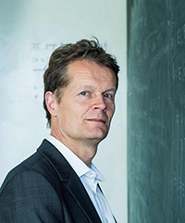
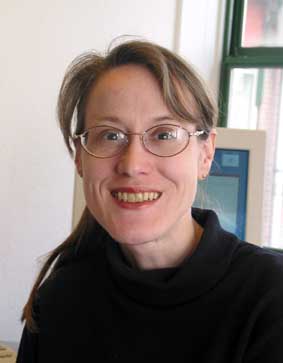
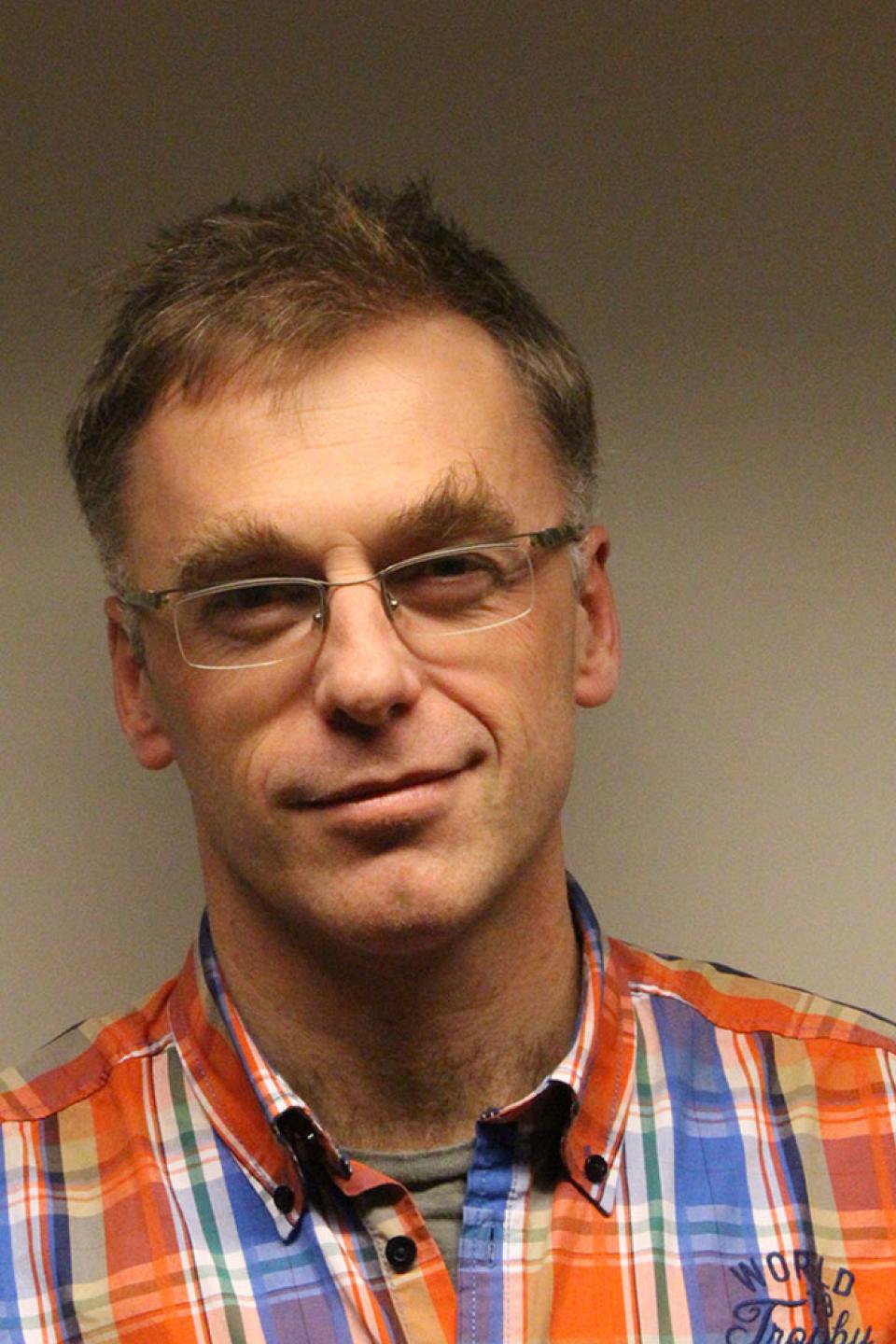
Aad van der Vaart is a Professor of Stochastics at Leiden University's Mathematical Institute. He was awarded the prestigious NWO Spinoza Prize in 2015 for groundbreaking work in mathematical statistics, particularly Bayesian methods applied to medical imaging, genetic data, and complex models. His research bridges pure mathematical theory with applied domains like neuroscience and astronomy. Research Interests : Van der Vaart focuses on infinite-dimensional Bayesian statistics, nonparametric models, and statistical genetics. His work emphasizes rigorous mathematical analysis of prior distributions and their impact on data-driven conclusions. Applications include gene network modeling and PET scan image reconstruction. Key Contributions : Authored influential books on estimation theory; pioneered modern Bayesian approaches to high-dimensional data. His Spinoza Prize funds will support interdisciplinary research and hiring new talent in statistical methods. Awards : NWO Spinoza Prize (2015), recognized as a global leader in statistical theory. Future Directions : Expanding into astronomical data analysis and medical applications, leveraging Bayesian frameworks for big datasets.
Dr. Peter J.F. Lucas is a Full Professor specializing in Datamanagement & Biometrics with over 35 years of experience in artificial intelligence, probabilistic graphical models, and clinical decision support systems. His research spans intelligent systems, machine learning, and eHealth, with a focus on applying Bayesian networks and probabilistic logic to medical and non-medical domains.
National Research Institute for Mathematics and Computer ScienceNetherlands
Prof. Sander Bohte is a part-time full professor of Computational Neuroscience at the University of Amsterdam (Swammerdam Institute of Life Sciences) and an honorary full professor of Bio-inspired Neural Networks at the University of Groningen. He serves as a Scientific Staff Member and Group Leader in the Machine Learning department at CWI, Amsterdam. His work bridges computational neuroscience and machine learning with a focus on continuous-time information processing. Key research interests include: Spiking Neural Networks with predictive coding and multi-compartment models Biologically Plausible Learning in recurrent and deep architectures Working Memory modeling via reinforcement learning Neuromorphic Computing for real-time systems and GPU acceleration His recent publications highlight trends in neural adaptation , predictive coding , and SNN hardware-software co-design . Awards include the Veni Innovational Research Grant (2004) and ERCIM grant (2013) . He actively supervises MSc theses and leads grants like the NWO KIC project 'Selfhealing Neuromorphic Systems' (2024).
National Research Institute for Mathematics and Computer ScienceNetherlands
Marie-Colette van Lieshout is a Professor of Spatial Stochastics at the Faculty of Electrical Engineering, Mathematics and Computer Science, University of Twente, and a Scientific Staff Member in the Stochastics group at Centrum Wiskunde & Informatica (CWI), Amsterdam. She has been active in research since 1997 and is a leading expert in stochastic geometry, spatial statistics, and image analysis. Her educational and professional background includes positions at the University of Warwick and the Free University Amsterdam. She is currently engaged in advanced research on point processes, random fields, and tessellation models, with applications in seismic hazard, fire risk, and machine learning. Her research interests include: Stochastic Geometry Spatial Statistics Image Analysis Point Process Modeling Seismic Risk Assessment Machine Learning for Spatial Data Her recent publications (2023–2025) focus on spatial intensity estimation, marked point processes, and data-driven risk modeling, showing a strong integration of classical spatial statistics with modern computational and machine learning techniques. Key themes include adaptive kernel smoothing, infill asymptotics, and applications in environmental and public safety domains. She has received significant recognition, including: Elected Fellow, International Statistical Institute (ISI) She has been awarded multiple research grants from NWO and other agencies, including the KLEIN grant for fire risk management and the DeepNL grant for seismicity prediction in Groningen. She has supervised or collaborated with researchers such as C. Lu, Z. Baki, and R. Markwitz. She is also active in academic service, serving on editorial boards (e.g., Methodology and Computing in Applied Probability), advisory boards (InHolland University), and councils of learned societies (Bernoulli Society, KWG). She leads and participates in research clusters such as STAR and contributes to outreach and education through courses and public lectures on earthquake modeling and spatial statistics.
Didier Meuwly is a Full Professor of Forensic Biometrics at the University of Twente (since 2013) and Principal Scientist at the Netherlands Forensic Institute (NFI). His work focuses on automating and validating probabilistic evaluation of forensic evidence, particularly biometric traces. He has contributed to international standards via ISO Technical Committee 272 and served as Associate Editor for Forensic Science International . PhD in Forensic Speaker Recognition (University of Lausanne, 2000) Research spans forensic biometrics, likelihood ratios, AI validation, and gait/body analysis from surveillance footage. Recent work addresses ISO standards (21043), forensic AI explainability, and multimodal evidence evaluation. His publications emphasize empirical validation and statistical rigor. Key awards include: ENFSI Distinguished Forensic Scientist Award (2022) University of Lausanne Law Faculty Prize (2002) Active in global forensic networks, he chairs the ENFSI R&D Committee and collaborates across disciplines on digital evidence, biometric security, and forensic methodology.
Peter Desain is a Professor and Principal Investigator at the Donders Institute for Brain, Cognition and Behaviour, Radboud University. His work focuses on developing advanced brain-computer interfaces (BCI) leveraging evoked potentials, particularly through code-modulated visual and auditory stimuli. He pioneers methods like noise-tagging and Bayesian dynamic stopping to enhance BCI efficiency and accessibility. His research spans neurotechnology, electrophysiological modeling, and clinical applications such as objective EEG audiometry and ALS communication aids. Recent studies emphasize gaze-independent systems, semantic decoding, and minimizing BCI calibration requirements. Key contributions include optimizing c-VEP code-books, real-time fMRI neurofeedback for memory contexts, and literature reviews on BCI design trends. Experimental pilot studies explore auditory attention and high-frequency SSVEP dynamics. No scientific awards are explicitly mentioned. His work integrates multidisciplinary approaches, bridging neuroscience, machine learning, and engineering to advance human-computer interaction and clinical tools.
Hans Vernooij is a Lecturer in Farm Animal Health at the Faculty of Veterinary Medicine, Utrecht University. He specializes in statistical methods and data science applications in veterinary epidemiology and animal health. His areas of expertise include: Statistical methods for veterinary research Applied Data Science in Life Sciences Epidemiological modeling Machine learning applications in animal health Vernooij has extensive experience in developing statistical models for animal health applications. His research focuses on applying advanced statistical techniques and data science methods to solve problems in veterinary epidemiology and farm animal health. He has particular expertise in Random Forest models, as demonstrated during his sabbatical at the Human Sciences Research Council in Pretoria where he developed a model for HIV status prediction based on demographic information and knowledge of HIV prevention from large-scale survey data. His publication record shows consistent contributions across veterinary epidemiology, with recent work emphasizing machine learning applications and big data analytics in animal health surveillance. The research demonstrates a clear trajectory from traditional statistical methods toward more advanced data science approaches. Vernooij is actively involved in teaching and mentoring: Teaches statistics to Bachelor students at the veterinary faculty Supports PhD candidates and Master students during data analysis phases of their research Provides statistics education for the Master of Epidemiology program at the Julius Centre of University Medical Centre
Jan van den Brakel is an Extraordinary Professor of Survey Methodology at Maastricht University and a Senior Statistician at Statistics Netherlands. He holds a position in the Department of Quantitative Economics within the School of Business and Economics. His primary affiliation is with the methodology department at Statistics Netherlands, where he focuses on advancing statistical methods for official statistics. **Research Interests:** Professor van den Brakel specializes in survey methodology, with a focus on mixed-mode surveys, time series modeling, small area estimation, and discontinuity analysis. He explores topics such as sampling techniques, variance estimation, and the integration of non-probability data sources (e.g., social media) into official statistics. His work addresses challenges in labor force surveys, health surveys, and the impact of technological changes like tablet-based data collection. **Key Projects:** Current projects include mixed-frequency time series modeling for short-term statistics, accuracy assessments of non-probability web panels, and modeling discontinuities in official surveys. He has contributed to high-impact studies, such as analyzing mobility patterns during the pandemic and improving unemployment rate estimation using Bayesian models. **Awards:** His 2013 paper on factorial designs in probability samples was honored as the best journal paper by Survey Methodology in 2014. He is a member of the Advisory Committee on Statistical Methods at Statistics Canada, reflecting his international leadership in statistical methodology. **Professional Roles:** In addition to his academic role, he collaborates extensively with national statistical offices, advising on methodological challenges. His work bridges theory and practice, ensuring statistical methods are robust and applicable to real-world data collection and analysis.
Prof. Alfred Stein is a Full Professor in Spatial Statistics and Image Analysis at the Department of Earth Observation Science, Faculty ITC, University of Twente. He earned his MSc in Mathematics and Information Science from Eindhoven University of Technology and a PhD in Spatial Statistics from Wageningen University. His career spans roles at Wageningen University (1988–2002), ITC (2002–present), including leadership positions as department head, vice-rector research, and portfolio holder for education. Education: MSc (Eindhoven University of Technology), PhD (Wageningen University) Leadership: Department Head (Earth Observation Science), Vice-Rector Research (2008–2012), Portfolio Holder Education (2012–) His research focuses on Spatial and Spatio-Temporal Statistics , emphasizing Bayesian inference , data quality , image analysis , and fuzzy techniques . Key application domains include agriculture, health, urban land use, coastal systems, hazards, and wildlife. He has mentored over 30 PhD students since 1998, with 11 currently under supervision. Recent research trends highlight AI-driven remote sensing for glacier mapping, urban livability, and disease modeling. Publications span Deep Learning for SAR tomography, Bayesian hierarchical models for health data, and multitemporal SAR analysis for environmental monitoring. Awards include the Best Paper Award (2019) and ISARA Founder's Award (2020) . Scientific Awards Best Paper Award (2019) ISARA Founder's Award (2020) As Editor-in-Chief of Spatial Statistics and associate editor for multiple journals, he leads academic discourse. Collaborations include the University of Cape Town and University of Pretoria as Honorary Professor. His work contributes to UN Sustainable Development Goals, particularly in climate action and sustainable cities.
Dr. Evert van Nieuwenburg is an Assistant Professor at Leiden University, affiliated with both the Leiden Institute of Advanced Computer Science (LIACS) and the Leiden Institute of Physics (LION). His research bridges the fields of Quantum Physics , Machine Learning , and Condensed Matter Physics , with a focus on quantum algorithms, reinforcement learning, and quantum game development (e.g., Quantum TiqTaqToe ). He actively contributes to the Applied Quantum Algorithms (aQa) initiative and leads the QuantumPlayed subgroup for quantum games and education. Research Interests: AI-driven quantum experiment control, quantum machine learning, variational quantum circuits, and quantum games for education and intuition-building. Publications: 15+ peer-reviewed works spanning quantum error correction, phase transitions, reinforcement learning in quantum systems, and quantum dot array simulations. Community Engagement: Developer of educational quantum games, open science advocate, and active participant in interdisciplinary initiatives. Selected Trends: His work demonstrates AI's transformative role in quantum physics, from decoding error-correcting codes with graph neural networks to merging reinforcement learning with quantum control systems. Labs & Initiatives: Affiliated with the Applied Quantum Algorithms (aQa) initiative and co-founder of QuantumPlayed , where quantum mechanics meets game theory to engage diverse audiences.
National Research Institute for Mathematics and Computer ScienceNetherlands
Laura Toni is an Associate Professor in the Department of Electronic & Electrical Engineering at University College London (UCL). She serves as Director of the MSc in Telecommunications and Internet Engineering and the MRes in Telecommunications. Additionally, she is a Turing Fellow at the Alan Turing Institute and a member of ELLIS (European Lab for Learning and Intelligent Systems). Her research focuses on coding, streaming technologies, machine learning for immersive communications, decision-making under uncertainty, and large-scale signal processing. She leads the LASP (Learning And Signal Processing) group at UCL. Education: MSc (2005) and PhD (2009) from the University of Bologna, followed by postdoctoral research at UC San Diego and EPFL under Professors L. Milstein, P. Cosman, and P. Frossard. Key roles include Technical Program Chair at ACM MM 2022, Keynote Co-Chair at ACM MMSys 2022, and leadership in organizing workshops on graph-based machine learning and emerging technologies in performing arts. She is a Senior IEEE Member and holds editorial roles in IEEE Multimedia Magazine and EURASIP Journal on Signal Processing. Her work bridges communication systems and machine learning, with contributions to adaptive streaming, network optimization, and graph signal processing. She actively promotes diversity and inclusion in technical conferences, including roles as Diversity Chair at MMSys 2021 and PIMRC 2020.
Clemens V. Verhoosel is an Associate Professor in Computational Methods for Model- and Data-Driven Engineering at Eindhoven University of Technology (TU/e). He holds positions in the Department of Mechanical Engineering under the Energy Technology and Fluid Dynamics section, and is affiliated with the EAISI Foundational initiative. His research focuses on scan-based immersed isogeometric analysis, uncertainty quantification, and Bayesian inference for complex engineering problems. He leads the Group Verhoosel and manages the Engineering Mechanics Graduate School since 2018. Education: MSc (Aerospace Engineering, TU Delft, 2005, cum laude PhD, TU Delft, 2009). Postdoctoral research at University of Texas at Austin (2009-2010). Awarded NWO VENI Grant (2011). Research interests include numerical methods for solid mechanics, fluid dynamics, coupled problems, and applications in biomedical engineering (e.g., cardiac mechanics). He develops open-source tools like the Nutils toolkit and collaborates with industry partners such as Evalf Computing. Key contributions include isogeometric analysis for fracture mechanics, phase-field models, and mesh-free simulation workflows. Honors: NWO Veni Award (2011). Teaching includes Advanced Discretization Techniques and Scientific Computing courses. Active in professional activities, including invited talks on cardiac mechanics and computational methods.
H. Cheng is a researcher at the University of Twente, affiliated with the Faculty of Engineering Technology and the Department of Mechanics of Solids, Surfaces and Systems. He plays a central role in several interdisciplinary research projects focused on computational modeling of granular materials, geohazards, and machine learning integration in physics-based simulations. His research centers on advancing numerical methods such as the Discrete Element Method (DEM) and developing machine learning surrogates for efficient uncertainty quantification in complex systems. Key project areas include offshore infrastructure resilience under climate change (POSEIDON), dynamic fault slip in induced seismicity (FastSlip), upscaling particulate systems for industrial applications (TUSAIL), and automated segmentation of soil-root systems using micro-CT imaging (UNSAT). H. Cheng leads and supervises multiple early-career researchers across EU-funded initiatives, including MSCA Doctoral Networks and COST Actions. He is the main applicant and supervisor in the GrainLearning project, which integrates Bayesian inference with physics-based models to improve simulation accuracy and efficiency. His scientific contributions span collaborative research across academia and industry, with a strong emphasis on open science, reproducibility, and cross-sectoral training. He contributes to community-building through initiatives like ON-DEM, promoting best practices in particle-based simulations. Supervisor of multiple PhD students and postdoctoral researchers Daily supervisor in POSEIDON, FastSlip, TUSAIL, UNSAT Vice-lead of Working Group 1 in ON-DEM COST Action Main applicant and project lead for GrainLearning H. Cheng is actively involved in training the next generation of computational scientists and engineers, with a focus on interdisciplinary methodologies that bridge mechanics, data science, and industrial applications.
Bert de Vries is a Professor at the Signal Processing Systems Group at Eindhoven University of Technology (TU/e), where he has been employed since January 2012. He maintains a dual career, also working at GN Hearing in the hearing aids industry since April 1999, where he holds both research and managerial roles. His academic journey began at TU/e, where he earned his MSc in Electrical Engineering in 1986, followed by a PhD from the University of Florida in 1991. Between 1992 and 1999, he worked at Sarnoff Research Center in Princeton, NJ, contributing to diverse signal and image processing projects. Professor de Vries's research centers on Bayesian Machine Learning, with particular focus on the Free Energy Principle and its applications to engineering problems. His work bridges theoretical neuroscience with practical signal processing systems, especially in biomedical applications. He directs the BIASlab research team at TU/e, which develops probabilistic programming tools including RxInfer.jl, ForneyLab.jl, GraphPPL.jl, ReactiveMP.jl, and Rocket.jl. His research spans active inference, variational message passing, probabilistic programming, and Bayesian neural networks, with applications ranging from hearing aids to multi-agent systems. Analysis of his recent publications reveals a strong trend toward practical implementations of Bayesian inference frameworks, particularly through Julia-based probabilistic programming tools. His work shows increasing focus on active inference applications, message passing algorithms, and the intersection of Riemannian geometry with probabilistic modeling. The research demonstrates consistent progression from theoretical foundations toward real-world engineering applications, particularly in biomedical signal processing and autonomous systems. Professor de Vries teaches a graduate-level course on Bayesian Machine Learning at TU/e and actively contributes to open-source software development through his GitHub profile (bertdv), with recent activity as recent as August 2025. His research team has developed several influential probabilistic programming libraries that have gained significant attention in the machine learning community. The BIASlab research group continues to advance the state of the art in Bayesian inference methods with applications in hearing technology, robotics, and signal processing.
Dr. Matias Valdenegro Toro is an Assistant Professor of Machine Learning at the University of Groningen within the Faculty of Science and Engineering and the Artificial Intelligence department of the Bernoulli Institute. He holds a PhD from Heriot-Watt University (2019) and a Master's in Autonomous Systems from Bonn-Rhein-Sieg University of Applied Sciences (2014). His research focuses on trustworthy machine learning models , particularly in uncertainty quantification , medical AI , and robotics , with applications in computer vision and explainable AI. He teaches courses like Introduction to Machine Learning and Deep Learning at the Bachelor and Master levels. His work emphasizes robustness in AI systems, including uncertainty estimation for medical applications, super-resolution techniques, and neuromorphic robotics. He has published widely on topics like Bayesian neural networks, prompt tuning, and sanity checks for explanations. Notable awards include Best Reviewer at ICML (2024) and Highlighted Reviewer at ICLR (2022). He collaborates with institutions like the German Research Center for Artificial Intelligence and actively contributes to open-source datasets (e.g., the Japanese Uncertain Scenes Dataset ). Key grants and activities include organizing the ENLIGHT BIP Course on Deep Learning for Forestry and teaching at the European Summer School on AI . His research also addresses regulatory challenges like the EU AI Act's implications for uncertainty quantification in general-purpose AI.