Anna Levina is an Assistant Professor for Computational Neuroscience at the University of Tübingen , affiliated with the Department of Computer Science under the Faculty of Science. Her research focuses on the self-organization of neuronal activity, critical dynamics in neural networks, and the excitation/inhibition balance in cortical circuits. Current positions: Assistant Professor (since 2018), Group Leader (2017-2018), Equality Officer (Computer Science) Previous roles: IST Fellow (2015-2017), Associated Researcher (2011-2015), Postdoc/PI (2011-2015), Postdoc (2008-2011) Her research integrates mathematical modeling , statistical physics , and computational neuroscience to study criticality phenomena, neural avalanches, and adaptive network dynamics. Key interests include: Self-organized criticality in neural systems Excitation/Inhibition balance mechanisms Network topology and dynamics Timescale analysis in neural processing Stochastic modeling of neural activity Recent publications reveal trends in understanding critical dynamics across biological and artificial networks, with applications to memory systems, sensorimotor integration, and disease modeling. She has received recognition as an IST Fellow .
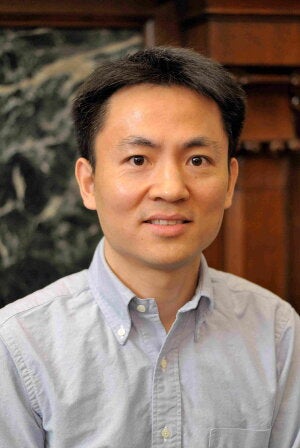
Yuguo Chen is a Professor in the Department of Statistics at the University of Illinois at Urbana-Champaign (UIUC), serving as Interim Department Chair and Director of the Illinois Statistics Office. He holds affiliations with the Department of Computer Science, Information Trust Institute, Coordinated Science Lab, and Illinois Informatics Institute. Chen earned his PhD in Statistics from Stanford University (2001) and a B.S. in Mathematics from the University of Science and Technology of China (1997). His research focuses on Monte Carlo methods, network data analysis, state space models, bioinformatics, and Bayesian inference. Key interests include scalable network estimation, community detection, and applications in public health, education, and computational biology. Recent work highlights include advancements in dynamic network modeling, Bayesian latent class models for cognitive diagnosis, and statistical methods for analyzing multi-layer networks. His contributions have been recognized through awards such as the American Statistical Association Fellowship (2018) and the Charles Edison Lectureship (2018). Editorial Roles: Associate Editor of Journal of the American Statistical Association , Journal of Computational and Graphical Statistics , and Journal of Algebraic Statistics . Grants & Consulting: Directs the Illinois Statistics Office, providing interdisciplinary research support. Active in collaborative projects involving healthcare, education, and computational infrastructure. Labs & Teams: Leads initiatives at the Coordinated Science Lab and Information Trust Institute, integrating statistical methods with cybersecurity and data-driven decision-making.
Michael Smith is the McCosh Professor of Philosophy at Princeton University. He holds a DPhil from Oxford University (1989) and has been a faculty member since 2004, previously at the Australian National University. His research focuses on ethics, moral psychology, philosophy of mind, political philosophy, and philosophy of law. Smith’s work integrates constitutivist theories of practical reason with analyses of moral agency. He has contributed to debates on moral rationalism, the nature of reasons for action, and the relationship between rationality and normativity. Education: MA, Monash University (1980); BPhil (1983), DPhil (1989), University of Oxford Smith’s scholarship emphasizes the interplay between ethical theory and psychological explanations of agency. Recent publications explore topics like carbon capture technologies, cultural clashes in moral reasoning, and probabilistic forecasting in oceanography. His philosophical contributions address foundational questions in meta-ethics, including the ‘moral problem’ and the implications of constitutivism for normative frameworks. He advises on interdisciplinary projects at the intersection of philosophy and emerging technologies. Notable research trends include applying philosophical analysis to environmental ethics and developing frameworks for resolving moral dilemmas through rational agency models. His work often bridges analytic philosophy with empirical inquiries in psychology and social science.
Hamsa Bastani is an Associate Professor of Operations, Information and Decisions at the Wharton School, University of Pennsylvania, with a secondary appointment in Statistics and Data Science. She co-directs the Wharton Healthcare Analytics Lab and serves as an Associate Editor for Operations Research, M&SOM and OR Letters. Her academic journey began with summa cum laude graduation from Harvard in 2012 with an A.M. in physics and A.B. in physics and mathematics. She completed her PhD in Stanford's Electrical Engineering department under Mohsen Bayati, followed by a Herman Goldstine postdoctoral fellowship at IBM Research. Professor Bastani's research focuses on developing novel machine learning algorithms for data-driven decision-making, with applications spanning healthcare operations, social good, and revenue management. Her work demonstrates particular expertise in sequential decision-making (bandits, reinforcement learning), learning from auxiliary data sources (transfer learning, meta-learning), and designing effective human-AI interfaces (interpretability, fairness). She has made significant contributions to understanding how AI systems affect and augment human behavior, with the goal of designing AI tools that help humans thrive. Her publications reveal a strong trend toward high-impact applications of machine learning in critical societal domains. A significant portion of her recent work focuses on healthcare applications, including optimizing health supply chains in low- and middle-income countries, designing clinical trial protocols, and creating targeted public health interventions. Another major theme examines the complex relationship between humans and AI systems, particularly how AI affects learning outcomes and decision-making processes. Her work frequently bridges theoretical advances with practical implementation, as evidenced by country-scale deployments in Greece and Sierra Leone. Wagner Prize for Excellence in Operations Research Practice (2021) Pierskalla Award for Best Paper in Healthcare (2021, 2019, 2016) Behavioral OM Best Paper Award (2021) Public Sector in OR Best Paper Award (2024) INFORMS Data Mining Best Paper Award (2022) Wharton Teaching Excellence Award (2019, 2020, 2021) Professor Bastani has advised numerous PhD students who have gone on to prominent positions, including Pia Ramchandani (Director of Responsible AI at PwC), Arielle Anderer (Assistant Professor at Cornell Johnson), and Kan Xu (Assistant Professor at ASU Carey). Her research has been supported by collaborations with national governments, including the Greek government where she co-designed Eva, the national-scale reinforcement learning system for targeted COVID-19 testing, and the Government of Sierra Leone where she improved patient access to essential medicines by nearly 20% via decision-aware learning. She has also conducted the first large field study deploying generative AI tutors in high school math classes. She leads the Wharton Healthcare Analytics Lab and serves on the Steering Committee for the Penn Center for Health Incentives and Behavioral Economics and on the statistics advisory committee for the AHA Food is Medicine Initiative. Outside academia, she serves on the Workday AI Advisory Board, demonstrating her commitment to translating academic research into practical applications.
Hedvig Kjellström is a Professor at the Division of Robotics, Perception and Learning within the School of Electrical Engineering and Computer Science at KTH Royal Institute of Technology. She holds significant affiliations with the Swedish e-Science Research Centre and the Max Planck Institute for Intelligent Systems in Germany. Her work spans multiple interdisciplinary domains and she serves as Editor-in-Chief for CVIU and was Program Chair for CVPR 2025. Her research centers on Computer Vision as a sub-field of AI, with three interconnected themes: Computational Aesthetics (exploring aesthetic aspects of human communicative behavior), Communicative Behavior (developing models of how humans and animals perceive and produce non-verbal communication), and Embodied Artificial Intelligence (creating methodologies for robots and autonomous agents to perceive the world through sensors, primarily vision). Her work has significant applications in medical diagnostics, animal welfare, human-robot interaction, and creative arts. Analysis of her recent publications reveals a strong trend toward multimodal AI systems that integrate vision, language, and action understanding. Her research increasingly focuses on animal-centered applications, particularly equine pain detection and behavior analysis, while maintaining strong foundations in human communication modeling, gesture recognition, and 3D reconstruction techniques. The interdisciplinary nature of her work bridges computer science with veterinary medicine, neuroscience, and performing arts. Hedvig Kjellström actively supervises numerous PhD and Master's students across various projects and maintains extensive collaborations with institutions including Karolinska Institutet, Swedish University of Agricultural Sciences, and international partners. Her research is supported by major funding bodies including WASP, VR, and SeRC. She leads or participates in several notable projects including OrchestrAI (communication between conductor and orchestra), ANITA (Animal Translator), MARTHA (3D horse motion analysis), and STING (synthesis and analysis with transducers and invertible neural generators). Her work with ACAI (Animal Centered Artificial Intelligence), which she co-founded and directs, demonstrates her commitment to applying AI for animal welfare.
Guillaume Lajoie is an Associate Professor in the Department of Mathematics and Statistics at Université de Montréal and a Core Academic Member of Mila – Quebec Artificial Intelligence Institute. He holds a Canada CIFAR AI Research Chair and a Canada Research Chair in Neural Computation and Interfacing. His research focuses on the intersection of AI and neuroscience, particularly in understanding neural network dynamics and developing brain-machine interfaces for clinical and scientific applications. He is affiliated with the Centre de recherches mathématiques (CRM), the Interdisciplinary Center for Research on the Brain and Learning (CIRCA), and the UNIQUE initiative. Education: PhD in Applied Mathematics from the University of Washington (Seattle), postdoctoral fellowships at the Max Planck Institute for Dynamics and the University of Washington Institute for Neuroengineering. Awards include the FRQS Scholar designation and leadership roles in strategic research initiatives like UNIQUE and CIRCA. Research interests include neural computations, recurrent neural networks, neurotechnology, and responsible AI development. Supervised students include François Paugam (PhD), Giancarlo Kerg (PhD), and others. Key grants include projects on adaptive neuroprosthetics, neural decoding, and Canada Research Chairs funding.
Ran Spiegler is a Professor of Economics at both Tel Aviv University and University College London (UCL). He holds a PhD in Economics from Tel Aviv University (1999). His research focuses on economic theory, behavioral economics, and bounded rationality, with notable contributions to understanding decision-making under flawed causal reasoning, narrative-driven political and economic dynamics, and market behaviors influenced by limited consumer rationality. Spiegler has held roles including Member at the Institute for Advanced Study (Princeton, 2000-2001) and Prize Research Fellow at Nuffield College, Oxford (1999-2000). Education: PhD in Economics, Tel Aviv University (1999) Affiliations: Professorships at Tel Aviv University (2009–present) and UCL (2006–present) Research Interests: Spiegler’s work explores how bounded rationality shapes economic outcomes, including consumer decision-making, market competition, and the role of narratives in political mobilization. He has authored influential books like Bounded Rationality and Industrial Organization (2011) and The Curious Culture of Economic Theory (2024), which critique and expand economic theory’s methodologies. Recent Articles: His recent work examines topics such as false narratives in politics, monopolistic data practices, and competitive markets with imperfectly discerning consumers. These studies highlight interdisciplinary applications of economic theory to modern challenges like algorithmic transparency and platform economics. Awards: Prize Research Fellow, Nuffield College, Oxford (1999–2000) Grants & Labs: While specific grants are not detailed, his research is funded through institutional affiliations. He collaborates widely, with notable co-authors like Kfir Eliaz and Yair Antler.
Daniel M. Wolpert is a Professor of Neuroscience at Columbia University and Principal Investigator at the Zuckerman Institute. His research focuses on computational models of movement, integrating sensory cues and cognitive elements to understand motor control, memory, and rehabilitation strategies for cerebellar disorders. Key Research Areas: Sensorimotor integration, probabilistic inference, reinforcement learning, predictive modeling of movement, and aging effects on motor learning. Selected Awards: Royal Society Fellow (2012), Minerva Golden Brain Award (2010), Fulbright Scholarship (1992-1995). Recent publications highlight his work on contextual learning, motor memory formation, and the computational basis of sensorimotor uncertainty. His lab develops robotic interfaces to study human motor behavior and collaborates on clinical applications for movement disorders. Current opportunities include postdoctoral fellowships in sensorimotor control and decision-making.
Il Memming Park is a Professor and Group Leader at the Centre for Restorative Neurotechnology within the Champalimaud Research division of the Champalimaud Foundation in Lisbon, Portugal. His work bridges computational neuroscience, machine learning, and statistical modeling to understand neural dynamics and computation. Dr. Park's research focuses on developing statistical and machine learning methods for analyzing neural time series data. His lab investigates the appropriate language for neural dynamics that can explain and generate specific predictions on neural data and behavior. He builds on foundations of dynamical systems and stochastic processes to create models of neural computation tightly tied to biology. His publications reveal a strong emphasis on developing methods like variational latent Gaussian processes and exponential family dynamical systems to extract meaningful patterns from complex neural recordings. His work spans both theoretical developments in computational methods and their application to real neural data from areas like visual cortex, parietal cortex, and other brain regions involved in perception and decision making. Dr. Park has previously held positions at Stony Brook University and the University of Texas at Austin, where he was affiliated with departments of Neurobiology and Behavior, Applied Mathematics and Statistics, Psychology, and Neuroscience. His lab at Champalimaud includes multiple PhD students, postdoctoral researchers, and research staff working collaboratively on various aspects of neural data analysis and modeling. The team employs an interdisciplinary approach combining neuroscience, statistics, machine learning, and dynamical systems theory.
Ian Ball is the Gary Loveman Career Development Assistant Professor of Economics at the Massachusetts Institute of Technology , specializing in economic theory , mechanism design , and information design . He is affiliated with the Department of Economics and contributes to theoretical advancements in strategic decision-making frameworks. Contact: ianball@mit.edu His research focuses on mechanism design , where he explores probabilistic verification and contingent payment systems, and information design , emphasizing dynamic provision and content filtering. Key themes include incentive compatibility, strategic agent behavior, and robustness in economic models. The articles highlight his work on probabilistic verification, dynamic information provision, and bias in delegation mechanisms, spanning journals like Econometrica , Journal of Economic Theory , and American Economic Journal: Microeconomics . Topics include reputation systems, optimization, and multi-period contracts. Scientific Awards: Review of Economic Studies Tour (2020) China Star Tour (2020) Contact details include his office location E52-556 and assistant Ruth Levitsky at phone number 617-253-3399 .
Dan Lizotte is an Associate Professor jointly appointed to the Department of Computer Science in the Faculty of Science and the Department of Epidemiology and Biostatistics in the Schulich School of Medicine & Dentistry at Western University. Additional affiliations include the Schulich Interfaculty Program in Public Health and a cross-appointment to the Department of Statistics and Actuarial Sciences. Based in Middlesex College, London, Ontario, his contact email is dlizotte@uwo.ca. His research centers on machine learning and biostatistics for health decision support, with emphasis on sequential decision-making in chronic disease management where evolving patient health status and preferences inform adaptive interventions. Core contributions involve adapting reinforcement learning frameworks to model dynamic health decisions in public health and primary care settings, addressing methodological challenges in personalized medicine and risk prediction. Analysis of his publication record reveals consistent focus on healthcare applications of machine learning, particularly in chronic disease risk modeling using electronic medical records, intersectionality frameworks in public health AI, and Bayesian methods for dose personalization. His work bridges reinforcement learning with clinical decision support systems, advancing dynamic treatment regimes and statistical methodologies for evolving patient data. No scientific awards were mentioned in the provided text. The text does not specify any advisees, grant funding, or educational background details. Lizotte leads a research laboratory focused on machine learning applications in health, as evidenced by the dedicated lab site referenced in his contact information. His team likely explores intersections of statistical methodology, AI ethics, and clinical implementation for personalized health interventions.
Amir-massoud Farahmand is an Associate Professor at the Polytechnique Montréal (Department of Computer and Software Engineering) and a Status-Only Associate Professor at the University of Toronto (Department of Computer Science). He is also a Core Academic Member at Mila (Quebec AI Institute). His research focuses on computational and statistical mechanisms for designing efficient reinforcement learning (RL) agents and adaptive algorithms. Dr. Farahmand's research spans reinforcement learning, optimal transport, adversarial robustness, and model-based methods. He has extensively studied regularization in RL, distributional approaches, and algorithm design for stability and convergence. His textbook Lecture Notes on Reinforcement Learning (2021) emphasizes mathematical intuition over algorithmic collections. Recent publications highlight trends in high-update-ratio RL, distributional equivalence, and self-prediction for task understanding. He is actively involved in teaching, having previously instructed courses on machine learning, neural networks, and RL at the University of Toronto. Scientific Awards : Ontario Early Researcher Award (2024) for Accelerated Reinforcement Learning Algorithms Dr. Farahmand has mentored numerous students, including his first PhD graduate Yangchen Pan (now at Oxford) and MSc students like Allen Bao (AMD) and Farnam Mansouri (University of Waterloo). He is currently recruiting graduate students at Polytechnique Montréal and Mila for 2025 admissions.
Vikas Singh is a Professor in the Department of Biostatistics at the University of Wisconsin-Madison, with appointments in Computer Sciences and Statistics. He also serves as a part-time Faculty Researcher at Google DeepMind. His research focuses on image analysis, machine learning, and medical imaging applications, particularly in neuroimaging and Alzheimer's disease studies. Singh holds a Ph.D. in Computer Science from SUNY Buffalo and has taught courses such as BMI/CS 767 (Medical Image Analysis) and CS 766 (Computer Vision). Affiliations: UW Computer Vision Group, Wisconsin Alzheimer's Disease Research Center (W-ADRC), Machine Learning@UW. Research: Develops algorithms for medical image analysis, including tools for neuroimaging and longitudinal biomarker studies. Grants: Collaborates on grants related to Alzheimer's progression modeling and imaging techniques. His work emphasizes interdisciplinary applications, bridging statistics, geometry, and optimization to solve real-world problems in healthcare and engineering.
Roxane de la Sablonnière is a Full Professor in the Department of Psychology at the University of Montreal, affiliated with the Faculty of Arts and Sciences. She directs the CSI—Laboratory on Social Change and Identity and is a member of the CÉCD—Centre for the Study of Democratic Citizenship and the CIRCA—Interdisciplinary Research Centre on the Brain and Learning. Her research focuses on social change, cultural identities, intercultural relations, and the psychological impacts of crises like the COVID-19 pandemic. She has advised over 20 graduate students and led numerous research projects funded by agencies such as the Fonds de recherche du Québec (FRQ) and the Social Sciences and Humanities Research Council (SSHRC). Education & Research Focus : Her work examines how rapid societal changes affect individuals, particularly in contexts of immigration, policy shifts (e.g., multiculturalism, secularism), and Indigenous communities. Recent studies include longitudinal analyses of pandemic-related behaviors, identity integration processes, and the role of cognitive strategies in managing conflicting identities. Grants & Collaborations : She leads projects like "S'engager pour mieux aller!" (FRQS-funded) and contributes to strategic networks such as the Centre pour l'Étude de la Citoyenneté Démocratique (CÉCD). Her research integrates psychology with sociology, leveraging mixed methods (e.g., text mining, longitudinal tracking) to address societal challenges. Labs & Teams : As CSI director, she oversees projects on social change dynamics and identity reconstruction. Her work bridges academic and applied domains, influencing policy debates on integration, public health, and community resilience.
Jesse Hoey is a Professor in the David R. Cheriton School of Computer Science at the University of Waterloo and leader of the Computational Health Informatics Lab (CHIL). He serves as a Faculty Affiliate at the Vector Institute and is Editor-in-Chief of the IEEE Transactions on Affective Computing. His research spans affective computing, health informatics, and socially assistive robotics, with a particular focus on developing technologies for elderly care and cognitive assistive applications. Hoey's research interests center around affective intelligence, Bayesian affect control theory (BayesACT), and decision-theoretic planning in uncertain domains. His work integrates social psychology with artificial intelligence to create emotionally aware systems that can interact naturally with humans, particularly those with cognitive impairments such as Alzheimer's disease. He has developed models for social interaction, emotion recognition, and uncertainty management in human-robot collaboration. His recent publications demonstrate a strong trend toward medical applications of AI, particularly in ultrasound analysis and healthcare technology. Many of his papers focus on self-supervised learning techniques for medical imaging and the application of affective computing principles to assistive technologies for dementia care. His work bridges theoretical AI with practical healthcare applications, showing increasing emphasis on real-world implementation. Editor-in-Chief of IEEE Transactions on Affective Computing Hoey has supervised numerous PhD and Master's students through the Computational Health Informatics Lab, with research spanning socially assistive robotics, affective computing, and health informatics. His lab has received funding for projects related to AI for dementia care, smart home technologies, and emotion-aware systems. The CHIL lab collaborates with healthcare institutions including the Toronto Rehabilitation Institute. The Computational Health Informatics Lab (CHIL) focuses on developing intelligent systems that understand and respond to human emotions and social contexts. Current projects include emotionally aligned social robots for dementia care, self-supervised learning for medical ultrasound, and models of social organization as uncertainty management. The lab combines theoretical work in Bayesian modeling with practical applications in healthcare technology.