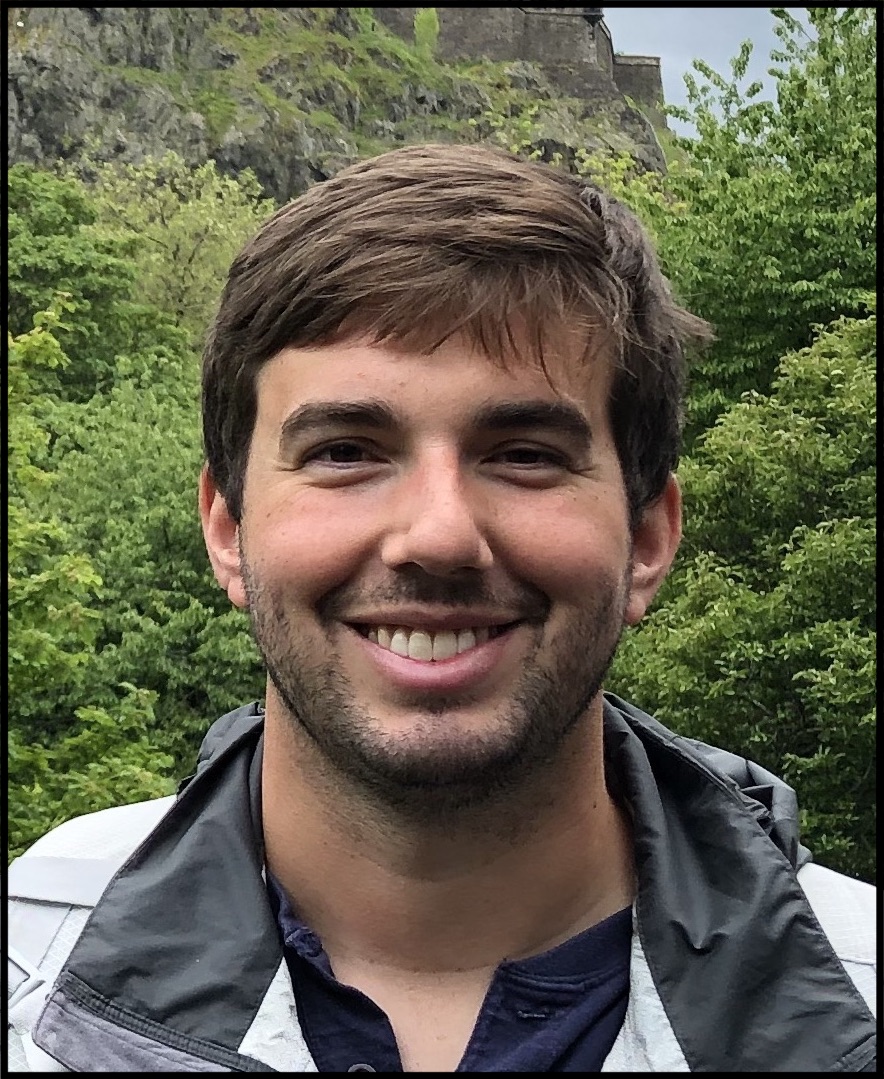
Dr Lauren Kennedy is a Lecturer at the University of Adelaide's School of Computer and Mathematical Sciences, Department of Mathematical Sciences. Her research focuses on survey methodology, multilevel modeling, poststratification, causal inference, and Bayesian statistical techniques. She specializes in addressing challenges arising from non-representative data and improving inference in social sciences through advanced statistical methods. Her work emphasizes practical applications in public opinion analysis, epidemiological modeling, and policy evaluation. Dr Kennedy is actively involved in supervising postgraduate students in Masters and PhD programs, particularly as a co-supervisor. She maintains an office in 6.56 Ingkarni Wardli Building on North Terrace campus and can be contacted at lauren.a.kennedy@adelaide.edu.au . Key research contributions include innovations in Bayesian workflow, cross-validation methodologies, and the integration of machine learning with traditional survey techniques. Her recent publications highlight advancements in causal inference frameworks and hierarchical modeling approaches for large-scale datasets.
Herbert Hoijtink is a Professor of Methodology and Statistics at Utrecht University's Faculty of Social and Behavioural Sciences. He leads the Hoijtink Methodology and Statistics research group and specializes in Bayesian statistical methods, particularly the evaluation of informative hypotheses. His work focuses on improving empirical research through prior knowledge integration, with applications in psychology, education, and biomedical sciences. Research interests include Bayesian model comparison, multivariate statistics, and structural equation modeling. He has developed the bain software package for Bayesian evaluation of inequality-constrained hypotheses. Key contributions include advancing sample size determination for multilevel models and promoting open science practices through the Open Empirical Cycle . Hoijtink has secured significant grants, including NWO VICI and Gravity grants (€27.6 million), and holds fellowships like the NIAS-KNAW residency (2019). He co-authored influential papers on Bayesian replication studies and contributed to the Redefine Statistical Significance debate. His work bridges methodological innovation with practical applications in clinical, developmental, and educational research. Key Projects: Bayesian sample size calculation for longitudinal data, NWO-funded studies on child development Labs/Teams: Methodology and Statistics group at Utrecht University Awards: Psychometric Society Award (2016), VICI Grant (2005)
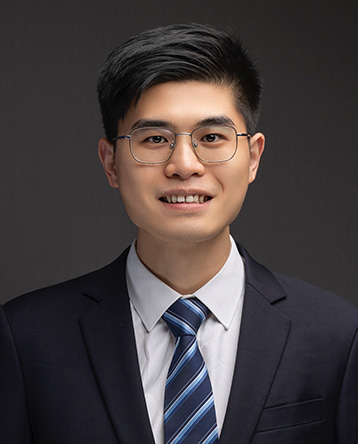
Yichong ZHANG is a Professor of Economics and Associate Dean (Postgraduate Research) at the School of Economics (SOE), Singapore Management University (SMU). He holds a Ph.D. in Economics from Duke University (2016), an M.A. in Economics from Duke University (2011), and a B.S. in Finance and Banking from Zhejiang University (2008). His research interests focus on econometrics, particularly in high-dimensional data analysis, quantile regression, network models, and statistical inference. Notable contributions include advancements in covariate-adaptive randomizations, instrumental variable regressions, and spectral clustering methods. His work bridges theoretical econometrics with applied methodologies, addressing challenges in causal inference and structural estimation. Key achievements include a Best Paper Award at the 2021 Delhi Winter School (Econometric Society) for his work on clustered data. His research spans econometric theory, machine learning applications, and network analysis, with publications in top journals such as the Journal of Econometrics and Journal of Machine Learning Research . He advises graduate students including WANG Yiren, Dennis LIM Guo Wei, and XIA Ying. His research also explores production frontiers, latent community detection, and bootstrap inference techniques, reflecting a commitment to both methodological innovation and real-world economic problems.
Xiaotong T Shen is a Professor in the Department of Statistics at the University of Minnesota, Twin Cities, within the College of Science and Engineering. He is actively involved in research and currently accepting PhD students. His work is supported by major grants from the National Science Foundation (NSF) and the National Institutes of Health (NIH), including projects on gene regulatory networks, Alzheimer’s disease genetics, and generative learning on unstructured data. Research Interests: Machine Learning and Deep Learning Statistical Inference and Modeling Biomedical Applications in Genomics and Neurodegenerative Diseases Natural Language Processing and Video Interpretation Generative Models and Synthetic Data Causal Inference and Graphical Models His recent publications reflect a strong trend in integrating deep learning with statistical rigor for causal and biomedical discovery, particularly in high-dimensional settings. Articles span applications in hepatology, transcriptomics, manufacturing, and AI-driven data generation, demonstrating interdisciplinary impact. Scientific Projects and Grants: PI, NSF: Generative Learning on Unstructured Data (2020–2024) PI, NIH: Estimation and Inference in Gene Regulatory Networks (2017–2024) Co-I, NIH: Causal Deep Learning for Alzheimer’s Disease Genetics (2021–2026) PI, NIH: Directed Acyclic Graphical Models for Biological Networks (2022–2026) He has advised numerous research projects and collaborated extensively with researchers in biostatistics and computer science. His work contributes to UN Sustainable Development Goals through data science for health and well-being. He leads a research group focused on foundational and applied statistical learning, with ongoing efforts in developing robust, interpretable models for complex scientific data.
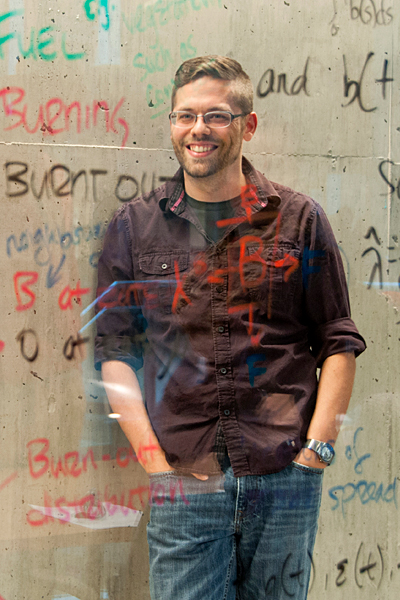
David B Dunson is a Professor in the Department of Statistical Science at Duke University, specializing in Bayesian statistics, high-dimensional data analysis, and computational methods. His research spans applications in genomics, environmental health, and machine learning, with a focus on nonparametric Bayes, factor models, and scalable inference algorithms. He has advised numerous PhD students, including Alexander Dombowsky and James Johndrow, contributing to advancements in statistical genetics and large-scale data problems. His recent publications address interpretable network discovery, robust covariance modeling, and environmental mixtures analysis. Dunson's methodological work includes empirical Bayes approaches, constrained Bayesian inference, and novel algorithms for handling imbalanced data. These methods have theoretical foundations and practical implementations in R packages like infinitefactor and bfa . Key Research Areas: Bayesian nonparametric modeling High-dimensional factor analysis Computational scalability in MCMC Environmental exposure interactions
Kevin D. Hoover is a Professor at Duke University, jointly appointed in the Departments of Economics and Philosophy. His work bridges econometrics, macroeconomics, and the philosophy of science, focusing on causal inference, model building, and the historical evolution of economic thought. Main Affiliation: Duke University Key Themes: Causality, econometric methodology, microfoundations, and the interplay between economics and philosophy Hoover employs graph-theoretic methods and the semantic approach to analyze structural vector autoregressions (SVARs) and cointegrated models (CVARs). His research interrogates the ontological status of shocks, trends, and latent variables, emphasizing empirical identification and robust specification search. He has collaborated extensively with scholars like Selva Demiralp, Stephen J. Perez, and Mauro Boianovsky, contributing to debates on monetary policy (e.g., the price puzzle), growth theory, and the legacy of institutions like the Cowles Commission and the London School of Economics (LSE). Hoover’s work also critically examines rational expectations, the Lucas critique, and the philosophical underpinnings of models through the lens of perspectival realism and pragmatism.
Dominik Deffner is a computational behavioral scientist and Professor at the Department of Psychology, Philipps University Marburg . His work bridges psychology, evolutionary biology, and statistics to study how individuals, groups, and populations adapt to changing environments through computational modeling and empirical research. Education: PhD in Biology (2021), MSc in Evolutionary and Comparative Psychology (2017), BSc in Psychology (2016), BA in Social and Cultural Anthropology & Philosophy (2016) Research interests include: Collective Behavior - Using immersive games and field research to model real-world group dynamics. Cultural Evolution - Simulations to study how culture emerges from individual decisions. Causal Inference - Developing transparent statistical frameworks to justify causal claims in psychology. Cross-cultural Methods - Creating workflows for comparing data across populations. Animal Adaptation - Applying computational models to non-human species' cognitive processes. Publications (2025–2019) span cultural evolution, collective decision-making, risk-sensitive learning, and causal modeling , with a focus on interdisciplinary approaches. Recent work includes applying Bayesian methods to cross-cultural studies and analyzing social information use in human and animal groups. Students : No formal advisees listed in the provided texts.
Eric Nalisnick is an Assistant Professor in the Department of Computer Science at Johns Hopkins University. He holds affiliations with the Institute for Assured Autonomy, Mathematical Institute for Data Science, and Data Science and AI Institute. His research focuses on developing safe and robust intelligent systems through probabilistic modeling and computational statistics, with applications in healthcare, online content moderation, and sign language processing. His work emphasizes human-centered design, exploring how to incorporate prior knowledge, detect system failures, and integrate human-machine decision-making. Research Trends: Recent publications highlight advancements in uncertainty quantification (e.g., Lightning UQ Box tool), early-exiting neural networks for risk control, and generative models for symmetry transformations. He also investigates calibration in multi-distribution learning and ethical considerations in hate speech detection systems. Advising & Contributions: Eric mentors a diverse cohort of PhD students and has developed influential open-source tools like Lightning UQ Box and Learning to Defer frameworks. His teaching includes courses on Deep Learning, Human-in-the-Loop Machine Learning, and Bayesian Methods.
James Booth is a Professor and Department Chair in the Department of Statistics and Data Science at Cornell University, part of the Computing and Information Science school. He holds a joint appointment with the Department of Biological Statistics and Computational Biology in the College of Agricultural and Life Sciences. His research focuses on statistical methodology, including bootstrap methods, clustering, mixed models, and applications in bioinformatics. He has taught numerous courses, including Statistical Methods II and Biological Statistics I, and contributes to Cornell's statistical consulting service. His work spans statistical theory and applications across disciplines like epidemiology and social sciences. Education: PhD from the University of Florida (Department of Statistics), with postdoctoral research at the Australian National University and Colorado State University. Research Interests: James’ methodological work emphasizes computational statistics, including Monte Carlo methods and generalized linear models. His applied research includes bioinformatics, wildlife disease surveillance, and social science data analysis. Key contributions include Bayesian modeling for disease prevalence estimation and statistical tools for proteomic data analysis. Publications: Over 50 peer-reviewed articles, with recent focuses on sample size calculations for wildlife disease studies and statistical methodologies for high-dimensional data. Notable work includes contributions to the Journal of the American Statistical Association and PLoS Computational Biology. Advising: Advised over 15 graduate students, many contributing to statistical methodology and interdisciplinary applications. Labs/Teams: Active in the Cornell Statistical Consulting Unit and collaborates with interdisciplinary groups in biology, public health, and social sciences.
Stephen John Eglen is a Professor in Computational Biology at the Department of Applied Mathematics and Theoretical Physics (DAMTP), University of Cambridge. He holds the position of Reader, focusing on computational neuroscience with expertise in retinal and visual pathway development. His research explores structural and functional aspects of neural circuit formation, including positional information in retinal neurons and synaptic connectivity mechanisms. Eglen is affiliated with the Computational Biology research group and has contributed to open science initiatives like CODECHECK and DeepClean. His academic career includes roles as a Wellcome Trust Fellow (1997–2000), Lecturer at the University of Edinburgh (2000–2001), and Senior Lecturer at DAMTP (2006–2015). His work bridges computational methods with experimental neuroscience, emphasizing reproducible research practices and computational tools for data analysis. Eglen's research interests span computational modeling of neural development, open science advocacy, and neurophysiological data analysis. He has published extensively on topics like retinal mosaics, neural network topology, and Bayesian statistical methods. His lab develops tools for analyzing neuronal activity in vitro and promoting transparency in scientific workflows.
Jeff Andrews is an Associate Professor at the University of British Columbia (Okanagan Campus), affiliated with the Department of Computer Science, Mathematics, Physics and Statistics within the Irving K. Barber Faculty of Science. He co-directs the Master of Data Science Program and leads the Andrews Research Group. Educated at the University of Guelph (PhD, MSc) and Acadia University (BSc), his work focuses on statistical machine learning, particularly mixture models for clustering and classification. His research explores parameter estimation, variable selection, and applications in bioinformatics, healthcare, and engineering. Research interests include computational statistics, radiation biology, and algorithm development for data analysis. Notable contributions include software packages like teigen , mmtfa , and vscc , which advance model-based clustering techniques. He has secured grants from NSERC, Mitacs, and CFI, and holds awards such as the Top 40 Under 40 (2024) and Chikio Hayashi Award (2017). His publications span machine learning applications in healthcare diagnostics, radiation response modeling, and statistical methodology. Prof. Andrews supervises graduate students in data science and statistics, emphasizing rigorous coursework in multivariate analysis and programming proficiency. He advocates for early-career researchers through mentorship and grant preparation guidance.
Robbe Goris is an Associate Professor in the Department of Psychology at the University of Texas at Austin, affiliated with the College of Liberal Arts. He received his Ph.D. from KU Leuven (2009) and completed a postdoc at NYU (advisors Tony Movshon and Eero Simoncelli). He joined UT Austin in 2016. His research focuses on understanding how the primate visual system processes visual information, with emphasis on neural coding, decision-making, and confidence estimation. He employs behavioral experiments, computational modeling, and electrophysiology to study these topics. Research Interests: Predictive vision (e.g., temporal straightening hypothesis), flexible decision-making under uncertainty, and representation of sensory uncertainty via neural gain variability. His lab investigates these themes through projects like decoding neural trajectories in the visual cortex and studying how uncertainty influences perceptual decisions. Awards/Grants: NSF-CAREER Award (2022), NIH R01 (2022), and UT Excellence in Postdoctoral Research Award (2023, via lab member Corey Ziemba). His work has been published in high-impact journals like Nature Neuroscience , Nature Communications , and Neuron . Lab Members: Includes postdocs (Corey Ziemba, Thomas Langlois), graduate students (Zoe Boundy-Singer, Jiaming Xu, Akash Raj), and lab manager Gabriela Coello-Reyes. Alumni include Julie Charlton (postdoc at Princeton) and Yoon Bai (postdoc at MIT). Courses Taught: Repeatedly teaches PSY 323 (Perception) and PSY 194Q (Ethical Issues in Psychology), demonstrating academic engagement and pedagogical commitment. Recent course instances span 2020–2025.
Prof. Dr. Pavel E. Tarasov is an Adjunct Professor (Außerplanmäßiger Professor) at Freie Universität Berlin’s Institute of Geological Sciences, specializing in Paleontology and Quaternary Sciences. His research focuses on lake sediments as climatic archives, pollen-based reconstructions of vegetation and climate, and Holocene human-environment interactions. He holds a PhD from Moscow State University (1992) and a Habilitation (2007) from FU Berlin. Tarasov has led major projects like the Lake El’gygytgyn drilling in Arctic Russia and the Baikal-Hokkaido Archaeology Project, integrating environmental and archaeological data. Key achievements include the 2012 Heisenberg Fellowship and over 220 peer-reviewed publications with an h-index of 59. Education: MV Lomonosov Moscow State University (1980–1985), Diploma in Geography (1985) PhD (Doctor of Geographical Sciences), Moscow State University (1992) Habilitation in Quaternary Sciences, FU Berlin (2007) Research Interests: Lake sediment analysis, pollen-based climate reconstructions, Holocene environmental variability, and interdisciplinary studies linking environmental changes to human dynamics across Eurasia. Major foci include the Arctic (Lake El’gygytgyn), East Asia (Lake Biwa, Lake Suigetsu), and Hokkaido’s prehistoric environments. Selected Awards: Heisenberg Stipend (DFG, 2011–2016) Visiting Scholar Award (University of Alberta, 2012) Japan Society for Promotion of Science Fellowship (2000–2001) Grants & Projects: Leads initiatives like the Heinrich-Böll-Foundation’s “HEINIA” project and contributes to the Asian Lake Drilling Program. Collaborates internationally on projects such as the Bridging Eurasia Research Initiative and Silk Road Fashion studies. Active in radiocarbon dating innovations, including fossil pollen purification techniques. Labs & Teams: Heads the Palaeobotany and Palaeoclimatology Working Group at FU Berlin. Collaborates with institutions like the Alfred Wegener Institute, German Archaeological Institute, and University of Alberta. Supervises interdisciplinary studies combining archaeology, geochemistry, and environmental proxies.
Liwei Wang is an Assistant Professor in the Department of Mechanical Engineering at Carnegie Mellon University's College of Engineering, where he leads the Computational and Physical Intelligence Laboratory (CPhI Lab). His research integrates computational modeling, machine learning, and mechanics to design advanced materials and smart systems. Education: Ph.D., Mechanical Engineering, Shanghai Jiao Tong University (2022, Honors) B.S., Mechanical Engineering, Shanghai Jiao Tong University (2017, Honors) Liwei Wang's research interests lie at the intersection of machine learning, computational engineering, and advanced materials . He develops data-driven and physics-informed frameworks for topology optimization, metamaterials, 3D/4D printing, soft robotics, and programmable materials systems . His work emphasizes physical intelligence —designing materials that can sense, adapt, and respond to their environments. Applications span mechanical protective cloaks, flexible electronics, minimally invasive surgery, and mechanical computing . His recent publications reveal a strong trend toward multi-scale, data-efficient design of metamaterials using advanced machine learning techniques such as Gaussian processes, latent variable models, and neural networks. He focuses on scalable, differentiable, and task-aware optimization methods that enable rapid discovery and deployment of functional material systems. Scientific Awards: ASME Design Automation Dissertation Award ASME Design Automation Conference Best Paper Award Institution-level Outstanding Ph.D. Dissertation Award Dr. Wang advises a growing research group at CMU and leads the CPhI Lab, where his team develops next-generation computational tools for materials innovation. While specific grants are not listed, his research is likely supported by federal and private funding given the scope and impact of his work. His lab emphasizes interdisciplinary collaboration and translation of computational designs into physical prototypes via additive manufacturing. Laboratory & Team: The Computational and Physical Intelligence Laboratory (CPhI Lab) focuses on co-designing materials and structures with embedded intelligence, combining simulation, data science, and experimental validation to push the boundaries of what engineered materials can achieve.
Nianqiao Ju is an Assistant Professor of Statistics at Purdue University's Department of Statistics within the College of Science. They hold a B.A. in Mathematics and Physics from Wellesley College (2016) and a Ph.D. in Statistics from Harvard University (2021). Their research focuses on computational methods for statistical inference, particularly Markov Chain Monte Carlo (MCMC) techniques and Bayesian inference from privatized data. Notable work includes developing privacy-preserving statistical methods and analyzing infectious disease transmission dynamics. Research interests span computational statistics, data privacy, MCMC algorithms, and applications in epidemiology. Their articles explore topics like SOMA samplers, privacy-aware Bayesian inference, and agent-based modeling of disease spread. Ju has received the IMS Hannan Graduate Student Travel Award (2020). Current research emphasizes bridging statistical methodology with computational challenges in data privacy and large-scale epidemiological models. Office: Math 508 | Phone: 765-494-0021