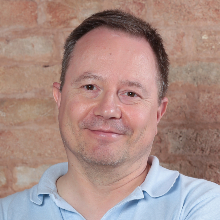
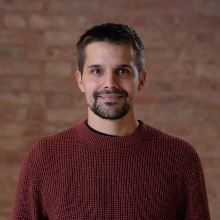
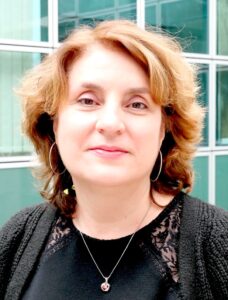
Claudio SILVESTRI is an Associate Professor at Ca' Foscari University of Venice, affiliated with the Department of Environmental Sciences, Computer Science and Statistics. He specializes in Computer Science (INFO-01/A), with a focus on data mining, privacy in location-based services, and spatio-temporal data analysis. His research integrates computer science with environmental and biomedical applications. Teaching Responsibilities include courses on Advanced Data Management (Computer Science) and Geographic Information Systems (Environmental Sciences) at the Master's level across multiple academic years. Research Interests span: Algorithms for privacy protection in location-based services Spatio-Temporal Data Warehouses and trajectory analysis Parallel computing on GPU and cloud platforms Applications in fisheries monitoring and diabetic kidney disease modeling Funding Projects include EU initiatives like H2020 (e.g., DC-ren for kidney disease research) and regional grants (e.g., ADMIN4D on Industry 4.0). Key collaborations involve researchers like Salvatore ORLANDO and Debora SLANZI. He is affiliated with the European Center for Living Technology (ECLT) and the Research Institute for Social Innovation. Office hours are held Wednesdays 2-4 PM by email appointment.
Yichuan Zhu is an Assistant Professor in the Department of Civil and Environmental Engineering at Temple University's College of Engineering. He leads the Computational Geosystems Group (CGG), focusing on interdisciplinary research at the intersection of civil engineering, geosciences, and computer science. Research Interests: Dr. Zhu’s work centers on applying machine learning, uncertainty quantification, and computational modeling to geotechnical and geological challenges. Key areas include granular mechanics, landslide characterization, remote sensing applications, risk and reliability assessment, and AI-driven geosystem modeling. His research combines physical principles with data-driven techniques to enhance predictive accuracy and decision-making in complex earth systems. Publication Trends: His recent publications (2021–2025) reflect a strong emphasis on integrating machine learning (including transformers and Bayesian deep learning) with traditional geomechanical models. Topics span tunnel safety, jet grouting, seismic site response, and landslide susceptibility, demonstrating a consistent focus on uncertainty-aware, AI-enhanced solutions for geotechnical problems. Professional Recognition and Activities: Chair, Session MS 0706 (Natural Hazards), EMI/PMC 2024 Conference Presented at Geotechnical Frontiers 2025 and Geo-Congress 2024 Actively recruiting fully-funded Ph.D. students Advising and Teaching: Dr. Zhu advises Ph.D. students, including Dr. Khabiri, whose dissertation informed recent conference presentations. He teaches core undergraduate and graduate courses in soil mechanics, foundation engineering, and geotechnical earthquake engineering (CEE 2011, CEE 3331, CEE 4821–4823, CEE 5821–5823). His lab, the Computational Geosystems Group, supports ongoing research in AI and computational geosciences. Research Group: The Computational Geosystems Group (CGG) conducts cutting-edge research in probabilistic modeling, geosystem simulation, and data-driven geotechnics. The team is actively expanding, with funded positions available for graduate researchers.
Jouni Helske is an Academy Research Fellow in Statistics at the University of Turku, Finland, affiliated with the INVEST Research Flagship Centre. He leads the CAUSALTIME project and is a subconsortium-PI in the PREDLIFE consortium at the University of Jyväskylä. His work bridges statistical methodology and applied research in social sciences and epidemiology. Academy Research Fellow, University of Turku PI, CAUSALTIME Project Subconsortium-PI, PREDLIFE Consortium, University of Jyväskylä Associate Editor, The R Journal and rOpenSci Open Science Ambassador, Open Science Community Turku Education: PhD in Statistics, University of Jyväskylä, Finland (2015) Jouni Helske’s research centers on developing advanced Bayesian methods for causal inference, particularly using complex multivariate time series and panel data. His expertise includes state space models, hidden Markov models, computational statistics, and probabilistic programming. He is deeply involved in statistical software development, especially in the R ecosystem, contributing to open science and reproducible research. His applied work spans sociology, education, public health, and epidemiology, where he analyzes longitudinal and sequential data to understand causal mechanisms and life course trajectories. The recent publications highlight a strong trend in methodological innovation for causal analysis in panel data, spatio-temporal disease modeling, and R package development. His work integrates Bayesian computation with real-world applications, especially in social policy and health, using historical and contemporary data. The focus on dynamic multivariate models and sequence analysis underscores his leadership in modern statistical methodology for complex data. Scientific Awards and Recognition: Academy Research Fellow (prestigious research position funded competitively) Jouni Helske has led and contributed to major research projects such as CAUSALTIME and PREDLIFE, which aim to improve policy decisions through predictive modeling of life trajectories. He mentors and collaborates widely, evidenced by his numerous co-authored publications and software projects. While no formal students are listed, his role as a project leader and software maintainer suggests significant advisory and collaborative activity. He is a key contributor to the open-source statistical community, particularly through rOpenSci and Stan. Labs and Teams: He leads the CAUSALTIME project team and is part of the PREDLIFE research consortium. He is actively involved in the R and Stan developer communities, contributing to state-of-the-art Bayesian computational tools.
Jeffrey Chan is a Professor and Associate Dean of Data Science & Artificial Intelligence at RMIT University's School of Computing Technologies. His research focuses on machine learning, recommender systems, responsible AI, and interdisciplinary applications in sustainability, healthcare, and transportation. He has held roles such as Assistant Associate Dean and led projects on fairness-aware systems, energy-efficient recommendations, and AI-driven circular economies. His work bridges theory and practice, collaborating with industry and non-profits. He teaches courses in algorithms, network analytics, and machine learning, and actively supervises PhD and Honours students. Notable contributions include grants from the Australian Research Council and a Best Paper Award at ACM International Conference on Web Science 2011. His research also addresses ethical challenges in AI, such as fairness and transparency, and explores mobility solutions like e-scooter dynamics and parking optimization. Research Interests: Machine Learning, Recommender Systems, Data-Driven Optimization, Social Network Analysis, Responsible AI, Cloud Security, and Sustainability. Awards: Best Paper Award at ACM International Conference on Web Science 2011 Grants: Australian Research Council Discovery Project (2017–2019), Early Career Researcher Grant (2015), and EU FP7 ROBUST project (2011–2013). Labs/Teams: Leads initiatives in AI ethics, mobility systems, and interdisciplinary data science collaborations.
Christian Graugaard is a Professor of Sexology at Aalborg University, affiliated with the Faculty of Medicine and the Department of Clinical Medicine. He is a key member of the Center for Sexology Research and leads Project SEXUS, aiming to study Danish sexual behavior comprehensively. His work emphasizes the intersection of biological, psychological, and cultural factors in human sexuality, challenging simplistic gender-based stereotypes. Research interests include gender differences in sexual behavior, societal norms influencing sexual health, and the cultural dimensions of human sexuality. He actively participates in public discourse, as seen in his DR-podcast interview on 'Ramt af kærlighed,' where he discussed the complex interplay between biology and culture in shaping sexual identities. Though no specific awards or grants are detailed here, his publications span advanced technical domains like spatiotemporal data analysis, federated learning, and trajectory modeling, suggesting interdisciplinary research collaborations. His work on systems like OneDB and SWASH highlights contributions to distributed computing and data science, which may underpin his methodologies in large-scale sexual behavior studies. He currently holds no listed students or formal advisees in the provided texts, and his involvement in labs/teams is limited to the Center for Sexology Research and Project SEXUS.
Andrew ZammitMangion is an Associate Professor at the National Institute for Applied Statistics Research Australia (NIASRA) within the University of Wollongong's School of Mathematics and Applied Statistics. He specializes in spatio-temporal statistics and computational tools, with research focused on environmental informatics. He completed his PhD in 2012 at the University of Sheffield (Department of Automatic Control and Systems Engineering), followed by postdocs at the University of Edinburgh (School of Informatics) and the University of Bristol (Department of Maths and School of Geographical Sciences). His work emphasizes statistical methodologies and their applications, documented in the 'Research Outputs' section of his blog. He maintains an active blog (andrewzm.wordpress.com) updated monthly with technical notes and R-based computational statistics insights. Key affiliations include the Centre for Environmental Informatics at NIASRA. Contact details include his office number (+61 2 4221 5112) and email azm@uow.edu.au. His research interests span spatio-temporal modeling, Bayesian methods, and interdisciplinary applications in environmental science.
Professor Owen Jones is a Chair in Operational Research at the School of Mathematics, Cardiff University. His work focuses on applying mathematical modeling and optimization techniques to address challenges in environment, energy, and sustainability, including renewable energy systems, water management, and disaster risk quantification. Operational Research Stochastic Modeling Environmental Data Analysis Renewable Energy Optimization His research spans environmental science, hydrology, and computational methods, with recent work leveraging approximate Bayesian computation (ABC) and generative adversarial networks (GANs) to model climate impacts, water systems, and biological dynamics. Articles highlight innovations in wastewater surveillance, bat roost detection, and tidal energy optimization. Professor Jones supervises advanced students in areas like spatio-temporal modeling, emergency response simulation, and multifractal processes. He has secured grants for interdisciplinary projects, including UKRO-funded freshwater solutions, GCRF wastewater monitoring, and EU Horizon2020 climate adaptation initiatives. He is part of the Operational Research group at Cardiff University and has collaborated with institutions such as the Australian Department of Agriculture, Fisheries and Forestry, and the EU Horizon2020 program.
Raul Castro Fernandez is a prominent researcher in data management and database systems, with a focus on data discovery, integration, and marketplaces. He has collaborated extensively with leading institutions and researchers, contributing to projects like Data Station and Nexus for secure data sharing. His work bridges theoretical innovation with practical implementations in cloud optimization, differential privacy, and LLM-driven data tools. Key Contributions : Data market frameworks, LLM applications in databases, differential privacy platforms Collaborators : Yue Gong, Samuel Madden, Michael Stonebraker, Eugene Wu, Kyle Chard Research Themes Fernandez explores automated metadata management for data catalogs, spatiotemporal data sharing with privacy guarantees, and LLM-based data discovery . His work on stateful stream processing (e.g., SABER system) and cost optimization in cloud analytics shows technical depth. Recent Trends 2023-2025 publications highlight his pivot toward LLM applications in data management, including tabular data representation and hypothesis assessment tools. He also investigates sustainability in HPC through carbon credit systems.
Stefano Federico Tonellato is an Associate Professor at the Department of Economics, Ca' Foscari University of Venice. His academic responsibilities include serving as Departmental Delegate for Information Technology Infrastructure. 1992: Degree in Economics, Ca' Foscari University of Venice 1993-1994: Visiting student, Department of Statistics, Warwick University (UK) 1996: PhD in Statistics, University of Padua His research focuses on statistical modeling for economic, financial, and environmental applications, with expertise in Bayesian nonparametric clustering, space-time models, semiparametric methods, and computational statistics. He has participated in EU research networks and regionally-funded health monitoring projects. Recent publications explore Bayesian clustering as community detection in financial data, health workforce forecasting, and spatio-temporal modeling. His work emphasizes predictive analytics and complex data structures. As a referee, he evaluates research projects for institutions like the University of Padua and contributes to journals including the Journal of the Royal Statistical Society and Computational Statistics and Data Analysis. He supervises theses in applied statistics for economics, finance, and environmental studies, requiring pre-discussion agreement on topics.
Mattia Stival is a Researcher at the Department of Economics , Ca' Foscari University of Venice , with a focus on social statistics (SSD: STAT-03/B). His work bridges Bayesian and computational statistics with applications in public health and sports science. Current statistician for the Planet4Health project Previously postdoctoral researcher for the Age-it project on multi-morbidity modeling PhD in Statistical Sciences (University of Padua, 2022) with thesis on Sports Performance Analysis with State Space Models Research Interests combine methodological innovation with real-world impact: Applied : Health inequalities, aging population dynamics, sport-for-health promotion, competitive sports analytics (talent identification, performance monitoring), diffusion models Methodological : Bayesian inference, computational statistics, spatio-temporal modeling, machine learning, Monte Carlo methods Publications demonstrate interdisciplinary trends across: Sports statistics (decathlon/heptathlon scoring, youth-to-elite transition) Bayesian spatio-temporal health modeling Missing data patterns in longitudinal athlete datasets Scientific Recognition : 2023 Honorable Mention for Best PhD Thesis in Applied Statistics by the Italian Statistical Society (SIS) Teaching includes statistics exercises for economics degrees and R coding in finance analytics. Office hours: Wednesday 10-12 by appointment.
Dr David Hofmeyr serves as a Senior Lecturer in Statistics at Lancaster University's School of Mathematical Sciences, specializing in advanced statistical methodology and machine learning applications for complex data analysis. His research focuses on: Estimation of complexity for non-standard estimators (clustering models, linear projections) Non-parametric regression and classification methodology Cluster analysis and unsupervised dimension reduction theory Spatial, temporal, and spatio-temporal applications of flexible regression models Recent publications demonstrate his interdisciplinary approach bridging machine learning with environmental science (soil mapping via survival analysis) and theoretical classification improvements. His work consistently emphasizes practical implementation of statistical theory in real-world data challenges. Dr Hofmeyr actively supervises PhD candidates through the STOR-i Centre for Doctoral Training and collaborates with the Statistical Artificial Intelligence research group. He maintains an open invitation for potential PhD students in his core research areas. No scientific awards were documented in the provided materials.
Michel Ménard is a Teacher-Researcher at the University of La Rochelle, affiliated with the Mathematics and Computer Science departments. His research focuses on image and signal processing, particularly in cardiovascular imaging, dynamic texture analysis, and UWB radar applications for through-wall imaging. Key projects: ANR DIAMS, FISC consortium, A.Gaugue project Applications: Cardiovascular imaging, environmental monitoring, mobile application programming Research Interests Ménard's work centers on modeling information ambiguity, imprecision, and uncertainty in image analysis, pattern recognition, and information fusion. He has developed generalized fuzzy coalescence methods, non-parametric Bayesian approaches for trajectory analysis, and variational formulations for image filtering inspired by quantum physics. His team focuses on: Dynamic texture modeling via spatio-temporal decomposition Low-level image processing with information theory Through-wall imaging systems using UWB radar Information fusion techniques with minimal a priori assumptions Applications in coastal environment monitoring and biomedical imaging Publications Ménard's publications reflect his expertise in advanced image processing techniques applied to diverse domains. Notable contributions include: Theoretical works on total variation and sublinear functionals Algorithm developments for multistatic radar systems Applications in 3D bee tracking and cardiovascular flow analysis Extensions of Chambolle's algorithm to color images Decomposition methods for dynamic textures Integration of quantum physics concepts in image filtering Collaborations He collaborates with: Laboratoires: L3i, MIA, CLDG/BQR, IRPHE CNRS, ETIS, LASIE Institutions: University Hospitals of Poitiers and Angers, ONERA, LEAT, Tronico Researchers: Abdallah El-Hamidi, Alain Gaugue, Damien Coisne, Gilles Aubert Teaching Ménard teaches across eight departments/programs including: Electronics and Industrial Computing Automation Network Security and Cryptography Video Game Programming Smartphone Programming Digital Media Distribution He has developed new educational initiatives in mobile application programming since 2010.
Furkan Kıraç is an Assistant Professor in the Computer Science Department at Özyeğin University, specializing in Computer Vision and Machine Learning . He previously served as a Part-Time Instructor at the same university (2012-2013) and as a Research Assistant at Boğaziçi University (2009-2013). Education: PhD in Computer Engineering, Boğaziçi University (2013) MS in Systems and Control Engineering, Boğaziçi University (2002) BS in Mechanical Engineering, Boğaziçi University (2000) His research focuses on real-time hand pose estimation , deep learning , and computer vision applications in industrial automation. Recent publications highlight his work on pedestrian tracking, spatio-temporal mapping, and image processing pipelines for test oracle automation. Notable achievements include founding two computer vision companies ( Proksima and Fortibase ) and receiving awards at SIU conferences (2004, 2005, 2012). He has contributed to projects funded by TÜBİTAK and the Scientific and Technical Research Council of Turkey. Scientific Awards: 3rd place in best demo award (SIU 2012) Best application paper award (SIU 2012) 3rd degree in Turkish National Science Competition (1994, 1995) Gold/Silver/Bronze medals in National Computer Science Olympiads
Madalina Deaconu is an Inria Research Director and Assistant Scientific Delegate (DSA) at the Inria Center of the University of Lorraine since January 2022. She leads the PASTA joint project team (Processus Aléatoires Spatio-Temporels et leurs Applications) hosted at the Institut Elie Cartan de Lorraine (IECL). Her academic affiliation is with the Faculty of Science and Technology at the University of Lorraine, where she conducts research in probability theory and stochastic modeling. She serves on multiple committees including the Inria Evaluation Commission, the Geophysics Program Committee of the RT CNRS "Earth & Energies", and has held leadership positions including Director of the Charles Hermite Federation (2018-2022). Dr. Deaconu completed her Habilitation à diriger des recherches (HDR) at Université Henri Poincaré – Nancy 1 in 2008 and earned her PhD in Stochastic Processes and Partial Differential Equations from the same institution in 1997. Habilitation à diriger des recherches (HDR), Université Henri Poincaré – Nancy 1, France, 2008 PhD in Stochastic Processes and Partial Differential Equations, Université Henri Poincaré – Nancy 1, France, 1997 Madalina Deaconu's research focuses on stochastic modeling with applications across multiple domains. Her primary areas include data-enriched stochastic modeling, probabilistic approaches to coagulation/fragmentation models, numerical methods for diffusion reach times, and stochastic methods for linear and nonlinear partial differential equations. Her work bridges theoretical probability with practical applications in environmental science, geophysics, and actuarial science. She develops innovative probabilistic simulation methods and analyzes random spatio-temporal processes, with particular emphasis on fragmentation equations, Bessel processes, and Hawkes processes. Her research has significant applications in modeling avalanches, natural disasters, insurance risk assessment, and hydrochemical data analysis. She has established international collaborations with researchers from University of Turin, University of Uruguay, and institutions in Bucharest, as well as national collaborations with University of Burgundy and INRAE Grenoble. Analysis of Dr. Deaconu's recent publications reveals a consistent focus on fragmentation processes and stochastic modeling approaches. Her work spans theoretical developments in probability theory, numerical methods for stochastic processes, and practical applications in environmental science and actuarial mathematics. A notable trend is her increasing focus on Bayesian inference methods and point process applications, particularly for environmental and insurance contexts. Her most recent work demonstrates strong interdisciplinary connections, applying stochastic methods to hydrochemical data analysis, insurance recommendation systems, and natural disaster modeling. The consistent thread throughout her publications is the development and application of sophisticated probabilistic techniques to solve complex real-world problems. Dr. Deaconu has received recognition for her contributions to research: Paper and Poster award at EWEA 2015 (European Wind Energy Association) Plenary speaker at the 14th International Conference on Monte Carlo Methods and Applications (MCM23) While specific student names aren't listed in the provided text, Dr. Deaconu is involved in doctoral training through the IECL and supervises research in stochastic modeling. She coordinates multiple research collaborations including industrial partnerships with Le Foyer Luxembourg and SnT Université du Luxembourg (2018-2022). Her teaching activities include Stochastic Modeling at Master 2 level, Stochastic Differential Equations at École des Mines de Nancy, and Monte Carlo Simulation for Financial Market Engineering. Dr. Deaconu leads the PASTA research team (Processus Aléatoires Spatio-Temporels et leurs Applications), a joint Inria project hosted at IECL. She previously directed the Charles Hermite Federation (2018-2022), which brought together three major research laboratories: CRAN (Automatic Control), IECL (Mathematics), and LORIA (Computer Science). Her work is centered at the Institut Elie Cartan de Lorraine, a mathematics research institute affiliated with the University of Lorraine, where she contributes to both theoretical developments and practical applications of stochastic methods across multiple scientific domains.
Zhilin Guo is an Associate Professor at the School of Environmental Science and Engineering of the Southern University of Science and Technology (SUSTech), Shenzhen. She earned her Ph.D. in Environmental Science (minor in Hydrology) from the University of Arizona and completed postdoctoral work at UC Davis. Research Leadership : Vice Chair of UNESCO Groundwater Youth Network, member of AGU and IAHR committees, and associate editor for top journals like Water Resources Research . Research Focus : Groundwater pollution mechanisms, non-Fickian transport modeling, contamination risk assessment, and sustainability under global change. Her work spans numerical simulation, upscaling methods, and reactive transport analysis. Scientific Awards : 2024 Ministry of Education Young Talents, 2024 Guangdong Environmental Science Society Gold Award, and multiple journal-specific honors. Her funded projects include national Key R&D programs and NSFC grants, totaling over 10 million RMB. Academic Contributions : Published 15+ papers in 2024 alone, covering groundwater modeling, pollution risk, and climate-water interactions. Her teaching includes bilingual courses on water resources and contaminant transport.