Nikolaus Umlauf is an Associate Professor at the Department of Statistics, University of Innsbruck. He specializes in Bayesian distributional regression, structured additive models, and spatiotemporal analysis, with applications in public health, climate science, and real estate valuation.
Jaroslav MYSIAK is an Adjunct Professor at the Department of Environmental Sciences, Informatics and Statistics (DEIS) at Ca' Foscari University of Venice. His research focuses on climate risk management, disaster resilience, and environmental policy, with particular emphasis on flood modeling, nature-based solutions, and decision support systems for sustainable resource management. He holds an academic appointment in the Department of Environmental Sciences, Informatics and Statistics at Ca' Foscari University of Venice. His teaching activities include advanced courses on climate risk modeling and assessment at the master's and doctoral levels. His key research contributions span climate adaptation pathways, flood damage assessment frameworks, and the integration of Bayesian networks for multi-sectoral risk analysis. MYSIAK has extensively engaged in developing policy-oriented tools such as the MULINO-DSS decision support system and the INFORM vulnerability framework. Recent work explores nature-based solutions for climate resilience and the governance mechanisms enabling their implementation. His publications demonstrate expertise in cross-disciplinary research, bridging hydrology, economics, and policy. Current research themes include: Climate services evaluation and socio-economic impact analysis Resilience assessment frameworks for coastal and urban areas Cost-benefit analysis of flood defense infrastructure Integration of machine learning in disaster risk reduction His work frequently addresses European and Mediterranean contexts, with studies on Adriatic coastal systems and Italian agricultural water management. MYSIAK's research has been applied in policy contexts including the EU's climate adaptation strategy and international disaster risk reduction frameworks.
Peter Baade is an Adjunct Professor in the Faculty of Science at Queensland University of Technology (QUT), associated with the Tier 1 Research Centre - Science (U91) and the Centre for Data Science. He holds a PhD from the University of Queensland. His research focuses on public health, epidemiology, and biostatistics, with a particular emphasis on cancer outcomes, spatial disparities, and health informatics. Baade leads projects analyzing geospatial patterns of cancer incidence and survival, Bayesian modeling for health outcomes, and the development of the Australian Cancer Atlas. Key research interests include cancer epidemiology, spatial analysis of health disparities, and the application of statistical methods to public health challenges. His work explores topics such as diagnostic delays in breast cancer, prostate-specific antigen (PSA) testing patterns, and survival disparities among Indigenous populations. Baade collaborates on interdisciplinary projects, integrating data science with public health to inform policy and improve healthcare equity. His recent publications highlight trends in spatial epidemiology, Bayesian approaches to small-area estimation, and visualizing health data for diverse audiences. He contributes to understanding cancer survival inequalities, particularly among rural and Indigenous communities. Baade’s research has implications for healthcare planning, cancer surveillance, and health equity initiatives.
Dr Jessica Cameron is a Research Fellow at Queensland University of Technology's Faculty of Science, affiliated with the Tier 1 Research Centre - Science and the Centre for Data Science. She holds a PhD from the University of Queensland and specializes in public health research with a focus on cancer epidemiology and spatial analysis. Her research interests center on using advanced statistical methods to understand geographical patterns in cancer incidence, survival, and screening across Australia. Dr Cameron's work employs Bayesian spatial modeling techniques to examine health inequalities and cancer outcomes at various geographical scales. She has made significant contributions to the development of the Australian Cancer Atlas, which visualizes cancer patterns across the country. Dr Cameron's recent publications (2023-2025) demonstrate her expertise in spatial epidemiology, with studies examining prostate-specific antigen testing patterns, breast cancer outcomes across urban-rural divides, geographical disparities in rare cancers, and mapping cancer risk factors at small area levels. Her research consistently addresses important public health questions related to cancer prevention, screening, and treatment access. Her collaborative work with researchers including Cramb, Baade, and Mengersen has resulted in numerous high-impact publications in journals such as Cancer Epidemiology, Statistics in Medicine, and PLoS ONE. Dr Cameron's methodological expertise in Bayesian statistics and spatial analysis has positioned her as a key contributor to understanding the geography of cancer in Australia.
Heiko Schütt is Associate Professor for Computational Cognitive Science and Modeling at the Université du Luxembourg. His research focuses on developing mechanistic models of visual perception and cognition using deep neural networks, Bayesian inference, and efficient coding principles. He is also the developer of widely used toolboxes such as rsatoolbox for representational similarity analysis and Psignifit 4 for psychometric function fitting. His work lies at the intersection of cognitive science, computational neuroscience, and machine learning, with a strong emphasis on creating and evaluating models of human perception and decision-making. He investigates early visual processing, eye movement dynamics, and model evaluation methodologies, contributing both theoretical frameworks and practical tools to the scientific community. The recent publications reflect a strong trend toward developing rigorous statistical methods for comparing neural and cognitive models, particularly in the context of representational geometries and perceptual decision-making. His work increasingly bridges human cognition and artificial neural networks, exploring parallels in generalization and representation. Much of his research is image-computable and grounded in empirical psychophysics. He has previously held postdoctoral positions with Weiji Ma at New York University and Niko Kriegeskorte at the Zuckerman Institute, Columbia University. His PhD was jointly conducted with Felix Wichmann at Tübingen and Ralf Engbert at Potsdam, focusing on early visual processing and eye movements. No scientific awards are mentioned in the provided text. While no formal advisees are listed, his active research program and development of major scientific toolboxes suggest a role in mentoring students and collaborators. There is no mention of specific grants, but his work likely involves funded research given the scale and impact of his projects. He maintains active code repositories on GitHub for rsatoolbox, Psignifit 4, early vision models, and eye movement modeling, indicating leadership in open science and computational tool development. These resources support a broad community in cognitive and computational neuroscience.
Dr. Dhafer SAIDANE is a full Professor at SKEMA Business School (France), holding a HDR (Paris 1 Sorbonne) and French university qualification (CNU: Professeur des universités). He specializes in finance, with a focus on sustainable finance, Islamic banking, and development economics. He leads the MSc in Corporate Financial Management - FinTech & Digital Finance in Suzhou, China, and coordinates programs across SKEMA's global campuses. He advises Tunisia's Prime Minister and chairs the African Finance Network, promoting financial integration in Africa. His research explores governance, CSR, and systemic risk in banking, with over 150 publications. Awards include the 2012 TURGOT Prize and 2024 Emerald Literati Award. Education Doctorat en sciences économiques (1991), HDR (1997), Paris 1 Panthéon-Sorbonne Maitrise, Licence en sciences économiques (1985-1986), Paris 1 Research Interests His work bridges finance and development, addressing sustainability, banking governance, and African economic challenges. Key themes include Islamic finance models, CSR-banking linkages, and public debt impacts on credit supply. He advocates for integrated reporting frameworks and sustainable banking practices. Professional Roles Advisor to the Tunisian Prime Minister's Economic Council Member, Club of African Bankers Editorial Board Member, Journal of Risk and Financial Management Organized major conferences like the African Finance Network summits Grants & Awards 2024 Fintech for Tomorrow Challenge Prize 2024 Emerald Literati Outstanding Paper 2012 TURGOT Prize for Sustainable Finance Advisees & Leadership Supervised 12+ PhD students, serving as director or jury member. Leads SKEMA's global programs and chairs African finance networks, fostering academic-industry collaboration. Labs & Initiatives Director, International Observatory of Sustainable Finance; co-founded African Finance Network promoting financial innovation and regional integration.
Dr Benjamin Seligmann is a Research Fellow at The University of Queensland's Minerals Industry Safety and Health Centre (MISCH) within the Faculty of Engineering, Architecture and Information Technology. He holds a Bachelor (Honours) of Chemical Engineering and a PhD from UQ, and is a Member of Engineers Australia. His research focuses on risk management innovations, particularly causal network topology analysis (CaNeTA) for accident scenario modeling, and addressing complexity in socio-technical systems across mining, infrastructure, healthcare, and education sectors. Key areas include risk assessment practices, fire safety engineering, and automation risk in mining. He has contributed to projects like the Complex Orebodies Review of the Izok Lake Corridor and led studies on human-system integration for autonomous systems. Current grants include 'Modelling impacts of natural hazards on interconnected infrastructure networks' (2023-2026). Dr Seligmann is actively involved in PhD supervision, currently co-advising projects on fire safety engineering and causal network tools. His work spans over 30 peer-reviewed outputs, including high-impact journal articles and conference presentations on causal network applications, Bayesian risk models, and ESG mapping in mining. Notable collaborations include projects with MMG Australia Limited and Mount Isa Mines Limited. He maintains active roles in professional networks like Engineers Australia and is accessible for media inquiries through UQ's communications team.
Elizabeth A. Babcock is a Professor and Associate Dean at the Rosenstiel School of Marine, Atmospheric, and Earth Science, University of Miami. Her roles include overseeing Graduate Studies and the Master of Professional Science program. She specializes in marine biology, elasmobranch conservation, fisheries management, and ecological modeling. Her research focuses on shark population dynamics, bycatch mitigation, and the efficacy of marine protected areas (MPAs). Key contributions include studies on Caribbean reef sharks, stingray activity patterns, and the global shark fin trade. Her work integrates field studies, genetic analysis, and statistical modeling to address conservation challenges. Notable projects include analyzing small-scale fisheries in Central America and developing tools to estimate bycatch in Gulf of Mexico fisheries. She collaborates with NOAA on workforce development initiatives, emphasizing diversity in marine sciences. Her publications span over 20 years, addressing topics like habitat use in elasmobranchs and the impacts of fishing practices on biodiversity. Elizabeth’s research highlights the need for adaptive management strategies, particularly in data-limited fisheries. She advocates for science-informed policies to protect threatened species and improve ecosystem resilience. Her interdisciplinary approach bridges ecology, policy, and education to foster sustainable marine resource management.
Prof. Dr. Günter Last is a Professor at the Institute of Stochastics within the Faculty of Mathematics at the Karlsruhe Institute of Technology (KIT) . He has held this position since 2000 (C4/W3 Professorship). Last's research focuses on stochastic processes , stochastic geometry , and their applications in mathematics, physics, and finance. Education: Diploma in Mathematics, Humboldt University Berlin (1984) PhD in Mathematics, Humboldt University Berlin (1987) Dr. Sc. in Mathematics, Technical University Braunschweig (1995) Research Interests: Last leads research in Poisson processes, Boolean models, Gibbs processes, and spatial random systems. His work explores Palm calculus, hyperuniformity, normal approximation, and percolation phenomena. He co-authored the textbook Lectures on the Poisson Process with Mathew Penrose. Publications & Trends: His recent work includes Normal approximation of Kabanov-Skorohod integrals , Hyperuniform stable matchings , and Poisson hulls , reflecting a focus on stochastic analysis and geometric probability. His research bridges theoretical insights with applications in digital microstructures and wireless network modeling. Scientific Leadership: Co-Editor for Electronic Journal of Probability (2018-2023) Speaker of DFG Research Unit Geometry and Physics of Spatial Random Systems (2011-2018) Associate Editor for Applied Probability Journals (2005-2019) Advising: Last has supervised 15 doctoral theses and numerous diploma/master's theses, including topics on neural networks, random tessellations, and stochastic financial models.
Tina Comes is a Researcher at the Department of Technology, Policy and Management , Delft University of Technology , with a focus on Transport and Logistics . Her work integrates Decision Theory , Resilience Engineering , and Artificial Intelligence to address complex challenges in Disaster Management and Humanitarian Logistics . 2025: Agent-Based Modeling for crisis adaptation 2025: HILP Event Taxonomy for risk classification 2024: Dynamic Bayesian Networks in emergency mapping Her research combines Computer Science and Urban Planning to develop Data-Driven Decision Support Systems , with recent studies on flood response , healthcare resilience , and ethical AI . She has contributed to 70+ research outputs and supervised interdisciplinary projects like 4TU Resilience Engineering Centrum initiatives. Selected Trends: Prior work emphasizes information asymmetries , cognitive biases , and multi-modal data in crisis scenarios. She actively explores spatio-temporal analytics and blockchain applications for humanitarian coordination. Key Collaborations: Partnerships with European Safety and Reliability Conference (2020), ISCRAM Conference (2025), and Kenyan Election Fact-Finding (2018) Press Mentions: Highlighted in AI for Mobility (2025) and 4TU Resilience Centrum Launch (2018)
Francesca Panero is an Assistant Professor (RTT) in Statistics at the Department of Methods and Models for Economy, Territory, and Finance (MEMOTEF) at Sapienza University of Rome. She also serves as a Visiting Fellow at the Department of Statistics of the London School of Economics and Political Science, where she was previously an Assistant Professor until May 2024. Additionally, she maintains an affiliation with the Grantham Research Institute on Climate Change and the Environment at LSE. Dr. Panero earned her PhD in Statistics from the University of Oxford in 2022, following undergraduate and master's studies at the Department of Mathematics of the University of Turin and Collegio Carlo Alberto. Her academic journey reflects a strong foundation in mathematical and statistical theory applied to complex real-world problems. Her research centers on Bayesian statistical methodologies with applications across multiple domains. She specializes in complex networks analysis using Bayesian nonparametric approaches, disclosure risk assessment for privacy preservation, spatio-temporal Gaussian process modeling for food insecurity prediction, and fair machine learning techniques. Her work demonstrates a consistent thread of developing rigorous statistical methods with practical societal applications, particularly in network science, privacy protection, and algorithmic fairness. Dr. Panero's publications reveal a strong trajectory in high-impact statistical research, with recent work focusing on sparse network modeling, fairness constraints in machine learning, and privacy-preserving statistical techniques. Her methodological contributions bridge theoretical statistics with applications in social sciences, public policy, and computational challenges. 2025 Visiting Lecturer at Faculty of Informatics, University of the Italian Switzerland (USI) Elected as j-ISBA Chair Elect for 2025-2026 Recipient of IMS junior research travel grant for ICSDS 2024 Awarded LSE Research and Impact Support Fund (RISF) grant for food insecurity research As an educator, Dr. Panero teaches Probability and Stochastic Processes at Sapienza University and has previously instructed Deep Learning and Artificial Intelligence courses at LSE. She actively mentors students and encourages PhD candidates interested in her research areas to contact her. She is also a core member of GENIAL, an LSE focus group examining how students utilize generative AI tools for learning. Beyond her technical work, she has been engaged in equality, diversity, and inclusion initiatives since 2020 and maintains an active academic blog discussing data visualization, research projects, and academic life.
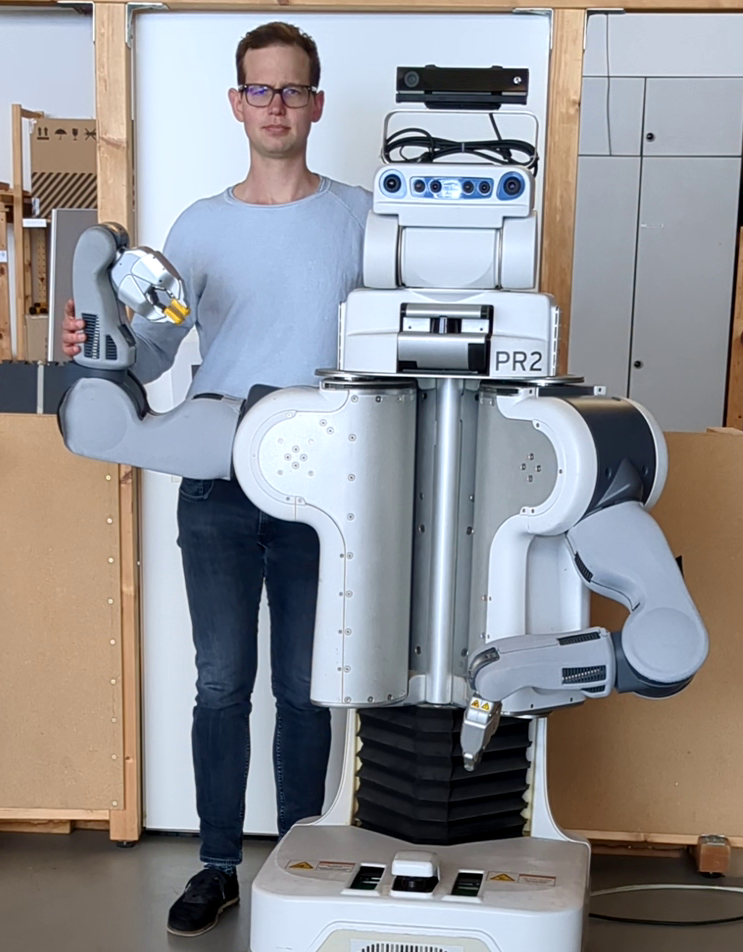
Daniel Büscher is a post-doctoral researcher at the Robot Learning Lab of the University of Freiburg. His work focuses on autonomous robot navigation , deep learning , and probabilistic state estimation . He has contributed to robotics research through projects involving mobile manipulation and audio-visual navigation . Research Interests : Autonomous navigation, deep learning, computer vision, probabilistic estimation Teaching : Lecturer and tutor for Introduction to Mobile Robotics and Robot Mapping (2017–2023) Publication Trends : Recent work emphasizes robot design optimization , language-grounded scene graphs , and uncertainty-aware perception . His research connects reinforcement learning with mobile manipulation and cross-domain navigation challenges.
Erlend Birkeland Nilsen serves as Professor at Nord University's Faculty of Biosciences and Aquaculture and Senior Researcher at NINA's Terrestrial Biodiversity unit . His dual affiliation bridges academic research with applied conservation, focusing on Norwegian wildlife management and international ecological challenges. His research centers on population dynamics of large carnivores and avian species , examining how environmental factors like snow conditions and habitat changes influence predator-prey relationships. Key interests include lynx and wolf conservation , ptarmigan-gyrfalcon interactions , and statistical modeling of wildlife populations . His work integrates field data with advanced analytical frameworks to address biodiversity loss and climate impacts. Recent publications reveal strong trends in rewilding applications (e.g., wolf reintroduction for carbon sequestration) and innovative population monitoring techniques . His 2025 outputs demonstrate consistent focus on Scandinavian ecosystems while expanding to international contexts like Scotland, highlighting cross-disciplinary approaches to conservation biology and ecosystem restoration. Nilsen actively contributes to major initiatives including GBIF Norway (biodiversity data infrastructure) and sustainable small game management projects. At NINA, he advances evidence-based strategies for terrestrial biodiversity, emphasizing practical solutions for wildlife conservation and natural resource management in northern ecosystems.
Stephanie Thomas is an Adjunct Assistant Professor in the Department of Economics at Curtin University, with expertise in health economics, experimental economics, and environmental/resource economics. Her research focuses on healthcare policy, public finance, and behavioral economic modeling. Education: Ph.D., McMaster University (2016) M.A., University of Western Ontario (2010) B.A., McMaster University (2009) Her scholarly work bridges econometric methodologies with healthcare decision-making, including studies on EQ-5D-5L value sets and health policy analysis. Recent publications examine price prediction models under stress, healthcare financing systems, and behavioral taxation dynamics. Co-authors include prominent researchers such as Hurley, Buckley, and Cuff, reflecting collaborative interdisciplinary efforts. While no formal awards are documented in the provided data, her research has been widely shared across academic platforms.
Björn Forsberg is an Assistant Professor in the Department of Physics, Chemistry and Biology (IFM) at Linköping University, where he leads a research group in structural bioinformatics. He is affiliated with SciLifeLab Linköping and the National Supercomputer Centre (NSC), and is part of the Wallenberg National Program for Data-Driven Life Science (DDLS), supported by the Knut and Alice Wallenberg Foundation. His work bridges computational science and molecular biology, focusing on the development of novel methods for analyzing cryo-electron microscopy (cryo-EM) data. His research centers on understanding molecular life through data-driven approaches. He develops computational tools to analyze ensemble cryo-EM data, using spatial filtering and local correlation metrics to identify sources of structural variation and attribute them to biological mechanisms. His lab leverages high-performance computing resources, including the Berzelius supercomputer, to process large-scale datasets and improve the resolution and interpretability of molecular models. This work has broad implications for understanding diseases like Alzheimer's and for drug discovery. The recent publications highlight a strong trend in advancing cryo-EM methodology, particularly through software development (e.g., RELION) and the integration of machine learning and GPU computing. His work spans fungal metabolism, ion channel dynamics, chloroplast ribosomes, and foundational algorithmic improvements in 3D reconstruction. The research combines structural biology, bioinformatics, and computational physics to extract biological meaning from complex data. Scientific Awards and Recognition: Selected for the SciLifeLab and Wallenberg National Program for Data-Driven Life Science (DDLS) Supported by the Knut and Alice Wallenberg Foundation through DDLS and the PALS (Program for Academic Leaders in Life Science) network Björn Forsberg is actively building his research team, advising PhD and master’s students, and seeking postdoctoral researchers with backgrounds in computational biology, computer science, or related fields. His lab collaborates with leading experts in structural biology and uses national research infrastructures to push the boundaries of data-driven life science. He has no listed formal grants yet, but his program is funded through major foundation support. His research is conducted at the intersection of the Department of Physics, Chemistry and Biology (IFM), SciLifeLab Linköping, and the National Supercomputer Centre (NSC), forming a multidisciplinary environment for innovation in computational structural biology.