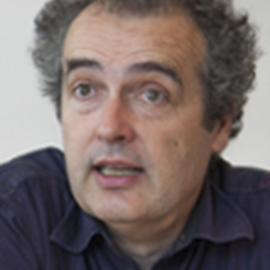
Prof. Sander Bohte is a part-time full professor of Computational Neuroscience at the University of Amsterdam (Swammerdam Institute of Life Sciences) and an honorary full professor of Bio-inspired Neural Networks at the University of Groningen. He serves as a Scientific Staff Member and Group Leader in the Machine Learning department at CWI, Amsterdam. His work bridges computational neuroscience and machine learning with a focus on continuous-time information processing. Key research interests include: Spiking Neural Networks with predictive coding and multi-compartment models Biologically Plausible Learning in recurrent and deep architectures Working Memory modeling via reinforcement learning Neuromorphic Computing for real-time systems and GPU acceleration His recent publications highlight trends in neural adaptation , predictive coding , and SNN hardware-software co-design . Awards include the Veni Innovational Research Grant (2004) and ERCIM grant (2013) . He actively supervises MSc theses and leads grants like the NWO KIC project 'Selfhealing Neuromorphic Systems' (2024).
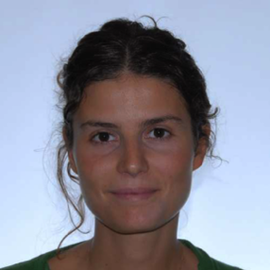
Ivana Nikoloska is an Assistant Professor at the Department of Electrical Engineering, Eindhoven University of Technology (TU/e). She is affiliated with the Center for Quantum Materials and Technology Eindhoven and BIASlab (Bayesian Intelligence and Stochastic Agents Lab). Her academic career includes prior roles as a Research Associate at King’s College London and a Visiting Researcher at Aalborg University. PhD: Monash University, Australia (2023) MSc & Dipl.-Ing.: University of Ss. Cyril and Methodius, North Macedonia Research Interests span foundational and applied machine learning, quantum computing, and information/communication engineering. Her work focuses on integrating Bayesian inference, variational methods, and quantum technologies for tasks like signal processing, channel estimation, and power control optimization. Quantum Machine Learning Bayesian Simulation-Based Inference Meta-learning for Wireless Systems Hybrid Quantum-Classical Architectures Stochastic Signal Processing Quantum Sensing & Metrology Notable Trends in Publications include quantum recurrent neural networks with adaptive gating, Bayesian frameworks for quantum sensing, and meta-learning applications in communication systems. She explores variational inference for planning and robust algorithms for channel estimation under non-ideal conditions.
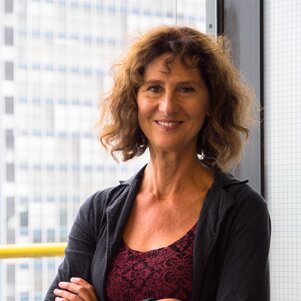
Sofie Haesaert is an Assistant Professor in the Control Systems group at the Department of Electrical Engineering, Eindhoven University of Technology. Her work focuses on formal verification and control synthesis methods for cyber-physical systems, particularly through stochastic simulation relations and temporal logic specifications. Education: BSc (cum laude) and MSc (cum laude) in Mechanical Engineering and Systems & Control from Delft University of Technology; PhD from Eindhoven University of Technology (2017) Experience: Postdoctoral researcher at Caltech (2017-2018), then returned to TU/e as Assistant Professor Her research interests include: Cyber-physical systems verification Stochastic control methods Temporal logic specification Markov decision processes Formal methods in control engineering Model abstractions and simulation relations Recent publications show strong focus on: Stochastic temporal logic control Robust and risk-aware control Multi-agent system verification Formal synthesis via simulation relations AI integration in control systems Software tools for formal control Scientific achievements: Veni Grant recipient (2020) Co-developer of the SySCoRe toolset for stochastic control synthesis Contributor to formal verification benchmarks through ARCH-COMP reports She contributes to education through courses on: Control principles for engineered systems Control challenges in autonomous racing Supervisory control of cyber-physical systems Haesaert collaborates across disciplines including computer science, applied mathematics, and robotics, with over 750 citations and significant contributions to formal control theory for stochastic systems. Her work bridges theoretical developments with practical applications in autonomous systems and complex control architectures.
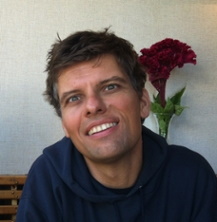
Rodrigo González is an Assistant Professor at the Department of Mechanical Engineering, Eindhoven University of Technology, since 2022. His research focuses on data-driven modeling, estimation, and control methods for high-tech precision systems, with applications in motion control and continuous-time system identification. Education: Ph.D. in Electrical Engineering (KTH Royal Institute of Technology, 2022) M.Sc. in Electronic Engineering (Universidad Técnica Federico Santa María, 2016) His work emphasizes continuous-time system identification, state-space modeling, and Bayesian estimation techniques. Key research themes include motion control tuning, multivariable systems, and noise/disturbance modeling in precision engineering applications. Rodrigo has received the Best Electronic Engineering Student Award (2016) and Best Thesis Award from Universidad Técnica Federico Santa María. He has active collaborations with institutions like Universidad Técnica Federico Santa María through visiting researcher appointments. Scientific awards include: Best Electronic Engineering Student Award (2016) Best Thesis Award (Universidad Técnica Federico Santa María)
Raymond H. Cuijpers is an Associate Professor at Eindhoven University of Technology in the Human Technology Interaction group. His research focuses on Cognitive Robotics , Human-Robot Interaction , and Artificial Intelligence for cognitive agents, with applications in healthcare robotics and aging population support. PhD in Physics of Man from Utrecht University (2000) Postdoctoral research at Erasmus MC Rotterdam and Radboud University Nijmegen Key research areas include: Developing socially intelligent robots with proper social cue interpretation Hybrid AI approaches for real-world complexity handling Visual-haptic perception integration in human motor control Service robots for COPD patient assistance (KSERA project) Rescue robotics and tele-operation applications Recent research output (2025) includes studies on: Personalization in human-robot communication Optimal lighting for elderly visual perception Human-robot bonding mechanisms Interactive sensorized platforms for homecare (GUARDIAN) Audiovisual temporal integration in virtual environments He coordinates large-scale European projects like GUARDIAN and previously KSERA, contributes to sustainable development goals through healthcare robotics, and serves on editorial boards of leading journals including International Journal of Social Robotics . His work spans both technical robotics development and human-centric interaction studies.
Laura Toni is an Associate Professor in the Department of Electronic & Electrical Engineering at University College London (UCL). She serves as Director of the MSc in Telecommunications and Internet Engineering and the MRes in Telecommunications. Additionally, she is a Turing Fellow at the Alan Turing Institute and a member of ELLIS (European Lab for Learning and Intelligent Systems). Her research focuses on coding, streaming technologies, machine learning for immersive communications, decision-making under uncertainty, and large-scale signal processing. She leads the LASP (Learning And Signal Processing) group at UCL. Education: MSc (2005) and PhD (2009) from the University of Bologna, followed by postdoctoral research at UC San Diego and EPFL under Professors L. Milstein, P. Cosman, and P. Frossard. Key roles include Technical Program Chair at ACM MM 2022, Keynote Co-Chair at ACM MMSys 2022, and leadership in organizing workshops on graph-based machine learning and emerging technologies in performing arts. She is a Senior IEEE Member and holds editorial roles in IEEE Multimedia Magazine and EURASIP Journal on Signal Processing. Her work bridges communication systems and machine learning, with contributions to adaptive streaming, network optimization, and graph signal processing. She actively promotes diversity and inclusion in technical conferences, including roles as Diversity Chair at MMSys 2021 and PIMRC 2020.
Peter Desain is a Professor and Principal Investigator at the Donders Institute for Brain, Cognition and Behaviour, Radboud University. His work focuses on developing advanced brain-computer interfaces (BCI) leveraging evoked potentials, particularly through code-modulated visual and auditory stimuli. He pioneers methods like noise-tagging and Bayesian dynamic stopping to enhance BCI efficiency and accessibility. His research spans neurotechnology, electrophysiological modeling, and clinical applications such as objective EEG audiometry and ALS communication aids. Recent studies emphasize gaze-independent systems, semantic decoding, and minimizing BCI calibration requirements. Key contributions include optimizing c-VEP code-books, real-time fMRI neurofeedback for memory contexts, and literature reviews on BCI design trends. Experimental pilot studies explore auditory attention and high-frequency SSVEP dynamics. No scientific awards are explicitly mentioned. His work integrates multidisciplinary approaches, bridging neuroscience, machine learning, and engineering to advance human-computer interaction and clinical tools.
Dr. Aurelien Baillon is a Professor of Economics of Uncertainty at the Erasmus School of Economics , Erasmus University Rotterdam, specializing in the Department of Applied Economics . His research focuses on individual decision-making under risk and ambiguity, combining empirical and theoretical approaches to understand probability elicitation and expert opinion aggregation. Key research areas: Behavioral Economics, Risk Attitudes, Bayesian Modeling Major projects: Bayesian Markets , Personal Model of Trumpery , Malakoff Humanis Chair His recent publications explore ambiguity theories , cybersecurity decision-making , and linguistic deception detection . Notable grants include the ERC Starting Grant (2016) and NWO Vidi Grant (2014). Collaborations span institutions like BRiO , HITS Institute , and GATE . The Datavisualization project with Alice Havrileck demonstrates his interdisciplinary approach to uncertainty analysis.
Bert de Vries is a Professor at the Signal Processing Systems Group at Eindhoven University of Technology (TU/e), where he has been employed since January 2012. He maintains a dual career, also working at GN Hearing in the hearing aids industry since April 1999, where he holds both research and managerial roles. His academic journey began at TU/e, where he earned his MSc in Electrical Engineering in 1986, followed by a PhD from the University of Florida in 1991. Between 1992 and 1999, he worked at Sarnoff Research Center in Princeton, NJ, contributing to diverse signal and image processing projects. Professor de Vries's research centers on Bayesian Machine Learning, with particular focus on the Free Energy Principle and its applications to engineering problems. His work bridges theoretical neuroscience with practical signal processing systems, especially in biomedical applications. He directs the BIASlab research team at TU/e, which develops probabilistic programming tools including RxInfer.jl, ForneyLab.jl, GraphPPL.jl, ReactiveMP.jl, and Rocket.jl. His research spans active inference, variational message passing, probabilistic programming, and Bayesian neural networks, with applications ranging from hearing aids to multi-agent systems. Analysis of his recent publications reveals a strong trend toward practical implementations of Bayesian inference frameworks, particularly through Julia-based probabilistic programming tools. His work shows increasing focus on active inference applications, message passing algorithms, and the intersection of Riemannian geometry with probabilistic modeling. The research demonstrates consistent progression from theoretical foundations toward real-world engineering applications, particularly in biomedical signal processing and autonomous systems. Professor de Vries teaches a graduate-level course on Bayesian Machine Learning at TU/e and actively contributes to open-source software development through his GitHub profile (bertdv), with recent activity as recent as August 2025. His research team has developed several influential probabilistic programming libraries that have gained significant attention in the machine learning community. The BIASlab research group continues to advance the state of the art in Bayesian inference methods with applications in hearing technology, robotics, and signal processing.
Jan Bergmans is a Full Professor in the Department of Electrical Engineering at Eindhoven University of Technology (TU/e). He leads the Signal Processing Systems group and holds professorships at multiple research centers including the Eindhoven MedTech Innovation Center (e/MTIC), Center for Care & Cure Technology Eindhoven, NeuroPlatform, EAISI Health, and EAISI Foundational. With approximately 35 years of experience in signal processing theory and applications, Bergmans focuses on developing computationally efficient signal analysis techniques for healthcare, wireless communication, surveillance, and intelligent lighting applications. Bergmans' educational background includes: MSc in Electrical Engineering from Eindhoven University of Technology (1981) PhD in Electrical Engineering from Eindhoven University of Technology (1987) His research interests center around signal processing and data analytics theories, algorithms, architectures, and systems. Bergmans develops mathematical models that incorporate domain-specific knowledge, such as propagation models for radio communication channels or pathophysiological models for clinical decision support systems. His work emphasizes creating powerful yet computationally efficient signal analysis techniques, with significant applications in healthcare technology and medical diagnostics. The integration of engineering principles with clinical needs is a hallmark of his research approach, enabling practical solutions that address real-world medical challenges. Analysis of Bergmans' recent publications reveals a strong focus on medical signal processing, particularly in ECG and fetal monitoring applications. His work combines advanced signal processing techniques like adaptive Kalman filtering with practical healthcare applications. There's also significant research in visible light communications and sensor network technologies, showing the breadth of his expertise across different application domains of signal processing. The consistent theme across his work is developing computationally efficient algorithms that incorporate domain-specific knowledge to solve practical engineering problems. Scientific recognition includes: Senior Member of the IEEE Author of numerous papers and 2 books Holder of approximately 40 US patents Bergmans has established smooth collaborations with strategic industrial and clinical partners, including Philips Research and multiple hospitals in the Eindhoven region. He co-manages BrainBridge, the strategic collaboration between TU/e, Philips Research, and Zhejiang University (China). His research group has secured numerous projects, including recent third-tier projects like MEDEIA, PISANO SPS, and RAISE projects focusing on medical engineering innovations and robust AI for radar signal processing. As a key figure in the Signal Processing Systems group and one of the founders of the Eindhoven MedTech Innovation Center (e/MTIC), Bergmans plays a central role in bridging academic research with industrial and clinical applications. His leadership extends to managing multiple research teams working on healthcare technology, wireless communications, and sensor systems, fostering an environment where theoretical signal processing advances translate into practical medical and technological solutions.
Patricia Dankers is a Full Professor of Biomedical Materials at the Department of Biomedical Engineering, Eindhoven University of Technology (TU/e). She leads the DankersLab, focused on developing functional biomaterials using supramolecular chemistry for regenerative medicine applications. Her research emphasizes designing adaptive materials to control biological processes in the human body. Academic Background: Dankers earned her PhD in Chemistry at TU/e (2006) and a second PhD in Medical Sciences at Groningen University (2013). She held roles at SupraPolix, UMCG, and as a visiting professor at Northwestern University (2010). Her career progression includes appointments as Assistant Professor (2008), Associate Professor (2014), and Full Professor (2017). Research Interests: Her lab explores supramolecular polymers, hydrogels for drug delivery, antimicrobial surfaces, and in situ tissue engineering. Key areas include tuning material properties via molecular design and high-throughput screening for biomaterial-cell interactions. Grants & Awards: Veni (2008), Vidi (2017), ERC Starting Grant (2012), DSM Science & Technology Award, Pauline van Wachem Award, and membership in prestigious academies like DJA (KNAW) and Academia Europaea. Advising & Labs: Supervised PhD candidates including Boris Arts, Riccardo Bellan, and Maritza Rovers. Active in startups like Dankers Group BV and UPyTher, and chairs roles in institutions like DWI Leibniz Institute and the Smart Biomaterials Consortium. Labs & Teams: Heads the Biomedical Materials & Chemistry group within TU/e’s ICMS and collaborates internationally on projects like kidney regeneration and synthetic heart valves.
Giovanni Sileno is an academic specializing in Artificial Intelligence, Logic Programming, and Knowledge Representation, with teaching appointments at the University of Amsterdam, EPITA Paris, and Université Pierre et Marie Curie. His primary affiliation is with the Informatics Institute at the University of Amsterdam where he serves as a Lecturer. His research interests span multiple domains within computer science, focusing particularly on formal methods for normative systems, agent-based programming, and logic-based knowledge representation. His work bridges theoretical computer science with practical applications in policy modeling, forensic science, and business information systems. Dr. Sileno has developed several notable software projects including AgentScriptCC for single-threaded intentional agents, DCPLschema for normative policy specifications, and libraries for normative primitives in Answer Set Programming. His GitHub activity shows consistent contributions from 2012 through 2025, indicating active engagement in both research and development. His publications reflect a strong focus on formal methods applied to practical problems, with particular emphasis on normative systems, agent architectures, and logic programming applications. The research trajectory shows evolution from foundational topics in logic and numeral systems toward increasingly sophisticated applications in policy modeling and agent-based systems. As an educator, he has taught across multiple institutions and disciplines, covering topics from basic programming paradigms to advanced knowledge representation and formal modeling techniques. His teaching spans undergraduate to master's level courses in information studies, cognitive science, data science, and forensic science.
Dr. Bernd Ensing is an Associate Professor at the van 't Hoff Institute for Molecular Sciences (HIMS) within the University of Amsterdam's Faculty of Science. He directs the AI4Science Laboratory, focusing on integrating artificial intelligence with molecular simulations. His research spans computational chemistry, catalyst design, and biophysical systems, emphasizing bio-inspired materials and electron/proton transfer mechanisms. Key research areas include: molecular simulations of catalytic processes (e.g., hydrogenase enzymes), multiscale modeling of soft materials, and machine learning-enhanced data analysis. He develops advanced algorithms like Path-metadynamics and FABULOUS for free energy exploration and reaction coordinate identification. Notable contributions include studies on polyether solubility in water, light-activated proteins' signaling mechanisms, and adaptive resolution simulations (Hybrid-atomistic/coarse-grained methods). His group collaborates on AI-driven material discovery and sustainable chemistry solutions. He has supervised numerous student projects at bachelor/master levels, requiring expertise in quantum chemistry, thermodynamics, or programming. The AI4Science Lab promotes open-source tools via GitHub and community-driven initiatives like PLUMED tutorials.
Marjan Hagenzieker is a Professor at Delft University of Technology (TU Delft) in the Department of Transport & Planning under the Faculty of Civil Engineering and Geosciences. She holds a PhD from Leiden University and specializes in traffic safety, particularly focusing on road user behavior, distraction, vulnerable road users (e.g., cyclists, elderly), and interactions between road users and automated vehicles. Her research integrates psychological and engineering perspectives to improve road safety. **Education**: PhD in Experimental Psychology (Leiden University), MSc in related fields (not explicitly stated). **Research Interests**: Road safety effects of transport systems, driver/road user behavior, automated vehicles, road infrastructure design, and cyclist/pedestrian safety. She leads the Traffic and Transportation Safety Lab and supervises numerous PhD students, including recent works on automated vehicle HMIs, cyclist interactions, and freeway curve safety. **Teaching**: Courses include Traffic Safety and contributions to the online Delft Road Safety Course. She also teaches modules in the Master of Transport, Infrastructure, and Logistics (TIL) program. **Recent Projects**: Co-investigator in SAMEN (mixed traffic automation), AfroSAFE (road safety in Africa), and MEDIATOR (driver-automation mediation). She is an editorial board member of Transportation Research Part F and IATSS Research . **Grants & Labs**: Involved in EU-funded projects and part of TU Delft’s DAIMoND Lab and Automated Driving & Simulation Lab. Ancillary roles include membership in the CBR Supervisory Board (2024–2026).
Tiedo Tinga is a Full Professor at the Netherlands Defence Academy and a leading expert in Dynamics-Based Maintenance . With over 175 research outputs and an h-index of 30, his work focuses on predictive maintenance, fault diagnostics, and prognostics in mechanical systems. Research Highlights : Bayesian filtering, sensor performance evaluation, composite material diagnostics, and smart maintenance systems. Scientific Recognition : Recipient of the 2015 Maintenance Awareness Award. Recent Contributions : Advanced methods for impact identification in composites, integration of FMEA/FTA in fault diagnosis, and applications of transfer learning for marine propulsion systems. His research combines physics-based models with data-driven approaches to solve practical maintenance challenges in defense and industrial applications. Recent Publications (2025-2023): Application of transfer learning for shaft power predictions, Bayesian filtering frameworks, bond graph diagnostics, and sensor performance comparisons in composite structures. Scientific Awards Maintenance Awareness Award (2015) Professional Activities Invited talks at conferences (2023-2025) on predictive maintenance, smart systems, and data-driven maintenance challenges. Collaborations on motor vibration monitoring datasets and defense technology projects.