

Henrik Sandberg is a Professor at the Division of Decision and Control Systems , KTH Royal Institute of Technology , Stockholm, Sweden. He holds the title of Deputy Head of Division and is affiliated with the School of Electrical Engineering and Computer Science . Education: MSc in Engineering Physics (1999) PhD in Automatic Control (2004) from Lund University Postdoctoral position at Caltech (pre-2007) Research Interests: Focus on cyber-physical systems security , power systems , model reduction , and fundamental limitations of control systems . Key sub-areas include attack detection , networked control , privacy-preserving estimation , and resilient control architectures . Publications: Over 150 papers across IEEE Transactions and Automatica , covering topics like stealthy attacks , distributed control , LQG optimization , and thermodynamic costs in filtering . Recent work includes LWE-based encrypted control and Bayesian deception mechanisms . Scientific Awards: Best Student Paper Award Finalist at IEEE CASE 2014; Best Student-Paper Award at IEEE CDC 2004. Grants & Projects: Leads the DYNACON project (WASP Cybersec cluster) and collaborates on CERCES (critical infrastructure resilience). Serves as examiner for multiple advanced courses in cybersecurity and control systems. Contact: Email: hsan@kth.se Phone: +46 (0)8 790 7294 Room: A:607, Malvinas Väg 10, Stockholm
جستجوی استاد راهنمای دانشگاهی
برای مسیر پژوهشیتان، استاد راهنما، استاد دانشگاه و پژوهشگر مناسب را پیدا کنید و با آنها ارتباط بگیرید.
نمایش ۱-۱۵ از ۵۳ استاد راهنما
اطلاعات پروفایلها از صفحات عمومی دانشگاهها گرفته شده و ممکن است بهروز نباشد.
Lars Nordström is a Professor at the Division of Electric Power and Energy Systems within KTH Royal Institute of Technology, Stockholm, Sweden. His work bridges control systems , communication networks , and power systems , with a focus on future architectures, functionality, and quality aspects of ICT for power grid operations. He has led initiatives such as the Swedish Centre of Electric Power Engineering and served as Thematic Leader for Smartgrids in KIC InnoEnergy. In 2014, he was a Visiting Professor at Washington State University. Education : Ph.D., MSc.EE Nordström's research explores the intersection of smart grids , machine learning , and cybersecurity for power systems. Key areas include: Wide-Area Monitoring and Control (WAMC) systems Decentralized control strategies for DC microgrids Impedance modeling using neural networks Data-driven methods for islanding detection ICT reliability and protocol design for grid operations His recent publications emphasize machine learning applications in power systems, including LSTM networks for EV charging management, graph attention networks for stability monitoring, and digital twin approaches for cyber-attack mitigation. These works span disciplines such as Smart Grids, Power Electronics, and Data Science. Scientific Recognitions : Senior Member, IEEE Senior Member, CIRED Senior Member, Cigre Past Chairman, Swedish IEC TC57 Mirror Committee Nordström actively teaches and examines graduate courses like Communication and Control in Electric Power Systems and Computer Applications and Machine Learning in Electric Power Systems . His work influences industry practices through collaborations on digital substations, energy market analysis, and resilience strategies.
- Power System Control
- Smart Grids
- Communication Systems
- +۱۱ مورد دیگر
Christian Smith is an Associate Professor and Lecturer at the Department of Robotics, Perception and Learning at Kungliga Tekniska Högskolan (KTH Royal Institute of Technology). His research focuses on robotics and applications in human-centered environments like home environments, small workshops, and healthcare facilities, including the development of new robotic systems for research. Teaching Roles: Course Coordinator/Teacher/Examiner for courses such as Introduction to Robotics (DD2410), Research Project in Robotics (DD2411), and Java Programming for Python Programmers (DD1380) Research Themes: Human-Robot Interaction, Behavior Trees, Exoskeletons, Intent Recognition, and Multimodal Perception Awards: No specific scientific awards mentioned in the provided text His KTH profile highlights work on adaptive robotics systems and formalized control strategies. The research portfolio spans from theoretical studies on behavior tree programming to applied work in assistive technologies and teleoperation systems.
- Robotics
- Human-Robot Interaction
- Machine Learning
- +۷ مورد دیگر
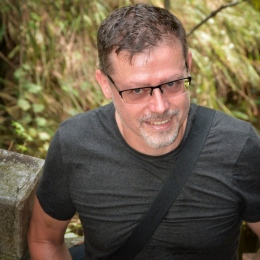
Niklas Janz is a Professor in Evolutionary Insect Ecology at the Department of Zoology, Stockholm University. He serves as Head of the Department of Biology Education (BIG) and Vice Chair of the Faculty of Science's Advisory Committee for Undergraduate Education, teaching courses like 'Ecology I' and 'Science in Biological Research and Investigation'. His research focuses on evolutionary dynamics between butterflies and host plants, investigating host shifts, speciation, and ecological network modularity. He leads research group Janz, analyzing how environmental changes affect herbivorous insect interactions through phylogenetic modeling and network analysis. Recent publications examine ancestral ecological network transitions, host repertoire evolution, and reconciling diversification hypotheses in phytophagous insects. Key findings demonstrate how gene expression patterns in generalist butterflies reflect evolutionary adaptation rather than plant phylogeny. Scientific awards and honors are not explicitly mentioned in the provided text. His laboratory specializes in butterfly-plant coevolutionary studies using advanced network-theoretical approaches.
- Evolutionary Biology
- Ecology
- Entomology
- +۴ مورد دیگر
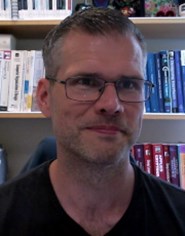
Tommy Löfstedtمشاهده پروفایل
دانشیار
Tommy Löfstedt is an Associate Professor at Umeå University , affiliated with the Department of Computing Science and the Department of Mathematics and Mathematical Statistics. His research focuses on machine learning , computer vision , and medical image analysis , with applications in life sciences, radiation therapy, and biomedical imaging. He leads multiple research projects, including AI-driven delineation in radiation therapy, quantitative MRI for radiotherapy, and machine learning for plant nutrient uptake. Current research emphasizes structured regularization methods to improve model interpretability and robustness. Key applications include medical image segmentation , Alzheimer's classification , and uncertainty estimation in MRI . Recent publications highlight his work on morphological regularization , adversarial attack mitigation , and multi-task learning in medical imaging contexts. His projects span 2022–2026 with funding for pediatric oncology automation and gynecological cancer staging. Affiliated with both computing and mathematical departments, he bridges algorithm development with applied mathematical frameworks in medical and life science domains.
Summary Pawel Andrzej Herman is an Associate Professor at the Division of Computational Science and Technology within the School of Computer Science and Communication (CSC) at KTH Royal Institute of Technology. His research focuses on computational neuroscience, brain-inspired AI, and machine learning applications in healthcare and cognitive science. He teaches multiple courses including Artificial Neural Networks and Deep Architectures , supervises degree projects across computer engineering and electrical engineering disciplines, and actively contributes to interdisciplinary research initiatives. His work bridges theoretical neuroscience with practical AI solutions, emphasizing synaptic plasticity models, neuromorphic computing, and medical diagnostic systems. Key areas include olfactory perception modeling, working memory mechanisms, and FPGA-accelerated neural networks. He collaborates internationally on projects such as AI-driven medical imaging and cognitive neuroscience studies. Dr. Herman’s research has been published in high-impact journals and conferences, with recent contributions to understanding neural mechanisms of odor naming deficits, beta/alpha oscillations in working memory, and spiking neural network architectures. His technical leadership spans HPC frameworks like StreamBrain and interdisciplinary tools for scientific data storage (NoaSci).
Thomas Hellstrom is a Professor at the Department of Computer Science , Umeå University, Sweden. He leads the Intelligent Robotics group and is affiliated with the Center for Transdisciplinary AI . His research spans human-robot interaction (HRI) , deep learning applications , robot ethics , and field robotics for agricultural and forestry automation. Coordinated EU projects: INTRO (FP7/ITN), SOCRATES (H2020), CROPS, SWEEPER Developed intelligent walker for stroke patients with CMTS/MT-FoU/Umeå Stroke Center Key contributions in robot learning , causal reasoning , and natural language understanding Research Focus : His work emphasizes understandability in robot behavior, including causal modeling , multi-modal communication , and ethical frameworks for autonomous systems. Current project ROCC (Swedish Research Council) explores robot causality, while SOCRATES addressed social robotics in eldercare. Scientific Awards : • Erdös-Bacon-Sabbath number ≤ 13 Grants & Funding : • ROCC (2023, 3.7M SEK, Principal Investigator) • SCAI (2022, 3.7M SEK, Co-Applicant) • VINNOVA (2019, 3.47M SEK, Co-Applicant)
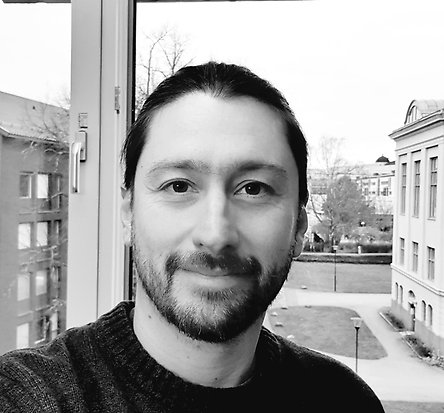
Carlos Guerrero Bosagna is a Senior Lecturer at Uppsala University's Department of Organismal Biology; Physiology and Environmental Toxicology. His research bridges evolutionary biology, epigenetics, and environmental science, focusing on how environmental exposures (e.g., toxins, stress) induce epigenetic modifications that influence developmental processes and transgenerational phenotypic variation. Role: Senior Lecturer, Uppsala University Department: Physiology and Environmental Toxicology Key Projects: Epigenetic stress response in chickens, metabolic/reproductive effects of environmental toxins, germline epigenetic variation in speciation His work has secured a FORMAS grant for modeling environmental toxicant impacts on chicken reproduction and metabolism. Recent publications analyze avian methylation patterns , mito-nuclear interactions , and Z-chromosome epigenetic regulation . Collaborations span poultry science, computational biology, and global environmental epigenetics research. Scientific awards include a FORMAS grant for environmental toxicology research His research emphasizes sustainability and evolutionary innovation, with lab projects tracking epigenetic changes across six generations to mimic early speciation events. Methodological contributions include protocols like GBS-MeDIP for concurrent genetic/epigenetic analysis.
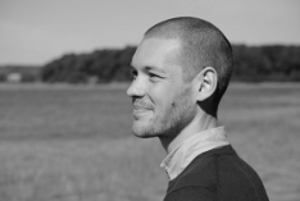
Pierre Nyquistمشاهده پروفایل
دانشیار
Pierre Nyquist is an Associate Professor and docent in the Department of Mathematical Sciences at Chalmers University of Technology and Gothenburg University. His research is sponsored by the Swedish Research Council, the Swedish e-science Research Center (SeRC), and the Wallenberg Artificial Intelligence, Autonomous Systems and Software Program (WASP). He is also an elected member of the Young Academy of Sweden for the period 2024-2029 and has served as a scientific ambassador for EURANDOM since November 2021. Dr. Nyquist's research interests lie at the intersection of probability theory, mathematical statistics, and applied mathematics. His main expertise is in probability theory, with a focus on large deviations theory and stochastic numerical methods. He has a general interest in all aspects of probability theory and much of what is categorized as applied mathematics, particularly questions related to partial differential equations, optimization, and stochastic optimal control. Recently, he has become increasingly interested in the mathematical foundations of complex data analysis and modeling, and the interplay with ideas from physics. His current research interests include large deviations, gradient flows and their generalizations, stochastic numerical methods, statistical learning theory, stochastic processes, and random dynamical systems. Pierre Nyquist has received research funding from several prestigious sources including the Swedish Research Council, the Swedish e-science Research Center (SeRC), and the Wallenberg Artificial Intelligence, Autonomous Systems and Software Program (WASP). His publications demonstrate a consistent focus on theoretical aspects of probability with applications to computational methods and data analysis, showing increasing integration with machine learning techniques in recent years. elected member of the Young Academy of Sweden (2024-2029) scientific ambassador for EURANDOM (since November 2021) Dr. Nyquist is actively involved in mentoring the next generation of researchers. He currently supervises several PhD students including Cinja Arndt (starting Aug. 2025), Niki Wilhemlson (started Aug. 2024), and Viktor Nilsson (started Aug. 2020). He has previously supervised successful PhD students such as Federica Milinanni (Aug. 2020-May 2025) and Carl Ringqvist (Aug 2015-June 2021). He regularly teaches graduate-level courses including "Modern methods of statistical learning" and has supervised numerous MSc theses on topics ranging from deep learning for time-series radar signals to neural network embedding in insurance pricing. His research group is active in both theoretical developments and practical applications, with current projects spanning from mathematical foundations of probability to applications in machine learning and data science. Dr. Nyquist maintains strong international collaborations, as evidenced by his frequent travel for conferences and research visits to institutions such as Brown University and TU Delft.
Christian Dahlman is a Professor in the Department of Law at Lund University, serving as Research Coordinator for the Law, Evidence and Cognition (LEVIC) research group. His work focuses on legal evidence, cognitive biases in legal decision-making, and Bayesian models of evidence evaluation. He contributes to UN Sustainable Development Goals related to justice and governance. Dahlman is actively involved in interdisciplinary research at the intersection of law, psychology, and artificial intelligence. Research interests include probabilistic reasoning in legal contexts, cognitive biases affecting judicial fact-finding, and the application of Bayesian networks to forensic evidence analysis. His work critiques common legal fallacies and proposes methods to debias legal decision-making processes. Recent activities include organizing the NORTH SEA GROUP legal evidence seminars and delivering invited lectures on topics like 'Against Plausibility' (2024). He supervises doctoral research in areas such as decisional privacy and legal cognition. Dahlman's projects address preventing miscarriages of justice and improving evidence evaluation frameworks. He leads the long-running Law, Evidence and Cognition research initiative (2010–present) and has coordinated international collaborations across Europe. Dahlman's contributions span legal education, historical legal case analyses, and policy recommendations for judicial reform.

Tom Lindströmمشاهده پروفایل
مدرس ارشد
Tom Lindström is a Senior Associate Professor and Head of the Biology Division at the Department of Physics, Chemistry and Biology (IFM), Linköping University. His interdisciplinary research integrates theoretical biology with applied modeling in ecology and epidemiology, supported by collaborations with U.S. agencies such as the USDA and DHS. His research focuses on developing advanced statistical and computational models to address complex biological challenges. Key areas include livestock epidemiology , where he simulates disease outbreaks and evaluates control strategies; movement ecology , particularly reptile movement and invasion dynamics in tropical Australia; and wildlife monitoring , where he develops Bayesian methods to estimate hunting harvests in Sweden using incomplete data. His work emphasizes handling imperfect datasets through structured modeling. Recent publications reveal a strong trend in using Bayesian inference , network modeling , and large-scale simulations to study animal movement and disease spread, particularly in U.S. livestock systems. These studies contribute to policy-making by offering predictive tools for transboundary animal diseases and food security threats. Scientific contributions include: Development of efficient algorithms for nationwide livestock movement simulation Pioneering ensemble modeling approaches in epidemiology Statistical methods for estimating wildlife harvests from area-based reporting Identification of climatic drivers in reptile movement and invasion success Tom Lindström actively mentors research projects and leads collaborative teams across international institutions. He has secured significant research funding from U.S. federal agencies, underscoring the societal impact of his work. His lab focuses on bridging data gaps in animal movement and improving predictive accuracy for disease control policies. Future work continues to advance computational tools for ecological and epidemiological forecasting.
- Theoretical Biology
- Ecology
- Epidemiology
- +۷ مورد دیگر

Alexandros Sopasakisمشاهده پروفایل
مدرس ارشد
Alexandros Sopasakis is a Senior Lecturer at the Department of Mathematics, Faculty of Engineering (LTH), Lund University. He is affiliated with multiple research initiatives including eSSENCE (the e-Science Collaboration), ELLIIT (Linköping-Lund IT and mobile communication initiative), and LU Profile Areas in Natural and Artificial Cognition. Senior Lecturer in Mathematics Principal Investigator for eSSENCE Active in LU Profile Areas: Climate, Health, and AI Research Interests: His work bridges machine learning, dynamical systems, and applied mathematics, focusing on: Stochastic modeling of complex systems Attention-based forecasting (Transformers) Diffusion models for synthetic data generation Graph neural networks in transportation and agriculture Anomaly detection in signal processing Climate modeling under non-Gaussian noise Scientific Awards: Recipient of three patents in: 5G/6G mobility devices Beam management measurement optimization Traffic network forecasting
Lars Hammarstrand is an Associate Professor at Chalmers University of Technology specializing in the Signal Processing research group. His work integrates model-based Bayesian statistics with deep machine learning for applications in visual localization, sensor fusion, and autonomous systems, with emphasis on robustness in real-world environments. His research focuses on bridging Bayesian inference and deep learning to solve challenges in autonomous vehicle perception. Key areas include visual localization under appearance changes, radar-camera sensor fusion, and out-of-distribution detection for safety-critical systems. Recent work explores neural radiance fields for radar, semi-supervised learning for mapping, and probabilistic hierarchical classification to address real-world uncertainties in autonomous driving. Analysis of his 2020-2025 publications reveals a trajectory toward unifying geometric and semantic understanding in autonomous systems. His work demonstrates increasing integration of neural radiance fields with traditional filtering techniques, while advancing open-set recognition capabilities. Notable contributions include road geometry estimation frameworks, extended object tracking with PHD filters, and methods to mitigate data leakage in localization benchmarks. No scientific awards were mentioned in the provided materials. Hammarstrand has contributed to academic supervision methodology through his publication on improving master's thesis supervision efficiency, though specific student names are not listed. The provided information contains no details about research grants or funding sources. He operates within Chalmers University's Signal Processing research group, which develops advanced algorithms for automotive perception systems, focusing on sensor fusion techniques that combine radar, camera, and motion data for robust environmental understanding in autonomous vehicles.

Måns Magnussonمشاهده پروفایل
دانشیار
Måns Magnusson is an Associate Professor at the Department of Statistics, Uppsala University, with affiliations at the Institute for Analytical Sociology (Linköping University) and the Institute for Future Studies. His work bridges Bayesian statistics, probabilistic machine learning, and textual analysis, focusing on model evaluation, diagnostics, and inference algorithms. He contributes to computational social science and digital humanities through text-as-data methods. Research Themes: Bayesian inference, probabilistic machine learning, statistical inference from textual data Key Applications: Sociology, political science, law, education statistics, public health Current Projects: Improving probabilistic programming generalizability (Swedish Research Council grant), SWERIK research infrastructure (Riksbankens jubileumsfond) His recent publications emphasize text mining, model comparison, and legal data challenges. He has developed tools for national ID number validation, hate crime estimation, and parliamentary corpus construction. Notable awards include the Cramér Prize (2018), Statistician of the Year (2023), and membership in the Swedish Young Academy (2023) and ELLIS (2024). Scientific Contributions: Botten Ada Bayesian election model, 'loo' package for cross-validation Collaborative Work: AI4Research sabbatical (2024), Riksbankens jubileumsfond funding Industry Background: Statistician roles at Swedish Agency for Education, Crime Prevention, and Public Health

Bruna G. Palm is a Lecturer at the Department of Mathematics and Natural Sciences, Blekinge Institute of Technology (BTH), Sweden. She holds a BA (2014) and PhD (2020) in Statistics from Brazilian institutions and has held visiting and research fellow positions at BTH and the Aeronautics Institute of Technology (ITA). Education: BA in Statistics (2014), PhD in Statistics (2020) Current Role: Lecturer at BTH Collaborations: Saab AB, Sweden Her research bridges statistical modeling with remote sensing and signal processing , focusing on SAR image analysis , change detection , and machine learning applications. She has also contributed to environmental data forecasting and educational pedagogy in STEM. Key trends include Bayesian inference , autoregressive models , and Rayleigh distribution techniques for SAR imagery. Her work on resin composite masking extends into dentistry , highlighting interdisciplinary reach. She has no listed scientific awards but maintains active profiles on LinkedIn , Google Scholar , and ORCID .