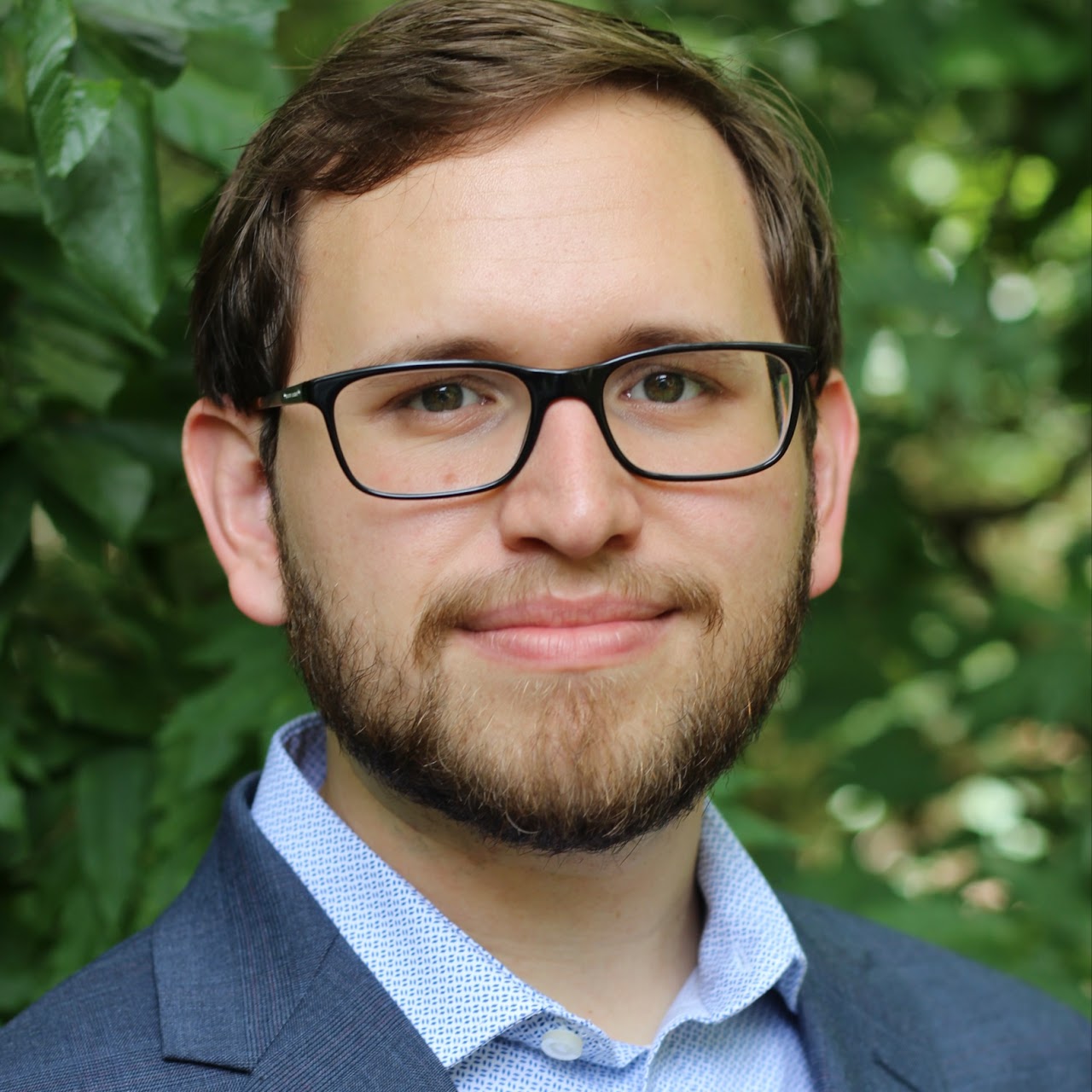
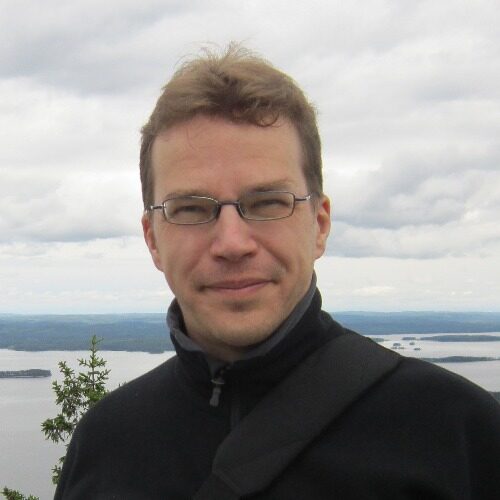
Jeremy Watts is a Postdoctoral Associate specializing in the application of machine learning and biomedical technologies to neurological disorders, particularly Parkinson’s disease. His research focuses on optimizing treatment planning, analyzing gait dynamics via sensor technology, and improving clinical outcomes through predictive modeling. He has contributed to advancements in deep brain stimulation (DBS) state classification, gene expression prediction, and water level forecasting using deep learning techniques. Key research areas include machine learning for clinical decision-making, sensor-based diagnostics, and algorithm development for healthcare applications. His work bridges computational methods with neurology, aiming to enhance precision medicine and treatment personalization. Jeremy’s publications highlight interdisciplinary approaches, addressing challenges in Parkinson’s disease management, anomaly detection frameworks, and environmental modeling. He collaborates on projects involving wearable sensors, reinforcement learning, and Bayesian statistical methods.
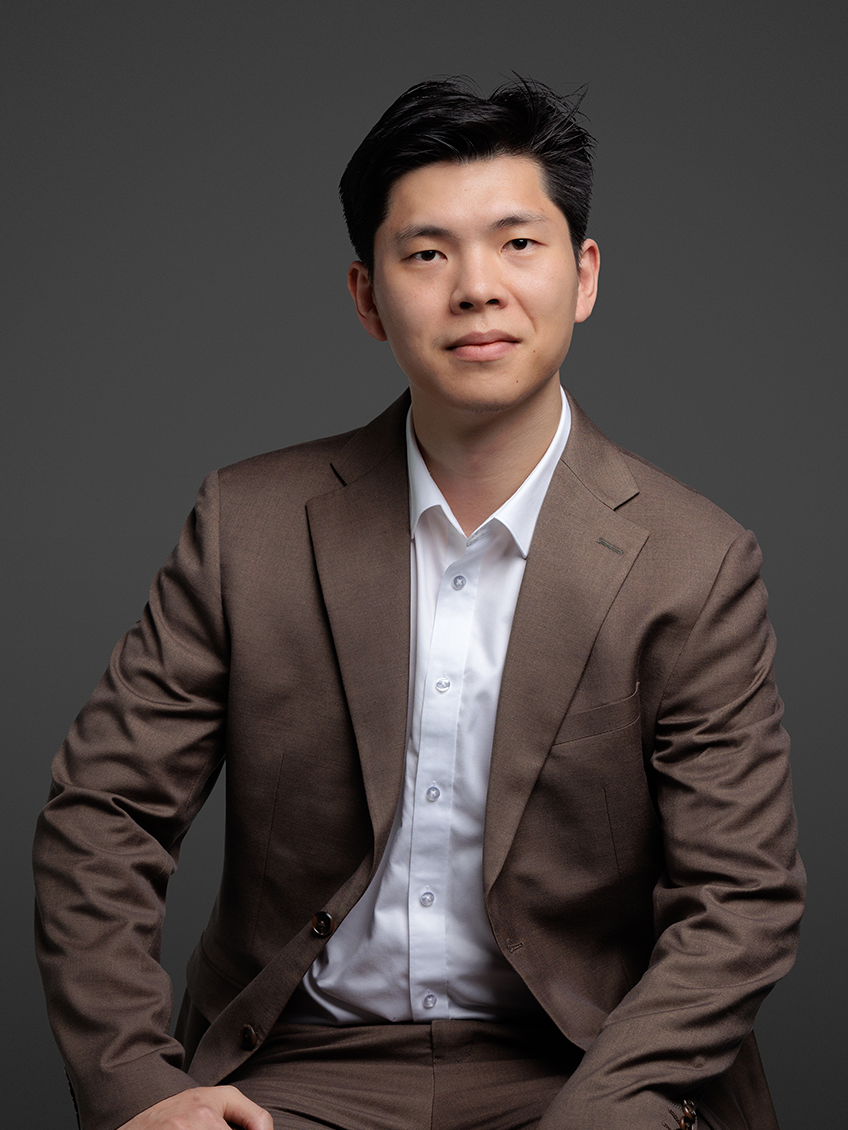
Dr. Cai Yutong is a Lecturer at the Engineering Systems and Design (ESD) pillar of Singapore University of Technology and Design (SUTD). He holds a PhD in Civil Engineering (Transportation) from National University of Singapore (2022), an M.Sc. in Transportation Systems & Management (2017), and a B.Sc. in Shipping Management (2016). His work focuses on optimization, discrete choice modeling, and machine learning applications in sustainable mobility, active mobility, and maritime studies. Research interests include maritime risk assessment, transportation policy, and smart mobility solutions. Notable contributions include projects funded by Singapore's Ministry of Transport, Ministry of Home Affairs, and Singapore Maritime Institute. His research has been published in top-tier journals like Transportation Research Parts C/D/E , Applied Energy , and Transport Policy . Key achievements include the 2021 Best Student Paper Award at the International Symposium on Multimodal Transportation. His work spans transportation infrastructure design, electric vehicle systems, and agent-based simulations for bike-sharing dynamics. Current research emphasizes equitable urban cycling networks and maritime chokepoint resilience. Dr. Cai has collaborated on projects addressing vessel detention risk, AV adoption perceptions, and trade corridor route optimization. His interdisciplinary approach bridges operations research, data science, and policy analysis to address real-world transportation challenges.
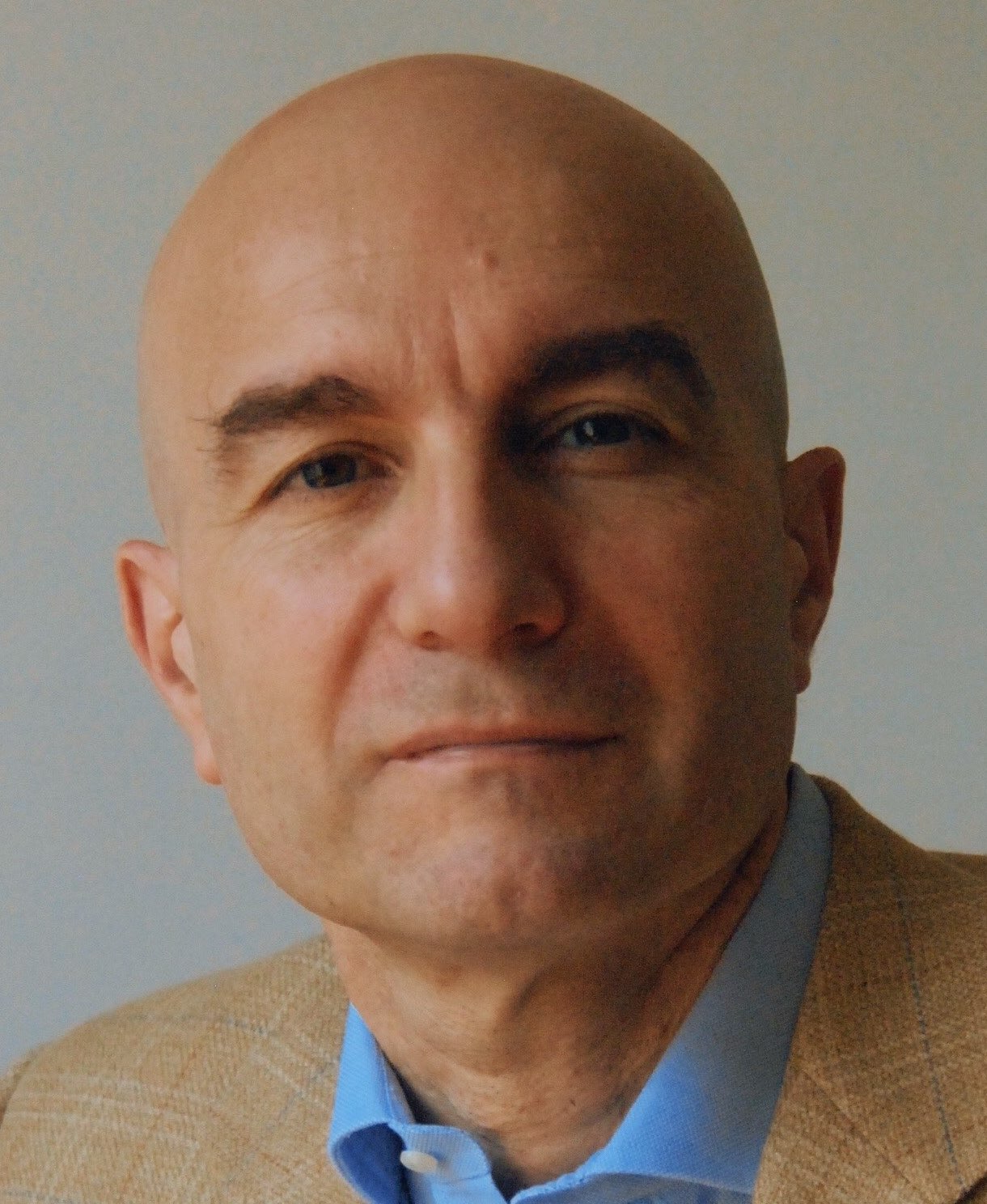
Massimo Vergassola is a Professor at École Normale Supérieure-PSL (ENS-PSL) in Paris and Director of the ENS-PSL Center for Quantitative Biology. His research bridges physics and life sciences, focusing on the physics of living systems with emphasis on embryonic development , animal behavior , and biological navigation . He holds a joint appointment as CNRS Directeur de Recherche and leads initiatives at the PariSanté Campus Val-de-Grâce, integrating institutions like Inserm and Inria. Education: Laurea in Physics (University La Sapienza, Rome, 1985-1990); PhD in Physics (University Nice-Sophia Antipolis, 1990-1993); Post-doc at Princeton University (1994-1995) His research spans fluid dynamics , statistical physics , and biophysics , addressing problems like olfactory navigation , chemotaxis , cell size control , and mitotic wave dynamics . Recent work explores Bayesian search strategies in turbulent flows and topological interactions in developmental biology. His 15 most recent articles reveal a focus on olfactory search algorithms , embryonic patterning , gene regulation , and turbulent transport . Keywords include Biophysics , Computational Biology , and Nonlinear Dynamics . Scientific Awards : APS Fellow, APS Outstanding Referee, CNRS Bronze Medal, Fondation de France Thérèse Lebrasseur Prize, EADS Grand Prix, and Accademia dei Lincei student award Vergassola contributes to academic governance via editorial boards ( Physics Reports , JSTAT ) and grant committees (Human Frontier Science Project). His lab at ENS-PSL collaborates with institutions like Harvard Center for Quantitative Biology and Pasteur Institute.
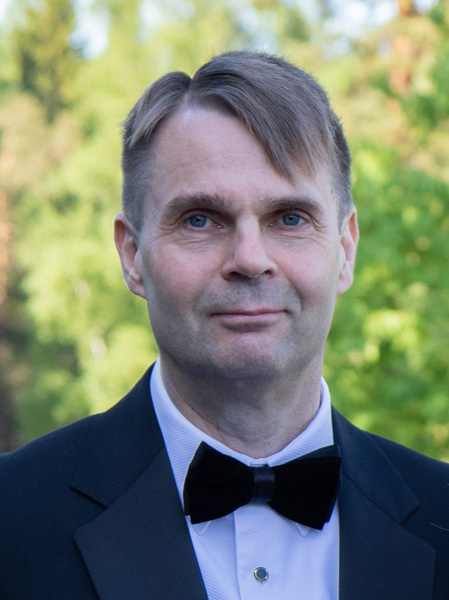
Visa Koivunen is the Aalto Distinguished Professor at Aalto University, Finland, with a global reputation in statistical signal processing and wireless communications. He has held prestigious positions including Academy Professor (2010-2014) and Principal Investigator for the SMARAD Center of Excellence (2002-2013). Education: D.Sc. (EE) from University of Oulu Current roles: Full Professor at Aalto University Visiting appointments: EPFL (2022-2023), Princeton University (2007, 2010-2013) His research spans statistical signal processing , radar systems , machine learning for radio frequencies , and integrated sensing and communications (ISAC) , with a focus on robust algorithms and practical applications. Recent work explores reinforcement learning for ISAC resource allocation and James-Stein estimator-based change detection. Notable awards include IEEE Fellow , EURASIP Fellow , Mannerheim Research Foundation Award , and Knight of the Order of the White Rose of Finland . Patents: 5 co-invented (US Patent Nos. 7787548, 7929937, 7949357, 20090197550, 20100120467) Publications: 490+ scientific papers, 116 peer-reviewed journal papers, h-index 60 Service: IEEE Fourier Award Committee, SPS Awards Board, NATO Radar panels
Professor Sheng-feng Qin is a faculty member at the Northumbria School of Design, Northumbria University, since 2014. He holds the academic rank of Professor and serves as the Director of the MA Design Programme. His research focuses on digital design and manufacturing, smart technologies, and sustainable urbanization. He leads the Smart Design Lab, exploring AI-driven design methods and interdisciplinary approaches for smart products and services. Professor Qin's educational background includes a PhD in Craft, Design, and Technology (2000) and a BEng in Manufacturing Engineering (1983). He is a Fellow of the Higher Education Academy (FHEA) and a member of IEEE. His work has been recognized with the 2019 Newton Prize for collaborative research on sustainable urbanization. His research interests encompass digital design technology, smart cities, crowdsourcing in product development, and emotion-centric design. He has supervised multiple PhD students focusing on topics like digital twins for elderly care, smart transportation systems, and emotion regulation tools. Professor Qin collaborates internationally, including as a Visiting Professor at Southwest Jiaotong University and through joint labs with Chinese institutions. He also serves as Editor-in-Chief of the International Journal of Rapid Manufacturing and on editorial boards of other journals.
Ville Hautamäki is an Associate Professor at the University of Eastern Finland's School of Computing, Department of Computer Science. His research focuses on data science, statistical inference, and deep learning with applications in autonomous agents, bioinformatics, and speech technology. He teaches courses such as Probabilistic Inference for Data Science and Bayesian Inference, and regularly contributes to summer schools on machine learning. His research group, Applied Statistics and Statistical Machine Learning, addresses challenges in speaker verification, speech processing, and biomedical data analysis. Recent works include advancements in robust speaker recognition under noisy conditions, deepfake detection, and end-to-end autonomous driving systems. Collaborations span diverse domains including healthcare, cybersecurity, and robotics. Publications highlight contributions to multi-task learning frameworks, imitation learning policies, and generative models for single-cell data. His work emphasizes cross-disciplinary approaches, blending theoretical machine learning with practical applications in real-world scenarios.
Professor Neil Walton is a Professor and Deputy Head of the Department of Operations Management, Strategy, Innovation, Information Systems, and Entrepreneurship at the Business School. His research primarily focuses on operations research, queueing theory, stochastic processes, and their applications in transportation systems, networking, and optimization. He has contributed significantly to understanding scheduling algorithms, traffic signal control, and decentralized systems. His work bridges theoretical foundations with practical applications in urban mobility and resource allocation. Research interests include advanced scheduling techniques for quantum switches, stochastic approximation methods, and optimization frameworks for vehicular networks. He has explored topics such as regret analysis in multi-arm bandits and the convergence of stochastic processes. His studies often address real-world challenges like traffic congestion and healthcare resource management through rigorous mathematical modeling. Publications highlight a consistent focus on optimizing systems under uncertainty, with notable contributions to network stability, adaptive control mechanisms, and reinforcement learning applications. His work on platooning in connected vehicle networks and decentralized signal control systems underscores a commitment to cutting-edge solutions for modern transportation challenges. Professor Walton has advised students such as Yao Shao, contributing to the training of future researchers in operations management and systems optimization.
Prof. Stefan Bauer is an Associate Professor at TU Munich and a senior PI at Helmholtz AI. He holds a Ph.D. in Computer Science from ETH Zurich (2018), where he received the ETH Medal for his thesis on causal learning. His research focuses on developing algorithms that uncover causal relationships in high-dimensional data, enabling explainable AI and robust, transformative technologies. Bauer previously worked as an Assistant Professor at KTH Stockholm and a Group Leader at the Max Planck Institute for Intelligent Systems. Educational Background Ph.D. in Computer Science, ETH Zurich (2018) M.Sc. Mathematics, ETH Zurich B.Sc. Economics and Finance, University of London Research Interests Bauer’s work bridges causal inference, machine learning, and robotics. Key themes include causal representation learning for AI transparency, scalable algorithms for complex systems, and applications in robotics, materials science, and biomedical research. His team emphasizes real-world validation, such as deploying dexterous manipulation robots and discovering novel high-entropy alloys via machine learning. Awards and Contributions CIFAR Azrieli Global Scholar (2020) Best Paper Award at ICML (2019) ETH Medal for Outstanding Dissertation (2018) Advancing AI and Robotics Bauer leads projects like the Real Robot Challenge , a cloud-based platform for reproducible robotics research. He also collaborates on biomedical applications, such as bias detection in medical imaging and robustness testing for foundation models in healthcare. Labs and Collaborations His lab at TU Munich integrates interdisciplinary teams working on causal AI, robotics, and materials discovery. Bauer collaborates with Helmholtz AI, KTH, and institutions globally to advance AI’s societal impact.
Ashif Iquebal is an Assistant Professor at Arizona State University's School of Computing, Informatics, and Decision Systems Engineering (CIDSE). His research focuses on smart manufacturing, data science, and advanced manufacturing technologies, particularly addressing challenges in materials-on-demand manufacturing. He holds a PhD in Industrial and Systems Engineering from Texas A&M University, along with an M.S. in Statistics and a B.Tech from IIT Kharagpur. His work emphasizes integration of IIoT, embedded sensors, and data science methods like streaming analytics and unsupervised learning. Key research interests include change point detection for streaming data, unsupervised image segmentation, and leveraging machine learning for manufacturing quality control. His contributions have been recognized through awards such as the IISE Pritsker Dissertation Award (3rd place, 2021) and multiple best student paper/poster awards at INFORMS and IISE conferences. He collaborates with institutions like Mayo Clinic on projects involving breast cancer diagnosis and segmentation using AI. Teaching responsibilities include courses on Advanced Quality Control and ASU Experience programs. His research has led to publications in top journals like IEEE Transactions on Signal Processing and Pattern Analysis and Machine Intelligence, focusing on topics spanning material characterization, process optimization, and AI-driven manufacturing solutions.
Ivona Brandić is a University Professor for High Performance Computing Systems at TU Wien's Institute of Software Engineering and Interactive Systems. Born in Gradačac, Bosnia and Herzegovina, she moved to Austria in 1992 as a refugee during the Bosnian War. She earned a master's degree (2002) and doctorate (2007) in business computer science from TU Wien and completed her habilitation in applied computer science there in 2013. Her career includes roles as an assistant professor (University of Vienna, 2002–2007) and postdoctoral researcher (University of Melbourne, 2008). She transitioned to a tenure-track position at TU Wien in 2014 and became a full professor in 2016. Brandić’s research focuses on cloud computing, energy-efficient ultra-scale systems, and hybrid quantum-classical computing. She has been recognized with the MiA Award (2011), the Austrian Science Fund's Start-Preis (2015), and membership in the Austrian Academy of Sciences' Young Academy (2016). Her work emphasizes sustainable computing, edge systems, and optimizing resource management for distributed applications. Education: Bachelor's degree in Business Informatics (University of Vienna/TU Wien) Master's in Business Computer Science (University of Vienna, 2002) PhD in Applied Computer Science (TU Wien, 2007) Habilitation in Practical Computer Science (TU Wien, 2013) Research Interests: Brandić’s work spans cloud computing, energy efficiency in HPC systems, edge computing, and quantum-classical hybrid systems. She explores autonomic resource management, distributed system resilience, and sustainability in ultra-scale infrastructures. Her projects often address real-world applications like drug design, environmental monitoring, and smart energy grids. Publications: Her 2009 paper Cloud Computing and Emerging IT Platforms is a seminal work in the field. Recent publications focus on quantum-edge integration, energy optimization in AI models, and adaptive edge analytics frameworks. These contributions highlight trends toward sustainable, distributed, and hybrid computational paradigms. Awards: 2011: MiA Award for distinguished contributions by international backgrounds 2015: Austrian Science Fund’s Start Prize 2016: Austrian Academy of Sciences Young Academy Membership Advising & Grants: Brandić leads research groups and has secured grants for projects like NESSUS (energy-efficient cloud systems) and CHIST-ERA’s SDCDN (distributed networks). She mentors students in HPC, edge computing, and quantum systems. Advised topics include workload scheduling, fault tolerance, and energy-aware algorithms. Labs & Teams: She directs research on autonomic cloud management, edge intelligence frameworks (e.g., Sea-LEAP, FRESCO), and quantum-classical workflow systems (RIGOLETTO). Her teams collaborate internationally, integrating academia and industry for scalable, sustainable solutions.
Martin Diehl is a lecturer at the Faculty of Engineering Sciences of KU Leuven , Belgium. He is affiliated with the Department of Materials Engineering and the Department of Computer Science . His research focuses on computational materials science, particularly crystal plasticity simulations and multiscale modeling of metallic microstructures.
Claire Vernade is a Group Leader at the University of Tübingen within the Cluster of Excellence Machine Learning for Science. Her research focuses on sequential decision making and theoretical reinforcement learning (RL), particularly in non-stationary environments, bandit problems, and principled learning algorithms. She has received prestigious awards including the Emmy Noether Award (2022) and an ERC Starting Grant (2024) for her projects FoLiReL and ConSequentIAL , respectively. Claire has previously worked as a Research Scientist at DeepMind (London) and as a part-time Applied Scientist at Amazon (Berlin). Education : PhD in Machine Learning from Telecom ParisTech (2017), under Prof. Olivier Cappé. Research Interests include: Sequential Decision Making Bandit Problems (Combinatorial, Delayed Feedback, Sparse Actions) Reinforcement Learning Theory Meta-Learning and Lifelong Learning Optimization Algorithms Game-Theoretic Approaches to PCA Publications highlight trends in non-stationary environments, contextual bandits, and theoretical foundations of RL and bandit algorithms. Her work spans applications in scientific discovery, statistical testing, and optimization. Scientific Awards : Emmy Noether Award (2022) ERC Starting Grant (2024) Outstanding Paper Award at ICLR 2021 Advising and Grants : Claire leads a research group with ongoing PhD and postdoc opportunities through IMPRS-IS and ELLIS doctoral programs. Her projects receive funding from the European Research Council and DFG, with focus on continual learning and adaptive AI systems. Labs/Teams : She coordinates the Tübingen Women in Machine Learning (TWiML) initiative and co-leads the Women in Learning Theory (WiML-T) website. Her group emphasizes diversity, inclusivity, and collaborative research in theoretical machine learning.
Xi Wu is a faculty member at Chengdu University of Information Technology , affiliated with the School of Computer Science . He holds a PhD from Sichuan University (2012, College of Electronic and Information Engineering). Current Research Focus: Medical imaging, computer vision, and deep learning applications in healthcare Key Themes: PET image reconstruction, radiotherapy dose prediction, GANs, diffusion models, and facial expression recognition His recent work explores transformer architectures , semi-supervised learning , and uncertainty-aware models for tasks like tumor segmentation and multi-organ analysis. Publications emphasize cross-domain adaptation and multi-modal medical imaging .
Yoshua Bengio is a Full Professor at Université de Montréal's Department of Computer Science and Operations Research, and a leading global expert in deep learning. He is the founder and scientific advisor of Mila Quebec AI Institute, and holds a Canada CIFAR AI Chair. His work has revolutionized AI, earning him the 2018 Turing Award ("Nobel of computing") and multiple accolades including the Killam Prize and Officer of the Order of Canada. Education: PhD in Computer Science (McGill, 1991), postdocs at MIT (1991-1992) and AT&T Bell Labs (1992-1993). Research focuses on deep learning theory, generative models, and AI ethics. He co-leads the CIFAR Learning in Machines & Brains program and advises IVADO. Concerned about AI's societal impact, he co-authored the Montreal Declaration for Responsible AI and chairs global AI safety initiatives. Recent research spans AI safety frameworks, causal machine learning, and climate change applications. Over 200 students supervised, including PhDs and postdocs. Key awards include Royal Society Fellowships, IEEE Pioneer Award, and UN Scientific Advisory Board membership.
Richard Zemel is a Professor in the Department of Computer Science at the University of Toronto, where he has been a faculty member since 2000. He holds the Google/NSERC Industrial Research Chair in Machine Learning and is a Canada CIFAR Artificial Intelligence Chair. His research focuses on foundational aspects of machine learning, including unsupervised learning, representation learning, few-shot learning, and ethical AI concerns like fairness and privacy. He co-founded SmartFinance, a financial tech startup, and developed the Toronto Paper Matching System used in major conferences like NIPS and ICML. Education: BSc in History & Science from Harvard University (1984), PhD in Computer Science from the University of Toronto (1993). Research Interests : Machine Learning, Unsupervised Learning, Probabilistic Models, Computer Vision, Natural Language Processing, Fairness in AI. Awards : NVIDIA Pioneers of AI Award Young Investigator Award (Office of Naval Research) Presidential Scholar Award NSERC Discovery Accelerator Supplements CIFAR Fellow Affiliations : Senior Fellow at Canadian Institute for Advanced Research (CIFAR), Co-Chief of Machine Learning at Rotman School of Business' Creative Destruction Lab, and Chief Scientist at Vector Institute for AI.