

Dr. Charlotte Vlek is a Science Writer and Lecturer in Science Education and Communication at the University of Groningen's Faculty of Science and Engineering. She specializes in integrating Bayesian networks with legal reasoning, particularly in criminal case analysis. Her work bridges probabilistic modeling and forensic storytelling, focusing on how narratives and quantitative evidence interact in legal contexts. Her research emphasizes constructing transparent Bayesian network models for legal scenarios, ensuring that complex probabilistic analyses remain accessible to legal professionals. She has published extensively on the representation of crime scenarios, quality assessment of legal evidence, and the application of artificial intelligence in law. Her interdisciplinary work spans computer science, law, and education, with notable contributions to the JURIX and Artificial Intelligence and Law conferences. She holds a PhD from the University of Groningen (2016) and has collaborated with institutions like the Groningen Science LinX initiative.
جستوجوی استاد و پژوهشگر
استاد راهنما، استاد دانشگاه یا پژوهشگر مناسب برای مسیر پژوهشیتان را پیدا کنید و با او ارتباط بگیرید.
نمایش ۷۲۱-۷۳۵ از ۱٬۷۵۶ استاد راهنما
اطلاعات این پروفایلها از صفحات عمومی دانشگاهها جمعآوری شده و ممکن است بهروز نباشد.

John Levyمشاهده پروفایل
مدرس ارشد
Dr. John Levy is a Senior Lecturer in Economics at the Adam Smith Business School, University of Glasgow. He holds a PhD from the Hebrew University of Jerusalem and has held postdoctoral positions at the University of Oxford. His research focuses on game theory, stochastic games, and microeconomic theory, with a particular emphasis on equilibrium existence, repeated interactions, and information economics. He has supervised doctoral students exploring equilibrium stability, fairness in games, and microeconomic theory. His research interests include equilibria in static/repeated games, learning dynamics, and competitive equilibrium. He has published extensively in journals like the Journal of Mathematical Economics and Games and Economic Behavior . His recent work addresses measurable equilibrium selections, Bayesian game equilibria, and optimal contract regulation in markets. Education: PhD, Hebrew University of Jerusalem (2013) Postdoctoral Fellow, Nuffield College, Oxford (2013–2016) Awards: None explicitly listed. Grants/Advising: Active supervision of multiple doctoral projects in game theory and microeconomic theory. Labs/Teams: Member of the Microeconomics research cluster at the University of Glasgow.
Azhar Iqbalمشاهده پروفایل
پژوهشگر ارشد
Dr. Azhar Iqbal is an ARC Senior Postdoctoral Fellow at the University of Adelaide's School of Electrical and Mechanical Engineering, within the Department of Electrical and Electronic Engineering. His research spans quantum game theory, game theory applications, geometric algebra, and mathematical modeling of complex systems. He focuses on integrating quantum mechanics principles into game theory, exploring evolutionary stability (ESS), social optimality, and quantum Bayesian games. His work also includes geometric algebra applications in quantum computation (e.g., Grover's algorithm) and special relativity. He has contributed to memristive device modeling and epidemiological studies of infectious disease transmission in Bahrain using game theory. Dr. Iqbal is eligible to supervise Master’s and PhD students in these areas. His research interests include quantum strategies in EPR setups, non-factorizable probabilities in games, and quantum gravity models through geometric algebra. He has published extensively on topics like Minkowski metric derivation, cybersecurity game theory, and vaccine strategy optimization. Though no formal awards are listed, his work has been cited across disciplines including physics, computer science, and epidemiology. Dr. Iqbal collaborates on projects like memristor circuit modeling and has supervised studies on Bahrain's COVID-19 outbreak. He maintains active research profiles on ORCID, Google Scholar, and Scopus, reflecting his interdisciplinary impact.
- Judgment and Decision-Making in a Social World
- Adaptive Judgment and Decision-Making
- Risky Decisions
- +۵ مورد دیگر
Thorsten Pachur is a Professor for Behavioral Research Methods at the Technical University of Munich (since 2022) and a Senior Research Scientist at the Max Planck Institute for Human Development in Berlin. His work focuses on judgment and decision-making, particularly in social contexts, adaptive rationality, and risky choices. He has led projects such as " Simple decision-making strategies " and " Search and Learn " at the Max Planck Institute. Education : Habilitation (2012, University of Basel), PhD in Psychology (2006, Free University of Berlin), Dipl.-Psych. (2002, Free University of Berlin), MSc in Health Psychology (2002, University of Sussex) Research Themes : Pachur investigates how social memory structures influence decision-making, the toolbox of cognitive strategies in risky choices, and the role of attentional processes in decisions. His work bridges prospect theory and heuristic models , examining how attention shapes probability weighting and outcome evaluation. Scientific Contributions : Recent publications include studies on the description-experience gap in intertemporal choices, age differences in risk perception , and attentional biases in sequential sampling . His 2024 work on COVID-19 vaccine refusal highlights deliberate ignorance and cognitive distortions. Scientific Awards : 2017 Fellow of the Association for Psychological Science (APS), 2001 DAAD Scholarship, 2005 Max Planck Postdoctoral Fellowship Grants : Funded by the Swiss National Science Foundation (SNSF), German Research Foundation (DFG), and Biäsch Foundation Editorial Roles : Consulting Editor for Journal of Experimental Psychology: Learning, Memory, and Cognition (2013–2025), Associate Editor for Cognitive Psychology (2025–), and member of boards for journals including Decision and Psychological Review .

Koen Derksمشاهده پروفایل
استادیار
- Auditing
- Bayesian Statistics
- Open-source Software
- +۳ مورد دیگر
Dr. Koen Derks is an Assistant Professor at Nyenrode Business University, specializing in the application of Bayesian statistics to auditing. He is affiliated with the Faculty Research Center for Accounting, Auditing & Control, where his work focuses on improving audit methodologies through statistical innovation and open-source software. His research emphasizes Bayesian approaches to audit sampling, prior distribution integration, and the development of tools like JASP to bridge gaps between auditors and statisticians. Education: MSc in Psychological Methodology from UvA, PhD from Nyenrode Business University Key Roles: Member of Nyenrode's Examination Committee for Accounting, Controlling and Tax Research interests include Bayesian statistics, auditing techniques, machine learning applications, and generative art. His publications span topics like audit efficiency, statistical evidence quantification, and software tools for auditors. Derks is also involved in open-source projects like aRtsy, contributing to generative art algorithms.

Lisa Nicklassonمشاهده پروفایل
استادیار
Lisa Nicklasson is an Assistant Professor of Mathematics at Mälardalen University (MDU). She holds a PhD from Stockholm University (2020) and has held postdoctoral positions at the University of Genova and the Max-Planck-Institut für Mathematik in den Naturwissenschaften (Leipzig). Her primary research focus is in commutative algebra, with a particular emphasis on graded algebras and their interplay with combinatorial structures. Before joining MDU, her academic journey included postdoctoral research in Italy and Germany, where she explored topics such as determinantal matroids, Lefschetz properties of algebras, and syzygies in algebraic structures. Her work often bridges algebraic techniques with combinatorial problems, such as independence complexes and graded algebra decompositions. Her recent publications (2022–2025) reflect a strong emphasis on algebraic structures with combinatorial underpinnings, including studies on Gorenstein algebras, binomial ideals, and toric models. These works address questions related to Hilbert functions, Jordan types, and the Lefschetz properties in graded algebras. Despite her active research profile, no awards or grants are explicitly mentioned in the provided texts. Her academic contributions are primarily through her publications and teaching at MDU's Department of Mathematics and Physics, though no lab affiliations or collaborative teams are detailed here.

Univ. Prof. Dr. Ezio Bartocci is a Professor at TU Wien, leading the Forschungsbereich Cyber-Physical Systems . His research focuses on formal methods, runtime verification, and probabilistic systems in Cyber-Physical Systems (CPS). He leads projects like 'Distribution Recovery for Invariant Generation of Probabilistic' and 'Trustworthy IoT for CPS'. Key interests include specification mining, probabilistic hyperproperties, and developing tools like MoonLight for spatio-temporal monitoring. Recent work explores reinforcement learning ethics, neural network verification, and adaptive testing frameworks. His contributions span conferences such as HSCC and RV, with notable publications on parameter synthesis, fault localization in CPS, and moment-based analysis of probabilistic loops. Research Interests : Cyber-Physical Systems (CPS) design and validation Formal specification and verification techniques Probabilistic systems and hyperproperties Runtime monitoring and adaptive testing Neural networks and ethical AI Labs/Teams : Active in TU Wien's Cyber-Physical Systems research unit, collaborating with industry and academia on CPS security and autonomous systems.
Dr Philipp Thomas is a Lecturer in Biomathematics at the Department of Mathematics, Imperial College London, within the Faculty of Natural Sciences. He holds affiliations with the Biomathematics Group, Physics of Life group, and Mathematics research staff. He earned his PhD in Applied Mathematics from the University of Edinburgh in 2015 and serves as an associate editor for Scientific Reports . His research focuses on stochastic methods to understand single-cell dynamics and cell-to-cell variability in biological populations. Recent work includes studies on circadian clocks, cancer biology, and parameter inference in biochemical systems. He has received a UKRI Future Leaders Fellowship and a Royal Commission for the Exhibition of 1851 Fellowship. His academic contributions span software development (e.g., AgentBasedModeling.jl ), conference organizing (e.g., ECMTB 2022 mini-symposium), and mentorship of PhD students like Alasdair Daniels. His research integrates mathematical modeling, computational tools, and experimental data to address questions in systems biology, cell cycle dynamics, and metabolic heterogeneity. Education: PhD in Applied Mathematics (University of Edinburgh, 2015). Awards: UKRI Future Leaders Fellowship (2024), Royal Commission for Exhibition of 1851 Fellowship (2021). Advising: Mentors PhD student Alasdair Daniels (joined 2023). Labs/Groups: Biomathematics Group, Physics of Life group at Imperial College London.

Yushu Liمشاهده پروفایل
دانشیار
- Statistics
- Data Science
- Time Series Analysis
- +۷ مورد دیگر
Yushu Li is an Associate Professor in the Department of Mathematics at the University of Bergen. His research spans statistics, data science, and econometrics, with a focus on wavelet methods, sparse Bayesian learning, and statistical surveillance. He has taught courses like Monte Carlo Methods, Statistical Learning, and Theory of Finance at institutions including the University of Bergen (UIB), Norwegian School of Economics (NHH), and NTNU. Research Interests: Wavelet analysis for time series and econometrics Sparse Bayesian learning for statistical modeling Density forecasting and statistical surveillance Machine learning applications in finance and economics Recent Publications: His 2024 work on Sparse Bayesian learning using TMB and forecasting milk delivery highlights his contributions to computational statistics and agricultural economics. Earlier studies on oil price volatility, structural breaks, and unit root testing underscore his expertise in nonlinear time series and financial modeling. Supervision: He has supervised 1 Ph.D. project (Ingvild M. Helgøy, 2023) and over 10 master's theses since 2012, including topics on density forecasting, wavelet methods, and machine learning classifiers.
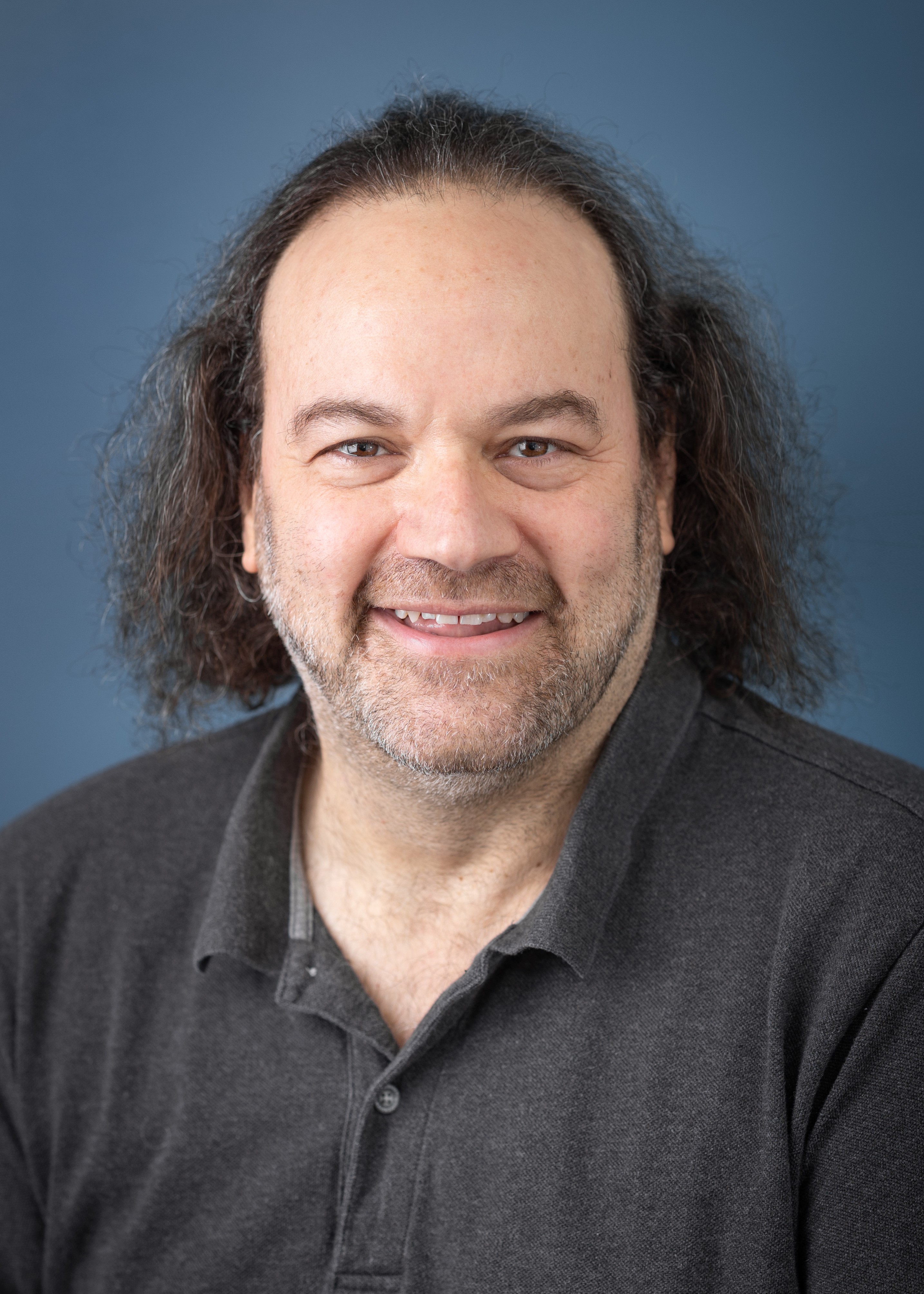
Jeffrey S. Rosenthal is a Professor in the Department of Statistical Sciences at the University of Toronto, Faculty of Arts and Science. He holds a PhD in Mathematics from Harvard University and a BSc from the University of Toronto. PhD, Mathematics, Harvard University BSc, University of Toronto His research centers on probability theory , stochastic processes , and statistical computation , with a particular focus on Markov chain Monte Carlo (MCMC) algorithms . His work spans theoretical foundations and practical applications, including random walks on groups and interdisciplinary modeling. He is also known for his public engagement in statistics through bestselling books and media appearances. The recent publications reflect a sustained focus on the theoretical underpinnings and convergence properties of MCMC methods, including adaptive and non-reversible algorithms. His work also extends into data science applications, such as analyzing streaks in online chess and the long-term impact of the COVID-19 pandemic on mortality. The keywords span probability, statistics, computational mathematics, and machine learning, indicating a blend of theoretical rigor and applied relevance. Scientific Awards and Honors: CRM-SSC Prize in Statistics COPSS Presidents' Award SSC Gold Medal Fellow of the Royal Society of Canada Fellow of the Institute of Mathematical Statistics Alumnus of Influence, University College Pierre Robillard Award SSC Student Research Presentation Award Savage Award Finalist Academic Supervision and Grants: Professor Rosenthal has supervised a large and diverse group of students, including numerous PhD candidates, MSc students, and post-doctoral fellows, many of whom have gone on to successful academic careers. His research is supported by ongoing publications and collaborations, indicating active grant funding and a vibrant research program. He maintains a well-documented research team and provides extensive resources for students and collaborators. Research Teams and Labs: He leads an active research group in probability and computational statistics, with a documented team of current and past post-doctoral fellows, PhD students, and research assistants. The group maintains a collaborative environment, as evidenced by joint publications and team photos, and focuses on advanced topics in MCMC theory and applications.

Olivier Buffetمشاهده پروفایل
پژوهشگر
Olivier Buffet is a Researcher at INRIA, working at the INRIA Center at Université de Lorraine / LORIA since November 2007. He is affiliated with the LORIA laboratory (Lorraine Laboratory of Computer Science and its Applications), which focuses on computer science research. His work spans multiple institutions, having previously held positions at NICTA's Statistical Machine Learning program (2004-2006), RSISE at ANU (2004-2006), and LAAS at CNRS (2006-2007). Dr. Buffet received his engineering degree from Supélec and a DEA (Diplôme d'Etudes Approfondies) from Henri Poincaré University. He completed his PhD in computer science under the supervision of François Charpillet and Alain Dutech at LORIA / INRIA Nancy Grand-Est, defended on September 10, 2003. He later defended his habilitation to supervise research (HDR) on December 18, 2017. Dr. Buffet's research focuses on artificial intelligence, particularly in the areas of automated planning and scheduling, reinforcement learning, and decision-making under uncertainty. His work extensively explores Markov Decision Processes (MDPs), Partially Observable MDPs (POMDPs), and Decentralized POMDPs (Dec-POMDPs), with applications ranging from multi-agent systems to traffic management and adaptive conservation strategies. His research often bridges theoretical foundations with practical applications, developing algorithms that can handle complex decision problems in uncertain environments. His publication record demonstrates a consistent focus on advancing methods for planning and decision-making under uncertainty. Over the past decade, his work has increasingly addressed decentralized and multi-agent settings, developing novel approaches for coordination among multiple decision-makers with partial information. More recently, his research has explored interpretable solutions for adaptive management problems, particularly in environmental contexts, and advanced theoretical understanding of properties like Lipschitz continuity in POMDP value functions. Dr. Buffet has received recognition for his contributions to the field, including: Winner of the probabilistic track in the Fifth International Planning Competition (IPC-06) Best Paper award at AAMAS-14 for "Exploiting separability in multi-agent planning with continuous-state MDPs" Best Paper award at JFSMA-13 for "Synchronisation de véhicules autonomes aux croisements d'un réseau de routes" Best Paper award at CAp'11 for "Une extension des POMDP avec des récompenses dépendant de l'état de croyance" As an educator and mentor, Dr. Buffet has supervised numerous PhD students including Arnaud Glad, Mauricio Araya-Lòpez, Mohamed Tlig, Arsène Fansi, and Manel Tagorti. He has also guided many interns and research projects. His teaching experience includes tutored sessions on discrete and deterministic optimization, decision making under uncertainty, and computer science for industrial engineering at École des Mines de Nancy, as well as courses on Unix shell and C programming at Université Henri Poincaré. Dr. Buffet has been actively involved in the academic community, serving as Co-Conference Chair of the 30th International Conference on Automated Planning and Scheduling (ICAPS 2020) in Nancy. He has organized multiple meetings of the French workgroup JFPDA (formerly PDMIA) and chaired several workshops on planning and scheduling under uncertainty. He previously served on the editorial boards of Revue d'Intelligence Artificielle (RIA) and Journal of Artificial Intelligence Research (JAIR), and has been a reviewer for numerous prestigious journals and conferences in artificial intelligence.
Omar Mouchtakiمشاهده پروفایل
استادیار
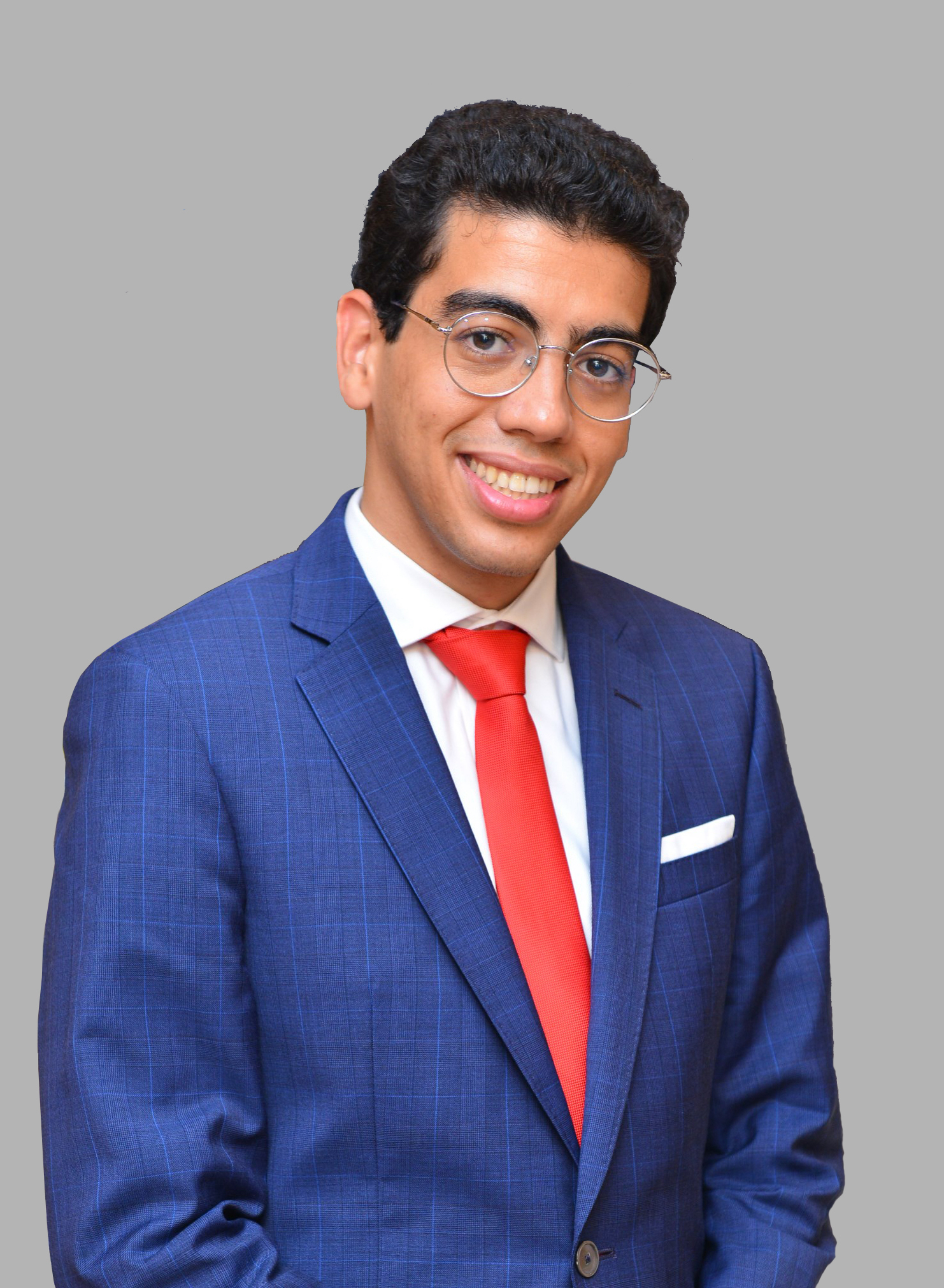
Omar Mouchtaki is an Assistant Professor of Technology, Operations, and Statistics at the Leonard N. Stern School of Business, New York University, where he joined in July 2024. His research bridges theoretical and practical aspects of data-driven decision-making in operations management. Education: PhD in Decision, Risk and Operations, Columbia University MS in Applied Mathematics and Computer Science, École Polytechnique (Paris) BS in Applied Mathematics and Computer Science, École Polytechnique (Paris) Omar's research lies at the intersection of optimization, probability, game theory, and statistical learning. His work focuses on improving operational decision-making in areas such as inventory management, pricing, revenue management, and assortment optimization. He develops methodological tools with fine-grained performance guarantees tailored to real-world data environments. His recent publications and working papers, many co-authored with leading scholars like Omar Besbes and Will Ma, appear in top journals like Management Science and conference proceedings such as NeurIPS. These works explore topics including non-IID data environments, sample-efficient learning for newsvendor problems, auction design, and joint inventory-assortment planning. Scientific Awards: Finalist, 'Best OM Paper in Management Science' Award, 2024 First Place, RMP Jeff McGill Student Paper Award, 2021 Finalist, INFORMS George Nicholson Student Paper Competition, 2021 Finalist, APS Best Student Paper Award, 2021 Omar advises no students listed publicly but is actively involved in research collaborations. He teaches Operations Management in the Part-Time MBA program starting Spring 2025. His research is supported by ongoing collaborations and submissions to leading journals, indicating a strong trajectory in operations research and data-driven operations. He is affiliated with the Decision, Risk and Operations division at Columbia during his PhD and now contributes to NYU Stern’s Technology, Operations, and Statistics area. No labs or research centers are explicitly mentioned in the provided text.

Isabel Cristina Maciel Natário is an Associate Professor in the Department of Mathematics at the Faculdade de Ciências e Tecnologia, Universidade Nova de Lisboa (FCT-UNL). She is an integrated member of the Centro de Matemática e Aplicações (CMA), specifically within the Statistics and Risk Management research group. Her academic and research profile is deeply rooted in statistical theory and applied data analysis, with strong interdisciplinary applications. Her educational background includes a Doctorate in Statistics and Operational Research (2005), a Master’s in Probability and Statistics (1999), and a Bachelor’s in Applied Mathematics and Computation (1995), all from Universidade de Lisboa. Doctorate: Hierarchical Bayesian Models for Epidemiological Analysis of Rare Events, Universidade de Lisboa (2005) Master’s: Spatial, Temporal and Spatio-Temporal Distribution of Rare Diseases, Universidade de Lisboa (1999) Bachelor’s: Avaliação de Erros em Inquéritos: Entrevista/Reentrevista, Instituto Superior Técnico (1995) Her research interests center on Spatio-Temporal Statistics, Bayesian Analysis, Hierarchical Modeling, Stochastic Processes, and Big Data. She applies these methodologies to diverse domains such as environmental risk, fisheries, epidemiology, and climate modeling. Her recent work demonstrates a strong focus on geostatistical inference, stochastic partial differential equations, and risk assessment in maritime and ecological contexts. Her 15 most recent publications reflect a consistent trajectory in advanced statistical modeling, particularly in spatial and spatio-temporal frameworks. The research spans theoretical developments in stochastic processes and Bayesian methods, as well as applied studies in health, marine biology, and environmental science. Key themes include maritime surveillance, species distribution modeling, wind velocity analysis, and clinical outcome prediction using statistical models. She has received no explicitly mentioned scientific awards in the provided text. Isabel Cristina Maciel Natário has supervised or collaborated with several researchers, including Sílvia Isabel Belo Guerra and Paula Cristina Pires Simões. While no formal list of advisees is provided, her collaborative publications and leadership in research groups suggest active mentoring. She has been involved in interdisciplinary research projects, particularly those involving environmental and health data. There is no mention of specific grants, but her sustained publication record and research group affiliation indicate active research funding. She is affiliated with the CMA – Centro de Matemática e Aplicações, a recognized research center at FCT-UNL, where she contributes to the Statistics and Risk Management group. This center supports collaborative, interdisciplinary research in mathematical modeling and statistical applications.

Professor Emmanuel Pothos is a distinguished academic at City, University of London , specializing in cognitive psychology and quantum probability theory. He studied physics at Imperial College (awarded the Stanley Raimes Memorial Prize in Mathematics) and earned a DPhil in Experimental Psychology from the University of Oxford . His research bridges computational frameworks like quantum theory , Bayesian methods , and information theory to model human cognition, focusing on categorization, decision-making, learning, and attentional biases in health psychology.
Ayokunle Anthony Osuntuyi is an Assistant Professor (Econometrics) at the Department of Economics, Ca' Foscari University of Venice. His research focuses on Financial and Computational Econometrics, with expertise in Bayesian Inference, Monte Carlo Methods, GARCH Models, Risk Management, and Portfolio Theory. PhD Economics (2014), University Ca' Foscari Venice, supervised by Monica Billio and Roberto Casarin Erasmus Mundus Master in Quantitative Economics (2009), University Ca' Foscari Venice, University of Paris 1, and University of Bielefeld BSc Statistics (2004), Obafemi Awolowo University, Nigeria Osuntuyi's research spans Bayesian nonparametric methods, Markov-switching GARCH models for financial volatility, climate risk analysis, EEG spectral dynamics, and optimization algorithms. He has contributed to energy futures hedging, financial cycles, and biomedical signal processing. His recent work trends include integrating Bayesian inference with panel data analysis for climate economics, advancing computational finance through nonparametric GARCH models, and applying statistical methods to neuroscience data. Collaborative projects with Roberto Casarin and Mauro Costantini highlight his focus on methodological innovation. Riccardo Faini award for best Master Thesis (2012) Erasmus Mundus Master Scholarship (2007-2009) Multiple research grants at Ca' Foscari University (2012-2020) Osuntuyi has received federal and institutional scholarships in Nigeria (2002-2003) and contributes as a referee for journals like Economic Modeling and Journal of the Nigerian Mathematical Society. His current role includes teaching and leading research projects on financial econometrics.