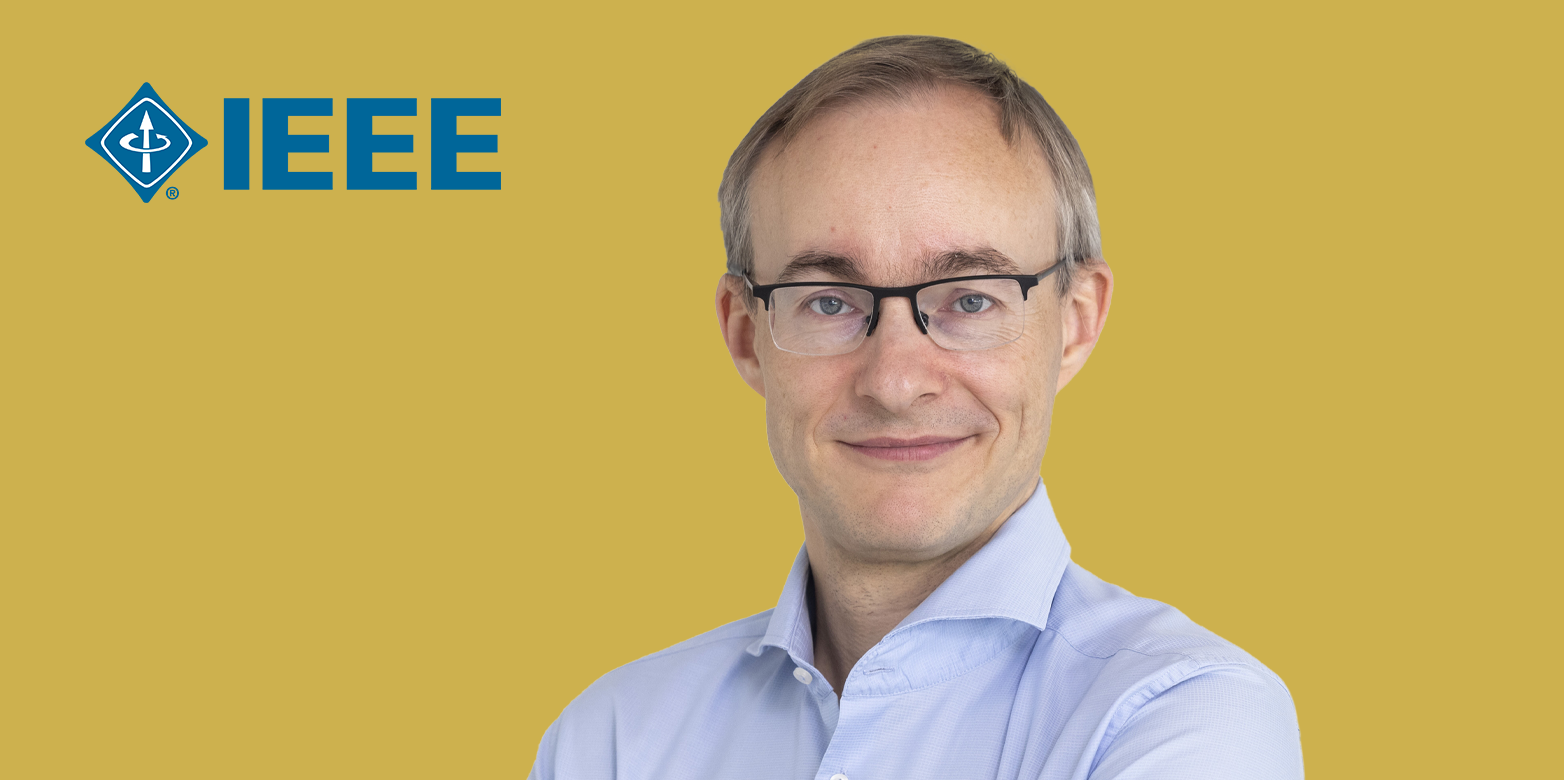
Andreas Krause is a Professor of Computer Science at ETH Zurich, leading the Learning & Adaptive Systems Group and serving as Chair of the ETH AI Center and Academic Co-Director of the Swiss Data Science Center. He previously held an Assistant Professorship at Caltech. His research focuses on machine learning, Bayesian optimization, reinforcement learning, and AI safety. Key contributions include advancements in active sensing, learning-based control, and probabilistic AI. Affiliations: ETH AI Center, Swiss Data Science Center, Max Planck Institute for Intelligent Systems (Fellow) Education: PhD in Computer Science (Carnegie Mellon University, 2008); Diplom in Computer Science and Mathematics (Technical University of Munich, 2004) His work bridges theory and practice, with applications in robotics, healthcare, and climate science. Notable awards include the IEEE Fellow distinction, Rössler Prize, and multiple ERC grants. Krause actively chairs ICML conferences and contributes to global AI policy through the UN’s High-level Advisory Body on AI. Research Interests: Machine learning fundamentals, adaptive systems, AI safety, and optimization. Recent work explores safe exploration in reinforcement learning, causal modeling, and large-scale generative AI.
Thomas Sheldrake is an SNSF Eccellenza Professorial Fellow (Assistant Professor) at the Department of Earth Sciences, University of Geneva. His research focuses on magmatic processes, volcanic systems, and geochronological methods with applications to understanding eruption dynamics and tectonic interactions. He specializes in integrating geochemical, petrological, and computational approaches to study magma evolution and volcanic hazards. Research interests include: Magmatic system evolution and eruption triggers Zircon-based geochronology and petrochronology Volcanic crystal records of magma storage and degassing Remote sensing of volcanic structures using micro-CT Statistical modeling of volcanic eruption data His work spans field-based studies in the Caribbean, Iceland, and Italy, alongside computational methods for mineral analysis. Notable contributions include linking sea-level changes to magmatic pulses during the Messinian crisis and developing zircon age spectra techniques for magma evolution quantification. His recent 2025 study on Caribbean coral porosity demonstrates interdisciplinary approaches bridging geology and environmental science. Scientific Awards: SNSF Eccellenza Professorial Fellowship Research collaborations involve institutions globally, with frequent co-authorship on topics ranging from Holuhraun eruption geochemistry to Saint Kitts volcanic stratigraphy. His work emphasizes bridging fundamental geoscience with applied volcanic hazard assessment.
Dr. Thomas Sutter is a Researcher affiliated with the Department of Computer Science at ETH Zurich , specifically part of the Professorship for Medical Data Science. His work focuses on advanced machine learning techniques applied to medical data, including anomaly detection, generative AI, and multimodal learning. He contributes to healthcare innovation through projects like improving radiology diagnostics via Vision-Language Models (RadVLM) and developing denoising techniques for physiological signals in cardiology. Research Interests: Medical Data Science, Anomaly Detection in Healthcare, Generative AI for Biomedical Signals, Multimodal Representation Learning, and Cardiac Function Prediction using Echocardiograms. His methods often combine deep learning with domain-specific medical challenges. Key Publications Trends: Recent work emphasizes medical imaging analysis (e.g., MIMIC-CXR studies), generative models for signal denoising, and contrastive learning for anomaly detection. His research bridges computer science theory with clinical applications, particularly in cardiology and radiology. Awards & Grants: No specific awards or grants mentioned in the provided texts. Advising & Teams: While no advisees are listed, he collaborates within the Medical Data Science research group at ETH Zurich, contributing to interdisciplinary projects in healthcare AI.
Yoav Zemel is a Lecturer at the École polytechnique fédérale de Lausanne (EPFL) , affiliated with the School of Basic Sciences and Department of Mathematics . He specializes in statistical aspects of optimal transport and related geometric methods. B.Sc. Mathematics & Economics, Hebrew University of Jerusalem (summa cum laude, 2010) M.Sc. Applied Mathematics, EPFL (2012) PhD Mathematical Statistics, EPFL (2017), advised by Victor M. Panaretos His research focuses on geometrical statistics , point processes , shape theory , and optimal transportation . Recent work explores covariance operators, Gaussian processes, and stochastic algorithms in Wasserstein spaces. Publications bridge theoretical advancements with applications in ecology, genetics, and machine learning. Scientific awards include the Robert May Prize , Swiss government scholarship , and multiple Hebrew University honors. He has taught courses on probability, statistical machine learning, and optimal transport at EPFL, Göttingen, and Cambridge.
Bastian Alexander Grossenbacher is a Full Professor of Machine Learning at the University of Fribourg, where he leads the AIDOS Lab within the Department of Informatics, Faculty of Science and Medicine. He holds secondary appointments at the Institute of AI for Health and the Helmholtz Pioneer Campus of Helmholtz Munich. He is also a TUM Junior Fellow and a member of ELLIS and AI-LIFE. He co-directs the Applied Algebraic Topology Research Network (AATRN) and is involved in the Topology, Algebra, and Geometry in Data Science (TAG DS) initiative. His research lies at the intersection of geometry, topology, and machine learning, with a focus on Geometric Deep Learning, Topological Deep Learning, and Topological Data Analysis. He develops novel machine learning methods that use topological and geometric priors to improve model robustness and interpretability, particularly in biomedical applications. His work spans theoretical foundations and practical implementations in areas such as single-cell analysis, medical imaging, and network science. The 15 most recent publications (2023–2025) reveal a strong trend toward integrating algebraic and differential topology into deep learning architectures. Key themes include the use of Euler Characteristic and magnitude transforms, curvature-based analysis of graphs and data, simplicial and manifold-based neural representations, and the application of topological methods to biomedical data. His articles appear in top-tier venues such as Nature Communications, ICML, NeurIPS, ICLR, and IEEE conferences, reflecting both theoretical depth and high-impact applications. ERC Starting Grant Bastian Rieck is actively involved in mentoring and academic leadership. He supervises PhD students and postdoctoral researchers in the AIDOS Lab and is open to new collaborations, particularly with candidates from interdisciplinary backgrounds. He has secured significant research funding, including the ERC Starting Grant, and leads multiple collaborative research initiatives. He emphasizes open science, sharing code, data, and educational materials publicly. He leads the AIDOS Lab, which focuses on advancing machine learning through topological and geometric principles. He is also a co-director of the Applied Algebraic Topology Research Network (AATRN), which hosts a large online seminar series. Additionally, he maintains DONUT, a curated database of non-theoretical applications of topology, and is active in the ELLIS and AI-LIFE networks, fostering international collaboration in AI and health.
Prof. Alexandre Pouget is a leading Professor at the University of Geneva , affiliated with the Faculty of Medicine and Department of Basic Neuroscience . His research focuses on uncovering general principles of representation and computation in neural circuits , particularly how the brain handles uncertainty through probabilistic inference in domains like Decision Making Multisensory Integration Number Representation Visual Processing Perceptual Learning His work applies Bayesian inference to neural coding, with notable contributions to understanding odor demixing and confidence vs. certainty in cognitive tasks. He leads a dynamic research group at CMU (C08.1538.A) with postdocs and graduate students, and his collaborations span institutions like University College London Simons Foundation Human Frontiers Science Programme Swiss National Science Foundation While no specific scientific awards are listed, his publications in Nature Neuroscience and Nature highlight his impact. His lab emphasizes interdisciplinary approaches combining computational modeling , neurophysiology , and behavioral analysis .
Thomas Weber is a Full Professor at the École Polytechnique Fédérale de Lausanne (EPFL) , holding the Chair of Operations, Economics, and Strategy (OES) within the College of Management (CDM) . He serves as Director of the Doctoral Program in Management of Technology and contributes to academic governance through roles in committees such as the CDM Academic Evaluation Committee. PhD Students: Zhang Ru, Han Jun, Mark Michael, Razeghian Jahromi Maryam Email: thomas.weber@epfl.ch His research spans behavioral economics, risk analysis, and optimization in dynamic systems, with a focus on sharing economy applications, inventory management, and cryptocurrency market dynamics. Recent publications address robust decision-making frameworks, self-exciting point processes, and economic implications of information endogeneity. Key teaching activities include: Information: Strategy & Economics Innovation & Entrepreneurship in Engineering Microeconomics
Philip Neil Garner is a Researcher at the Idiap Research Institute (LIDIAP), affiliated with École Polytechnique Fédérale de Lausanne (EPFL). His current position is listed as "EPFL member Current" with email philip.garner@epfl.ch. He maintains an active research profile with publications spanning from 2013 to 2025. Garner's research focuses on the intersection of physiological auditory modeling and machine learning for speech processing. His work bridges cochlear physiology with automatic speech recognition systems, investigating how biological principles of hearing can inform and improve computational models. Key areas include modeling the cochlea as an active amplifier using Hopf oscillators, exploring neural oscillations in speech perception via spiking neural networks, and developing interpretable affective speech synthesis systems. His research demonstrates consistent interest in creating biologically plausible models that maintain compatibility with modern deep learning frameworks. Analysis of his recent publications reveals a clear trajectory toward integrating physiological auditory models with state-of-the-art speech recognition systems. His work increasingly focuses on creating hybrid models that maintain physiological plausibility while leveraging pre-trained acoustic models. The research shows particular attention to modular approaches that allow different components (cochlear models, neural networks) to interact meaningfully, with emphasis on understanding how end-to-end learning affects physiological interpretations of speech processing. Garner has supervised multiple doctoral students including Louise Coppieters De Gibson, Bastian Schnell, and Sibo Tong, whose theses address cochlear modeling, affective speech synthesis, and multilingual speech recognition respectively. His research has received funding from the Swiss National Science Foundation as indicated in two publications. While specific grants aren't detailed, his work demonstrates consistent collaboration with Hervé Bourlard and Alexandre Bittar across multiple projects. As a core researcher at Idiap Research Institute, Garner works within a multidisciplinary team focused on speech processing and artificial intelligence. His publications indicate collaboration across units including LIDIAP, EDEE, STI, IEL, and LCAV at EPFL, suggesting integration within both the Idiap institute and broader EPFL research ecosystem. His work connects computational neuroscience with practical speech technology applications, positioning him at the intersection of theoretical auditory modeling and applied speech processing.
Dr. Stefano Marelli is a Lecturer at ETH Zürich's Department of Civil, Environmental and Geomatic Engineering, affiliated with the Risk, Safety, and Uncertainty Quantification Chair. He holds a MSc in Physics (University of Milano Bicocca, 2006) and a PhD in Applied and Environmental Geophysics (ETH Zurich, 2011). His research focuses on uncertainty quantification (UQ), surrogate modeling, reliability analysis, and Bayesian inversion, with applications in engineering, astrophysics, and economics. He leads the development of UQLab, a general-purpose UQ software framework, and collaborates on interdisciplinary projects like HIPERWIND. Key research areas include high-dimensional UQ, stochastic simulators, and surrogate modeling for dynamical systems. Recent work emphasizes multifidelity methods, Bayesian tomography, and noise-aware reliability analysis. He teaches structural reliability and risk analysis at ETH and contributes to international UQ training programs. Education: MSc Physics (Milano Bicocca, 2006); PhD in Geophysics (ETH Zurich, 2011) Roles: Senior Scientist (2018–present); Postdoc (2012–2018) Software: UQLab, UQ [py] Lab Collaborations: Cross-disciplinary projects in astrophysics, mechanical engineering, and remote sensing His articles (2020–2025) highlight advancements in surrogate modeling, Bayesian inversion, and UQ applications. Notable contributions include frameworks for noisy data analysis, time-variant reliability, and industrial fragility assessment.
Dr. Ye Hong is a Researcher affiliated with the Institute of Cartography and Geoinformatics at ETH Zürich, specifically within the Department of Geoinformation Engineering. Their work focuses on geospatial data analysis, urban mobility modeling, machine learning applications in transportation systems, and sustainable urban planning. They contribute to open-source tools like Trackintel for mobility analysis and have published extensively on topics such as mobility data synthesis, traffic prediction, and privacy-preserving techniques. Research interests emphasize integrating multi-source geospatial data with deep learning to address challenges in urban sustainability, poverty reduction, and transportation efficiency. Their articles highlight innovations in trajectory generation, uncertainty quantification, and contextual-aware neural networks for spatial-temporal prediction. Dr. Hong’s publications explore the interplay between urban infrastructure, human behavior, and environmental impact. Key themes include accessibility measurement in cities, carbon footprint analysis, and the ethical implications of tracking mobility data. Their work bridges theoretical advancements in geoinformatics with practical applications in urban policy-making and infrastructure design. Notable contributions include frameworks for causal intervention in mobility data, methods to estimate poverty reduction efficiency using remote sensing, and analyses of tracking duration effects on location privacy. These efforts demonstrate a commitment to leveraging geospatial technologies for socially impactful research.
Victor Kristof is a researcher at École Polytechnique Fédérale de Lausanne (EPFL), affiliated with the INDY2 laboratory. His work spans interdisciplinary domains, combining Natural Language Processing (NLP) , Machine Learning , and Social Process Modeling to analyze legislative dynamics, vote prediction, and environmental perception. Research Focus: Kristof develops interpretable models for democratic transparency, including aligning interest group positions with parliamentary speeches. He pioneered methods for predicting legislative edit acceptance using matrix factorization and NLP. His work on Swiss referendum prediction integrates historical data with real-time analysis via the Predikon platform . Methodological Contributions: He applies Bayesian statistics , time-dynamic pairwise comparison models , and active learning algorithms to diverse problems, from carbon footprint perception to sports analytics. His War of Words framework reveals ideological patterns in EU law-making, while his Player Kernel model improves football match prediction. Labs & Collaborations: Based at EPFL's Laboratory of Dynamic Information and Networks (INDY2) , he collaborates with researchers like Matthias Grossglauser and Patrick Thiran. His datasets on legislative edits and carbon perception have advanced transparency studies.
Carl Allen is a Laplace Junior Chair in Machine Learning at École Normale Supérieure, Paris, working in the research group of Stéphane Mallat, Giulio Biroli and Garbiele Peyré. Previously, he was a postdoctoral fellow at ETH Zurich and completed his PhD in Machine Learning in 2021 at the University of Edinburgh under the supervision of Professors Tim Hospedales and Iain Murray. His educational background includes a BSc in Mathematics & Chemistry from the University of Southampton, an MSc in Mathematics and the Foundations of Computer Science (MFoCS) from the University of Oxford, and MScs in Artificial Intelligence and Data Science from the University of Edinburgh. Before transitioning to AI/ML research, he spent several years in Project Finance. Allen's research focuses on mathematically understanding mechanisms behind successful machine learning methods, particularly neural networks. He investigates how machine learning models exploit aspects of data distribution from a probabilistic perspective. His current topics include explaining how VAEs disentangle independent factors of data, identifying mathematical models behind self-supervised learning, and deriving probabilistic interpretations of softmax classification. His PhD work investigated neural representations of discrete objects and their relationships, with a main result explaining how word embeddings can seemingly be added and subtracted (e.g., queen ≈ king - man + woman), which received Best Paper (honorable mention) at ICML 2019. His research spans theoretical foundations of machine learning, with particular emphasis on representation learning, disentanglement, and probabilistic modeling of neural networks. His work connects mathematical principles with practical machine learning applications, aiming to develop more interpretable and reliable algorithms. Allen has received notable recognition including a Best Paper honorable mention at ICML 2019 and a research grant from the Hasler Foundation. He has delivered invited talks at prestigious institutions including Harvard Center of Mathematical Sciences & Applications and Astra-Zeneca. His collaborative work spans multiple institutions, including a notable internship at Samsung AI Centre, Cambridge, where he worked at the intersection of representation learning and logical reasoning. His research has significant implications for developing more interpretable, reliable, and theoretically grounded machine learning systems.
Desi R. Ivanova is a research fellow at the University of Oxford's Department of Statistics under the Florence Nightingale Bicentennial Fellowship. Her work bridges probabilistic machine learning, Bayesian experimental design, and LLM evaluation frameworks. She holds a DPhil in Statistics from Oxford's StatML CDT program (2020-2024) and an MMORSE in Mathematics from University of Warwick (2011-2016) with Erasmus exchange at LMU Munich. Research spans causal machine learning and uncertainty quantification Developed CO-BED and Step-DAD frameworks Focus on LLM evaluation methodology and calibration Expert in real-time adaptive experimental systems Her publications demonstrate expertise in Bayesian self-consistency methods, neural data compression, and privacy-preserving dataset merging. Key contributions include improving amortized inference efficiency and developing gradient-based causal experimental designs. Current work emphasizes rigorous statistical evaluation of language models, advocating for appropriate uncertainty quantification when analyzing performance across small datasets. She critiques CLT-based methods for LLM evaluation and proposes more robust frequentist and Bayesian alternatives.
Melih Kandemir is an Associate Professor of Machine Learning at the University of Southern Denmark, Department of Mathematics and Computer Science. He earned his PhD in 2013 from Aalto University under Prof. Samuel Kaski, followed by postdoctoral work at Heidelberg University (with Prof. Fred Hamprecht) and an assistant professorship at Ozyegin University, Turkey. Prior to joining SDU, he led research at Bosch Center for Artificial Intelligence. Education: PhD (Aalto University, 2013), Postdoc (Heidelberg University). Previous Roles: Assistant Professor (Ozyegin University), Research Group Leader (Bosch CAI). His research focuses on Bayesian inference, stochastic process modeling with deep neural networks, and applications to reinforcement learning and continual learning. He leads the SDU Adaptive Intelligence (ADIN) Lab and is an ELLIS Member, reflecting his standing as a top European AI researcher. His work addresses critical challenges in uncertainty quantification, exploration strategies, and theoretically grounded algorithms for decision-making systems. Recent publications highlight expertise in model-based reinforcement learning (e.g., MOMBO for offline RL), PAC-Bayesian bandits, evidential learning for robust classification, and neural stochastic differential equations. His scientific awards include a Best Paper Award (2017) and ELLIS Membership. He also explores interdisciplinary applications of natural sciences to sustainable technology development.
Dr. Matteo Spada is a Senior Researcher in Risk and Resilience at the Zurich University of Applied Sciences (ZHAW) School of Engineering, where he focuses on Technology Assessment. His research spans multiple institutions including the Paul Scherrer Institute, Swiss Seismological Service, and Istituto Nazionale di Geofisica e Vulcanologia in Italy. His educational background includes a Ph.D. in Earth Sciences from ETH Zurich (2006-2011) and an MSc in Physics from the University of Bologna (1999-2005). Dr. Spada's research focuses on risk and resilience assessment of critical infrastructure systems, with particular expertise in energy systems, natural hazards, and multi-criteria decision analysis. His work integrates quantitative methods with practical applications to inform policy and decision-making processes related to infrastructure safety and security. He has developed innovative approaches for probabilistic risk assessment, uncertainty quantification, and decision support systems that have been applied across multiple sectors including energy, water resources, and transportation. His recent work has particularly emphasized the energy transition, analyzing comparative accident risks across different energy technologies and developing frameworks for assessing resilience of electricity supply systems. Through his research, he has contributed to understanding the societal implications of energy infrastructure failures and developing methodologies for more robust risk assessment. Dr. Spada is an active member of several professional networks including the European Safety and Reliability Association (ESRA), the Institute for Operations Research and the Management Sciences (INFORMS), and the Special Activity Group - Sustainable Concrete Structures of the International Federation for Structural Concrete. He leads several research projects including 'Innovative Spatio-Temporal multi-criteria decision analysis Interface to support informed decision-Making for real-world applications' and contributes to initiatives focused on urban energy transition, resilient supply chains, and building decarbonization. His work often involves interdisciplinary collaboration with engineers, economists, and policy experts to address complex infrastructure challenges. Dr. Spada maintains an active research laboratory focused on risk and resilience assessment, where his team develops and applies advanced analytical methods to real-world infrastructure challenges. The lab utilizes a combination of statistical modeling, simulation techniques, and decision analysis tools to support evidence-based policy making.