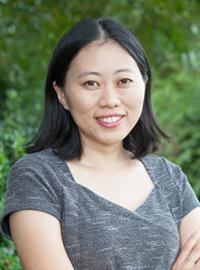
Jason Pacheco serves as an Assistant Professor in the Department of Computer Science at the University of Arizona, maintaining an office in GS 724. He earned his Ph.D. from Brown University in 2016 and specializes in theoretical and applied machine learning. His educational background includes: Ph.D. in Computer Science, Brown University (2016) Dr. Pacheco's research centers on statistical machine learning, probabilistic graphical models, and approximate inference algorithms, with emphasis on information-theoretic decision making. He bridges theoretical foundations with practical applications in cybersecurity, privacy-preserving AI, and environmental monitoring systems, developing novel approaches for robust sequential decision making under uncertainty. Analysis of his 15 most recent publications (2021-2025) reveals three dominant research thrusts: (1) Privacy-preserving machine learning, particularly federated learning and differential privacy for large language models; (2) Adversarial reinforcement learning for cyber defense and malware detection; and (3) Variational information-theoretic methods for mutual information estimation and sequential decision making. His work consistently integrates theoretical rigor with real-world applications in security and environmental science.
Lichun Li is an Associate Professor at the Department of Industrial & Manufacturing Engineering within the FAMU-FSU College of Engineering . Holding a Ph.D. in Electrical Engineering from the University of Notre Dame (2013), Dr. Li's career includes postdoctoral work at the University of Illinois at Urbana-Champaign (UIUC) and Georgia Institute of Technology under Prof. Langbort and Prof. Shamma, respectively. Research Interests: Game Theory : Focused on asymmetric and stochastic games with applications to security and control systems. Control Theory : Investigates event-triggered systems, Bayesian games, and resilient networked systems. Security of Cyber-Human-Physical Systems : Addresses threats from hackers, natural disasters, and adversarial actors through strategic modeling. Smart Manufacturing : Explores AI-driven robotic collaboration to enhance industrial efficiency. Networked Systems : Studies large-scale systems resilience and coordination mechanisms. Recent Publications highlight applications of game theory to cybersecurity, LTE network defense, and efficient control algorithms. Dr. Li's work bridges theoretical advancements with practical solutions for risk mitigation and system optimization. Contact : lichunli@eng.famu.fsu.edu
Stuart Jonathan Russell is a Distinguished Professor of Computer Science, Cognitive Science, and Computational Precision Health at the University of California, Berkeley. He holds the Smith-Zadeh Chair in Engineering and is also a Professor of Computational Precision Health at the University of California, San Francisco. Russell is the founder and leader of the Center for Human-Compatible Artificial Intelligence (CHAI) at UC Berkeley and serves as an Honorary Fellow of Wadham College, Oxford. His academic journey began with a B.A. in Physics from the University of Oxford, followed by a Ph.D. in Computer Science from Stanford University. Throughout his distinguished career, Russell has received numerous prestigious honors including the IJCAI Computers and Thought Award (1995), IJCAI Award for Research Excellence (2022), Fellow of the Royal Society (2025), and Member of the National Academy of Engineering (2025). Russell's research spans multiple domains within artificial intelligence, with a recent focus on ensuring AI systems remain beneficial to humanity. His work includes significant contributions to machine learning, probabilistic reasoning, knowledge representation, planning, real-time decision making, and inverse reinforcement learning. In recent years, his research has increasingly focused on AI safety, value alignment, and developing frameworks for human-compatible AI systems that maintain human control as AI capabilities advance. His publication record shows a clear trend toward addressing the long-term challenges of AI development, particularly the control problem and value alignment. The research spans theoretical foundations of AI, practical applications in robotics and decision making, and critical examinations of the societal implications of increasingly capable AI systems. Russell's work has evolved from foundational AI research to increasingly focus on the alignment problem and mechanisms for ensuring AI systems remain beneficial. Russell has received numerous scientific awards recognizing his contributions to the field: IJCAI Computers and Thought Award (1995) AAAI Fellow (1997) ACM Fellow (2003) AAAS Fellow (2011) Blaise Pascal Chair (2012) Reith Lectures (2021) Officer of the Order of the British Empire (OBE) (2021) Fellow of the Royal Society (2025) Member of the National Academy of Engineering (2025) Russell has advised numerous doctoral students including Marie desJardins, Eric Xing, and Shlomo Zilberstein, and has mentored many postdoctoral researchers who have become leaders in the field. His research has been supported by various grants from organizations including the National Science Foundation, Defense Advanced Research Projects Agency, and other funding bodies focused on advancing AI research with careful consideration of safety and societal impact. He has been particularly active in securing funding for research on human-compatible AI and value alignment. He founded and leads the Center for Human-Compatible Artificial Intelligence (CHAI), which brings together researchers from multiple disciplines to address the challenge of creating AI systems that reliably do what humans want them to do. The center collaborates with other research groups including the Berkeley Artificial Intelligence Research (BAIR) lab, the Kavli Center for Ethics, Science, and the Public (KCESP), and the Institute for Cognitive and Brain Sciences (ICBS), creating a rich interdisciplinary environment for addressing the challenges of AI safety and human compatibility.